2010-11-26 Spike activity

Quick links from the past week in mind and brain news:
The New York Times has an excellent piece by wide-thinking neuroscientist Robert Sapolsky: This Is Your Brain on Metaphors. Want more metaphors? This week’s ‘In Our Time’ had a history.

The web’s best optical illusion videos from io9.

The Guardian has an excellent piece covering some of the latest findings in the neuroscience of synaesthesia.

Thank you LanguageLog for the keeping it real coverage of The New York Times’ odd anecdote-led ‘Your Brain on Computers’ series.

New Scientist on a New York exhibition of Franz Messerschmidt’s sculptures – a series of “character heads” whose distorted facial features he believed had the power to ward off the demons that tormented him by pinching his thighs and abdomen.

Waiting for the sky gods of brain science. Oscillatory Thoughts takes a critical look at headline-making blue-sky-and-bluster neuroscience projects.

ScienceNews covers new research on bomb blast brain protection finding helmet visors may prevent shock waves entering through the face.

What makes a good gift? Irrationally Yours discusses how to select a present for maximum guilt-alleviating impact.

NPR has a brilliant piece on siblings, personality development, genetics, environment and why two people who grow up together can be so different.

A 15-minute writing exercise closes the gender gap in university-level physics according to research expertly covered by Not Exactly Rocket Science. Now someone hurry up and invent one for psychology so I look less of a klutz in front of my female colleagues.

The Morning News has a brilliant first-person account of someone caught up in compulsive gambling.

A diagnosis of schizophrenia exited the body of a white housewife, flew across the hospital, and landed on a young Black man from the housing projects of Detroit. Brilliant In the News piece on recent research on ‘how schizophrenia became a black disease’.

BBC Radio 3 had an surprisingly engrossing programme on when Freud met the composer Mahler. You have only two days left to listen to it and streaming only. Public funding in action.

Does having children really make us less happy, despite the contrary stereotype? Evidence Based Mummy has an excellent piece that delves into the detail.

The Wall Street Journal has a piece by VR pioneer Jaron Lanier on the psychology of being an avatar.

The ‘smell of fear’ makes us dangerous. The BPS Research Digest covers a piece on how the scent of anxious people encourages risk taking.

APA Monitor magazine for December has just arrived online. Lots of psychology goodness from the American Psychological Association.

A mirror neuron dance party for autism spectrum disorders. The Neurocritic tackles a funky if not wildly speculative treatment for ASD.

The New York Times covers the increasing use of virtual reality in psychological treatment.

The psychiatric hospital best known as the site for the filming of the 1975 movie “One Flew Over The Cuckoo’s Nest” will soon be reopened for patients. Providentia has the news.

Time magazine has a piece on how posh people are worse at reading emotion in faces. Better manners though, and that’s what counts.

Do guns make violence more likely? Barking Up the Wrong Tree tackles a relevant study.

The Guardian has an important and interesting piece on false memory, unsound convictions and a legal system that still relies on the vagaries of recall.

‘Synthetic cannabis’ has been given an immediate and temporary ban in the United States. Addiction Inbox, as always, has brilliant coverage.

An infection of mental fog

The Guardian has an excellent article on how tropical diseases are a major and largely unrecognised risk to the mental agility of young children as parasites directly or indirectly affect the brain.

Frustratingly, the diseases are widespread and, in many cases, easily treatable, if only the resources were available.

Unfortunately, the same problems that make treatment scarce also mean that the conditions are under-researched and it’s still not clear in many cases how the diseases end up causing mental deterioration.

We are still a long way from understanding the mechanisms by which a given disease may affect cognitive function. For instance, a parasitic worm infection may have its main effect on educational progress by causing diarrhoea and malaise, leading the child to miss school or to be listless and unmotivated in the classroom. But there may be more direct effects on brain development caused by malabsorption of nutrients or iron-deficiency anaemia. It has also been suggested that the toxins generated by some parasites may affect brain function.

Such effects may be temporary, the child catching up with his or her peers once the infection has been cured, or long-lasting, if brain development is disrupted during a critical phase. Research in this area is difficult, but is urgently needed if we are to develop effective preventive strategies.


Link to Guardian piece ‘Out of sight, out of mind’.

Magic at the dawn of psychology

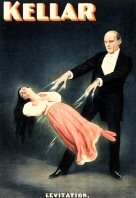
Some of the world’s best illusionists are now collaborating with cognitive scientists to better understand the mind and brain but this turns out to be old news. A brilliant article in The Psychologist charts the remarkably long history of magicians and psychologists working together to understand the human mind.

The piece is by psychologist and historian Peter Lamont, himself a stage magician of some repute, who looks back at how illusionists knowledge of mental engineering was in demand even in the earliest days of experimental psychology.

At the end of the 19th century, Hermann and Kellar were the two greatest conjurors in the world, though who was greatest depended upon whose publicity one believed. In the United States they competed over audiences and advertising space, and each considered the other his arch-rival. When Hermann died in 1896, Kellar was free to establish his reign and, aside from his notable achievements in the world of magic, he was almost certainly the inspiration for the Wizard of Oz. But before Kellar became the grand wizard, and shortly before Hermann’s death, the two great rivals agreed to compete in a quite different environment – the psychological laboratory.

In fact, December’s edition of The Psychologist is a special issue on the history of psychology with all the major articles open and available to all.
 

Link to article on magic and psychology.
Link to table of contents for December’s The Psychologist.
 

Full disclosure: I’m an unpaid associate editor and occasional columnist for The Psychologist. Sadly, I lost the magic years ago.

The boundaries of mental illness

Seed Magazine has an excellent piece on ‘redefining mental illness’ that discusses the limits of labelling mental disorders and whether we can understand disability purely in terms of the mind.

The piece captures the highlights from a recent online blog discussion on the topic and is inspired in part by the ongoing update to the American Psychiatric Association’s diagnostic manual, the DSM-5, due to be released in May 2013.

One of the big changes to the manual is likely to be the introduction of dimensions, so instead of just having to decide whether “you have it or you don’t” psychiatrists will be able to rate symptoms on a sliding scale.

This has been inspired evidence that hallucination-like experiences or unlikely magical beliefs are not restricted to people with schizophrenia or other psychotic disorders, but are also present, albeit to varying degrees, in everyone.

This has led some to argue that we should abandon diagnoses for mental disorders as they’re just arbitrary cut-off points that have no scientific basis.

But if everyone has their own ‘unique dose’ of unusual experiences, like everyone has their ‘unique dose’ of typical daily anxiety, we should see a nice smooth curve when we measure it in the population. Some people have a little, some people have lots, and we should find everyone else in between.

It turns out, that this is not the case with hallucinations, delusions, reality distortions and unusual magical beliefs.

A recent over-arching meta-analysis of all the data from past research suggests that some people show a qualitative difference in the type of psychosis-like experiences they have – in other words, there is a natural break – but this doesn’t match up with who is likely to be diagnosed with schizophrenia.

Here are the authors in their own words:

The weight of evidence suggests there is a nonarbitrary boundary between those with and without schizophrenia. Certainly, the prevalence estimates of the psychometric risk categories indicate that this nonarbitrary boundary is well below the threshold for schizophrenia, capturing approximately 11% of the population.

In other words, there is not a smooth continuum between normality and schizophrenia. In fact, there seems to be clear difference in 11% of the population, but this happens in most cases in people who never become mentally ill.

Less than 1% of the population will qualify for a diagnosis of schizophrenia and only 3% for any type of psychotic disorder involving hallucinations and delusions.

That leaves 8% who have, perhaps what we could call ‘schizophrenia-like’ unusual experiences (as opposed to ‘regular’ unusual experiences), but who don’t ever seem to become disabled.

What this may mean is that defining mental disorders like schizophrenia largely on the basis of certain experiences may be missing the point, because they don’t in themselves cause a problem for most people.

But what this also means, is that the diagnostic manuals will remain very rough guesses until the publishers decided to draw their diagnoses from science, rather than doing science to try and justify their diagnoses.
 

Link to Seed on ‘Redefining Mental Illness’.
Link to ‘What is Mental Illness’ blog carnival.
Link to PubMed entry for meta-analysis of psychosis-like experiences.

A misperceptive critic

It’s not often that hallucinations indulge in media criticism, but this case of Charles Bonnet syndrome recently published in the journal Optometry is a delightful exception.

Everyone, it seems, is a critic, including perceptual distortions generated by, in this case, macular degeneration.

A 79-year-old man presented to the clinic with intermittent hallucinations of 6 months’ duration before this visit. He reported it occurred mostly in the evening, when he saw visions of road maps, Christmas wreaths, and faces that blocked his television screen. The faces were not of people known to him and often had elaborate hats or headdresses. When he rode in a car, he often saw houses that he knew were not truly present, and when he watched his favorite celebrity television dancing show, he saw multiple dancers rather than the 2 actually dancing. He was not disturbed or frightened by these hallucinations; he knew that they were not real. On the contrary, he felt they were amusing and reported they were often more entertaining than what was actually on television.


Link to PubMed entry for case report.
Link to DOI entry for same.

Mental air

A poem by the great Irish writer William Butler Yeats on the difficulties of getting the balloon of the mind into its narrow shed.

No, I’m not really sure what it’s about either, but I wonder if that’s the point.

The Balloon Of The Mind
by William Butler Yeats

Hands, do what you’re bid:
Bring the balloon of the mind
That bellies and drags in the wind
Into its narrow shed.

The cutting edge of a splitting headache

ABC Radio National’s Life Matters has a programme that’s full of fascinating snippets about the cutting edge of headache science.

It’s hardly the sort of material you’ll be charming your next date with, but there are so many ‘I never knew that’ moments that it’s definitely worth catching if you have an interest in the research or treatment of a pounding head.

For example, the programme reviews how Botox is being used to treat migraine, the introduction of a completely new class of headache drugs – the CGRP receptor antagonists, and how drug companies are marketing special body part specific medications for increased profit – despite the fact they all contain identical active ingredients.

It also covers how the added codeine in standard headache pills probably does nothing and why psychological treatment can be an effective way of treating even long-term persistent headache when drugs can seem to do no further good.

Lots more eye-opening facts and a plenty of discussion tightly packed into a 20 minute show.
 

Link to Life Matters on ‘Headaches: what’s new?’

Walk this sway

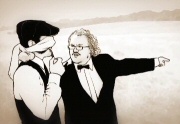
NPR has a fascinating segment about how humans can’t walk in a straight line unless we have an external guide. We just end up walking in circles.

It turns out, no one is really sure why this happens but experiments on walkers, drivers and swimmers have all found the tendency to circle back on ourselves despite us thinking that we’re maintaining a steady course ahead.

The NPR piece is both a short radio discussion and an animation so make you catch both as it’s a minor but utterly fascinating mystery.

So why, when blindfolded, can’t we walk straight? There is still no good answer. Jan Souman, a research scientist in Germany, co-wrote a paper last year about this human tendency to walk in circles…

In our radio broadcast, Jan and I explore possible explanations for this tendency to slip into turns. Maybe, I suggest, this is a form of left or right handedness where one side dominates the other? Or maybe this is a reflection of our left and right brains spitting out different levels of dopamine? Or maybe it’s stupidly simple: Most of us have slightly different sized legs or slightly stronger appendages on one side and this little difference, over enough steps, mounts up?

Wrong, wrong and wrong, Jan says. He’s tested all three propositions (the radio story describes the details) and didn’t get the predicted results.


Link to NPR on ‘Why Can’t We Walk Straight?’ (via @JadAbumrad).

Soviet psychiatry, the poster series

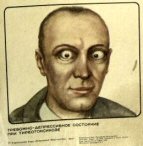
English Russia has a gallery of unsettling psychiatric hospital posters from Soviet Russia.

Sadly, my Russian is not quite as good as it should be but they seem to be a mix of flowchart style information telling staff how to deal with clinical situations and information about different sorts of disorders.

Needless to say, the bleak photos and unsettling graphics don’t make for the cheeriest combination but they are certainly an interesting insight into a small part of psychiatry from an earlier Russia.
 

Link to English Russia gallery of Soviet psychiatry posters.

Brain, The Inside Story – AMNH, New York

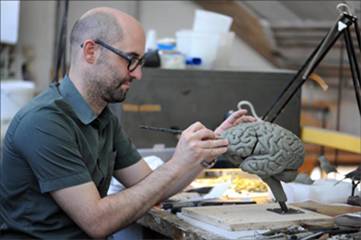
AMNH employee making a brain for the exhibition, http://www.amnh.org

The American Museum of Natural History in New York has a new exhibit called “Brain: The Inside Story“. Mindhacks.com‘s New York correspondent, Ben Ehrlich, sends this report:

I remember being a kid. I remember being a kid and going on field trips. I remember being a seventh-grade kid in New York City and going on field trips to the American Museum of Natural History. That’s why, standing at the threshold of a new exhibit there – Brain: The Inside Story, curated by Rob DeSalle – I try to imagine that I am once again a child, beholding with that ceaseless curiosity and wide-eyed wonderment all that is around me.
This proves not-so-difficult. The “tunnel” at the start the exhibition is draped with tangled clumps of recycled wire – 1500 pounds of material. It looks like some mischievous giants had a food fight with giant sticky spaghetti. Meanwhile, beads of light are moving through the thick-and-thin strands. The installation, by the Spanish artist Daniel Canogar, is meant to represent neurons firing their electrical impulses. On a plain, white pedestal at the door, a preserved brain-small and shriveled-sits understatedly in a glass case, as if daring someone to underestimate it. But the “tunnel” transports me inside its magical, gray matter, where I can walk beneath a sparkling canopy of nervous connectivity, a whole world alive within the wrinkles and folds, and I am as amazed as ever that all this happens inside of that.

Emerging from the “tunnel,” I am met by a life-sized projected image of a young dancer, sort of like the Princess Leah hologram only in spandex and a light sweat. She is in the process of an audition; she is thinking, emoting, and moving. As a recorded voice explains the correlating brain activity, a large three-dimensional brain model simultaneously lights its corresponding regions up in colors. This multimedia exhibit demonstrates the concept of regional specialization, while reminding that a brain controls a person who lives a life and has a story. From the “tunnel”-which contains an interpretation of the anatomy and functionality of brain cells-to the dancer, which illustrates cognitive, emotional, and behavioral phenomena, Brain: The Inside Story highlights some different approaches to neuroscience research, and their interrelatedness.

The rest of the exhibition is organized into five categories: The Sensing Brain, The Emotional Brain, The Thinking Brain, The Changing Brain, and The 21st Century Brain. At every turn are sights and sounds, and I am reminded of a carnival. Stand here! Look through here! Build this brain! Play this game! Touch this screen! There are illusions like an upside-down Mona Lisa made from spools of thread, and a picture of a rainy day coupled with the sound of what seems to be rainfall-until I discover it is frying bacon. (This deceptive influence of sight on sound is a demonstration of cross-modal perception). A hulking homunculus stands awkwardly with its enormous hands and mouth, a little too late, sadly, for Halloween. (The figure reflects the proportions of the somato-sensory cortex devoted to each body part). And everything shown is also explained by writing and pictures that surround every room, like an engaging textbook on a wall. Of course, unlike in school, no one has to read.

At about The Changing Brain, I notice a group of school kids making their way excitedly against the flow of we, the media. They are a diverse seventh-grade class studying neuroscience at a city secondary school. “I’ve always heard about the things memory can do, now I’m actually seeing it,” one boy tells me, excitedly. Another boy tells me how cool the exhibition is. Cool? For a kid? I ask him if it makes him want to study the brain more. He says, without hesitation, almost annoyed (because after all I should already know): “Yes.” And then he scampers off to play brain teasers with his friends. This is the main reason that Brain: The Inside Story is such an important exhibition. It informs and amuses and, although there are more and more educational resources about the brain in the public consciousness, the fact remains that-whether you are young or old or some of both-nothing beats a day at the museum.

The exhibition is open now, and is in New York until August 14 2011. After that it goes on international tour (mindhacks.com requests visits to Medellín, Colombia and Sheffield, England!)

Link to Brain: The Inside Story

I stopped talking when I was six years old

I’ve just revisited the indifferent indie classic Child Psychology by British band Black Box Recorder that has perhaps the only description of ‘selective mutism’ in pop music.

Selective mutism is a curious psychological disorder where children refuse to speak, or refuse to speak in certain situations (like school), despite having no speech problems.

The first verse of ‘Child Psychology’ describes the experience from the child’s perspective:

I stopped talking when I was six years old
I didn’t want anything more to do with the outside world
I was happy being quiet
But of course they wouldn’t leave me alone
My parents tried every trick in the book
From speech therapists to child psychologists
They even tried bribery
I could have anything, as long as I said it out loud

I’ve never been able to find out whether the singer is describing a real experience or it’s just poetic license for the sake of the song.

Rather ironically for a song about selective mutism, the song was banned from radio and MTV because of the chorus which goes “Life is unfair, kill yourself of get over it”.

UPDATE: Thanks to Kate for posting in the comments that the lyrics to “She’s Given Up Talking” by Paul McCartney also describe the condition. If you know of any other songs, do add them in the comments.


Link to Child Psychology song on YouTube.
Link to Wikipedia page on selective mutism.

Treating the most dangerous

If you only listen to one podcast this week, make it this one.

The BBC World Service Exchanges at the Frontier has a compelling discussion with Gwen Adshead, a forensic psychiatrist and psychotherapist at the high security Broadmoor Hospital, who discusses on working with some of the most dangerous psychiatric patients in the country.

I was left both moved and inspired by the programme as Adshead discusses the humanity in caring for those who may have committed some of the most dreadful crimes and how one works to rehabilitate those many people would consider ‘evil’.

The discussion doesn’t shy away from tackling the hard questions of forensic psychiatry, scientific and ethical, and you’ll find no better introduction to the sharp end of dealing with people may be both patient and prisoner.

There’s also an extended hour long version of the programme that you can stream online.

Humane. Challenging. Revealing. Enlightening. Genuinely unmissable.
 

mp3 of podcast.
Link to programme page.
Link to page with streamed hour-long extended version.

2010-11-19 Spike activity

Quick links from the past week in mind and brain news:

The now expanded megalist of ‘Psychologists on Twitter’ is going strong over at The BPS Research Digest.

New Scientist has a special section that collects coverage from the recent Society for Neuroscience annual megaconference. From orgasms to virtual reality.

The debate over the earliest use of tools by humans has become all scowls and flying handbags. Not Exactly Rocket Science has brilliant coverage of the heated debate.

Discover Magazine covers a technical but fascinating phenomenon called the ‘psychological refractory period’ – sort of like your brain’s recovery zone – and what it tells us about how your brain manages cognitive load.

There’s a really fantastic piece on the neuroscience of time perception over at io9.

The New York Times on covers how children as young as 3 are less likely to help a person after they have seen them harm someone else – suggesting an early development of the ability to understand intention.

This may be one of the most enraging pieces you read all week. OpenMedicine covers how AstraZeneca buried negative findings on its antipsychotic drug Seroquel. Taken from company emails that came to light in a recent court case.

Time covers a fascinating study on stoners, stereotype threat and the cognitive impact of marijuana.

A Swedish girl developed all the major symptoms of autism at 14, following a viral infection. Another wonderful post from Neuroskeptic covers the case.

Discovery News has a piece on how some ancient Peruvian temples may have been designed with acoustics designed to interact with mind-altering drugs.

Mental illness suspected in ‘fairy abduction’. Another curious case covered by the wonderful Providentia blog.

The Guardian has a great piece on the latest development in optogenetics – light control of neurons – hot from SfN.

Neurowriter Jonah Lehrer is one of Salon’s sexiest men of 2010 (aftershave coming soon). I suspect because of this brilliant analysis of the recent ‘precognition’ study.

The Chronicle of Higher Education discusses the psychological strain of art school and why it has specific mental health needs.

There was lots of misleading coverage of the genuinely interesting ‘Tetris and trauma’ study. The Neurocritic discusses what was actually done.

Is a roller coaster and a Red Bull a smart first date? asks Barking Up the Wrong Tree. I didn’t know there was any other type to be honest.

All in the Mind from ABC Radio National had a good discussion from two authors from recent ‘brain gender myth’ books.

Does money matter when raising children? More from the ever-fascinating Evidence Based Mummy.

The Economist has a fantastic piece on the ‘uncanny valley’ of robot eeriness.

The Phenomenology of Being a Jerk. A deadpan but genuine attempt to discusses the phenomenon over at The Splintered Mind.

Wired Science covers a fascinating network analysis of the economic entities in the run up to the 2008 crash.

There’s a fantastic piece on the Changizi Blog on the philosophy behind scientific inference.

CNET News says that the human brain has more switches than all computers on Earth. I would like to add that the interfaces are also much better.

The history of photography in the study of madness. Wonderfully illustrated post from Academitron.

The New York Times has an in-depth article on the high-fat ketogenic diet which has been proved to help control epilepsy.

I’ve just been really digging the h-madness history of psychiatry blog recently. Great stuff.

RadioLab has audio from a recent talk on whether technology can be thought of as an active component in evolution. A more subtle idea that I first assumed.

The bright side of the “depression-risk gene”. David Dobbs is developing an important and innovative view of psychiatric genetics, this is a great example from his Neuron Culture blog.

I can’t hold it any longer

Sometimes, medical case studies tell as much of a story by what they omit as by what they include. This sentence, from a recent case study published in the Canadian Journal of Urology, is one such example:

To complete the therapeutic approach, we focused also on the possible psychiatric implications of the self insertion of a foreign body into the urethra, and the initial evaluation reached the diagnosis of depression.

You may not be aware, but there are hundreds of cases in the medical literature of people ending up in hospital after putting objects in their cock or mimsy.

Allen key? Done. Pencil? Yes ma’am. Telephone cable? Hold the line. Plastic cup? At your service.

As far as I can tell, the matter has not been systematically studied, although hospital admissions seem to be most commonly linked to sex games that, excuse the pun, have got out of hand, or, are the unfortunate results of mental illness.

One interesting case from last year was reported in a chimpanzee. Do mention that next time you bump into an evolutionary psychologist. It should keep them busy for a while.
 

Link to PubMed entry for case study.

Surgery beyond your wildest dreams

I’ve just read a fascinating 2009 study on dreaming during anaesthesia that looks at how different drugs can alter our unconscious reveries during surgery.

One section was on ‘near-miss awareness’ where dreams incorporate the outside reality of the hospital because the patient is on the threshold of consciousness.

This is the wonderful list of these dreams from the study where the patients report strangley surgical fantasies.

“She dreamt that she wanted to argue but could not because there was something in her mouth stopping her talking.”

“A patient dreamed that he was at a fairground and someone was throwing darts at his stomach. The patient was undergoing a gastro-enterostomy and vagotomy.”

“A patient undergoing a uterovaginal prolapse repair dreamed of a dragging feeling around her perineum and of having a baby”.

“A patient had an unpleasant dream in which he was accused of being under the influence of narcotic drugs.”

“A patient dreamed of a party in a public house in which there was a generous supply of gin and the anaesthetist was the landlord.”

“(A patient) dreamt about a fish in a tank and seaweed surrounding her. Splashing around and the colour blue.” (The theatre staff were talking about fishing).

“One patient dreamt about aliens and thought aliens had taken over the operation” (Theatre staff had had a conversation about aliens during surgery).

“I dreamt that I heard your (the researcher’s) voice which made me feel very relaxed but I don’t remember what you said.” This patient was played an audiotape of a story during anaesthesia.


Link to DOI entry and summary for locked study.
Link to PubMed entry for same.

The forest of hope and despair

VBS.TV has a short poignant documentary on the Aokigahara forest in Japan, which has become one of the world’s most popular locations for people to commit suicide.

The film is from the perspective of the warden who discusses why people are drawn to the forest and how people spend some of their most difficult moments.

The popularity of the location has been attributed to a best-selling novel in which two people end their lives there and the fact it was featured in the controversial Japanese book The Complete Manual of Suicide.

The 20 minute documentary is by no means gratuitous although does have a few difficult scenes. Mainly though, it is one man’s philosophical reflections on the beautiful but troubled environment that ultimately ends on a note of hope and optimism.

An understated but quietly powerful film.
 

Link to streamed documentary on Aokigahara.