The mysterious nodding syndrome

New Scientist reports that Uganda has been hit by a new outbreak of the mysterious ‘nodding syndrome’ or ‘nodding disease’ that seems to be an unknown neurological condition that only affects children.

There is not much known about it but it seems to be a genuine neurological condition (and not an outbreak of ‘mass hysteria‘) that has devastated the lives of children in the region.

Affected children show a distinctive head nodding (although I would describe it more as lolling than nodding) and show delayed development neurologically and stunted growth physically. This apparently leads to malnutrition, injuries and reportedly, death.

The ‘head nodding’ is also reported to be prompted by food and eating, and by feeling cold, although these triggers are not as well verified.

If you want to see video of the symptoms the best is a seven minute piece from Global Health Frontline News although there’s also a good shorter report from Al Jazeera TV.

This brief Nature News article summarises what we know about it although from the neurological perspective there is good evidence from a preliminary studies that epilepsy and brain abnormalities are common in those with the condition.

There is some suspicion that it might be linked to infection with Onchocerca volvulus, the nematode parasite that causes river blindness, but early studies don’t show consistent results and ‘nodding syndrome’ isn’t prevalent in some other areas where the parasite is common.

One of the most mysterious aspects is why it only seems to affect children and currently there are no theories as to why.
 

Link to Nature News article on ‘nodding syndrome’.
Link to Global Health News TV report.
Link to open-access neurological study.
Unlikely causes of dementia

An article on the history of dementia lists the somewhat odd causes for the degenerative brain condition as given by the pioneering French psychiatrist Jean Etienne Esquirol in 1838:

Menstrual disorders, Sequelae [consequences] of delivery, Head injuries, Progression of age, Ataxic fever, Hemorrhoids surgery, Mania and monomania, Paralysis, Apoplexy, Syphilis, Mercury abuse, Dietary excesses, Wine abuse, Masturbation, Unhappy love, Fears, Political upheavals, Unfulfilled ambitions, Poverty, Domestic problems

Although there are clearly some rather bizarre causes in the list, it’s worth noting that 19th century physicians didn’t always make a clear distinction between different forms of perceived ‘madness’ and had little grasp of what contributed to mental instability.

However, the list was clearly a big advance from the causes put forward by the Ancient Greek writer Solon who said dementia was caused by “physical pain, violence, drugs, old age or the persuasion of a woman”!

Dementia is actually a decline in mental function that happens more quickly than would be expected from normal ageing and is usually accompanied by clearly detectable neurological degeneration – such as in Alzheimer’s disease or vascular dementia.
 

Link to locked academic article on the history of dementia.

An unborn brain flowering connections

We’ve mentioned some amazing advances in brain scanning unborn babies before on Mind Hacks and this image is another step in that remarkable science.

The coloured fibres in the image are still-developing white matter circuits in the brain of an unborn baby at 36 weeks, picked out by a diffusion MRI scan.

The scan is from a paper just published in Topics in Magnetic Resonance Imaging.
 

Diffusion-tensor imaging or DTI can identify white matter connections, the brain’s ‘cabling’, by picking out which water molecules in the brain only move along restricted paths.

It’s a bit like having a tube in a beehive. Even if you had no idea where the tube was, you could work out its location if you had information on the bee’s movements, because bees inside the tube can only move in one direction.

The same principal applies and DWI looks for the white matter ‘tubes’ by looking for where the brain’s water molecules can only move in certain directions.

This relies on the brain being relatively still so these scans are difficult to do in unborn babies because of their tendency to move around in the womb.

Nevertheless, when they work, the results are spectacular, and we can see the unborn brain flowering into a neurally connected marvel.
 

Link to locked study on Fetal Diffusion Imaging.

Counting every phantom found

I’ve just found a sublime track by singer songwriter William Fitzsimmons riffing on the antiquated diagnosis of psychasthenia and its treatment with brain surgery. Unexpectedly, it’s quite beautiful.

The song is called Psychasthenia, a reference to old-fashioned diagnosis of the same name that was the first description of what we would now call OCD.

I suspect, however, that the song is actually a laconic commentary on a modern case of OCD as it mentions psychosurgery, recently a current treatment option once more, alongside an oblique reference to treatment with SSRI drugs.

These medications alter the serotonin system and are usually the first treatment option for the condition.

The song seems to put the listener in the place of someone looking for relief from severe OCD while referencing psychasthenia as a way of underlining how our treatments still reflect the early days of psychiatry.

With an alter robe
I have stumbled knife to lobe
In compulsion drown
Counting every phantom found

Cut me open please
Cut me open please

With a bridge I’ve killed
I will serotonin fill
To a fear resigned
Quiet room I hope I find

If this sounds like reading a great deal into what are actually quite abstract lyrics it’s worth noting that Fitzsimmons left his original career as a psychotherapist in an acute psychiatric ward to pursue music full time.
 

Link to audio of Psychasthenia on YouTube

‘Legal marijuana’ and a ban on brain function

The United States Congress has just passed a bill to ban ‘legal marijuana’ incense products and ‘bath salts’ stimulants – a legal move which, possibly for the first time, prohibits substances based on their action in the brain and not solely their chemical structure.

The bill is an amendment to the Controlled Substances Act which currently contains a list of prohibited drugs, defined entirely by their name.

Due to the varied nature of cannabinoids, and the fact that semi-legit labs seem to be producing new variations at a remarkable rate, the bill uses quite a wide definition.

The bill (pdf here) specifically prohibits “cannabimimetic agents”, defined as:

…any substance that is a cannabinoid receptor type 1 (CB1 receptor) agonist as demonstrated by binding studies and functional assays within any of the following structural classes…

and any preparation

…which contains any quantity of cannabimimetic agents, or which contains their salts, isomers, and salts of isomers…

In other words, the definition includes a general class of compounds and possible chemical variations that have a specific action in the brain – namely binding to the CB1 receptor.

This is, as far as I know, the first attempt to ban a specific brain function.

The safety is these drugs is still largely unknown, however. Although most were developed many years ago they’ve never been scientifically tested in humans and current research is limited to a few case reports or small studies.

There have certainly been deaths and bad reactions but as we have almost no information on how widespread the use of these drug is we really have no idea about the relative risks.
 

Link to news from the DrugMonkey blog.
pdf of passed bill.

Body rock

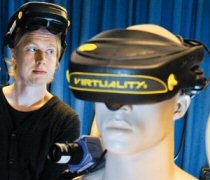
Nature has a fantastic article about how our sense of being located in our bodies is being temporarily warped and distorted in the lab of neuroscientist Henrik Ehrsson.

We’ve covered some of Ehrsson’s striking studies before as he has managed, with surprisingly simple equipment, to induce out-of-body experiences, the sense of having a third arm and the illusion of having a tiny doll-like body – among many other distortions.

But Ehrsson’s unorthodox apparatus amount to more than cheap trickery. They are part of his quest to understand how people come to experience a sense of self, located within their own bodies. The feeling of body ownership is so ingrained that few people ever think about it — and those scientists and philosophers who do have assumed that it was unassailable.

“Descartes said that if there’s something you can be certain of in this world, it’s that your hand is your hand,” says Ehrsson. Yet Ehrsson’s illusions have shown that such certainties, built on a lifetime of experience, can be disrupted with just ten seconds of visual and tactile deception. This surprising malleability suggests that the brain continuously constructs its feeling of body ownership using information from the senses — a finding that has earned Ehrsson publications in Science and other top journals, along with the attention of other neuroscientists.

The article looks at what this body distorting illusions are telling us about how the brain makes sense of our bodies and how these discoveries could be applied to ‘locating’ us in false limbs or even remote control robots.

Also don’t miss the podcast where author Ed Yong talks about his trip to the lab to try out the illusions.
 

Link to Nature article ‘Out-of-body experience: Master of illusion’.

Skull modifications for fun and profit

I’ve just stumbled across a special issue of Neurosurgical Focus on deliberate skull deformations that tracks the practice of molding the shape of the skull from ancient times to the modern body modification scene.

All of the articles are free to access but I recommend the pieces on the politics of head deformation and the practice in the ancient Mayan and Proto-Bulgarian cultures.

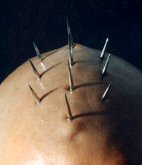
But perhaps the most surprising article is on modern deliberate skull deformities in adults that covers the body modification scene (drilled in metal mohawk anyone?) and the modern trepanation movement who advocate drilling a hole in the head to achieve an altered state of consciousness.

The trepanation section has the completely fascinating and somewhat oddball history of its modern revival.

The history of the International Trepanation Advocacy Group can be traced back to a Dutch medical student and admitted polysubstance abuser named Bart Huges, who was ultimately denied his medical degree by the University of Amsterdam at least in part for his vocal advocacy of marijuana use. During one particular episode in the early 1960s while under the influence of recreational psychoactive drugs, Huges came to believe that drilling a hole in one’s head would allow blood to more freely pulse around the brain, reproducing the state of an infant’s brain prior to closure of the cranial sutures. He was aware that by adulthood, the brain is denied an elastic bony covering against which to expand; in addition, he proposed that gravity gradually robbed the brain of some of its blood volume.

Trepanation, as his theory went, had the potential to reverse both of these processes. Huges felt that prolonged standing on one’s head could yield the same result, albeit temporarily, but only with trepanation could a long-term so-called “permanent high” be attained. He eventually delineated his ideas in a 1962 monograph alternately entitled either Homo Sapiens Correctus, named for what he believed would describe a new species of humans with holes in their skulls, or The Mechanism of Brainbloodvolume (BBV). He later also authored the book, Trepanation: the Cure for Psychosis, and an autobiography, The Book With the Hole. Although never finishing medical school, he did in 1965 successfully self-trepan, and, based on what he felt was an excellent benefit from this procedure, later convinced others to do the same.

It only gets weirder from there on in.

Highly recommended (the article, not drilling holes in your head).
 

Link to Neurosurgical Focus on skull deformations.
Link to article on ‘Modern induced skull deformity in adults’.

Brain in your medieval pants

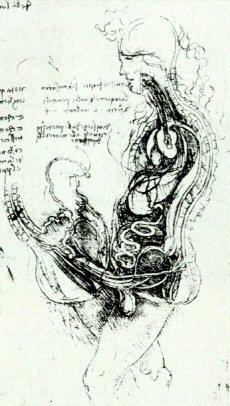
In Leonardo da Vinci’s anatomical drawings, the penis is connected directly to the brain.

A 1986 article “On the sexual intercourse drawings of Leonardo da Vinci” explains why this connection, still commonly proposed today (although mostly as a metaphor it must be said), was thought to be anatomical fact by the great master.

“A brief glance at the male character in Fig. 3 reveals the amazing internal ‘plumbing’ designed by Leonardo to describe Aristotelian physiology. He has drawn two canals in the penis, the lower of which is connected to the urogenital tract via the urethra, while the upper canal passes to the spinal cord by means of three vessels. The close-up of the penis demonstrates these two canals in fine detail. In ancient Greek writing, the ‘essence’ of a baby was provided by the ‘universal seed stuff’ of the male. This procreative ingredient was derived from animal spirit, a physiological material necessary for muscular activity. The animal spirit was manufactured from arterial blood at the base of the brain and was transferred to all parts of the body through the nerves. Hence da Vinci’s spinal connection to the penis.”

And before I hear a “Yeah, right on Leo!” from the ladies, I note a remarkably similar vagina – spinal cord connection also makes an appearance in the diagram.
 

Link to PubMed entry for article.
pdf of full text.

A paradoxical pill after brain damage

The New York Times has a fascinating article about how brain damaged people in the ‘minimally responsive state’ can become more alert, curiously, after being given a type of sleeping pill.

The drug is called zolpidem and occasional case reports of it increasing alertness in poorly responsive neurological patients have been kicking around for some years. We reported on an early case back in 2006.

It must be said that there is still very research little in this area – some scattered case studies and a trial that recruited just three children, so I’m not sure about the wisdom of the ‘A Drug That Wakes the Near Dead’ headline.

However, the article reports on ongoing research and has a video showing the marked effect on one patient diagnosed with ‘minimally conscious state’ or MCS.

This year, scientists at Moss Rehabilitation Research Institute and at the University of Pennsylvania, both in the Philadelphia area, began the first large-scale clinical study of zolpidem as a treatment for disorders of consciousness. (Amantadine, a drug used to treat Parkinson’s disease, and the anti-anxiety medication Ativan also show promise in increasing awareness in minimally conscious patients.) So far, the evidence suggests that less than 10 percent of brain-injured patients will experience the drug’s paradoxical effects, and that among those, only a few will respond as profoundly as Viljoen did. For families like the Coxes, such odds provide a tortured kind of hope. For doctors, they bring questions. Why does a sleeping pill induce awareness in some patients but not others? And what can these bizarre awakenings tell us about the brain’s ability to heal?

A fascinating article on a curious, if limited, effect. Don’t miss the video.
 

Link to NYT article on zolpidem and brain injury.

Two crucial minutes

If you’ve got just two minutes to spare you could learn first aid to help someone having a seizure thanks to a video from Epilepsy Action.

The acting is a little stiff, if you’ll excuse the pun, but it’s two minutes of your time very well spent.

You’ll notice in the video that the bystanders make a range of common but daft suggestions (‘hold them down’, ‘put something in the mouth to stop them biting their tongue’) that should be avoided as they could endanger the person having the seizure.

It has to be said that well-intentioned bystanders can sometimes be more of a danger than the seizure itself. Unless the person is likely to fall into a fire, fall off a bridge or get eaten by lions, the appropriate steps are just to protect the person, cushion their head, check their breathing and stay calm.

You only need to call an ambulance if the seizure continues for more than five minutes or you know this is the first seizure they’ve ever had.

The video just focuses on generalised seizures (‘having a fit’) but there’s info on other seizure types further down the page.

The organisation who’ve made the video, Epilepsy Action are fantastic, by the way, and they have a service where you can phone, email or tweet them any epilepsy question from anywhere in the world and they’ll answer it.

See the details on the top right of the page linked below.

Apparently though, no, they can’t get me a date with Lauren Pritchard.


Link to first aid for seizures video and info.

Endless brain gears

A visual tour of the clichéd ‘cogs in the brain’ image that seems to get attached to virtually every psychology article that isn’t published in a women’s magazine.

I’d be genuinely fascinated to know when this visual analogy first arose as you’d guess it’s a result of the computational model of the mind that arose with 50’s cognitive science.

But you never know (at least, not without a stiff dose of machine oil).
 

Link to never ending brain cogs.

On the perimeter of the synthetic cannabinoids

The synthetic weed story has just taken an interesting turn. Until now, all synthetic cannabinoids found in ‘herbal incense’ products have been taken from the scientific literature but a new previously unknown compound has just been discovered suggesting the underground labs are starting to innovate.

Cannabinoids are a type of compound related to the active chemicals in the cannabis plant. It turns out that a massive range of diverse compounds are cannabinoids and have a similar effect in the brain.

Synthetic cannabinoids have been researched for years. Both universities and pharmaceutical companies have churned out hundreds of variations both aiming to further our knowledge of the molecules and to look for potentially useful commercial compounds.

Since the mid-2000s, clandestine labs, thought to be based in China, have been synthesising cannabinoids that get you high, adding them to inert plant matter, and selling it as ‘herbal incense’ or ‘spice’ products for stoners.

Until now, almost all have been taken from scientific journals. The labs have been rifling through published research, picking out synthetic cannabinoids that look smokeable (and that haven’t been banned yet) and synthesising them.

Most are from the JWH series, named after John W Huffman, the chemist who first synthesised them in the 80s.

However, a new study in Forensic Science International reports on an analysis of a ‘herbal smoking mixture’ seized in Germany that contained both a banned known cannabinoid called JWH-073 alongside a completely new compound.

The chemical name is 1-butyl-3-(1-(4-methyl)naphthoyl)indole but it’s just called “compound 2” in the study.

Now it’s possible that this is just a by-product unknowing included in the mix, but I suspect this is unlikely.

In a new (excellent but locked) article on the chemistry of ‘designer street drugs’ the authors note that new molecule is a previously unknown hybrid of two existing high-potency synthetic cannabinoids. They also say the existence of this new molecule supports the idea that the clandestine labs are working on new compounds for street products.

What this means is that the labs are likely branching out from simply grabbing existing compounds from the literature to innovating new cannabis-like drugs, showing a surprising level of sophistication.

On a side note, it’s also interesting that this compound turned up in Germany, the same place that the original ‘herbal smoking mixtures’ appeared, perhaps suggesting that the country has the most direct links with the clandestine labs.
 

Link to locked report of novel cannabinoid.

Elvis in potato chip neuroscience

A new study just published in Cerebral Cortex on the neuroscience on how we see meaningful information in unpatterned visual scenes, seems a little fixated on Elvis.

The study concludes:

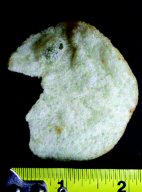
Future studies of the neural processing relevant to pareidolia and to meaning more generally may provide novel insights into how the organization of conceptual processing differs across individuals (see also Pizzagalli et al. 2001), thereby addressing the question of what neurocognitive architecture is necessary to see a potato chip not just as a tasty snack but as the embodiment of Elvis.

They even include a photo of the potato chip (proper spelling: crisp) that supposedly contains the image of The King which you can see above.

Unfortunately, I can’t see it, which I suspect means my brain has been ruined by the overuse of Fidonet as a child.
 

Link to Elvis obsessed neuroscience study.

The free will rebellion

A popular mantra of modern neuroscience tells us that free will is an illusion. An article in the New York Times makes a lucid challenge to the ‘death of free will’ idea and a prominent neuroscientist has come out to fight the same corner.

Neuroscientists began making preparations for the funeral of free will shortly after Benjamin Libet began publishing his experiments in the 1980s showing a consistent build-up of electrical activity from the brain’s motor cortex before participants were consciously aware of their desire to move.

Since then, many more neuroscience studies have shown that brain activity can precede conscious awareness of specific choices or actions – with the implication that our conscious experience of decision-making is nothing but a secondary effect that plays little role in our actions and reactions.

The idea that ‘free will is an illusion’ is now consistently touted by neuroscientists as an example of how brain science is revealing ‘what really drives us’ and how it explains ‘how we really work’. But philosophers, the conceptual engineers of new ideas, have started to find holes in this popular meme.

Probably the most lucid mainstream analysis of why neuroscience isn’t killing free will has just been published at The New York Times where philosopher of mind Eddy Nahmias takes the mourners to task using a narrow and largely irrelevant definition of free will.

So, does neuroscience mean the death of free will? Well, it could if it somehow demonstrated that conscious deliberation and rational self-control did not really exist or that they worked in a sheltered corner of the brain that has no influence on our actions. But neither of these possibilities is likely. True, the mind sciences will continue to show that consciousness does not work in just the ways we thought, and they already suggest significant limitations on the extent of our rationality, self-knowledge, and self-control. Such discoveries suggest that most of us possess less free will than we tend to think, and they may inform debates about our degrees of responsibility. But they do not show that free will is an illusion.

Nahmais makes the point that the ‘death of free will’ idea makes a fallacy he calls ‘bypassing’ that reduces our decisions to chemical reactions, implying that our conscious thinking is bypassed, and so we must lack free will.

He notes that this is like saying life doesn’t exist because every living thing is made up of non-living molecules, when, in reality, its impossible to understand life or free will without considering the system at the macro level – that is, the actions and interactions of the whole organism.

Interestingly, a similar point is made by legendary neuroscientist Michael Gazzaniga in an interview for Salon where he discusses his new book on free will. He also suggests it’s not possible to understand free will at the level of neurons without making the concept nonsensical.

These contrasting concepts about free will may yet be solved, however, as Nature recently reported on a new $4 million ‘Big Questions in Free Will’ project which brings together philosophers and cognitive scientists to work together to understand how we act in the world.
 

Link to NYT piece ‘Is Neuroscience the Death of Free Will?’
Link to Salon interview with Michael Gazzaniga.
Link to Nature piece ‘Taking Aim at Free Will’.

Radio 4’s brilliant brain season now being scattered

BBC Radio 4’s Brain Season is in full swing, which, in typical BBC fashion, is both brilliantly conceived and chaotically scattered over their webpages like a drunken farmer chasing birds off his field with a seed planter.

A good place to start is the brain season blog post which lists all the programmes in the season and links to their programme page and separate podcast page (if one exists). It may or may not be being updated as new material comes online.

Probably the best of the season is the History of the Brain series of which five of the ten programmes have been broadcast at the time of writing and which are all available on a single permanent temporary podcast page.

You could go to the separate and unlinked programme information page that has a few more details and the streamed audio but I’d advise against it as it’ll only encourage them.

The one-off Mind Myths and Life Scientific programmes, the latter featuring neuroscientist Colin Blakemore, have to be downloaded from their respective podcast pages (here and here) but if you read try the page months after the broadcast date you’ll have to click ‘Show all episodes’ and scroll down to find the episode from the entire list.

The awesome looking programme The Lobotomists apparently won’t be released as a podcast at all, so unless you live in the UK and can catch it on the streaming service within the next two weeks, you’ll have to stick it up your arse.

We have no idea where the similarly awesome looking series Brain Culture: Neuroscience and Society will turn up after its first broadcast on November 15th. Probably the B-side of a rare 1973 James Brown recording that has only recently become available after copies were found in the basement of the original recording studio.

Radio 4 also has a page with interviews and profiles of some of the scientists featured in the series but you can’t find out which are specifically linked to the brain season so you’ll have to…

Hang on a minute. GET ORFF MOY LAAAND YOU BLEEDIN’ BURDS!
 

Link to brain season blog post page.