BBC Column: The psychology of the to-do list

My latest column for BBC Future. The original is here.

Your mind loves it when a plan comes together – the mere act of planning how to do something frees us from the burden of unfinished tasks.

If your daily schedule and email inbox are anything like mine, you’re often left a state of paralysis by the sheer bulk of outstanding tasks weighing on your mind. In this respect, David Allen’s book Getting Things Done is a phenomenon. An international best-seller and a personal productivity system known merely as GTD, it’s been hailed as being a “new cult for the info age”. The heart of the system is a way of organising the things you have to do, based on Allen’s experience of working with busy people and helping them to make time for the stuff they really want to do.

Ten years after the book was first published in 2001, scientific research caught up with the productivity guru, and it revealed exactly why his system is so popular – and so effective.

The key principle behind GTD is writing down everything that you need to remember, and filing it effectively. This seemingly simple point is based around far more than a simple filing cabinet and a to-do list. Allen’s system is like a to-do list in the same way a kitten is like a Bengal Tiger.

“Filing effectively”, in Allen’s sense, means a system with three parts: an archive, where you store stuff you might need one day (and can forget until then), a current task list in which everything is stored as an action, and a “tickler file” of 43 folders in which you organise reminders of things to do (43 folders because that’s one for the next thirty-one days plus the next 12 months).

The current task list is a special kind of to-do list because all the tasks are defined by the next action you need to take to progress them. This simple idea is remarkably effective in helping resolving the kind of inertia that stops us resolving items on our lists. As an example, try picking a stubborn item from your own to-do list and redefining it until it becomes something that actually involves moving one of your limbs. Something necessary but unexciting like “Organise a new fence for the garden” becomes “ring Marcus and ask who fixed his fence”. Or, even better with further specifics on how to move your fingers, “dial 2 626 81 19 and ask Marcus who fixed his fence”.

Breaking each task down into its individual actions allows you to convert your work into things you can either physically do, or forget about, happy in the knowledge that it is in the system. Each day you pick up the folder for that day and either action the item, or defer it to another folder for a future day or month. Allen is fanatical on this – he wants people to make a complete system for self-management, something that will do the remembering and monitoring for you, so your mind is freed up.

So what’s the psychology that backs this up? Roy Baumeister and EJ Masicampo at Florida State University were interested in an old phenomenon called the Zeigarnik Effect, which is what psychologists call our mind’s tendency to get fixated on unfinished tasks and forget those we’ve completed. You can see the effect in action in a restaurant or bar – you can easily remember a drinks order, but then instantly forget it as soon as you’ve put the drinks down. I’ve mentioned this effect before when it comes to explaining the psychology behind Tetris.

A typical way to test for the Zeigarnik Effect is to measure if an unfulfilled goal interferes with the ability to carry out a subsequent task. Baumeister and Masicampo discovered that people did worse on a brainstorming task when they were prevented from finishing a simple warm-up task – because the warm-up task was stuck in their active memory. What Baumeister and Masicampo did next is the interesting thing; they allowed some people to make plans to finish the warm-up task. They weren’t allowed to finish it, just to make plans on how they’d finish it. Sure enough, those people allowed to make plans were freed from the distracting effect of leaving the warm-up task unfinished.

Back to the GTD system, its key insight is that your attention has a limited capacity – you can only fit so much in your mind at any one time. The GTD archive and reminder system acts as a plan for how you’ll do things, releasing the part of your attention that it struggling to hold each item on your to-do list in mind. Rather than remove things from our sight by doing them, Allen, and the research, suggest we merely need to have a good plan of when and how to do them. The mere act of planning how to finish something satisfies the itch that keeps uncompleted tasks in our memory.

Death of a booty chemical

I’ve got a piece in The Observer about why dopamine isn’t a ‘pleasure chemical’ but how this idea is likely to stay because it’s too useful for the media.

It provides a simplified explanation for a whole range of behaviours and sexes-up science stories, regardless of whether it makes sense or not.

If there were a celebrity among brain chemicals, it would be dopamine. Supposedly released whenever we experience something pleasurable, it’s forever linked to salacious stories of sex, drugs and wild partying in the popular press. The Kim Kardashian of neurotransmitters, it gives instant appeal to listless reporting and gives editors an excuse to drop some booty on the science pages.

There are too many bad examples to mention in detail, but I have some favourites. The Sun declared that “cupcakes could be as addictive as cocaine” because they apparently cause “a surge of the reward chemical dopamine to hit the decision-making area of the brain”. The article was topped off with a picture of Katy Perry, apparently a “cupcake fan” and, presumably, dangerously close to spiralling into a life of frosted-sponge addiction.

The piece goes on to mention another particularly bad example of dopamine reporting among many and explains why the ‘pleasure chemical’ cliché just doesn’t fit the science.

Unfortunately, one of my best lines (definition: I laughed at my own joke) got edited out.

The original line was “It was clearly just a smokescreen for the views of gun and, er, cupcake hating liberals” which has just been edited down to “gun hating liberals”.

It’ll make sense when you read it.
 

Link to ‘The unsexy truth about dopamine’ in The Observer.

Emotions are included

New Republic has an interesting piece on how corporations enforce ’emotional labour’ in their workforce – checking that they are being sufficiently passionate about their work and caring to their customers.

It focuses on the UK sandwich chain Pret who send a mystery shopper to each outlet weekly and “If the employee who rings up the sale is appropriately ebullient, then everyone in the shop gets a bonus. If not, nobody does.”

The concept of ‘emotional labour‘ was invented by sociologist Arlie Hochschild who used it to describe how some professions require people to present as expressing certain emotions regardless of how they feel.

The idea is that the waiter who smiles and tells you to ‘have a nice day’ doesn’t really feel happy to see you and doesn’t particularly care how your day will go, but he’s asked to present as if he does anyway.

The idea has now moved on and this particular example is considered ‘surface acting’ or ‘surface emotional labour’ while ‘deep acting’ or ‘deep emotional labour’ is where the person genuinely feels the emotions. A nurse, for example, is required to be genuinely caring during his or her job.

‘Surface emotional labour’ is known to be particularly difficult when it conflicts too much with what you really feel. This ’emotional dissonance’ leads to burnout, low mood and poor job satisfaction. In contrast, ‘deep emotional labour’ is linked to higher job satisfaction.

The New Republic article links to a deleted but still archived list of ‘Pret behaviours’ written by the company to state what is expected of the employees.

Apart from some classic corporate doublethink (‘Don’t want to see: Uses jargon inappropriately; Pret perfect: Communicates upwards honestly’) you can see how the company is trying to shift their employees from doing ‘surface emotional labour’ to ‘deep emotional labour’.

For example:

  • Don’t want to see: Does things only for show
  • Want to see: Is enthusiastic
  • Pret perfect! Loves food

  • Cynics would suggest this is a form of corporate indoctrination but you could also see it as part of drive for employee well-being. You say tomato, I say “smell that Sir – wonderful isn’t it? Fresh tomatoes from the hills of Italy”.

    Those of a political bent might notice an echo of Marx’s theory of alienation which suggests that capitalism necessarily turns workers into mechanistic processes that alienate them from their own humanity.

    However, the concept of ‘deep emotional labour’ is really where the approach can start becoming unhelpful as it has the capacity to denigrate genuine compassion as ‘required labour’. I doubt many nurses go into their profession intending to ‘monetize their emotions’ or feel they have been ‘alienated’ from their compassion.

    And as armies are loathe to admit, soldiers serve for their country but fight for their platoon mates. Is this really a form of ‘deep emotional labour’ or it is just another job where emotions are central?
     

    Link to New Republic piece ‘Labor of Love’.

    2013-02-01 Spike activity

    Quick links from the past week in mind and brain news:

    Do amusing titles affect the perception of research? Some initial findings from Rolf Zwaan.

    The New York Times celebrates fifty years of The Feminine Mystique. Feminist classic or Britney album? You decide.

    Humans are flocking everywhere notes Wired Science. With a particular flocking tendency to get in the way on the London underground.

    Providentia starts a three-part series on the Kinsey revolution in sex research.

    Boredom explained in under 300 words by PsyBlog. Hey. Is that an aeroplane?

    Aeon magazine discusses mourning and ritual. “The dead are no longer welcome at their own funerals”. Not sure why. At least they don’t get drunk and start a fight with Uncle Peter.

    Dame Uta Frith. In the house.

    The New York Post has an in-depth piece on the lucrative world of ecstasy smuggling. Refined, sublime, he makes you do time.

    Historian Professor Barbara Taylor discusses her time as an inpatient at Friern Psychiatric Hospital. A location we’ve discussed previously on Mind Hacks.

    Neuroskeptic takes a critical look at people who are mental health advocates putting descriptions after people.

    A new study in Social Influence has found that flirting works better on sunny days. British history, in a nutshell.

    If you’re following the replication carnage in social psychology: grants of up to $2000 available for replication attempts.

    Neurocritic finds that the winner of one of the Association for Psychological Science’s top awards has a dark past in unpleasant gay aversion therapy.

    Violating the prime directive

    The Chronicle of Higher Education has an in-depth article that explores the controversy over social priming, which suggest that our behaviour can be changed by exposing us to certain concepts.

    The most famous study in the genre was led by psychologist John Bargh, who is the focus of the story and who found that people walked more slowly down a corridor after reading words associated with being old.

    A failed replication of this study and the subsequent online reporting led Bargh to get a bit hot under the collar which was the tipping point for growing skepticism concerning social priming.

    The article is a very good account of that, although one drawback is that it doesn’t distinguish very well between ‘priming‘ – an extremely well replicated effect and one of the bedrocks of psychology, and ‘social priming’ – the subtype which is now in doubt.

    The idea behind classic priming is that if you activate a meaning, perhaps just by experiencing it, related meanings will also become activated. This activation will be less strong for less related meanings.

    Because we access meanings that are activated more quickly, you can test effect in reaction time tasks.

    For example, if you see the word ‘apple’ you will subsequently identify the word ‘orange’ more quickly because they are related in meaning. The word ‘aeroplane’, however, will be unaffected. In other words ‘apple’ will prime ‘orange’ but not ‘aeroplane’.

    There are various ways of testing this but it boils down to the fact that in terms of priming meaning, the effect is not at all controversial. It’s extremely reliable and can be seen in many sorts of tasks – verbal, visual, auditory and so on.

    However, social priming suggests that concepts about people or identity (such as being old or being a professor) affect complex behaviours (such as walking speed or test performance).

    Furthermore, several of these experiments have suggested that the meanings can be primed in ways that rely on analogy or metaphor – for example, that people who feel lonely will spend more time in a hot shower as they are primed to need ‘warmth’.

    Many people find some of these effects implausible and, as the article makes clear, the skeptics are now attempting to replicate some of the most well-known experiments to very mixed results.

    If you’ve not been following the wires, when a research team couldn’t replicate Bargh’s study everything kicked off and hangbags were flailed around by Bargh, a Belgian research group, Nature, a Nobel prize winner and the internet.

    Bin your copies of Kuhn people, this is how science really works.
     

    Link to Chronicle article on social priming.

    Culture of the digital playground

    Photo by Alex Washburn. Click for source.Anthropologist Gabriella Coleman has spent several years researching hacker culture, hanging out with coders, geeks and cypherpunks to understand the beliefs and boundaries of the community they inhabit.

    If you want a flavour of what Coleman has been working on her interview in Wired is a good place to start but the best place to get the low down is in her book Coding Freedom.

    You can buy it from your regular tax-avoiding online retailers but in the spirit of the culture it discusses it has been open licensed so you can download the full version online as a pdf.

    Coleman is currently researching the culture of Anonymous and you can read a brilliant article by her on the revolutionary online chaos collective which has just been published in triplecanopy.

    Expect more from her on this in the near future.
     

    Link to Wired interview with Gabriella Coleman.
    pdf of her book Coding Freedom.
    Link to her article on Anonymous ‘Our Weirdness is Free’.

    Lives Scientific

    The BBC Radio 4 programme The Life Scientific has just broadcast programmes on two of the most interesting cognitive scientists in the UK – developmental psychologist Annette Karmiloff-Smith and robotocist Noel Sharkey.


    Karmiloff-Smith is a psychologist who has made an important contribution both to the deep theory of infant brain development and has been active in many down-to-earth debates about child development.

    In the programme she makes a fascinating case for why banning TV for infants isn’t really helpful but how kids TV programmes could be made to be much more useful for their cognitive development.

    The Noel Sharkey programme is also fantastic. Apparently before becoming a specialist in artificial intelligence and robotics, he was an electrician, gigging musician and psychiatric nurse.

    In his interview he discusses how AI has evolved in its approach during his time as a researcher and where it falls down in terms of capturing the human mind.

    Both definitely worth listening to.
     

    Link to Annette Karmiloff-Smith programme page and audio stream.
    Link to Noel Sharkey programme page and audio stream.
    Link to podcast page for both.

    In the middle of a conflict

    One of the things I quickly discovered while working for Médecins Sans Frontières in Colombia, was that while there is lots of research on people who have experienced armed conflict in the past, there was very little information on the mental health of people living in active conflict zones.

    With MSF colleagues, we’ve just published a study that goes a little way to correcting that.

    The majority of research on how war effects civilians is done on refugees or in post-conflict situations. Practically, this makes sense, as collecting data during an armed conflict can be both difficult and dangerous.

    However, MSF in Colombia runs almost all its clinics in exactly this situation. The fact there was little research on which to base our interventions made my job a little challenging at times, but as we were also collecting systematic data on each consultation this also gave us a great deal of internal information on which to base decisions.

    During my time there, we set ourselves the task of analysing and publishing some of this data to make sure others could benefit from it. This study has just appeared in the journal Conflict and Health.

    The study looked at how symptoms of mental illness were related to experience of direct conflict-related violence (exposure to explosives, threats from armed groups, deaths of loved ones etc), violence not directly related to the conflict (domestic violence, child abuse etc) and what we called ‘general hardships’ – such as economic problems and poor social support.

    We predicted that the more someone was exposed to violence from the armed conflict, the worse mental health they would have, but what we found was a little different.

    Experience of the armed conflict was more linked to anxiety while non-conflict violence was more related to aggression and substance abuse. Depression and suicide risk, however, were represented equally across all of the categories.

    This is interesting because a lot of conflict-related mental health interventions are focused on trauma and PTSD, where as our study and various others have found that trauma is only one effect of being caught up in an armed conflict.

    It’s worth saying that being ‘trauma obsessed’ is really just a American and European condition – as I’ve discussed before, Latin American psychology in particular has a strong tradition of looking at problems on the community level rather than always aiming to treat the individual victims.

    It’s worth saying that the study used clinical data, rather than data from a specifically designed study, so there is still a need for a systematic approach to the problem. But as study of over 6,000 patients who were seen in areas of active conflict, we hope it’s a useful contribution.

    By the way, MSF’s work continues in Colombia. Everyday there are medical and mental health teams spending days, weeks or months in conflict zones to work with the local population who would otherwise have no access to healthcare. In over 60 countries around the world the organisation does something similar in very difficult conditions.

    They also do lots of important research particularly into medical problems that often get neglected.

    The majority of the staff are from the local country and they invest a lot into training.

    Do drop them a donation if you get the chance.
     

    Link to MSF Colombia study on the armed conflict and mental health.

    2013-01-25 Spike activity

    Quick links from the past week in mind and brain news:

    The interesting concept of a ‘possession trance disorder’ diagnosis is discussed by Neurocritic.

    BBC News video reports on how Brazil is considering a law to forcibly remove crack addicts from the street into rehab.

    Goodbye PDD-NOS, hello Social Communication Disorder. A sneaked-out DSM-5 change for the autism spectrum is covered by Cracking the Enigma.

    Nature reports that Henry Markham’s Human Brain Project which is supposedly aiming to ‘simulate the human brain’ (but actually, isn’t) gets kazillion dollar funding.

    The DSM-5 will cost $199 a copy, reports DSM-5 in Distress. That’s like 50c a diagnosis.

    Brighton Science Festival has a fantastic day on the Science of Sex on 9th February.

    China’s One Child Policy may have altered the personality of a generation according to research reviewed by the Nodes of Ranvier blog.

    Time magazine on how the tactics used in ‘troubled teen’ reality TV programmes are know to make adolescents worse.

    Is there a right age for first sex? an interesting study is briefly covered by Providentia.

    Discover Magazine reports that data storage in DNA has become a reality. Sony to sue RNA strands for piracy.

    A new Nature NeuroPod has hit the wires. Psychology and Sherlock Holmes, movement and memory.

    Colossal has some wonderful abstract 3D sculptures that transform in cylindrical mirrors. Have to be seen.

    Compare and contrast: high heels make women’s walk more attractive to males / historically women adopted high heels from male fashion to masculinise their outfits. Found: an evolutionary psychology infinite loop!

    A retrospective editing of consciousness

    A new study has found that conscious experience can be altered retrospectively, so that experience of visual information can be changed almost half a second later by manipulating where our attention is drawn.

    The research, led by cognitive scientist Claire Sergent, involved asking people to stare at a centre point of a screen with two empty circles either side.

    At some point, one of the two circles would fill with randomly oriented stripes for just 50ms (one twentieth of a second) and afterwards the participants were asked to say which direction the stripes were pointing in.

    Crucially however, each time this happened, one of the two circles would dim either before or after the stripes appeared.

    This would happen at different times – from 400ms before the stripes appeared, up to 400ms after the stripes appeared, and the dimmed circle might appear on the matching side to the stripes or on the opposite side.

    Dimming one of the circles grabs your attention. It makes you instantly focus more on whichever side of space it happens.

    For example, if the left-hand circle dims, it grabs your attention, and if the stripes then appear on the left, you’re more likely to make a correct judgement about which direction they’re pointing because you’re already focused on this area. But if the stripes subsequently appear on the other side, you’re distracted and you do worse.

    The key discovery from this experiment was that this also happens if the dimmed circle appears after the stripes. Up to 400ms seconds after.

    In other words, you perceive the original visual details that would otherwise have escaped consciousness if your attention is drawn to the area after the picture disappears. It’s like a retrospective editing of consciousness by post-event attention.

    This suggests that consciousness isn’t ‘filtered’ sensory information, but an active ‘conclusion’ drawn from information distributed across senses, space and time.
     

    Link to locked scientific study.
    Link to open-access commentary from same journal.

    BBC Column: Are we naturally good or bad?

    My BBC Future column from last week. The original is here. I started out trying to write about research using economic games with apes and monkeys but I got so bogged down in the literature I switched to this neat experiment instead. Ed Yong is a better man than me and wrote a brilliant piece about that research, which you can find here.

    It’s a question humanity has repeatedly asked itself, and one way to find out is to take a closer look at the behaviour of babies.… and use puppets.

    Fundamentally speaking, are humans good or bad? It’s a question that has repeatedly been asked throughout humanity. For thousands of years, philosophers have debated whether we have a basically good nature that is corrupted by society, or a basically bad nature that is kept in check by society. Psychology has uncovered some evidence which might give the old debate a twist.

    One way of asking about our most fundamental characteristics is to look at babies. Babies’ minds are a wonderful showcase for human nature. Babies are humans with the absolute minimum of cultural influence – they don’t have many friends, have never been to school and haven’t read any books. They can’t even control their own bowels, let alone speak the language, so their minds are as close to innocent as a human mind can get.

    The only problem is that the lack of language makes it tricky to gauge their opinions. Normally we ask people to take part in experiments, giving them instructions or asking them to answer questions, both of which require language. Babies may be cuter to work with, but they are not known for their obedience. What’s a curious psychologist to do?

    Fortunately, you don’t necessarily have to speak to reveal your opinions. Babies will reach for things they want or like, and they will tend to look longer at things that surprise them. Ingenious experiments carried out at Yale University in the US used these measures to look at babies’ minds. Their results suggest that even the youngest humans have a sense of right and wrong, and, furthermore, an instinct to prefer good over evil.

    How could the experiments tell this? Imagine you are a baby. Since you have a short attention span, the experiment will be shorter and loads more fun than most psychology experiments. It was basically a kind of puppet show; the stage a scene featuring a bright green hill, and the puppets were cut-out shapes with stick on wobbly eyes; a triangle, a square and a circle, each in their own bright colours. What happened next was a short play, as one of the shapes tried to climb the hill, struggling up and falling back down again. Next, the other two shapes got involved, with either one helping the climber up the hill, by pushing up from behind, or the other hindering the climber, by pushing back from above.

    Already something amazing, psychologically, is going on here. All humans are able to interpret the events in the play in terms of the story I’ve described. The puppets are just shapes. They don’t make human sounds or display human emotions. They just move about, and yet everyone reads these movements as purposeful, and revealing of their characters. You can argue that this “mind reading”, even in infants, shows that it is part of our human nature to believe in other minds.

    Great expectations

    What happened next tells us even more about human nature. After the show, infants were given the choice of reaching for either the helping or the hindering shape, and it turned out they were much more likely to reach for the helper. This can be explained if they are reading the events of the show in terms of motivations – the shapes aren’t just moving at random, but they showed to the infant that the shape pushing uphill “wants” to help out (and so is nice) and the shape pushing downhill “wants” to cause problems (and so is nasty).

    The researchers used an encore to confirm these results. Infants saw a second scene in which the climber shape made a choice to move towards either the helper shape or the hinderer shape. The time infants spent looking in each of the two cases revealed what they thought of the outcome. If the climber moved towards the hinderer the infants looked significantly longer than if the climber moved towards the helper. This makes sense if the infants were surprised when the climber approached the hinderer. Moving towards the helper shape would be the happy ending, and obviously it was what the infant expected. If the climber moved towards the hinderer it was a surprise, as much as you or I would be surprised if we saw someone give a hug to a man who had just knocked him over.

    The way to make sense of this result is if infants, with their pre-cultural brains had expectations about how people should act. Not only do they interpret the movement of the shapes as resulting from motivations, but they prefer helping motivations over hindering ones.

    This doesn’t settle the debate over human nature. A cynic would say that it just shows that infants are self-interested and expect others to be the same way. At a minimum though, it shows that tightly bound into the nature of our developing minds is the ability to make sense of the world in terms of motivations, and a basic instinct to prefer friendly intentions over malicious ones. It is on this foundation that adult morality is built.

    Back to the old school

    HighSchoolNew York Magazine has a fantastic article on the psychological impact of high school and how it affects you through your adult life.

    It’s a fascinating subject because so much of developmental psychology has focused on childhood and yet our adolescent school years are probably the most formative for our view of the social world.

    Not everyone feels the sustained, melancholic presence of a high-school shadow self. There are some people who simply put in their four years, graduate, and that’s that. But for most of us adults, the adolescent years occupy a privileged place in our memories…

    Yet there’s one class of professionals who seem, rather oddly, to have underrated the significance of those years, and it just happens to be the group that studies how we change over the course of our lives: developmental neuroscientists and psychologists. “I cannot emphasize enough the amount of skewing there is,” says Pat Levitt, the scientific director for the National Scientific Council on the Developing Child, “in terms of the number of studies that focus on the early years as opposed to adolescence. For years, we had almost a religious belief that all systems developed in the same way, which meant that what happened from zero to 3 really mattered, but whatever happened thereafter was merely tweaking.”

    The piece is focussed on the American high school experience, with its weirdly formalised social structure – like a teenage Brave New World, but you can see the universal parallels.

    Either way, it’s an excellent article that explores an oddly under stage of development. Recommended.
     

    Link to New York Magazine on ‘Why You Truly Never Leave High School’.

    Owner of Broca’s area identified

    A patient who could only say the word ‘tan’ after suffering brain damage became one of the most important cases in the history of neuroscience. But the identity of the famously monosyllabic man has only just been revealed.
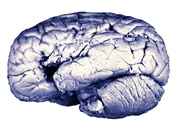
    Broca’s area was one of the first brain areas identified with a specific function after 19th Century neurologist Paul Broca autopsied a man who had lost the ability to speak.

    When examining the man’s brain (you can see it on the right), Broca found selective damage to the third convolution of the left frontal lobe and linked this with the fact that the person could understand speech but not produce it.

    This type of speech problem after brain injury is now known as Broca’s aphasia but his innovation was not simply naming a new type of neurological problem.

    Broca was one of the first people to think of the brain in terms of separate areas supporting specialised functions and studying patterns of difficulty after brain damage as a way of working this out – a science now known as cognitive neuropsychology.

    The patient Broca described was nicknamed ‘Tan’ because this was the only syllable he could produce. The scientific report named his as Monsieur Leborgne but no further details existed.

    Oddly, personal details were not even recorded in Broca’s unpublished medical notes for the patient.

    Because of the mystery, people have speculated for years about the identity of Monsieur Leborgne with theories ranging from the idea that he was a French peasant to a philandering man struck down by syphilis.

    But now, historian Cezary Domanski has tracked down the identity of Broca’s famous patient through detective work in record offices in France and published the results in the Journal of the History of the Neurosciences.

    According to the Broca’s report, the health problems of Louis Victor Leborgne became apparent during his youth, when he suffered the first fits of epilepsy. Although epileptic, Louis Victor Leborgne was a working person. He lived in Paris, in the third district. His profession is given as “formier” (a common description in the nineteenth century used for craftsmen who produced forms for shoemakers).

    Leborgne worked until the age of 30 when the loss of speech occurred. It is not known if the damage to the left side of Leborgne’s brain had anything to do with traumas sustained during fits of epilepsy nor, as reported in some recent publications, does it appear to have been caused by syphilis, as that was not indicated in Broca’s reports. The immediate cause for his hospitalization was his problem with communicating.

    Leborgne was admitted to the Bicêtre hospital two or three months after losing his ability to speak. Perhaps at first this might have been perceived as a temporary loss, but the defect proved incurable. Because Leborgne was unmarried, he could not be released to be cared for by close relatives; he therefore spent the rest of his life (21 years total) in the hospital.

    Domanski’s article finishes on a poignant note, highlighting that Leborgne became famous through his disease and death and his life history was seemingly thought irrelevant even when he was alive.

    “It is time” says Domanski, “for Louis Victor Leborgne to regain his identity”.
     

    Link to locked article on the identity of Broca’s patient (via @Neuro_Skeptic)

    2012-01-18 Spike activity

    Quick links from the past week in mind and brain news:

    Yes, it’s the return of Spike Activity. As I no longer spend time in the jungle (no not that one) and 140 characters are just not enough for respectable levels of sarcasm, the weekly roundup is back.

    Cross-dressing meth priest liked sex in rectory, reports The Connecticut Post. Bishop looking forward to public defrocking.

    Neuroskeptic covers the disappointing DSM5 field trial results which have just been released. Thankfully the manual was finalised first. Close call.

    Can people really grow out of autism? asks Forbes.

    Time magazine has a truly heart-breaking obituary for US military psychologist Dr Peter Linnerooth.

    Is It Time to Treat Violence Like a Contagious Disease? asked Wired Science

    Ten Percent Of U.S. High School Students Graduating Without Basic Object Permanence Skills reports The Onion. The other 95% lack conservation of number. Yes folks, we’re your number one source for Piaget jokes.

    The Guardian has a brilliant review of Jared Diamond’s new book The World Until Yesterday by anthropologist and explorer Wade Davis.

    At the DSM5 launch conference, a missed opportunity in getting Bill Clinton as keynote speaker for the scientific programme. They could have got Beyonce for the same money.

    The Neurocritic covers a fascinating study finding that the letter-colour mapping in many cases of synaesthesia is the same as Fisher-Price kid’s letters.

    There an excellent review of the books ‘Coming of Age on Zoloft’ and ‘Dosed: The Medication Generation Grows Up’ at the ever-excellent Somatosphere.

    The New York Times has an obituary for influential psychologist Susan Nolen-Hoeksema.

    A new study analysed DNA from 34,549 people and found no genes related to vulnerability to depression. Science News covers the results.

    A brain of warring neurons

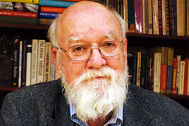
    A fascinating talk from philosopher of mind Daniel Dennett where he refutes his earlier claims that neurons can be thought of like transistors in a computational machine that produces the mind.

    This section is particularly striking:

    The question is, what happens to your ideas about computational architecture when you think of individual neurons not as dutiful slaves or as simple machines but as agents that have to be kept in line and that have to be properly rewarded and that can form coalitions and cabals and organizations and alliances? This vision of the brain as a sort of social arena of politically warring forces seems like sort of an amusing fantasy at first, but is now becoming something that I take more and more seriously, and it’s fed by a lot of different currents.

    The complete talk is over at Edge.
     

    Link to Dennett talk at Edge.