Fake pot industry generating novel, untested drugs

There’s an excellent article on the highs and increasing lows of the synthetic marijuana ‘legal high’ industry in the Broward Palm Beach New Times.

The piece is an in-depth account of how a legal high company called Mr. Nice Guy became the biggest fake pot manufacturer in the US.

It describes in detail how the business created and sold the product – only to fall foul of the rush ban on the first wave of synthetic cannabinoids.

The company was eventually raided by the Drugs Enforcement Agency and is waiting for the case to be tried in court. However, it’s still not clear whether they actually broke the law.

They changed their formula a few months before the raid to use two cannabinoids, called UR-144 and 5-fluoro-ur-144, which are not specifically covered by the current ban, so the prosecutors have to argue that they are close enough to the prohibited molecules to be illegal.

A curious point not mentioned in the article is that cannabinoid 5-fluoro-ur-144, also known as XLR-11, had never previously been described in the scientific literature and was first detected in synthetic marijuana.

It is listed by companies that sell research chemicals (for example, here) so you can buy it straight from the commercials labs.

But the data sheet makes it clear that structurally it is “expected to be a cannabinoid” but actually, it has never been tested – nothing is known about its effects or toxicity.

Previously, grey-market labs were picking out legal chemicals confirmed to be cannabinoids from the scientific literature and synthesizing them to sell to legal high manufacturers.

But now, they are pioneering their own molecules, based on nothing but an educated guess on how they might affect the brain, for the next wave of legislation-dodging drugs.

Fake pot smokers are now first-line drug testers for these completely new compounds.
 

Link to ‘The Fake-Pot Industry Is Coming Down From a Three-Year High’.

An in-brain stimulation grid

Implanted electrode grids are used to record brain activity in people who need neurosurgery – a technique known as electrocorticography.

But rather than just ‘reading’ from the brain, neuroscientists are starting to use them to ‘write’ to the brain, to the point of being able to temporarily simulate specific brain disorders for experimental studies.

This is the subject of my latest Observer column which looks at the history of open-brain stimulation studies and covers recent research by a joint British – Japanese team which has been using the grids to temporarily simulate a form of brain disorder called ‘semantic dementia’ in live volunteers.

The precision is such that the Lambon Ralph team and a team at Kyoto University Medical School, led by Riki Matsumoto, have used an implanted grid to temporarily simulate characteristics of a brain disease called semantic dementia. Like Alzheimer’s, semantic dementia is a degenerative disorder, but one in which brain cells that specifically support our understanding of meaning rapidly decline. Studies of patients with semantic dementia have taught us a great deal about how memory is organised in the brain but the disorder is swift and unpredictable, and a method that can mimic the effects while recording directly from the cortex is a powerful tool.

To be clear, the grids are not installed for this purpose. They’re installed because they are part of brain surgery to treat otherwise untreatable epilepsy. The grids allow neurosurgeons to locate the exact bit of the brain that triggers seizures so it can be removed.

The article is in part a coverage of the amazing neuroscience, from 1886 to the present day, and in part a tribute to the neurosurgery patients who have volunteered to help us understand the brain.
 

Link to Observer article.

The neurology of Psalm 137

I’ve just found a short but interesting study on Psalm 137 and how it likely has one of the first descriptions of brain damage after stroke.

The Psalm is still widely sung but it has some particular lines which made the researchers take notice. Here they are in modern English from the New International Version of the bible:

If I forget you, Jerusalem,
  may my right hand forget its skill.
May my tongue cling to the roof of my mouth
  if I do not remember you,
if I do not consider Jerusalem
  my highest joy.

This seems to describe some clear physical symptoms but the bible has numerous versions all of which have different translations and even in their early versions do not always agree on the exact wording.

As a result the researchers looked at Spanish, English, German, Dutch, Russian, Greek, and Hebrew versions to examine the consistency of the text and the variations in description of these curious physical effects. The combined description includes:

If I forget of you, oh Jerusalem, my right hand (my right side) shall dry, be paralyzed, loose its ability, its dexterity… That my tongue shall stick (shall be weakened, arrested) to my palate (in my throat), if I remember you, if I do not permit Jerusalem to be my greatest joy (if I do not sing of Jerusalem as my greatest joy)

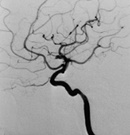
Both right-sided paralysis and loss of expressive speech are clear symptoms of a stroke of the left middle cerebral artery, where the blood flow is blocked – leading to the death of the surrounding brain tissue, suggesting that the Psalm may be wishing these effects on people who forget the importance of Jerusalem.

The powerful nature of the wish is perhaps explained by the fact that the Psalm is widely believed to have been written as a lament by Jewish people exiled after the conquest of Jerusalem by the Babylonians in 586 BCE.

But why these specific symptoms are mentioned may have more to do with ancient beliefs about stroke itself.

The reason the condition is still called stroke is because people originally believed that it was a result of being ‘struck down’ by God.

The Psalm still remains popular and the opening lines “By the rivers of Babylon…” have spawned a cottage industry in bad pop songs most of which miss out the lines concerning stroke.

However, the track Jerusalem by Jewish reggae hip-hop maestro Matisyahu does focus on this part of the Psalm, which he mashes-up along with lyrics from Matthew Wilder’s Break My Stride.
 

Link to study on the neurology of Psalm 137.
Link to Jerusalem by Matisyahu.

A guided tour of bad neuroscience

Oxford neuropsychologist Dorothy Bishop has given a fantastic video lecture about how neuroscience can be misinterpreted and how it can be misleading.

If you check out nothing else, do read the summary on the Neurobonkers blog, which highlights Bishop’s four main criticisms of how neuroscience is misused.

But if you have the time, sit back and see the lecture in full.

The key is that these are not slip-ups only restricted to the popular press and self-help books – they are exactly the sort of poor reasoning about neuroscience that affects many scientists as well.

Essentially, if you get the Bishop’s four main points of how ‘neurosciency stuff leads to a loss of critical faculties’, you’re on fine form to separate the wheat from the chaff in the world of cognitive neuroscience.

Excellent stuff.
 

Link to coverage on the Neurobonkers blog.
Link to streamed video of the lecture.

Animals conscious say leading neuroscientists

A group of leading neuroscientists has used a conference at Cambridge University to make an official declaration recognising consciousness in animals.

The declaration was made at the Francis Crick Memorial Conference and signed by some of the leading lights in consciousness research, including Christof Koch and David Edelman.

You can read the full text as a pdf file, however, the main part of the declaration reads:

We declare the following: “The absence of a neocortex does not appear to preclude an organism from experiencing affective states. Convergent evidence indicates that non-human animals have the neuroanatomical, neurochemical, and neurophysiological substrates of conscious states along with the capacity to exhibit intentional behaviors. Consequently, the weight of evidence indicates that humans are not unique in possessing the neurological substrates that generate consciousness. Non- human animals, including all mammals and birds, and many other creatures, including octopuses, also possess these neurological substrates.”

You can also see all of the talks on the conference’s webpage. Curiously, physicist Stephen Hawking was there and the declaration was signed in his presence.
 

Link to conference website.
pdf of full declaration.
Link to coverage from Janet Kwasniak.

Hacking the brain for fun and profit

A study presented at the recent Usenix conference demonstrated how it is possible to get private information from the brains of people who use commercial brain-computer interfaces – like NeuroSky and Emotiv.

These headsets are designed for gamers and are cheaper, less accurate versions of EEG devices – used by scientists to read the electrical activity of the brain by attaching electrodes to the surface of the scalp.

The new study, titled ‘On the Feasibility of Side-Channel Attacks with Brain-Computer Interfaces’ (available online as a pdf), took advantage of a reliable brain signal called the P300.

The P300 reflects the brain’s categorisation of something as relevant, important or meaningful. If you’re shown a series of photo portraits, for example, the P300 will kick in when you see photos of people you recognise but not to strangers.

One form of the not-very-reliable EEG ‘lie detector’ is based on this principle. Called the Guilty Knowledge Test, the idea is that the police would show you photos of the crime scene, and if you had actually been there, your P300 would kick in.

This new study was based on a similar principle. The researchers ran various experiments based on the same idea: they’d ask a question to make sure the key information was at the forefront of the study participant’s mind, and then they’d fire a bunch of information at the volunteer to pick out which was most associated with the P300.

For example, in one experiment participants were told they would have to type in the first digit of their newly acquired PIN number into the computer, but before this happened, the volunteers were shown a series of single digits, while the software recorded which numerals were most associated with the P300.

In another, the P300 was recorded while participants were shown pictures of branded credit cards and bank machines. Another experiment asked participants to think of their month of birth before showing them all the options, while another flashed up maps of the local area to determine their approximate home address.

You can see how the researchers were angling to get the equivalent of essential account details out of the volunteers.

Although the set-up was a little artificial, the researchers note that this sort of unconscious personal detail dredging could be incorporated into a game-like activity, so people would be unaware of what was really happening.

The test was a success scientifically, in that the key information was identified more often than chance, but fraudsters are unlikely to be eschewing email hacking for NeuroSky pwning anytime soon. The hit rate was about 10-20%.

Nevertheless, as a demonstration of a ‘hacking brain wave data from a commercial gaming equipment to get personal information’ you have to take your hat off to the research team.

Even more interestingly, perhaps, is the increasing trend for security technology to move towards the interface between mind and machine.

Another study presented at the same conference showed how people could input ‘passwords’ into a system without any conscious knowledge of knowing a password.

The idea relies on implicit learning – which is where you learn connections between things without having any conscious knowledge of doing so.

For example, when playing a computer game like Guitar Hero or Dance Dance Revolution, the same short sequence of moves might come up several times but you might not be aware of it, because they would be embedded within a larger sequence.

However, simply by having encountered the sequence before you will do better the second time – because you have practised the response – even if you have no conscious memory of it.

For each user, this new study embedded a newly generated ‘password of moves’ several times into a longer sequence and made sure they were well practised. Later, the software could identify each user by spitting out those moves again and checking the performance to see if they’d been encountered before. The participants were unaware of anything except that they were playing a game.

Looking at the bigger picture, the fact that computer security could rely on the fine detail of how the brain works could open up a whole new arena of security vulnerabilities.

Perhaps you could be covertly trained to enter someone else’s security details, or perhaps that last game you played actually trained you to leak your login details in another activity – all of which may be completely unnoticeable to your conscious mind.

Black hat neuroscientists may suddenly become very concerned with how these automatic effects could be influenced in very specific, and of course, very lucrative, ways.
 

Link to study on brain-based personal details hacking (via BoingBoing)
Link to unconscious password study.

The science and politics of mind-altering drugs

The Guardian Science Podcast has an interview with neuroscientist David Nutt on the science and politics of mind-altering substances and it’s possibly one of the most sensible discussions of drugs and drug harms you are likely to hear in a long time.

Prof Nutt is quite well known in the UK – largely due to be fired by the Government from their drugs advisory panel for pointing out in a scientific paper that the health risks of taking ecstasy are about equivalent to going horse riding.

Rather than doing the usual dishonest apology required of government advisors where they ask forgiveness for ‘unintentionally misleading the public’ away from a convenient collective illusion, he decided to take the government to task about their disingenuous drug policy.

He is now a straight-talking, evidence-based, pain-in-the-arse to the government who doggedly stick to the ‘war on drugs’ rhetoric that not even they believe any more.

In the interview the discussion ranges from how psychedelic affect the brain to the scientific basis (or lack thereof) of drug policy. Essential listening.

 
Link to Science Podcast interview with David Nutt.

Neurowords and the burden of responsibility

The New York Times has an excellent article about the fallacy of assuming that a brain-based explanation of behaviour automatically implies that the person is less responsible for their actions.

The piece is by two psychologists, John Monterosso and Barry Schwartz, who discuss their research on how attributions of blame can be altered simply by giving psychological or neurological explanations for the same behaviour.

The fallacy comes in, of course, because psychology and neuroscience are just different tools we use to describe, in this case, the same behaviour.

A brain characteristic that was even weakly associated with violence led people to exonerate the protagonist more than a psychological factor that was strongly associated with violent acts….

We labeled this pattern of responses “naïve dualism.” This is the belief that acts are brought about either by intentions or by the physical laws that govern our brains and that those two types of causes — psychological and biological — are categorically distinct. People are responsible for actions resulting from one but not the other. (In citing neuroscience, the Supreme Court may have been guilty of naïve dualism: did it really need brain evidence to conclude that adolescents are immature?)

Naïve dualism is misguided. “Was the cause psychological or biological?” is the wrong question when assigning responsibility for an action. All psychological states are also biological ones.

A better question is “how strong was the relation between the cause (whatever it happened to be) and the effect?”

In light of the Aurora shootings and the prematurely and already misfiring debate about the shooter’s ‘brain state’, this is well worth checking out.
 

Link to NYT piece ‘Did Your Brain Make You Do It?’ (via @TheNeuroTimes)

All time high

The latest issue of The Psychologist has a fascinating article on why time can seem distorted after taking drugs.

The piece is by psychologists Ruth Ogden and Cathy Montgomery who both research the effects of drugs, legal and illegal, on the mind and brain.

The consumption of drugs and alcohol has long been known to warp time experiences. In his much-quoted book Confessions of an English Opium Eater, Thomas De Quincey (1821/1971) noted that opium intoxication resulted in distortions to the passage of time to the extent that he ‘Sometimes seemed to have lived for 70 or 100 years in one night; nay, sometimes had feelings representative of a millennium passed in that time’.

Similar experiences were also reported by Aldous Huxley (1954) in Doors of Perception after consuming mescaline and LSD. Drug-induced distortions to time are not only experienced by renowned literary figures: a quick search of an internet drug forum will reveal that many drug users report similar experiences to De Quincey and Huxley following marijuana, cocaine and alcohol use.

The article notes that both the social context in which drugs are taken (e.g. drinking on a night out) and the pharmacological effects of the substances can each add their own ingredients to the time stretching or shrinking effects.
 

Link to article ‘High Time’ in The Psychologist.

The rebirth of hypnosis

I’ve got an article in today’s Observer about the re-emergence of hypnosis into the scientific mainstream despite the fact that the technique is still associated with stereotypes.

The piece has been oddly titled ‘hypnosis is no laughing matter’, which kind of misses the point, because no-one laughs at it, but many scientists do find it uncomfortable because of its long-running associations with stage shows, high-street hypnotists and the like.

The sub-heading also suggests that the article is about the revival of hypnosis as a ‘clinical tool’ when the article only discusses the use of hypnosis in the lab.

However, get past the headings and the piece discusses the genuinely interesting cognitive science of hypnosis and suggestibility.

The recent research is interesting not so much because we are learning about hypnosis itself, but because it is helping us understand some quite striking things about the fundamentals of the mind.

Amir Raz and colleagues at McGill University in Montreal reported that it was possible to “switch off” automatic word reading and abolish the Stroop effect – a psychological phenomenon that demonstrates a conflict between meanings, such as where we are much slower to identify the ink colour of a word when the word itself describes a different hue. Furthermore, when this experiment was run in a brain scanner, participants showed much lower activation in both the anterior cingulate cortex, an area known to be particularly involved in resolving conflict between competing demands, and the visual cortex, which is crucial for recognising words. Although this may seem like a technicality, to the scientific world it was a strikingly persuasive demonstration that hypnosis could apparently disassemble an automatic and well-established psychological effect in a manner consistent with the brain processes that support it.

One of the other exciting areas is the use of hypnosis to temporarily induce altered states of consciousness that can then be studied in the lab. More of that in the article.
 

Link to Observer article.

Ghost image in my mind

Offbeat indie singer Charlotte Gainsbourg released a 2009 song about being fMRI brain scanned that even incoporated sounds from an actual scanner.

The track is called IRM, presumably because Gainsbourg is a French speaker and ‘magnetic resonance imaging’ in French is imagerie par résonance magnétique – which, by the way, is also the sound of a mysterious Parisian stranger whispering sweet nothings in your ear.

If you’re not familiar with what an MRI machine sounds like, listen out for the ‘buzz plus alien tractor beam’ sound in the song.

There is also what looks like an interesting error in the song. At one point she sings “Analyse EKG, Can you see a memory?”

As EKG usually refers to an electrocardigram – a measure of heart function – it’s unlikely she’ll see many memories there.

An EEG, on the other hand, measures electrical activity from the brain, and was probably what was intended.

Here’s the wonderfully poetic neuroscience lyrics in full:

Take a picture what’s inside
Ghost watching my mind
Neural pattern like a spider
Capillary to the centre

Hold still and press a button
Looking through a glass onion
Following the X-Ray eye
From the cortex to medulla

Analyse E K G
Can you see a memory
Register all my fears
On a flowchart disappear

Leave my head demagnetised
Tell me where the trauma lies
In the scan of pathogen
Or the shadow of my sin

The track is great by the way. MRI never sounded so hip.
 

Link to Charlotte Gainsbourg track IRM.

An animated neuroscience of headache pills

TED have a fantastic animation that explains how pain works and how it is relieved by two common analgesics – aspirin and ibuprofen.

Of course, pain relievers work in many different ways – the opioids, for example, are vastly different – but the four-minute video is a wonderful guide to the neuroscience of two common household pills.

Excellent stuff.
 

Link to ‘How Do Pain Relievers Work?’ (via @brainpicker)

A procession of dementia

The June issue of the neuroscience journal Brain has an amazing cover showing “increasingly bizarre and menacing caricatures by an artist with frontotemporal lobar degeneration during the course of his illness”.

The caption reads:

From left, the first picture drawn many years before his illness; the middle pair in the first 2 years of dementia; and that on the right at least 3 years into the illness. Background: Gouache entitled ‘Unravelling Boléro’, showing de novo transmodal creativity comprising auditory to visual transformation, by a patient with primary progressive aphasia…


Link to Brain cover (via @tiempoasm)

A shot to the head

A couple of online articles have discussed whether you would be conscious of being shot in the head with the general conclusion that it is unlikely because the damage happens faster than the brain can register a conscious sensation.

While this may be true in some instances it ignores that fact that there are many ways of taking a bullet to the head.

This is studied by a field called wound ballistics and, unsurprisingly when you think about it, the wound ballistics of the head are somewhat special.

Firstly, if you get shot in the head, in this day and age, you have, on average, about a 50/50 chance of surviving. In other words, it’s important to note that not everyone dies from their injuries.

But it’s also important to note that not every bullet wound will necessarily damage brain areas essential for consciousness.

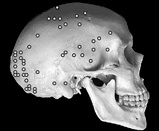
The image on the top left of this post charts the position of fatal gunshot wounds recorded in soldiers and was published in a recent study on combat fatalities.

For many reasons, including body armour and confrontation type, head wounds to soldiers are not necessary a good guide to how these will pan out in civilians, but you can see that there are many possibilities with regard to which brain areas could be affected.

In fact, you can see differences in the effect of gunshots to the head more directly from the data from Glasgow Coma Scale (GCS) ratings. A sizeable minority are conscious when they first see someone from the trauma team.

It’s also worth noting that deaths are not necessarily due to brain damage per se, blood loss is also a key factor.

An average male has about 6 litres of blood and his internal carotid artery clears about a quarter of a litre per minute at rest to supply the brain. When in a stressful situation, like, for example, being shot, that output can double.

If we need to lose about 20% of our blood to lose consciousness, our notional male could black out in just over two minutes just through having damage to his carotid. However, that’s two minutes of waiting if he’s not been knocked unconscious by the impact.

But if we’re thinking about brain damage, the extent depends on a whole range of ballistic factors – the velocity, shape, size and make-up of the bullet being key.

As it turns out, the brain needs special consideration, not least because it is encased in the skull.

One of the first things to consider is that the skull can fracture and how the fragments themselves can become missiles. In 42 cases of civilian gunshot wounds to the brain two neurosurgeons were able to find bone chips in 16 patients’ brains simply by “digital palpation” – which is a complicated medical term for sticking your fingers in and wiggling them about.

In other words, a shot to one part of the head may have knock-on effects purely due to skull shattering.

However, the skull also sets up a unique target due to its enclosed nature. If someone gets shot in the leg the pressure of the impact can be released into the surroundings. If a bullet gets into the brain the options are fewer because the pressure waves and, indeed, the brain, are largely trapped inside a solid box of bone.

If you want to get an idea of the sorts of pressures involved, just catch a video or two of bullets being fired into ballistic gel and think what would happen if the gel was trapped inside a personally important life-sustaining box.

In fact, if the shot is powerful enough, from high velocity rifles for example, there is a combination of the initial impact and an ‘explosive’ effect which can do substantial damage through forcing the brain to the side of the skull and fracturing from the inside out.

There is one rare effect, called the Krönlein shot, where a high powered shot messily opens the skull but neatly ejects the whole brain on the ground. You can find pictures on the web from pathology articles but, I warn you, they’re neither child friendly nor particularly good tea-time viewing.

Small low-velocity rounds can do quite local damage, however, and despite the tragedy of being shot, we have learnt a surprising amount from people who have survived such wounds.

As we’ve discussed previously, the use of small bore low-velocity bullets during World War I meant that more than ever before and, perhaps since, soldiers survived with small localised brain injuries.

This meant doctors could do some of the first systematic studies into how specific brain areas related to specific functions, based on tests of what brain-injured soldiers could no longer do.

But while it’s true to say that many people will lose consciousness before they even know they’ve been shot, it’s not guaranteed. Although it will mean that some people will be unfortunately aware of their death, it also means that others are able to save themselves.

A bridge over troubled waters for fMRI?

Yesterday’s ‘troubles with fMRI’ article has caused lots of debate so I thought I’d post the original answers given to me by neuroimagers Russ Poldrack and Tal Yarkoni from which I quoted.

Poldrack and Yarkoni have been at the forefront of finding, fixing and fine-tuning fMRI and its difficulties. I asked them about current challenges but could only include small quotes in The Observer article. Their full answers, included below with their permission, are important and revealing, so well worth checking out.

First, however, a quick note about the reactions the piece has received from the neuroimaging community. They tend to be split into “well said” and “why are you saying fMRI is flawed?”

Because of this, it’s worth saying that I don’t think fMRI or other imaging methods are flawed in themselves. However, it is true that we have discovered that a significant proportion of the past research has been based on potentially misleading methods.

Although it is true that these methods have largely been abandoned there still remain some important and ongoing uncertainties around how we should interpret neuroimaging data.

As a result of these issues, and genuinely due to the fact that brain scans are often enchantingly beautiful, I think neuroimaging results are currently given too much weight as we are trying to understand the brain but that we shouldn’t undervalue neuroimaging as a science.

Despite having our confidence shaken in past studies, neuroimaging will clearly come out better and stronger as a result of current debates about problems with analysis and interpretation.

At the moment, the science is at a fascinating point of transition, so it’s a great time to be interested in cognitive neuroscience and I think this is made crystal clear from Russ and Tal’s answers below.

Russ Poldrack from the University of Texas Austin

What’s the most pressing problem fMRI research needs to address at the moment?

I think that biggest fundamental problem is the great flexibility of analytic methods that one can bring to bear on any particular dataset; the ironic thing is that this is also one of fMRI’s greatest strengths, i.e., that it allows us to ask so many different questions in many different ways. The problem comes about when researchers search across many different analysis approaches for a result, without the realization that this induces an increase in the ultimate likelihood of finding a false positive. I think that another problem that interacts with this is the prevalence of relatively underpowered studies, which are often analyzed using methods that are not stringent enough to control the level of false positives. The flexibility that I mentioned above also includes methods that are known by experts to be invalid, but unfortunately these still get into top journals, which only helps perpetuate them further.

Someone online asked the question “How Much of the Neuroimaging Literature Should We Discard?” How do you think should we consider past fMRI studies that used problematic methodology?

I think that replication is the ultimate answer. For example, the methods that we used in our 1999 Neuroimage paper that examined semantic versus phonological processing seem pretty abominable by today’s standards, but the general finding of that paper has been replicated many times since then. There are many other findings from the early days that have stood the test of time, while others have failed to replicate. So I would say that if a published study used problematic methods, then one really wants to see some kind of replication before buying the result.

Tal Yarkoni from the University of Colorado at Boulder

What’s the most pressing problem fMRI research needs to address at the moment?

My own feeling (which I’m sure many people would disagree with) is that the biggest problem isn’t methodological laxness so much as skewed incentives. As in most areas of science, researchers have a big incentive to come up with exciting new findings that make a splash. What’s particularly problematic about fMRI research–as opposed to, say, cognitive psychology–is the amount of flexibility researchers have when performing their analyses. There simply isn’t any single standard way of analyzing fMRI data (and it’s not clear there should there be); as a result, it’s virtually impossible to assess the plausibility of many if not most fMRI findings simply because you have no idea how many things the researchers tried before they got something to work.

The other very serious and closely related problem is what I’ve talked about in my critique of Friston’s paper [on methods in fMRI analysis] as well as other papers (e.g., I wrote a commentary on the Vul et al “voodoo correlations” paper to the same effect): in the real world, most effects are weak and diffuse. In other words, we expect complicated psychological states or processes–e.g., decoding speech, experiencing love, or maintaining multiple pieces of information in mind–to depend on neural circuitry widely distributed throughout the brain, most of which are probably going to play a relatively minor role. The problem is that when we conduct fMRI studies with small samples at very stringent statistical thresholds, we’re strongly biased to detect only a small fraction of the ‘true’ effects, and because of the bias, the effects we do detect will seem much stronger than they actually are in the real world. The result is that fMRI studies will paradoxically tend to produce *less* interesting results as the sample size gets bigger. Which means your odds of getting a paper into a journal like Science or Nature are, in many cases, much higher if you only collect data from 20 subjects than if you collect data from 200.

The net result is that we have hundreds of very small studies in the literature that report very exciting results but are unlikely to ever be directly replicated, because researchers don’t have much of an incentive to collect the large samples needed to get a really good picture of what’s going on.

Someone online asked the question “How Much of the Neuroimaging Literature Should We Discard?” How do you think should we consider past fMRI studies that used problematic methodology?

This is a very difficult question to answer in a paragraph or two. I guess my most general feeling is that our default attitude to any new and interesting fMRI finding should be skepticism–instead of accepting findings at face value until we discover a good reason to discount them, we should incline toward disbelief until a finding has been replicated and extended. Personally I’d say I don’t really believe about 95% of what gets published. That’s not to say I think 95% of the literature is flat-out wrong; I think there’s probably a kernel of truth to most findings that get published. But the real problem in my view is a disconnect between what we should really conclude from any given finding and what researchers take license to say in their papers. To take just one example, I think claims of “selective” activation are almost without exception completely baseless (because very few studies really have the statistical power to confidently claim that absence of evidence is evidence of absence).

For example, suppose someone publishes a paper reporting that romantic love selectively activates region X, and that activation in that region explains a very large proportion of the variance in some behavior (this kind of thing happens all the time). My view is that the appropriate response is to say, “well, look, there probably is a real effect in region X, but if you had had a much larger sample, you would realize that the effect in region X is much smaller than you think it is, and moreover, there are literally dozens of other regions that show similarly-sized effects.” The argument is basically that much of the novelty of fMRI findings stems directly from the fact that most studies are grossly underpowered. So really I think the root problem is not that researchers aren’t careful to guard against methodological problems X, Y, and Z when doing their analyses; it’s that our mental model of what most fMRI studies can tell us is fundamentally wrong in most cases. A statistical map of brain activity is *not* in any sense an accurate window into how the brain supports cognition; it’s more like a funhouse mirror that heavily distorts the true image, and to understand the underlying reality, you also have to take into account the distortion introduced by the measurement. The latter part is where I think we have a systemic problem in fMRI research.

The trouble with fMRI

I’ve written a piece for The Observer about ‘the trouble with brain scans’ that discusses how past fMRI studies may have been based on problematic assumptions.

For years the media has misrepresented brain scan studies (“Brain centre for liking cheese discovered!”) but we are now at an interesting point where neuroscientists are starting to seriously look for problems in their own methods of analysis.

In fact, many of these problems have now been corrected, but we still have 100s or 1000s of previous studies that have been based on methods that have now been abandoned.

In part, the piece was inspired by a post on the Neurocritic blog entitled “How Much of the Neuroimaging Literature Should We Discard?” that was prompted by growing concerns among neuroscientists.

The fact is, fMRI is a relatively new science – it just celebrated it’s 20th birthday – and it is still evolving.

I suspect it will be revised and reconsidered many times yet.

 
Link to Observer article ‘The Trouble With Brain Scans’