Feeling sheepish

Quite possibly the strangest news story I have ever come across. It starts out strange, gets stranger and then finishes on a trumpeting pageant of strangeness. From GhanaWeb:

“People who practice bestiality threaten society”-psychologist

A psychologist at the Komfo Anokye Teaching Hospital, Rev. Ekow Jackson says people who have sex with animals are potential threats to society.

He says such people have confidence problems and most times fear that their sexual advances towards humans may be turned down; a situation they cannot bear.

Such people may instead use force on the object of their sexual pleasure whether it’s a woman, a baby or an animal.

Rev. Jackson says these people should not just be ostracized or incarcerated but should be given serious psychological or psychiatric attention. He adds that some of the culprits of bestiality may have had troubled childhoods or some unresolved issues from their past.

The psychologist, who is also a minister of the Assemblies of God Church, was speaking in an interview with this reporter after a 35 year-old man, Kofi Agyeman was asked to marry a sheep he allegedly had sexual intercourse with at Wamaso in the Lower Denkyira District of the Central region.

How would we make sense of it all if there weren’t psychologists like Rev. Ekow Jackson to help us out?
 

Link to sheep news story.

A psychological bias in DNA testing

I’ve got a piece in today’s Observer about how psychological biases can affect DNA testing from crime scenes.

It seems counter-intuitive, but that’s largely because we’ve come to accept the idea that DNA is a sort of individual genetic ‘serial number’ that just needs to be ‘read off’ from a biological sample – but the reality is far more complex.

Despite this, the psychological power of DNA evidence is huge and has misled several investigations that have privileged mistaken DNA results above everything else – including the case of a shadowy transsexual serial killer that led the German police astray.

The piece riffs on the work of psychologist Itiel Dror who was the first to show that the identification of people by their fingerprints could be biased by extraneous information and he’s now found the same with certain types of DNA analysis.

More at the link below.
 

Link to Observer article on the psychology of forensic identification.

Human error in psychology research: a rough guide

Science writer Ed Yong has just posted the audio of a fantastic talk on problems in psychology research and how to fix them.

The talk was delivered at Bristol University but is remarkably direct and he pulls no punches in pointing out psychology’s scientific flaws.

Interestingly, Yong makes the point that this is not a problem of psychology specifically, because many of the problems – like publication bias and selective reporting – appear across the scientific board, but that psychology is a hot topic because the field is trying to do something about it.

Yong has been doing some fantastic work not only highlighting these difficulties but getting a public debate going about solutions to these problems of research culture.

His talk is an excellent round-up of his own work and the state of play in the fight to change science culture.
 

Link to post with audio of Ed Yong’s talk.

The great rock n’ roll brain scramble

It’s not often you see someone licking a brain in a rock n’ roll video and get to think to yourself “well, there’s a funny story behind that”, but this is one of those occasions.

The video for singer Candice Gordon’s new single Cannibal Love starts out as a TV cooking programme and ends in a cannibal cook-out with the brain as the pièce de résistance.

Oddly, I met Candice when I was living in Dublin when she came to a neuroscience talk I did in a pub. She was both interested in neuroscience and just starting out on her music career.

All these years later, she’s still interested in neuroscience but is now touring the world with her startling blend of big band voodoo blues.

In contrast, I’m still doing talks in pubs.

So kids, er… stay in school.
 

Link to Candice Gordon’s Cannibal Love video.

Come hell or high water

The New York Times has an article on New York’s suicide cops who are tasked with talking down potential ‘jumpers’.

If you want to read something that’ll restore your hope in humanity, give this article ten minutes of your time.

In Midtown Manhattan or the financial district, for instance, pedestrians are more likely to yell, “Jump!”; in residential areas, like Harlem or Brooklyn, where the would-be jumper might be a familiar face, residents will provide officers with information about the person. They will cheer and applaud officers who make a successful grab…

“Traffic was horrible,” Detective Keszthelyi recalled. “Everybody was yelling at me. New York is ‘Hurry up and move or get out of my way.’ ”

The 40-year-old detective tuned out the angry din and zeroed in on the man before him. “I’m not here to hurt you in any way,” he offered gently.

The detective asked the man’s story, what brought him out here, and a dialogue began. The man, in his early 20s, explained that he had no job and no place to live, Detective Keszthelyi said.

“You might seem like you are alone, but you are not really alone,” he told him.

You sir, are a star.
 

Link to NYT article ‘The Jumper Squad’ (via @rvitelli)

The luxury of hindsight

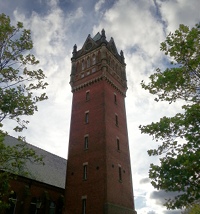
“It’s no secret” says the promotional material “that several professional footballers live in Repton Park”, presumably unaware that one of London’s most luxurious housing developments used to be a psychiatric hospital.

Repton Park is the new name for what was originally called the London County Lunatic Asylum and was eventually renamed Claybury Hospital before the fashion for monolithic mental hospitals finally passed.

When it finally closed it stayed derelict for a few years before it was bought by a property developer and turned into luxury flats.

As you walk round the estate you can see it’s been an easy sell. Driveways are scattered with Porches and Range Rovers and there seems not a single apartment which has not been sold.

The surroundings are admittedly stunning and the place boasts its own health club. Curiously, the estate has been divided into sections with faux stately names like Kensington and Tavistock House.

If this story sounds familiar, it is remarkably similar to the history of Colney Hatch Lunatic Asylum, later Friern Hospital, and now Princess Park Manor, which we covered previously on Mind Hacks.

Along similar lines, neither the property developers nor the residents of Repton Park are keen to mention the heritage of the building they now live in.

The residents’ association carefully avoids any mention of mental health in their history of the estate and the property dealers mention the ‘fine Victorian facades’ but not why they were built.

Next on the redevelopment list is probably the old City of London Lunatic Aslyum, later Stone House Hospital. Currently empty, it will shortly be converted into, well, luxury flats – although credit to the local council for specifying that some will have to become affordable housing.

However, if you can look past the luxury of Repton Park, the history itself is fascinating. There’s a great account of it here.

Welcome, professional footballers.
 

Link to history of Claybury Hospital.
Link to previous Mind Hacks piece on Friern Hospital.

Brain candle

Like most neuroscientists, when you’ve had a hard day at the lab, you get home and just want to scatter a few rose petals into a warm bath, put on your favourite whale song tape, and sink into the tub.

What’s missing? A few candles to shed a gentle ambient glow over your tired body.

Sadly, most candles just don’t cut it.

Tea lights just remind you of those 47 cups of tea you drunk during data analysis and if you wanted something with the scent of soothing reassurance you would have gone to the clinical psychology department.

What you need is a brain-floating-in-formalin-style candle.

Well, don’t worry, because ThinkGeek have started selling one.

It says it’s a “hand-sculpted brain candle suspended in gel wax” and oddly it’s described as unscented.

Clearly wrong. It smells of science.

And relaxxxxxx.
 

Link to brain candle.

No, internet addiction is not an ‘official mental illness’

The media has been buzzing with the supposed news that ‘internet addiction’ has been added to the list of ‘official mental disorders’. This is nonsense, but it tells us something oddly disappointing about how the media handles tech scare scores.

This recent wave of ‘the internet is making us crazy’ drivel stemmed from an article published in The Sydney Morning Herald and the story soon went global – being picked up by everyone from the Wall Street Journal to Russia Today.

Firstly, for those of you who are not aware why the concept of internet addiction is so untrue it’s a logical impossibility, I’ll direct you to an earlier post.

But talking specifically about the article which sparked the media panic attack, it’s odd in that it quotes two psychologists – one who has never published anything on internet addiction and the other who is a Reiki therapist. This doesn’t make it wrong but it does strike me as slightly strange for a news piece.

The article is trying to talk about the listing of ‘internet use disorder‘ in a non-diagnosable section of the DSM-5 for conditions “recommended for further study”.

This section has speculative and non-official disorders in it. You can find caffeine use disorder there if you’re feeling a bit jittery.

It also has the diagnosis of attenuated psychosis syndrome in it. Here’s how science journal Nature reacted when this diagnosis was listed in the same section: “Psychosis risk syndrome excluded from DSM-5″

In other words, if something appears in the DSM-5 section “recommended for further study” it is excluded from the list of ‘official mental illnesses’ because the diagnosis has been evaluated but found to be unsupported by research evidence.

It’s a mystery why this has suddenly become ‘news’ now because this decision has been discussed for years and it finally happened last May.

But it’s also worth noting that even the proposed definition of internet use disorder isn’t actually about using the internet, it’s about online gaming. This doesn’t make it any less nonsense, however. If someone who is addicted to gambling starts playing online do they suddenly have ‘another mental illness’? Clearly not.

Similarly, the idea that someone can be ‘addicted to gaming’ is just daft as the concept of ‘gaming’ is so wide as to not describe any single behaviour or experience – something quite important if you’re going to say that there is a mental illness based on it.

More interestingly, the The Sydney Morning Herald article has a curious quirk that allows us to see how lazily these stories get picked up and flung around.

The piece says will be included in the ‘revised edition of the DSM-IV’ – which is presumably a very awkward way of saying DSM-5.

Suddenly though, the world’s media is saying that ‘internet addiction’ will be included in the ‘DSM-IV’ which would be quite a feat considering it was published in 1994.

Here’s the clanger presented as original journalism from Forbes, the Daily Mail, the HuffPo, Mashable, the New York Post, Times of India and Russia Today. The Guardian even asked readers to vote on whether it was true!

Essentially, you can currently get anything into the media just by suggesting that technology is ‘bad for our minds’, because we love stories that justify our worries – no matter how untrue.

We used to think schools were ‘bad for the mind’ but try getting ‘education causes mental illness’ into the newspapers.

I’m just here for the research

My latest Beyond Boundaries column for The Psychologist asks why psychologists don’t immerse themselves in the lives of people they study and whether sociologists think we’re wimps. Plus a bonus question about why strip clubs are so frequently researched.

Sociologists must think we’re wusses. While we’re handing out questionnaires, scanning people in labs or measuring behavioural responses, our society-focused friends wade into the thick of it. One particular technique, called participant observation, involves taking part in the activities of those you want to study or accompanying them in their daily lives. For reasons never quite clear to me, this has never been a popular approach in psychology, although from reading a few of the studies, perhaps you can begin to see why.

Simon Winlow was finding it difficult to study violence in the night-time economy and so decided to get himself a job as a bouncer. His work provides an exceptional insight into how doormen use and understand professional violence in clubs and pubs. This was not least because, at the risk of losing his job, Winlow was expected to muscle in when patrons became aggressive. In other words, beat people up. It’s not often that you read about a researcher beating up their research subjects but how could you do such a study without it? ‘The rights and wrongs of these issues’, his research team noted, ‘were never fully resolved’. Run-ins with the authorities are not unknown. Sociologist Mick Bloor, who himself ended up in a bar fight while studying male prostitution in Glasgow, wrote a pertinent article on research dangers. He recounts how one PhD student had been imprisoned without trial in Africa during fieldwork.

Several other researchers immersed themselves in the world of provos and paramilitaries during the height of The Troubles in Northern Ireland. Lorraine Dowler recounted how she was forced to flee when her interviewee became the target of a street-level assassination attempt, while social scientist Frank Burton woke one morning to find a submachine gun pointed in has face and the owner insinuating he was a military informer. Sadly, not all have come away from their experiences unscathed. The body of Ken Pryce was found washed up on a Caribbean beach after investigating criminality in Jamaica.

There are some isolated examples in psychology, most notably David Rosenhan’s study ‘On being sane in insane places’, where he asked researchers to fake symptoms of mental illness to be admitted to psychiatric hospital, but we are surprisingly reticent to take an immersive approach to the people we study. Maybe we are specialists in looking in from the outside?

Not mentioned in the column, to avoid offending the gentle readers of The Psychologist, is the fact that one of the most popular subjects for ‘participant observer’ studies has been strip clubs.

Just think about that for a minute.

Whatever strip club related thoughts are now gyrating through your mind, be assured that someone has done a study on it, by, er… participating and observing.

Visiting strip clubs, visiting strip clubs for women, visiting gay strip clubs, working as a stripper, and probably the finest example of its genre – a study on going to strip clubs while on holiday.

Drs, I would take my hat off to you, but it’s covering my data.
 

Thanks to Jon Sutton, editor of The Psychologist who has kindly agreed for me to publish my column on Mind Hacks as long as I include the following text:

The Psychologist is sent free to all members of the British Psychological Society (you can join here), or you can subscribe as a non-member by going here.
 

Link to column from The Psychologist (bottom of page).

Does social psychology have a prejudice problem?

The Weekly Standard has a scorching article that takes ‘liberal psychopundits’ to task for suggesting that science supports their view that conservatives are ‘heartless and stupid’.

It comes on the heels of a new study that found that social psychology professors were more likely to be liberal (no surprise there) but rather more shockingly were prepared to openly discriminate against conservative colleagues.

The ‘science blind Republicans’ idea has become particularly popular in some corners of the blogosphere, but as psychologists will tell you, people in White Houses shouldn’t throw stones.

If you want an excellent discussion of why everyone, regardless of their political stripe, is susceptible to the denial of science, a recent edition of BBC Radio 4’s Analysis on the psychology of political prejudice is one of the best cognitive science documentaries I’ve heard in ages.

Right wingers prefer to deny the science of evolution and global warming, while left-wingers prefer to ignore the evidence on the genetic influence on behaviour and IQ.

Reality, of course, is bipartisan and will smack you in the nose regardless of how you vote.
 

Link to edition of BBC Radio 4 Analysis on political prejudice.
Link to podcast download page for same.

Artist treats psychiatric hospital stay as art residency

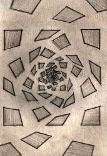
Claude Heiland-Allen is an artist who specialises in mathematical, algorithmic and science-based art. When he was recently admitted to a psychiatric hospital he decided to treat his stay “as an artist-in-residence opportunity” – producing fractal images by freehand drawings.

You can see some of the amazing work on his website.

He explains the background to his unusual residency:

…Claude eventually found himself in a psychiatric hospital, treating his in-patient as an artist-in-residence opportunity, using more old-school media such as pens, pencils and paper to carry on making art despite adversity. It’s hard to draw a perfect circle when sharp drawing compasses are disallowed, but with plenty of time to practice, and inspiration from memories of Euclid, Escher, Coxeter, and many others whose names he should recall, many more images of various designs should be finding their way on to this website sooner or later, along with a few texts inspired by events along the ride.

Some amazing art and his website says more work from his stay is due to appear.
 

Link to Claude Heiland-Allen’s website (via @yaxu)

The Lancet, [temporarily] seized by irony

The Lancet has just a launched a special collection on how epilepsy is a global health problem particularly in lower-income countries.

According to several of the articles, one of the key problems that drives the medical neglect of people with epilepsy is a lack of accurate information about the condition for health professionals and the public.

How ironic then that The Lancet have put the five key scientific review articles from the series behind a paywall – costing $31.50 each. That’s 157.50 dollars for all five.

According to the figures cited in special collection, in a low income country $157.50 dollars would pay for a year’s epilepsy treatment for up to 31 people (using the cheapest anti-epileptic drug phenobarbital).

In some countries in sub-Saharan Africa, $157.50 would pay the monthly salary of a dedicated epilepsy nurse.

Or you can pay for five Lancet review articles that provide not only accurate, evidence-based treatment recommendations for epilepsy but also lament the lack of freely available, accurate, evidence-based treatment recommendations for epilepsy.

UPDATE: The Lancet has announced that all articles are now freely available to anyone who completes the free registration on their site. Credit where credit’s due – an excellent move. Many thanks to them.


Link to Lancet special collection on epilepsy.

Growing up in Broadmoor

Novelist Patrick McGrath talks about his childhood as the son of a psychiatrist growing up in the grounds of Broadmoor – one of Britain’s highest security psychiatric hospitals – in an article for Intelligent Life.

Broadmoor Hospital has a special and undeserved place in the British psyche – stereotyped as ‘the real-life equivalent of Arkham Asylum’.

The reality is vastly different. While dangerous people do genuinely go there, it is primarily a hospital and a particularly state-of-the-art one at that, although it is a very secure place.

With this is mind, McGrath’s article is all the more amazing, as it describes a forensic hospital of generations past where children could live on the grounds and play amid the hospital buildings.

…the family had settled happily into Broadmoor life. The superintendent’s kids—there were four of us eventually—were well pleased with their lot. Kentigern had sculleries, pantries, a meat safe, servants’ quarters, and various sheds and outhouses, including a conservatory where the patients grew tomatoes. The garden was a sprawling expanse of trees and lawns, a goldfish pond with a fountain, a vegetable garden and, best of all, areas of dense rhododendron bushes where you could hide out from the authorities and build a campfire. It was a good place to grow up.

I occasionally work in medium secure psychiatric wards, a ‘step below’ Broadmoor on the risk ladder, and it usually takes me at least 15 minutes to get in through the searches, doors and endless locks. The days when families lived on site are long gone.

McGrath also talks about (in)famous patients and cases that made the media and how they affected their family life.

Interestingly, McGrath has gone on to write several novels that feature psychiatry or madness as central to the plot.

A curious and unique perspective.
 

Link to ‘A Boy’s Own Broadmoor’ (via MeFi)

The inner object

The Lancet has a wonderful article on how medicine has understood how strange objects have ended up in the body and how this has influenced our understanding of the body and behaviour.

The piece notes that cases where people have swallowed or inserted foreign bodies into themselves have been important for surgery and even anatomy – hair swallowers apparently provided useful “hair casts of the stomach”.

However, it is no surprise that interest turned to understanding why some people put objects into themselves.

Thus, in surgical writings, the foreign body became something from which psychological meaning could be drawn. In 1913, William Clayton-Green puzzled: “Did hair-swallowers desire to do something which others abhorred? Or did they wish to excite wonder and interest and to puzzle their doctors? Or was hair-swallowing a form of psychical tic, occurring in mentally abnormal subjects?” He and his contemporaries struggled to answer such questions. This new interest in a psychological model of the foreign body is also apparent in the case of a young woman, Beatrice A, admitted repeatedly to the Royal London Hospital between 1898 and 1909 for the removal of hairpins inserted into her bladder. On her first admission, the young milliner was described as “[m]ad as a hatter”.

Yet, by 1909, this conclusion did not seem so obvious. Beatrice’s actions were now referred to as a “habit”, and it was noted that no other symptoms of insanity had been observed. Beatrice herself informed the surgeon “that she formerly suffered from an impulse to throw herself out [of] windows [and] once did it. Many years ago however she gave this up for the now harmless amusement of putting hairpins into her bladder.” This unusual explanation appears to have perturbed Beatrice’s surgeons, located as it was somewhere between the rational and the irrational: inserting hairpins did indeed seem less dangerous than falling from a height, but why might she need to do either? Thus articles in the next few decades debated the psychological meaning of foreign bodies, with a wide array of possible explanations suggested from hysteria to malingering, sexual perversion, and “professional swallowing”.

The image is of objects found in the stomach of a “26-year-old woman who was admitted to hospital in 1915, having accidentally swallowed a metal hook 2 weeks previously, since when there had been pain and the vomiting of black material”.
 

Link to Lancet article ‘Curious appetites’.

Sleight-of-hand causes a moral reversal

Just over half of participants in survey of moral opinions argued for the reverse of what they first claimed when their answers were secretly switched.

The thoroughly delightful study is open-access from PLOS One but is also described in a news piece for Nature.

The researchers, led by Lars Hall, a cognitive scientist at Lund University in Sweden, recruited 160 volunteers to fill out a 2-page survey on the extent to which they agreed with 12 statements — either about moral principles relating to society in general or about the morality of current issues in the news, from prostitution to the Israeli–Palestinian conflict.

But the surveys also contained a ‘magic trick’. Each contained two sets of statements, one lightly glued on top of the other. Each survey was given on a clipboard, on the back of which the researchers had added a patch of glue. When participants turned the first page over to complete the second, the top set of statements would stick to the glue, exposing the hidden set but leaving the responses unchanged.

Two statements in every hidden set had been reworded to mean the opposite of the original statements. For example, if the top statement read, “Large-scale governmental surveillance of e-mail and Internet traffic ought to be forbidden as a means to combat international crime and terrorism,” the word ‘forbidden’ was replaced with ‘permitted’ in the hidden statement.

Participants were then asked to read aloud three of the statements, including the two that had been altered, and discuss their responses.

About half of the participants did not detect the changes, and 69% accepted at least one of the altered statements.

Don’t miss the video of the ‘trick questionnaire’ in action.
 

Link to Nature News coverage of the study.
Link to full text of study.

Schizophrenia beyond the brain

The Wilson Quarterly has an excellent article about the rebirth of interest in how social experiences affect the development of schizophrenia.

It’s written by the brilliant anthropologist Tanya Marie Luhrmann, who tracks how the enthusiasm for a completely neurobiological explanation for the disorder has now begun to wane.

It’s worth saying that this extreme neurobiological focus has really been an American phenomenon.

While it’s true to say that psychiatry has taken a distinct neurobiological turn across the world, the mantra that ‘schizophrenia is a brain disease’ and only needs to be understood in terms of brain function has been most strongly championed in the United States.

For somewhat mysterious reasons, and not without a touch of irony, American psychiatry has been subject to quite striking mood swings over the past century.

The ‘Freudian takeover’ only really occurred in the US, and was overturned by the diagnostic manual championing ‘mid-Atlantics’ who created the DSM-III.

Subsequently, a dominant current of thought emerged that mental illnesses could be understood as ‘brain disorders’ – a concept massively promoted and funded by drug companies. Searches for the ‘gene for schizophrenia’ and the ‘brain circuit for depression’ were all the rage, even if they seem a little naive in hindsight.

In Europe, however, social psychiatry – where mental disorders are seen within a social context – remained widely taught. In the UK, it had more an an epidemiological flavour, where on the continent it was more focussed on analysing the cultural meaning of mental illness.

Nevertheless, Luhrmann’s article is an excellent overview of how psychiatry has started to look ‘beyond the brain’, although we’d hope it doesn’t lose sight of it while gazing at the horizon

My only significant problem was that the article repeats the ‘people with schizophrenia do better in the developing world’ claim, which is so over-general as to be useless.

Other than that though, an excellent incisive article and one of the best pieces you’re likely to read in a while.
 

Link to ‘Beyond the Brain’ in The Wilson Quarterly (thanks Peter!)