Brain scanning the deceased

I’ve got an article in The Observer about how, a little surprisingly, the dead are becoming an increasing focus for brain scanning studies.

I first discussed this curious corner of neuroscience back in 2007 but a recent Neuroskeptic post reminded me of the area and I decided to check in on how it’s progressing.

It turns out that brain scanning the dead is becoming increasingly common in research and medicine and the article looks at how the science is progressing. Crucially, it’s helping us better understand ourselves in both life and death.

For thousands of years, direct studies of the human brain required the dead. The main method of study was dissection, which needed, rather inconveniently for the owner, physical access to their brain. Despite occasional unfortunate cases where the living brain was exposed on the battlefield or the surgeon’s table, corpses and preserved brains were the source of most of our knowledge.

When brain scanning technologies were invented in the 20th century they allowed the structure and function of the brain to be shown in living humans for the first time. This was as important for neuroscientists as the invention of the telescope and the cadaver slowly faded into the background of brain research. But recently, scrutiny of the post-mortem brain has seen something of a revival, a resurrection you might say, as modern researchers have become increasingly interested in applying their new scanning technologies to the brains of the deceased.

It’s a fascinating area and you can read the full article at the link below.

UPDATE: I’ve just noticed two of the links to studies have gone AWOL from the online article. The study that looked for the source of a mysterious signal by scanning people, cadavers and dummies and found it was a scanner problem was this one and the study that used corpses to test in-scanner motion correction was this one.


Link to Observer article on brain scanning the dead.

Spike activity 15-08-2014

Quick links from the past week in mind and brain news:

An important editorial in Nature describes the pressing problem of how research is not being turned into practice for treating children with mental health problems caused by armed conflict.

Not Exactly Rocket Science covers a swarm of self-organising autonomous robots that have the potential to rise up, rise up and threaten humanity with their evil buzzing. To the bunkers!

A Malaysian language names odors as precisely as English does colors. Interesting finding covered by Discover Magazine.

New York Magazine has a piece on the social psychology of how the presence of militarised police can increase aggression.

The Demographics of Genocide: Who Commits Mass Murder? Interesting piece in The Atlantic.

The Neurocritic has a fascinating interview with Jan Kalbitzer, the man behind the ‘Twitter psychosis’ case study, who discusses the media reverberations of the article.

Excellent Wired profile of Yann LeCun, AI guru begind Facebook’s, tweaked deep learning revolution.

Science News has an interesting piece on how the explosion of baby monitoring technology feeds ‘paranoia parenting’.

The new president of the Royal College of Psychiatrists gives his first interview in The Guardian and lays down some hard truths about mental health treatment.

One death too many

One of the first things I do in the morning is check the front pages of the daily papers and on the day following Robin Williams’ death, rarely have I been so disappointed in the British press.

Over the years, we have gathered a lot of evidence from reliable studies that show that how suicide is reported in the mass media affects the chances of suicide in the population – likely due to its effect on vulnerable people.

In other words, sensationalist and simplistic coverage of suicides, particularly celebrity suicides, regularly leads to more deaths.

It seems counter-intuitive to many, that a media description of suicide could actually increase the risk for suicide, but it is a genuine risk and people die through what is sometimes called suicide contagion or copycat suicide.

For this reason, organisations from the Samaritans, to the Centre for Disease Control, to an international panel of media organisations, have created explicit suicide reporting guidelines to ensure that no one dies or is harmed unnecessarily because of how suicide is reported.

The guidelines include sensible advice like not focusing on the methods people use to harm themselves, not oversimplifying the causes, not overly focusing on celebrity suicide, avoiding sensationalist coverage and not presenting suicide as a tool for accomplishing certain ends.

This advice keeps people safe. Today’s coverage does exactly the opposite, and many of the worst examples of dangerous reporting have been put directly on the front pages.

It is entirely possible to report on suicide and self-harm in a way that informs us, communicates the tragedy of the situation, and leaves us better off as a result of making these events more comprehensible.

This is not about freedom of the press. The press can report on what they want, how they want. There are no laws against bad reporting and neither would I want there to be but you do have a personal and professional responsibility to ensure that you are not putting people at risk by your need to sell copy.

You also have to look yourself in the mirror every morning, and by the front pages of many of today’s daily papers, I’m sure there are more than a few editors who had to divert their gaze while standing, momentarily shamed, in front of their own reflections.

Drugs in space and sleepless in the shuttle

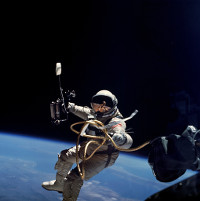
A fascinating study published in today’s Lancet Neurology reports on sleep deprivation in astronauts but also describes the drugs shuttle crew members use to keep themselves awake and help them fall asleep.

The study looked at sleep data from 64 astronauts on 80 space shuttle missions along with 21 astronauts on 13 International Space Station missions, and compared it to their sleep on the ground and in the days before space flight.

Essentially, in-flight astronauts don’t get a great deal of shut-eye, but what’s surprising is the range and extent of drugs they use to manipulate sleep.

Mostly these are the z-drug class of sleep medications (of which the best known is zolpidem, branded name Ambien) but also include benzos, melatonin and an antipsychotic called quetiapine.

Here are the sleep-inducing drugs with my comments in square brackets:

Zolpidem and zolpidem controlled release were the most frequently used drugs on shuttle missions, accounting for 301 (73%) and 49 (12%) of the 413 nights, respectively, when one dose of drug was reported. Zaleplon use was reported on 45 (11%) of 413 nights.

Other sleep-promoting drugs reported by shuttle crew members during the 413 nights included temazepam [sedative anti-anxiety benzodiazepine – similar to Vallium] on 8 (2%) nights, eszopiclone on 2 (<1%) nights, melatonin [hormone that regulates circadian rhythms] on 7 (2%) nights, and quetiapine fumarate [antipsychotic] on 1 (<1%) night.

The paper also notes concerns about the astronauts’ use of zolpidem and similar z-drug medications because they can affect mental sharpness, coordination and can lead to unusual and complex ‘sleep-behaviours’.

Interestingly, it seems astronauts tend to use these drugs in a rather ad-hoc manner and the consequences of this have clearly not been well thought through.

As the Lancet Neurology paper notes:

This consideration is especially important because all crew members on a given mission might be taking a sleep-promoting drug at the same time…. crew members reported taking a second dose of hypnotic drugs—most commonly zolpidem—often only a few hours before awakening. Although crew members are encouraged to try such drugs on the ground at home at least once before their use in flight, such preparations probably do not involve multiple dosing or dosing with two different drugs on the same night.

Furthermore, such tests do not include any measure of objective effectiveness or safety, such as what would happen in the case of abrupt awakening during an in-flight night-time emergency… sleep-related-eating, sleep-walking, and sleep-driving events have been reported with zolpidem use, leading the FDA to require a so-called black-box warning on all hypnotic drugs stating that driving and performance of other tasks might be impaired in the morning after use of such drugs:

“A variety of abnormal thinking and behavior changes have been reported to occur in association with the use of sedative/hypnotics…. Complex behaviors such as ‘sleep-driving’…have been reported. Amnesia, anxiety, and other neuropsychiatric symptoms may occur unpredictably.”

However, use of sleep drugs was reported on more than half the nights before extravehicular activities were undertaken.

Information on stimulant use by astronauts is hidden in the appendix but caffeine was widely used in space, but less than when on the ground – although possibly due to coffee shortages, and modafinil was used occasionally.

Caffeine was widely used throughout all data collection intervals by both shuttle and ISS crewmembers, though supply shortages sometimes led to coffee rationing and reduced consumption aboard ISS. All but eight shuttle mission crewmembers (72/80, 90%) and all but one ISS crewmember (20/21,95%) reported using caffeine at least once during the study…

Given the 3-7 hour half-life of caffeine and the sleep disturbances associated with its use, caffeine may have contributed to or enabled the sleep curtailment observed in this population. However, there is no evidence that caffeine accounts for the reduced sleep duration observed during spaceflight, as caffeine consumption was, if anything, reduced during spaceflight.

The wakefulness-promoting medication, modafinil, was reportedly used on both shuttle (10 reported uses) and ISS missions (2 reported uses). The use of this wakefulness-promoting medication was reported more frequently in post-flight debriefs.

There’s also an interesting snippet that gives the most common reason for sleep disturbance in space:

Nocturnal micturition is common in this age group and was the most reported reason for disruptive sleep both on Earth and inflight

Not stress, not being surrounded by equipment, not a lack of home comforts, but ‘Nocturnal micturition’ or wetting yourself in your sleep.

This is possibly more likely in space due to the fact that bodily cues for a full bladder work less effectively in zero gravity, but one major factor in astronauts wetting themselves was that it a better alternative than waking sleeping colleagues by going to the toilet.

The paper notes that this is why many astronauts wear ‘maximum absorbency garments’ – essentially giant nappies – while they sleep.
 

Link to locked Lancet study on sleep in astronauts.
Hallucinating in the deep waters of consciousness

On Saturday I curated a series of short films about other inner worlds, altered states and the extremes of mental health at London’s Shuffle Festival. I discovered one of the films literally a couple of days before the event, and it completely blew me away.

Narcose is a French documentary about a dive by world champion free diver Guillaume Néry. It documents, in real time, a five minute dive from a single breath and the hallucinations he experiences due to carbon dioxide narcosis.


Firstly, the film is visually stunning. A masterpiece of composition, light and framing.

Secondly, it’s technically brilliant. The director presumably thought ‘what can we do when we have access to a community of free divers, who can hold their breath under water for minutes at a time?’ It turns out, you can create stunning underwater scenes with a cast of apparently water-dwelling humans.

But most importantly it is a sublime depiction of Néry’s enchanted world where the boundaries between inner and outer perception become entirely porous. It is perhaps the greatest depiction of hallucinations I’ve seen on film.

Darken the room, watch it on as big a screen as possible and immerse yourself.
 

Link to Narcose on Vimeo.

Shuffle Your Mind: Short Film Screenings

If you’re around in London Saturday 2nd August I’m curating a showing of short films about psychosis, hallucinations and mental health as part of the fantastic Shuffle Festival.

The films include everything from a first-person view of voice hearing, to out-of-step behaviour in the urban sprawl, to a free-diver’s deep sea hallucinations.

There will be a discussion after the showing with film-makers and first-person visionaries about the challenges of depicting altered minds, other inner worlds and the limits of mental health.

Tickets are free but you have to book as there are only 40 seats.

If you want to join us, find the event on this page (which doesn’t list all the films, so prepare for some surprises) and click to book.

Seeing ourselves through the eyes of the machine

I’ve got an article in The Observer about how our inventions have profoundly shaped how we view ourselves because we’ve traditionally looked to technology for metaphors of human nature.

We tend to think that we understand ourselves and then create technologies to take advantage of that new knowledge but it usually happens the other way round – we invent something new and then use that as a metaphor to explain the mind and brain.

As history has moved on, the mind has been variously explained in terms of a wax tablets, a house with many rooms, pressures and fluids, phonograph recordings, telegraph signalling, and computing.

The idea that these are metaphors sometimes gets lost which, in some ways, is quite worrying.

It could be that we’ve reached “the end of history” as far as neuroscience goes and that everything we’ll ever say about the brain will be based on our current “brain as calculation” metaphors. But if this is not the case, there is a danger that we’ll sideline aspects of human nature that don’t easily fit the concept. Our subjective experience, emotions and the constantly varying awareness of our own minds have traditionally been much harder to understand as forms of “information processing”. Importantly, these aspects of mental life are exactly where things tend to go awry in mental illness, and it may be that our main approach for understanding the mind and brain is insufficient for tackling problems such as depression and psychosis. It could be we simply need more time with our current concepts, but history might show us that our destiny lies in another metaphor, perhaps from a future technology.

I mention Douwe Draaisma’s book Metaphors of Memory in the article but I also really recommend Alison Winter’s book Memory: Fragments of a Modern History which also covers the fascinating interaction between technological developments and how we understand ourselves.

You can read my full article at the link below.
 

Link to article in The Observer.

Awaiting a theory of neural weather

In a recent New York Times editorial, psychologist Gary Marcus noted that neuroscience is still awaiting a ‘bridging’ theory that elegantly connects neuroscience with psychology.

This reflects a common belief in cognitive science that there is a ‘missing law’ to be discovered that will tell us how mind and brain are linked – but it is quite possible there just isn’t one to be discovered.

Marcus, not arguing for the theory himself, describes it when he writes:

What we are really looking for is a bridge, some way of connecting two separate scientific languages — those of neuroscience and psychology.

Such bridges don’t come easily or often, maybe once in a generation, but when they do arrive, they can change everything. An example is the discovery of DNA, which allowed us to understand how genetic information could be represented and replicated in a physical structure. In one stroke, this bridge transformed biology from a mystery — in which the physical basis of life was almost entirely unknown — into a tractable if challenging set of problems, such as sequencing genes, working out the proteins that they encode and discerning the circumstances that govern their distribution in the body.

Neuroscience awaits a similar breakthrough. We know that there must be some lawful relation between assemblies of neurons and the elements of thought, but we are currently at a loss to describe those laws.

The idea of a DNA-like missing component that will allow us to connect theories of psychology and neuroscience is an attractive one, but it is equally as likely that the connection between mind and brain is more like the relationship between molecular interactions and the weather.

In this case, there is no ‘special theory’ that connects weather to molecules because different atmospheric phenomena are understood in multiple ways and across multiple models, each of which has a differing relationship to the scale at which the physical data is understood – fluid flows, as statistical models, atomic interactions and so on.

In explanatory terms, ‘psychology’ is probably a lot like the weather. The idea of their being a ‘psychological level’ is a human concept and its conceptual components won’t neatly relate to neural function in a uniform way.

Some functions will have much more direct relationships – like basic sensory information and its representation in the brain’s ‘sensotopic maps’. A good example might be how visual information in space is represented in an equivalent retinotopic map in the brain.

Other functions will have more more indirect relationships but in great part because of how we define ‘functions’. Some have very empirical definitions – take iconic memory – whereas others will be cultural or folk concepts – think vicarious embarrassment or nostalgia.

So it’s unlikely we’re going to find an all-purpose theoretical bridge to connect psychology and neuroscience. Instead, we’ll probably end up with what Kenneth Kendler calls ‘patchy reductionism’ – making pragmatic links between mind and brain where possible using a variety of theories and descriptions.

A search for a general ‘bridging theory’ may be a fruitless one.
 

Link to NYT piece ‘The Trouble With Brain Science’.

Out on a limb too many

Two neuropsychologists have written a fascinating review article about the desire to amputate a perfectly healthy limb known variously as apotemnophilia, xenomelia or body integrity identity disorder

The article is published in the Journal of Neuropsychiatric Disease and Treatment although some who have these desires would probably disagree that it is a disease or disorder and are more likely to compare it to something akin to being transgender.

The article also discusses the two main themes in the research literature: an association with sexual fetish for limb aputation (most associated with the use of the name apotemnophilia) and an alteration in body image linked to differences in the function of the parietal lobe in the brain (most associated with the use of the name xenomelia).

It’s a fascinating review of what we know about this under-recognised form of human experience but it also has an interesting snippet about how this desire first came to light not in the scientific literature, but in the letters page of Penthouse magazine:

A first description of this condition traces back to a series of letters published in 1972 in the magazine Penthouse. These letters were from erotically-obsessed persons who wanted to become amputees themselves. However, the first scientific report of this desire only appeared in 1977: Money et al described two cases who had intense desire toward amputation of a healthy limb. Another milestone was a 2005 study by Michael First, an American psychiatrist, who published the first systematic attempt to describe individuals who desire amputation of a healthy limb. Thanks to this survey, which included 52 volunteers, a number of key features of the condition are identified: gender prevalence (most individuals are men), side preference (left-sided amputations are most frequently desired), and finally, a preference toward amputation of the leg versus the arm.

The review also discusses a potentially related experience which has recently been reported – the desire to be paralysed.

If you want a more journalistic account, Matter published an extensive piece on the condition last year.
 

Link to scientific review article on apotemnophilia / xenomelia.
Link to Matter article.

Towards a scientifically unified therapy

nature_scienceToday’s edition of Nature has an excellent article on the need to apply cognitive science to understanding how psychological therapies work.
Psychological therapies are often called ‘talking treatments’ but this is often a misleading name. Talking is essential, but it’s not where most of the change happens.

Like seeing a personal trainer in the gym, communication is key, but it’s the exercise which accounts for the changes.

In the same way, psychological therapy is only as effective as the experience of putting changes into practice, but we still know relatively little about the cognitive science behind this process.

Unfortunately, there is a traditional but unhelpful divide in psychology where some don’t see any sort of emotional problem as biological in any way, and the contrasting divide in psychiatry where biology is considered the only explanation in town.

The article in Nature argues that this is pointless and counter-productive:

It is time to use science to advance the psychological, not just the pharmaceutical, treatment of those with mental-health problems. Great strides can and must be made by focusing on concerns that are common to fields from psychology, psychiatry and pharmacology to genetics and molecular biology, neurology, neuroscience, cognitive and social sciences, computer science, and mathematics. Molecular and theoretical scientists need to engage with the challenges that face the clinical scientists who develop and deliver psychological treatments, and who evaluate their outcomes. And clinicians need to get involved in experimental science. Patients, mental-health-care providers and researchers of all stripes stand to benefit.

The piece tackles many good examples of why this is the case and sets out three steps for bridging the divide.

Essential reading.
 

Link to ‘Psychological treatments: A call for mental-health science’.

The concept of stress, sponsored by Big Tobacco

NPR has an excellent piece on how the scientific concept of stress was massively promoted by tobacco companies who wanted an angle to market ‘relaxing’ cigarettes and a way for them to argue that it was stress, not cigarettes, that was to blame for heart disease and cancer.

They did this by funding, guiding and editing the work of renowned physiologist Hans Selye who essentially founded the modern concept of stress and whose links with Big Tobacco have been largely unknown.

For the past decade or so, [Public Health Professor Mark] Petticrew and a group of colleagues in London have been searching through millions of documents from the tobacco industry that were archived online in the late ’90s as part of a legal settlement with tobacco companies.

What they’ve discovered is that both Selye’s work and much of the work around Type A personality were profoundly influenced by cigarette manufacturers. They were interested in promoting the concept of stress because it allowed them to argue that it was stress — not cigarettes — that was to blame for heart disease and cancer.

“In the case of Selye they vetted … the content of the paper, they agreed the wording of papers,” says Petticrew, “tobacco industry lawyers actually influenced the content of his writings, they suggested to him things that he should comment on.”

They also, Petticrew says, spent a huge amount of money funding his research. All of this is significant, Petticrew says, because Selye’s influence over our ideas about stress are hard to overstate. It wasn’t just that Selye came up with the concept, but in his time he was a tremendously respected figure.

Despite the success of the campaign to associate smoking with stress relief, the idea that smoking alleviates anxiety is almost certainly wrong. It tends to just relieve anxiety-provoking withdrawal and quitting smoking reduces overall anxiety levels.

Although the NPR article focuses on Selye and his work on stress, another big name was recruited by Big Tobacco to promote their theories.

It’s still little known that psychologist Hans Eysenck took significant sums of cash from tobacco companies.

They paid for a lot of Eysenck’s research that tried to show that the relationship between lung cancer and smoking was not direct but was mediated by personality differences. There was also lots of other research arguing that a range of smoking related health problems were only present in certain personality types.

Tobacco companies wanted to fund this research to cite it in court cases where they were defending themselves against lung cancer sufferers. It was their personalities, rather than their 20-a-day habit, that was a key cause behind their imminent demise, they wanted to argue in court, and they needed ‘hard science’ to back it up. So they bought some.

However, the link between ‘father of stress’ Hans Seyle and psychologist Hans Eysenck was not just that they were funded by the same people.

A study by Petticrew uncovered documents showing that both Seyle and Eysenck appeared in a 1977 tobacco industry promotional film together where “the film’s message is quite clear without being obvious about it — a controversy exists concerning the etiologic role of cigarette smoking in cancer.”

The ‘false controversy’ PR tactic has now became solidified as a science-denier standard.
 

Link to The Secret History Behind The Science Of Stress from NPR.
Link to paper ‘Hans Selye and the Tobacco Industry’.

Spike activity 11-07-2014

Quick links from the past week in mind and brain news:

Your Brain Is On the Brink of Chaos. Nautilus has an interesting piece on chaos the and the brain.

Neuroskeptic has a good Q&A with Zach Mainen, one of the originators of the NeuroFuture open letter demanding reform of the Human Brain Project.

There’s an open-access special issue on epilepsy in the latest edition of Nature.

The New York Times has a good piece on developments towards brain implants for cognitive enhancement.

Phantom limb pain tortures amputees and puzzles scientists. A man in Cambodia cycles round the country and treats it with mirrors. Excellent Mosaic Science piece.

Practical Ethics has an excellent piece on ‘tidying up psychiatry’.

Searching for the “Free Will” Neuron. Interesting piece from MIT Tech Review.

PLOS has launched a neuroscience channel.

Adults, like children, have a tendency to think vision is more informative than it is. Interesting piece on our understanding of what we understanding though looking from the BPS Research Digest

The Toast has what seems to be the first ever first-person account of Cotard’s delusion, the belief that you’re dead, in someone who experienced intense psychosis.

A thought lab in the sun

Neuroscientist Karl Friston, being an absolute champ, in an interview in The Lancet Psychiatry

“I get up very late, I go and smoke my pipe in the conservatory, hopefully in the sunshine with a nice cup of coffee, and have thoughts until I can raise the energy to have a bath. I don’t normally get to work until mid day.”

I have to say, I have a very similar approach which is getting up very early, drinking Red Bull, not having any thoughts, and raising the energy to catch a bus to an inpatient ward.

The man clearly doesn’t know the good life when he sees it.

The Lancet Psychiatry is one of the new speciality journals from the big names in medical publishing.

It seems to be publishing material from the correspondence and ‘insight’ sections (essays and the like) without a paywall, so there’s often plenty for the general reader to catch up on. It also has a podcast which is aimed at mental health professionals.
 

Link to interview with Karl Friston.

Memories of ‘hands on’ sex therapy

There’s an amusing passage in Andrew Solomon’s book Far From the Tree where he recounts his own experience of a curious attempt at surrogate partner therapy – a type of sex therapy where a ‘stand in’ partner engages with sexual activity with the client to help overcome sexual difficulties.

In Solomon’s case, he was a young gay man still confused about his sexuality who signed himself up to a cut-price clinic to try and awaken any possibility of ‘hidden heterosexual urges’.

It’s a curious historical snapshot, presumably from the early 1980s, but also quite funny as Solomon dryly recounts the futile experience.

When I was nineteen, I read an ad in the back of New York magazine that offered surrogate therapy for people who had issues with sex. I still believed the problem of whom I wanted was subsidiary to the problem of whom I didn’t want. I knew the back of a magazine was not a good place to find treatment, but my condition was too embarrassing to reveal to anyone who knew me.

Taking my savings to a walk-up office in Hell’s Kitchen, I subjected myself to long conversations about my sexual anxieties, unable to admit to myself or the so-called therapist that I was actually just not interested in women. I didn’t mention the busy sexual life I had by this time with men. I began “counselling” with people I was encouraged to call “doctors,” who would prescribe “exercises” with my “surrogates” – women who were not exactly prostitutes but who were also not exactly anything else.

In one protocol, I had to crawl around naked on all fours pretending to be a dog while the surrogate pretended to be a cat; the metaphor of enacting intimacy between mutually averse species is more loaded than I noticed at the time. I became curiously fond of these women, one of whom, an attractive blonde from the Deep South, eventually told me she was a necrophiliac and had taken this job after she got into trouble down the morgue.

You were supposed to keep switching girls so your ease was not limited to one sexual partner; I remember the first time a Puerto Rican woman climbed on top of me and began to bounce up and down, crying ecstatically, “You’re in me! You’re in me!” and how I lay there wondering with anxious boredom whether I had finally achieved the prize and become a qualified heterosexual.

Surrogate partner therapy is still used for a variety of sexual difficulties, although only fringe clinics now use it for pointless ‘gay conversion therapy’.

Although it is clearly in line with good psychological principles of experiential therapy, it has been quite controversial because of fears about being, as Solomon says, “not exactly prostitutes” along with some well-founded ethical concerns.

In the UK, the first bona fide clinic that used surrogate partner therapy was started in the 1970s and run by the sexologist Martin Cole – who was best known to the British public by his actually rather wonderful tabloid nickname Sex King Cole.

He spent several decades scandalising the establishment with his campaign for open and direct sex education and unstigmatised treatment of sexual dysfunction.

You can see the extent to which he rattled the self-appointed defenders of English morality by his mentions in parliamentary speeches made by concerned MPs who retold second-hand tales of scandal supposedly from Cole’s clinics.

This 1972 speech by MP Jill Knight veers from the melodramatic to the farcical as she describes how a sex surrogate “was with a client when a thunderous knocking occurred on the door and the glass panels in the door revealed a blue-clad figure topped by a policeman’s helmet. She knew at once that it was her fiance, who happened to be a policeman.”

If you want an up-to-date and level-headed discussion of surrogate partner therapy, an article by sex researcher Petra Boyton is a good place to start, and its something we’ve covered previously on Mind Hacks.

As for Cole, The Independent tracked him down, still working, in 1993, and wrote a somewhat wry profile of him.

A cultural view of agony

painNew Statesman has a fascinating article on the ‘cultural history of pain’ that tracks how our ideas about pain and suffering have radically changed through the years.

One of the most interesting, and worrying, themes is how there have been lots of cultural beliefs about whether certain groups are more or less sensitive to pain.

Needless to say, these beliefs tended to justify existing prejudices rather than stem from any sound evidence.

Some speculated whether the availability of anaesthetics and analgesics had an effect on people’s ability (as well as willingness) to cope with acute affliction. Writing in the 1930s, the distinguished pain surgeon René Leriche argued fervently that Europeans had become more sensitive to pain. Unlike earlier in the century, he claimed, modern patients “would not have allowed us to cut even a centimetre . . . without administering an anaesthetic”. This was not due to any decline of moral fibre, Leriche added: rather, it was a sign of a “nervous system differently developed, and more sensitive”.

Other physicians and scientists of the 19th and early 20th centuries wanted to complicate the picture by making a distinction between pain perception and pain reaction. But this distinction was used to denigrate “outsider” groups even further. Their alleged insensitivity to pain was proof of their humble status – yet when they did exhibit pain reactions, their sensitivity was called “exaggerated” or “hysterical” and therefore seen as more evidence of their inferiority.


Link to New Statesman article (via @SarahRoseCrook)