Body rock

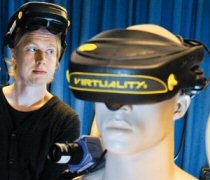
Nature has a fantastic article about how our sense of being located in our bodies is being temporarily warped and distorted in the lab of neuroscientist Henrik Ehrsson.

We’ve covered some of Ehrsson’s striking studies before as he has managed, with surprisingly simple equipment, to induce out-of-body experiences, the sense of having a third arm and the illusion of having a tiny doll-like body – among many other distortions.

But Ehrsson’s unorthodox apparatus amount to more than cheap trickery. They are part of his quest to understand how people come to experience a sense of self, located within their own bodies. The feeling of body ownership is so ingrained that few people ever think about it — and those scientists and philosophers who do have assumed that it was unassailable.

“Descartes said that if there’s something you can be certain of in this world, it’s that your hand is your hand,” says Ehrsson. Yet Ehrsson’s illusions have shown that such certainties, built on a lifetime of experience, can be disrupted with just ten seconds of visual and tactile deception. This surprising malleability suggests that the brain continuously constructs its feeling of body ownership using information from the senses — a finding that has earned Ehrsson publications in Science and other top journals, along with the attention of other neuroscientists.

The article looks at what this body distorting illusions are telling us about how the brain makes sense of our bodies and how these discoveries could be applied to ‘locating’ us in false limbs or even remote control robots.

Also don’t miss the podcast where author Ed Yong talks about his trip to the lab to try out the illusions.
 

Link to Nature article ‘Out-of-body experience: Master of illusion’.

Skull modifications for fun and profit

I’ve just stumbled across a special issue of Neurosurgical Focus on deliberate skull deformations that tracks the practice of molding the shape of the skull from ancient times to the modern body modification scene.

All of the articles are free to access but I recommend the pieces on the politics of head deformation and the practice in the ancient Mayan and Proto-Bulgarian cultures.

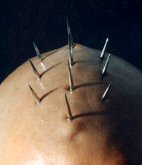
But perhaps the most surprising article is on modern deliberate skull deformities in adults that covers the body modification scene (drilled in metal mohawk anyone?) and the modern trepanation movement who advocate drilling a hole in the head to achieve an altered state of consciousness.

The trepanation section has the completely fascinating and somewhat oddball history of its modern revival.

The history of the International Trepanation Advocacy Group can be traced back to a Dutch medical student and admitted polysubstance abuser named Bart Huges, who was ultimately denied his medical degree by the University of Amsterdam at least in part for his vocal advocacy of marijuana use. During one particular episode in the early 1960s while under the influence of recreational psychoactive drugs, Huges came to believe that drilling a hole in one’s head would allow blood to more freely pulse around the brain, reproducing the state of an infant’s brain prior to closure of the cranial sutures. He was aware that by adulthood, the brain is denied an elastic bony covering against which to expand; in addition, he proposed that gravity gradually robbed the brain of some of its blood volume.

Trepanation, as his theory went, had the potential to reverse both of these processes. Huges felt that prolonged standing on one’s head could yield the same result, albeit temporarily, but only with trepanation could a long-term so-called “permanent high” be attained. He eventually delineated his ideas in a 1962 monograph alternately entitled either Homo Sapiens Correctus, named for what he believed would describe a new species of humans with holes in their skulls, or The Mechanism of Brainbloodvolume (BBV). He later also authored the book, Trepanation: the Cure for Psychosis, and an autobiography, The Book With the Hole. Although never finishing medical school, he did in 1965 successfully self-trepan, and, based on what he felt was an excellent benefit from this procedure, later convinced others to do the same.

It only gets weirder from there on in.

Highly recommended (the article, not drilling holes in your head).
 

Link to Neurosurgical Focus on skull deformations.
Link to article on ‘Modern induced skull deformity in adults’.

Brain in your medieval pants

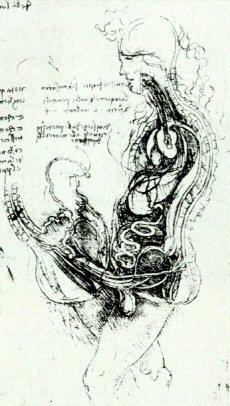
In Leonardo da Vinci’s anatomical drawings, the penis is connected directly to the brain.

A 1986 article “On the sexual intercourse drawings of Leonardo da Vinci” explains why this connection, still commonly proposed today (although mostly as a metaphor it must be said), was thought to be anatomical fact by the great master.

“A brief glance at the male character in Fig. 3 reveals the amazing internal ‘plumbing’ designed by Leonardo to describe Aristotelian physiology. He has drawn two canals in the penis, the lower of which is connected to the urogenital tract via the urethra, while the upper canal passes to the spinal cord by means of three vessels. The close-up of the penis demonstrates these two canals in fine detail. In ancient Greek writing, the ‘essence’ of a baby was provided by the ‘universal seed stuff’ of the male. This procreative ingredient was derived from animal spirit, a physiological material necessary for muscular activity. The animal spirit was manufactured from arterial blood at the base of the brain and was transferred to all parts of the body through the nerves. Hence da Vinci’s spinal connection to the penis.”

And before I hear a “Yeah, right on Leo!” from the ladies, I note a remarkably similar vagina – spinal cord connection also makes an appearance in the diagram.
 

Link to PubMed entry for article.
pdf of full text.

Teen sex hamsters in health danger shock alert

The Daily Mail is a UK newspaper famous for a moralising obsession with teen sex and a tragic, long-term science impairment.

Most of their science stories are simply face-palm material but occasionally they produce unintentional works of comic genius.

Today, is one of those days.

Teenage sex ‘leads to bad moods’ in later life’

Having sex during teenage years could lead to bad moods, changes in brain development and smaller reproductive tissues, according to scientists.

Researchers from Ohio State University College of Medicine found that these changes can occur because the sexual experience is taking place while the brain is still developing.

Study co-author John Morris said: ‘Having a sexual experience during this time point, early in life, is not without consequence.’

The researchers based their conclusions after studying the behaviour of hamsters after they engaged in sexual activity.


Link to Daily Mail on hamster sex (via @DrPetra).

A paradoxical pill after brain damage

The New York Times has a fascinating article about how brain damaged people in the ‘minimally responsive state’ can become more alert, curiously, after being given a type of sleeping pill.

The drug is called zolpidem and occasional case reports of it increasing alertness in poorly responsive neurological patients have been kicking around for some years. We reported on an early case back in 2006.

It must be said that there is still very research little in this area – some scattered case studies and a trial that recruited just three children, so I’m not sure about the wisdom of the ‘A Drug That Wakes the Near Dead’ headline.

However, the article reports on ongoing research and has a video showing the marked effect on one patient diagnosed with ‘minimally conscious state’ or MCS.

This year, scientists at Moss Rehabilitation Research Institute and at the University of Pennsylvania, both in the Philadelphia area, began the first large-scale clinical study of zolpidem as a treatment for disorders of consciousness. (Amantadine, a drug used to treat Parkinson’s disease, and the anti-anxiety medication Ativan also show promise in increasing awareness in minimally conscious patients.) So far, the evidence suggests that less than 10 percent of brain-injured patients will experience the drug’s paradoxical effects, and that among those, only a few will respond as profoundly as Viljoen did. For families like the Coxes, such odds provide a tortured kind of hope. For doctors, they bring questions. Why does a sleeping pill induce awareness in some patients but not others? And what can these bizarre awakenings tell us about the brain’s ability to heal?

A fascinating article on a curious, if limited, effect. Don’t miss the video.
 

Link to NYT article on zolpidem and brain injury.

Rainbows of mourning

This is a video of people dancing with a recently deceased baby and it tells us something profound about the psychology of grief and mourning.

Despite a common stereotype, death of a loved one can provoke some of the most culturally diverse forms of emotion and social ritual.

The video is rare footage of the Chigualo ceremony, a mourning ritual for children aged less than seven-years-old who have just passed away from the Afrocolombian community of the Pacific coast of Colombia.

Unfortunately, there is almost nothing written about the ceremony available online in English but the Spanish language Wikipedia has good page about it.

The belief behind the ceremony is that when young children die they become angels and go straight to heaven. Therefore, these deaths are not an occasion for sadness, as many might assume, but a cause for a goodbye celebration.

You can see in the video that the Chigualo involves upbeat rhythms, singing, games and dancing – including passing the dead baby between people at the ceremony.

This may seem shocking or disrespectful to people accustomed to sadness and distress-based mourning, but in its own community it is the single most respectful way of saying goodbye to a recently blessed angel.

Psychology has a stereotype problem with grief and mourning. Over and over again false assumptions are repeated, not even valid in Western cultures, that there are certain ‘stages’ to grief, that people will reliably react in certain ways with certain key emotions – sadness, anger, resignation and so on.

This leads to both a professional pathologising of grieving people including endless variations on ‘the person hasn’t accepted their loss’, ‘they haven’t elaborated their grief’ and ‘they’re in denial’ applied to anyone who doesn’t mourn within the expected boundaries.

Moreover, it leads to a cultural blindness about how other societies feel and understand the loss of others with the implicit assumption that the experience of grief is somehow universal.

Any other reaction except extended sadness is considered to be a way of ‘masking’ supposedly inevitable pain. ‘Underneath’, it is assumed, everyone must feel the same as ‘us’.

This is despite the fact that we have a huge array of anthropological work on the vast variation in grief and mourning throughout the world.

The Akan have elaborate rituals that punctuate the year to keep the memory of dead alive. The Achuar prohibit any attempts to remember or memoralise the deceased.

The Ganda prohibit sexual activity during mourning, the Cubeo have sexual activity as part of the mourning ceremony.

A Dogon funeral is designed to ensure that spirits of the dead leave the community, an Igbo funeral that they stay.

Although death is perhaps the only experience guaranteed to be universal, our reaction to it is one of the most diverse. Consequently, respect comes in many forms.
 

Link to video of Chigualo ceremony.

Two crucial minutes

If you’ve got just two minutes to spare you could learn first aid to help someone having a seizure thanks to a video from Epilepsy Action.

The acting is a little stiff, if you’ll excuse the pun, but it’s two minutes of your time very well spent.

You’ll notice in the video that the bystanders make a range of common but daft suggestions (‘hold them down’, ‘put something in the mouth to stop them biting their tongue’) that should be avoided as they could endanger the person having the seizure.

It has to be said that well-intentioned bystanders can sometimes be more of a danger than the seizure itself. Unless the person is likely to fall into a fire, fall off a bridge or get eaten by lions, the appropriate steps are just to protect the person, cushion their head, check their breathing and stay calm.

You only need to call an ambulance if the seizure continues for more than five minutes or you know this is the first seizure they’ve ever had.

The video just focuses on generalised seizures (‘having a fit’) but there’s info on other seizure types further down the page.

The organisation who’ve made the video, Epilepsy Action are fantastic, by the way, and they have a service where you can phone, email or tweet them any epilepsy question from anywhere in the world and they’ll answer it.

See the details on the top right of the page linked below.

Apparently though, no, they can’t get me a date with Lauren Pritchard.


Link to first aid for seizures video and info.

Reaction formation in New York City

My latest Beyond Boundaries column is about psychodynamic revolutionaries in New York and is in the December edition of The Psychologist.

Jonathan Shedler is recounting an anecdote. ‘So when the patient says “I’m frustrated”, you say “Tell me more about that” and then you shut up!’ We’ve just bustled in from a crisp Manhattan evening and the story gets an appreciative laugh. City University of New York is home to one of the most psychodynamically oriented clinical psychology courses in the US, and Shedler is here to fire up the audience. He’s presenting his research on the effectiveness of psychodynamic therapy, but the underlying message heralds a fight back. His data is mixed with tales of naive cognitive therapy trainees and disdain for ‘manualised CBT’ (there is, it seems, no other sort) and the audience are firmly behind him.

New York City was famous for its Freudian émigrés and became a leading centre for psychoanalysis during the 20th century, but the rising influence of drug treatment began to erode both the popularity of the couch and the therapeutic eminence of the Big Apple. Shorter therapies, validated using the techniques of academic research, have pressured both psychodynamic therapy, the younger relation of psychoanalysis, and its community of practice, who traditionally eschewed the systematic collection of data for the introspective gaze.

Psychoanalysis never gripped the UK’s psychology and psychiatry departments as it did in the US, and so the division between clinicians and researchers has traditionally been much less acute. In the New York lecture hall, this divide is reflected in the post-presentation discussion, driven by the split rhetoric of ‘practitioners’ and ‘researchers’ and how the latter don’t understand the former, despite the fact that we’re here to discuss research evidence. But most striking is the sense of revolt against the perceived oppression towards the psychodynamic approach, which, in the US, is additionally fuelled by the insurance companies desire for the most evidence-based bang for their buck.

The audience speak out. Person after person stands up, vociferously thanking the speaker, decrying the lack of respect afforded to psychodynamic treatment and promising to spread the word about this new evidence to colleagues, managers and patients. But beyond the fight back, there is a distinct culture change in the air. In an area famously divided by internecine feuding and bitter theoretical differences there is unity. And perhaps more significantly, the tools of clinical trials, systematic data collection and evidence-based practice are now being taken up as essential allies. New York City may yet be home to psychodynamic revolutionaries once more.

Many thanks to @Zleeoga for inviting me along to see the New York psychoanalytic scene in action. Greatly appreciated!

And many thanks to Jon Sutton, editor of The Psychologist, who has kindly agreed for me to publish my column on Mind Hacks as long as I include the following text:

The Psychologist is sent free to all members of the British Psychological Society (you can join here), or you can subscribe as a non-member by going here.
 

Link to December’s Beyond Boundaries column.

Endless brain gears

A visual tour of the clichéd ‘cogs in the brain’ image that seems to get attached to virtually every psychology article that isn’t published in a women’s magazine.

I’d be genuinely fascinated to know when this visual analogy first arose as you’d guess it’s a result of the computational model of the mind that arose with 50’s cognitive science.

But you never know (at least, not without a stiff dose of machine oil).
 

Link to never ending brain cogs.

On the perimeter of the synthetic cannabinoids

The synthetic weed story has just taken an interesting turn. Until now, all synthetic cannabinoids found in ‘herbal incense’ products have been taken from the scientific literature but a new previously unknown compound has just been discovered suggesting the underground labs are starting to innovate.

Cannabinoids are a type of compound related to the active chemicals in the cannabis plant. It turns out that a massive range of diverse compounds are cannabinoids and have a similar effect in the brain.

Synthetic cannabinoids have been researched for years. Both universities and pharmaceutical companies have churned out hundreds of variations both aiming to further our knowledge of the molecules and to look for potentially useful commercial compounds.

Since the mid-2000s, clandestine labs, thought to be based in China, have been synthesising cannabinoids that get you high, adding them to inert plant matter, and selling it as ‘herbal incense’ or ‘spice’ products for stoners.

Until now, almost all have been taken from scientific journals. The labs have been rifling through published research, picking out synthetic cannabinoids that look smokeable (and that haven’t been banned yet) and synthesising them.

Most are from the JWH series, named after John W Huffman, the chemist who first synthesised them in the 80s.

However, a new study in Forensic Science International reports on an analysis of a ‘herbal smoking mixture’ seized in Germany that contained both a banned known cannabinoid called JWH-073 alongside a completely new compound.

The chemical name is 1-butyl-3-(1-(4-methyl)naphthoyl)indole but it’s just called “compound 2” in the study.

Now it’s possible that this is just a by-product unknowing included in the mix, but I suspect this is unlikely.

In a new (excellent but locked) article on the chemistry of ‘designer street drugs’ the authors note that new molecule is a previously unknown hybrid of two existing high-potency synthetic cannabinoids. They also say the existence of this new molecule supports the idea that the clandestine labs are working on new compounds for street products.

What this means is that the labs are likely branching out from simply grabbing existing compounds from the literature to innovating new cannabis-like drugs, showing a surprising level of sophistication.

On a side note, it’s also interesting that this compound turned up in Germany, the same place that the original ‘herbal smoking mixtures’ appeared, perhaps suggesting that the country has the most direct links with the clandestine labs.
 

Link to locked report of novel cannabinoid.

Elvis in potato chip neuroscience

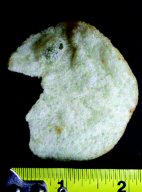
A new study just published in Cerebral Cortex on the neuroscience on how we see meaningful information in unpatterned visual scenes, seems a little fixated on Elvis.

The study concludes:

Future studies of the neural processing relevant to pareidolia and to meaning more generally may provide novel insights into how the organization of conceptual processing differs across individuals (see also Pizzagalli et al. 2001), thereby addressing the question of what neurocognitive architecture is necessary to see a potato chip not just as a tasty snack but as the embodiment of Elvis.

They even include a photo of the potato chip (proper spelling: crisp) that supposedly contains the image of The King which you can see above.

Unfortunately, I can’t see it, which I suspect means my brain has been ruined by the overuse of Fidonet as a child.
 

Link to Elvis obsessed neuroscience study.

The dreams and hallucinations of cloistered monks

French sleep scientists have studied a group of monks who have virtually no contact with the outside world and have taken a vow of silence.

The monks are of scientific interest owing to the tradition of having two sleep periods per night interrupted by a 2-3 hour prayer and psalm reading session.

The research group were interested in how the sleep-regulating circadian rhythm adjusts to this two sleep system.

It turns out that the automatic rising and falling of body temperature seemed to sync with the two-period sleep patterns but that the monks still had sleep problems (difficulty sleeping, waking, daytime sleepiness).

This suggests that they were not fully adjusted, even after decades of practice (the researchers report that “They all used several (two to six) alarm clocks”!)

Delightfully, the monks were also asked about their tendency to hallucinate and about the content of their dreams.

Although only ten individuals were studied, the answers are oddly appropriate for members of a silent, closed order.

Six monks had experienced mild (n = 4, ringing of the cell door at sleep offset or of the alarm clock, feeling that someone hit them briefly in the back, waking-up during the second sleep while mentally singing psalms) and moderate (n = 2, nightmarish, prolonged feeling of a demoniac presence at sleep onset after Matins) sleep-related hallucinations vs. one control (p = .06). Occasional nightmares were more frequent in monks than in controls.

All monks reported dreaming more often after than before the Matins [midnight prayers in between the two sleep periods], and to have conversations in their dreams. These conversations were rare (n = 3), hard to understand (n = 2), or frequent (n = 5). As for prayers, six monks were able to pray while dreaming, although it was rare, whereas two others dreamt of acts of piety, or imagined a disrupted liturgy, and finally two of them dreamt they were never monks.


Link to locked study. Not very charitable really.

The Crux of PTSD under threat of terrorism

I’ve got a piece over at Discover Magazine’s new group blog, The Crux, which looks at whether post-traumatic stress disorder makes sense if it’s applied to people who remain at high risk of terrorist attack.

The Crux is a blog written by a crowd of science folks that aims to taker a deeper look at some of the ‘big ideas in science’ that are currently being thrown around and I’ll be writing some occasional pieces as mind and brain issues surface.

Researchers have noted that “PTSD is classified as an anxiety disorder. Within cognitive models, anxiety is a result of appraisals relating to impending threat. However, PTSD is a disorder in which the problem is a memory for an event that has already happened.” After all, if you feel threatened with good reason, almost by definition, this isn’t a mental illness.

So if someone remains in danger after a life-threatening incident, does the concept of “post-traumatic stress disorder” even make sense?

As the diagnosis relies largely on totalling up symptoms in a checklist-like fashion, it is possible to diagnose someone with the condition in almost any circumstance. But no one knew whether treating it in people who are still in grave danger would be any use.

Until now that is.

You can check out the full article at the link below and pieces by the other fine folks of The Crux here.
 

Link to ‘Life During Wartime: Can Mental Illness Be a Rational Response?’

Against the high cult of retreat

Depending on who you ask Naomi Weisstein is a perceptual neuroscientist, a rock n roll musician, a social critic, a comedian, or a fuck the patriarchy radical feminist.

You stick Weisstein’s name into Google Scholar and her most cited paper is ‘Psychology Constructs the Female’ – a searing critique of how 60s psychology pictured the female psyche – while her second most cited is a study published in Science on visual detection of line segments.

Although the topics are different, the papers are more alike than you’d first imagine.

Her article ‘Psychology Constructs the Female’ was originally published in 1968 and became an instant classic.

She looked at the then current theories of female psychology, and at the evidence that supported them, and shows that the theories are pitiful – largely based on personal opinion and idiosyncratic interpretations of weak or non-existent evidence.

Moreover, she shows that all known differences at the time could be accounted for by social context and what was expected of the participants, rather than their sex.

It’s a masterpiece of evidence-based scientific thinking when feminist psychology was, and to a large extent, still is, heavily influenced by postmodernism and poststructuralism – theories that suggest that there is no objective reality and science is just another social narrative that has female oppression built into its knowledge base.

Weisstein, who also had a huge impact on perceptual science, had little time for what she considered to be ‘fog’ and ‘paralysis’:

I’m still wearing my beanie hat, aren’t I? I don’t think I can take it off… Science (as opposed to the scientific establishment) will entertain hypothesis generated in any way: mystical, intuitive, experiential. It only asks us to make sure that our observations and replicable and our theories have some reasonable relation to other things we know to be true about the subject under study, that is to objective reality…

Whether or not there is objective reality is a 4000-year-old philosophical stalemate. The last I heard was that, like God, you cannot prove there is one and you cannot prove there is not one. It comes down to a religious and / or political choice. I believe that the current feminist rejection of universal truth is a political choice. Radical and confrontational as the feminist challenge to science may appear, it is in fact, a deeply conservative retreat…

Poststructuralist feminism is a high cult of retreat. Sometimes I think that, when the fashion passes, we will find many bodies, drowned in their own wordy words, like the Druids in the bogs.

A recent academic article looked back at Weisstein’s legacy and noted that she has been a powerful force in a feminist movement that typically rejects science as a useful approach.

But she was also a pioneer in simply being a high-flying female scientist when they were actively discouraged from getting involved.
 

Link to full text of ‘Psychology Constructs the Female’.

The free will rebellion

A popular mantra of modern neuroscience tells us that free will is an illusion. An article in the New York Times makes a lucid challenge to the ‘death of free will’ idea and a prominent neuroscientist has come out to fight the same corner.

Neuroscientists began making preparations for the funeral of free will shortly after Benjamin Libet began publishing his experiments in the 1980s showing a consistent build-up of electrical activity from the brain’s motor cortex before participants were consciously aware of their desire to move.

Since then, many more neuroscience studies have shown that brain activity can precede conscious awareness of specific choices or actions – with the implication that our conscious experience of decision-making is nothing but a secondary effect that plays little role in our actions and reactions.

The idea that ‘free will is an illusion’ is now consistently touted by neuroscientists as an example of how brain science is revealing ‘what really drives us’ and how it explains ‘how we really work’. But philosophers, the conceptual engineers of new ideas, have started to find holes in this popular meme.

Probably the most lucid mainstream analysis of why neuroscience isn’t killing free will has just been published at The New York Times where philosopher of mind Eddy Nahmias takes the mourners to task using a narrow and largely irrelevant definition of free will.

So, does neuroscience mean the death of free will? Well, it could if it somehow demonstrated that conscious deliberation and rational self-control did not really exist or that they worked in a sheltered corner of the brain that has no influence on our actions. But neither of these possibilities is likely. True, the mind sciences will continue to show that consciousness does not work in just the ways we thought, and they already suggest significant limitations on the extent of our rationality, self-knowledge, and self-control. Such discoveries suggest that most of us possess less free will than we tend to think, and they may inform debates about our degrees of responsibility. But they do not show that free will is an illusion.

Nahmais makes the point that the ‘death of free will’ idea makes a fallacy he calls ‘bypassing’ that reduces our decisions to chemical reactions, implying that our conscious thinking is bypassed, and so we must lack free will.

He notes that this is like saying life doesn’t exist because every living thing is made up of non-living molecules, when, in reality, its impossible to understand life or free will without considering the system at the macro level – that is, the actions and interactions of the whole organism.

Interestingly, a similar point is made by legendary neuroscientist Michael Gazzaniga in an interview for Salon where he discusses his new book on free will. He also suggests it’s not possible to understand free will at the level of neurons without making the concept nonsensical.

These contrasting concepts about free will may yet be solved, however, as Nature recently reported on a new $4 million ‘Big Questions in Free Will’ project which brings together philosophers and cognitive scientists to work together to understand how we act in the world.
 

Link to NYT piece ‘Is Neuroscience the Death of Free Will?’
Link to Salon interview with Michael Gazzaniga.
Link to Nature piece ‘Taking Aim at Free Will’.