 The changing fortunes of psychoanalysis have been reflected in some of the greatest novels of the last hundred years, a literary history recounted in an article for The Guardian.
The piece is by historian Lisa Appignanesi, author of the highly regarded new book Mad, Bad and Sad: A History of Women and the Mind Doctors from 1800.
The article notes that two recent novels (Kureishi’s Something to Tell You and Vickers’ The Other Side of You) have reversed the recent tradition of portraying psychoanalysts as somehow deviant, unethical or intellectually bankrupt.
The low-point for the creative depiction of Freudian mind doctors was probably Nabakov’s novel Lolita, which is presented as a faux psychiatric case study of a paedophile.
You might think that someone who wrote a widely-read novel about a middle-aged man who desired under-aged girls had good reasons to dislike any theory which attempted to uncover unconscious motivations, but Nabakov was famously and venomously anti-Freudian even before he began writing his masterpiece.
He first started knocking psychoanalysis in his second novel, The Defense, and he often referred to Freud as the ‘Viennese Quack’ and his theories as ‘voodooism’ for the rest of life his.
This negative portrayal is not universal though, and many novels contain sympathetic and even highly complementary depictions. For example, Appignanesi notes that in Plath’s semi-autobiographical novel The Bell Jar, Dr Nolan is “something of a guardian angel amid the horror of asylum life”.
Interestingly, the more recent positive portrayals of psychoanalysts mirror some positive results in the scientific literature.
Two recent randomised controlled trials have found that psychoanalytically-inspired treatments can be effective.
A recent trial on treatments for ‘personality disorder’ found it effective, as did a recent trial on using it as a treatment for panic disorder.
Unfortunately, these are still a drop in the ocean compared to the evidence for some other psychological treatments, but hopefully this is a sign that psychoanalysis is beginning to adopt a more scientific approach to its theories and practice and we’ll be better able to separate the wheat from the chaff.
Link to Guardian article on psychoanalysis and literature (thanks Kat!).

 I remember a recently admitted patient, nose-to-nose with his psychiatrist, screaming at her “you don’t know what I’m going through – how the fuck do you know what it’s like little missy?”.
 The American Academy of Neurology are now doing fortnightly super-geeky
  Neurophilosophy has found a gory but completely astonishing
  Love is the most exalted and sublime of human emotions. It has inspired breathtaking works of art, journeys through continents and even the tragedies of war. Given its powerful hold on humanity it’s surprising that it’s been traditionally neglected by the brain sciences. In spite of this, a new dawn in romance research has begun to bud in recent years, and love has finally blossomed in the lab.
 I’ve just found an interesting page on Wikipedia that discusses the concept of ‘
 Psychiatrist Gerald Rosen argues that the diagnosis of post-traumatic stress disorder (PTSD) should be abandoned because it just re-describes emotional reactions that would otherwise be diagnosed as depression or anxiety, and is increasingly used where there was never any clear trauma in the first place.
 Developing Intelligence has a
 You might have prejudices you won’t admit to, or, don’t even know about. The Implicit Attribution Test claims to measure these hidden associations and it’s been one of the most important psychological developments during the last decade.
 How does the brain generate orgasm? It’s one of the most under-investigated human experiences but two articles,
 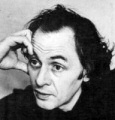 An excerpt from Knots, a book of poetry by the radical psychiatrist
  Advances in the History of Psychology has
  The Neuroscience for Kids website has created an online
  Mind Hacks