Researching the sublime

Jonah Lehrer, author of Proust was a Neuroscientist, is a guest on this week’s All in the Mind, where he discusses why he thinks the arts are an essential complement to the sciences in the attempt to understand human experience.

Lehrer argues that some artists aim to explore, capture or communicate aspects of our subjective experience that are otherwise indefinable.

Perhaps most controversially, he suggests that through these explorations some artists have glimpsed the functional organisation of the brain – even though we’ve only come to realise this in more recent lab work.

Nevertheless, Lehrer argues that art is more than just a reconnaissance mission for science.

Although some of its ‘discoveries’ can stimulate research or be validated by experiments, it also communicates what science cannot, and so is essential as part of the wider attempt to understand ourselves.

It struck me while listening to the programme that Lehrer talks about art in the same way many clinical scientists talk about working with patients.

In neuropsychology and neuropsychiatry particularly, clinicians will constantly be trying to integrate the empirical research and objective medical tests with the patient’s subjective account of their experience.

The patient’s narrative (soliloquy perhaps?) also helps direct a scientific approach to their individual problems, and raises broader scientific questions about the course of the disorder or the function of the normal system, now gone awry.

While clinicians are trained to draw these reflections from their patients with careful questioning, artists are like evangelists for the subjective – making their first-person experience available to all.

Moreover, these experiences often come in such fine and exquisite detail that not even the most skilled clinician could provoke such insights.

Link to AITM with Jonah Lehrer.

2008-02-08 Spike activity

Quick links from the past week in mind and brain news:

Is V1agra spam getting you down? Fear not, get more sex with V1tamin C!

OmniBrain discovers a long lost film on ‘Frightening Diseases of the Mind’.

How good is Neurofeedback for treating attention deficits? Sharp Brains has a great review of the evidence.

The fantastic Furious Seasons hosts a pdf of a recent academic article on the increasing overdiagnosis of child bipolar disorder.

The New York Times has the shocking news that brilliant discoveries typically need years of hard word.

Subliminal images of drug paraphernalia can trigger cravings in addicts, according to a new study reported by Treatment Online.

Pregnancy ‘does cause memory loss’ according to a new study covered by The Guardian.

Discover Magazine asks if Osama’s only 6 degrees away, why can’t we find him? I’ve asked a similar question about Shakira myself.

10 reasons people lie to their psychotherapists. World of Psychology rounds up an informal survey.

The ‘Google generation’ a myth according to a new study. Susan Greenfield and chums take note.

A Blog Around the Clock interviews psychologist Vanessa Woods, who goes into the jungle to observe the behaviour of bonobos.

“Colin Blakemore: An organ so complex we may never fully understand it”. A poorly worded headline unintentionally describes the head of the Medical Research Council as an organ.

More headline innuendo pleasure from The New York Times: “Drop Down and Give Me More Than She‚Äôs Doing”. Sadly, about the psychology of exercise.

Metapsychology reviews a book that documents medical complicity in torture during the war on terror. So truly awful that words fail to describe it adequately.

More from The New York Times with an article and audio reading from an upcoming book on obsessive-compulsive disorder.

PsyBlog looks at the limits of cognitive dissonance, one of the most important theories in social psychology.

Don’t breath the pig brains. Sound advice from Neurophilosophy.

Developing Intelligence looks at how gestures during speech affect what we communicate.

School of Everything! Want to learn something or have something to share. Fine out who can teach you in your local area.

How to Study. The BPS Research Digest has a guest feature looking at the psychology of optimum learning.

Deric Bownds discusses how blindsight has been created in people without brain damage, using TMS.

The he-haw boys and the eye-drillers

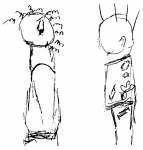
A 61 year-old lady was admitted to a Florida hospital with florid hallucinations after suffering a stroke to her thalamus. She saw curious strangers and visitors with odd clothes, but rather unusually, the ones on the right always seemed pleasant and happy, whereas the ones on the left always seemed fearful and unsettling.

The case was reported in the journal Cognitive Neuropsychiatry and is of interest because the emotional content of the hallucinations seem to match the dominant emotion of the corresponding hemisphere of the brain.

[The patient] described the right visual hallucinations as consisting of “college age boys in colourful Hawaiian shirts” that “are too happy, talk too much”, and that are somewhat “too energetic”. The patient called them the “he-haw boys,” and reported that she could hear them talking.

The left visual hallucinations were described as “men in black religious clothes that make no noises.” The patient called them “the eye drillers”, and stated that “they look a hole right through you”. The patient provided vivid drawings of the hallucinations that accentuated the positive and negative associations she had with each hallucination. The patient provided vivid drawings of the hallucinations that accentuated the positive and negative associations she had with each hallucination.

This is not the first time that hallucinations have been reported to be differing in emotional tone depending on which side of space they appear.

This is likely due to the way emotion is processed in the brain.

Perception of negative emotions often relies largely on the right hemisphere, where positive emotions are processed by both the right and the left hemispheres. In fact, this pattern of brain response has been found in children as young as 10 months old.

The woman in this case report didn’t suffer damage to the hemispheres directly, but to the thalamus. This area is often called the brain’s relay station as it is extensively connected to hemispheres, so damage in this area can often mimic damage to the cortex.

Link to PubMed abstract of case report.

Psychedelic Science online

In 1997, BBC science programme Horizon broadcast a legendary edition on the use of psychedelic drugs in medicine. Luckily, it’s been uploaded to Google Video and you can now watch the whole thing online.

It came at an interesting time in psychedelic drug research – when the authorities were still touchy (they’d only raided Shulgin’s licensed lab three years earlier) but were just starting to allow some stirrings of research since they’d shut it down almost completely in the 1960s.

The programme looks at the history of psychedelic drug research when it was still easily possible, focusing on Osmond and Hoffer’s early work on using LSD in treating addiction and facilitating psychotherapy.

It’s also got loads of great historical footage from the early research but also talks to the new generation of researchers looking at compounds such as ayahuasca and ibogaine, who are now the senior figures in this growing area.

Unfortunately, the video is a bit grainy in places but it’s quite watchable and it’s got a great soundtrack. The producers used Future Sound of London, Massive Attack and a number of tracks from the Ninja Tune label to give the programme a trippy feel.

Link to ‘Psychedelic Science’ edition of Horizon.

Impostors and the subtleties of self-presentation

‘Impostor Syndrome’ is where someone feels they aren’t as competent as everyone else thinks they are and fears they could be found out.

I’ve heard the term used by psychologists and in everyday language to describe this situation but never realised it’s been the subject of serious psychological research.

Several studies have looked at the issue and The New York Times has a brief article on the findings. They suggest that the ‘syndrome’ is actually more subtle than the simple description lets on – in fact, it may be a way of managing others’ expectations.

In a study published in September [pdf], Rory O’Brien McElwee and Tricia Yurak of Rowan University in Glassboro, N.J., had 253 students take an exhaustive battery of tests assessing how people present themselves in public. They found that psychologically speaking, impostorism looked a lot more like a self-presentation strategy than a personality trait.

In an interview, Dr. McElwee said that as a social strategy, projecting oneself as an impostor can lower expectations for a performance and take pressure off a person — as long as the self-deprecation doesn’t go too far. “It’s the difference between saying you got drunk before the SAT and actually doing it,” she said. “One provides a ready excuse, and the other is self-destructive.”

Link to NYT article on ‘impostor syndrome’.
pdf of McElwee and Yurak’s paper.

It Came From Inner Space

In light of the unusual behaviour displayed by some of NASA’s astronauts in recent times, the American space agency is aiming to use increased psychological screening for its potential space travellers.

They say there is nothing new orbiting the sun and, as testament to this, the exact same issue was discussed way back in 1959, in a special issue of the American Journal of Psychiatry on ‘space psychiatry’.

It’s a rather curious discussion to say the least, showing a mix of 1950s prejudice, naive awe, and some rather charming if not slightly potty Freudian analysis.

An article by A.J Silverman and colleagues discusses the possibilities of using psychological selection techniques for space crew and notes that it should exclude “the person with a history of constantly fighting and rebelling both against peers and authority figures, as well as those with pressing homosexual or other major neurotic conflicts.”

Silverman was writing at a time when homosexuality was still 15 years away from being de-listed as a mental illness but the issue of whether to send an openly gay person into space is still a hot topic. Apparently, Lance Bass, ex-‘N Sync singer and commercial astronaut, might be the first.

Despite a few throwaway comments, the authors of the ‘space psychiatry’ articles actually spend much more time discussing the terrors of outer space, and how they relate to the terrors of inner space, rather than how to screen crews.

Air Force Captain George Ruff notes two serious sources of space anxiety: one is “the possibility that equipment failure or operator error may cause death within a few seconds”. The other, is “the subject’s infantile fantasies” (Houston, we have an unresolved Oedipus complex).

In contrast, Eugene Brody sees ‘separation anxiety’ as the most likely source of psychological disturbance. This is what young children suffer when they are taken, even temporarily, from their mothers.

Brody thought this would be equally as stressful when astronauts were separated from ‘mother earth’ and suggested that the consequences could be dire:

These factors plus the sensory input patterns which may be encountered in space flight, and such apparently basic fears as that of impenetrable darkness might in theory at least be expected in time to produce-even in a well-selected and trained pilot-something akin to the panic of schizophrenia. The regressive defense may be revealed in symptom formations such as hallucinations or delusions…”

In other words, Brody is arguing that the existential loneliness of space may break down the usual defences of astronauts causing them to experience their innermost conflicts as delusions and hallucinations, imposed upon reality.

What’s remarkable, is this is strikingly similar to the main themes in Stanislaw Lem’s influential novel Solaris which was published in 1961, two years after the American Journal of Psychiatry special issue.

It’s interesting to speculate that Lem may have been inspired to explore these concepts after they were discussed by American psychiatrists and disseminated by starry-eyed futurists.

Link to AJP ‘Symposium of Space Psychiatry’ (sadly, closed access).
Link to USA Today article on astronaut selection.
Link to Wired article on hopes for gay astronauts.

Just because you’re paranoid

There is simply not enough conspiracy theory-driven paranoid funk rock in the world.

By the looks of his YouTube video Ralph Buckley is hoping to redress the balance with a song that rages against psychiatry, the media, George Bush, Prozac, corporations, socialised health care, mind control, the police state, and the government. Phew!

Not one to let his shaky grasp of neurobiology temper his attack on the New World Order, he notes that antidepressants are hallucinogenic like LSD and both were created to keep down the masses. Fact.

Prozac, zoloft, wellbutrin, paxil etc…are psychoactive drugs (in the hallucinogen family) not unlike LSD which is also another drug developed by the government for purposes of mind control. Curious coincidence? How many ‘coincidences’ does it take before a conspiracy stops becoming a conspiracy?

How many conspiracy theorists does it take to change a light bulb? The light bulb didn’t change man, that’s WHAT THEY WANT YOU TO THINK!

Despite the pharmacological mix-up, Buckley definitely has the funk and cuts some mean blues into the deal. The track is from an album called ‘9/11 Conspiracy Blues’ and he’s a big Ron Paul supporter if you want to get a feel for his suspicious outlook on life.

Best of all though, he rhymes ‘schizophrenia’ with ‘fuck the media’ and you gotta respect that.

Link to Buckley’s paranoid blues track ‘schizophrenia’.

Neurotic AI has video game edge

Austrian AI researchers wanted to find out whether giving an ‘autonomous agent’ emotion-like reactions would make it more successful at playing a fight-to-the-death strategy game. It turns out, neurotic bots have the edge when it comes to video game war.

The study was designed by the Austrian Research Institute for Artificial Intelligence and was presented at an AI conference in Paris. Luckily for us, they’ve just put their slides online as a pdf file.

They used the popular strategy game Age of Mythology and created four software ‘bots’ to play the computer which were loosely based on the ‘big five‘ personality traits.

When they compared their successes, the version designed to simulate ‘neurotic’ personality traits came equal first in number of games won, but was the clear winner when the average time to victory was compared.

It was deliberately designed to overestimate the value of current resources and had a tendency to resort to extreme playing styles – tending at times towards aggressive play, and at other times, overly defensive strategies.

The research team note that human players typically only face computer opponents that act ‘rationally’, and suggest that simulating ’emotions’ may make playing computers more realistic, potentially more challenging, and distinctly more fun.

Link to NewSci Tech Blog piece on the research.
pdf of research presentation.

Girl power comes of age

Clinical psychologist Dan Kindlon has been researching children and adolescents for over 20 years and argues that the psychology of American girls has radically changed in recent years owing to the effect of feminism and increased equality.

Harvard Magazine has an article on what he calls ‘alpha girls’ in his new book – confident girls and young women with high expectations and high self-esteem.

“The psychological demons that used to affect girls and women in this country just don‚Äôt affect today‚Äôs girls in the same way,” Kindlon asserts. In the 1980s and early ‚Äô90s, Carol Gilligan (formerly Graham professor of gender studies at Harvard Graduate School of Education and now a professor at New York University) and other feminist psychologists wrote that girls in their teens compromise their authenticity to fit gender roles, thereby “losing their voice.” In 1992, influential American Association of University Women (AAUW) research on late-1980s data on girls born in the 1970s found that girls’ self-esteem plunged in middle school, compared to boys’, and that classroom sexism (such as teachers’ calling on boys more than girls, or more competitive than cooperative learning) was a cause. The AAUW report recognized positive trends, such as young women‚Äôs ascent in college enrollment, while recommending correctives for the continuing shortfalls.

Alpha girls are created in large numbers when the society that they are born into has sufficient equal opportunity, Kindlon says: “It wasn‚Äôt until the early to mid ’80s‚Äîwhen schools really started to get serious about Title IX, when women first began to outnumber men in college, when women began moving into leadership roles, such as Congress, in significant numbers‚Äîthat societal conditions had changed enough to permit the alpha girl explosion.” He set out to discover how Beauvoir’s “inner metamorphosis” has changed girls’ psychology in the years since the AAUW report.

Link to Harvard Magazine article ‘Girl Power’.

Brain Age neuroscientist prefers lab to millionaire row

Neuroscientist Dr. Kawashima, the star and part-designer of Nintendo’s brain training game ‘Brain Age’ has turned down $22 million dollars in royalties saying that he has no need for the money because “my hobby is work”.

Personally, I suspect it’s just an excuse because he knows he’d blow it all on gambling and loose women. Let Dr Jim Yong Kim’s story be a lesson to us all.

Or maybe it’s because he feels he still needs to make some final adjustments so it can recognise the Manchester accent.

Simulating the Mafia

I’ve just found this fascinating paper that used game theory to model why a Mafia protection racket inevitably leads to violence that neither the mob nor the shopkeepers can keep a lid on.

It turns out, fakers who pretend to be the Mafia to extort additional money throw a spanner in the works, as it reduces ‘trust’ between the real Mafia and the small business owners.

The full paper is available online as a pdf file but the abstract is reproduced below:

Payment, Protection and Punishment: The Role of Information and Reputation in the Mafia

Rationality and Society, 2001, 13(3), 349–393.

Alistair Smith and Federico Varese

A game theoretic model is used to examine the dynamics governing repeated interaction between Mafiosi running extortion rackets and entrepreneurs operating fixed establishments. We characterize the conditions under which violence occurs. Entrepreneurs pay protection money to the Mafia because they fear the Mafia’s ability to punish. However, the entrepreneurs’ willingness to pay encourages opportunistic criminals (fakers) to use the Mafia’s reputation and also demand money. We show that two phenomena drive the repeated interaction between criminals and entrepreneurs: reputation-building and readiness to use violence on the part of the Mafiosi, and attempts to filter out fakers on the part of entrepreneurs.

These two phenomena lead to turbulence: as entrepreneurs filter out fakers by not paying some of the times, some real Mafiosi are not paid and punish non-payment to establish their reputation. As Mafia reputation is re-established, fakers have again an incentive to emerge, setting in motion a spiral of never-ending filtering and violence. We also show how external shocks to this relationship, such as changes in policing practices, succession disputes within the Mafia or inflation, often lead to violence until beliefs are re-established. We conclude that a world where mafias operate is inherently turbulent. This conclusion goes against the widespread perception that racketeers are able to perfectly enforce territorial monopolies.

pdf of full-text paper.

A blind man hallucinating

NPR has an brief but interesting piece on a blind man who has visual hallucinations.

Stewart, the person in question, lost his sight due to hereditary sight-loss, but has developed Charles Bonnet syndrome, a curious condition where playful visual hallucinations are common.

Two things about this condition are striking: firstly, the hallucinations are typically complex and intricate but the damage is typically only to the retina, the cortex remains intact.

Secondly, unlike many other conditions where hallucinations are common, the person typically retains complete insight. They know they are hallucinating and typically don’t mistake hallucinations for the real world.

While the person interviewed in this radio segment is blind, Charles Bonnet syndrome can occur in people with partial sight, who may have only lost vision in one part of their visual field (often due to macular degeneration). In these cases, even when the hallucinations can ‘blend in’ with true vision, the person usually knows the difference.

One of the most remarkable things about the interview is that the Stewart’s hallucinations can be triggered by quite idiosyncratic things (such as foods and thoughts) and that he takes such joy in the experience.

If you want to read more about the syndrome, the Fortean Times published a great article on it back in 2004.

Link to NPR segment on Charles Bonnet syndrome.
Link to FT article on the same.

Illegal ink: reading meaning in criminal tattoos

Until fashions changed in recent decades, a tattoo was widely considered the mark of the soldier, the sailor or the criminal. The tattoos of offenders have sparked particular interest as they can be highly symbolic coded messages that have been thought to be a glimpse into the psychology of the criminal underworld.

The interest in ‘criminal ink’ stretches back to the 19th century when Italian criminologist Cesare Lombroso started collecting pictures of tattoos from captured or murdered Mafiosos.

Lombroso believed that persistent offenders were biologically defective who reflected an ‘atavistic‘ throwback to a primitive stage of human development.

He further believed that criminal tendencies could be seen in the shape of the face, skull and body, and could be divined by studying tattoos, which were a reflection of the “fierce and obscene hearts of these unfortunates”.

While Lombroso’s ideas on criminality and the body proved to be little more than prejudice and conclusions drawn from poorly guided research (he failed to compare how often the same traits appear in non-criminals) the idea that criminal tattoos were a sort of ‘symbolic code’ proved to be closer to the mark.

Russian prison tattoos from the Soviet era are some of the most complex of these symbolic codes and determine an offender’s place within the strictly organised and brutally enforced criminal social order.

Russian prison guard Danzig Baldaev collected pictures of these tattoos for over 40 years, mostly during the period of Soviet-run gulags, and carefully documented the images and their meanings.

He published a Russian book on the tattoos in 2001 and later his work was re-published in English in two volumes of the Russian Criminal Tattoo Encyclopaedia.

Racist, graphically pornographic and violent images are common but apparently accurately reflect the vicious and oppressive nature of the prison camps. Others are political, some romantic, and many a combination of a number of these themes.

The images are satirical, offensive and disturbing both in their explicit content and their implicit meaning. While some are ‘earned’, others are forcibly applied and intended as punishments.

The tattoos are intended to reflect the life, status and experiences of the prisoner, and most importantly, they allow others to ‘read’ the person in the most literal sense.

The Russian criminal tattoo is a means of secret communication, an esoteric language of representational images which the thief’s body uses to inform the world of thieves about itself. This language resembles thieves’ argot and it performs a similar function – encoding secret thieves’ information to protect it from outsiders (fraera). In exactly the same way as argot endows standard, neutral words with ‘strictly professional’ meanings, the tattoo also conveys ‘secret’ symbolic knowledge through the use of ordinary allegorical images which at first glance seem familiar to everyone. Even the tattoo ‘Heil Hitler!’, when applied to the body of a Russian ‘legitimate thief’ (vor v zakone) may have absolutely nothing to do with Hitler or National Socialism in general. As a rule it is a sign of a thief’s attitude of denial (otritsalovka) or the symbol of a refusal to submit to the prison and camp administration and also, in a broader sense, a total refusal to cooperate in any way with the Soviet authorities. (p33, Russian Criminal Tattoo Encyclopaedia Vol II).

In effect, these tattoos embody a thief’s complete ‘service record’, his entire biography. They detail all of his achievements and failures, his promotions and demotions, his ‘secondments’ to jail and his ‘transfers’ to different types of work. A thief’s tattoos are his ‘passport’, ‘case file’, ‘awards record’, ‘diplomas’ and ‘epitaphs’. In other words, his full set of official bureaucratic documents… Tattoos acts as symbols of public identity, social self-awareness and collective memory. They shape stereotypes of group behaviour and set out the rules and rituals necessary for maintaining order in the world of thieves. (p27, Russian Criminal Tattoo Encyclopaedia Vol I).

The symbols are extensive and complicated, and owing to their importance, the penalty for faking an unearned tattoo could be a swift and brutal death.

There is a grim irony in the fact that many in the Russian criminal underworld saw themselves as rebelling against the Soviet system while creating a subculture which was more oppressive and almost as bureaucratic. I suspect, however, the irony was lost on many.

The tattoos from the Soviet gulags are not the sole examples, of course. Many criminal gangs use tattoos as a pledge of allegiance and a record of past experience, to the point where Mara Salvatrucha gang members are now trying to avoid getting their distinctive tattoos so the authorities can’t identify and ‘read’ them so easily.

Link to NSFW info/images from Russian Criminal Tattoo Encyclopaedia I.
Link to NSFW info/images from Russian Criminal Tattoo Encyclopaedia II.
Link to SFW images from the same collection.
pdf of good essay on Cesare Lombroso, his theories and influence.
Neuroanthropology

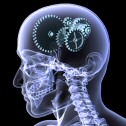
I’ve been enjoying the Neuroanthropology blog recently which discusses how the cognitive and neurosciences can help us understand culture and social diversity.

For example, trance states are common in some cultures, where they may form the part of certain religious rituals or spirit possession experiences.

There is now increasing interest in understanding the neuroscience of trance states, with a view to better understanding both how they occur and how they are used as key parts of social life by cultures across the world.

The Neuroanthropology blog disusses how culture shapes and interacts with brain function, and what new research tell us about our cultural quirks.

Link to Neuroanthropology blog.

An embuggerance

Author Terry Pratchett recently announced that he has early onset Alzheimer’s disease, a form of the brain disorder that strikes before the age of 65.

In typical Pratchett style, he described the news as ‘an embuggerance’ but still continues to work on his comic novels.

He’s just given an audio interview to the BBC where he discusses his diagnosis, how he views the future, and how the brain changes are affecting his day-to-day life.

He is wonderfully open and optimistic, and quite inspiring, in his usual quiet, humorous way.

Link to BBC audio interview with Terry Pratchett.