The beauty algorithm and coding for the brain

The New York Times has a fascinating piece on some new software that automatically tweaks pictures of human faces to make them more attractive by reducing the concept of facial beauty to simple vector-based algorithms.

The image on the right is a ‘before and after’ picture of the software at work, and the researchers have a page for the project with many more examples and the full-text of the academic paper.

The researchers asked participants to rate the attractiveness of a series of faces and they then used software to calculate distances and directions between key facial landmarks.

By combining the attractiveness ratings and the landmark vectors they created a statistical model of which general facial attributes are most attractive. Their software allows new faces to be subtly altered to more closely approximate the general model of attractiveness.

I’m fascinated by the fact that software advances are increasingly taking advantage of the quirks of our mind and brain.

The MP3 format is perhaps the most well known, which allows audio files to be compressed because it takes advantage of a psychological effect called auditory masking where, when two sounds of certain frequencies are present, we can only perceive one.

The MP3 encoding algorithm simply scans sound files for times when auditory masking would eliminate the perception of one sound, and then actually eliminates the data from the file, thereby making it smaller.

Another wonderful idea is chroma subsampling used in jpg and digital video compression. It’s based on the finding that our visual system is less accurate at pinpointing colour differences than brightness differences.

Chroma subsampling takes advantage of this by storing colour information at a lower resolution than brightness information. For example, rather than storing separate colour information for every pixel, it will store it for every four. When we see the image, we often can’t tell the difference.

This is particularly true for moving images, and you’ll notice sometimes when you stop YouTube videos the colours seem to be fuzzy and bleed from where they’re supposed to be (have a look at this YouTube still I used on a recent post ) even though you hardly notice this when the video is playing.

These software advances wouldn’t have happened without the psychology research to find the bugs / features in human perception and it’s curious to think that these new developments build on both the digital and neural platforms.

What will be most interesting is if software starts to take advantage of cognitive features found only in certain members of the population (for example, some women have four types of colour receptor in the retina, rather than the usual three).

In other words, we might find that some important software advance will only work on some people (or rather, will be developed with only some people in mind), and so these people might be preferentially hired to work with certain applications.

If these applications become particularly high value (usually due to their use in the military or intelligence services), people might starting attempting to engineer themselves or others to have the uncommon attribute.

Sci-fi writers, start your engines.

Link to NYT piece ‘The Sum of Your Facial Parts’.
Link to researcher’s page with photos and full-text.

Ladies and gentlemen we’re floating in space

I just came across these two beautiful images in a paper by neuroscientist Marek Kubicki and colleagues on diffusion tensor imaging studies in schizophrenia.

DTI is a technique that using MRI scans to track how water moves throughout the brain. As water tends to move in one particular direction when its trapped inside nerve fibres, a technique called MRI tractography can be used to map out all the white matter ‘cabling’, separate from the rest of the brain.

I think the technique produces some of the most beautiful images in neuroscience. You get to see the brain’s connections, disconnected, and suspended in space.

Link to full-text of paper (see page 27 for images).
Link to PubMed entry for same.
Link to more DTI tractography images.

The museum of criminal brains

Today’s Nature has a fascinating one page article on the Turin anatomy museums that have the archives of the controversial founder of criminal psychology, Cesare Lombroso, who thought that deviant behaviour was imprinted in the face and brain from birth.

Lombroso had the theory that criminals were biologically defective, and that these defects – and hence criminality – could be found by measuring the body. This practice of interpreting someone’s character from their physical features is known as physiognomy and was in full swing before Lombroso started his studies but he was the first to apply it to criminology.

Unfortunately for the physiognomists, it’s impossible to reliably judge a person’s character from their physical appearance (although subtle statistical differences can be found when comparing the average of many people – such as with an iris patterning and personality study we reported on last year).

During his studies, however, Lombroso made a huge collection of brains, skulls, death masks, life masks, photos, measurements and even tattoos to try and prove his theory.

His other unshakeable theory held, ironically, that genius and madness were two sides of the same degenerate coin. In 1897, at the height of his fame, Lombroso travelled to Leo Tolstoy‘s village in Russia to gather living proof of the theory ‚Äî but the undisputed genius disappointed him by lacking the physical characteristics that Lombroso associated with madness. In turn, Tolstoy dismissed his visitor as “ingenuous and limited”, and later described Lombroso’s theories as a “misery of thought, of concept and of sensibility” (see Nature 409, 983; 2001). The great French novelist √âmile Zola levelled that Lombroso gathered proof selectively: “like all men with preconceived theses.”

The irrepressible Lombroso also had plenty of opponents back home in Turin ‚Äî most notably the neuroanatomist Carlo Giacomini, head of the University of Turin’s anatomy museum. In the 1880s, Giacomini had developed a ‘dry’ method for preserving brains based on mummification, which he put to lavish use. At least 950 of the resulting specimens are displayed in the Museum of Human Anatomy of the University of Turin, which reopened last year after renovation, having been closed for more than a century. Giacomini was a thorough, systematic scientist interested in individual variability in the gross anatomy of the brain. His analysis of the crevices, or sulci, of human brains suggested that there is sufficient variability among normal people to negate Lombroso’s theory that the size and shape of a brain dictate character. Typically, Lombroso ignored the data.

And, if I’m not mistaken, this page has a picture of Lombroso’s face, preserved in a jar. Can’t be sure though, as it’s in Italian, however, it does have loads of fascinating photos of the archive.

The article also notes that the another nearby museum has the collection of Luigi Rolando, a proto-neuropsychologist who attempted to related nervous system structure both to its biological function and partly to mind and behaviour.

One of the major landmarks in the brain is the central sulcus, which has the alternate name of ‘the Rolandic fissure’ or the ‘fissure of Rolando’ in his honour. Rather peculiarly, the Nature article uses a jarring mix of old and new and names it the ‘Rolando sulcus’ which seems to be virtually non-existent in the literature.

The only reference to this term in PubMed is from an obviously awkwardly translated French study which appeared earlier this year.

Anyway, a fascinating article and they look like some wonderful museums to visit if ever you’re in the beautiful Italian town of Turin.

Link to article.
Link to DOI entry.
Link to page in Italian with loads of photos.
Link to website for Cesare Lombroso Criminal Anthropology Museum.
Link to website of Luigi Rolando Human Anatomy Museum.

Everything I know about psychiatry, I learnt from heavy metal

If mental illness doesn’t exist, how come the dark forces of heavy metal know so much about it? Almost the whole range of psychopathology can be found on the cover of heavy metal albums.

You may never need buy a psychiatry textbook again.

Are you listening Thomaz Szasz?

Are you?


Continue reading “Everything I know about psychiatry, I learnt from heavy metal”

I have a hunch, but I’m just working out when to use it

The Boston Globe has an interesting piece on differing decision-making styles and how cognitive science is increasingly recognising the role of emotion in making choices.

It’s shoehorned into a slightly dubious Obama vs McCain premise, but it covers the important relationship between more conscious reflective forms of problem analysis, and more intuitive forms of approach.

Some of the most interesting research in this area has looked at how these systems interfere with each other.

One of my favourite studies used the Iowa Gambling Task, a card game where participants pick from four decks of cards that can either give them wins and losses. There are various version but a common variant is where two decks give a slight overall gain, while the other two give a slight overall loss.

It’s really hard to work out rationally, because there are just too many numbers to keep in your head, but after a while people tend to get an intuitive grasp of which are the best decks to stick with.

One particular study [full text], led by psychologist Cathryn Evans, found that people with a university education actually did worse on this task than people without one, presumably because they tended to over-apply futile rationalist strategies.

In terms of discussing the problem and ways of tackling it, a classic study by Jonathan Schooler found that getting people to talking about their problem-solving strategy actually made people worse at solving problems, particularly for ‘insight problems‘ where the solution lies in your ability to reframe the whole scenario – often in a counter-intuitive way.

Of course, some problems need a measured, thoughtful, analytical approach, whereas in some situations this interferes with the outcome. However, these are largely findings from lab tasks designed to isolate these types of problems whereas in the real world, problems come as a chaotic mix of both elements.

Knowing which strategy to apply is key, but then again, solving this problem is often equally as complex as solving the problem itself.

Link to Boston Globe article ‘The next decider’.

Viral brain cancer theory comes of age

The San Francisco Chronicle has a great article about Dr Charles Cobbs, a neurosurgeon who had the seemingly wacky idea that malignant brain tumours called gliomas might be caused by a viral infection. Initially dismissed, there is now growing evidence for his idea and how it might lead to better prevention and treatment for these usually fatal forms of brain cancer.

Gliomas are tumour that form from glial cells – non-neuronal brain cells that provide support, nutrition protection and some just-recognised roles in signalling.

As you might expect, they are an essential part of almost every part the brain and a malignant tumour which grows from glial cells can be fatal (without treatment, within about 3 months) as they are very difficult to remove and treat.

Cobbs had observed that his patients diagnosed with malignant glioma – an aggressive brain cancer that leaves victims with a two-year life expectancy – were mostly older, well-educated and from higher socioeconomic backgrounds. Their “hyper-hygienic” lifestyles had possibly left their immune systems susceptible to more common viruses, such as the human cytomegalovirus, or CMV, a herpes virus so ubiquitous that it infects 4 of 5 Americans.

During off-hours, and without formal research funding, Cobbs and a lab partner analyzed dozens of brain tumor samples: All of them were riddled with CMV. In 2002, the doctor published his novel finding in a leading medical journal Cancer Research where it was quickly dismissed by many of his peers. “I was left with a lot of self doubt,” said Cobbs, now 45. “My fear was that we’d done something incorrect. But now, my confidence is growing.”

In February, brain cancer researchers at Duke University Medical Center published the first peer-reviewed report that confirmed Cobbs’ discovery, followed by two reports from independent labs at the M.D. Anderson Cancer Center at University of Texas in Houston and the Karolinska Institute in Stockholm, Sweden. And this month, the National Brain Tumor Society is sponsoring a first-of-its-kind gathering in Boston of the world’s top virologists and glioma experts to examine the possible link between CMV and the deadly brain tumors that are diagnosed in 10,000 Americans every year.

The photos accompanying the piece are excellent by the way. The image I’ve used to illustrate this post is particularly impressive – click on it to see the full-size version which you need to get the full effect.

Nature also ran a piece about Cobbs last month owing to the publication of one of his studies in the same issue where he discovered one of key receptors on which the CMV virus has its action.

Unfortunately, I can’t read either as Nature’s Athens login system is currently broken [insert your own rant about open-access publishing here].

Link to SFChronicle article ‘Surgeon changes study of brain tumors’.

Deep brain optimism

A list of things that deep brain stimulation has been used to treat. DBS involves surgically implanting an electrode into the brain which is stimulated with a ‘pacemaker’ like device.

I’ve just been looking over the DBS literature and I was quite surprised to see that it has been used to try and treat just about anything you can think of.

Maybe someone should try it for over-optimistic repetitive surgery syndrome? Anyway, here’s the one’s I’ve found, if you know of any others, do send them in or add them to the comments.

Obesity

Writer’s cramp

Tremor

Depression

Parkinson’s disease

Epilepsy

Huntingdon’s disease

Addiction

Self-mutilation

Cluster headache

Tourette’s syndrome.

OCD

Early onset pantothenate kinase-associated neurodegeneration

Dystonia

Meige syndrome

Facial pain

An intuitive sense of humour

I’ve just discovered a delightful <a href="http://www.guardian.co.uk/world/2006/may/23/germany.features11
http://www.guardian.co.uk/film/2007/feb/10/comedy.television
“>article by English comedian Stewart Lee on why British people don¬¥t get German humour. He argues that the English language is full of ambiguities and that many jokes rely on resolving these in ways which are much less possible in the German language owing to the sentence structure.

It reminded me of a more recent article by another English comedian, Simon Pegg, on why Americans sometimes miss the irony in British humour. He argues that it’s not that they don’t understand irony, as the stereotype suggests, but that British people use it in situations which Americans are not familiar with, making it harder to understand as intentional humour.

Neither are scientific and both are really just opinion pieces, but it struck me that there are interesting parallels with the recent series of articles where professional magicians have collaborated with cognitive scientists to understand the consciousness and attention.

The gist was that stage magicians have developed a keen intuitive sense of how the human attentional system works in order to fool it, and cognitive scientists can benefit from this knowledge as it is eminently useful in designing experiments.

As far as I know, no similar collaboration has happened with professional comedians and cognitive scientists studying the psychology of humour, despite the fact that both the articles mentioned above seem to demonstrate an intuitive sense of the what makes things funny.

Richard Herring (a one-time comedic partner of Stewart Lee in a past double act) recently wrote a shorter piece on honing jokes that seemed also to capture some of this intuitive knowledge.

A beautifully chosen, unexpected adjective can transform a comedy routine into poetry, while the banal repetition of a common place noun can make that word, and consequently all language, suddenly appear ridiculous.

If you are a stand-up you can hone your material over successive performances, based on the audience response. Changing a single word or altering the pace or emphasis can make a previously failed witticism work.

You might be saying too much. Let the audience discover the consequences of a comedic notion themselves. A pause can be as effective as a paragraph of exposition.

Finally, remember that you will learn the most through trial and error.

Link to ‘Lost in translation’ on humour and the German language.
Link to article ‘What are you laughing at?’ on Americans and irony.
Link to article on honing a joke.

The Curious Coupling of Science and Sex

Bonk: The Curious Coupling of Science and Sex is a hugely entertaining book on sex research that is chaotic, delightful and utterly compelling.

The book is by science writer Mary Roach, whose past book Stiff: The Curious Lives of Human Cadavers is one of my favourite science books of all time and when the publishers offered to send me a free copy of her new book I jumped at the chance.

Roach does something different to most other science writers – she writes about the research itself and not just about the findings. This means you get a fascinating insight into how people go about researching sex, what motivates them, and often most surprisingly, what exactly they’ve chosen to investigate.

One of the joys of the book is its asides and footnotes which make it a bit like getting a bit drunk with a knowledgeable and slightly overenthusiastic friend. Take this section on spinal cord injury and orgasm:

It’s strange to think of orgasm as a reflex, something dependably triggered, like a knee jerk. [Sex researcher] Sipski assures me that psychological factors also hold sway. Just as emotion affect heart rate and digestion, they also influence sexual response. Sipski identifies orgasm as a reflex of the autonomic nervous system that can be either facilitated or inhibited by cerebral input (thoughts and feelings).

The sacral reflex definition fits nicely with something I stumbled upon in the United States Patent Office web site: Patent 3,941,136, a method for “artificially inducing urination, defecation of sexual excitation” by applying electrodes to “the sacral region on opposites sides of the spine.” The patent holder intended the to help not only people with spinal cord injuries but those with erectile dysfunction or constipation.

The author also takes part in several studies herself, describing the slightly surreal situations that arise from bringing the personal into the lab, and doesn’t lapse into nods and winks when the gritty detail is needed.

Like, Jeff Warren’s excellent The Head Trip: Adventures on the Wheel of Consciousness it’s sort of an educational travelogue through the world of science, where we encounter the people associated with sex research and the research itself. It’s both completely fascinating and very funny in places.

Link to more details about the book.
Link or mp3 to Salon interview with Roach on the book.
Link to review from the International Herald Tribune.
Link to interview on NPR radio.

Medellín at last

After several sleep-defying flights from the UK, I’m pleased to say I’ve arrived in Medell√≠n and look forward to working with some of the many talented cognitive scientists and clinicians they have here in Colombia.

I’ve been kindly looked after by Jorge and his wife Claudia who are both local psychiatrists and in addition to looking out for sleep-deprived psychologists, teach and treat patients in the city.

I’m particularly indebted to Jorge who is largely responsible for my being here in Colombia and has been enthusiastic and helpful in equal measure.

I should have a permanent internet connection in the near future (I’m currently working off a dialup) so hopefully normal Mind Hacks service should resume shortly.

2008-10-03 Spike activity

A belated and backdated round-up of quick links from the past week in mind and brain news:

SciAm Mind Matters has an excellent piece on ‘Metaphors of the Mind: Why Loneliness Feels Cold and Sins Feel Dirty’.

Socially isolated people feel physically colder, according to a new study covered by BBC News.

Seed Magazine discusses the recently famous photo of an “uncontacted” isolated tribe in the Amazon and finds they’re not quite as they’re portrayed.

IQ zealot and author of controversial book the ‘Bell Curve’ is the subject of a revealing piece by Frontal Cortex.

American Scientist has a good review of a new book entitled ‘On Deep History of the Brain’.

Under fire psychiatry researcher Charles Nemeroff resigns after revelations about failures to report industry cash-ins, reports Furious Seasons. Not a moment after the NYT finds more financial irregularities.

Not Exactly Rocket Science has an excellent piece on toxoplasma, the brain parasite that has curious character – and maybe culture – changing psychological effects.

Do we all have some synaesthetic ability? asks New Scientist on the basis of a genuinely fascinating new study that suggests we have.

I’ve got a list of links as long as my arm from the ever excellent Neurophilosophy which I’ll get round to waxing lyrical about soon, but in the meantime if you haven’t checked it out recently you’re missing out.

Trouble With Spikol on the legal changes that means America has made mental health care legally equivalent to other medical treatments and enters the 21st century (OK, the 20th, but it’s still a welcome move). Kinda ironically, it’s been tagged onto the recent US bill designed to bailout the banks and prevent a global depression.

Projection, fear, sex, Freud and evolutionary psychology (all vices I note) are covered in a heady post from Cognitive Daily.

New Scientist suggests Francis Crick was right about a possible ‘vision filter‘ in the brain.

The ‘BBC Prison study‘, a project based on Zimbardo’s famous Stanford Prison Experiment has a information rich new website.

Neuroanthropology has an interesting aside on ‘neuroprospecting‘.

A new study on the genetics of dyslexia is covered by Science News.

Feeling out of control sparks magical thinking

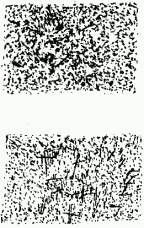
Psychology Today journalist Matthew Hutson covers some fascinating experiments just published in this week’s Science that found that reducing participants’ control increase the tendency for magical thinking and the perception of illusory meaning in random or patternless visual scenes.

Hutson covers all six experiments, but here’s a sample from his article which should give you the general idea:

In the fourth study, people who recalled a situation where they lacked control were more likely to see nonexistent images in snowy pictures and were also more likely to suspect conspiracies in ambiguous vignettes. (In one story, three local construction companies raise their prices after their owners all spend the same weekend at one bed and breakfast. In another, the protagonist was denied a promotion right after his boss and a workmate exchanged a flurry of emails.)

The fifth experiment showed that describing the stock market as volatile (versus stable) renders people more likely to spot false correlations in reports on company financials—and then make stock investments based on their unfounded conclusions.

Finally, the sixth study showed that feeling good about yourself reduces the frantic grasping for straws. There were three groups. One group recalled not having control, another recalled not having control and then performed a self-affirmation task, and a third group did neither. The first group saw more figures in snowy pictures and perceived more conspiracies than the other groups did. Apparently, increasing self-esteem fosters a sense of control over one’s life and reduces the need to seek additional stability in random noise.

Two of the ‘snowy pictures’ are shown on the right. The one on the top is completely random, the other has an embedded picture.

This is particularly interesting to me, because one of my own studies I completed with some colleagues in Cardiff also involved getting participants to perceive images in random visual patterns.

We did something a little different though, in that we didn’t have any hidden images, so every time someone saw something we knew it was illusory.

However, we also managed to alter how often people saw the images, but we used electromagnets (a technique called TMS) to alter the function of the temporal lobes which have been previously thought to be involved in the magical thinking spectrum – from everyday examples to diagnosable psychosis.

This study was inspired by an earlier study by neuroscientist Peter Brugger, who found that people who professed a belief in ESP (‘telepathy’) were more likely to see meaningful patterns in visual noise than those that didn’t.

Both the new study and our study are interesting because they show how this type of magical thinking can be manipulated.

However, this new study takes it to a whole new level because it involves a whole range of magical thinking tests (not just the ‘snowy patterns’) and shows how a number they are subject to the tides of emotion and feelings of being in control.

Link to Hutson’s excellent write-up.
Link to study in Science.
Link to DOI entry for same.

SciAmMind tackles implants, scans, death and terror

The latest edition of Scientific American Mind has just arrived on the shelves and the online articles are one of the best selections I’ve seen in a very long time – with pieces on brain-computer interfaces, five ways in which brain scans mislead us, toddlers and their temper tantrums, the science of gossip, why we can’t imagine death and why metaphors are shaping the ‘war on terror’.

The article on the psychology of death is from the always interesting Jesse Bering and has been inspired by an evolutionary view of death concepts:

The common view of death as a great mystery usually is brushed aside as an emotionally fueled desire to believe that death isn‚Äôt the end of the road. And indeed, a prominent school of research in social psychology called terror management theory contends that afterlife beliefs, as well as less obvious beliefs, behaviors and attitudes, exist to assuage what would otherwise be crippling anxiety about the ego‚Äôs inexistence…

Yet a small number of researchers, including me, are increasingly arguing that the evolution of self-consciousness has posed a different kind of problem altogether. This position holds that our ancestors suffered the unshakable illusion that their minds were immortal, and it’s this hiccup of gross irrationality that we have unmistakably inherited from them. Individual human beings, by virtue of their evolved cognitive architecture, had trouble conceptualizing their own psychological inexistence from the start.

This is reflected in the many studies which have show that we reason what might be thought as rather oddly about death – we have a tendency to attribute mental states to dead people.

Even if you believe in an immortal soul, it is unlikely that the mind continues in any way which we could conceive, and yet we tend to implicitly assume that certain abilities and attributes continue after death.

The other freely available articles are also fantastic. It’s one of the best issues in ages, so well worth having a look at.

Link to October SciAmMind.

Neuropod on depression, theatre, speech and credit

The September edition of the Nature Neuroscience podcast Neuropod recently appeared online and covers the treatment of depression, how deaf people retain their ability to speak, a psychoanalytic contribution to the understanding of stock market instability, and a feature on the London play Reminiscence (in which I make a brief appearance).

The discussion on depression is particularly interesting as it’s based on a recent review article by Robert DeRubeis that looked at the neural effects of antidepressants and cognitive therapy as they help treat depression.

The piece on the psychoanalytic study of financial markets struck me as completely left-field but is also very interesting, as psychologist David Tucket argues that fund managers have too much information and so internalise models or rules of thumb that are as equally affected by emotion and concerns about their job as hard evidence, meaning that as a population, the whims of the human psyche can cause large economic effects.

The rest is very interesting too, and the interview with myself and Michael and Effy from the Reminiscence team is a lovely conclusion to a hugely enjoyable project.

Link to Neuropod homepage with streamed audio archive.
mp3 of September edition.

Autism in 100 words

A micro explanation of autism by Simon Baron-Cohen from this month’s British Journal of Psychiatry as part of their monthly feature which tries to explain a key concept in psychiatry in 100 words.

Autism – in 100 words

Simon Baron-Cohen

Autism Spectrum Conditions (ASC) occur in 1% of the population, are strongly heritable, and result from atypical neurodevelopment. Classic autism and Asperger Syndrome (AS) share difficulties in social functioning, communication and coping with change, alongside unusually narrow interests. IQ is average or above in AS with average or even precocious age of language onset. Many areas within the `social brain’ are atypical in ASC. ASC has a profile of impaired empathy alongside strong `systemising’. Hence, ASC involves disability (when empathy is required) and talent (when strong systemising would be advantageous). Psychological interventions that target empathy by harnessing systemising may help.

Link to piece in BJP.

The action potential, through the medium of dance

Dana Kotler and Joy Gibson are two dancers and medical students at the Albert Einstein College of Medicine who decided they’d like to illustrate the neuronal action potential through the medium of modern dance. It’s a rather unique interpretation and one that will likely stay with me for a while.

And if that doesn’t interest you, just think of girls in leotards throwing salt at each other in the service of a scientifically accurate dance spectacular. And from what I can make out, they’ve illustrated potassium flow with bananas.

Even better, they even go on to illustrate how the action potential breaks down during demyelenating diseases.

And if you still have your dancing shoes on, Scientific America has a brief but interesting article discussing why we might enjoy dance at all.

Link to Action Potential – the performance.
Link to SciAm on ‘Why do we like to dance?’