The psychiatrist delusion

My attention was caught by a recently published case study in which a patient with psychosis had the delusion that he was a psychiatrist:

“This 44-year-old single man was first admitted at the age of 27, with a two-week history of hyperactivity and decreased need for sleep. He described a feeling of well-being and believed he was a famous psychiatrist.”

I’ve met several such patients in my time working in mental health and from talking to other professionals I suspect its not uncommon. Hence, I’d be interested in tracking down other published cases of the delusion.

However, it’s very difficult to search for these cases using online databases because lots of articles have the terms ‘delusion’ and ‘psychiatrist’ in them even when they’re not describing this particular form of psychosis.

I’m keen to see if this delusion is widely documented in the scientific literature or whether it has been brushed under the carpet perhaps due to its obvious irony.

So, I need your help.

If you know of any published cases of people who have the delusion that they are a psychiatrist please add a link or reference in the comments below, drop me an email through this form, or contact me on Twitter here.
 

Link to locked case study mentioned above.
Link to DOI entry for same.

Searching for the Alzheimer’s key

BBC Radio 4’s Crossing Continents has an excellent programme on how an extended family in Colombia with an inherited form of dementia are providing clues that may help us understand Alzheimer’s disease.

The research is being led by a group from the University of Antioquia in Colombia’s second city, Medellín, and has caused waves of excitement among those hoping for a new treatment for the condition.

The project was featured in The New York Times last year and we also covered some of the background to the research at the time.

It’s generally a great programme but my attention was caught by the programme’s description which makes out that the ethical problems are related to possible exploitation of a poor family in the developing world – when economics is really not the issue at hand.

The families do not have a significant financial benefit from their involvement and the debate is more over whether cognitively impaired people can fully consent to their participation.

It also concerns whether families, affected by incurable conditions that appear in young and middle aged people, are motivated by desperation for a cure when they might not understand that this is years away.

This is exactly the same issue that would face any family, anywhere in the world, so I’m not sure why the issue of the family being in the ‘developing world’ is particularly relevant.

The programme also discusses the risk that American could exploit scientists in the developing world.

I’ve been to the neuroscience centre discussed in the programme and it would put many Western research institutes to shame – it’s a modern, multi-disciplinary, high-powered research institute doing cutting edge science.

Not everything outside of Europe and the USA needs to be seen through the lens of poverty and exploitation. Usually, the science speaks for itself.
 

Link to Crossing Continents on leading dementia research.
Link to earlier NYT piece on the same research.

From the bottom of my hard disk

The latest edition of RadioLab is a wonderful exploration of how we interact with machines and whether it is possible to simulate the humanity at the core of who we are.

While most discussions on this topic tend to focus on theoretical artificial intelligence of the future, the programme instead looks at technologies that attempt to connect with us emotionally and might already be allowing us to form intense emotional bonds to machines.

Both delightfully playful and profound, it covers everything from emulated romance to sentient toys.

We begin with a love story–from a man who unwittingly fell in love with a chatbot on an online dating site. Then, we encounter a robot therapist whose inventor became so unnerved by its success that he pulled the plug. And we talk to the man who coded Cleverbot, a software program that learns from every new line of conversation it receives…and that’s chatting with more than 3 million humans each month. Then, five intrepid kids help us test a hypothesis about a toy designed to push our buttons, and play on our human empathy. And we meet a robot built to be so sentient that its creators hope it will one day have a consciousness, and a life, all its own.

A beautiful hour of radio.
 

Link to RadioLab on ‘Talking to Machines’.

Animated psychiatry

Beards and Bowties is a wonderful animated short film about the outdated stereotypes of psychiatrists that still persist.

It’s been created by psychiatrist Kamran Ahmed and is a light-hearted exploration of how psychiatry is perceived by people he meets and others in the medical profession.

The film notes that the important speciality is stigmatised, not just by the general public but by other doctors, and it aims to show a more accurate picture of what psychiatry can be.

I note, however, that the film portrays other doctors and psychologists almost entirely as stereotypes, to the point where the psychiatrist shoves the bearded, pipe-smoking psychologist out of the way to show his medical certificate! Thanks colleague.

Psychodynamic types would probably mutter something about projective identification but I’d probably just mark it down as a little ironic.

However, the film is still hugely entertaining and captures the diversity of modern psychiatry.
 

Link to ‘Beards and Bowties’ on YouTube (via @rcpsych)

A reflection of the greatest

A surprising study has just appeared in The Journal of Personality and Social Psychology about whether narcissists realise what others think about their egotistical self-image.

Narcissism is a trait where people are more concerned about themselves than others and tend to think they are better and more important than their peers.

This has often been considered to be a form of self-delusion or self-serving cognitive bias, while this new study deliberately tested whether highly narcissistic realised what others thought about them.

The study came to the surprising conclusion that narcissism is usually accompanied by a crystal clear insight into how others don’t share the shining view that narcissists have of themselves.

You probably think this paper’s about you: Narcissists’ perceptions of their personality and reputation

J Pers Soc Psychol. 2011 May 23. [Epub ahead of print]

Carlson EN, Vazire S, Oltmanns TF.

Do narcissists have insight into the negative aspects of their personality and reputation? Using both clinical and subclinical measures of narcissism, the authors examined others’ perceptions, self-perceptions, and meta-perceptions of narcissists across a wide range of traits for a new acquaintance and close other (Study 1), longitudinally with a group of new acquaintances (Study 2), and among coworkers (Study 3).

Results bring 3 surprising conclusions about narcissists: (a) they understand that others see them less positively than they see themselves (i.e., their meta-perceptions are less biased than are their self-perceptions), (b) they have some insight into the fact that they make positive first impressions that deteriorate over time, and (c) they have insight into their narcissistic personality (e.g., they describe themselves as arrogant). These findings shed light on some of the psychological mechanisms underlying narcissism.


Link to PubMed entry for study.

Human nature is a moving target

I just caught up with a fascinating discussion on ABC Radio’s Future Tense on what artificial intelligence showdowns like the Turing Test tell us about the evolution of human nature.

It sounds like a bit of clichéd subject but the interview with author Brian Christian is full of novel, thoughtful insights into how human nature is evolving in response to technological innovations.

This is one of many fascinating bits, about the effect of mobile phone technology on the dynamics of conversation.

One of the comments that we’ve heard several times on our program in the past is that people are now starting to interact with each other like computers. That computers aren’t just learning from us, we’re learning from computers…

…I would also say that the shift in telephone technology from landlines to cellphones has had a kind of unforeseen trade-off, which is that we’re now much more accessible geographically, but the cost is that the lag on the connection is six times greater. So it’s about half of a second instead of a little bit less than a tenth of a second.

And it may not seem like much, but in fact it is enough to disrupt a lot of the subtle dynamics of timing and pauses, and yielding to other people, and it’s turning communication much more into a kind of peer data exchange, you know, pure content.


Link to ABC Future Tense on technology and human nature.

A mind of our own

The New York Times has an amazing article on conjoined twins Tatiana and Krista Hogan who share part of their brains and seem to be aware of each others’ minds at work.

It’s a long read but worth it both for how the piece captures both the scientific interest in the possibility of shared consciousness and the personalities of the twins.

Twins joined at the head — the medical term is craniopagus — are one in 2.5 million, of which only a fraction survive. The way the girls’ brains formed beneath the surface of their fused skulls, however, makes them beyond rare: their neural anatomy is unique, at least in the annals of recorded scientific literature. Their brain images reveal what looks like an attenuated line stretching between the two organs, a piece of anatomy their neurosurgeon, Douglas Cochrane of British Columbia Children’s Hospital, has called a thalamic bridge, because he believes it links the thalamus of one girl to the thalamus of her sister.

The thalamus is a kind of switchboard, a two-lobed organ that filters most sensory input and has long been thought to be essential in the neural loops that create consciousness. Because the thalamus functions as a relay station, the girls’ doctors believe it is entirely possible that the sensory input that one girl receives could somehow cross that bridge into the brain of the other. One girl drinks, another girl feels it.

We covered an earlier article that touched on whether the two young children had access to each others’ experiences but the NYT piece explores the issue in far more depth.
 

Link to excellent NYT piece on the Hogan twins (via @mocost).

Empathy in shades of grey

Scientific American has an insightful and beautifully written article asking whether it is possible to make sense of empathy using brain scans.

Neuroscience studies are increasingly focusing on what science calls ‘high level’ concepts and what those outside the field might just call ‘vague’.

Empathy is probably not in the ‘vague’ category although it is true to say that there are several competing definitions and no standard way of measuring it.

It does have huge intuitive appeal, however, leading to a boom in brain scanning studies that are trying to pin down how we understand other people’s emotions.

The SciAm piece takes a trip to the Saxelab Social Cognitive Neuroscience Laboratory at MIT to take a look at how at how a study is attempting to understand the neuroscience of empathy, as well as asking some searching questions about whether we are over-simplifying the problem

A short but excellent piece of writing.
 

Link to SciAm article ‘Looking for Empathy’ (via @edyong209).

Face to face with psychopathy

The Guardian has a curious article where journalist Jon Ronson investigates what it means to be a psychopath and meets a patient diagnosed with psychopathy at one of Britain’s highest security psychiatric hospitals.

In popular culture, ‘psychopath’ refers to a crazed killer but in psychiatry it refers to someone with anti-social personality traits along with low empathy and manipulative behaviour. Although psychopathy is more common amongst violent criminals it is not restricted to this group and the many other people can have ‘psychopathic traits’.

Ronson explores the concept and his experiences of meeting someone with the condition, but also recounts some surprising anecdotes from the history of the condition.

In the late 1960s, a young Canadian psychiatrist believed he had the answer. His name was Elliott Barker and he had visited radical therapeutic communities around the world, including nude psychotherapy sessions occurring under the tutelage of an American psychotherapist named Paul Bindrim [see previously on Mind Hacks]. Clients, mostly California free-thinkers and movie stars, would sit naked in a circle and dive headlong into a 24-hour emotional and mystical rollercoaster during which participants would scream and yell and sob and confess their innermost fears…

And so he successfully sought permission from the Canadian government to obtain a large batch of LSD, hand-picked a group of psychopaths, led them into what he named the “total encounter capsule”, a small room painted bright green, and asked them to remove their clothes. This was truly to be a radical milestone: the world’s first ever marathon nude LSD-fuelled psychotherapy session for criminal psychopaths.


Link to Guardian article on psychopathy (via @tomstafford)

The psychology of the dead in the Amazon

Anthropologist Anne Christine Taylor lived with the Achuar people of the Northern Amazon and described the traditional beliefs about how death causes specific psychological impairments to the deceased although their presence can be experienced through drug-induced visions that form a part of a boy’s voyage into manhood.
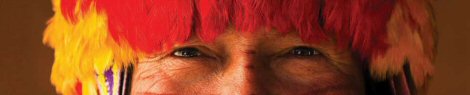
In an article on the mourning practices of the Achuar, Tayor describes how the tribe have no concept of an ‘afterlife’ as they make no distinction between planes of existence and believe that the wakan or disembodied essence of the dead still remain in the area.

Strikingly, death is thought to affect the mind of the deceased so that the disembodied person retains sensory perception and some limited understanding but they remain entirely unaware of the nature of their own (un)existence.

This lack of understanding of their new ‘situation’ is thought to cause intense intense loneliness and psychological distress in the dead.

The funeral ceremony serves to inform the deceased that they have died and provides a way of disremembering the deceased. There are no rituals of remembrance, tombs or markers.

In fact, the tribe makes efforts to ensure that the dead are no longer talked about, remembered or memorialised in any way because thinking about the ‘dead’ is thought to be a form of dangerous contact in which the mentally impaired wakan can capture people to alleviate their solitude and anguish.

The wakan do, however, play a part in the rituals of manhood. From the age of about ten or twelve the menfolk of the village go into the forest to drink a mixture of green tobacco juice and datura stramonium – a plant common around the world and known by a list of poetic names such as jimson weed, devil’s trumpet and burundanga.

The plant is highly hallucinogenic and despite the fact that it grows almost everywhere it is rarely used recreationally as it usually leaves the affected person completely delirious and dangerously close to death.

But for the Achuar men, the drink separates the wakan from the body of the drinker, allowing a meeting with a wakan of the dead. Taylor describes the visions:

The apparition eventually comes forth, first in the shape of a huge ball of fire rolling towards the supplicant (the payar or comet evoked in many mourning chants), or of two giant, intertwined anacondas thrashing about in the clearing, or of a huge, dead and blackened tree, a blood-soaked warrior, or possibly a looming, mutilated arm cracking the joints of its fingers. The seeker must then go up to this horrifying vision and touch it with his hand or a stick, whereupon it explodes and disappears.

After this almighty vision, the seeker encounters the wakan of one of the deceased who communicates a verbal message to the seeker which he must never reveal.

The ceremony is repeated throughout the lifespan in order to establish the manhood of the Achuar males and build up both their fighting spirit and self-control.
 

Link to locked Anne Christine Taylor on mourning in the Achuar.

Update: Now, thanks to Galina Miklosic a Ukrainian translation of this post (we’re told!)

Media addicted to self-fulfilling porn survey shock

Dr Petra has an excellent breakdown of a recent UK survey that ran with the finding that a quarter of men are worried about their online porn use.

Although the piece looks at the details of this particular headline grabbing story, it really serves as a good critique of almost any media survey about sex, as it examines the process of how such surveys are conducted and subsequently reported by the media.

Porn is a topic that is of increasing interest to the media because it fills a particular niche in the way sex is reported: it allows a sexy headline grabbing topic to presented while framing it with acceptable matronly concern.

If you look at the press coverage of this survey (alongside reflecting on the discussions I had with journalists today) some very definite patterns of how journalists/the media see sex/relationships and porn.

The view from medialand is as follows:

Who looks at porn? Well, it’s men. They are all straight and the porn they are seeking out is also heterosexual. Women are constructed as having problems/concerns about pornography – but only in relation to their (male) partner’s use of it. ‘Pornography’ as a term is used to mean one genre from one format (the internet). Looking at mainstream porn in moderation is okay, but if you do it often then it becomes a problem. Quite often described in the medicalised language of addiction.

Men are naturally sexual and so can’t help liking porn, but if they do look at it they’ll become abusers or change their neurological makeup or sexual behaviour. Women don’t like porn, those who do are presented as being in a minority, probably deluded, or liking romantic/couples-based/equality-based/feminist porn. Porn within relationships is only permissible if it’s to spice things up (or encourage reluctant wives to get in the mood). LGBT folk aren’t even thought about…

If you’re starting from this as your standard position it makes thinking critically about pornography difficult. It means journalists will be tasked (or choose) to find evidence to stack up this world view. It also means it’s risky to find other ways to think about/explore porn for fear of being seen to endorse it.

By the way, the image on the right is a French cartoon from the 1800s satirising concern about the ‘pornography epidemic’.

Plus ça change, plus c’est la même chose.
 

Link to excellent Dr Petra piece on media porn surveys.

A neurologist, fighting to the last

The San Francisco Chronicle has a striking article about a neurologist who is dying from the disease he has researched all his professional career. He is writing his last paper as he slowly gives way.

The condition is called amyotrophic lateral sclerosis, also known as ALS or Lou Gehrig’s disease, which slowly destroys neurons in the spinal cord that control the muscles in the body, leading to a gradual loss of control, paralysis and death through breathing problems.

The doctor is Richard Olney an expert in the condition who is writing up his last study on the condition by using a device which lets him type with his eye movements.

Dr. Richard Olney is racing to finish what is almost certain to be his last research paper.

The 63-year-old UCSF neurologist is considered one of the country’s top clinical specialists for amyotrophic lateral sclerosis, or ALS, popularly known as Lou Gehrig’s disease. ALS is also the reason Olney is in a hurry to finish his paper: He was diagnosed with ALS in 2004, and after a long period of relative stability, the disease appears to be rapidly winning out over the doctor.

Olney has almost no muscle function left.

“He’s at the end stages now, certainly,” said Dr. Catherine Lomen-Hoerth, once Olney’s medical trainee, now his doctor. “I’m hopeful he may have at least a few months.”

Olney hopes the disease he is studying will spare him at least long enough to finish his research on it. His son, Nicholas, 33, is assisting with the final write-up.

The piece is tragic yet inspiring and a tribute to a life’s work lived to the full.

God speed good doctor.
 

Link to SF Chronicle article (via @stevesilberman).

A history of killing

The psychology of murder is the topic of a fantastic edition of ABC Radio’s All in the Mind that looks at the changing motivations behind the most serious of crimes.

You might think that the reasons for committing murder have been relatively constant across time, even if the perceived necessity has been been changed by modern society.

But it turns out that the social psychology of murder has changed radically in the last 500 years.

Honour and shame are no longer considered to be the most important psychological factors in determining social standing and murder is no longer considered an acceptable way of redressing the balance.

Pieter Spierenburg: Basically it means that honour moves away from being based on the body, being tied to the body, being based on preparedness to defend yourself and your dependants, and that you get other sources of honour that for example economic success or that even in a later period what they called sexual purity is a source of honour, being a good husband, a good head of the family, things that people take pride in and that becomes a source of honour— a man can be honourable without being violent…

James Gilligan: The more people have a capacity for feelings of guilt and feelings of remorse after hurting other people, the less likely they are to kill others. I think in the history of Europe what one can see is a gradual increase in moral development from the shame / honour code to the guilt / innocence code.

The programme not only tracks the history of murder and its motivations but looks at this is dealt with in modern day prison systems and violence prevention programmes. A fascinating look at a violent act.
 

Link to All in the Mind on ‘Murder in mind’.

Three Christs return and are waiting to be won

The New York Review of Books has just reprinted the classic book ‘The Three Christs of Ypsilanti’ documenting psychologist Milton Rokeach’s offbeat experiment where he brought three delusional Christs together in the same psychiatric hospital.

I wrote about the astounding but somewhat ethically dubious study in a recent article for Slate if you want some background and I’m pleased to see a new edition being printed, as even the out-of-print second edition was being sold for hundred of dollars.

The publishers have kindly offered a copy of the book as a prize, sent anywhere in the world, so we thought we’d run a quick competition (please note, although I’m quoted on the publishers’ page for the book, I’m not financially involved in any way).

Anyway, the competition is this:

You’re working in a psychiatric hospital and suddenly everyone thinks you’re a patient. How would you convince them you’re really a psychiatrist?

Leave an answer in the comments, I’ll pick the best one by the end of the week and the prize will be sent to you, anywhere in the world.

COMPETITION CLOSED: Thanks for all your wonderful entries. The winner has been announced although you’re welcome to continue to add your own fantastic ideas below if you’d like to join the fun.


Link to publishers page for The Three Christs of Ypsilanti.

The exceptional mourning of twins

I’ve just found an amazing article that looks at how the death of twins is mourned in cultures around the world.

The journal Twin Research and Human Genetics is usually dedicated to the science of twin studies – a key method for understanding the role of genetics and the environment on the development of human traits.

In 2002 they had a special issue that took a very different look at the subject – examining grief and mourning related to twins.

One of the articles is a stunning look at the anthropology of twin death, exploring the diverse and intriguing beliefs and practices concerning twin death.

This is a short excerpt on funeral practices (I’ve removed references removed for ease of reading) although I could have selected almost any part of the fascinating article:

Mythical attributes, such as animal kinship, inevitably influence twin funerary rites. The Ga (west Africa) presume twins have the wild bushcow’s spirit, and living twins rush about like wild cows when a twin dies. The Nootka and Bella Coola (NW North America) believed salmon and twins had close affinity. The Nootka did not bury a dead twin infant, but laid it on swampy ground. A twin who died after infancy was not interred like a singleton, but placed in a box in a riverside tree until the current swept away tree and box together.

Nuer (NE Africa) twin infants’ bodies were placed in trees due to their purported kinship with birds. Both birds and twins were children of God, gaat kwoth, spirits who dwell in air and clouds. A stillborn twin was left in a reed basket in a tree fork and birds of prey supposedly left them intact. Adult Nuer twins weren’t buried, but were laid on a platform with no ceremonies. Twins did not attend others’ funerals.

The Gilyak (Sakhalin Island, Far east) cremated singletons, but burial was mandated for a twin or his parents. Twins, as offspring of the mountain god, were dressed in white and seated Turkish style in a specially built house surrounded with shavings.

The article is completely open-access and, although an academic paper, is quite readable and completely engrossing.
 

Link to article entry (click through for full text PDF)

Layers of the revolution

Revolutionology is an excellent blog on the uprising in Libya written by a PhD sociology candidate who has embedded himself with the rebel forces.

It’s not an impartial view of the conflict, as it intends to document the views and perceptions of the rebels, but it is full of insightful observations that reflect Libyan society and the fluid culture of the insurgents.

It has both serious analysis and sometimes funny observations, all with the keen eye of a sociologist.

This is a lovely example posted yesterday:

It’s 2:15 pm on March 31. We’re in a car headed toward the front, which is west of Ajdabiyah.

Muhammad, our driver, slips a CD in the car stereo. Arab house music comes on.

Joao, a Portuguese photographer sitting behind me, starts pumping his fist in the air to the beat.

Muhammad (in Arabic, to me): “Tell him not to do that, man.”

Me: “Why not?”

Muhammad, laughing: “The rebels will launch a rocket at us.”

Me: “Huh?”

Muhammad: “The fist-pump in the air — that’s what Gaddafi and his guys do. The rebels do this [he puts two fingers up in a “V”]. Stick with the two fingers.”

(Muhammad changes the CD.)


Link to Revolutionology.