Five minutes with Carolyn Mair

CMairI’ve often seen people on the web who advertise themselves as ‘fashion psychologists’ who say they can ‘match clothes to your personality’. I’ve always rolled my eyes and moved on.

So I was fascinated to meet Carolyn Mair, a cognitive scientist who did her PhD in perceptual cognition, who now leads a psychology programme at the world-renowned London College of Fashion.

They are doing rigorous psychology as it applies to fashion, clothes and the beauty industry and I asked her to speak to Mind Hacks about herself and her work.

Can you say a little about your background?
My first job was as a ‘commercial artist’ (now graphic designer). Alongside this I made a reasonable income from painting portraits and murals. I then moved to Australia for two years where I worked in a cake shop/bakery where I was able to decorate cakes for special occasions. On returning to the UK, I became a mother and continued painting portraits and murals and also began to design and sell children’s clothes as well as cakes.

During this time, I studied on the BSc Applied Psychology and Computing at Bournemouth University in 1992 and then the MSc Research Methods Psychology at Portsmouth University in 1995. I was asked to do a PhD in Computational Neuroscience, a very young discipline in 1999, investigating the ‘binding problem’; specifically short-term visual memory. During this period I spent three months at the centre of Cognitive Neuroscience at SISSA in Trieste which dramatically changed the direction of my thesis from computational to cognitive neuroscience. I completed my postdoc in the Department for Information Science, Computing and Maths at Brunel University and then took up a Senior Lectureship at Southampton Solent University. I left there in 2012 to join London College of Fashion as Subject Director Psychology.

How did you get into the psychology of fashion?
I love fashion! I started making clothes for myself when I was 13 years old and for others during my teens and again when I had children. Following a chance meeting at a conference in 2011, I was asked to give a paper on psychology and fashion at London College of Fashion. I was then invited back to discuss how psychology could be introduced at Masters level. A role was created, I applied and was successful. I have since developed the world’s first Masters programmes, an MA and MSc, to apply psychology to or, in the context of, fashion.

Why does fashion need psychology?
Fashion is about perception, attention, memory, creativity and communication; it involves reasoning, decision-making, problem-solving and social interaction. Fashion is psychology! Although it has been interpreted anecdotally in psychological terms for centuries, applying psychology to fashion as a scientific endeavour is very new.

Psychology matters beyond what our clothes say about us. People are involved in every aspect of fashion from design, though production, manufacture, advertising and marketing, visual merchandising, retail, consumption and disposal. Taking a scientific approach enables us to derive a more meaningful understanding of behaviour related to fashion and therefore to predict and ultimately change behaviour for the better. We know that within one second of seeing another person, we decide how attractive they are, whether we like them and what sort of characteristics they possess. In addition, what we wear can affect our mood and confidence, and interestingly, what we believe about what we are wearing influences our cognitive performance.

However, the ultimate impact and value of applying psychology to fashion goes beyond what we wear. The fashion industry is an important global industry which employs millions of people worldwide and ultimately involves us all. Since the 60s, the fashion industry has promoted a very narrow stereotype of ‘beauty’ which has now become the ‘norm’ through the ubiquity of web and mobile technology. With the increase in exposure to such images, comes an increase in body dissatisfaction across the lifespan. This brings multiple behavioural issues which can be addressed by psychologists.

In addition, psychologists can challenge the status quo and promote a more inclusive and diverse representation of what is ‘beautiful’ by demonstrating the benefits such an approach would bring. The narrow stereotype of beauty is reinforced through the multibillion pound cosmetic industry. The repercussions of this can be seen in the increase in demand for cosmetic surgery and other interventions many of which are conducted by unqualified practitioners on vulnerable individuals. The impact of such practice is yet to be fully realised, but psychologists are concerned at the lack of regulations that currently exist.

The fashion industry has a poor reputation in terms of the environment and sustainability. In fact, sustainable fashion can be considered an oxymoron. However, it is possible to have a sustainable fashion industry which considers the environment and consumers who care more about what they buy and in doing so buy less. Working alongside fashion professionals, the role of psychology in addressing these issues is education.

When I started applying psychology to fashion, I was determined not be a ‘wardrobe therapist’ or a ‘fashion psychologist’. I am often asked to write about what a particular garment or accessory says about the wearer, for example do glasses suggest intelligence or what does a politician’s fashion style say about him or her? My typical response is that deriving deep meaning from a single ‘snapshot’ is unrealistic as it’s more complex than that! I have been surprised about the demand for this sort of information and think the time is right for developing this new sub-discipline of psychology that has the potential to do good at individual, societal and community levels.

Fashion is a multibillion global industry which employs millions of people worldwide. As a result it affects, and is affected by the intricacies, fallibilities and fragility of human behaviour. In addition to those impacted by fashion as employer; fashion influences its consumers at all levels. Even if we consider ourselves not interested in fashion per se, we all wear clothes! Until recently, the scientific study of psychology applied in the context of fashion has been neglected. This important area, which affects billions worldwide, is in obvious need of investigation.

Name three under-rated things
Looking healthy as opposed to looking young
Getting older
Chilling out

The CIA’s inner circle of white elephant specialists

CC Licensed Image from Flickr by The U.S. Army.  Click for source.The New York Times recently covered a report by long-term critics of psychologists’ involvement in the CIA torture programme.

It includes a series of leaked emails which suggests something beyond what is widely noted – that the US security agencies have been handing out key contracts to high profile psychologists on the basis of shared political sympathies rather than sound scientific evidence. The result has been a series of largely ineffective white elephant security projects that have cost hundreds of millions of dollars.

To back up a bit, this new report claims, on the basis of the leaked emails, that there was collusion between the American Psychological Association and the CIA to make psychologists’ participation in brutal interrogations possible through engineering the written code of ethics.

The allegations are not new but as part of the coverage The New York Times includes the full text of the report which includes the full text of key emails.

The APA have commissioned an independent investigation and have released a statement, quite reasonably actually, saying they’re not going to comment until it’s concluded.

But looking at the emails, you can see that the CIA was buddies with a select group of high profile psychologists who later get big money contracts from the US Government. You may recognise the names.

One email from Kirk Hubbard, Senior Behavioral Scientist for the CIA, notes that “I have been in contact with Ekman and he is eager to do work for us”, seemingly with regard to a forum on the science of deception. This is Paul Ekman famous for his work on facial emotions and micro-expression.

Hubbard notes that Martin Seligman, famous for his work on learned helplessness and later positive psychology, “helped out alot over the past four years”. Seligman hosted a now well-documented meeting in December 2001 for “a small group of professors and law enforcement and intelligence officers” who “gathered outside Philadelphia at the home of a prominent psychologist, Martin E. P. Seligman, to brainstorm about Muslim extremism”.

This meeting included James Mitchell, of the now notorious Mitchell Jessen and Associates, who developed the CIA’s brutal interrogation / torture programme.

To be clear, I am not suggesting that Ekman and Seligman were directly involved in CIA interrogations or torture. Seligman has gone as far as directly denying it on record.

But there is something else interesting which links Ekman, Seligman and Mitchell: lucrative multi-million dollar US Government contracts for security programmes based on little evidence that turned out to be next to useless.

Ekman was awarded a contract to train ‘behavior detection officers’ at US airports using a technique called SPOT (Screening Passengers by Observation Techniques) based on detecting facial expressions – part of a $900 million programme. It was widely criticised as lacking a scientific foundation, there has been not one verified case of a successful terrorist detection, and evaluations by the Department of Homeland Security, the Government Accountability Office and the Rand Corporation were scathing.

Seligman was reportedly awarded a $31 million US Army no-bid contract to develop ‘resilience training’ for soldiers to prevent mental health problems. This was surprising to many as he had no particular experience in developing clinical interventions. It was deployed as the $237 million Comprehensive Soldier Fitness programme, the results of which have only been reported in some oddly incompetent technical reports and are markedly under-whelming. Nicholas Brown’s analysis of the first three evaluative technical reports is particularly good where he notes the tiny effects sizes and shoddy design. A fourth report has since been published (pdf) which also notes “small effect sizes” and doesn’t control for things like combat exposure.

And famously, Mitchell and Jessen won an $81 million contract to develop the interrogation programme, now officially labelled as torture, and which the Senate Intelligence Committee suggested was actually counter-productive in gathering intelligence.

Applying psychology to improve airport security screening, soldiers’ well-being and interrogation are all reasonable aims. But rather than reviewing the evidence to see what’s possible and contracting relevant specialists to develop and evaluate programmes where possible, they seem to have contracted supporters of the ‘war on terror’ for work that lacked an applied evidence base.

The outcome has been expensive and ineffectual.
 

Link to full text of critical report, full text of emails in Appendix.

Spike activity 01-05-2015

Quick links from the past week in mind and brain news:

IT News reports on a serious proposal to have Australian kids exams marked by artificial intelligence.

First results from psychology’s largest reproducibility project according to Nature. Maybe bad news, maybe not-so-bad news – read the full piece for the devil and the detail.

The New York Times covers on a new report by ethical psychology campaigners that says that the American Psychological Association collaborated with the CIA on the justification for torture.

Can social unrest be predicted with social media? asks Science Insider

The Lancet Psychiatry on the history of cutting the body to cure the mind.

Why we laugh. Wonderful TED talk from neuroscientist Sophie Scott.

The Lay Scientist has an interesting network analysis of porn data: visualising fetish space. SFW. Unless your boss is offended by graph theory.

Ants Swarm Like Brains Think: A neuroscientist studies ant colonies to understand feedback in the brain in Nautilus.

Vice on mental health

Somewhat unexpectedly, Vice magazine has just launched a series of articles, videos and interviews on mental health, and it’s really very good.
The VICE Guide to Mental Health covers the science of mental illness, what it’s like being sectioned, recovering from suicide or being severely anxious, and the social issues in getting mental health care, to name just a few of the many articles.

It also covers sex and drugs (it is Vice magazine after all) but even those are pretty good.

The series has been done in collaboration with the mighty mental health charity Mind and is well worth your time.
 

Link to The VICE Guide to Mental Health.

Cognitive lives scientific

CC Licensed Image by Flickr user Charly W. Karl. Click four source.The BBC Radio 4 series The Life Scientific has recently profiled three four, count’em, three four, cognitive scientists.

Because the BBC find the internet confusing I’m just going to link straight to the mp3s to save you scrabbling about on their site.

The most recent profile you can grab as an mp3 was artificial intelligence and open data Nigel Shadbolt.

The next mp3 for your list is an interview with cognitive neuroscientist and teenage brain researcher Sarah-Jayne Blakemore.

And finally, grab the mp3 of the programme on spatial memory researcher and recent Nobel prize winner John O’Keefe.

UPDATE: Thanks to those nice folks on the Twitter who told me about another edition I missed. AI scientist Maggie Boden was also profiled and you can also grab that edition as an mp3.

That’s more than an hour an a half of pure cognitive science. Use carefully. Keep away from fire. Remember, the value of your investments may go down as well as up

Spike activity 24-04-2015

Quick links from the past week in mind and brain news:

Prospect Magazine has a good article on early psychosis and young people who hear voices.

The cost of fame. The Message discusses the nefarious social effects of fame.

Neuroskeptic asks Where Are The Big Ideas in Neuroscience?

Emotional Intelligence Doesn’t Translate Across Borders. Essential piece from the Harvard Business Review.

The New Yorker has an excellent Oliver Sacks post-traumatic brain biography of actor Spalding Gray.

Can the Static-99 save us from sex offenders? BuzzFeed has an extended article on a widely used but perhaps over-trusted risk prediction tool in forensic psychology.

Neuroconscience has an excellent piece on current big trends in neuroscience.

Ritual cannibalism occurred in England 14,700 years ago reports Science News.

A visual history of madness

The Paris Review has an extended and richly illustrated piece by historian Andrew Scull who tracks how madness has been visually depicted through the ages.

Scull is probably the most thorough and readable historian of madness since the death of the late, great Roy Porter, and this article is no exception.

Modern psychiatry seems determined to rob madness of its meanings, insisting that its depredations can be reduced to biology and nothing but biology. One must doubt it. The social and cultural dimensions of mental disorders, so indispensable a part of the story of madness and civilization over the centuries, are unlikely to melt away, or to prove no more than an epiphenomenal feature of so universal a feature of human existence. Madness indeed has its meanings, elusive and evanescent as our attempts to capture them have been.

By the way, most of the illustrations in the web article seem to be clickable for high resolution full screen versions, so you can see them in full detail.
 

Link to Madness and Meaning in Paris Review.

Spike activity 17-04-2015

Quick links from the past week in mind and brain news:

The latest instalment of ‘the seductive allure of neuroscience’ has been released (aka the force awakens) – a solid study suggest spurious neuroscience adds weight to explanations. Great coverage from the BPS Research Digest.

Aeon asks an interesting question: throughout evolutionary history, we never saw anything like a montage. So why do we hardly notice the cuts in movies?

There’s an excellent Motherboard documentary on the contested future of autonomous military robots you can watch online. To the bunkers!

Should I train to be a psychologist? asks The Telegraph “Clinical psychologist: pick this if you’re non-judgmental, thick-skinned and empathetic”. Cardigans, Telegraphs, you failed to mention cardigans.

Harvard Business Review has a good piece on how artificial intelligence is almost ready for business.

There’s a fascinating piece in The New York Times about how deep brain stimulation for Parkinson’s might have its effect.

Pacific Standard covers an interesting study on how school counsellors improve school performance.

Did Neurons Evolve Twice? asks Quanta Magazine. I’m not sure either of mine have common ancestors to be honest.

Narratively has a great profile of the only psychiatrist in Sadr City, Iraq.

Sex and relationship researchers write an open letter to the NSPCC to protest their use of a PR survey to claim a tenth of 12-13 year olds believe they are addicted to porn.

MIT Tech Review has a great interview on why seemingly ‘obvious’ technological interventions for poverty fail. Culture, culture, culture.

Long corridors of the mind

I’ve just read Barbara Taylor‘s brilliant book The Last Asylum: A Memoir of Madness in Our Times which blends her own experiences as a patient in one of the last remaining asylums with an incisive look at the changing face of mental health care since the Victorian era.

Taylor is a renowned historian but the book is not what you’d expect. It’s scandalous, searingly honest and often a exquisitely observed look at herself and others as they made shaky orbits around the mental health system.

Through severe mental unwellness, the state mental health system, and a searching course of psychoanalysis, Taylor is an exceptional guide and she is provides a lot of cold hard truths, as well as a lot of warm, overlooked ones.

You might think that this is a book in the same vein as Kay Redfield Jamison’s An Unquiet Mind or The Center Cannot Hold by Elyn Sacks – accounts by brilliant women who recount the challenges of developing their careers while walking on the shifting sands of the mind.

But Taylor’s book is quite different. She has become a renowned history professor but the book ends well before, when she gets her first steady job after a long period of disability. Actually, most of the book describes her dysfunction in the face of wanting to fulfil her ambitions.

In this sense, the book is more like an explorer’s journal than the post-voyage story of success. It carefully captures the day-to-day atmosphere and characters of a world she never thought she’d be in.

Wrapped around this are Taylor’s descriptions of how her experiences, and the experiences of many others like her, were situated in the mental health system of the late 20th Century. It captures the course not only of her madness, but madness as a part of a changing society.

By the way, the ‘last asylum’ in the title is the sprawling Friern Hospital née Colney Hatch Lunatic Asylum, which we’ve discussed previously on Mind Hacks as one of the many Victorian asylums which have become don’t-mention-the-past luxury flats.
 

Link to more info on The Last Asylum by Barbara Taylor.

She’s giving me hallucinations

Last year I did a talk in London on auditory hallucinations, The Beach Boys and the psychology and neuroscience of hallucinated voices, and I’ve just discovered the audio is available online.
It was part of the Pint of Science festival where they got scientists to talk about their area of research in the pub, which is exactly what I did.

The audio is hosted on SoundCloud which gives you an online stream but there’s no mp3 download facility. However, if you type the page URL into the AnythingToMP3 service it’ll present you with you an mp3 to download.

It was a fun talk, so do enjoy listening.

UPDATE: The nice folks at Pint of Science have made the mp3 downloadable directly from the SoundCloud page so no second website trickery needed.

Link to audio of Vaughan’s talk on hallucinated voices.

Spike activity 10-04-2015

Quick links from the past week in mind and brain news:

A new series of BBC Radio 4’s mind and brain magazine programme All in the Mind has just kicked off.

The New York Times has an excellent piece on America’s mental illness fuelled, jail and treatment revolving door: For Mentally Ill Inmates, a Cycle of Jail and Hospitals.

One of the few good, balanced pieces on the recent ‘genetics of sex offending’ study appeared in The Independent. Full open-access paper here if you want the original source.

MIT Tech Review reports an example of how the newly cloudified IBM AI system Watson will likely be applied more widely: focussed but free-form information provision at the human level. In this case, a museum tour guide that answers any question thrown at it.

A special documentary on Artificial Intelligence and Cinema was broadcast on BBC Radio 4. You can listen online, streamed only, because the BBC know that mp3s can kill.

New Scientist reports that a baboon bone has been found in the famous Lucy skeleton.

The pseudonymous and excellent neuroscience blogger Neuroskeptic is interviewed at Blogginheads.tv and we finally get to see his real face.

A fluctuating wellness

The New York Review of Books has an excellent new piece by Oliver Sacks where he describes the psychological effects of cancer treatment in terms of its effects on the ‘homeostasis of well being’.
The article weaves together the role of the autonomic nervous system, the progression of migraine and the repressions and releases of cancer treatment.

Indeed, everything comes and goes, and if one could take a scan or inner photograph of the body at such times, one would see vascular beds opening and closing, peristalsis accelerating or stopping, viscera squirming or tightening in spasms, secretions suddenly increasing or decreasing—as if the nervous system itself were in a state of indecision. Instability, fluctuation, and oscillation are of the essence in the unsettled state, this general feeling of disorder. We lose the normal feeling of “wellness,” which all of us, and perhaps all animals, have in health.

As you might expect it’s intricate, poetic and profound.
 

Link to ‘A General Feeling of Disorder’.

A brain of wonders

The U-T San Diego, which I originally thought was a university but turns out it’s a newspaper, has an excellent online multimedia project called ‘The Wonders of Your Brain’ which is an extensive and excellent look at some of the key issues in modern neuroscience.
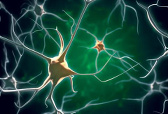
It tackles everything from the development of the brain from embryo to old age, how the brain processes senses, the challenges of neurosurgery, mental health and brain disorders, and the future of brain science – to name just a little of the content.

It has some great articles, fantastic video, and includes a range of neuroscientists discussing their work.

Specialist science magazines would be proud to have this as a neuroscience piece so good work U-T San Diego. I may never have heard of you but apparently your a proper newspaper and you do great online neuroscience specials.

Recommended.
 

Link to ‘The Wonders of Your Brain’.

How is the brain relevant in mental disorder?

The Psychologist has a fascinating article on how neuroscience fits in to our understanding of mental illness and what practical benefit brain science has – in lieu of the fact that it currently doesn’t really help us a great deal in the clinic.

It is full of useful ways of thinking about how neuroscience fits into our view of mental distress.

The following is a really crucial section, that talks about the difference between proximal (closer) and distal (more distant) causes.

In essence, rather than talking about causes we’re probably better off talking about causal pathways – chains of events that can lead to a problem – which can include common elements but different people can arrive at the same difficulty in different ways.

A useful notion is to consider different types of causes of symptoms lying on a spectrum, the extremes of which I will term ‘proximal’ and ‘distal’. Proximal causes are directly related to the mechanisms driving symptoms, and are useful targets for treatment; they are often identified through basic science research. For example, lung cancer is (proximally) caused by malfunction in the machinery that regulates cell division. Traditional lung cancer treatments tackle this cause by removing the malfunctioning cells (surgery) or killing them (standard chemotherapy and radiotherapy)…

By contrast, distal causes are indirectly related to the mechanisms driving symptoms, and are useful targets for prevention; they are often identified through epidemiology research. Again, take the example of lung cancer, which is (distally) caused by cigarette smoking in the majority of cases, though it must be caused by other factors in people who have never smoked. These could be genetic (lung cancer is heritable), other types of environmental trigger (e.g. radon gas exposure) or some interaction between the two. Given the overwhelming evidence that lung cancer is (distally) caused by smoking, efforts at prevention rightly focus on reducing its incidence. However, after a tumour has developed an oncologist must focus on the proximal cause when proposing a course of treatment…

The majority of studies of depression have focused on distal causes (which psychologists might consider ‘underlying’). These include: heritability and genetics; hormonal and immune factors; upbringing and early life experience; and personality. More proximal causes include: various forms of stress, particularly social; high-level psychological constructs derived from cognitive theories (e.g. dysfunctional negative schemata); low-level constructs such as negative information processing biases (also important in anxiety); and disrupted transmission in neurotransmitter systems such as serotonin.

It’s not a light read, but it is well worth diving into it for a more in-depth treatment of the brain and mental illness.
 

Link to Psychologist article neuroscience and mental health.

Trauma is more complex than we think

I’ve got an article in The Observer about how the official definition of trauma keeps changing and how the concept is discussed as if it were entirely intuitive and clear-cut, when it’s actually much more complex.

I’ve become fascinated by how the concept of ‘trauma’ is used in public debate about mental health and the tension that arises between the clinical and rhetorical meanings of trauma.

One unresolved issue, which tests mental health professionals to this day, is whether ‘traumatic’ should be defined in terms of events or reactions.

Some of the confusion arises when we talk about “being traumatised”. Let’s take a typically horrifying experience – being caught in a war zone as a civilian. This is often described as a traumatic experience, but we know that most people who experience the horrors of war won’t develop post-traumatic stress disorder or PTSD – the diagnosis designed to capture the modern meaning of trauma. Despite the fact that these sorts of awful experiences increase the chances of acquiring a range of mental health problems – depression is actually a more common outcome than PTSD – it is still the case that most people won’t develop them. Have you experienced trauma if you have no recognisable “scar in the psyche”? This is where the concept starts to become fuzzy.

We have the official diagnosis of posttraumatic stress disorder or PTSD but actually lots of mental health problems can appear after awful events, and yet there is no ‘posttraumatic depression’ or ‘posttraumatic social phobia’ diagnoses.

To be clear, it’s not that trauma doesn’t exist but that it’s less fully developed as a concept than people think and, as a result, often over-simplified during debates.

Full article at the link below.
 

Link to Observer article on the shifting sands of trauma.

Spike activity 06-03-2015

Quick links from the past week in mind and brain news:

The strange world of felt presences. Great piece in The Guardian.

Nature reports that the Human Brain Project has voted for a change of leadership. But read carefully, it’s not clear how much will change in practice.

Surely the worst ‘neuroscience of’ article ever written? “The Neuroscience of ISIS” from The Daily Beast. Ruthlessly, it’s the first in a series.

Project Syndicate on why social science needs to be on the front-line of the fight against drug-resistant diseases.

Psychiatry is More Complex than Either its Proponents or its Critics Seem Able to Admit. Insightful piece on Mental Health Chat.

iDigitalTimes on what DeepMind’s computer game playing AI tells us where artificial intelligence falls short.

No link found between psychosis and use of ‘classic’ psychedelics LSD, psilocybin and mescaline in two large studies, reports Nature.

Beautiful online exhibition of the work of surreal optical illusion photographer Erik Johansson over at Twisted Sifter.