A victim of metaphor

A gripping piece from Not Exactly Rocket Science describes how simply changing the metaphors used to describe crime can alter what we think is the best way of tackling it.

The article covers a new study on the power of metaphors and how they can influence our beliefs and understanding of what’s being discussed.

In a series of five experiments, Paul Thibodeau and Lera Boroditsky from Stanford University have shown how influential metaphors can be. They can change the way we try to solve big problems like crime. They can shift the sources that we turn to for information. They can polarise our opinions to a far greater extent than, say, our political leanings. And most of all, they do it under our noses. Writers know how powerful metaphors can be, but it seems that most of us fail to realise their influence in our everyday lives.

First, Thibodeau and Boroditsky asked 1,482 students to read one of two reports about crime in the City of Addison. Later, they had to suggest solutions for the problem. In the first report, crime was described as a “wild beast preying on the city” and “lurking in neighbourhoods”. After reading these words, 75% of the students put forward solutions that involved enforcement or punishment, such as calling in the National Guard or building more jails. Only 25% suggested social reforms such as fixing the economy, improving education or providing better health care.

The second report was exactly the same, except it described crime as a “virus infecting the city” and “plaguing” neighbourhoods. After reading this version, only 56% opted for more enforcement, while 44% suggested social reforms. The metaphors affected how the students saw the problem, and how they proposed to fix it.

The study is interesting because it touches on a central claim of the linguist George Lakoff who has argued that metaphors are central to how we reason and make sense of the world.

Lakoff’s arguments have had a massive influence in linguistics, where they have started more than one scientific skirmish, and were adopted by the US Democratic party in an attempt to reframe the debates over key issues.

Despite the fact that Lakoff was one of the pioneers of the idea that metaphor is central to reasoning, his political associations have made him somewhat unfashionable and it’s interesting that this new study makes only passing reference to his work.
 

Link to Not Exactly Rocket Science on new metaphor study.
Link to full text of scientific study.

Existential internet states

Thought Catalog has an amusing and unsettlingly accurate piece on ‘Five Emotions Invented by the Internet’ which has a series of existential feelings uniquely evoked by our favourite worldwide communication network.

The state of being ‘installed’ at a computer or laptop for an extended period of time without purpose, characterized by a blurry, formless anxiety undercut with something hard like desperation.

During this time the individual will have several windows open, generally several browser ‘tabs,’ a Microsoft Word document in some state of incompletion, the individual’s own Facebook page as well as that of another randomly-selected individual who may or may not be on the ‘friends’ list, 2-5 Gchat conversations that are no longer immediately active, possibly iTunes and a ‘client’ for Twitter. The individual will switch between the open applications/tabs in a fashion that appears organized but is functionally aimless, will return to reading some kind of ‘blog post’ in one browser tab and become distracted at the third paragraph for the third time before switching to the Gmail inbox and refreshing it again.

More new emotional experiences triggered by the interweb at the link below.
 

Link to ‘Five Emotions Invented by the Internet’.

Funky shit

In the debate about the ability of language to adequately describe conscious experience, jazzed-out rappers The Jungle Brothers came out firmly behind the skeptical position of philosopher of mind Eric Schwitzgebel with their 1997 track ‘Brain’.

In the 2007 book Describing Inner Experience? Proponent Meets Skeptic psychologist Russell Hurlburt argued that modern research methods make accurate accounts of inner experience possible whereas Schwitzgebel, a philosopher, disagreed saying that language simply cannot match our rich subjective experience and is prone to error.

However, a decade earlier The Jungle Brothers had strongly supported the idea that language is simply not up to the job of capturing our conscious experience.

I got so much funky shit inside my brain
I couldn’t explain, couldn’t explain
You wouldn’t understand, I couldn’t explain

Explanation of the funk essential trapped in my brain
Couldn’t do it, make me wonder how a world maintain
Got emcees frontin’ total masquerade
Screamin’ toast had to touch them up with my blade

Although their general theory now has a number of proponents, as far as I know, they are unique in proposing that “Screamin’ toast had to touch them up with my blade”.
 

Link to video of The Jungle Brothers’ ‘Brain’.

Sniffing out the unconscious

The illusion that a horse could do maths may be behind sniffer dogs falsely ‘detecting’ illicit substances according to an intriguing study covered by The Economist.
The horse in question was called Clever Hans and he was rumoured to be able to do complicated maths, work out the date, spell German words – all from questions called out by the audience.

The trainer would run his hand across possible responses on, for example, a piece of paper, and Hans would tap with his hoof to signal when the correct answer was being pointed to.

Psychologist Oskar Pfungst became suspicious and eventually worked out than the horse was doing no more than waiting until his trainer changed his body posture when he hit on the right answer.

His trainer was completely unaware that his expectancies were shaping the horse’s behaviour but this form of unintentional behavioural influence over animal behaviour has become known as the ‘Clever Hans effect‘.

The Economist reports on a new study of sniffer dogs that seems to show a similar effect in action.

Sniffer dogs and their handlers were told to search an area that that might have up to three target scents and that on two occasions the scents would be clearly marked with bits of red paper.

In reality, there were no target scents, so anything the dogs detected was a false alert.

When handlers could see a red piece of paper, allegedly marking a location of interest, they were much more likely to say that their dogs signalled an alert. Indeed, in the two rooms where red paper was present and sausages were not, 32 of a possible 36 alerts were raised. In the two where both red paper and sausages were present that figure was 30–not significantly different. In contrast, in search areas where a sausage was hidden but no red piece of paper was there for handlers to see, it was only 17.

The dogs, in other words, were distracted only about half the time by the stimulus aimed at them. The human handlers were not only distracted on almost every occasion by the stimulus aimed at them, but also transmitted that distraction to their animals–who responded accordingly. To mix metaphors, the dogs were crying “wolf” at the unconscious behest of their handlers.

In other words, when the human handlers become suspicious the dogs are more likely to seem to detect suspicious scents, making the process a lot more subjective than the search teams like to believe.
 

Link to The Economist article ‘Clever hounds’.

Want to come up and see my sketchings?

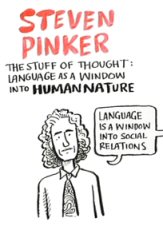
The Royal Society of Arts has an awesome video that animates one of Steven Pinker’s lectures on ‘Language as a Window into Human Nature’.
It covers how we use certain implicit properties of language to negotiate social relationships – discussing everything from the cult film Fargo to why we try and seduce people with indirect speech rather than coming out and saying “fancy a shag”.

Delightful to watch and definitely 10 minutes well spent.
 

Link to animated ”Language as a Window into Human Nature’.

2011-02-18 Spike activity

Quick links from the past week in mind and brain news:

The Atlantic asks is it time to welcome our new computer overlords? – In light of the recent IBM Watson powered Jeopardy-pocalypse. Time? I’ve already slammed the bunker door.

The ‘boy without a cerebellum baffles doctors’ story is tackled by the not very baffled Neurological blog and the boy’s mother joins the discussion in the comments.

Law News Now reports on a news study finding that juries are less likely to convict defendants wearing glasses – nicknamed “the nerd defense”.

When a psychotherapist’s patient confesses to murder in the consulting room. The BPS Research Digest covers a fascinating study on this curious situation.

The Guardian reports on a second study finding that regular use of a second language during adulthood is associated with the later development of Alzheimer’s disease.

Prehistoric Brits made first pint glasses out of human skulls. Not Exactly Rocket Science calls time on the recently found craneo-vessels.

Wired Science reports on a study finding that the algorithms that describe the spread of an earthquake also describe how words spread through the political blogosphere.

Posterior Hippocampus and Sexual Frequency. The Neurocritic presents us with a great name for an Indie band and finds an interesting correlation. “The two outliers who had sex every day could be driving the correlation” – and if that isn’t a great lyric, I don’t know what is.

American Scientist has an engrossing piece arguing against the common idea that early humans were psychologically primitive.

The Curse of Mental Accounting. The Frontal Cortex has an excellent piece on hotel overcharging and the temptations of economics context.

Puzzle video games shown to treat anxiety and depression in a randomised controlled trial. The Rogue Neuron takes us one step further towards the day when patents are send to the Dungeon Master.

New Scientist asks whether Botox can really cure chronic migraine. Next week, can fake tits cure long-sightedness?

So, you say you’re pregnant sir? Wonderland on phantom pregnancy syndrome – in men.

The Guardian has a brief articles where a bunch of hype-weary neuroscientists give the brain stimulating ‘insight boosting’ thinking cap a scientific roughing up.

A concise summary of sexual psychology from Ionian Enchantment.

The California Report looks at brain surgery, while awake.

Is the ability to influence others by showing emotion a new aspect of emotional intelligence? The BPS Occupational Digest covers a fascinating new study.

Cerebrum has an interesting piece on the science of predicting aggression – although starts with an odd disclaimer about how “biological causes are difficult to identify and may be impossible to overcome” – which seems to miss the point that risk factors are additive not determinative.

History of psychology fans won’t want to miss the evolving list of key bibliographies over at Advances in the History of Psychology.

Psychiatric Times now has a monthly column by the history of psychiatry guys from the excellent h-madness blog.

A place downtown where the freaks all come around

Kellogg Insight has a fantastic article on how nightclub bouncers make instant status judgements to decide whether to let people into exclusive clubs.

It’s a curious insight into perception of social status that both relies on some social stereotypes and turns others completely on their head.

The article is based on the work of sociologist Lauren Rivera who got a job as a “coat-check girl” in a high class club to observe the selection process in action before revealing her true intentions and interviewing the doormen to work out how they made status judgements of hopeful clubbers.

Through conversations and observations, she found that bouncers ran through a hierarchical list of qualities to determine in seconds who would enhance the image of the club and encourage high spending. Social networks mattered more than social class, or anything else for that matter. Celebrities and other recognized elites slipped through the door. And people related to or befriended by this “in crowd” often made the cut, too.

Wealth is considered to be one of the strongest indicators of status, yet bouncers frowned upon bribes even though bribes are obvious displays of money. “New Faces,” as the bouncers called unrecognized club-goers, were selected on the basis of gender, dress, race, and nationality. Sometimes the final call boiled down to details as minor as the type of watch that adorned a man’s wrist.

As we’ve discussed before, Rivera is not the first sociologist to immerse herself in the swing of urban night life for her work.

Sociologist Simon Winlow actually got a job as a bouncer to get, er, hands on experience of the role of violence in the night time economy.
 

Link to Kellog Insight on status judgements in night clubs.
Link to previous Mind Hacks post on work of Simon Winlow.

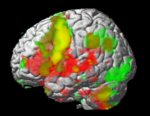
Brain area for empty news stories discovered

Satirical website Newsbiscuit has a cutting article making fun of the regular ‘brain scans show…’ news items that are a staple of the popular science pages.
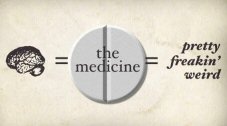
Scientists are heralding a breakthrough in brain scan technology after a team at Oxford University produced full colour images of a human brain that shows nothing of any significance.

‘This is an amazing discovery’, said leading neuroscientist Baroness Susan Greenfield, ‘the pictures tell us nothing about how the brain works, provide us with no insights into the nature of human consciousness, and all with such lovely colours.’…

The development, which has been widely reported around the world, is also significant because it allows journalists to publish big fancy pictures of the brain that look really impressive while having little or no explanatory value.

‘These scans are fantastic,’ said Lawrence McGinty, Science Editor for ITV News, ‘not only are they bright and colourful but the graphics department have even converted them into 3D and can make them spin around the screen while I stand in front waving my hands about. None of this helps to explain anything, but it does it so much better the old black and white pictures. They were rubbish.’


Link to ‘New brain scan reveals nothing at all’ (via @michaelmeadon).

A strangely effective video

Australian science reporter Professor Funk has made a fantastic animated video about the science of the placebo effect that’s three minutes of sheer joy even without an active ingredient.
It takes you through the remarkable ways in which the placebo effect differs between different types of pills, perceptions and places and is highly recommended.
 

Link to ‘The Strange Powers of the Placebo Effect’ on YouTube.

A long view of the nervous system

BBC Radio 4’s In Our Time has a wonderful programme on the history of our knowledge about the nervous system which you can listen to streamed from the webpage or download as an mp3.

It’s a satisfyingly in-depth discussion that tracks first beliefs about the nervous system from ancient times through the renaissance into the modern age.

Scholars first described the nerves of the human body over two thousand years ago. For 1400 years it was believed that they were animated by ‘animal spirits’, mysterious powers which caused sensation and movement. In the eighteenth century scientists discovered that nerve fibres transmitted electrical impulses; it was not until the twentieth century that chemical agents – neurotransmitters – were first identified.

 
Link to episode page with streaming.
mp3 of programme.

Five minutes past trauma

A new series of ABC Radio National’s All in the Mind has just kicked off with a thoughtful programme about treating traumatised people just after a tragic event.

If you’re not familiar with the contentious area of disaster response, you may be surprised to hear that there is no firm evidence that psychological treatment of just-traumatised people is any more helpful in the long-term than doing absolutely nothing.

This is in contrast to the widely held belief that all disaster victims ‘need’ to see mental health professionals. In fact, studies on psychological treatment in disaster victims have suggested the worrying result that some treatments may actually make matters worse in the long-term for some people.

This was famously found in studies on single session ‘debriefing’ but also less well known is that there is a similar conclusion with regard to multi-session psychological treatment that is aimed to prevent trauma in disaster victims.

To complicate matters, in the studies where the effects are shown to be harmful in the long-term, patients reported feeling better immediately after the sessions.

If you are a psychologist responding to a disaster, grateful and apparently relieved patients are extremely strong personal evidence that you are being helpful, even if in the long-term you might be causing problems.

This makes it very hard for some to accept that they need to question what they are doing.

But there is one over-arching and important point that trauma psychologist Richard Bryant makes in the programme – that, despite some good hints, the evidence is still not firm enough to say for sure whether we are helping, harming or being irrelevant when working with just-traumatised victims.

It must be stressed that this is in contrast to treating people who are still traumatised a long while after an incident and haven’t recovered on their own, where we know psychological treatment is helpful and important.

This issue of All in the Mind is a fantastic discussion of the potential benefits and drawbacks of ‘trauma debriefing’ and immediate psychological treatment and don’t miss some great additional material on the blog.
 

Link to AITM on ‘The mind in crisis’.
Link to additional material and audio on the AITM Blog.

It’s just something inside my head

A remarkably accurate account of the learned helplessness theory of depression as recounted in the lyrics of downbeat hip-hop track ‘Something Inside My Head’ by London based rapper Akala.

I wasn’t born this way
My condition was learned
Once bitten twice shy I don’t wanna be burned
When you travel a passage
That leaves your heart ravaged
Your mind waxes placid to limit the damage
Your reaction is passive
Whether you like it or not
You cannot win whether you fight it or not
Your brain swallows the pain and buries it instead
Now.. It’s just something inside my head

Link to audio on YouTube.
Link to lyrics.

2011-02-11 Spike activity

Quick links from the past week in mind and brain news:

Discover Magazine interviews the neuroscientist of love – who seems to have three hands in the photo. Imagine.

Is anorexia more strongly influenced by size zero models in the mass media or use of online social networking? Neuroskeptic covers a fascinating new study.

New Scientist has a Valentine’s day optical illusion for you. Insert small penis joke here.

Footage of one of the last few groups of supposedly ‘uncontacted people’ on the planet is given a brilliant write-up by Neuroanthropology.

Slate has a short but incisive critique of behavioural economics.

Let’s say good-bye to the straw-feminist, says an excellent piece by Cordelia Fine on the science of sex differences on PLoS Blogs. If, of course, we can also agree to say goodbye to the straw sexist.

BBC News has a fascinating piece on the stigma of Japan’s ‘suicide apartments‘.

There’s a fantastic write-up of the recent Maudsley debate on whether Female Sexual Arousal Disorder is a fabrication on the BMJ Blog.

Discover Magazine has a piece on how depression dulls the senses.

A funny and charming newspaper correction is picked up by the ever intriguing Language Log.

Nature News reports on a new study finding that antipsychotics cause small but reliable brain shrinkage. Also Reuters reports on a study finding a risk to heart function even early in treatment.

White matter differences in pre-op transsexuals should NOT be the basis for childhood Interventions. The Neurocritic catches some potentially dangerous woolly thinking on gender and brain scans.

Science News has an in-depth article that looks at the role of the amygdala in picking out rewards in a piece that helps dispel the persistent ‘fear centre’ stereotype.

Along similar lines, the Eide Neurolearning Blog has a short but interesting piece on a study on amygdala size and the size of our social network.

Science reports that happy people live longer. Typical.

Tim Salmon wrote a book about his personal experience of schizophrenia and he takes part in a thoughtful interview over at Frontier Psychiatrist.

Discover Magazine has an excellent article on prosopagnosia – the condition sometimes inaccurately called ‘face blindness’.

Bluma Zeigarnik was a hauntingly beautiful Russian psychologist after whom the Zeigarnik Effect is named. PsyBlog look at what it tells us about beating procrastination in a brilliantly written post.

The Fortean Times covers a London art exhibition inspired by CIA mind-control experiments.

fMRI Beatbox. New Scientist short article with embedded video. Finishes with the wonderful line “If you enjoyed this video, you might also like to watch a couple having sex in an MRI scanner.” Uncanny.

Miller-McCune reports on a study finding that sexy female presenters distract male viewers from absorbing the news. Or, the news distracts… oh forget it.

Let’s hear it for the boy

A fascinating study just published in the Archives of Sexual Behaviour looked at the link between women’s vocalisations during sex and the timing of orgasm during heterosexual encounters, finding that there was little connection with female climax but a strong link with male ejaculation.

The researchers draw the ego-denting conclusion that women’s moans and sighs are not an involuntary reaction to male sexual prowess, but a way of exerting influence over their partner’s sexual response.

In the study, many of the women also explicitly reported what the researchers coyly labelled a ‘tactical use of copulatory vocalizations’ as a specific sexual strategy.

This manoeuvring of male behavior not only ensures the delivery of his ejaculate [be still my beating heart!], but may also serve to end male copulatory effort under circumstances when the female is, for example, suffering discomfort or pain, boredom, fatigue, or simply does not have enough time for the encounter to last longer. Females appear to be fully conscious of the positive effects that their copulatory vocalizations have on male self-esteem and a very high percentage reported using them for this purpose.

Further advantages of the female being able to manipulate the presence/absence/timing of the male orgasm may include the reduction of her risk of incurring physical damage from roughness, abrasion, and ensuing infection. One of the effects of female copulatory vocalizations may be to promote male self-esteem, which may strengthen the pair bond, decreases the risk of emotional infidelity and abandonment, resulting in continued access to resources and protection.

These data were remarkably consistent with findings reported in non-human primates, where, for example, in Barbary macaques (Macaca sylvanus) the likelihood of male ejaculation is related to the intensity and speed of female vocalizations during copulation…

These data were consistent with the proposal that male ejaculation is influenced by female copulatory vocalizations rather than vice versa and points towards the evolutionary origin of human female vocalizations in the context in our polygynandrous “past” rather than our pseudo-monogamous present.

Thankfully the researchers ended the paper with that throwaway evolutionary explanation which gives me a good excuse the ignore the hard data and pretend it never happened.
 

Link to study summary and DOI entry. Sadly locked.
Link to PubMed entry for study.

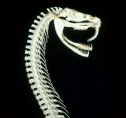
Getting high from snakebites

The addiction journal Substance Abuse has two cases of people using snakebites to get high.
To be clear, this isn’t the mix of beer and cider, a drink also known as snakebite, but an actual venomous bite from a serpent.

Here’s the first case – and yes, alternative reality fans – he really is named ‘Mr PKD‘ in the report:

Mr. PKD, a 52-year-old married male with a history of substance use for past 34 years started taking alcohol at the age of 18 and over the years he added cannabis, benzodiazepines, and opioids over different periods of time and in varying combinations to produce the desired effects…

Two months before contacting our center, the patient learned of the intoxicating effects of snake venom through some of his friends and, as reasoned by the patient, he decided to try it in order “to experience the kick the other substances now lacked.”

With the help of the nomadic snake charmers common in India, the patient subjected himself twice to the snake bite over his left forearm over a period of 15 days. There was no local tissue injury at the site of the bite apart from the bite marks.

The patient described a feeling of dizziness and blurred vision followed by a heightened arousal and sense of well-being lasting a few hours; a more intense state of arousal than he would experience with pentazocine injections. The patient was not able to identify the snakes used but was apprehensive about the risks involved in the process.

The other case involves a man who “subjected himself to being bitten once on his left foot by a small Indian cobra (Naja naja). The patient described the experience as a blackout associated with a sense of well-being, lethargy, and sleepiness”.

Anyone even slightly tempted by this description should check out the off-putting illustrations on the Wikipedia page on snakebites. Slightly less trippy I’m sure you’ll agree.
 

Link to DOI entry for case reports.
Link to PubMed entry for case reports.

I’m Gladwell to hear it

The Malcolm Gladwell Book Generator is simultaneously a very silly and a very funny website that generates Malcolm Gladwell books from a parallel universe.

If you never knew you wanted to read:

“The Tripping Point: How Psychoactive Substances Created a… Wait, I Can’t Feel My Face Bro”

or

“The Paradox Paradox: Why Nobody Gives a Shit About Great Mysteries”

…you might discover your inner talent for not being interested in a whole new range of topics.
 

Link to The Malcolm Gladwell Book Generator (via @AndreaKuszewski)