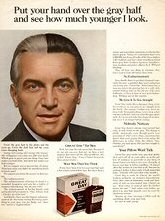
A history of the mid-life crisis

Scientific American’s Bering in Mind has a fantastic article on how the concept of the mid-life crisis was invented and whether it has any evidence behind it beyond the occasional inadvisable pair of cycling shorts and sudden interest in cheesy sports cars.

It turns out that the idea of the ‘mid-life crisis’ is surprisingly new – first touted in 1965 – but was invented to refer to a crisis of creativity in geniuses – rather than a sudden urge to dye one’s greying hair.

There isn’t actually any evidence that middle age is more of a time of crisis than any other period of life, but the concept has stuck.

In the decades since Jacques and Levinson posited their mostly psychoanalytic ideas of the midlife crisis, a number of more empirically minded psychologists have attempted to validate it with actual data. And with little success. Epidemiological studies reveal that midlife is no more or less likely to be associated with career disillusionment, divorce, anxiety, alcoholism, depression or suicide than any other life stage; in fact, the incidence rates of many of these problems peak at other periods of the lifespan.

Adolescence isn’t exactly a walk in the park either—as a teen, I’d worry so much about the uncertainties of my future that I vividly recall envying the elderly their age, since for them, no such uncertainties remained. Actually, old people—at least Swiss old people—aren’t fans of the “storm and stress” of adolescence, either. Freund and Ritter asked their elderly respondents which stage of their lives they’d prefer to return to, if they could. Most said middle age.

From another point of view, of course, the concept could also be a socially convenient way of helping to curtail certain behaviours in men when their actions are no longer thought to be age appropriate.

That’s my theory and I’m sticking to it.
 

Link to Bering in Mind on the mid-life not so crisis.

Epilepsy as a door between worlds

There’s a wonderful anthropology study on beliefs about epilepsy among the Guaraní people in Bolivia in the latest Epilepsy and Behavior.

The Guaraní believe that people with recurrent seizures are a gateway between the worlds of life and death.

Among the Guaraní, epilepsy is called mano-mano, which literally means “die-die” and refers to the concept of death with a notion of frequency (die several times) and also of being in a constant passage between life and death. In other terms, this word means always being on the border between life and death, reflecting the fact that mano-mano produces a constant interruption of life or a “partial death.”…

In fact, the expression mano-mano is meaningful. It refers to the idea of a round trip between life and death. This concept addresses the loss of consciousness and shows that epilepsy is recognized mostly in terms of generalized seizures. The uncertain state between life and death is seen as a kind of “third possible condition” for a human being, a state that generates hesitation over what attitude to hold. PWE [people with epilepsy] are omano-mano-vae, the “undeads,” different from the other members of the community and considered both as victims of this life–death relationship and as enablers of the meeting of these two worlds…

The representation of epilepsy as a state of human being and the perception of this in a vision that involves the entire community allow an interpretation of Guaraní attitudes toward PWE [people with epilepsy]. Guaraní PWE are rarely condemned, misjudged, or isolated as in other cultures. Apparently, PWE do not represent a threat to the Guaraní, who seem to hold the attitude of helping and protecting PWE. As noted, the restrictions and prohibitions cited by the Guaraní appear to derive from the need to take care of PWE, as heavy work, traveling alone, and being involved in problems are believed to worsen the condition or trigger seizures in PWE.

It’s worth noting that while their perception of people with epilepsy is generally positive, several of the people interview gave advice about avoiding contact between affected people and children or pregnant women.

As the researchers note this raises questions “that could be related to a belief that was not mentioned: possible transmission of the disease to those who are considered the weakest and most defenseless in the community.”

However, their general outlook is markedly positive in light of widespread beliefs about epilepsy being the results of evil spirits or a divine punishment.

In contrast, the Guaraní most frequently cited epilepsy as being caused by a “failure to observe the Yekuaku, a fasting period linked to special events”.
 

Link to locked anthropology study.

The death of atypical antipsychotics

The British Journal of Psychiatry has just published the latest in a long line of studies to find that the newer ‘atypical’ or ‘second generation’ antipsychotic drugs are barely better than the old style medications and has a stinging editorial that accompanies the piece calling out years of drug company marketing spun as an illusory advance in medical science.

Unfortunately both are locked (after all, you’d just worry yourself with all those facts) but here is the last paragraph of the editorial. It leaves no ass unkicked.

In creating successive new classes of antipsychotics over the years, the industry has helped develop a broader range of different drugs with different side-effect profiles and potencies, and possibly an increased chance of finding a drug to suit each of our patients. But the price of doing this has been considerable – in 2003 the cost of antipsychotics in the USA equalled the cost of paying all their psychiatrists.

The story of the atypicals and the SGAs [‘second-generation antipsychotics’] is not the story of clinical discovery and progress; it is the story of fabricated classes, money and marketing. The study published today is a small but important piece of the jigsaw completing a picture that undermines any clinical or scientific confidence in these classes.

With the industry reputation damaged by evidence of selective publishing and its deleterious effects, and the recent claims that trials of at least one of the new atypicals have been knowingly ‘buried’, it will take a great deal for psychiatrists to be persuaded that the next new discovery of a drug or a class will be anything more than a cynical tactic to generate profit. In the meantime, perhaps we can drop the atypical, second-generation, brand new and very expensive labels: they are all just plain antipsychotics.


Link to locked editorial ‘The rise and fall of the atypical antipsychotics’.

The New York Times wees itself in public

The New York Times has just pissed its neuroscientific pants in public and is now running round the streets announcing the fact in an op-ed that could as easily been titled ‘Smell my wee!’

The piece is written by Martin Lindström, famous for writing the ‘neuromarketing’ best-seller Buyology, but infamous for not making any of his data or studies public.

In fact, despite constantly mentioning the astounding conclusions from numerous brain imaging studies he was run, not one has appeared in the scientific literature.

But even without knowing about the reliability data or the quality of the analysis, it’s easy to see that he’s talking through his hat because the interpretations are so over-the-top that they are actually beyond what is possible with brain imaging science.

The piece is full of nonsense of various sorts.

I carried out an fMRI experiment to find out whether iPhones were really, truly addictive…

In each instance, the results showed activation in both the audio and visual cortices of the subjects’ brains. In other words, when they were exposed to the video, our subjects’ brains didn’t just see the vibrating iPhone, they “heard” it, too; and when they were exposed to the audio, they also “saw” it. This powerful cross-sensory phenomenon is known as synesthesia.

Actually, this is known as bullshit because synesthesia is where a conscious sensory experience in one sensory domain produces a conscious experience in another.

In other words, synesthesia is defined by the experiences that someone has, not where brain activity shows up.

The fact that brain activity occurs in an area previously linked to a different function does not mean it is being used for that function or that the person is having a related conscious experience.

If this is not entirely clear, think of it like this. Imagine, for the first time in your life, you just heard the sound of a guitar being played as part of a pop song. You’d be a bit daft if every time you heard guitar chords you told people that the music must be a pop song. After all, there’s a guitar in it, right?

Clearly, this is ridiculous because the guitar is an instrument that appears in lots of musical styles but Lindström is doing the neuroscience equivalent of over-interpreting guitar sounds throughout his terrible article.

He starts going on about how activation in the insula, detected in his privately conducted otherwise unknown study, means the person is experiencing love for their iPhone because insula activity has previously been linked to love.

The trouble is, as neuroimaging researcher Russ Poldrack just pointed out, it is one of the most common brain areas that turns up in fMRI studies and appears in about a third of imaging studies no matter what is being studied. In other words, it’s linked to just about every experience and behaviour you can think of.

In fact, it is probably most famous, not for its association with love, but for its association with digust, but Lindstrom apparently decided to avoid this particular interpretation.

This is just one example among many and if you want a breakdown of why the article really is full of crap, I recommend neuroscientist Tal Yarkoni’s point-by-point analysis and facepalm jamboree.

In fact, the op-ed has annoyed so many people there is now a letter to the editor signed by just about every big name in fMRI research on its way to the New York Times in an attempt to open the windows and get rid of that uncomfortable smell.
 

Link to NYT pissing itself in public.
Link to Tal Yarkoni’s excellent mopping up exercise.

Swimming in the tides of war

My recent Beyond Boundaries column for The Psychologist explores how the micro-culture of Colombian paramilitary organisations may have shaped the expression of post-traumatic stress disorder in demobilised fighters.

Dr Ricardo de la Espriella’s office is surprisingly quiet. Buried deep within San Ignacio University Hospital, the growl of the chaotic Bogotá traffic is perceptibly absent. Despite the street-level pandemonium, the capital city of Colombia remains an oasis of relative calm in a troubled country. The five-decade-old conflict has been pushed back from the urban fringes and persists, unabated, in the rural areas where it continues to devastate the country’s diverse cultural landscape. Dr de la Espriella has long promoted an understanding of how psychological distress is filtered through cultural norms. ‘There are difficulties in recognising post-traumatic stress in certain populations, which is why cultural psychiatry is so important’ he stresses, highlighting the surprising variation in response to suffering. In this case, however, he is not talking about the culture of ethnic or racial groups, but the micro-culture of illegal paramilitary organisations.

While working on a project to rehabilitate ex-members of illegal armed groups, he noticed a striking absence of post-traumatic stress disorder in his patients, despite them having experienced extreme violence both as combatants and civilians. Many had taken part in massacres and selective assassinations, and many had lost companions to equally brutal treatment. There were high levels of substance abuse, aggression and social problems, but virtually none showed signs of anxiety. Intrigued, de la Espriella decided to investigate more closely and carefully interviewed the ex-paramilitary patients again, using the Clinician Administered PTSD Scale, which asks specific and detailed questions about post-trauma symptoms. After this more detailed examination, more than half could be diagnosed with the disorder.

The reason for why none of these symptoms presented in day-to-day life seemed to lie in paramilitary subculture. While aggression and drug abuse are tolerated, anxiety is taboo to the point where members showing signs of anxiety can be killed by their compatriots for being ‘weak’. This brutal emotional environment shapes the men to neither show nor spontaneously report any form of fear or nervousness. De la Espriella reported his findings in the Colombian Journal of Psychiatry where he discusses the difficulties in treating people who have been involved in violence and killing. His work also raises the uncomfortable question of who we consider to be a victim of conflict. Can we extend compassion to those who commit the atrocities or do we allow those who swim in the tides of war to drown in its powerful currents?

Thanks to Jon Sutton, editor of The Psychologist who has kindly agreed for me to publish my column on Mind Hacks as long as I include the following text:

“The Psychologist is sent free to all members of the British Psychological Society (you can join here), or you can subscribe as a non-member by going here.
 

Link to column from The Psychologist (bottom of page).

The chaos behind a legendary portrait

I just found this fascinating account of how Vincent Van Gogh cut off his own ear while seemingly severely mentally ill, the event that led him to paint one of his most famous pictures.

The account is apparently reconstructed from known events at the time but also has van Gogh’s own description of the event, taken from letters to his sister.

On Christmas Eve 1888, after Gauguin already had announced he would leave, van Gogh suddenly threw a glass of absinthe in Gauguin’s face, then was brought home and put to bed by his companion. A bizarre sequence of events ensued. When Gauguin left their house, van Gogh followed and approached him with an open razor, was repelled, went home, and cut off part of his left earlobe, which he then presented to Rachel, his favorite prostitute.

The police were alerted; he was found unconscious at his home and was hospitalized. There he lapsed into an acute psychotic state with agitation, hallucinations, and delusions that required 3 days of solitary confinement. He retained no memory of his attacks on Gauguin, the self-mutilation, or the early part of his stay at the hospital…

At the hospital, Felix Rey, the young physician attending van Gogh, diagnosed epilepsy and prescribed potassium bromide. Within days, van Gogh recovered from the psychotic state. About 3 weeks after admission, he was able to paint Self-Portrait With Bandaged Ear and Pipe, which shows him in serene composure. At the time of recovery and during the following weeks, he described his own mental state in letters to Theo and his sister Wilhelmina: “The intolerable hallucinations have ceased, in fact have diminished to a simple nightmare, as a result of taking potassium bromide, I believe.”

“I am rather well just now, except for a certain undercurrent of vague sadness difficult to explain.” “While I am absolutely calm at the present moment, I may easily relapse into a state of overexcitement on account of fresh mental emotion.” He also noted “three fainting fits without any plausible reason, and without retaining the slightest remembrance of what I felt”

Although absinthe is commonly associated with hallucinations and madness, and the author of the article wonders whether it might have helped cause his epilepsy, this is unlikely due to the fact that the effect of absinthe’s ‘special ingredient’ is largely a myth.

The distinctive aspect of the drink, the chemical thujone from the wordwood plant, is actually present in such small quantities that absinthe has virtually no psychoactive effects beyond the alcohol.

However, epilepsy does raise the risk of psychosis and it is suspected that he had temporal lobe epilepsy which is particularly associated with this reality-bending mental state.
 

Link to AJP article on ‘The Illness of Vincent van Gogh’.

Game not over

The Guardian covers a new study on how video games can persist in our perception as fleeting hallucinations in an effect labelled ‘game transfer phenomena’.

Unfortunately, the study has been published in an obscure journal which means I’ve not been able to read it in full, although the write-up quotes the lead researcher, Mark Griffiths:

“The academic literature goes back to 1993,” says Griffiths. “There was a case of a woman who had auditory hallucinations; she just couldn’t get the tune of the game she was playing out of her head – it was very intrusive. But what came out of our pilot research were lots of different experiences, some that were auditory, some visual and some were tactile. We had the example of a teacher who dropped his pen and immediately reached for a joypad button to retrieve it, as though he were in a game.

“Most of the experiences were neutral and often quite positive. We distinguished between what we call automatic GTP, which are almost like reflexes or classically conditioned responses, and those where players deliberately take elements out of the game and work them into their day-to-day routines.”

Needless to say, the tabloids got carried away and ran with ‘gamers losing touch with reality’-type stories although it sounds like the authors of the study were probably a little over-enthusiastic with their own descriptions.

Despite this, it sounds like an interesting study describing how conditioned responses and perceptual expectations learnt in video games might be get triggered in other situations.

I knew someone would get round to studying those weird thoughts about Tomb Raider at some point.
 

Link to Guardian article on ‘game transfer phenomena’

The birth of ‘synthetic marijuana’

Addiction Inbox has an interview with pharmacologist David Kroll where he discusses the origin of the countless synthetic cannabinoids that have recently flooded the market as ‘legal highs’ and ‘incense’.

You may know Kroll better as the author of the long-running top-notch pharmacology blog Terra Sigillata where he has been tracking the ‘synthetic marijuana’ story since its early days.

In this recent interview he gives a fantastic brief description of how these compounds were born and became big business as ‘legal highs’.

Every area of CNS pharmacology has chemists who try to figure out the smallest possible chemical structure that can have a biological effect. In fact, this is a longstanding practice of any area of pharmacology. Huffman was an excellent chemist who in the 1990s was trying to figure out the most important part of the active component of marijuana that might have psychotropic effects. These compounds made by him and his students, surprisingly simple ones, I prefer to call cannabimimetics since they mimic the effect of the more complex cannabinoids in marijuana. These basic chemistry and pharmacology studies are what ultimately lead to new drugs in every field – a facet of chemistry called “structure-activity relationships” or SAR.

But since they are simple, they are relatively easy to make – some of Huffman’s work at Clemson was actually done by undergraduate chemistry majors. So, it was no surprise that they would be picked up by clandestine drug marketers, even though cannabis (UK) and marijuana (US) are freely available. The attraction to users was, until recently, that Huffman compounds (prefixed with “JWH-” for his initials) could not be detected in urine by routine drug testing. Hence, incense products containing these compounds have been called “probationer’s weed.”

In the interview he also discusses drug legality, drug development and prescription. Well worth checking out.
 

Link to David Kroll interview at Addiction Inbox.

Twelfth century orgasmic brain heat

Hildegard of Bingen was a twelfth century nun, possibly with repressed lesbian desires, who had visions, was a proto-scientist, advised the Pope, composed music, and, er, wrote about the role of the brain in the female orgasm.

BBC Radio 4’s Great Lives just had a fantastic programme about her where they read out her description of the female orgasm and how it is driven by a ‘sense of heat’ in the brain.

Remember, if you could possibly forget, that this was written by a nun in the 12th century.

When a woman is making love with a man, a sense of heat in her brain, which brings forth with it sensual delight, communicates the taste of that delight during the act and summons forth the emission of the man’s seed. And when the seed has fallen into its place, that vehement heat descending from her brain draws the seed to itself and holds it.

I for one, certainly feel closer to God after reading that.

Hildegard is most well known among neuroscientists for the descriptions of her visions which Oliver Sacks has interpreted as likely stemming from migraines as these can can cause an array of visual distortions and hallucinations.

Although from now on, I shall give equal consideration to her interest in erotic brain heat.
 

Link to programme info and streaming.
mp3 of the same in different location because the BBC are a bit slow.

Teenage kicks

National Geographic has an excellent article on teenage risk-taking and adolescent brain development.

It goes some way to explaining both the dangerous mistakes that typically peak in the late teens and, I like to think, the bad fashion sense which seems to follow a similar pattern.

Importantly, the piece goes beyond the usually ‘well the frontal lobes are still developing, aren’t they?’ explanation that gets wheeled out whenever teen neuroscience is discussed and hits on some of the gritty details.

Are these kids just being stupid? That’s the conventional explanation: They’re not thinking, or by the work-in-progress model, their puny developing brains fail them.

Yet these explanations don’t hold up. As Laurence Steinberg, a developmental psychologist specializing in adolescence at Temple University, points out, even 14- to 17-year-olds—the biggest risk takers—use the same basic cognitive strategies that adults do, and they usually reason their way through problems just as well as adults. Contrary to popular belief, they also fully recognize they’re mortal. And, like adults, says Steinberg, “teens actually overestimate risk.”

So if teens think as well as adults do and recognize risk just as well, why do they take more chances? Here, as elsewhere, the problem lies less in what teens lack compared with adults than in what they have more of. Teens take more risks not because they don’t understand the dangers but because they weigh risk versus reward differently: In situations where risk can get them something they want, they value the reward more heavily than adults do.

Probably one of the most comprehensive introductions to teen risk you’ll read in a good while.
 

Link to National Gerographic on Teenage Brains.

The football cure / addiction

A psychologist from the University of Alabama says American football can absolutely heal the trauma that the deadly April tornados left behind but be careful because there is a risk you could suffer from football addiction.

Clearly true because he says so in a priceless TV interview and the university backed it up in a hard hitting press release.

Media science – saving YOU from deadly sports addictions.

Outside the criminal mind

ABC Radio National’s All in the Mind recently had a fascinating programme on the science behind offender profiling and whether it lives up to its ‘inside the criminal mind’ image.

If you’re not familiar with the debates about criminal profiling you may be surprised to hear that a fair few forensic psychologists think it’s a waste of time.

Even while studies can show a statistical link between certain psychological characteristics and crime features, it’s not clear whether applying this to individual criminals gives us reliable enough results to guide police investigations.

This edition of All in the Mind explores the various types of criminal profiling and the evidence behind their accuracy.

Although it is somewhat annoyingly cut with scenes from Silence of the Lambs (which has about as much to say about criminal profiling as One Flew Over the Cuckoo’s Nest has to say about psychiatric nursing) it is still a fascinating and insightful look into a little understood practice.

And if this isn’t enough criminology for you, a recent Radio 4 documentary (podcast here) discussed the evidence behind ‘miracle’ crime and violence reduction schemes.
 

Link to All in the Mind on ‘Profiling the Criminal Profilers’.
Link to streamed BBC doco on ‘crime cutting miracles’.
Podcast for same because putting the mp3 on the same page is hard.

Shifting between the worlds of Carl Jung

The New Atlantis has a wonderful article giving an in-depth biography of Carl Jung, perhaps one of the most interesting, infuriating and brilliant thinkers in the history of psychology.

Variously a pioneering experimental psychologist, a depth-analyst, an asylum psychiatrist and a man submerged in his own psychosis, he had a massive influence on both our understanding of the mind and 20th century culture.

…Jung never slackened in his pursuit of the ultimate — both ultimate good and ultimate evil, which he tended to find inseparable. He was frequently off in the empyrean or down in the bowels of hell, consorting with gods and demons as ordinary men do with family and friends. Few persons conducted such conversations, and most of them were inmates of lunatic asylums. For a time the thought that he might be insane terrified him.

The fear dissipated, however, as he became convinced that his visions were genuinely revelatory and belonged to the primordial psychic reality that all men have in common: the collective unconscious, he called it. Poets and such may get away with beliefs like these, for their madness is pretty well taken for granted, but it was a most unorthodox way for an esteemed psychiatrist to think.

Jung is also probably one of the most misunderstood figures in psychology, largely owing to his tendency to swing between science, poetic genius and outright flakery.

The New Atlantis article is a fantastic exploration of the man and his ideas and one of the best short introductions you could find. Well, as short as you could get with Carl Jung.
 

Link to ‘Psychology’s Magician’.

Masters on the mind

Edge has just kicked off their 2011 Master Class with a fantastic course on ‘The Science of Human Nature’ delivered by an impressive line-up of leading cognitive scientists.

Princeton psychologist Daniel Kahneman on the marvels and the flaws of intuitive thinking; Harvard mathematical biologist Martin Nowak on the evolution of cooperation; UC-Santa Barbara evolutionary psychologist Leda Cosmides on the architecture of motivation; UC-Santa Barbara neuroscientist Michael Gazzaniga on neuroscience and the law; Harvard psychologist Steven Pinker on the history of violence; and Princeton religious historian Elaine Pagels on The Book of Revelations.

The first part is already online, where Daniel Kahneman gives a fantastic presentation on the counter-intuitive psychology of intuitive thinking, while the others will appear in the coming weeks.

And as always, I’m sure you’ll be pleased to hear the details of the expensive and exclusive location where the talks take place, lest you worry that the science was being toned down by sub-standard canopés, or God forbid, a pub.
 

Link to Edge Master Class 2011.

A whiff of madness

For a short time, the scientific community was excited about the smell of schizophrenia.

In 1960, a curious article appeared in the Archives of General Psychiatry suggesting not only that people with schizophrenia had a distinctive smell, but that the odour could be experimentally verified.

The paper by psychiatrists Kathleen Smith and Jacob Sines noted that “Many have commented upon the strange odour that pervades the back wards of mental hospitals” and went on to recount numerous anecdotes of the supposedly curious scent associated with the diagnosis.

Having worked on a fair few ‘back wards of mental hospitals’ in my time, my first reaction would be to point out that the ‘strange odour’ is more likely to be the staff than the patients but Smith and Sines were clearly committed to their observations.

They collected the sweat from 14 white male patients with schizophrenia and 14 comparable patients with ‘organic brain syndromes’ and found they could train rats to reliably distinguish the odours while a human panel of sweat sniffers seemed to be able to do the same.

Seemingly backed up by the nasal ninja skills of two different species, science attempted to determine the source of the ‘schizophrenic odour’.

Two years later researchers from Washington suggested the smell might be triggered by the bacteria Pseudomonas aeruginosa but an investigation found it was no more common in people with schizophrenia than those without the diagnosis.

But just before the end of the 60s, the original research team dropped a scientific bombshell. They claimed to have identified the schizophrenia specific scent and got their results published in glittery headline journal Science.

Using gas chromotography they identified the ‘odorous substance’ as trans-3-methyl-2-hexenoic acid, now known as TMHA.

At this point, you may be staring blankly at the screen, batting your eyelids in disinterest at the mention of a seemingly minor chemical associated with the mental illness, but to understand why it got splashed across the scientific equivalent of Vogue magazine you need to understand something about the history, hopes and dreams of psychiatry research.

For a great part of the early 20th century, psychiatry was on the hunt for what was called an ‘endogenous schizotoxin’ – a theorised internal toxin that supposedly triggered the disorder.

A great part of the early scientific interest in psychedelics drew on the same idea as psychiatrists wondered whether reality-bending drugs like LSD and mescaline were affecting the same chemicals, or, in some cases, might actually be the ‘schizotoxins’ themselves.

So a chemical uniquely identified in the sweat of people with schizophrenia was big news. Dreams of Nobel Prizes undoubtedly flashed through the minds of the investigators as they briefly allowed themselves to think about the possibility of finally cracking the ‘mystery of madness’.

As the wave of excitement hit, other scientists quickly hit the labs but just couldn’t confirm the link – the results kept coming in negative. In 1973 the original research team added their own study to the disappointment and concluded that the ‘schizophrenic odour’ was dead.

Looking back, we now know that TMHA is genuinely an important component in sweat odour. Curiously, it turns out it is largely restricted to Caucasian populations but no link to mental illness or psychiatric disorder has ever been confirmed.

The theory seems like an curious anomaly in the history of psychiatry but it occasionally makes a reappearance. In 2005 a study claimed that the odour exists but is “complex and cannot be limited to a single compound, but rather to a global variation of the body odor” but no replications or further investigations followed.

I, on the other hand, am still convinced it was the staff that were the source of the ‘strange odour’, but have yet to get research funding to confirm my pioneering theories.

Now available in Italian L’odore della schizofrenia
(thanks Giuliana!)

Escaping from the past of disaster psychology

Scientific American has a useful piece on how the immediate treatment of psychological trauma has changed since 9/11. The issue is interesting because recent progress has turned lots of psychological concepts on their head to the point where many still can’t grasp the concepts.

The article notes that at the time of the Twin Towers disaster, the standard form of treatment was Critical Incident Stress Debriefing – also known as CISD or just ‘debriefing’ – a technique where psychologists would ask survivors, usually in groups, to describe what happened and ‘process’ all the associated emotions by talking about them.

This technique is now not recommended because we know it is at best useless and probably harmful – owing to the fact that it seems to increase trauma in the long-term.

Instead, we use an approach called psychological first aid, which, instead of encouraging people to talk about all their emotions, really just focuses on making sure people feel secure and connected.

Although the article implies that 9/11 was a major turning point for our knowledge of immediate post-trauma treatment, the story is actually far more complex.

Studies had been accumulating throughout the 90s showing that ‘debriefing’ caused harm in some, although it wasn’t until around the turn of the century that two meta-analyses sealed the deal.

Unfortunately, the practice of ‘debriefing’ by aid agencies and emergency psychologists was very hard to change for a number of interesting reasons.

A lot of aid agencies don’t deal directly with the scientific literature. Sometimes, they just don’t have the expertise but often it’s because they simply have no access to it – as most of it is locked behind paywalls.

However, probably most important was that even the possibility of ‘debriefing’ having the potential to do damage was very counter-intuitive.

The treatment was based on the then-accepted foundations of psychological theory that said that emotions always need to be expressed and can do damage if not ‘processed’.

On top of this, for the first time, many clinicians had to deal with the concept that a treatment could do damage even though the patients said it was helpful and were actually and genuinely getting better.

This is so difficult to grasp that many still continue with the old and potentially damaging practices, so here’s a quick run down of why this makes sense.

The theoretical part is a hang-over from Freudian psychology. Freud believed that neuronal energy was directly related to ‘mental energy’ and so psychology could be understood in thermodynamic terms.

Particularly important in this approach is the first law of thermodynamics that says that energy cannot be created or destroyed just turned into another form. Hence Freud’s idea that emotions need to be ‘expressed’ or ‘processed’ to transform them from a pathological form to something less harmful.

We now know this isn’t a particularly reliable guide to human psychology but it still remains hugely popular so it seemed natural that after trauma, people would need to ‘release’ their ‘pent up emotions’ by talking about them lest the ‘internal pressure’ led to damage further down the line.

And from the therapists’ point of view, the patients said the intervention was helpful and were genuinely getting better, so how could it be doing harm?

In reality, the psychologists would meet with heavily traumatised people, ‘debrief’ them, and in the following weeks and months, the survivors would improve.

But this will happen if you do absolutely nothing. Directly after a disaster or similarly horrible event people will perhaps be the most traumatised they will ever be in their life, and so will naturally move towards a less intense state.

Statistically this is known as regression to the mean and it will occur even if natural recovery is slowed by a damaging treatment that extends the risk period, which is exactly what happens with ‘debriefing’.

So while the treatment was actually impeding natural recovery you would only be able to see the effect if you compare two groups. From the perspective of the psychologists who only saw the post-trauma survivors it can look as if the treatment is ‘working’ when improvement, in reality, was being interfered with.

This effect was compounded by the fact that debriefing was single session. The psychologists didn’t even get to see the evolution of the patients afterwards to help compare with other cases from their own experience.

On top of all this, after the ‘debriefing’ sessions, patients actually reported the sessions were useful even when long-term damage was confirmed, because, to put it bluntly, patients are no better than seeing the future than professionals.

In one study, 80% of patients said the intervention was “useful” despite having more symptoms of mental illness in the long-term compared to disaster victims who had no treatment. In another, more than half said ‘debriefing’ was “definitely useful” despite having twice the rate of postraumatic stress disorder (PTSD) after a year.

Debriefing involves lots of psychological ‘techniques’, so the psychologists felt they were using their best tools, while the lack of outside perspective meant it was easy to mistake instant feedback and regression to the mean for actual benefit.

It’s worth saying that the same techniques that do damage directly after trauma are the single best psychological treatment when a powerful experience leads to chronic mental health problems. Revisiting and ‘working through’ the traumatic memories is an essential part of the treatment when PTSD has developed.

So it seemed to make sense to apply similar ideas to those in the acute stage of trauma, but probably because the chance of developing PTSD is related to the duration of arousal at the time of the event, ‘going over’ the events shortly after they’ve passed probably extends the emotional impact and the long-term risks.

But while the comparative studies should have put an end to the practice, it wasn’t until the World Health Organisation specifically recommended that ‘debriefing’ not be used in response to the 2004 tsunami [pdf] that many agencies actually changed how they went about managing disaster victims.

As well as turning disaster psychology on its head, this experience has dispelled the stereotype that ‘everyone needs to talk’ after difficult events and, in response, the new approach of psychological first aid was created.

Psychological first aid is actually remarkable for the fact that it contains so little psychology, as you can see from the just released psychological first aid manual from the World Health Organisation.

You don’t need to be a mental health professional to use the techniques and they largely consist of looking after the practical needs of the person plus working toward making them feel safe and comfortable.

No processing of emotions, no ‘disaster narratives’, no fancy psychology – really just being practical, gentle and kind.

We don’t actually know if psychological first aid makes people less likely to experience trauma, as it hasn’t been directly tested, although it is based on the best available evidence to avoid harm and stabilise extreme stress.

So while 9/11 certainly focussed people’s minds on psychological trauma and its treatment (especially in the USA which is a world leader in the field) it was really just another bitter waymarker in a series of world tragedies that has shaped disaster response psychology.

So unusually for a psychologist, I’ll be hoping we’ll have the chance to do less research in this particular area and have a more peaceful coming decade.
 

Link to SciAm piece on psychology and the aftermath of 9/11.