The crowd dynamics of the city safari

The Economist has a fascinating article about the weird way that pedestrians behave as they walk through cities and how this knowledge is being applied to make city-living easier and safer.

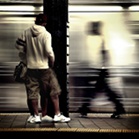
IMAGINE that you are French. You are walking along a busy pavement in Paris and another pedestrian is approaching from the opposite direction. A collision will occur unless you each move out of the other’s way. Which way do you step?

The answer is almost certainly to the right. Replay the same scene in many parts of Asia, however, and you would probably move to the left. It is not obvious why. There is no instruction to head in a specific direction (South Korea, where there is a campaign to get people to walk on the right, is an exception). There is no simple correlation with the side of the road on which people drive: Londoners funnel to the right on pavements, for example.

Although seemingly a trivial difference, the impact could be quite significant when, for example, trying to design emergency exit routes for international sporting events when people from many cultures mix.

The article is full of curious culture observations about how people move in crowds and the science of how and why people select their peoplescape navigating strategies.

Fascinating stuff.
 

Link to Economist article ‘The wisdom of crowds’ (via @mocost).

Transplanted corneas are a window to the soul

A fascinating note on the social meaning of eyes and why people are much more reluctant to donate the cornea after death than other bodily organs.

From a recent article in the journal Transplanatation:

At the time that a patient is diagnosed as brain dead, a substantial proportion of families who give consent to heart and kidney donation specifically refuse eye donation. This in part may relate to the failure of those involved in transplantation medicine and public education to fully appreciate the different meanings attached to the body of a recently deceased person.

Medicine and science have long understood the body as a “machine.” This view has fitted with medical notions of transplantation, with donors being a source of biologic “goods.” However, even a cursory glance at the rituals surrounding death makes it apparent that there is more to a dead body than simply its biologic parts; in death, bodies continue as the physical substrate of relationships. Of all the organs, it is the eyes that are identified as the site of sentience, and there is a long tradition of visual primacy and visual symbolism in virtually all aspects of culture.

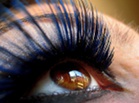
It therefore seems likely that of all the body parts, it is the eyes that are most central to social relationships. A request to donate the eyes therefore is unlikely to be heard simply in medical terms as a request to donate a “superfluous” body part for the benefit of another. That the eyes are not simply biologic provides one explanation for both the lower rates of corneal donation, compared with that of other organs, and the lack of adequate corneal donation to meet demand.

What’s interesting is that the operation to remove the cornea does no visible damage to the donor. It’s just the idea of the thing that puts people off.
 

Link to locked article on eyes, meaning and cornea transplants.

An unborn brain flowering connections

We’ve mentioned some amazing advances in brain scanning unborn babies before on Mind Hacks and this image is another step in that remarkable science.

The coloured fibres in the image are still-developing white matter circuits in the brain of an unborn baby at 36 weeks, picked out by a diffusion MRI scan.

The scan is from a paper just published in Topics in Magnetic Resonance Imaging.
 

Diffusion-tensor imaging or DTI can identify white matter connections, the brain’s ‘cabling’, by picking out which water molecules in the brain only move along restricted paths.

It’s a bit like having a tube in a beehive. Even if you had no idea where the tube was, you could work out its location if you had information on the bee’s movements, because bees inside the tube can only move in one direction.

The same principal applies and DWI looks for the white matter ‘tubes’ by looking for where the brain’s water molecules can only move in certain directions.

This relies on the brain being relatively still so these scans are difficult to do in unborn babies because of their tendency to move around in the womb.

Nevertheless, when they work, the results are spectacular, and we can see the unborn brain flowering into a neurally connected marvel.
 

Link to locked study on Fetal Diffusion Imaging.

Mixing up a decade of All in the Mind

The amazing ABC Radio National programme All in the Mind is ten years old and is celebrating by mixing up some specially themed editions from its extensive archives.

First up is the psychology and neuroscience of sex that tackles everything from gender myths to the neuroscience of female orgasm.

The following edition, to hit the wires next week, is a special on consciousness and there’s plenty more gold on its way.

All in the Mind is one of the few programmes that is as interesting to professionals as it is to enthusiasts and if you’ve never had a listen, now’s a good chance to check out some of the audio.
 

Link to All in the Mind site.
Link to 10th Anniversary Special 1: Getting Sexy.

An untranslatable mind

We tend to think of translation as a problem of grammar but a brilliant post on Notes from Two Scientific Psychologists demonstrates how even concepts about what the mind is can vary across languages.

In Korean, the concept “maum” replaces the concept “mind”. “Maum” has no English counterpart, but is sometimes translated as “heart”. Apparently, “maum” is the “seat of emotions, motivation, and “goodness” in a human being” (Wierzbicka, 2005; p. 271). Intellect and cognitive functions are captured by the Korean “meli” (head). But, “maum” is clearly the counterpart to “mind” in terms of the psychological part of the person. For example, there are tons of Korean books about “maum” and body in the same way that there are English texts on “mind” and body…

Interestingly, Russia, which kind of sits between East and West uses “dusa” as the counterpart to the psychological part of the person. “Dusa” is often translated as “soul”, but also sometimes as “heart” or “mind.” “Dusa” is associated with feelings, morality, and spirituality. The “dusa” is responsible for the ability to connect with other people. This meaning seems to lie somewhat more with the Eastern conception than with the highly cognitive concept of “mind.”

The Notes from Two Scientific Psychologists blog is generally excellent by the way.

I also recommend this great post on female attractiveness, wait-to-hip ratio and why evolutionary psychology needs spend more time working with other cultures before it can really talk about likely evolutionary explanations.
 

Link to ‘How Universal Is The Mind?’

Counting every phantom found

I’ve just found a sublime track by singer songwriter William Fitzsimmons riffing on the antiquated diagnosis of psychasthenia and its treatment with brain surgery. Unexpectedly, it’s quite beautiful.

The song is called Psychasthenia, a reference to old-fashioned diagnosis of the same name that was the first description of what we would now call OCD.

I suspect, however, that the song is actually a laconic commentary on a modern case of OCD as it mentions psychosurgery, recently a current treatment option once more, alongside an oblique reference to treatment with SSRI drugs.

These medications alter the serotonin system and are usually the first treatment option for the condition.

The song seems to put the listener in the place of someone looking for relief from severe OCD while referencing psychasthenia as a way of underlining how our treatments still reflect the early days of psychiatry.

With an alter robe
I have stumbled knife to lobe
In compulsion drown
Counting every phantom found

Cut me open please
Cut me open please

With a bridge I’ve killed
I will serotonin fill
To a fear resigned
Quiet room I hope I find

If this sounds like reading a great deal into what are actually quite abstract lyrics it’s worth noting that Fitzsimmons left his original career as a psychotherapist in an acute psychiatric ward to pursue music full time.
 

Link to audio of Psychasthenia on YouTube

‘Legal marijuana’ and a ban on brain function

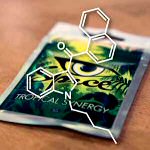
The United States Congress has just passed a bill to ban ‘legal marijuana’ incense products and ‘bath salts’ stimulants – a legal move which, possibly for the first time, prohibits substances based on their action in the brain and not solely their chemical structure.

The bill is an amendment to the Controlled Substances Act which currently contains a list of prohibited drugs, defined entirely by their name.

Due to the varied nature of cannabinoids, and the fact that semi-legit labs seem to be producing new variations at a remarkable rate, the bill uses quite a wide definition.

The bill (pdf here) specifically prohibits “cannabimimetic agents”, defined as:

…any substance that is a cannabinoid receptor type 1 (CB1 receptor) agonist as demonstrated by binding studies and functional assays within any of the following structural classes…

and any preparation

…which contains any quantity of cannabimimetic agents, or which contains their salts, isomers, and salts of isomers…

In other words, the definition includes a general class of compounds and possible chemical variations that have a specific action in the brain – namely binding to the CB1 receptor.

This is, as far as I know, the first attempt to ban a specific brain function.

The safety is these drugs is still largely unknown, however. Although most were developed many years ago they’ve never been scientifically tested in humans and current research is limited to a few case reports or small studies.

There have certainly been deaths and bad reactions but as we have almost no information on how widespread the use of these drug is we really have no idea about the relative risks.
 

Link to news from the DrugMonkey blog.
pdf of passed bill.

Body rock

Nature has a fantastic article about how our sense of being located in our bodies is being temporarily warped and distorted in the lab of neuroscientist Henrik Ehrsson.

We’ve covered some of Ehrsson’s striking studies before as he has managed, with surprisingly simple equipment, to induce out-of-body experiences, the sense of having a third arm and the illusion of having a tiny doll-like body – among many other distortions.

But Ehrsson’s unorthodox apparatus amount to more than cheap trickery. They are part of his quest to understand how people come to experience a sense of self, located within their own bodies. The feeling of body ownership is so ingrained that few people ever think about it — and those scientists and philosophers who do have assumed that it was unassailable.

“Descartes said that if there’s something you can be certain of in this world, it’s that your hand is your hand,” says Ehrsson. Yet Ehrsson’s illusions have shown that such certainties, built on a lifetime of experience, can be disrupted with just ten seconds of visual and tactile deception. This surprising malleability suggests that the brain continuously constructs its feeling of body ownership using information from the senses — a finding that has earned Ehrsson publications in Science and other top journals, along with the attention of other neuroscientists.

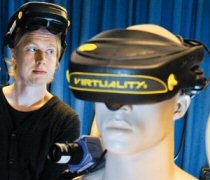
The article looks at what this body distorting illusions are telling us about how the brain makes sense of our bodies and how these discoveries could be applied to ‘locating’ us in false limbs or even remote control robots.

Also don’t miss the podcast where author Ed Yong talks about his trip to the lab to try out the illusions.
 

Link to Nature article ‘Out-of-body experience: Master of illusion’.

Skull modifications for fun and profit

I’ve just stumbled across a special issue of Neurosurgical Focus on deliberate skull deformations that tracks the practice of molding the shape of the skull from ancient times to the modern body modification scene.

All of the articles are free to access but I recommend the pieces on the politics of head deformation and the practice in the ancient Mayan and Proto-Bulgarian cultures.

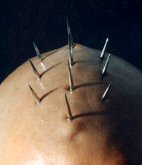
But perhaps the most surprising article is on modern deliberate skull deformities in adults that covers the body modification scene (drilled in metal mohawk anyone?) and the modern trepanation movement who advocate drilling a hole in the head to achieve an altered state of consciousness.

The trepanation section has the completely fascinating and somewhat oddball history of its modern revival.

The history of the International Trepanation Advocacy Group can be traced back to a Dutch medical student and admitted polysubstance abuser named Bart Huges, who was ultimately denied his medical degree by the University of Amsterdam at least in part for his vocal advocacy of marijuana use. During one particular episode in the early 1960s while under the influence of recreational psychoactive drugs, Huges came to believe that drilling a hole in one’s head would allow blood to more freely pulse around the brain, reproducing the state of an infant’s brain prior to closure of the cranial sutures. He was aware that by adulthood, the brain is denied an elastic bony covering against which to expand; in addition, he proposed that gravity gradually robbed the brain of some of its blood volume.

Trepanation, as his theory went, had the potential to reverse both of these processes. Huges felt that prolonged standing on one’s head could yield the same result, albeit temporarily, but only with trepanation could a long-term so-called “permanent high” be attained. He eventually delineated his ideas in a 1962 monograph alternately entitled either Homo Sapiens Correctus, named for what he believed would describe a new species of humans with holes in their skulls, or The Mechanism of Brainbloodvolume (BBV). He later also authored the book, Trepanation: the Cure for Psychosis, and an autobiography, The Book With the Hole. Although never finishing medical school, he did in 1965 successfully self-trepan, and, based on what he felt was an excellent benefit from this procedure, later convinced others to do the same.

It only gets weirder from there on in.

Highly recommended (the article, not drilling holes in your head).
 

Link to Neurosurgical Focus on skull deformations.
Link to article on ‘Modern induced skull deformity in adults’.

Brain in your medieval pants

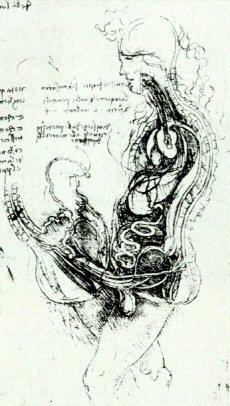
In Leonardo da Vinci’s anatomical drawings, the penis is connected directly to the brain.

A 1986 article “On the sexual intercourse drawings of Leonardo da Vinci” explains why this connection, still commonly proposed today (although mostly as a metaphor it must be said), was thought to be anatomical fact by the great master.

“A brief glance at the male character in Fig. 3 reveals the amazing internal ‘plumbing’ designed by Leonardo to describe Aristotelian physiology. He has drawn two canals in the penis, the lower of which is connected to the urogenital tract via the urethra, while the upper canal passes to the spinal cord by means of three vessels. The close-up of the penis demonstrates these two canals in fine detail. In ancient Greek writing, the ‘essence’ of a baby was provided by the ‘universal seed stuff’ of the male. This procreative ingredient was derived from animal spirit, a physiological material necessary for muscular activity. The animal spirit was manufactured from arterial blood at the base of the brain and was transferred to all parts of the body through the nerves. Hence da Vinci’s spinal connection to the penis.”

And before I hear a “Yeah, right on Leo!” from the ladies, I note a remarkably similar vagina – spinal cord connection also makes an appearance in the diagram.
 

Link to PubMed entry for article.
pdf of full text.

Teen sex hamsters in health danger shock alert

The Daily Mail is a UK newspaper famous for a moralising obsession with teen sex and a tragic, long-term science impairment.

Most of their science stories are simply face-palm material but occasionally they produce unintentional works of comic genius.

Today, is one of those days.

Teenage sex ‘leads to bad moods’ in later life’

Having sex during teenage years could lead to bad moods, changes in brain development and smaller reproductive tissues, according to scientists.

Researchers from Ohio State University College of Medicine found that these changes can occur because the sexual experience is taking place while the brain is still developing.

Study co-author John Morris said: ‘Having a sexual experience during this time point, early in life, is not without consequence.’

The researchers based their conclusions after studying the behaviour of hamsters after they engaged in sexual activity.


Link to Daily Mail on hamster sex (via @DrPetra).

A paradoxical pill after brain damage

The New York Times has a fascinating article about how brain damaged people in the ‘minimally responsive state’ can become more alert, curiously, after being given a type of sleeping pill.

The drug is called zolpidem and occasional case reports of it increasing alertness in poorly responsive neurological patients have been kicking around for some years. We reported on an early case back in 2006.

It must be said that there is still very research little in this area – some scattered case studies and a trial that recruited just three children, so I’m not sure about the wisdom of the ‘A Drug That Wakes the Near Dead’ headline.

However, the article reports on ongoing research and has a video showing the marked effect on one patient diagnosed with ‘minimally conscious state’ or MCS.

This year, scientists at Moss Rehabilitation Research Institute and at the University of Pennsylvania, both in the Philadelphia area, began the first large-scale clinical study of zolpidem as a treatment for disorders of consciousness. (Amantadine, a drug used to treat Parkinson’s disease, and the anti-anxiety medication Ativan also show promise in increasing awareness in minimally conscious patients.) So far, the evidence suggests that less than 10 percent of brain-injured patients will experience the drug’s paradoxical effects, and that among those, only a few will respond as profoundly as Viljoen did. For families like the Coxes, such odds provide a tortured kind of hope. For doctors, they bring questions. Why does a sleeping pill induce awareness in some patients but not others? And what can these bizarre awakenings tell us about the brain’s ability to heal?

A fascinating article on a curious, if limited, effect. Don’t miss the video.
 

Link to NYT article on zolpidem and brain injury.

Rainbows of mourning

This is a video of people dancing with a recently deceased baby and it tells us something profound about the psychology of grief and mourning.

Despite a common stereotype, death of a loved one can provoke some of the most culturally diverse forms of emotion and social ritual.

The video is rare footage of the Chigualo ceremony, a mourning ritual for children aged less than seven-years-old who have just passed away from the Afrocolombian community of the Pacific coast of Colombia.

Unfortunately, there is almost nothing written about the ceremony available online in English but the Spanish language Wikipedia has good page about it.

The belief behind the ceremony is that when young children die they become angels and go straight to heaven. Therefore, these deaths are not an occasion for sadness, as many might assume, but a cause for a goodbye celebration.

You can see in the video that the Chigualo involves upbeat rhythms, singing, games and dancing – including passing the dead baby between people at the ceremony.

This may seem shocking or disrespectful to people accustomed to sadness and distress-based mourning, but in its own community it is the single most respectful way of saying goodbye to a recently blessed angel.

Psychology has a stereotype problem with grief and mourning. Over and over again false assumptions are repeated, not even valid in Western cultures, that there are certain ‘stages’ to grief, that people will reliably react in certain ways with certain key emotions – sadness, anger, resignation and so on.

This leads to both a professional pathologising of grieving people including endless variations on ‘the person hasn’t accepted their loss’, ‘they haven’t elaborated their grief’ and ‘they’re in denial’ applied to anyone who doesn’t mourn within the expected boundaries.

Moreover, it leads to a cultural blindness about how other societies feel and understand the loss of others with the implicit assumption that the experience of grief is somehow universal.

Any other reaction except extended sadness is considered to be a way of ‘masking’ supposedly inevitable pain. ‘Underneath’, it is assumed, everyone must feel the same as ‘us’.

This is despite the fact that we have a huge array of anthropological work on the vast variation in grief and mourning throughout the world.

The Akan have elaborate rituals that punctuate the year to keep the memory of dead alive. The Achuar prohibit any attempts to remember or memoralise the deceased.

The Ganda prohibit sexual activity during mourning, the Cubeo have sexual activity as part of the mourning ceremony.

A Dogon funeral is designed to ensure that spirits of the dead leave the community, an Igbo funeral that they stay.

Although death is perhaps the only experience guaranteed to be universal, our reaction to it is one of the most diverse. Consequently, respect comes in many forms.
 

Link to video of Chigualo ceremony.

Two crucial minutes

If you’ve got just two minutes to spare you could learn first aid to help someone having a seizure thanks to a video from Epilepsy Action.

The acting is a little stiff, if you’ll excuse the pun, but it’s two minutes of your time very well spent.

You’ll notice in the video that the bystanders make a range of common but daft suggestions (‘hold them down’, ‘put something in the mouth to stop them biting their tongue’) that should be avoided as they could endanger the person having the seizure.

It has to be said that well-intentioned bystanders can sometimes be more of a danger than the seizure itself. Unless the person is likely to fall into a fire, fall off a bridge or get eaten by lions, the appropriate steps are just to protect the person, cushion their head, check their breathing and stay calm.

You only need to call an ambulance if the seizure continues for more than five minutes or you know this is the first seizure they’ve ever had.

The video just focuses on generalised seizures (‘having a fit’) but there’s info on other seizure types further down the page.

The organisation who’ve made the video, Epilepsy Action are fantastic, by the way, and they have a service where you can phone, email or tweet them any epilepsy question from anywhere in the world and they’ll answer it.

See the details on the top right of the page linked below.

Apparently though, no, they can’t get me a date with Lauren Pritchard.


Link to first aid for seizures video and info.

Reaction formation in New York City

My latest Beyond Boundaries column is about psychodynamic revolutionaries in New York and is in the December edition of The Psychologist.

Jonathan Shedler is recounting an anecdote. ‘So when the patient says “I’m frustrated”, you say “Tell me more about that” and then you shut up!’ We’ve just bustled in from a crisp Manhattan evening and the story gets an appreciative laugh. City University of New York is home to one of the most psychodynamically oriented clinical psychology courses in the US, and Shedler is here to fire up the audience. He’s presenting his research on the effectiveness of psychodynamic therapy, but the underlying message heralds a fight back. His data is mixed with tales of naive cognitive therapy trainees and disdain for ‘manualised CBT’ (there is, it seems, no other sort) and the audience are firmly behind him.

New York City was famous for its Freudian émigrés and became a leading centre for psychoanalysis during the 20th century, but the rising influence of drug treatment began to erode both the popularity of the couch and the therapeutic eminence of the Big Apple. Shorter therapies, validated using the techniques of academic research, have pressured both psychodynamic therapy, the younger relation of psychoanalysis, and its community of practice, who traditionally eschewed the systematic collection of data for the introspective gaze.

Psychoanalysis never gripped the UK’s psychology and psychiatry departments as it did in the US, and so the division between clinicians and researchers has traditionally been much less acute. In the New York lecture hall, this divide is reflected in the post-presentation discussion, driven by the split rhetoric of ‘practitioners’ and ‘researchers’ and how the latter don’t understand the former, despite the fact that we’re here to discuss research evidence. But most striking is the sense of revolt against the perceived oppression towards the psychodynamic approach, which, in the US, is additionally fuelled by the insurance companies desire for the most evidence-based bang for their buck.

The audience speak out. Person after person stands up, vociferously thanking the speaker, decrying the lack of respect afforded to psychodynamic treatment and promising to spread the word about this new evidence to colleagues, managers and patients. But beyond the fight back, there is a distinct culture change in the air. In an area famously divided by internecine feuding and bitter theoretical differences there is unity. And perhaps more significantly, the tools of clinical trials, systematic data collection and evidence-based practice are now being taken up as essential allies. New York City may yet be home to psychodynamic revolutionaries once more.

Many thanks to @Zleeoga for inviting me along to see the New York psychoanalytic scene in action. Greatly appreciated!

And many thanks to Jon Sutton, editor of The Psychologist, who has kindly agreed for me to publish my column on Mind Hacks as long as I include the following text:

The Psychologist is sent free to all members of the British Psychological Society (you can join here), or you can subscribe as a non-member by going here.
 

Link to December’s Beyond Boundaries column.