Science behind the billion dollar brain hype

Image by Flickr user Ars Electronica. Click for source.If you want to hear me talk about what the US and Europe’s billion dollar brain projects are trying to achieve, I’m on the latest BBC All in the Mind discussing the science behind the quite considerable hype.

I discuss these latest brain initiatives alongside presenter Claudia Hammond and distinguished neuroscientist Donald Stein – who appeared despite my suggestion of inviting distinguished neuroscientist Shakira.

Either way, a good discussion on an important topic.
 

Link to programme information and streamed audio.
mp3 of podcast.

A world of swearing

The Boston Globe has a short but fascinating interview on the history of swearing where author Melissa Mohr describes how the meaning of the act of swearing has changed over time.

IDEAS: Are there other old curses that 21st-century people would be surprised to hear about?

MOHR: Because [bad words] were mostly religious in the Middle Ages, any part of God’s body you could curse with. God’s bones, nails, wounds, precious heart, passion, God’s death—that was supposedly one of Queen Elizabeth I’s favorite oaths.

IDEAS: Have religious curses like that lost their power as the culture becomes increasingly secular?

MOHR: We still use them a lot, but we just don’t think of them as bad words. They’re very mild. If you look at lists of the top 25 swear words, I think “Jesus Christ” often makes it in at number 23 or something….The top bad words slots are all occupied by the racial slurs or obscene—sexually or excrementally—words…

IDEAS: Are blasphemy, sexuality, and excrement the main themes all over the world?

MOHR: As far as I know, they’re mostly the same with a little bit of regional variation. In Arab and Spanish-speaking Catholic countries, there’s a lot of stuff about mothers and sisters. But it’s pretty much the same.

Interesting, there is good evidence that swear words are handled differently by the brain than non-swear words.

In global aphasia, a form of almost total language impairment normally caused by brain damage to the left hemisphere, affected people can still usually swear despite being unable to say any other words.

Author Melissa Mohr has just written a book called Holy Sh*t: A Brief History of Swearing which presumably has plenty more for swearing fans.
 

Link to Boston Globe interview (via @leraboroditsky)
Link to details of Holy Sh*t: A Brief History of Swearing.

Disaster response psychology needs to change

Photo by Flickr user flyingjournals. Click for source.I’ve got an article in today’s Observer about how disaster response mental health services are often based on the erroneous assumption that everyone needs ‘treatment’ and often rely on single-session counselling sessions which may do more harm than good.

Unfortunately, the article has been given a rather misleading headline (‘Minds traumatised by disaster heal themselves without therapy’) which suggests that mental health services are not needed. This is not the case and this is not what the article says.

What it does say is that the common idea of disaster response is that everyone affected by the tragedy will need help from mental health professionals when only a minority will.

It also says that aid agencies often use single-session counselling sessions which have been found to raise the risk of long-term mental health problems. This stems from a understandable desire to ‘do something’ but this motivation is not enough to actually help.

Disaster, war, violence and conflict, raise the number of mental health problems in the affected population. The appropriate response is to build or enhance high-quality, long-term, culturally relevant mental health services – not parachuting in counsellors to do single counselling sessions.
 

Link to article on disaster response psychology in The Observer.

2013-05-03 Spike activity

Quick links from the past week in mind and brain news:

I can’t recognise my own face! In my case, it’s because the Botox has worn off but for person described in the New Scientist article it’s because of prosopagnosia.

The Guardian reports that the UK Government’s ‘Nudge Unit’ is set to become a commercial service. Nudge mercenaries!

A greater use of “I” and “me” as a mark of interpersonal distress. An interesting study covered by the BPS Research Digest.

Pacific Standard has an interesting piece about gun registers, felons and interrupting the contagion of gun violence.

Brain Voodoo Goes Electric. The mighty Neuroskeptic on how a previously common flaw in fMRI brain imaging research may also apply to EEG and MEG ‘brain wave’ studies.

A Médecins Sans Frontières psychologist writes about her work with in the Syrian armed conflict.

The latest social priming evidence and replication story at Nature causes all sorts of academic acrimony. The fun’s in the comments section.

Slate asks Is Psychiatry Dishonest? And if so, is it a noble lie?

With all the ‘everyone will be traumatised and needs to see a psychologist’ nonsense to hit the media after the Boston bombing, this interview with Boston psychiatry prof Terence Keane gets it perfectly. Recommended.

Mind and brain podcast radio rush

Several new mind and brain radio series have just started in the last few weeks and all can be listened to online.

The two ‘All in the Minds’ have just started a new series.

BBC Radio 4’s All in the Mind has just started a new series with the first programme including end-of-the-world hopefuls and psychologist and journalist Christian Jarrett.

ABC Radio National’s All in the Mind new series has also just begun – kicking off with a programme on the social brain.

BBC Radio 4’s brilliant online sociology series The Digital Human started a new series a few weeks ago.

The latest Nature NeuroPod just hit the wires a few days ago.

The Neuroscientists Talk Shop podcast is technical but ace and has a big back catalogue.

Any mind and brain podcasts you’re into at the moment? Add them in the comments.

National Institute of Mental Health abandoning the DSM

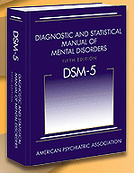
In a potentially seismic move, the National Institute of Mental Health – the world’s biggest mental health research funder, has announced only two weeks before the launch of the DSM-5 diagnostic manual that it will be “re-orienting its research away from DSM categories”.

In the announcement, NIMH Director Thomas Insel says the DSM lacks validity and that “patients with mental disorders deserve better”.

This is something that will make very uncomfortable reading for the American Psychiatric Association as they trumpet what they claim is the ‘future of psychiatric diagnosis’ only two weeks before it hits the shelves.

As a result the NIMH will now be preferentially funding research that does not stick to DSM categories:

Going forward, we will be supporting research projects that look across current categories – or sub-divide current categories – to begin to develop a better system. What does this mean for applicants? Clinical trials might study all patients in a mood clinic rather than those meeting strict major depressive disorder criteria. Studies of biomarkers for “depression” might begin by looking across many disorders with anhedonia or emotional appraisal bias or psychomotor retardation to understand the circuitry underlying these symptoms. What does this mean for patients? We are committed to new and better treatments, but we feel this will only happen by developing a more precise diagnostic system.

As an alternative approach, Insel suggests the Research Domain Criteria (RDoC) project, which aims to uncover what it sees as the ‘component parts’ of psychological dysregulation by understanding difficulties in terms of cognitive, neural and genetic differences.

For example, difficulties with regulating the arousal system might be equally as involved in generating anxiety in PTSD as generating manic states in bipolar disorder.

Of course, this ‘component part’ approach is already a large part of mental health research but the RDoC project aims to combine this into a system that allows these to be mapped out and integrated.

It’s worth saying that this won’t be changing how psychiatrists treat their patients any time soon. DSM-style disorders will still be the order of the day, not least because a great deal of the evidence for the effectiveness of medication is based on giving people standard diagnoses.

It is also true to say that RDoC is currently little more than a plan at the moment – a bit like the Mars mission: you can see how it would be feasible but actually getting there seems a long way off. In fact, until now, the RDoC project has largely been considered to be an experimental project in thinking up alternative approaches.

The project was partly thought to be radical because it has many similarities to the approach taken by scientific critics of mainstream psychiatry who have argued for a symptom-based approach to understanding mental health difficulties that has often been rejected by the ‘diagnoses represent distinct diseases’ camp.

The NIMH has often been one of the most staunch supporters of the latter view, so the fact that it has put the RDoC front and centre is not only a slap in the face for the American Psychiatric Association and the DSM, it also heralds a massive change in how we might think of mental disorders in decades to come.
 

Link to NIMH announcement ‘Transforming Diagnosis’.

Prescribe it again, Sam

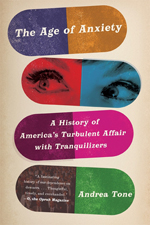
We tend to think of Prozac as the first ‘fashionable’ psychiatric drug but it turns out popular memory is short because a tranquilizer called Miltown hit the big time thirty years before.

This is from a wonderful book called The Age of Anxiety: A History of America’s Turbulent Affair with Tranquilizers by Andrea Tone and it describes how the drug became a Hollywood favourite and even inspired its own cocktails.

Miltown was frequently handed out at parties and premieres, a kind of pharmaceutical appetizer for jittery celebrities. Frances Kaye, a publicity agent, described a movie party she attended at a Palm Springs resort. A live orchestra entertained a thousand-odd guests while a fountain spouted champagne against the backdrop of a desert sky. As partiers circulated, a doctor made rounds like a waiter, dispensing drugs to guests from a bulging sack. On offer were amphetamines and barbituates, standard Hollywood party fare, but guests wanted Miltown. The little white pills “were passed around like peanuts,” Kaye remembered. What she observed about party pill popping was not unique. “They all used to go for ‘up pills’ or ‘down pills,'” one Hollywood regular noted. “But now it’s the ‘don’t-give-a-darn-pills.'”

The Hollywood entertainment culture transformed a pharmaceutical concoction into a celebrity fetish, a coveted commodity of the fad-prone glamour set. Female entertainers toted theirs in chic pill boxes designed especially for tranquilizers, which became, according to one celebrity, as ubiquitous at Hollywood parties as the climatically unnecessary mink coat…

Miltown even inspired a barrage of new alcoholic temptations, in which the pill was the new defining ingredient. The Miltown Cocktail was a Bloody Mary (vodka and tomato juice) spiked with a single pill, and a Guided Missile, popular among the late night crowd on the Sunset Strip, consisted of a double shot of vodka and two Miltowns. More popular still was the Miltini, a dry martini in which Miltown replaced the customary olive.

Andrea Tone’s book is full of surprising snippets about how tranquilisers and anti-anxiety drugs have affected our understanding of ourselves and our culture.

It’s very well researched and manages to hit that niche of being gripping for the non-specialist while being extensive enough that professionals will learn a lot.
 

Link to details for The Age of Anxiety book.

2013-04-27 Spike activity

Quick links from the past week in mind and brain news:

Psychiatry needs its Higgs boson moment says and article in New Scientist which describes some interesting but disconnected findings suggesting it ‘aint going to get it soon.

Wall Street Journal has an overenthusiastic article on how advances in genetics and neuroscience are ‘revolutionizing’ our understanding of violent behavior. Not quite but not a bad read in parts.

The new series of BBC Radio 4 wonderful series of key studies in psychology, Mind Changers, has just started. Streamed only because the BBC think radio simulations are cute.

Reuters reports that fire kills dozens in Russian psychiatric hospital tragedy.

Author and psychologist Charles Fernyhough discusses how neuroscience is dealt with in literary fiction in a piece for The Guardian.

Nature profiles one of the few people doing gun violence research in the US – the wonderfully named emergency room doctor Garen Wintemute.

The Man With Uncrossed Eyes. Fascinating case study covered by Neuroskeptic.

Wired reports that scientists have built a baseball-playing robot with 100,000-neuron fake brain. To the bunkers!

“Let’s study Tamerlan Tsarnaev’s brain” – The now seemingly compulsory article that argues for some sort of pointless scientific investigation after some horrible tragedy appears in the Boston Globe. See also: Let’s study the Newtown shooter’s DNA.

Wired report from a recent conference on the medical potential of psychedelic drugs.

Adam Phillips, one of the most thoughtful and interesting of the new psychoanalyst writers, is profiled by Newsweek.

Deeper into genetic challenges to psychiatric diagnosis

For my recent Observer article I discussed how genetic findings are providing some of the best evidence that psychiatric diagnoses do not represent discrete disorders.

As part of that I spoke to Michael Owen, a psychiatrist and researcher based at Cardiff University, who has been leading lots of the rethink on the nature of psychiatric disorders.

As a young PhD student I sat in on lots of Prof Owen’s hospital ward rounds and learnt a great deal about how science bumps up against the real world of individuals’ lives.

One of the things that most interested me about Owen’s work is that, back in the day, he was working towards finding ‘the genetics of’ schizophrenia, bipolar and so on.

But since then he and his colleagues have gathered a great deal of evidence that certain genetic differences raise the chances of developing a whole range of difficulties – from epilepsy to schizophrenia to ADHD – rather these differences being associated with any one disorder.

As many of these genetic changes can affect brain development in subtle ways, it is looking increasingly likely that genetics determines how sensitive we are to life events as the brain grows and develops – suggesting a neurodevelopmental theory of these disorders that considers both neurobiology and life experience as equally important.

I asked Owen several questions for the Observer article but I couldn’t reply the answers in full, so I’ve reproduced them below as they’re a fascinating insight into how genetics is challenging psychiatry.

I remember you looking for the ‘genes for schizophrenia’ – what changed your mind?

For most of our genetic studies we used conventional diagnostic criteria such as schizophrenia, bipolar disorder and ADHD. However, what we then did was look for overlap between the genetic signals across diagnostic categories and found that these were striking. This occurred not just for schizophrenia and bipolar disorder, which to me as an adult psychiatrist who treats these conditions was not surprising, but also between adult disorders like schizophrenia and childhood disorders like autism and ADHD.

What do the current categories of psychiatric diagnosis represent?

The current categories were based on the categories in general use by psychiatrists. They were formalized to make them more reliable and have been developed over the years to take into account developments in thinking and practice. They are broad groupings of patients based upon the clinical presentation especially the most prominent symptoms and other factors such as age at onset, and course of illness. In other words they describe syndromes (clinically recognizable features that tend to occur together) rather than distinct diseases. They are clinically useful in so far as they group patients in regard to potential treatments and likely outcome. The problem is that many doctors and scientists have come to assume that they do in fact represent distinct diseases with separate causes and distinct mechanisms. In fact the evidence, not just from molecular genetics, suggests that there is no clear demarcation between diagnostic categories in symptoms or causes (genetic or environmental).

There is an emerging belief which has been stimulated by recent genetic findings that it is perhaps best to view psychiatric disorders more in terms of constellations of symptoms and syndromes, which cross current diagnostic categories and view these in dimensional terms. This is reflected by the inclusion of dimensional measures in DSM5, which, it is hoped, will allow these new views to stimulate research and to be developed based on evidence.

In the meantime the current categories, slightly modified, remain the focus of DSM-5. But I think that there is a much greater awareness now that these are provisional and will replaced when the weight of scientific evidence is sufficiently strong.

The implications of recent findings are probably more pressing for research where there is a need to be less constrained by current diagnostic categories and to refocus onto the mechanisms underlying symptom domains rather than diagnostic categories. This in turn might lead to new diagnostic systems and markers. The discovery of specific risk genes that cut across diagnostic groupings offers one approach to investigating this that we will take forward in Cardiff.

There is a lot of talk of endophenotypes and intermediate phenotypes that attempt to break down symptoms into simpler form of difference and dysfunction in the mind and brain. How will we know when we have found a valid one?

Research into potential endophenotypes has clear intuitive appeal but I think interpretation of the findings is hampered by a couple of important conceptual issues. First, as you would expect from what I have already said, I don’t think we can expect to find endophenotypes for a diagnostic group as such. Rather we might expect them to relate to specific subcomponents of the syndrome (symptoms, groups of symptoms etc).

Second, the assumption that a putative endophenotype lies on the disease pathway (ie is intermediate between say gene and clinical phenotype) has to be proved and cannot just be assumed. For example there has been a lot of work on cognitive dysfunction and brain imaging in psychiatry and widespread abnormalities have been reported. But it cannot be assumed that an individual cognitive or imaging phenotype lies on the pathway to a particular clinical disorder of component of the disorder. This has to be proven either through an intervention study in humans or model systems (both currently challenging), or statistically which requires much larger studies than are usually undertaken. I think that many of the findings from imaging and cognition studies will turn out to be part of the broad phenotype resulting from whatever brain dysfunction is present and not on the causal pathway to psychiatric disorder.

Using the tools of biological psychiatry you have come to a conclusion often associated with psychiatry’s critics (that the diagnostic categories do not represent specific disorders). What reactions have you encountered from mainstream psychiatry?

I have found that most psychiatrists working at the front line are sympathetic. In fact psychiatrists already treat symptoms rather than diagnoses. For example they will consider prescribing an antipsychotic if someone is psychotic regardless of whether the diagnosis is schizophrenia or bipolar disorder. They also recognize that many patients don’t fall neatly into current categories. For example many patients have symptoms of both schizophrenia and bipolar disorder sometimes at the same time and sometimes at different time points. Also patients who fulfill diagnostic criteria for schizophrenia in adulthood often have histories of childhood diagnoses such as ADHD or autistic spectrum.

The inertia comes in part from the way in which services are structured. In particular the distinction between child and adult services has many justifications but it leads to patents with long term problems being transferred to a new team at a vulnerable age, receiving different care and sometimes a change in diagnosis. Many of us now feel that we should develop services that span late childhood and early adulthood to ensure continuity over this important period. There are also international differences. So in the US mood disorders (including bipolar) are often treated by different doctors in different clinics to schizophrenia.

There is also a justifiable unwillingness to discard the current system until there is strong evidence for a better approach. The inclusion of dimensional measures in DSM5 reflects the acceptance of the psychiatric establishment that change is needed and acknowledges the likely direction of travel. I think that psychiatry’s acknowledgment of its diagnostic shortcomings is a sign of its maturity. Psychiatric disorders are the most complex in medicine and some of the most disabling. We have treatments that help some of the people some of the time and we need to target these to the right people at the right time. By acknowledging the shortcomings of our current diagnostic categories we are recognizing the need to treat patients as individuals and the fact that the outcome of psychiatric disorders is highly variable.
Like a part of me is missing

Matter magazine has an amazing article about the world of underground surgery for healthy people who feel that their limb is not part of their body and needs to be removed.

The condition is diagnosed as body integrity identity disorder or BIID but it has a whole range of interests and behaviours associated with it and people with the desire often do not feel it is a disorder in itself.

Needless to say, surgeons have not been lining up to amputate completely healthy limbs but there are clinics around the world that do the operations illegally.

The Matter article follows someone as they obtain one of these procedures and discusses the science of why someone might feel so uncomfortable about having a working limb they were born with.

But there is a particularly eye-opening bit where it mentions something fascinating about the first scientific article that discussed the condition, published in 1977.

One of the co-authors of the 1977 paper was Gregg Furth, who eventually became a practising psychologist in New York. Furth himself suffered from the condition and, over time, became a major figure in the BIID underground. He wanted to help people deal with their problem, but medical treatment was always controversial — often for good reason. In 1998, Furth introduced a friend to an unlicensed surgeon who agreed to amputate the friend’s leg in a Tijuana clinic. The patient died of gangrene and the surgeon was sent to prison. A Scottish surgeon named Robert Smith, who practised at the Falkirk and District Royal Infirmary, briefly held out legal hope for BIID sufferers by openly performing voluntary amputations, but a media frenzy in 2000 led British authorities to forbid such procedures. The Smith affair fuelled a series of articles about the condition — some suggesting that merely identifying and defining such a condition could cause it to spread, like a virus.

Undeterred, Furth found a surgeon in Asia who was willing to perform amputations for about $6,000. But instead of getting the surgery himself, he began acting as a go-between, putting sufferers in touch with the surgeon.


Link to Matter article on the desire to be an amputee.

A stiff moment in scientific history

Photo by Flickr user NASA's Marshall Space Flight Center. Click for source.In 1983 psychiatrist Giles Brindley demonstrated the first drug treatment for erectile dysfunction in a rather unique way. He took the drug and demonstrated his stiff wicket to the audience mid-way through his talk.

Scientific journal BJU International has a pant-wettingly hilarious account of the events of that day which made both scientific and presentation history.

Professor Brindley, still in his blue track suit, was introduced as a psychiatrist with broad research interests. He began his lecture without aplomb. He had, he indicated, hypothesized that injection with vasoactive agents into the corporal bodies of the penis might induce an erection. Lacking ready access to an appropriate animal model, and cognisant of the long medical tradition of using oneself as a research subject, he began a series of experiments on self-injection of his penis with various vasoactive agents, including papaverine, phentolamine, and several others. (While this is now commonplace, at the time it was unheard of). His slide-based talk consisted of a large series of photographs of his penis in various states of tumescence after injection with a variety of doses of phentolamine and papaverine. After viewing about 30 of these slides, there was no doubt in my mind that, at least in Professor Brindley’s case, the therapy was effective. Of course, one could not exclude the possibility that erotic stimulation had played a role in acquiring these erections, and Professor Brindley acknowledged this.

The Professor wanted to make his case in the most convincing style possible. He indicated that, in his view, no normal person would find the experience of giving a lecture to a large audience to be erotically stimulating or erection-inducing. He had, he said, therefore injected himself with papaverine in his hotel room before coming to give the lecture, and deliberately wore loose clothes (hence the track-suit) to make it possible to exhibit the results. He stepped around the podium, and pulled his loose pants tight up around his genitalia in an attempt to demonstrate his erection.

At this point, I, and I believe everyone else in the room, was agog. I could scarcely believe what was occurring on stage. But Prof. Brindley was not satisfied. He looked down sceptically at his pants and shook his head with dismay. ‘Unfortunately, this doesn’t display the results clearly enough’. He then summarily dropped his trousers and shorts, revealing a long, thin, clearly erect penis. There was not a sound in the room. Everyone had stopped breathing.

But the mere public showing of his erection from the podium was not sufficient. He paused, and seemed to ponder his next move. The sense of drama in the room was palpable. He then said, with gravity, ‘I’d like to give some of the audience the opportunity to confirm the degree of tumescence’. With his pants at his knees, he waddled down the stairs, approaching (to their horror) the urologists and their partners in the front row. As he approached them, erection waggling before him, four or five of the women in the front rows threw their arms up in the air, seemingly in unison, and screamed loudly. The scientific merits of the presentation had been overwhelmed, for them, by the novel and unusual mode of demonstrating the results.

The screams seemed to shock Professor Brindley, who rapidly pulled up his trousers, returned to the podium, and terminated the lecture. The crowd dispersed in a state of flabbergasted disarray. I imagine that the urologists who attended with their partners had a lot of explaining to do. The rest is history. Prof Brindley’s single-author paper reporting these results was published about 6 months later.


Link to full account of that fateful day (via @DrPetra)

Amid the borderlands

I’ve got an article in The Observer on how some of the best evidence against the idea that psychiatric diagnoses like ‘schizophrenia’ describe discrete ‘diseases’ comes not from the critics of psychiatry, but from medical genetics.

I found this a fascinating outcome because it puts both sides of the polarised ‘psychiatry divide’ in quite an uncomfortable position.

The “mental illness is a genetic brain disease” folks find that their evidence of choice – molecular genetics – has undermined the validity of individual diagnoses, while the “mental illness is socially constructed” folks find that the best evidence for their claims comes from neurobiology studies.

The evidence that underlies this uncomfortable position comes recent findings that genetic risks that were originally thought to be specific for individual diagnoses turn out to risks for a whole load of later difficulties – from epilepsy, to schizophrenia to learning disability.

In other words, the genetic risk seems to be for neurodevelopmental difficulties but if and how they appear depends on lots of other factors that occur during your life.

The neurobiological evidence has not ‘reduced’ human experience to chemicals, but shown that individual life stories are just as important.
 

Link to Observer article.
Link to brief scientific review article on the topic.

A cuckoo’s nest museum

The New York Times reports that the psychiatric hospital used as the backdrop for the 1975 film One Flew Over the Cuckoo’s Nest has been turned into a museum of mental health.

In real life the institution was Oregon State Hospital and the article is accompanied by a slide show of images from the hospital and museum.

The piece also mentions some fascinating facts about the film – not least that some of the actors were actually genuine employees and patients in the hospital.

But the melding of real life and art went far beyond the film set. Take the character of John Spivey, a doctor who ministers to Jack Nicholson’s doomed insurrectionist character, Randle McMurphy. Dr. Spivey was played by Dr. Dean Brooks, the real hospital’s superintendent at the time.

Dr. Brooks read for the role, he said, and threw the script to the floor, calling it unrealistic — a tirade that apparently impressed the director, Milos Forman. Mr. Forman ultimately offered him the part, Dr. Brooks said, and told the doctor-turned-actor to rewrite his lines to make them medically correct. Other hospital staff members and patients had walk-on roles.


Link to NYT article ‘Once a ‘Cuckoo’s Nest,’ Now a Museum’.

Gotham psychologist

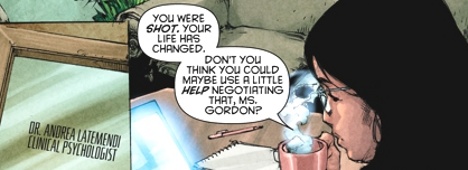
Andrea Letamendi is a clinical psychologist who specialises in the treatment and research of traumatic stress disorders but also has a passionate interest in how psychological issues are depicted in comics.

She puts her thoughts online in her blog Under the Mask which also discuss social issues in fandom and geek culture.

Recently, she was paid a wonderful compliment when she appeared in Batgirl #16 as Barbara Gordon’s psychologist.
 

I’ve always been of the opinion that comics are far more psychologically complex than they’re given credit for. In fact, one of my first non-academic articles was about the depiction of madness in Batman.

It’s also interesting that comics are now starting to explicitly address psychological issues. It’s not always done entirely successfully it has to be said.

Darwyn’s Cooke’s Ego storyline looked at Batman’s motivations through his traumatic past but shifts between subtle brilliance and clichés about mental illness in a slightly unsettling way.

Andrea Letamendi has a distinctly more nuanced take, however, and if you would like to know more about her work with superheroes do check the interview on Nerd Span.
 

Link to Letamendi’s Under the Mask (on Twitter as @ArkhamAsylumDoc)
Link to Nerd Span interview.

Hallucinating sheet music

Oliver Sacks has just published an article on ‘Hallucinations of musical notation’ in the neurology journal Brain that recounts eight cases of illusory sheet music escaping into the world.

The article makes the interesting point that the hallucinated musical notation is almost always nonsensical – either unreadable or not describing any listenable music – as described in this case study.

Arthur S., a surgeon and amateur pianist, was losing vision from macular degeneration. In 2007, he started ‘seeing’ musical notation for the first time. Its appearance was extremely realistic, the staves and clefs boldly printed on a white background ‘just like a sheet of real music’, and Dr. S. wondered for a moment whether some part of his brain was now generating his own original music. But when he looked more closely, he realized that the score was unreadable and unplayable. It was inordinately complicated, with four or six staves, impossibly complex chords with six or more notes on a single stem, and horizontal rows of multiple flats and sharps. It was, he said, ‘a potpourri of musical notation without any meaning’. He would see a page of this pseudo-music for a few seconds, and then it would suddenly disappear, replaced by another, equally nonsensical page. These hallucinations were sometimes intrusive and might cover a page he was trying to read or a letter he was trying to write.

Though Dr. S. has been unable to read real musical scores for some years, he wonders, as did Mrs. J., whether his lifelong immersion in music and musical scores might have determined the form of his hallucinations.

Sadly, the article is locked behind a paywall. However you can always request it via the #icanhazpdf hashtag on twitter .
 

Link to locked article on ‘Hallucinations of musical notation’.

The postmortem portraits of Phineas Gage

A new artform has emerged – the post-mortem neuroportrait. Its finest subject, Phineas Gage.

Gage was a worker extending the tracks of the great railways until he suffered the most spectacular injury. As he was setting a gunpowder charge in a rock with a large tamping iron, the powder was lit by an accidental spark. The iron was launched through his skull.

He became famous in neuroscience because he lived – rare for the time – and had psychological changes as a result of his neurological damage.

His story has been better told elsewhere but the interest has not died – studies on Gage’s injury have continued to the present day.

There is a scientific veneer, of course, but it’s clear that the fascination with the freak Phineas has its own morbid undercurrents.

Image from Wikipedia. Click for source.The image is key.

The first such picture was constructed with nothing more than pen and ink. Gage’s doctor John Harlow sketched his skull which Harlow had acquired after the patient’s death.

This Gage is forever fleshless, the iron stuck mid-flight, the shattered skull frozen as it fragments.

Harlow’s sketch is the original and the originator. The first impression of Gage’s immortal soul.

Gage rested as this rough sketch for over 100 years but he would rise again.

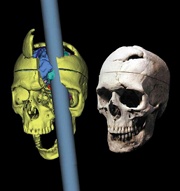
In 1994, a team led by neuroscientist Hannah Damasio used measurements of Gage’s skull to trace the path of the tamping iron and reconstruct its probable effect on the brain.

Gage’s disembodied skull appears as a strobe lit danse macabre, the tamping iron turned into a bolt of pure digital red and Gage’s brain, a deep shadowy grey.

It made Gage a superstar but it sealed his fate.

Every outing needed a more freaky Phineas. Like a low-rent-celebrity, every new exposure demanded something more shocking.

A 2004 study by Peter Ratiu and Ion-Florin Talos depicted Gage alongside his actual cranium – his digital skull screaming as a perfect blue iron pushed through his brain and shattered his face – the disfigurement now a gory new twist to the portrait.

In contrast, his human remains are peaceful – unmoved by the horrors inflicted on their virtual twin.

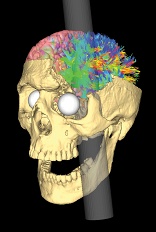
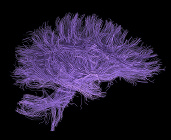
But the most recent Gage is the most otherworldly. A study by John Darrell Van Horn and colleagues examined how the path of the tamping iron would have affected the strands of white matter – the “brain’s wiring” – that connects cortical areas.

From Van Horn et al. (2012) PLoS One. 2012;7(5):e37454A slack-jawed Gage is now pierced by a ghostly iron bar that passes almost silently though his skull.

Gage himself is equally supernatural.

Blank white eyes float lifelessly in his eye sockets – staring into the digital blackness.

His white matter tracts appear within his cranium but are digitally dyed and seem to resemble multi-coloured hair standing on end like the electrified mop of a fairground ghoul.

But as the immortal Gage has become more horrifying over time, living portraits of the railwayman have been discovered. They show an entirely different side to the shattered skull celebrity.

To date, two portraits have been identified. They both show a ruggedly handsome, well-dressed man.

He has gentle flesh. Rather than staring into blackness, he looks at us.

Like a 19th century auto-whaler holding his self-harpoon, he grips the tamping iron, proud and defiant.

I prefer this living Phineas.

He does not become more alien with every new image.

He is at peace with a brutal, chaotic world.

He knows what he has lived through.

Fuck the freak flag, he says.

I’m a survivor.