Candidate neurotech for the billion dollar brain projects

NatureBrainNature has an article that discusses candidate neuro-mapping technologies that may form the basis of the billion dollar brain projects that are just kicking off on either side of the Atlantic.

Both Europe’s and Obama’s brain projects have set themselves the (possibly over-) ambitious goal of mapping the working brain on the neuron-by-neuron level.

This is off the back of new technologies that promise multiple-neuron fine-grained recording and systems to make sense of the date – but can only currently do it on a very small scale.

The Nature article looks at the most promising options and how they might scale to whole brain, or at least, ‘big chunk of brain’ level.

Attempting to take another leap farther, Jeff Lichtman at Harvard University in Cambridge, Massachusetts, and Winfried Denk of the Max Plank Institute for Neurobiology in Munich, Germany, are working with the German optics company Carl Zeiss on a new electron microscope that would image even thinner slices — 25 nanometres, or one-thousandth the thickness of an average cell. “Then you get to see every little damn thing in the brain, from every neuron to every subcellular organelle, from every synapse to every spine neck — everything,” says Lichtman.

It’s probably worth saying that the ‘mapping the whole brain as it’s working’ thing is spin. Considering there are about 100 billion or so neurons in the human brain that’s a lot of microchips you’d need mixing in with your brain.
 

Link to Nature article ‘Neuroscience: Solving the brain’

Like a kid in a brain candy store

Photo by Flickr user Max. Click for source.Slate has got a great article that takes on the newly fashionable field of ‘neuromarketing’ and calls it out as an empty promise.

The piece is written by neuroscientist Matt Wall who notes the upsurge in consumer EEG ‘brain wave’ technology has fuelled a boom in neuromarketing companies who claim that measuring the brain is the shining path to selling your product.

Because neuromarketing companies don’t provide the key details of the analysis techniques they use, it’s hard to evaluate them objectively. However, they seem to take a highly automated approach, essentially plugging the raw data into a black box of algorithms that spits out a neatly processed answer at the other end. Such an approach must involve making a large number of assumptions and some fancy-analysis footwork to make something coherent out of the poor-quality data.

In general the same applies to getting information out of a data set as to getting information out of a human: If you torture it long enough, it’ll tell you everything you want to know, but information extracted under torture is highly unreliable.

In addition, marketing-related studies are not well-suited to the kind of repetition that’s required to boost the useful signal and reduce noise; the same product or TV commercial can be presented only a few times before the participant becomes very bored indeed and therefore ceases to have any kind of meaningful reaction.

The article discusses why the current fad of EEG-based neuromarketing is scientifically unsound but despite the technical difficulties and theoretical incoherence of the field, it would all become irrelevant with one simple demonstration: a measure of the brain that could predict buyer preference better than behavioural or psychological measures.

Until now, no-one has shown this. In other words, no-one, nowhere, has shown that a ‘neuromarketing’ approach adds anything to what can be done by a standard marketing approach.

I’m all for neuromarketing research but until you can come up with the goods as a commercial product, you’re selling hot air.

There is one area that neuromarketing companies excel at though – marketing themselves. Considering a complete lack of data for their benefits, they pull in millions of dollars a year from advertising contracts.

Now that is effective marketing.
 

Link to Slate article ‘What Are Neuromarketers Really Selling?’

Double matrix

This is quite possibly the least comprehensible abstract of a psychology article I have ever read. It starts off dense and wordy and ends up feeling like you’re huffing butane.

The psychologization of humanitarian aid: skimming the battlefield and the disaster zone

Hist Human Sci. 2011;24(3):103-22.

De Vos J.

Humanitarian aid’s psycho-therapeutic turn in the 1990s was mirrored by the increasing emotionalization and subjectivation of fund-raising campaigns. In order to grasp the depth of this interconnectedness, this article argues that in both cases what we see is the post-Fordist production paradigm at work; namely, as Hardt and Negri put it, the direct production of subjectivity and social relations. To explore this, the therapeutic and mental health approach in humanitarian aid is juxtaposed with the more general phenomenon of psychologization.

This allows us to see that the psychologized production of subjectivity has a problematic waste-product as it reduces the human to ‘Homo sacer’, to use Giorgi Agamben’s term. Drawing out a double matrix of a de-psychologizing psychologization connected to a politicizing de-politicization, it will further become possible to understand psycho-therapeutic humanitarianism as a case of how, in these times of globalization, psychology, subjectivity and money are all interrelated.

Hey. I think the walls are melting.
 

Link to PubMed abstract.

I’m experiencing a lot of automaticity right now

Funny or Die is supposedly a comedy site but they seem to have a brief video tutorial on how to undertake neurally informed domestic negotiations.

The credits of the video give special thanks to Dr Dan Siegel – founder of ‘the exciting field of interpersonal neurobiology’.

I think that might be a joke though as the video seemed relatively free of flowery neurojargon.

Life of a Neuro Pope

The late Pope John Paul II is to be made a saint by the Catholic church after having two miracles confirmed – both of which allegedly involved curing neurological disorders.

As Popes go, John Paul was particularly interested in neuroscience and seems to have continued his interest in the, er, afterlife.

His post-mortem miracles have allegedly involved, on one occasion, curing a woman of a ‘brain aneurysm’, and on another, curing a nun of Parkinson’s disease.

The neurosurgeon involved in the latter cases was recently interviewed about the case to explain why he thinks it was a miracle – rather than, for example, a misdiagnosis.

However, this was not the first time it was claimed that the late Pope miraculously aided a neuroscientist. He beatified 17th Century neuroscientist Nicolas Steno who became the first brain specialist to start his journey toward sainthood.

Pope John Paul II also commented on neuroscientific issues. He defended dualism – the belief that the mind and brain are separate entities in a 1996 address, saying:

Consequently, theories of evolution which, in accordance with the philosophies inspiring them, consider the mind as emerging from the forces of living matter, or as a mere epiphenomenon of this matter, are incompatible with the truth about man. Nor are they able to ground the dignity of the person.

But perhaps paradoxically he also supported the medical consensus on death being ‘brain death’ rather than respiratory failure – noting in the year 2000 that the “complete and irreversible cessation of all brain activity” was an acceptable definition.

However, this issue clearly troubled him for some time after, because in 2006 he convened a conference of medics and neuroscientists to debate exactly this issue, producing the famous ‘Signs of Death’ publication from the Vatican.

He also commented on cases of people in coma-like persistent vegetative states, saying that even without their ‘higher functions’ that may have been affected by brain damage, they should be always be treated to keep them alive.

John Paul’s interest in the brain may have had a personal aspect. He developed Parkinson’s disease himself which was not made public for many years.

Nevertheless, he was not the first Pope to have a neurological disorder. Pope Pius IX had epilepsy – something else which was barely mentioned by the Vatican during his time as the head of the Catholic Church.

In fact, even now they only describe his condition as “a disease not well diagnosed, which some called epilepsy” – possibly because it is still associated with possession by cultures across the world.

Taking emotions at face value

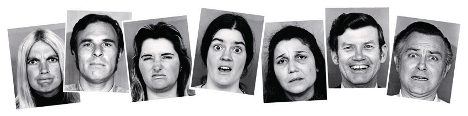
Boston Magazine has a fascinating article on the work of psychologist Lisa Feldman Barrett who has been leading the charge against the idea that we recognise the same facial expression of emotion across the world.

This was first suggested by Paul Ekman whose work suggested that humans can universally recognise six emotions: anger, disgust, fear, happiness, sadness, and surprise.

His research involved showing people from different cultures pictures of faces and asking them to label each expression from a choice of emotional words.

But Barrett has found a simple flaw in the procedure:

She returned to those famous cross-cultural studies that had launched Ekman’s career—and found that they were less than watertight. The problem was the options that Ekman had given his subjects when asking them to identify the emotions shown on the faces they were presented with. Those options, Barrett discovered, had limited the ways in which people allowed themselves to think.

Barrett explained the problem to me this way: “I can break that experiment really easily, just by removing the words. I can just show you a face and ask how this person feels. Or I can show you two faces, two scowling faces, and I can say, ‘Do these people feel the same thing?’ And agreement drops into the toilet.”

The article is on much more than this controversy in cognitive science and also tracks how research on emotion and facial expression is playing an increasing role in law enforcement – with not all of it well supported by evidence.

And if you want links to some of the scientific papers, the always interesting Neuroanthropology blog has more at the bottom of this post.
 

Link to Boston Magazine article ‘About Face’.

Great cure but we lost the patient

The Journal of Neuroscience has a surprising case report of a patient who was treated with an implanted brain stimulator to treat severe movement side-effects from an extended period of taking antipsychotic drugs for behavioural problems.

This is the background to the case:

A 27-year-old woman with developmental delay and severe behavioural disturbance was treated with risperidone 6 mg/day from age 14. At age 20, she developed facial twitching, blinks, and truncal extension spasms, which persisted during both sitting and lying supine. By age 21, she was no longer able to walk due to the spasms. She became housebound and was forced to ambulate by crawling, to the extent that she developed post-traumatic cysts over both knees. She was unable to sit in a chair. She was forced to eat from a plate on the floor while kneeling because the extension spasms were too severe in other positions.

The movement problems were due to tardive dystonia – a problem where the brain’s automatic control of muscle tone stops working.

When you move, some muscles need to contract while others need to relax. This happens automatically but turns out to be a complex brain process that is mediated by important dopamine pathways in a deep brain area called the basal ganglia.

Antipsychotic medication was first widely used to treat the delusions and hallucinations of psychosis but is increasingly being used to treat ‘behavioural disturbance’ (normally meaning aggression) as it can be slightly sedating and reduces anxiety.

This medication works by blocking dopamine receptors but in high doses it can lead to temporary and, occasionally, permanent movement problems due to its effects on the dopamine-mediated movement pathways in the brain.

This most typically appears as tic-like movements called tardive dyskinesia, Parkinson’s-disease like stiffness, a form of restlessness called akithisia, or movement problems that affect muscle tone – which is what this patient had.

These severe symptoms were treated in similar way to one option for Parkinson’s disease – a deep brain stimulation device was inserted into the brain to send electrical pulses directly into the basal ganglia to help regulate the movement circuits.

It turns out that many studies have reported the results of putting brain implants in people to treat movement side effects from antipsychotic drugs.

It’s probably true to say that some people have been left with permanent movement problems from the days when large doses of antipsychotics were prescribed and the side-effects were poorly understood.

These days, one of a psychiatrist’s most important jobs is to avoid these unwanted effects.

From one perspective, no matter how the situation arose, patients deserve the best possible treatments, of which deep brain stimulation is certainly one.

But still, you can’t help thinking it’s kind of a bleak situation where brain implants are needed to treat medication side-effects.

When used appropriately, antipsychotics can be a genuinely useful form of treatment but cases like these serve to remind us how far we have to go in developing safer psychiatric medications.
 

Link to locked Journal of Neuroscience case report.

What is it like being nerve gassed?

I’ve just found an interesting article in the Journal of Pharmacy Practice that discusses the medical management of chemical weapons injuries.

It has a particularly attention-grabbing section that describes the effects of being nerve gassed. I’ve pasted it below, but as it was dense with medical jargon, I’ve added explanations in square brackets.

The nerve agents prevent the breakdown of [neurotransmitter] acetylcholine resulting in a cholinergic crisis. Muscarinic effects from nerve agents include miosis [constriction of the pupils of the eyes], bradycardia [slowed heartbeat], diarrhea, nausea and vomiting, diaphoresis [excessive sweating], bronchial secretions [fluid in the lungs], and bronchial constriction [lung tightening]. A dimming of vision occurs with the miosis.

Nicotinic effects include tachycardia [fast heartbeat] and muscle twitching which progresses to muscle paralysis. The toxidrome [poisoning syndrome] depends of the route of absorption. When dermally absorbed [through the skin] muscle twitching occurs first. With inhalation exposure, breathing difficulties are seen first.

The onset of symptoms with inhalation exposure is within 5 minutes. With dermal exposure, it can last up to several hours. The seizures due to nerve agents may be from blocking [neurotransmitter] γ-aminobutyric acid (GABA).

The article also discusses other types of chemical weapons: blister agents, choking agents, incapacitating agents, riot control agents, blood agents, and toxic industrial chemicals. All of which sound very unpleasant.

However, ‘incapacitating agents’ can also mean substances that have psychotropic effects. These can be anything which drug the person to a state where they are less able to resist.

In theory, these could be anything, but the article particularly notes opioid-based gasses (think vaporised synthetic heroin – like the fentanyl derivative used in the 2002 Moscow theatre siege by Russian special forces) or the hallucinogenic drug BZ which has featured in many favourite conspiracy theories.
 

Link to locked article on chemical weapons medicine.

A taxonomy of ayahuasca hallucinations

A wonderful list categorising hallucinations experienced by the Cashinahua people of Peru after drinking the hallucinogenic brew ayahuasca.

1. Brightly colored, large snakes
2. Jaguars and ocelots
3. Spirits, both of ayahuasca and others
4. Large trees, often falling trees
5. Lakes, frequently filled with anacondas and alligators
6. Cashinahua villages and those of other Indians
7. Traders and their goods
8. Gardens

It was reported by the anthropologist Ken Kensinger in a chapter in the book Hallucinogens and Shamanism.

It reminded me of writer Jorge Luis Borges’ whimsical classification system for animals.

An unrecognised revolution in street drug design

I’ve got an article in The Observer about the ongoing but little recognised revolution in street drug design being pushed forward by the ‘legal high’ market.

Since 2008 we’ve seen the first genuine wave of ‘designer drugs’ that are being produced by science-savvy professional labs that are deliberately producing substances to avoid drug laws.

New substances are appearing at a rate of more than one-a-week and some are completely new to science.

The article looks at how the clandestine labs are creating these new highs and what this almost impossible to regulate situation means for the ‘war on drugs’ approach to recreational drug use.
 

Link to article in The Observer.

A radio guide to global mental health

The BBC World Service is in the midst of an excellent series on global mental health – called The Truth About Mental Health.

It is currently half-way through and is remarkably well done, looking at everything from the war in Syria, to the effects of solitary confinement, to treatment in developing countries.

The programme also takes a considered look at the important question of whether mental illness is universal or whether it is tightly bound to the culture in which we live.

You can get the episode guide and streaming audio from this page but because the BBC is a bit rubbish at the internet, the podcasts are on an entirely different page, not linked from the episode guide, under the heading of a different programme and mixed in with another series.

Oh, and they’re only available for a few weeks. It’s fine, those interactive Pods will never catch on.

Don’t let this put you off though, whether you manage to catch the podcasts or can stream the programmes online, they’re an excellent guide to the increasingly important field of global mental health.
 

Link to guide and streamed audio of The Truth About Mental Health
Link to podcasts.

Protect your head – the world is complex

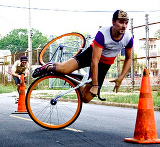
The British Medical Journal has a fascinating editorial on the behavioural complexities behind the question of whether cycling helmets prevent head injuries.

You would think that testing whether helmets prevent bikers from head injury would be a fairly straightforward affair. Maybe putting a bike helmet on a crash test dummy and throwing rocks at its head. Or counting how many cyclists with head injuries were wearing head protection – but it turns out to be far more complicated.

The piece by epidemiologist Ben Goldacre and risk scientist David Spiegelhalter examines why the social and behavioural effects of wearing a helmet, or being required to wear one by law, can often outweigh the protective effects of having padding around your head.

People who are forced by legislation to wear a bicycle helmet, meanwhile, may be different again. Firstly, they may not wear the helmet correctly, seeking only to comply with the law and avoid a fine. Secondly, their behaviour may change as a consequence of wearing a helmet through “risk compensation,” a phenomenon that has been documented in many fields. One study — albeit with a single author and subject—suggests that drivers give larger clearance to cyclists without a helmet.

Risk compensation is an interesting effect where increasing safety measures will lead people to engage in more risky behaviours.

For example, sailors wearing life jackets may try more risky maneuvers as they feel ‘safer’ if they get into trouble. If they weren’t wearing life jackets, they might not even try. So despite the ‘safety measures’ the overall level of risk remains the same due to behavioural change.

This happens in other areas of life. Known as self-licensing it is where people will allow themselves to indulge in more harmful behaviour after doing something ‘good’.

For example, people who take health supplements are more likely to engage in unhealthy behaviours as a result.

The moral of the story, of course, is to stay in the bunker.
 

Link to BMJ editorial ‘Bicycle helmets and the law’.

Drugs where the sun don’t shine: a cultural history

Through the history of humanity, every culture has made use of psychoactive substances. While smoking, eating and injecting have generated most interest, taking drugs through the nether regions has a remarkably long history.

Firstly, let’s get your burning question out of the way. The reason someone might want to administer drugs through the vagina or anus is because these areas have two properties that make them excellent drug delivery systems: they are moist and they have an excellent blood supply.

This means drugs will be absorbed into the bloodstream and reach the brain very quickly – often more quickly than if you drank the substance.

We know why this works due to medical research, but as we wander through the history of downstairs doping, you may wish to take a moment to reflect on how this remarkable fact was first discovered.

The earliest accounts of rectal administration of psychoactive drugs come from the Ancient Mayan civilization where ritual enemas were commonly used to induce states of trance and were widely depicted on carvings and pottery.

The image above is a Mayan carving depicting a priest giving reclining man a large ritual enema to the point where he sees winged reptile Gods flying overhead. Sorry hipsters, your parties suck.

It wasn’t just the Mayans, though. The historical use of psychoactive enemas was known throughout the Americas and is still used by traditional societies today.

Unfortunately, we know little about the history of similar practices in Africa but they are certainly present in traditional societies today – and largely known to mainstream science through documented medical emergencies.

In contrast, while it seems that enemas and douching were often used in Ancient Europe (for example, Aristides writes in his Sacred Tales that the goddess Athena appeared to him in a dream and recommended a honey enema – thanks your holiness), they do not seem to have been used for bottom-up drug taking.

However, there is some evidence that in medieval Europe, hallucinogenic ointments were applied to the vagina with some speculation that the ‘witch on a flying broomstick’ cliché arose due to the use of a broomstick-like applicator for strongly psychoactive drugs.

As the first synthesised psychoactive drugs became available in the 19th and early 20th Centuries, specialised delivery devices were quickly developed.

Cocaine was especially likely to be applied down-below because, although it makes you high, it is also an excellent local anaesthetic useful for discomfort and minor surgery. The development of cocaine tampons was considered a medical innovation that was “regarded as an especially effective treatment for gynecological diseases”.

The application of psychoactive drugs into the anus is a small but essential part of modern medicine. Status epilepticus is a medical emergency where someone has an epileptic seizure that doesn’t end by itself. It is potentially fatal.

The single best way of ending the seizure is through the use of drugs like lorazepam or diazepam (better known as Vallium). But if someone is unconscious and possibly shaking, trying to get them to swallow a pill could be very dangerous. Hence, the drug is often put straight into the back passage. This has saved countless lives and may, one day, save yours.

Recreationally, both vaginal and anal cocaine use have been reported in the medical literature and popular culture. Unfortunately though, most cases of cavity cocaine highs are not from recreational users but smugglers who have hidden drugs in their body and had the packets burst – sending them to hospital with drug toxicity.

For those wondering whether the modern world has truly mastered the art of the half-height high, you need look no further than ‘butt chugging’ – the frat boy practice of absorbing alcohol through the anus either via a tube or via a booze-soaked tampon.

Police reports suggested that the University of Tennessee chapter of the Pi Kappa Alpha fraternity decided to have a butt chugging party which promptly sent fraternity member Alexander Brougthon to the emergency room with alcohol poisoning.

This led to quite possibly one of the oddest incidents in the history of derrière drug taking: a live press conference where the entire fraternity and their lawyer addressed the media to deny the incident ever happened.

After the lawyer gives a strongly worded denial, Brougthon reads his statement. “The scandalous accusations surrounding that event never happened and I completely deny them,” he says. “At this point,” he continues, “my intent is to clear my name”.

One of the press pack asks a question. “Alexander, can you clarify what did happen that day?”

He looks distraught. “It’s a long story” he says.
Crystal history

Spiegel Online has an excellent article that traces the history of methamphetamine from its early days as synthetic soldier fuel in Nazi Germany to its recent history as street crank.

There is one curious bit though:

Pervitin remained easy to obtain even after the war, on the black market or as a prescription drug from pharmacies. Doctors didn’t hesitate to prescribe it to patients as an appetite suppressant or to improve the mood of those struggling with depression. Students, especially medical students, turned to the stimulant to help them cram through the night and finish their studies faster.

Numerous athletes found Pervitin decreased their sensitivity to pain, while simultaneously increasing performance and endurance. In 1968, boxer Joseph “Jupp” Elze, 28, failed to wake again after a knockout in the ring following some 150 blows to the head. Without methamphetamine, he would have collapsed much sooner and might not have died. Elze became Germany’s first known victim of doping. Yet the drug remained on the market.

This was probably not mainly due to increased pain tolerance. In fact, studies on the pain-killing effects of amphetamine show quite modest effects on reducing discomfort.

Being knocked out is basically where the brain has sustained so much damage that it cannot maintain sufficient arousal to support consciousness.

Amphetamine artificially increases arousal, so you’re likely able to sustain much more brain damage before passing out.

Or to put it another way, after dropping speed, the point at which you sustain enough brain damage to pass out becomes much closer to the point at which you’re likely to die.

There is also a chronic effect of amphetamine raising blood pressure, which increases the chance of stroke, so getting repeatedly punched in the head while on speed is probably not a good idea. I suspect this was the more likely route to the death of boxer Joseph “Jupp” Elze.

If you want a background on the science and history of stimulants, I never miss the opportunity to recommend the brilliant book Speed, Ecstasy, Ritalin: The Science of Amphetamines.

However, if you want a quick primer (no, not that sort) the Spiegel article is a great place to start.
 

Link to Spiegel article ‘The German Granddaddy of Crystal Meth’.

2013-05-31 Spike activity

Quick links from the past week in mind and brain news:

A video of a brain surgery patient playing guitar during the procedure. Theatre nurse on drums.

The Guardian has an excellent piece on ‘appreciating the politics of psychiatry’. Hints of Viennese wood and iodine with a curiously bitter aftertaste.

“Yesterday, I read a paper that, to my mind, embodies what’s wrong with cognitive neuroscience” says Neuroskeptic. Personally, I just look at the pictures.

People into bondage are better psychologically adjusted according to a new study covered by Pacific Standard. Double-blind intervention already planned.

Time magazine warns not to read too much into brain scans. Although you can see castles if you stare long enough.

Neuroscience: Method man. Nature not fooling anyone by trying to pass off Karl Deisseroth as one of the Wu-Tang Clan.

Smoking weed doesn’t reduce loneliness says The Neurocritic, somewhat wistfully.

Photographing hallucinations

BMJ Case Reports has a paper that describes two patients with Parkinson’s disease who experienced hallucinations that transferred onto photos they took to try and prove they were real.

This is ‘Patient 1’ from the case report:

Patient 1 was first evaluated at age 66, having been diagnosed with PD [Parkinson’s Disease] at age 58… She complained of daytime and night-time visual hallucinations for the past one year. Most of the time she did not have insight about them. She described seeing three children playing in her neighbour’s yard and a brunette woman sleeping under the covers in one of the beds in her house. She also saw images of different people sitting quietly in her living room. Most of her visual hallucinations subsided in open and brightly lit spaces but were, nevertheless, troublesome. In one instance, she saw a man covered in blood, holding a child and called 911.

Her husband, in an attempt to prove to her that these were hallucinations, took pictures of the neighbour’s yard and the bed in their house. Surprisingly, when shown these photos, the patient continued to identify the same children playing in the yard and the same brunette woman sleeping under the covers. This perception was present every time the patient looked at these photos. Within 6 months of stopping ropinirole and titrating quetiapine to 75 mg every night at bedtime the hallucinations were less severe and shorter in duration, but the patient continued to see them in the photos.


Link to locked article in BMJ Case Reports.