The baroque art rifle

Anthropologist Wade Davis’s wonderfully vivid description of the effects of Amazonian hallucinogenic plants from page 216 of his fantastic book, One River:
In the case of yagé, some twenty one admixtures have been identified to date. Two of these are of particular interest. Psychotria viridis is a shrub in the coffee family. Chagopranga is Diplopterys cabrerana, a forest liana closely related to yagé. Unlike yagé, both of these plants contain tryptamines, powerful psychoactive compounds that when smoked or snuffed induce a very rapid, intense intoxication of short duration marked by astonishing visual imagery.

The sensation is rather like being shot out of a barrel lined with baroque paintings and landing on a sea of electricity.


Link to more information about One River.

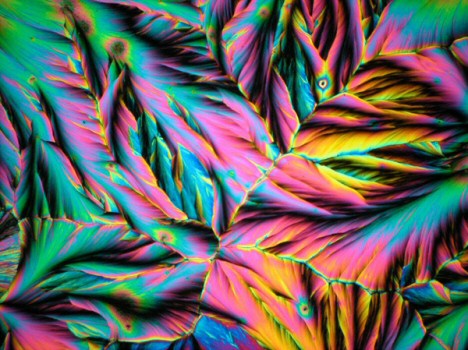
Dopamine crystal method

A beautiful image of dopamine crystals viewed with polarized light.

Photo by Spike Walker for Wellcome Images. Click for source

From the description: “A polarized light micrograph of dopamine crystals. Dopamine is a naturally occurring precursor of norepinephrine that affects various brain processes, many of which control movements, emotional responses and the experiences of pain and pleasure. Dopamine receptors are especially clustered in the midbrain. The drug L-DOPA, used to help sufferers of Parkinson’s disease, is converted in the brain to dopamine.”
 

Link to Creative Commons licensed image at Wellcome (via NewSci).

Mind gene myths

The Guardian has an excellent article on why news stories touting a gene for a particular psychological trait, like intelligence, optimism or dyslexia, are usually misguided.

The piece is a fantastic potted guide to how science goes about untangling the effects of genes and the environment and how this applies to the increasingly popular attempt to link genetics to personality, thinking and behaviour.

What are the implications of all this for the stories we hear in the media about new genetic discoveries? The main message is that we need to be aware of the small effect of most individual genes on human traits. The idea that we can test for a single gene that causes musical talent, optimism or intelligence is just plain wrong. Even where reliable associations are found, they don’t correspond to the kind of major influences that we learned about in school biology. And we need to realise that twin studies, which consider the total effect of a person’s genetic makeup on a trait, often give very different results from molecular studies of individual genes.

Don’t be put off by the picture of Jedward. Not all twin studies are quite so gruesome.
 

Link to article on myth of ‘a gene for things like intelligence.’

2010-09-10 Spike activity

Quick links from the past week in mind and brain news:

Neuroscience hip-hop. The Beautiful Brain discovers a new track from Prince Ea where he waxes lyrical about the cortex. The neurobiological microphonist discusses the track here.

The New York Times says to forget what you know about good study habits and discusses where the cognitive science of learning conflicts with teacherly advice.

The future of reading and how tweaking fonts could cause us to process text differently are discussed over at The Frontal Cortex. See also a piece riffing on the recent study on mobile phone half-a-logues.

BBC News has an in-depth article on cutting drugs and how the supply of adulterants to illicit dealers has become a big business in its own right.

Problem drug users are possibly the most stigmatised group of patients. Addiction Inbox looks at how drug policy needs to change to take these social obstacles into account.

Slate has an excellent analysis of ‘HauserGate‘ and why the drive for evidence can be a Siren’s call.

The first medical cannabis advert airs in the US, advertising cannabis for, er, just about any illness you can think of. Dosenation has the video.

NPR has a short radio piece on the top five things parents worry about and the genuine top five dangers to children. There is no overlap.

There’s a fantastic piece on the subtle reaping by carbon monoxide poisoning over at Speakeasy Science.

Wired Danger Room reports on the record number of US troops taking psychiatric medication.

If you read only one piece on oxytocin this week make it this great piece from Wonderland that looks at the differing effects of the hormone and male and female parents and skips the ‘hug drug’ stereotype.

The Guardian has a fantastic piece on the remarkably problem solving abilities of slime moulds. The B-movie version is in the works.

The excellent Providentia blog has a great piece on Thomas de Quincey “one of the high priests of the literary drug culture” – famous for his book ‘Confessions of an English Opium Eater’.

The Psychologist is looking for new voices and brand new talent for its pages. If you’ve not published much, or anything before, but have a passion for writing, this could be your chance.

The woman whose new memories are erased each night. The BPS Research Digest covers an intriguing and unusual form of amnesia.

BBC News has some fantastic coverage of the biomechanical analysis of attractive male dancing styles study. Although, according to the conclusions of the research, the funky chicken should be sexual dynamite.

A new meta-analysis debunks the link between psychopathy and violence and In the News has the low-down.

New Scientist has a lamentable article were they ask the head of the UK’s first and only private internet addiction clinic whether ‘internet addiction’ really exists. Next week, head of Eli Lilly asked which is the best pill to treat depression.

How the mind counteracts offensive ideas. Great review of how we mentally push back against things we don’t like.

All in the Mind from ABC Radio National discusses climate change and the psychology of mass behaviour change for the collective good.

There’s an interesting project developing at the History of Madness blog where they’re publishing the syllabus from a number of university courses on the history of psychiatry from around the world.

The New York Times has an in-depth article that asks can preschoolers be depressed?

A fascinating look at supposedly new slang like ‘gonna’ and ‘shoulda’ over at LanguageLog digs up the fact that they have a fine vintage in the English language.

Nature News has a feature article on the science of nurture and epigenetics.

Maximum amount of alcohol consumed in 24 hours by parents predicts mental health problems in teenagers. Another fascinating look at recent research by Evidence Based Mummy.

The New York Times Opinionator blog has a piece introducing the concept of ‘experimental philosophy’.

The latest edition of the American Psychological Association’s Monitor magazine is online and open.

Newsweek discusses the many facets of alcoholism and why abstinence isn’t always the only solution.

The environmental influence on the heredity of intelligence is discussed over at Spiegel which is one of the few mainstream articles that seems to get the idea that genetic influence isn’t fixed.

The Washington Post discusses the popularity of hallucinogenic ayahuasca ceremonies for Peruvian tourists.

Britney Spears’ tongue. As LanguageLog notes “It’s not very often that an observation about articulatory phonetics goes viral.” Exactly what I was thinking.

Beyond the call of duty

Oscillatory Thoughts has a brilliant post about the self-experimentation carried out by pioneering neurologist Henry Head in the early 1900s. This involved severing nerves to see which were responsible for areas of sensation and creating a thorough map of how sensory abilities differed across the body – and no spot was left untested.

The post has a fantastic description of a 1908 study on how somatosensation recovered after… ok, ok, here’s where he dips his cock in hot water:

In the case of [Henry Head], the tip happens to be devoid of heat-spots but is sensitive to cold and to pain. When… it was dipped into water at 40° C, no sensation of heat was produced, but [Head] experienced an unusually disagreeable sensation of pain… But, as soon as the water covered the corona without reaching the foreskin, both cold and pain disappeared, giving place to an exquisitely pleasant sensation of heat.

Science. Happy now?
 

Link to Oscillatory Thoughts on Head’s self-experimentation.
Link to excellent Wikipedia article on Henry Head.

Beyond paddling: children and technology

One of the most sensible articles yet published on children, technology and the brain has just appeared in the scientific journal Neuron. It’s titled “Children, Wired: For Better and for Worse” and has been made open-access so you can read it in full online.

You’ll notice a few things that are different from your usual article about the impact of technology: it is written by cognitive scientists who are actually involved in the research; it is published in a peer-reviewed scientific journal; it discusses the whole range of evidence; and it hasn’t made any headlines.

Although it’s an academic article, it’s surprisingly readable and if you’re interested in the area, I highly recommend it.

This is not least because it points out lots of counter-intuitive findings in the scientific literature that are never covered by the people who usually spin the ‘I think it’s trash culture so it must be doing harm’ line.

For example, educational or ‘brain boosting’ applications may actually slow learning while ‘mindless’ video games can have sustained benefits:

Technology specifically developed for the purpose of enhancing cognitive abilities, such as infant-directed media including the ‘‘Baby Einstein’’ collection or various ‘‘brain games’’ designed for adults, may lead to no effects or, worse, may lead to unanticipated negative effects (Owen et al., 2010; Zimmerman et al., 2007). Meanwhile, technological applications that on the surface seem rather mindless (such as action video games) can result in improvements in a number of basic attentional, motor, and visual skills (Green and Bavelier, 2008; Greenfield, 2009).

It’s worth noting that there is good evidence that some educational TV programmes and software have a beneficial effect, but the point remains that you can’t guess the effect from the label.

The article is great at picking up on these complexities and noting the importance of fully considering content and context as well as the way technology delivers it.

My only quibble is a throwaway line where the authors consider addiction to video games and note we need to consider neurological evidence because: “The fronto-striatal pathway, which has been strongly implicated in both drug addiction and behavioral disorders such as pathological gambling is also activated by interaction with certain types of media technology, video games in particular”

As the ‘reward system’, of course, it’s strongly activated in lots of things we find pleasurable or useful – like listening to music, consuming soft drinks, co-operating with others and receiving a compliment.

There is nothing inherently pathological about the activity of this system so we need to be careful that we are guided by what actually impacts on people’s lives and not get too dazzled by the bright lights of brain scanners. But this is a minor point in a overwhelmingly excellent piece.

The take home point is that the ‘technology is damaging the brain / eating our children / harming our culture’ stories are over-simplified to the point of absurdity. No-one could get away with a scare story about the whole of ‘transport’ but you can with ‘technology’ because it plays to our anxious stereotypes.

This is not to say that there aren’t some genuine areas of concern but these are little different from every other media that has come before: violence has a small but significant effect on aggression and doing anything to the detriment of a balanced education and active life will affect school progress and health.
 

Link to Neuron article with full text pdf link (via @bradleyvoytek).
Link to DOI entry.

Air gun psychology

An amusing YouTube video demonstrates Ivan Pavlov’s principal of classical conditioning with an air gun, a novelty alarm and a reluctant college roommate.

Pavlov discovered that we learn to associate an established response to a new event simply by repeatedly pairing the new event to a situation that already caused the response. Famously he could trigger salivation in a dog just with the sound of a bell, simply by ringing a bell every time food was presented.

This video uses exactly the same principle, but instead of food, an airgun pellet is fired at a college roommate causing a painful reaction, and instead of a bell, an annoying novelty alarm is sounded.

Science. Standing on the shoulders of giants.
 

Link to YouTube video.

Guided by voices

RadioLab has a fantastic mini-edition about the link between our internal thought stream and the development of auditory hallucinations – the experience of ‘hearing voices’.

The programme discusses the theory that the experience of hearing hallucinated ‘voices in your head’ occurs when we lose the ability to recognise our internal thoughts as our own.

Although there is some good evidence that, for example, people diagnosed with schizophrenia who hear voices are less able to recognise their own actions as their own, one crucial aspect not explained by the theory is why many ‘voice hearers’ experience voices with distinct identities.

For example, someone might hear the voice of their dead parent along with someone they knew from childhood where someone else might have discovered the identities of their voices over time, simply from hearing them speak, and they seem to have no relation to specific people they’ve met in their lives.

The programme suggests the idea, which, as far as I know, has never been discussed in the scientific literature, that the identities of the voices could originate from when we learn to internalise voices of people who give us instructions when we’re children – an approach based on the theories of Lev Vygotsky.

It’s a delightful idea, if not a little blue sky, and is accompanied by a brilliant demonstration of the type of study that focuses on hallucinated voices.
 

UPDATE: There’s further discussion with references to Vygotsky’s work on self-talk and internalised thought from the interviewee, psychologist Charles Ferynhough, over at a great post on his blog.


Link to RadioLab ‘Voices in Your Head’ edition.

Why are overheard phone conversations so distracting?

Psychological Science has a brilliantly conceived study that explains why overhearing someone talk on a mobile phone is so much more annoying than simply overhearing two people in conversation.

It turns out that a one-sided conversation (brilliantly named a ‘half-a-logue’) draws in more of our mental resources because the information is less predictable – like being fed a series of verbal cliff-hangers.

Overheard Cell-Phone Conversations: When Less Speech Is More Distracting.

Psychol Sci. 2010 Sep 3. [Epub ahead of print]

Emberson LL, Lupyan G, Goldstein MH, Spivey MJ.

Why are people more irritated by nearby cell-phone conversations than by conversations between two people who are physically present? Overhearing someone on a cell phone means hearing only half of a conversation-a “halfalogue.” We show that merely overhearing a halfalogue results in decreased performance on cognitive tasks designed to reflect the attentional demands of daily activities. By contrast, overhearing both sides of a cell-phone conversation or a monologue does not result in decreased performance. This may be because the content of a halfalogue is less predictable than both sides of a conversation. In a second experiment, we controlled for differences in acoustic factors between these types of overheard speech, establishing that it is the unpredictable informational content of halfalogues that results in distraction. Thus, we provide a cognitive explanation for why overheard cell-phone conversations are especially irritating: Less-predictable speech results in more distraction for a listener engaged in other tasks.


Link to PubMed entry for study.

A stranger in half your body

An amazing study has just been published online in Consciousness and Cognition about a patient with epilepsy who felt the left half of his body was being “invaded by a stranger” when he had a seizure. As a result, he felt he existed in one side of his body only.

The research is from the same Swiss team who made headlines with their study that used virtual reality to make participants feel they were in someone else’s body, and one where brain stimulation triggered the sensation of having an offset ‘shadow body’ in patients undergoing neurosurgery.

The researchers suggest that having an integrated sense of our own bodies involves three types of perception: self-location – the area where we experience the self to be located; first-person perspective – the perceived centre of the conscious experience; and self-identification – the degree to which we identify sensations with our own bodies.

They report two case studies of patients with neurological disorders where self-identification goes haywire. This is the first:

Patient 1 is a 55 year old, left-handed male patient suffering from epilepsy since the age of 14 years. His simple partial sensorimotor seizures [where he remained ‘awake’ throughout] affected his left hand had been well controlled under anti-epileptic medication until the onset of paroxysmal episodes of vertigo 9 years before the current hospitalization.

At that time he additionally started to experience the following, highly stereotypical pattern of symptoms: without any prior warning he would first have the impression of an increasing pressure in the entire left hemi-body. This sensation increased progressively in strength leading eventually to the sensation that he was invaded by a stranger in his left hemi-body.

At this time he also sensed that the left half of his head, the upper part of his left trunk, his left arm and his left leg were no longer belonging to him (no misattribution), that these parts were disconnected from the rest of his body, and that his body was divided into two parts (Fig. 1A [see image above]). Sometimes this was followed by the impression that the left arm was moving unintentionally and would disappear behind the patient’s back. During these episodes he never experienced any deformation or other changes of his body or the environment.

Furthermore, no autoscopic hallucinations, no sensation of floating or disembodiment, no change in visuo-spatial or first-person perspective, no disturbance of language or vision and no loss of contact or consciousness were noted. During these sensations the patient localized the self as within the right side of his body (shown in grey in Fig. 1 [above]). He managed to remain calm and was able to continue standing, walking, and even give oral presentations while in front of audiences at work (surrounding persons usually did not notice his seizure manifestations). These simple partial seizures occurred on a daily basis and lasted about 1 min.

These sorts of cases are useful because they help us understand whether theories about the brain and its relation to our experience are realistic.

For example, one test of the idea that body self-consciousness has three components (self-location; first-person perspective; and self-identification) would be to see if there are any patients who show disturbances to only one of these experiences due to a neurological problem.

This patient shows exactly this, giving us some additional evidence that the three-component idea is useful. It is not the only evidence we need of course, but it is still makes an important contribution.
 

Link to PubMed entry for study.
Link to DOI entry.

Chomsky’s Universal Glamour

Satirical website Newsbiscuit has a funny piece about linguist Noam Chomsky being a new judge on X-Factor.

Professor of linguistics and political campaigner Noam Chomsky has been confirmed as the new judge on TV talent show The X Factor. ‘Cheryl Cole was still recovering from malaria and we needed someone who could fill the intellectual void,’ said programme creator Simon Cowell, ‘Professor Chomsky is perfect and the audience just loves him.’

In his first outing as judge, Chomsky quickly made his mark. ‘Your act is part of a propaganda state promoting a culture-ideology of comforting illusion’, he told one hopeful young girl, before adding, ‘I’m saying yes.’

Chomsky then set about a teenage boy-band, describing them as ‘yet another example of pre-packaged ideological oppression whose lyrics systematically fail to demonstrate even a basic understanding of what happened to East Timor in 1975,’ he paused for effect, ‘But, I’m giving you a second chance…You’re through to the next round.’


Link to Newsbiscuit story.

NeuroPod on James, genes and jammin’

The latest Nature Neuroscience podcast has just appeared online. The latest edition is a particularly good one and tackles the 100th anniversary of William James’ death, a barely known gene that has been linked to severe brain malformations, monkey anxiety and psychedelic psychiatry.

The author of William James‘ biography, Linda Simon, is interviewed about the life of the great man and founder of modern psychology. The interview makes for a brilliant potted biography of James and is a particular highlight of the show.

I also enjoyed the interview with Franz Vollenwider, co-author of the recent article on the use of psychedelic drugs in psychiatry who gives a classic scientists’ answer to the question “Have you ever taken these drugs yourself?” He replies “When we did the very first psilocybin study, we had no idea about the dose…”

You’ll have to listen to the show to hear how it went.
 

Link to NeuroPod homepage.
mp3 of this episode.

Peculiar disturbances of vision

I have found what is reportedly the first description of a hallucinogenic ‘magic mushroom’ trip in the Western medical literature. It is from a 1926 paper on different types of mushroom poisoning that was published in the Journal of Pharmacology and Experimental Therapeutics and was written by William. W. Ford.

He lists various types of poisoning, including stomach upsets, cramps, vomiting and convulsions, but the final category is where he tackles the effects of what are now known as ‘magic mushrooms’ that contain the naturally occurring hallucinogenic drug psilocybin.

5. Mycetismus cerebralis. Here the patients show peculiar cerebral symptoms four or five hours after the fungi are eaten. They are greatly exhilarated, laugh immoderately on slight occasion, develop a staggering gait and show peculiar disturbances of vision. The symptoms are transient, the patients being restored to health in twenty-four to forty-eight hours, except for a peculiar sensation which they describe as a feeling “as if they were walking on air.” This subjective sensation may last several days.

The plants responsible for this peculiar poisoning are Panaeolus papilionaceus and Panaeolus campanulatus. They are of interest to us chiefly in that they grow on lawns together with the edible mushroom, Agaricus campestris, and also rarely in beds for the artificial propagation of this species.

Although leaders of the psychedelic movement have created back histories about Western use of hallucinogenic mushrooms – suggesting they were used for spiritual purposes by druids, the Ancient Greeks, and folk healers to the present day – historian Andy Letcher has noted that the effects of these fungi have, as far as we know, always been treated as accidental poisoning.

For example, he notes in his book on the cultural history of the ‘magic mushroom’ that throughout the 18th and 19th centuries medical records describe how consumption of what we would now recognise as ‘magic mushrooms’ were treated with emetics, cathartics, the stomach pump, and occasionally leeches, as would any other poison.

The medical article by William. W. Ford, published 30 years before the active ingredient of magic mushroom would be isolated, was the first time that the hallucinogenic effects had been identified as a distinct effect.

We know now that the toxicity of psilocybin is very low and the main dangers are being inebriated (off your face) or accidentally picking and eating genuinely poisonous mushrooms.

I learnt about this early medical report from an academic article by Andy Letcher where he analysis how ‘magic mushrooms’ have been discussed in popular culture and science.
 

Link to online version of paywalled 1926 paper.
Link to NYT review of Shrooms: A Cultural History of the Magic Mushroom.

You are the last piece in the puzzle

The Economist has an excellent article that discusses the increasingly diverse ways in which information from your social network – drawn from services like Facebook, or from telephone calls or payment patterns – are being used to obtain personal information about you.

This is not information which you have explicitly stated or included, but which can be found out or ‘mined’ from your patterns of behaviour and your connections to other people.

The piece looks at ways in which software, specifically designed for the task, is being increasingly deployed by companies and security agencies to profile their targets.

Telecoms operators naturally prize mobile-phone subscribers who spend a lot, but some thriftier customers, it turns out, are actually more valuable. Known as “influencers”, these subscribers frequently persuade their friends, family and colleagues to follow them when they switch to a rival operator. The trick, then, is to identify such trendsetting subscribers and keep them on board with special discounts and promotions. People at the top of the office or social pecking order often receive quick callbacks, do not worry about calling other people late at night and tend to get more calls at times when social events are most often organised, such as Friday afternoons. Influential customers also reveal their clout by making long calls, while the calls they receive are generally short.

The piece goes on to explain how such analyses have been used in everything from targeting advertising to tracking down Saddam Hussein.
 

Link to ‘Untangling the social web’.

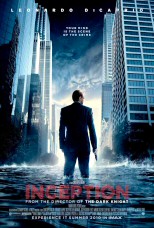
The labyrinth of Inception

When you have a hammer, everything can look like a nail and people have been banging the shit out of Inception. The sci-fi movie of the year has attracted numerous ‘neuroscience of Inception’ reviews despite the fact that the film has little to say about the brain and is clearly more inspired by the psychological theories of Carl Jung than by neurobiology.

It’s easy to why the movie has attracted neuroscience fans, including a brain-based review in this week’s Nature. It’s a science fiction film, the dream entry device presumably alters the brain, and director Christopher Nolan’s previous film Memento was carefully drawn from a detailed reading of the science of brain injury and memory loss.

Inception itself, however, contains so little direct reference to the brain (I counted about three lines) that you have to do some pretty flexible interpretation to draw firm parallels with brain science. Perhaps, most tellingly, for a film supposedly about neuroscience, the dream entry devices don’t even connect to the brain and nothing is made of how they achieve their interface.

But for those familiar with the theories of Carl Jung, the psychoanalyst and dissenter from Freud’s circle, the film is rich with both implicit and explicit references to his work.

As with all psychoanalysts, Jung was concerned with the subconscious mind and believed that it contains powerful emotional processes that, when malformed or disturbed, can break through and cause immense distress to our conscious lives. To protect us, the subconscious tries to hide these forces behind symbols, which appear, most vividly, in dreams.

This is why Freud called dreams “the royal road to the unconscious” and Jung’s work is also based on this core assumption.

Similarly, in Inception, dreams are a way of accessing the subconscious of the dreamer, to the point where they can be used to steal secrets. This dream invasion work is not easy, of course, primarily because the subconscious mind attempts to defend against invaders (a defense mechanism in psychoanalytic terms) and the dreamspace needs to be explored and interpreted by the invaders to get to the secret itself.

This is not the only challenge, as other people in the dream are projections of the dreamer’s subconscious where, in line with the definition from psychoanalysis, personal feelings are perceived as residing in other people.

In the film, the young architect, Ariadne is hired to build dreams in the form of mazes, and the labyrinth forms one of the central symbols in the film (the name, Ariadne, by the way, comes from the Greek legend where she leads Theseus out of the Minotaur’s labyrinth – Jung referred to being lost in life as ‘losing the Ariadne thread’).

In Jungian psychology the labyrinth is one of the most powerful symbols of the subconscious. In his book ‘Man and His Symbols’, he explains its meaning:

“The maze of strange passages, chambers, and unlocked exits in the cellar recalls the old Egyptian representation of the underworld, which is a well-known symbol of the unconscious with its abilities. It also shows how one is “open” to other influences in one’s unconscious shadow side and how uncanny and alien elements can break in.”

Ariadne is hired because Don Cobb can no longer create dreams, owing to the fact that the subconscious representation of his ex-wife, who killed herself due to Cobb’s dream work, appears and attempts to violently stop him. Cobb names her his ‘shade’, directly referencing the Jungian concept of the shadow where we are haunted by the parts of ourselves which we are most ashamed and which we most try to repress.

While Cobb’s main objective is to get back to his children, his main challenge is to overcome his shadow that causes conflicts in his subconscious. Normally, if you wrote a sentence like that about a film you would be using a Jungian interpretation, but in the case of Inception this is also the literal state of affairs.

This is not the only psychological journey that happens in the film, as Cobb’s journey is paralleled by that of Robert Fischer, the target of the dream invaders. Fischer’s father is dying leaving both the state of the family corporation and the father-son relationship unresolved.

The situation is a representation of the Arthurian grail legend, the Fisher King. In the tale, the king responsible for protecting the Holy Grail is wounded and his kingdom decays in parallel to his damaged body. The knight Perceval learns he could heal the king and his kingdom by asking the right questions.

Not coincidentally, Jung was intensely interested in the Grail legend throughout his life as he thought it was one of the best representation of the ‘collective unconscious‘ where common psychological themes of humanity appear as what he called ‘archetypes‘.

His wife, Emma Jung, a psychoanalyst in her own right, wrote a book on the psychological meaning of the legend drawn from Carl Jung’s theories and cited the key theme of the tale to be ‘individuation‘, that is the healthy development of ourselves as distinct individuals by resolving our relationships with those around us and the conflicts within us.

In Inception, Robert Fischer’s journey ends with him resolving his relationship with his wounded father and saving his ‘kingdom’ by learning that he had always wanted him to be his own man and not try and be his father – which, as we learn at the end – is at the core of his subconscious. Again, this is not an interpretation; it is the literal truth of the film.

There are lots of other subtle pointers in the film which may or may not be deliberate. Is it a co-incidence that the lead character Don Cobb, shares a name with Stanley Cobb, the person most responsible for introducing Jungian analysis to the United States? Or that Ariadne gets the job by drawing a mandala style maze, a symbol that Jung believed was a representation of the unconscious self? Or that Mal’s madness is portrayed as her subconscious breaking through into reality, in line with Jung’s definition?

Regardless of whether these are subtle hints or not, the film is Jungian at its core, and what is most interesting for me is that Nolan is deploying different theories of the mind as themes in his films. While Memento was obviously neuropsychological, Inception is clearly Jungian.
 

Link to Wikipedia Inception page.
Link to more on Jung and Inception.