Fifteen brain encounters

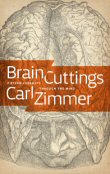
I’ve just finished Carl Zimmer’s new e-book Brain Cuttings that collects fifteen of his previous long-form mind and brain articles and, I have to say, I thoroughly enjoyed it.

I was kindly sent an advanced copy of the book which is only available as a pdf for your Kindle or other electronic reader. As I don’t own one, I took the file to the local copy shop and got it printed out (a paper version of the ‘iPad’ known as the ‘Pad’).

I was particularly impressed by the sheer range of the pieces that cover everything from the neurobiology of astrocytes (in a chapter entitled The Brain’s Dark Matter) to an account of a trip the Singularity Summit, a conference of techno-utopians who are working towards augmented immortality for the human race.

The piece on the Singularity is probably the stand-out section of the book as it takes a level-headed look at the movement’s claims for brain enhancement and super-intelligence without engaging in literary eye-rolling or ever losing a sense of wonder for the genuine scientific advances incorporated into the ideas.

In terms of the science, the book is absolutely faultless, which is sadly not something your average reader can take for granted when it comes to neuroscience or psychology journalism, and Zimmer writes in a remarkably clear style that makes absorbing even some of the most technical aspects seem as natural as breathing.

At times, I yearned for a little more exploration of the characters we encounter on the journeys, but the length of the pieces means they tend to focus more on the ideas than the scenes.

I’m not familiar with the e-book market but $11 for a 100 page book struck me as a little steep. However, I note that the book is an experiment in itself and is only available electronically, something of a first from such as well-established author.

Whether you are an enthusiast, a professional psychologist or neuroscientist, or a combination, you will probably learn much from the book due to its breadth of vision. Regardless of who you are you are sure to enjoy the engaging immersions in some of the most interesting ideas in contemporary science.
 

Link to Brain Cuttings page.
Link to Zimmer’s blog post about the new book.

A history of the phantom penis

After amputation, many people feel ‘phantom limb‘ sensations that seem to come from the missing body part. Although typically associated with missing arms or legs, these phantom sensations can arise from almost anywhere and a new study in the Journal of the History of the Neurosciences looks at how the ‘phantom penis’ has enjoyed a surprisingly long history in the medical literature.

The first case of a phantom penis was mentioned in passing by the ‘father’ of phantom limbs, Silas Weir Mitchell, and there has been an assumption that these sensations are rare or unusual.

In fact, a 1999 case report of a phantom penis after amputation noted only a few previous mentions of the experience, some of which have become quite well-known.

Among the most cited publications is one by Boston surgeon A. Price Heusner (1950) containing two case studies. His first case was an elderly man whose penis was “accidently traumatized and amputated,” and who “was intermittently aware of a painless but always erect penile ghost whose appearances were neither provoked nor provokable by sexual phantasies” (Heusner, 1950, p. 129). This man had to look under his clothes to be sure that his penis was, in fact, absent. Heusner’s second case was a middle-aged, perineal cancer patient. Because his malignancy had spread and was causing intense burning pains in his groin, he opted to undergo penile amputation. Thereafter, he continued to have painful sensations “suggesting the continuing presence of the penis,” until he underwent spinal surgery

This new historical study shows that there were actually many reports of phantom penises in the 18th Century medical literature that have previously been overlooked.

These include reports from some of the most important doctors of the time, and indeed, some of the most important in history.

This included the Scottish surgeon and anatomist John Hunter who reported on what can only be described as phantom wanking:

A serjeant of marines who had lost the glans, and the greater body of the penis, upon being asked, if he ever felt those sensations which are peculiar to the glans, declared, that upon rubbing the end of the stump, it gave him exactly the sensation which friction upon the glans produced, and was followed by an emission of the semen.

Hunter’s case highlights an interesting aspect of the phantom penis sensation which seems to differentiate it from most other forms of phantom limb sensations – they tend to be pleasurable rather than painful.

Phantom limbs are often associated with the feeling that the missing body part is stuck in an awkward position, such as the ‘fingers digging into the palm’, something which the mirror box treatment attempts to correct.

Although some painful phantom penises have been reported they seem more likely to appear as pleasurable sensations and phantom erections.

This may have some interesting implications for neuroscience. Phantom limbs are thought to arise when activity in the brain maps that represent the limbs no longer have a constant flow of sensory feedback that keep them tied to their task.

The boundaries of the maps become blurry and information from other body areas starts to cause activity in the map for the missing limb, leading to the phantom sensations.

However, in contrast to the penis, arms and legs involve much more of a feedback loop, because fine action control signals are being sent and modified on the basis of the sensations from the limb.

As the penis has less need for such fine action control, it’s probably less likely that misfiring of the signals can make it seem as if it is in an awkward or painful position, possibly reducing the chance of an uncomfortable phantom pecker.
 

Link to DOI entry for the locked article (via AITHOP).

2010-10-15 Spike activity

Quick links from the past week in mind and brain news:
Anti-depressant reboxetine has been found to be ineffective and potentially harmful. How come nobody knew, you ask. Well, because Pfizer hid 74% of the trial data. Link to scientific study here and Neuroskeptic’s take here.

The Telegraph has an excellent article on free will and the brain that has a deadpan photo made unintentionally hilarious by an odd caption.

Mind Hacks was kindly chosen as one of six notable science blogs by The Times Eureka Magazine. If you don’t remember The Times, it’s a British newspaper that locked itself out of the internet but you can read the piece here on selector Alice Bell’s blog.

The Wall Street Journal on how the White House have a policy of not sending condolence letters to families of soldiers who commit suicide and the campaign to change their medieval policy.

A round-up of the last three months of the excellent Evidence Based Mummy blog is now available online.

e! Science News covers a meta-analysis of more than a million people finding that females are equal to males in maths skills.

There’s more on the fascinating topic of unconscious expertise over at Barking up the Wrong Tree blog that asks whether experts can play chess without thinking.

Wired Science covers an interesting study finding that love makes you increasingly ignorant of your partner. Thankfully doesn’t affect those of us with the character depth of a dry puddle.

There’s some rough data gay / straight myth busting over at the blog of the OkCupid dating site which crunches their millions big database of members.

Science News reports on a study finding that a slow release implant of the drug buprenorphine helps heroin users kick the habit.

Philosopher Joshua Knobe and psychologist Lera Borodoitsky discuss whether language shapes thought on bloggingheads.tv via 3 Quarks Daily.

Cerebrum, the excellent online neuroscience magazine from The Dana Foundation has a great piece on the brain’s default network: Your Mind, on Its Own Time

Receiving a massage increases trust and co-operation in a financial game. Great coverage of a fascinating study from Dan Ariely’s Irrationally Yours blog.

The New York Times discusses the interesting proposition that happiness is not a state of mind.

A six-week science programme for two to three-year-old children boosted their exploratory ‘science-like’ play according to a study brilliantly covered by the BPS Research Digest. Timmy, take Tabatha’s hand out of the particle accelerator please.

New Scientist covers a study finding that for men, moving country can affect the libido. Once I get hold of the scientific paper, I fully intend to find fault with irrelevant details in this clearly misguided study.

There’s a completely fascinating discussion of language, context and its use in experimental philosophy over at Child’s Play.

The New York Times has an obituary for Philippa Foot, moral philosopher and inventor of the trolley problem.

Why are the effects of marijuana so unpredictable? asks The Frontal Cortex.

The LA Times asks whether bilingualism can improve your brain’s multitasking power? Je ne sais pas is the answer.

The Online Society: 50 Internet Psychology Studies. Great round-up of a slew of great studies on the net by the ever-excellent PsyBlog.

New Scientist has a piece on a fascinating study finding it’s possible to spot cases of flu by looking for changes in the movement and communication patterns of infected people by using data from the mobile phone network.

A study finding a correlation between screen time and psychological difficulties in children is ably de-hyped by Carmen Gets Around.

The Wall Street Journal looks at how marketing companies are building profiles by scraping data from internet forums.

Science you never knew you needed from NCBI ROFL: Detection and management of pornography-seeking in an online clinical dermatology atlas.

Wired Science covers a fascinating study suggesting that cultures evolve in small increments but collapse quickly.

Just loads of great stuff on Neuroanthropology this week. You’re best just heading on over and having a browse.

Only forensic psychology blog In the News could bring you news of an exciting new sex offender treatment model.

The LA Times covers a recent consensus giving guidelines on which patients with Parkinson’s disease should be eligible for deep brain stimulation surgery.

The US Army are getting concerned about the use of the new generation of synthetic cannabinoids among their rank and file, according to some great coverage by Addiction Inbox.
Coastal bound

Apologies if posts are a little irregular over the next few days as I shall be in the beautiful Colombian coastal cities of Santa Marta and Barranquilla to attend the Congreso Colombiano de Psiquiatría.

Both cities are known for their stunning coastline, but Barranquilla has probably become more famous for being the home town of Shakira.

Although I shall be briefly presenting at the conference, I would just like to mention that I have no plans for dinner in case any musically inclined barranquilleras happen to be reading.

Pavlov steaks a claim

Yale University archives have a piece of steak signed by the famous Russian psychologist Ivan Pavlov. The story of how this meaty museum piece was created is told in a short article for Yale Magazine.

Pavlov was apparently visiting the renowned brain surgeon Harvey Cushing when a new piece of surgical equipment caught his eye.
 

Pavlov was captivated by the new electrosurgical knife Cushing used in the operation, and at the end of the procedure, Cushing got a piece of beef so that the elder scientist could try his hand. After making a few incisions, Pavlov inscribed his name into the meat. “I asked him whether he wanted me to eat the meat in the hope of improving my conditional reflexes,” Cushing wrote in his journal, “or whether we could keep it in the museum, the latter we will proceed to do—’Pavlov’s beef-steak.'” A collector of old medical books and of brain tumors, when he died in 1939 Cushing bequeathed both to Yale, where his rare books would become the cornerstone for creating the Medical Historical Library.

For all his work on salivation, it’s a little ironic that Pavlov’s first response on being handed a steak was to respond quite so unusually.

The article has more on the curious museum piece.
 

Link to article on the signed steak (via Wonderland).

The social resonance of baby babble

The New York Times investigates how the goohs and gaahs of baby babble transform through the first year of life, becoming ever more language-like until they mutate into the first recognisable words.

But more than just tracking how the sounds change over time, the piece is a fascinating look at how they become enmeshed in social interaction and alter as they start to elicit specific responses from other people.

Some of the most exciting new research [pdf], according to D. Kimbrough Oller, a professor of audiology and speech-language pathology at the University of Memphis, analyzes the sounds that babies make in the first half-year of life, when they are “squealing and growling and producing gooing sounds.” These sounds are foundations of later language, he said, and they figure in all kinds of social interactions and play between parents and babies — but they do not involve formed syllables, or anything that yet sounds like words.

“By the time you get past 6 months of age, babies begin to produce canonical babbling, well-formed syllables,” Professor Oller said. “Parents don’t treat those earlier sounds as words; when canonical syllables begin to appear, parents recognize the syllables as negotiable.” That is, when the baby says something like “ba ba ba,” the parent may see it as an attempt to name something and may propose a word in response.


Link to NYT piece on understanding babble.
pdf of chapter on Evolution of Communicative Flexibility.

Susto: a soul wrenching fright

Neuroanthropologist Daniel Lende alerted me to this short video of an Ecuadorian healer or curandera treating a condition called ‘susto‘.

‘Susto’ literally means ‘fright’ in Spanish but the patient is not simply assumed to be suffering from shock or anxiety as the fright is thought to have caused the soul to leave the body which, in turn, causes a range of psychological and physical symptoms.

The anthropologist Arthur Rubel, who was one of the first to study the condition in detail, examined a range of cases and drew up a short list of its symptoms that included: “(1) during sleep the patient evidences restlessness; (2) during waking hours patients are characterized by listlessness, loss of appetite, disinterest in dress and personal hygiene, loss of strength, depression, and introversion”.

However, as an influential study by Michel Tousignant noted that other anthropologists have given remarkably different definitions, including fever, muscular pains, complexion changes, nausea, vertigo, and stomach or intestinal upsets; the inability to carry out your normal social role; an emotional crisis related to love or sexual problems, or, in the highlands of Ecuador, a problem that normally effects children that can lead to death if unchecked.

This last definition seems to be exactly what is being treated in the video as in the last few frames you can see a whole row of children being attended by curanderos and the video is labelled as taken in the highland Ecuadorian city of Cuenca.

The American Psychiatric Association’s DSM defines ‘susto’ as a culture-bound syndrome which is supposed to be a non-universal syndrome which only occurs in a specific culture but actually means a syndrome that only appears in foreign cultures as the category seems to automatically exclude a diagnosis if it appears in Americans.

Although its tempting to classify the condition as a form of mental illness, Tousignant’s work makes clear that this is misguided as the condition is defined as primarily spiritual in nature with what we would call ‘symptoms’ being knock-on effects.

It would like be a bit like trying to define poverty as a mental illness. While you can see that it causes mental stress, defining it as a psychiatric disorder doesn’t make much sense because it is best understood as an economic concept.

The same applies to ‘susto’. You cannot define it as a mental illness, as the DSM tries, without stripping it of its meaning from the cultures in which it appears.
 

Link to YouTube video of curandera treating ‘susto’.

I’m only racist when I’m drunk

In the light of several celebrities who have excused racist comments by saying they were drunk, tired or under stress, Time magazine has an excellent article examining how we can indeed become more prejudiced when run-down. Contrary to what some might think, this is not a get-out card for racism but may be key to understanding how best to challenge prejudice.

The piece riffs on findings from the Implicit Association Test or IAT that measures how quickly we pair concepts with positive or negative attitudes. It has found, for example, that negative biases towards black people are present in a large proportion of the population, including black people themselves.

The idea is not that all of these people are racist, but that we have absorbed negative cultural associations that tend to push our thinking in the direction of prejudice and we need to make a conscious effort to act even-handedly to counter-balance this tendency.

This effort, however, is hard mental work, and several studies have shown that this control can be weakened simply by altering the resources available to the brain.

It’s probably worth saying that one example in the article has been a bit mangled in the retelling. The study on ‘how elderly people given full sugar lemonade expressed fewer racist sentiments than those given diet lemonade’ wasn’t actually on elderly people or racist remarks.

But it did show that students given real lemonade were less likely to make homophobic remarks when asked to write as essay about a gay man than those given a sugar-free soft-drink.

However, it has been found that we are more likely to show racial bias as we age – likely because the circuits most involved in self-control heavily rely on the frontal lobes – which tend to become less efficient as we head into our twilight years.

In other words, we are all more likely to be prejudiced when we’re not firing on all cylinders and this is where it gets interesting.

The article raises the issue of which is the authentic you – the socially acceptable on-the-ball you, or the run-down prejudice-prone you?

Clearly, we would prefer the former, but its notable that much of the anti-racism rhetoric has pointed out, quite rightly, that we can be biased despite our best efforts, suggesting the latter.

It is also the case that people who have become notorious for outbursts of prejudice are often condemned as ‘racists’ rather than criticised for having made a mistake.

This is important, but it turns out that thinking of someone as characteristically prejudiced, rather than someone subject to the wax and wane of bias, is likely to mean racist acts go unchallenged.

A person’s attitude toward bias may help reduce it as well. Carol Dweck, a professor of psychology at Stanford, and her colleagues recently published a study illustrating why some people confront racism and others do not. Dweck found that those who believed racism was a permanent characteristic (“that person is a racist”) were four times less likely to confront research assistants who made racist statements than those who saw racism as changeable…

Further, Dweck’s study found that it’s relatively easy to get people to change their views about the changeability of racism, at least in the short term. After researchers asked participants to read a report emphasizing studies showing that people can change, they were 20% to 25% more likely to say they would confront prejudice.

Condemning people rather than actions may make it more likely that racism goes unchallenged. Scientific backing for the words of Jay Smooth.
 

Link to Time on prejudice and the ‘authentic self’.
Link to Jay Smooth on challenging racism.

The unconscious expert

Expertise seems to work most effectively in the unconscious mind. An intriguing new study on predicting the outcome of football matches suggests that a period of unconscious thought, at least for experts, is most effective for accurately calling the result.

The research was led by Dutch psychologist Ap Dijksterhuis and involved asking hundreds of Dutch students to rate how much they knew about football and call the outcome of four matches from the football league in Holland.

In the first experiment, the participants were split into three groups, and after being given the matches to predict, were either asked to respond immediately, or were asked to give their answer after thinking about the outcomes for two minutes, or, alternatively, after completing a ‘2-back’ working memory task for two minutes – designed to keep the conscious mind occupied.

The initial results are a blow to sports pundits everywhere. Overall, expertise barely accounted for any ability to predict matches accurately. In fact, knowledge of football accounted for less than 2% of overall match calling success.

Nevertheless, when experts were compared to non-experts, the ability to strike home with a prediction was significantly improved by a period of non-conscious thought – that is, spending two minutes doing the ‘2-back’ task before answering.

The amount of success predicted by expertise was still low, just under 7%, but the power of expertise more than tripled.

In contrast, deliberately analysing the matches for two minutes or responding immediately made expert predictions worse. This is also evidence against the ‘blink effect’, popularised by writer Malcolm Gladwell, as instant responses were not a success.

The researchers also ran a second experiment on World Cup matches to better understand why the unconscious mind was doing so well. They additionally asked participants to guess the world ranking of each team – the biggest single predictor of match success in the tournament.

For immediate responders and conscious thinkers, the rankings they gave didn’t show much relation to the outcome of matches. Unconscious thinkers, on the other hand, showed a strong link between ranking and match outcome.

World ranking was the single most useful piece of information in guessing World Cup scores, but even when people had accurate rankings, they tended to discount this information when given time to consciously mull it over. Perhaps there were distracted by a star player being off-form, or tabloid revelation about the team, or superstitions about playing in the away strip.

It’s not that these don’t have an effect, but that the conscious mind can give them undue weight.

The idea is that the unconscious mind is ticking away in the background and working on the problem, and that this is more effective than giving a rushed answer or one where the conscious mind is given free reign to override what’s going on in the ‘back of our minds’ with potentially irrelevant detail.

Looking at the bigger picture, the researchers used a similar choice for picking match outcomes as the football pools – a popular lottery-style form of gambling where punters predict matches as a wins, losses, draws and so on.

On the individual level the absolute boost in accuracy is small, but over the long-term or in syndicates, punters could significantly raise their chances by relying on unconscious deliberation.

Although it’s probably worth saying that chances are likely raised from minuscule to tiny, so you’re unlikely to be cashing in big time.
 

Link to study abstract and DOI entry.

Ten minutes of consciousness

I have to admit, I’m a little bored with consciousness, and my heart slightly sinks when I see yet another piece that rehashes the same old arguments. However, I thoroughly enjoyed this refreshing Cristof Koch talk where he engagingly describes his own approach to the neural basis of conscious experience.

The talk is from a recent debate on consciousness that was covered by The Guardian and serves as a great introduction to some of the major issues in the field.

Despite a minor relapse of his Mac-affliction half way through (sufferers may note that there is now a maintenance treatment that can ease the path to full remission) the talk is ten well-spent minutes which might just re-ignite your interest in consciousness.
 

Link to video of consciousness talk at The Guardian.

2010-10-08 Spike activity

Quick links from the past week in mind and brain news:

New York Magazine has an excellent article on the psychology of why people confess to crimes they didn’t commit.

The ever-incisive Neuroskeptic covers a fascinating study on retaliation and cycles of violence in the Israeli-Palestinian conflict.

Technology Review covers the launch of a massive new ‘connectome‘ project to map the connections of the brain on a massive scale.

Is there any evidence for the “porn-addicted brain”? Neurocritic hits it out of the park, if you’ll excuse the expression, with a great critical piece.

The New York Times covers how antipsychotics became some of the biggest selling drugs on the planet on the back of dodgy marketing and illegal sales practices. The lawsuits are now raining down.

A new 3D film by Werner Herzog on what the Chauvet cave paintings tell us about the mind of the creators gets a great write-up on The Beautiful Brain.

The Philosopher’s Zone had a fantastic discussion on the ‘extended mind hypothesis’.

Some excellent coverage of the recent ‘genetics of ADHD’ study and why genes are not a good answer to the stigma of mental illness over at Bad Science.

The Times has an excellent piece on the hidden dangers of ‘black box research’ where high-level algorithms shape our view of the world without us understanding what they’re doing. The article is paywalled but the author, Aleks Krotoski, has put a full version online.

Best forensic psychology blog on the net, In the News, discusses a radical proposal to apply ad-hoc ethics to managing violent sexual offenders.

The Dana Foundation has an excellent piece on what makes some people more vulnerable to stress and trauma than others.

How to form a habit. A truly fascinating piece from the BPS Research Digest – “the average time to reach peak automaticity was 66 days”.

The Economist reports on a new device for paralysed patients that allows them to communicate by sniffing.

Christine O’Donnell says scientists have made “mice with fully functioning human brains”. Wiring the Brain sardonically investigates this blinding scientific insight.

Scientific American Mind has a great piece on how researchers are measuring the beating of the heart to understand the mind.

Remind me to read Dan Ariely’s blog more often, it’s bloody brilliant. In this post there’s a copy of one of Hitler’s voting papers with a behavioural economics style nudge.

The New Yorker asks what we can learn about the mind from studying procrastination.

The history of ADHD is covered in a fantastic piece by the Child’s Play blog which is just getting better and better.

American Scientist has an in-depth review of the ‘Invisible Gorilla’ book on change blindness which looks very good.

There’s some fantastic coverage of the high cannibidiol, low memory impact cannabis study over at the mighty Addiction Inbox.

CNN has a great interview with Michael J. Fox on life and Parkinson’s disease.

Is epigenetics the fashionable new all-purpose woolly scientific explanation? asks a great post on Gene Expression.

The New York Times has an article exploring how memory biases lead us to think that are failings were in the distant past while our successes were only recent.

Diffusion Spectrum Imaging brain scans are really beautiful.

New Scientist covers the discovery of tattoos on an ancient Peruvian mummy that seemed to have a healing purpose.

The recent story on ‘the pill is changing women’s brains’ story is made coherent by a great post on Neurotic Physiology. Hint: the menstrual cycle has a similar effect.

Time has a fantastic piece marking the 30th anniversary of a newspaper report about an 8-year-old heroin addict that won the Pullitzer Prize – and was subsequently revealed as a fake.

October 10th is World Mental Health Day. Providentia has the low down.

The Wall Street Journal has a fascinating piece on how women are more likely to be rewarded at work if they’re thin, men as they rise in weight up to the point of 207 pounds! NB: Correlation, causation etc etc.

The Arabic anaesthetic sponge

A 1997 letter to the British Medical Journal describes an innovative surgical anesthetic used by Arabs in the middle ages that involved placing a sponge soaked in opium, hashish and scopolamine over the patient’s face.

From the ingredients, the patient was probably aware of little, let alone any pain, and it appropriately features in the dreamy Middle Eastern classic, Arabian Nights.

Editor—Anthony John Carter’s review of sedative plants skipped several centuries and did not mention the “Arabic anaesthetic sponge.” Opium infusion was known to Arab clinicians throughout the middle ages and was used commonly to relieve pain associated with inflammation or procedures such as tooth extraction and reduction of fractures. Poppy seeds were used in oral perioperative analgesic syrups or paste; their boiled solution was often used for inhalation.

Anaesthesia by inhalation was mentioned in R Burton’s Arabian Nights, and Theodoric of Bologna (1206-98), whose name is associated with the soporific sponge, got his information from Arabic sources. The sponge was steeped in aromatics and soporifics and dried; when required it was moistened and applied to lips and nostrils. The Arabic innovation was to immerse the “anaesthetic sponge” in a boiled solution made of water with hashish (from Arabic hasheesh), opium (from Arabic afiun), c-hyoscine (from Arabic cit al huscin) [aka scopolamine], and zo’an (Arabic for wheat infusion) acting as a carrier for active ingredients after water evaporation.


Link to full text of BMJ letter.

Dealing with delinquents in the 1920s

Canada’s The Daily Gleaner has a brief but revealing insight into the understanding of juvenile crime and delinquent behaviour in the 1920s.
Obviously the cultural standards of the day were different, so some behaviours considered ‘delinquent’ then were not be considered so now, and vice versa.

However, it is also clear from the piece that theories of how delinquency came about were influenced by very different sets of assumptions.

Prior to the emergence and expansion of psychiatry, moral and eugenic discourses dominated the understanding of juveniles and their treatment. However, Toronto Mayor Howland and other 19th-century reformers believed “allowing youth to go to the devil was a sheer waste.”

They believed there was no “such thing as a youth being really criminal at heart,” and that all deviant actions were just “surface depravity.”

Children were considered to be the product of their surroundings, and if a delinquent grew up in idleness and crime, that is what any child would be in a similar situation.

Previously, the dominant explanation for juvenile deviance was a ‘defective mind’ due to an inherited degenerate constitution. Famous at the time were life histories of degenerate families, with their poverty, prostitution, alcoholism and incest.

The brief article also mentions case reports of the time with a short excerpt which seems nothing short of jaw-dropping from a modern perspective:

Amanda, for example, had become “impudent of late” with a tendency to become “foxy and cunning.” Physical examination of her hymen showed she “had been immoral,” so she was found guilty of vagrancy and sent to the home for girls.

When Amanda was asked by a social worker about her life goals, she said she wanted to be an actress, and the psychiatrist was appalled. He suggested that a better occupation would be milliner, with release conditional on her acceptance.


Link to psychology and delinquency in the 1920s (via @jonmsutton).

Campaign man

Wired Science has an exclusive interview with Ari Ne’eman, the first openly autistic White House appointee in history, who has been given a place on the National Council on Disability that advises the president on equality for disabled people.

Ne’eman is an advocate of neurodiversity, which rather than automatically seeing conditions like autism and Asperger’s syndrome as diseases to be cured, understands them as another form of human variation that should be accepted.

As a society, our approach to autism is still primarily “How do we make autistic people behave more normally? How do we get them to increase eye contact and make small talk while suppressing hand-flapping and other stims?” The inventor of a well-known form of behavioral intervention for autism, Dr. Ivar Lovaas, who passed away recently, said that his goal was to make autistic kids indistinguishable from their peers. That goal has more to do with increasing the comfort of non-autistic people than with what autistic people really need.

Lovaas also experimented with trying to make what he called effeminate boys normal. It was a silly idea around homosexuality, and it’s a silly idea around autism. What if we asked instead, “How can we increase the quality of life for autistic people?” We wouldn’t lose anything by that paradigm shift. We’d still be searching for ways to help autistic people communicate, stop dangerous and self-injurious behaviors, and make it easier for autistic people to have friends.

But the current bias in treatment — which measures progress by how non-autistic a person looks — would be taken away. Instead of trying to make autistic people normal, society should be asking us what we need to be happy.

This issue is a particularly heated one, not least because describing someone as ‘on the autism spectrum’, or even ‘autistic’ tell us little about the individual.

People with a diagnosis of autism can range from highly intelligent but socially atypical individuals, to people who are unable to attend to their most basic needs and are severely cognitively impaired.

This diversity means that anyone seeming to champion autistic people is assumed by one party or other to be an interloper who doesn’t fully represent the range of life experiences, either of individuals or families with autistic members.

Ne’eman is certainly a powerful and articulate speaker and as the first autistic person to be appointed to an official advisory position, he will be seen as the ‘voice of autism’ whether he likes it or not.
 

Link to Wired Science interview with Ari Ne’eman.

Drone war psychology

As US military attacks by unmanned drone aircraft intensify, I was interested to find a podcast (mp3) on the psychology of combat drone piloting from Texas Tech University’s Psychology Podcast.
Unfortunately, their podcast series is not well indexed, but from what I can make out, the piece was from 2007 and interviews aviation psychologist Nancy Cooke and ex-fighter pilot and current drone interface designer Missy Cummings.

The discussion is notable for a couple of things. The first is the interesting point that although drones are aircraft, the designers are trying to stop engineers automatically designing control centres that look and work like aircraft cockpits.

Cockpits are designed to do the best job in the space allowed, and, although familiar, control systems for drones can be much better designed if the whole concept is divorced from the cockpit metaphor.

The second is that they don’t mention killing anyone.

I allowed myself a grim smile when Cummings is asked how the drones are used and she replies “search and rescue, for instance, downed hikers in remote areas, border patrols, we can use them to take pictures and that’s what happens a lot in Afghanistan and Iraq – they use predatory UAVs to really monitor a situation”.

The stress of being interviewed obviously caused ‘running an illegal air war in Pakistan’ to slip her mind.

Snarky comments aside, the psychology of killing remotely must play a huge role in how the drones are managed in combat, and it’s not as if the topic has never been broached.

‘On Killing’, a book on combat that analyses the role of psychological distance in kill decisions and their aftermath, is a classic in military psychology.

Nevertheless, the podcast is a brief but interesting interview on the psychology of drone flying and how the wider public feel about unmanned aircraft as they inevitably migrate from military weapons to civilian workhorses.
 

mp3 of interview on drone piloting psychology.
Link to Texas Tech podcast page.

The ’68 comeback perceptual

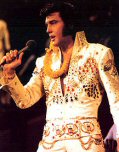
Elvis makes a fleeting comeback, accompanied by a milk drinking chimp and some well-dressed mice, in the hallucinations of a patient with Parkinson’s disease who is described in a case study published in the Southern Medical Journal.

He had compulsive gambling behavior and multiple hallucinations (visual and auditory). Visual hallucinations were simple (shapes of shadows, animal shapes like a raccoon, a cat, and a dog) and complex (a woman sitting next to him in car, two well-dressed little mice running around, a chimpanzee drinking his milk standing next to his lunch table in a restaurant, and Elvis Presley standing outside his door in his white coat and white trousers without a guitar). Once while fishing, he saw his dead uncle standing next to him and his uncle said, “It’s not going to work.” Auditory hallucinations were also both simple (incomprehensible sounds) and complex (like his uncle talking to him, nonspecific symphony, and constant melody of chimes). All hallucinations were associated with intact insight and were nonthreatening.

Although the patient was diagnosed with Parkinson’s, which is known to trigger hallucinations, it is likely they were caused as much by the dopamine-boosting medication than by the effects of the disease itself.

The patient was taking quite a selection, reportedly prescribed “a combined regimen including carbidopa/levodopa 25/100 mg four times a day (q.i.d.); carbidopa/levodopa 50/200 mg sustained release three times a day (t.i.d.) with a half tablet in the morning; entacapone 200 mg 5 times a day; pramipexole 1mg q.i.d. with 1.5 mg at bedtime (h.s.); amantadine 100 mg twice a day (b.i.d.); and clonazepam 1mg h.s.”

Despite the perceptual distortions encouraged by the meds, the patient is quoted as saying “It is the best control I have had of my motor functions in a long time” and refused to discontinue any of the treatments.
 

Link to PubMed entry for case study (via @anibalmastobiza).