A very modern trauma

Posttraumatic stress disorder is one of the defining disorders of modern psychiatry. Although first officially accepted as a diagnosis in the early 1980s, many believe that it has always been with us, but two new studies suggest that this unlikely to be the case – it may be a genuinely modern reaction to trauma.

The diagnosis of PTSD involves having a traumatic experience and then being affected by a month of symptoms of three main groups: intrusive memories, hyper-arousal, and avoidance of reminders or emotional numbing.

It was originally called ‘post-Vietnam syndrome’ and was promoted by anti-war psychiatrists who felt that the Vietnam war was having a unique effect on the mental health of American soldiers, but the concept was demilitarised and turned into a civilian diagnosis concerning the chronic effects of trauma.

Since then there has been a popular belief that PTSD has been experienced throughout history but simply wasn’t properly recognised. Previous labels, it is claimed, like ‘shell shock’ or ‘combat fatigue’, were just early descriptions of the same universal reaction.

But until now, few studies have systematically looked for PTSD or post-trauma reactions in the older historical record. Two recent studies have done exactly this, however, and found no evidence for a historical syndrome equivalent to PTSD.

A study just published in the Journal of Anxiety Disorders looked at the extensive medical records for soldiers in the American Civil War, whose mortality rate was about 50-80 greater than modern soldiers fighting in Iraq and Afghanistan.

In other words, there would have been many more having terrifying experiences but despite the higher rates of trauma and mentions of other mental problems, there is virtually no mention of anything like the intrusive thoughts or flashbacks of PTSD.

In a commentary, psychologist Richard McNally makes the point that often these symptoms have to be asked about specifically to be detected, but even so, he too admits that the fact that PTSD-like symptoms virtually make no appearance in hundreds of thousands of medical records suggests that PTSD is unlikely to be a ‘universal timeless disorder’.

Taking an even longer view, a study published in Stress and Health looked at historical accounts of traumatic experiences from antiquity to the 16th century.

The researchers found that although psychological trauma has been recognised throughout history, with difficult events potentially leading to mental disorder in some, there were no consistent effects that resembled the classic PTSD syndrome.

Various symptoms would be mentioned at various times, some now associated with the modern diagnosis, some not, but it was simply not possible to find ‘historical accounts of PTSD’.

The concept of PTSD is clearly grounded in a particular time and culture, but even from a modern diagnostic perspective it is important to recognise that we tend to over-focus on PTSD as the outcome of horrendous events.

Perhaps the best scientific paper yet published on the diversity of trauma was an article authored by George Bonanno and colleagues in 2011. You can read the full-text online as a pdf.

It notes that the single most common outcome after a traumatic event is recovery without intervention, and for those who do remain affected, depression and substance abuse problems are equally, if not more likely, than a diagnosis of posttraumatic stress disorder.
 

Link to locked study on trauma in Civil War soldiers.
Link to locked study on trauma through history.

The science and politics of mind-altering drugs

The Guardian Science Podcast has an interview with neuroscientist David Nutt on the science and politics of mind-altering substances and it’s possibly one of the most sensible discussions of drugs and drug harms you are likely to hear in a long time.

Prof Nutt is quite well known in the UK – largely due to be fired by the Government from their drugs advisory panel for pointing out in a scientific paper that the health risks of taking ecstasy are about equivalent to going horse riding.

Rather than doing the usual dishonest apology required of government advisors where they ask forgiveness for ‘unintentionally misleading the public’ away from a convenient collective illusion, he decided to take the government to task about their disingenuous drug policy.

He is now a straight-talking, evidence-based, pain-in-the-arse to the government who doggedly stick to the ‘war on drugs’ rhetoric that not even they believe any more.

In the interview the discussion ranges from how psychedelic affect the brain to the scientific basis (or lack thereof) of drug policy. Essential listening.

 
Link to Science Podcast interview with David Nutt.

Sexism affects robots

The Journal of Applied Social Psychology has just pubished a study that is both bizarre and profound. It reports on two experiments that show gender stereotyping extends to robots.

(S)he’s Got the Look: Gender Stereotyping of Robots

F. Eyssel and F. Hegel

Journal of Applied Social Psychology

Previous research on gender effects in robots has largely ignored the role of facial cues. We fill this gap in the literature by experimentally investigating the effects of facial gender cues on stereotypical trait and application ascriptions to robots. As predicted, the short-haired male robot was perceived as more agentic than was the long-haired female robot, whereas the female robot was perceived as more communal than was the male counterpart. Analogously, stereotypically male tasks were perceived more suitable for the male robot, relative to the female robot, and vice versa. Taken together, our findings demonstrate that gender stereotypes, which typically bias social perceptions of humans, are even applied to robots. Implications for design-related decisions are discussed.

Sadly, the study is locked behind a paywall, which is a pity because the discussion about “implications for design-related decisions” is a sort of parallel-world look into android gender politics.

The authors discuss whether it is better to create gender free robots to fight social stereotypes or whether we should create robots that comply with society’s prejudices to make them more acceptable.

Personally, I’m all for genderqueer robots. That would really throw a spanner in the works. Or a works in the spanner.
 

Link to locked study (via @hysell)

BBC Future column: Wear red, win gold?

My latest column for BBC Future, a cautionary tale of scientific research, with an Olympic theme. Original here.

Studies show that wearing a particular colour increases the chances of winning a gold medal. Why this is the case serves as a timely reminder that we should always be wary of neat explanations for complex phenomena.

What does it take to be an Olympic winner? Skill? Yes. Dedication to training? Definitely. Luck? Perhaps. What colour kit you wear? Possibly.

Research conducted during the 2004 Olympic Games in Athens showed that competitors in taekwondo, boxing and wrestling who wore red clothing or body protection had a higher chance of winning. The effect wasn’t large, but when the statistics were combined across all these sports it was undeniable – wearing red seemed to give a slightly better chance of winning gold. The effect has since been shown for other sports, such as football.

The researchers had a straightforward explanation for why wearing red makes a difference. Across the animal kingdom, red colouration is associated with male dominance, signalling aggression and danger to others. The vividness of the red displayed by individuals of various species has been shown to relate to the amount of the hormone testosterone they have in the bodies, which also correlates with their physical health and eventual breeding success. The researchers claimed that humans too are subject to this “red = dominance” effect, and so, for combat sports, the athlete wearing red had a psychological advantage.

In competitive sport, small advantages like this matter. The difference between winning and losing can be milliseconds, or millimetres. So, should every country be fighting for the right for their sportspeople to wear red?

Maybe they should, but not for the reasons the study authors claimed. What happened next is a textbook case of the way in which research happens, showing us why we should always be wary of neat explanations for complex phenomena.

Close calls

Like all good science, once someone has proposed a theory, others can hold it up to scrutiny. And so it was the case with the red=dominance explanation. Another research group analysed data from a different sport at the Athens Olympics, Judo, but they found that contestants who wore either white or blue had an advantage. Instead of being an effect of evolutionary colour signals, the new claim was that the difference in performance was due entirely to the visibility of the different colours. In a combat sport the person wearing the brightest clothing will be at a disadvantage – their opponent will find it slightly easier to see where they are and anticipate their next move.

Convinced? Don’t make up your mind yet, because there’s a further twist to the tale.

This debate was resolved in the most interesting way at around the time of the Beijing Olympics in 2008. A new study suggested that the previous theories based on dominance or visibility of the competitor were wrong. The effect wasn’t anything to do with the effect of colour on the athletes, but instead to do with the effect on the referees.

I’ve written before about how we all have a tendency to look for causes that are somehow part of the essence of a person, and this seems to be another example. The statistics were correct, contestants wearing red really do win more, but we had been looking in the wrong place for an explanation. This study used digital manipulation to show experienced taekwondo referees fights that were identical, except for the colours worn by the contestants. Judging the same fights, referees awarded more points to contestants who had been photoshopped red than to contestants who had been photoshopped blue.

In any competitive sport there will be close calls, situations where the margin of victory is small, and a referee has to make a judgment to the best of their abilities in the blink of an eye. It seems that because red does have an association with victory and dominance, the judgement of these marginal situations can, occasionally, be influenced by the contestant’s clothes colour. Colour does produce a psychological effect, but it is a bias in the refs, not in the contestants.

Horse play

This story provides a classic warning for anyone trying to find psychological causes for things: the effect can just as easily be in the observers as in the thing we observe. Psychology students around the world are taught the story of Clever Hans, a horse that many believed could do arithmetic. Huge crowds would pay to see Hans, held by his trainer, being asked questions such as “what is five plus two”, and answer by stamping his foreleg seven times.

This seemed like a wondrous example of animal intelligence, until a psychologist showed that Hans was performing his trick by reading the body language of his trainer. Hans would start tapping his foot. When he got to the correct number his trainer would relax, and Hans would read this signal and stop. What looked like a miraculous ability to do maths, was really a clever – but not miraculous – ability to act according to what his trainer did.

So there the matter rests – for the moment at least. Wearing red could give you an advantage in competitive sports, but its because of the effect it has on the observers, not the observed. And, just maybe, we’ll try to be a bit more careful about calling victory as we watch contests happening in the London Olympics.

Psychosis and the fog of reality

Last May The New Yorker had a beautiful but paywalled article on on psychosis and insight. Thankfully the full text has found its way online as a pdf.

Psychosis is the psychiatric term for delusions and hallucinations, with insight being the ability to recognise that what you believe or experience is not a fair representation of reality.

The concept of insight is more easily applied to hallucinations than delusions, after all you can hallucinate patterns on the walls but realise that the patterns are not really there, but you can’t really have a belief and not believe it.

With regard to delusions, it is tested by seeing how readily people can accept that there is a chance they might be wrong. In other words, it’s an estimate of certainty with absolute certainty in a false belief being considered abnormal.

In practice, and due to the difficulties on agreeing on or verifying reality, it often comes down to whether you agree with your psychiatrist (indeed, one definition of insight, includes accepting treating as a sign of good insight), sometimes leading to situations where people with genuine psychosis completely reject any form of treatment even where it would be of clear benefit.

Rachel Aviv’s article for The New Yorker is a brilliant exploration not only of the experience of slipping into psychosis but also the politics and practicalities of insight.

By the way, Aviv has written a series of excellent articles about mental health including one called ‘Which Way Madness Lies: Can psychosis be prevented?’ for Harper’s Magazine which is also online as a pdf.
 

pdf of article on insight in psychosis.
pdf of article on preventing psychosis.

A stream of unconsciousness

I have just discovered that if you search Pinterest with the keyword psychology you get a wonderfully eclectic stream of psychological images that range from the frosting of pop culture to the depths of profound theory.

In fact, it’s a bit like swimming around in the mind of a psychologist as they slowly drift off to sleep – a kind of whimsical, looping stream of half-verified memories and insights.
 

Link to ‘psychology’ on Pinterest.

Neurowords and the burden of responsibility

The New York Times has an excellent article about the fallacy of assuming that a brain-based explanation of behaviour automatically implies that the person is less responsible for their actions.

The piece is by two psychologists, John Monterosso and Barry Schwartz, who discuss their research on how attributions of blame can be altered simply by giving psychological or neurological explanations for the same behaviour.

The fallacy comes in, of course, because psychology and neuroscience are just different tools we use to describe, in this case, the same behaviour.

A brain characteristic that was even weakly associated with violence led people to exonerate the protagonist more than a psychological factor that was strongly associated with violent acts….

We labeled this pattern of responses “naïve dualism.” This is the belief that acts are brought about either by intentions or by the physical laws that govern our brains and that those two types of causes — psychological and biological — are categorically distinct. People are responsible for actions resulting from one but not the other. (In citing neuroscience, the Supreme Court may have been guilty of naïve dualism: did it really need brain evidence to conclude that adolescents are immature?)

Naïve dualism is misguided. “Was the cause psychological or biological?” is the wrong question when assigning responsibility for an action. All psychological states are also biological ones.

A better question is “how strong was the relation between the cause (whatever it happened to be) and the effect?”

In light of the Aurora shootings and the prematurely and already misfiring debate about the shooter’s ‘brain state’, this is well worth checking out.
 

Link to NYT piece ‘Did Your Brain Make You Do It?’ (via @TheNeuroTimes)

Hallucinating body flowers

A curious and kaleidoscopic case of hallucinations reported in the latest journal Arquivos de Neuro-Psiquiatria:

A 95-year-old woman, with four years of schooling, had a seven-year history of DI [delusional infestation]. In the beginning, there were itching and prickling sensations on arms and head. Subsequently, she felt small worms, with different shapes and colors, crawling through her skin or swirling around her body.

After two years, she began to see small pumpkins and flowers coming out of her body and lettuce crawling on the table. She complained of water trickling out of walls and forming puddles on the ground. Occasionally, she saw small children walking on the walls and also worms on the floor and walls.

Sometimes, the parasites set fire to small objects. She became upset with her family and physicians who did not believe her.

The belief that you are infested with hallucinatory parasites is more typically called delusional parasitosis but it is usually not linked to the florid circus of hallucinations reported here, which are more typical of Charles Bonnet syndrome.
 

Link to case report in Arquivos de Neuro-Psiquiatria.

All time high

The latest issue of The Psychologist has a fascinating article on why time can seem distorted after taking drugs.

The piece is by psychologists Ruth Ogden and Cathy Montgomery who both research the effects of drugs, legal and illegal, on the mind and brain.

The consumption of drugs and alcohol has long been known to warp time experiences. In his much-quoted book Confessions of an English Opium Eater, Thomas De Quincey (1821/1971) noted that opium intoxication resulted in distortions to the passage of time to the extent that he ‘Sometimes seemed to have lived for 70 or 100 years in one night; nay, sometimes had feelings representative of a millennium passed in that time’.

Similar experiences were also reported by Aldous Huxley (1954) in Doors of Perception after consuming mescaline and LSD. Drug-induced distortions to time are not only experienced by renowned literary figures: a quick search of an internet drug forum will reveal that many drug users report similar experiences to De Quincey and Huxley following marijuana, cocaine and alcohol use.

The article notes that both the social context in which drugs are taken (e.g. drinking on a night out) and the pharmacological effects of the substances can each add their own ingredients to the time stretching or shrinking effects.
 

Link to article ‘High Time’ in The Psychologist.

How the FBI sees the psychopath

The latest FBI Law Enforcement Bulletin is a special issue on the criminal psychopath.

Apart from the use of eye-scorching clip-art, it’s notable more what it tells us about how the FBI approaches the concept of psychopathy than necessarily being a great introduction to the topic.

Some of the most revealing articles are written by agents and give advice on how to interrogate the ‘psychopath’ as if it was a single type of person and not a relatively consistent pattern of characteristics found within unique individuals.

“…small talk, fidgeting with cell phones or notepads, or showing uncertainty regarding seating arrangements can communicate to psychopaths that interrogators are nervous or unsure of themselves,” says one article, “psychopathic individuals view this as a weakness”.

Well, that’s that then.

Despite some overconfident conclusions, several of the articles do give some good accounts of actual cases and the issue remains an interesting peek into how the FBI sees the psychopath.
 

Link to latest FBI Law Enforcement Bulletin (via @crimepsychblog)

Is mental health a smoke screen for society’s ills?

Somatosphere has a fantastic account of the debates rocking the world of global mental health – the still nascent field that aims to make mental health a world priority.

The idea itself is sound in the general sense, but there is still a lot of argument about what it means to promote mental health and much discussion about whether ‘global mental health’ is just a means of exporting Western ideas and diagnoses in a sort of 21st century globalisation of the mind.

I am always a little struck by the fact that the ‘global mental health’ movement seems mainly to focus on Asia and Africa.

For example, the lack of participation of Latin American mental health professionals and advocates is striking in both the headline-making publications and the key conferences.

This is a pity as Latin America has developed a unique perspective on mental health that, by reading the debates covered by Somatosphere, would be very relevant.

If you want to get your head into the space of this particular Latin American approach, have a think about this analogy.

How would you react if instead of supporting the American civil rights movement in the 1960s, you were told the major problem was that people were being affected by a mental illness called ‘post-discrimination stress disorder’?

I’m sure it would be possible to come up with a valid and reliable ‘PDSD’ diagnosis that could be agreed upon and would genuinely predict behavioural and psychological distress and impairment – the experience of racism is known to predict mental health problems and the discrimination of the civil rights era was extreme.

Arguing for more resources to be put into treating ‘post-discrimination stress disorder’ when the civil rights movement was almost at breaking point in the 1940s and 50 would lay you open to accusations of ‘putting up a smoke screen’ and ‘making a distraction’ when what was needed was social change, not an attempt to pathologise black people.

The question that you may be asking, and many Latin American psychologists have asked, is whether we should be instead focussing on inequality and violence to improve mental health.

The Western focus on disorders, they argue, can distract and blind us to societal problems. Instead of preventing oppression, we pathologise its victims.

This approach was born out of a field called liberation psychology that made exactly this point.

One of the founders was a remarkable chap called Ignacio Martín-Baró who was a Spanish priest who trained as a psychologist and worked in El Salvador during the Salvadoran civil war.

He was eventually murdered by a government death squad because of his theories, which at least shows their power if not their popularity.

Unfortunately, liberation psychology has become heavily politicised and you often hear variations of “Martín-Baró’s work means you must support my left-wing views” from proponents.

This is a shame because Martín-Baró’s work was often making a more profound and over-arching point – that there is no such thing as an apolitical act in mental health, and, indeed, in health care in general.

For example, the West’s understanding of the victims of war, torture and displacement in terms of PTSD and other diagnostic labels is largely due to the experience of treating refugees who have fled these horrible situations.

In this context, PTSD makes sense in the West because it has the implicit assumption that the person is now safe (after all, it’s post-traumatic stress disorder) and that the experiences and reactions described in the diagnosis are, therefore, inappropriate.

However, if you live in a war zone, intrusive thoughts, feeling on edge and avoiding reminders of danger could be considered quite a reasonable reaction to the constant experience of death and violence.

When you meet people who do live in war zones, who would clearly meet the criteria for PTSD, they rarely complain about their mental state. They’re usually more concerned about the actual dangers.

They’re concerned about torture, not intrusive thoughts about being tortured – the threat of rape, not rape-related anxiety.

So, the hard question becomes: are we really helping by sending professionals and training locals to recognise and treat people with, for example, PTSD?

And this is where Martín-Baró drew his inspiration from. The way we understand and treat mental health problems, he argued, is always political. There is no absolute neutrality in how we understand distress and those that think so are usually just blind to their own biases.

And this is what the global mental health movement is wrestling with. And needless to say, there are plenty of biases to overcome.

Big Pharma pushes theories as adverts for its medication. Western mental health professionals can see themselves as healers of people who don’t necessarily need healing.

Researchers see an untapped gold mine of data and local scientists see a way out of what seems like a limiting and unglamorous academic life distant from the shining lights of Northern Hemisphere High Science.

So when we talk about ‘mental health literacy’ are we talking education or propaganda? It’s not an easy question to answer or, for many, to even think about.

The Somatosphere piece is one of the best guides to this debate I’ve yet read. Essential reading.
 

Link to Somatosphere on ‘Global Mental Health and its Discontents’

BBC Future column: Why we love to hoard

Here’s last week’s column from BBC Future. The original is here. It’s not really about hoarding, its about the endowment effect and a really lovely piece of work that helped found the field of behavioural economics (and win Daniel Kahneman a Nobel prize). Oh, and I give some advice on how to de-clutter, lifehacker-style.

Question: How do you make something instantly twice as expensive?

Answer: By giving it away.

This might sound like a nonsensical riddle, but if you’ve ever felt overly possessive about your regular parking space, your pen, or your Star Wars box sets, then you’re experiencing some elements behind the psychology of ownership. Our brains tell us that we value something merely because it is a thing we have.

This riddle actually describes a phenomenon called the Endowment Effect. The parking space, the pen and the DVDs are probably the same as many others, but they’re special to you. Special because in some way they are yours.

You can see how the endowment effect escalates – how else can you explain the boxes of cassette tapes, shoes or mobile phones that fill several shelves of your room… or even several rooms?

No trade

To put a scientific lens on what’s going on here, a team led by psychologist Daniel Kahneman carried out a simple experiment. They took a class of ordinary University students and gave half of them a University-crested mug, the other half received $6 – the nominal cost of the mug.

Classic economics states that the students should begin to trade with each other. The people who were given cash but liked mugs should swop some of their cash a mug, and some of the people who were given mugs should swop their mugs for some cash. This, economic theory says, is how prices emerge – the interactions of all buyers and sellers finds the ideal price of goods. The price – in this case, of mugs – will be a perfect balance between the desires of people who want a mug and have cash, and the people who want cash and have a mug.

But economic theory lost out to psychology. Hardly any students traded. Those with mugs tended to keep them, asking on average for more than $5 to give up their mug. Those without mugs didn’t want to trade at this price, being only willing to spend an average of around $2.50 to purchase a mug.

Remember that the mugs were distributed at random. It would be weird if, by chance, all the “mug-lovers” ended up with mugs, and the “mug-haters” ended up without. Something else must be going on to explain the lack of trading. It seems the only way to understand the high-value placed on the mugs by people who were given one at random is if the simple act of being given a mug makes you value it twice as highly as before.

This is the endowment effect, and it is the reason why things reach a higher price at auctions – because people become attached to the thing they’re bidding for, experiencing a premature sense of ownership that pushes them to bid more than they would otherwise. It is also why car dealers want you to test drive the car, encouraging you in everyway to think about what it would be like to possess the car. The endowment effect is so strong that even imagined ownership can increase the value of something.

Breaking habits

The endowment effect is a reflection of a general bias in human psychology to favour the way things are, rather than the way they could be. I call this status quo bias, and we can see reflections of it in the strength of habits that guide our behaviour, in the preference we have for the familiar over the strange or the advantage the incumbent politician has over a challenger.

Knowing the powerful influence that possession has on our psychology, I take a simple step to counteract it. I try to use my knowledge of the endowment effect to help me de-clutter my life. Perhaps this can be useful to you too.

Say I am cleaning out my stuff. Before I learnt about the endowment effect I would go through my things one by one and try to make a decision on what to do with it. Quite reasonably, I would ask myself whether I should throw this away. At this point, although I didn’t have a name for it, the endowment effect would begin to work its magic, leading me to generate all sorts of reasons why I should keep an item based on a mistaken estimate of how valuable I found it. After hours of tidying I would have kept everything, including the 300 hundred rubber bands (they might be useful one day), the birthday card from two years ago (given to me by my mother) and the obscure computer cable (it was expensive).

Now, knowing the power of the bias, for each item I ask myself a simple question: If I didn’t have this, how much effort would I put in to obtain it? And then more often or not I throw it away, concluding that if I didn’t have it, I wouldn’t want this.

Let this anti-endowment effect technique perform its magic for you, and you too will soon be joyously throwing away things that you only think you want, but actually wouldn’t trouble yourself to acquire if you didn’t have them.

And here’s the thing… it works for emails too. If someone sends me a link to an article or funny picture, I don’t think “I must look at that”, I ask “If I hadn’t just been sent this link, how hard would I endeavour to find out this information for myself?”. And then I delete the email, thinking that however fascinating that article on the London sewerage system sounds or that funny picture of a cat promises to be, I didn’t want them before the email was in my possession, so I probably don’t really want them now.

That’s my tip for managing my clutter. If you have any others, let me know.

The rebirth of hypnosis

I’ve got an article in today’s Observer about the re-emergence of hypnosis into the scientific mainstream despite the fact that the technique is still associated with stereotypes.

The piece has been oddly titled ‘hypnosis is no laughing matter’, which kind of misses the point, because no-one laughs at it, but many scientists do find it uncomfortable because of its long-running associations with stage shows, high-street hypnotists and the like.

The sub-heading also suggests that the article is about the revival of hypnosis as a ‘clinical tool’ when the article only discusses the use of hypnosis in the lab.

However, get past the headings and the piece discusses the genuinely interesting cognitive science of hypnosis and suggestibility.

The recent research is interesting not so much because we are learning about hypnosis itself, but because it is helping us understand some quite striking things about the fundamentals of the mind.

Amir Raz and colleagues at McGill University in Montreal reported that it was possible to “switch off” automatic word reading and abolish the Stroop effect – a psychological phenomenon that demonstrates a conflict between meanings, such as where we are much slower to identify the ink colour of a word when the word itself describes a different hue. Furthermore, when this experiment was run in a brain scanner, participants showed much lower activation in both the anterior cingulate cortex, an area known to be particularly involved in resolving conflict between competing demands, and the visual cortex, which is crucial for recognising words. Although this may seem like a technicality, to the scientific world it was a strikingly persuasive demonstration that hypnosis could apparently disassemble an automatic and well-established psychological effect in a manner consistent with the brain processes that support it.

One of the other exciting areas is the use of hypnosis to temporarily induce altered states of consciousness that can then be studied in the lab. More of that in the article.
 

Link to Observer article.

No, the web is not driving us mad

Oh Newsweek, what have you done. The cover story in the latest edition is an embarrasing look at non-research that certainly doesn’t suggest that the internet is causing “extreme forms of mental illness”.

The article is a litany of scientific stereotypes and exaggeration:

The current incarnation of the Internet—portable, social, accelerated, and all-pervasive—may be making us not just dumber or lonelier but more depressed and anxious, prone to obsessive-compulsive and attention-deficit disorders, even outright psychotic.

This is an amazing list of mental illnesses supposedly caused by the internet but really Newsweek? Psychosis? A condition ranked by the World Health Organisation as the third most disabling health condition there is and one that is only beaten in its ability to disable by total limb paralysis and dementia and that comes ahead of leg paralysis and blindness.

We’re talking schizophrenia and severe bipolar disorder here. The mention of psychosis even makes the front page, of one of the most respected news magazines in the world, so this must be pretty striking evidence.

So striking, in fact, that it would probably turn psychiatric research on its head. We have studied the environmental risk factors for psychosis for decades and nothing has suggested that the internet or anything like it would raise the risk of psychosis. This must be amazing new scientific evidence.

So what is the evidence to back up Newsweek’s front page splash: a blog post, a quote and a single case study.

The rest of the article is full of similar howlers.

But the research is now making it clear that the Internet is not “just” another delivery system. It is creating a whole new mental environment, a digital state of nature where the human mind becomes a spinning instrument panel, and few people will survive unscathed.

“This is an issue as important and unprecedented as climate change,” says Susan Greenfield, a pharmacology professor at Oxford Univer…

Oh Christ.

A 1998 Carnegie Mellon study found that Web use over a two-year period was linked to blue moods, loneliness, and the loss of real-world friends. But the subjects all lived in Pittsburgh, critics sneered.

They didn’t sneer. They looked at the follow-up study, done on the same people, by the same research team, that found that “A 3-year follow-up of 208 of these respondents found that negative effects dissipated”.

As I’ve mentioned before, it is only possible to report on the first of these findings without the second if you’ve not read the research or are aiming for a particular angle. Why? Because if you type ‘internet paradox’, the name of the original study, into Google, the name of the follow-up study – The Internet Paradox Revisited – comes up as the second link.

If you’d read any of the actual literature on the topic, you’d know about the follow-up study because they are two of the most important and some of the few longitudinal studies in the field.

The article also manages the usual neuroscience misunderstandings. The internet ‘rewires the brain’ – which I should hope it does, as every experience ‘rewires the brain’ and if your brain ever stops re-wiring you’ll be dead. Dopamine is described as a reward, which is like mistaking your bank statement for the money.

There are some scattered studies mentioned here and there but without any sort of critical appraisal. Methodological problems with internet addiction studies? No mention. The fact that the whole concept of internet addiction is a category error? Not a whisper. The fact that prevalence has been estimated to vary between 1% and 66% of internet users. Nada

Sadly, these sorts of distorted media portrayals have a genuine impact on the public’s attitudes and beliefs about mental illness.

But perhaps the biggest problem with the article is that it doesn’t include any critical voices. It’s mainly people who have a book to sell or an axe to grind.

The internet will apparently make you psychotic if you only listen to the three people who think so. Or Newsweek, that is.
 

Link to ‘Is the Web Driving Us Mad?’

BBC Future column: Why I am always unlucky but you are always careless

From lost keys to failed interviews, we blame other people for mishaps but never ourselves, because assuming causes helps us to make sense of the world.

When my wife can’t find her keys, I assume it is because she is careless. When I can’t find my keys I naturally put it down to bad luck. The curious thing is that she always assumes the opposite – that she’s the one with the bad luck, and I’m the careless one.

When we observe other people we attribute their behaviour to their character rather than to their situation – my wife’s carelessness means she loses her keys, your clumsiness means you trip over, his political opinions mean that he got into an argument. When we think about things that happen to us the opposite holds. We downplay our own dispositions and emphasise the role of the situation. Bad luck leads to lost keys, a hidden bump causes trips, or a late train results in an unsuccessful job interview – it’s never anything to do with us!

 This pattern is so common that psychologists have called it the fundamental attribution error. And there’s a whole branch of psychology that investigates how we reason about causes for things called attribution theory. The fundamental attribution error is a good example of a quirk in the way we reason about causes, but it isn’t the only one. Despite the name, it may not even be the most fundamental.

Seeking causes

Psychologists are interested in attribution of causation because it tells us important things about how the mind works. To illustrate this, imagine you see a man asleep under a tree, and a leaf fluttering down to land on his head. As the leaf touches his head he wakes up and shouts “Yikes”. Anyone watching this scene would assume the man woke up because of the falling leaf.

 But this simple statement is remarkably difficult to prove – you have no direct access to the cause, just the before (a leaf) and after (“Yikes”). We automatically assume the cause. We talk about it like it is a thing – somehow in the middle between the leaf and the man, but really it is just an assumption, not a thing. And indeed, some new information could come along and force us to reconsider our assumptions. We might find out later that a philosophically-minded ant had come along and, just at that minute, decided to bite the sleeping man’s hand.

 So our causes are assumptions, based on what we perceive but with an extra bit of imagination. They are necessary assumptions. Without looking for causes we would be stuck with a confusing picture of the world. Rather than say “the falling leaf caused the man to wake up”, we have to take everything into account and say the following. “The leaf fell. The grass did the same as before. A bird flew between two trees one hundred and thirty yards away. I lost my keys. My Romanian aunt’s clock in my Romanian aunt’s house continued ticking (on and on and on). The man woke up.”

 Assuming causes in this way lets us make sense of the world. Not only is it easier to describe, the descriptions tell you how to make things happen (or avoid them – for instance, if you want the man to stay asleep next time, catch the leaf). In this way, attributions are psychological magic that help us control the future. No wonder psychologists find them interesting.

Built on sand

 The fundamental attribution error is just a continuation of a wider pattern: we blame individuals for what happens to them because of the general psychological drive to find causes for things. We have an inherent tendency to pick out each other as causes; even from infancy, we pay more attention to things that move under their own steam, that act as if they have a purpose. The mystery is not that people become the focus of our reasoning about causes, but how we manage to identify any single cause in a world of infinite possible causes.

 Even the way I described cause-seeking as an “inherent tendency” is part of this pattern. I have no direct access to what causes the results of experiments that have made me think this, just as I would have no direct access to what caused the man to wake as the leaf fell. I assume a thing, hidden, somehow, underneath the experiments – an inherent tendency for humans to identify each other as causes – which I then rely on to tell you what I’m thinking.

 That thing might not exist, or might have a reality very different from how I describe it, but we are forced to rely on assumptions to make sense of the world, and these assumptions create a reality of causes and essences that seems solid, despite its uncertain foundation.

 This all might sound overly philosophical, but once you are switched on to this tendency to invent essences you’ll hear them everywhere. Generalisations or stereotypes such as “women can’t do maths” or “Americans don’t have a sense of humour” also rely on an invented essence of a sex, or of a nationality, a term that some psychologists have called ultimate attribution error. These views don’t have a concrete existence. They are based in imagination, and are subject to all the psychological forces that are at play there.

 In more prosaic domestic moments, when it feels like such bad luck that I can’t find my keys, yet my wife seems so careless when she can’t find hers, I know I’m performing psychological magic. I’m observing the myriad events in the world and imagining things – my bad luck, her carelessness – which I use to explain the world with.

 With the knowledge that these explanations can only ever be built on sand, I know to be a bit more careful about how I use them.

My most recent column for the BBC Future website, the original is here

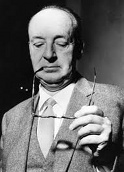
Projecting Nabokov

American Scholar has an excellent article on the use of psychology in the novels of Vladimir Nabokov – most famous as the author of Lolita.

As is now standard for literary criticism the article includes lots of florid prose and a spurious reference to ‘mirror neurons‘, but get past the flouncing and it’s a brilliant look at perhaps the most psychologically engaged author of the 20th century.

It’s not just that Nabokov’s novels are beautifully observed, insightful and run through with references to psychological theory, but also that he was a fierce combatant in the ‘Freud wars’:

Famously, Nabokov could not resist deriding Freud. And for good reason: Freud’s ideas were enormously influential, especially in Nabokov’s American years, but his claims were hollow. Nobel laureate Peter Medawar, perhaps the greatest of science essayists, declared in his book Pluto’s Republic, in terms akin to Nabokov’s, that Freudianism was “the most stupendous intellectual confidence trick of the twentieth century.” Nabokov saw the intellectual vacuity of Freudian theory and its pervasiveness in the popular and the professional imagination. He thought it corrupted intellectual standards, infringed on personal freedom, undermined the ethics of personal responsibility, destroyed literary sensitivity, and distorted the real nature of childhood attachment to parents–the last of which has been amply confirmed by modern developmental psychology.

Cynics, and especially cynics of a Freudian persuasion, might suggest that if you’ve written a novel about paedophilia, the last thing you’d want is people probing your unconscious motivations and so Nabokov’s objections could be understood as a form of projection.

Others might suggest, and especially those of a non-Freudian persuasion, that orthodox psychoanalysis needs to inspire no other motivation in its critics as it is so patently ridiculous that it doesn’t even make good farce.

Actually, Freud wrote so widely, revised his ideas, contradicted himself, hit on genuine insights, and shamelessly embarrassed himself, all in equal measure, that to say you are ‘for’ or ‘against’ Freud is like saying you are ‘for’ or ‘against’ the Greek classics.
 

Link to article on Nabokov as psychologist (via @ferrisjabr)