SciAmMind on ‘Halle Berry’ neurons and neurofeedback

sci_am_mind_2006-02.jpgA new edition of Scientific American Mind has been released and includes two web-published articles: one on recent research on grandmother cells (or ‘Halle Berry neurons’ as they’re becoming known) and another on the use of neurofeedback as a therapy and cognitive enhancer.

‘Halle Berry neurons’ are brain cells that supposedly activate in response to a single face, and are so named because a photo of Ms Berry was used in a recent experiment experiment that seemed to support this “one neuron – one face idea”, that was previously derided as being unrealistic.

The jury is still out on whether they exist or not, but the article considers evidence for and against the hypothesis.

Neurofeedback is a technique where brain activity is measured and shown to the subject, who can then attempt to control it by altering their mental state.

The brain activity can be measured from areas that could be linked to problems a person has (such as poor attention or concentration) and so the technique can be supposedly used to ‘train the brain’ to work more efficiently.

The article considers the evidence that it can be effective, although it is still not a mainstream treatment, partly because there are no widely agreed standards for how it should be administered.

Link to artice ‘One Person, One Neuron?’.
Link to article ‘Train Your Brain’.

advertising influences familiarity induces preference


We probably like to think that we’re too smart to be seduced by such “branding,” but we aren’t. If you ask test participants in a study to explain their preferences in music or art, they’ll come up with some account based on the qualities of the pieces themselves. Yet several studies have demonstrated that “familiarity breeds liking.” If you play snippets of music for people or show them slides of paintings and vary the number of times they hear or see the music and art, on the whole people will rate the familiar things more positively than the unfamiliar ones. The people doing the ratings don’t know that they like one bit of music more than another
because its more familiar. Nonetheless, when products are essentially equivalent, people go with what’s familiar, even if it’s only familiar because they know its name from advertising

Barry Schwartz. ‘The Paradox of Choice’ (2004)

I think the essential point is correct, but there is a sort of sneaking condescension here: All of you people (the ‘test participants’) only like the things you like because you’re familiar with them, not because of any rational or emotional affection for them (that’s just ‘some account’). What’s more – we (the psychologists) have done experiments which show (admittedly only in some circumstances) that familiarity leads to liking; and from this we’re prepared to generalise to all other circumstances you’re involved in. I parody, but I’m sure you see what I mean.

The fact that we tend to like the familiar isn’t too surprising. There’s even a good evolutionary reason for preferring what worked before – if it didn’t kill you last time, why risk doing something else this time? The single most useful thing you can measure to predict what someone will do in the future is not what they want to do, nor is it what they say they’ll probably do, nor what their friends and family will do, but simply what they did last time – such is the power of habit (For more on this see Hack #74 in Mind Hacks).

But the interesting thing about advertising and branding is the process of it making something familiar to us and us taking this as an indication of preference. In other words, we don’t properly take into account that the brand is not familiar to us for any good reason.

Psychologically it’s not too surprising that this should happen. The study [1] which revived the subliminal perception field involved this mere exposure effect. Participants were shown meaningless shapes for time-spans below the perceptual threshold and subsequently they preferred those shapes to other not previously displayed shapes – even though they had not consciously perceived either set of shapes before.

However, is there any evidence that this kind of familiarity effect can be shown to compete with, or even over-ride, actual good reasons for liking or disliking a brand? Perhaps people are happy to use a fairly arbitrary guideline (familiarity) for unimportant decisions, or decisions where the choices are all pretty good, but when more is at stake familiarity is relegated down the table of influencing factors?

Ref

[1] Kunst-Wilson WR, Zajonc RB (1980). Affective discrimination of stimuli that cannot be recognized. Science, 207(4430):557-8.

Mindfulness-based therapy in Time Magazine

StevenHayes.jpgTime magazine talks to psychologist Steven Hayes in an article about the development of ‘Acceptance and Commitment Therapy’ – an increasingly popular treatment for mental disorder.

I’m not familiar with the name, but it seems to be a form of mindfulness-based therapy, originally developed by a team at Cambridge University, inspired by Buddhist meditation techniques, and known to be highly effective in treating depression.

The article contains a summary of both ACT and the current most popular and most evaluated form of psychological therapy: cognitive behaviour therapy or CBT.

The Time article is a little overzealous in its enthusiasm, suggesting that ACT outperformed CBT when applied to a wide range of mental disorders, when, in fact, Hayes himself wrote an encouraging but balanced review article in which he stated “there are not enough well-controlled studies to conclude that ACT is generally more effective than other active treatments”.

Nevertheless, the article is an interesting insight into Hayes himself, and a good account of some of the core principles behind modern psychological treatments for mental illness.

Link to article ‘Happiness isn’t normal’.
Link to information on mindfulness-baded therapy from Oxford University.

Super Bowl brain scans with added hype

superbowl_amygdala.jpgThe ‘complete results‘ from the Super Bowl brain scans are online, and it does indeed seem as if the exercise has been mostly hype.

Cardinal sins:

1) Not giving the comparison conditions and experimental design. This makes the reported results essentially meaningless.

2) Interpreting brain activity in certain areas to mean a certain response from viewers, even when they actually report something else.

female subjects may give verbally very low ‘grades’ to ads using actresses in sexy roles, but their mirror neuron areas seem to fire up quite a bit, suggesting some form of identification and empathy.

Mirror neurons tend to fire when anyone else’s actions are viewed, there is no evidence that approval or liking of the person doing the actions has any bearing on the response.

3) Assuming activation in the ‘mirror system’ equals empathy.

4) Assuming activation of the amygdala is a measure of fear.

There is a big jump in amygdala activity when the dinosaur crushes the caveman… The scene looks funny and has been described as funny by lots of people, but your amygdala still perceives it as threatening

The amygdala can be active when someone experiences happiness or joy. Equally, it could have been active because people found the scene funny.

5) Finishing on an advert for the neuromarketing company involved.

Link to ‘Complete results’.
Link to previous Mind Hacks post on same.

Iconic

Just a quick note to say thanks very much to Mark Brown who got sick of mindhacks.com not having a favicon… and made us one. You can see it up there in the address bar, or – possibly – by the title for your RSS feed. Much appreciated, cheers!

Beautiful madness

her story.gifThis month’s Prospect magazine features a touching story about Nia – “..too beautiful to be in a psychiatric ward“. The true tale conveys elegantly the dilemma that often faces psychiatrists as they weigh up the benefits of antipsychotic medication against the side effects that can sometimes be worse than a patient’s original symptoms. In this story Nia’s beauty is ruined by the only drug that alleviates her psychosis – Olanzapine. What unnerves the psychiatrists is that she doesn’t seem to care, whereas they do. “The treatment had reversed a Faustian pact in which Nia had been beautiful and mad, and replaced it with another‚Äîin which she was fat and sane. But was it really a blessing that Nia seemed to have no conception of what she had lost?

Link to story by deputy editor of Prospect Alexander Linklater and psychiatrist Robert Drummond (access to this item is free).

What can brain scans tell us about Super Bowl ads?

super_bowl_scan.jpgTo cut a long story short – don’t believe the hype. At least as it’s described in a story doing the rounds.

According to the report, neuroscientist Marco Iacoboni and his team brain-scanned people while they watched the Super Bowl adverts to see which “won”.

This is part of an emerging science called neuromarketing, which uses the techniques of cognitive neuroscience to try and evaluate and design better product promotions.

Iacoboni claims that “a good indicator of a successful ad is activity in brain areas concerned with reward and empathy” (which seems controversial at best, but we’ll move on).

The tricky bit comes when you try and measure brain activity from participants who are watching adverts.

The images generated from fMRI brain scanning are not pure ‘maps’ of brain activity. All of the brain is active all of the time, so to infer which areas are most involved, neuroscientists compare brain activity between different conditions.

These conditions are designed very carefully in scientific experiments, and in the most common form of comparison (‘subtraction’) they are identical, apart from the one thing that the researchers want to investigate.

It is, therefore, impossible to interpret the results of a brain scanning study without knowing how the experiment was designed and exactly what was being compared with what.

As this hasn’t been made clear, the results could be due to any number of things not related to how good the advert was.

From a previous study done on political ads by the same marketing company, it looks as if they just average the activation of a certain brain area over the course of the ad. They then base their conclusions of the effect of the ads on the assumed functions of these brain areas.

The difficulty is that the functions of these areas are still controversial. For example, with the Super Bowl ads, Iacobini claims that activation in the ‘mirror system’ is a measure of empathy. This is still highly contentious and is presumably based on conclusions from an earlier study of his.

Because of this uncertainty, it is difficult to know that any difference is not due to one advert having more movement in it than the other. Or perhaps more people. Or happier people. Or even something unrelated like a faster tempo in the music… despite the advert being otherwise rubbish.

The previous study on political ads (that made the front page of The New York Times no less) was completed while America was winding up for the 2004 presidential elections, and the current one was completed during the 24 hours after the Super Bowl.

Sounds like the ‘neuromarketing’ company involved in these stories is doing some pretty effective marketing of their own. Apparently more details will be forthcoming. I look forward to reading more (but remain skeptical!).

Link to ‘Who really won the Super Bowl? The Story of an Instant-Science Experiment’.

music, wine and will

You go to the supermarket and stop by some shelves offering French and German wine. You buy a bottle of French wine. After going through the checkout you are asked what made you choose that bottle of wine. You say something like “It was the right price”, or “I liked the label”. Did you notice the French music playing as you took it off the shelf? You probably did. Did it affect your choice of wine? No, you say, it didn’t.

That’s funny because on the days we play French music nearly 80% of people buying wine from those shelves choose French wine, and on the days we play German music the opposite happens

This study was done by Adrian North and colleagues from the University of Leicester [1]. They played traditional French (accordion music) or traditional German (a Bierkeller brass band – oompah music) music at customers and watched the sales of wine from their experimental wine shelves, which contained French and German wine matched for price and flavour. On French music days 77% of the wine sold was French, on German music days 73% was German – in other words, if you took some wine off their shelves you were 3 or 4 times more likely to choose a wine that matched the music than wine that didn’t match the music.

Did people notice the music? Probably in a vague sort of way. But only 1 out of 44 customers who agreed to answer some questions at the checkout spontaneously mentioned it as the reason they bought the wine. When asked specifically if they thought that the music affected their choice 86% said that it didn’t. The behavioural influence of the music was massive, but the customers didn’t notice or believe that it was affecting them. Similar experiments have shown that classical music can make people buy more expensive wine [2], or spend more in restaurants [3].

Is this manipulation? There’s no coercion, all the customers are certainly wine buyers who are probably more or less in the mood to buy some wine. But they have been influenced in what kind of wine they buy and they don’t know that they have.

What would be the effect, I wonder, of having someone stand by the shelves saying to the customers as they passed “Why don’t you buy a French wine today”? My hunch is that you’d make people think about their decision a lot more – just by trying to persuade them you’d turn the decision from a low involvement one into a high involvement one. People would start to discount your suggestion. But the suggestion made by the music doesn’t trigger any kind of monitoring. Instead, the authors of this study believe, it triggers memories associated with the music – preferences and frames of reference. Simply put, hearing the French music activates [4] ideas of ‘Frenchness’ – maybe making customers remember how much they like French wine, or how much they enjoyed their last trip to France. For a decision which people aren’t very involved with, with low costs either way (both the French and German wines are pretty similar, remember, except for their nationality) this is enough to swing the choice.

This priming affect is, I believe, one of the major ways advertising works [5]. Simply by making it more likely for us to remember certain things, we are more likely to make decisions biased in a certain way. There’s no compulsion, nobody has their free-will wrenched from their conscious grip. There’s just an environment shaped a certain way to encourage certain ideas. And how could anything be wrong with that?

Refs & Footnotes below the fold:

Continue reading “music, wine and will”

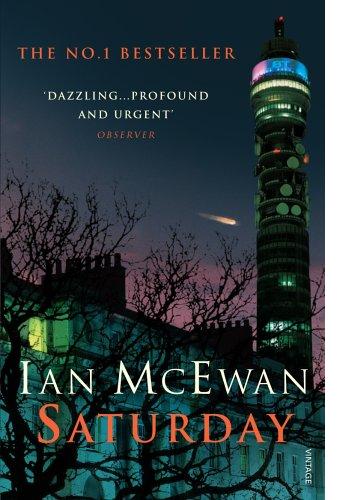
Henry Perowne on the neural code

saturday.jpg

“Just like the digital codes of replicating life held within DNA, the brain’s fundamental secret will be laid open one day. But even when it has, the wonder will remain, that mere wet stuff can make this bright inward cinema of thought, of sight and sound and touch bound into a vivid illusion of an instantaneous present, with a self, another brightly wrought illusion, hovering like a ghost at its centre”.(p.254)

Henry Perowne is the neurosurgeon at the centre of Ian McEwan’s novel Saturday from which this quote is taken (ISBN 978-0-099-46968-1).

Link to previous post on the neural code.

Fear of clowns

clown.jpg

Coulrophobia [fear of clowns] is most commonly triggered by a traumatic experience in childhood, said Steven Luel, a psychologist in New York specializing in anxiety and phobias.

Indeed, that was the case with Wallace. At the age of 6, she met her first clown at the circus, an encounter she still remembers clearly 25 years later.

“A clown got right up in my face, and I could see his beard stubble under his makeup. He smelled bad and his eyes were weird,” she said. “I guess I never got over it.”

Enough said.

Link to article (with fantastic title) ‘Fear of Clowns: No Laughing Matter’ from INS News.

Cognitive science café

chocolate_cake.jpgPsychologist Tania Lombrozo has collected suggestions for the menu of the fictional (but delicious sounding) cognitive science caf√©. It’s both full of psychology in-jokes and gives a lighthearted crib-sheet for some of the most influential thinkers in the field.

Some of my favourites include:

The Turing Tester
Half Brie with apricot jam on a French roll, half vegan alternative ‚Äî we bet you won’t know which is which!

The Wason Cheese Selector
Grilled Portobello mushroom with cheese. If cheddar, then sesame bun. (Please check your order carefully.)

The Piagetian
A sandwich in four stages: sensational baguette, quantities of Swiss cheese that are anything but conservative, the concrete crunch of walnuts, and a dash of Cayenne pepper lead to this sandwich’s formal elegance.

PDF of ‘Shepard’s Tables: A Cognitive Science Caf√©’ (via Mixing Memory)

Beauty in body and mind

shaded_face.jpgFrom Nancy Etcoff’s book Survival of the Prettiest: The Science of Beauty (ISBN 0385478542):

“People judge appearances as though somewhere in their minds an ideal beauty of the human form exists, a form they would recognise if they saw it, though they do not expect they ever will. It exists in the imagination.” (p11)

“Attitudes surrounding beauty are entwined with our deepest conflicts surrounding flesh and spirit. We view the body as a temple, a prison, a dwelling for the immortal soul, a tormentor, a garden of earthly delights, a biological envelope, a machine, a home. We cannot talk about our response to our body’s beauty without understanding all that we project onto our flesh.” (p20)

The Times on art, neuroscience and self-harm

razor_blade.jpgToday’s Times has two short but interesting articles in its ‘body and soul’ section, both of which are available online: one on the neuroscience of art and another on self-harm.

Mark Lythgoe is a neuroscientist at University College London who has been involved in art / science projects for over a decade. He discusses the possible neural basis for why Dan Flavin’s minimalist light-based artwork has such appeal.

The article on self-harm is inspired by a new book by Carolyn Smith, based on her own experiences of self-harm and recovery. It discusses the phenomenon, its emotional impact, and includes advice if you find out someone you know has self-harmed.

Link to article ‘The light fantastic’.
Link to article ‘Unkindest cut of all’.

experimental psychology of advertising resources

A few places where you can enjoy the intersection between experimental psychology and marketing research are at:

(labs)

The Food and Brand Lab (was ‘The Illinois Food and Brand lab’, but has now moved to Cornell) found at consumerpsychology.net

The Bangor University: The Experimental Consumer Psychology research group – see this article in New Scientist about Jane Raymond’s research Is advertising flogging a dead horse? (New Scientist, 24 December 2005).

(associations)

The Association for Consumer Research

Society for Consumer Psychology

(journals)

Journal of Consumer Psychology

<a href="http://www.ingentaconnect.com/content/jws/cbh
“>The Journal of Consumer Behaviour (defunct?)

Journal of Marketing

Journal of Marketing Research

(updated)

Psychology and Marketing

Cognitive psychology & advertising

Here’s another approach to understanding how adverts work – cognitive psychology, as discussed in this Wired article from 2002 (thanks Lauren!)

You’ll probably not be surprised that I’ve lots of sympathy for experimenal psychology as a method for understanding adverts (as opposed to, say, semiotics). A conventional experimental cognitive psychology approach to understanding something about advertising would be:

1. Have an idea, e.g., I think Factor X makes people buy more stuff
2. Come up with an experiment which involves two situations which are identical except for the presence/absence of Factor X.
3. Include some measure which is a good enouch approximation for the behaviour ‘buying’ (it could be actual purchases, or it could be something like memory for the product, or extent of positive feelings for the product, which we just assume will convert into sales)
4. Do the experiment, write up the results, let the rest of the (psychology) world criticise your experiment
5. Do follow-up experiments to re-test your idea and counter criticisms.

Or something like that anyway. Here’s an example from the Wired article:


One example: At the University of Texas at Austin, cognitive science professor Art Markman gave a group of hungry people a few bites of popcorn. Another group got no food. Then he showed his volunteers pictures of products – DVD players, shampoo, cars, French toast. The group whose appetite had been whetted with popcorn had a harder time concentrating on the nonfoods. One obvious implication, Markman says: Food samples may actually hurt nongrocery sales.

Now the strength here is that you both check if there is an effect at all, and you narrow down the possibiliies so that you have a rough idea what is causing it (again, cf a semiotic approach). The weakness is that even though you’ve shown an effect in the lab, you’re not sure it will operate outside of the lab (the problem of generalisability), and you’re not going to be sure that, even if it does operate, it isn’t made irrelevant by some other factor that you weren’t looking at with your experimental lens. So, for example, maybe wetting people’s appetites does make it harder for them to concentrate on non-foods, but maybe in real life most people don’t wet their appetites before shopping for non-foods, so the finding is irrelevant. Or maybe everyone wets their appetites, so the supermarket needn’t worry about giving away samples – we’re all peckish anyway. Or maybe we’re more likely to buy non-foods when we’re not concentrating (concentration being the thing actually measured in the experiment), so being peckish actually helps non-food sales.

Anyway, so lots of things could be true, and it takes more than a simple lab study to work out which factors are dominating, but the great virtue of the experimental method is that it gives strong hints as to what sorts of things can be operating and – just as important – what sort of things can’t affect behaviour.

Explore your brain

psychpop_image.jpgA new online service called ‘PsychPop‘ has been launched by the Institute of Psychiatry in London. It allows members of the public to volunteer to help in research that aims to combat brain injury, neurological disease and mental illness.

Often, one of the difficulties in conducting research is not recruiting people affected by medical conditions, but members of the public.

General public participants are essential allies in research, needed to determine which aspects of mind and brain functioning might be different when compared to people with a specific condition.

The service at the Institute of Psychiatry has been set up by neuropsychologist and wikipedian Paul Wicks, initially out of frustration when trying to recruit members of the public in his own research on motor neurone disease.

Taking part in research can also be a fascinating experience. If you don’t live in London, most universities will conduct research into the mind and brain so it’s worth getting in touch and asking how to volunteer.

Crucially, find out exactly what’s involved, make sure the study has ethical approval (it has been judged by an ethics committee to be safe and well conducted) and ask any questions you have before starting.

Other than that, enjoy the experience! You usually get your travel expenses reimbursed and can often get a copy of the results – including a picture of your brain if you take part in a neuroimaging study.

Cognitive scientists: If your department has an online sign-up form for participants, why not add a link in the comments page of this entry?

Link to PsychPop.