Dear Shakespeare, an update on sleep…

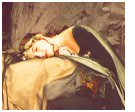
midsummer's_sleep.jpgShiban Ganju writes a letter to Shakespeare in 3 Quarks Daily, updating the Bard on the scientific advances in understanding sleep.

Shakespeare was obviously fascinated by sleep as many of his plays and poems contain references to sleep and dreaming, perhaps the most famous being A Midsummer Night’s Dream.

Ganju also notes that Macbeth and Lady MacBeth had troubled stage 4 sleep and that King Richard had significant sleep pathologies.

Link to Shiban Ganju’s “Sleep and Insomnia, A Letter to Shakespeare”.

Recurring d√©j√† vecu causes neurological groundhog day

nyt_deja_vu.jpgThe New York Times has an excellent article on people who experience chronic d√©j√† vu, or, more accurately d√©j√† v√©cu – the feeling of already having lived through something.

The article discusses work by Leeds-based neuropsychologist (and blogger) Chris Moulin who was asked to investigate a recurring feeling of familiarity in Susan Shapiro’s 77 year-old mother.

He was countacted because he is one of the only people to have investigated a similar case, that of a person known as ‘A.K.P.’:

His d√©j√† vu episodes seemed to be “practically constant,” as Moulin and colleagues outlined in a 2005 paper [abstract|pdf] in the journal Neuropsychologia:

He refused to read the newspaper or watch television because he said he had seen it before. However, A.K.P. remained insightful about his difficulties: when he said he had seen a program before and his wife asked him what happened next, he replied, “How should I know, I have a memory problem!” The sensation… was extremely prominent when he went for a walk ‚Äî A.K.P. complained that it was the same bird in the same tree singing the same song… When shopping, A.K.P. would say that it was unnecessary to purchase certain items, because he had bought the item the day before.

A little ironically, the New York Times published another excellent article on déjà vu last February.

Link to article ‘Deja Vu, Again and Again’ from the New York Times.

The neuroscience of early childhood

tree_bg_baby.jpgOne I missed the other week – a fantastic edition of the Australian All in the Mind on Early Childhood and the Developing Brain.

Child neuropsychology is now becoming an increasingly important area as the once neglected field is seen as increasingly important both to understand children themselves, and how adult abilities and disorders develop.

This edition of All in the Mind looks at how neuroscientists are uncovering the neurobiological changes that take place during parental care, and how the brain can be markedly altered by abuse or neglect during the early years.

The programme takes a particularly in-depth look at research on children who were largely abandoned in Romanian orphanages during the communist era and had virtually no human contact for the first four years of their life.

Both their social and cognitive development was markedly impaired, suggested that love and attention is needed both for healthy emotional and intellectual development.

Link to transcript and audio of ‘Early Childhood and the Developing Brain’.

Freudian slips and slippers

freudian_slip.jpgFashion designer Spicy Marigold has created this alluring ‘Freudian Slip‘ for the beautiful Cassandra in your life.

This is a silk slip layered with a purposely weathered image of Freud holding (of course) a cigar. Wearable for out and about under (or over!) layers, it’d also be nice for sleep, lounging about on the (analytical) couch. Floaty and very soft.

And if that’s not your thing, you could do far worse than celebrating Freud’s 150th birthday by putting your feet up in a pair of Freudian Slippers.

Both items are available to order over the internet.

Link to Spicy Marigold’s Freudian Slip (via BB).
Link to Freudian Slippers.

Birds of a feather

grey_cats.jpgPsychiatric Times has a fascinating article on people who hoard animals – a type of compulsive hoarding.

The report is from the The Hoarding of Animals Research Consortium – an professional association of researchers and clinicians who aim to better understand the condition.

A recent news report describes the sort of behaviour the association is aiming to explain:

A few years back the focus was on Marilyn Barletta, Petaluma’s so-called ‘cat woman’ who was found to have been keeping 196 cats in her home. In the past week, also in Petaluma, nearly 1,000 rats were discovered in filthy conditions in the home of Roger Dier.

And Friday, in South San Francisco, a man with a soft spot for bunnies was reported to the local humane society. When animal welfare workers arrived at his home, they discovered 80 rabbits chewing on day-old bagels and cauliflower.

The Psychiatric Times article discusses the current explanations for animal hoarding, which are a wide and varied list.

They include the idea that animal hoarders have delusional beliefs about special abilities to communicate with animals, that hoarding is an early sign of dementia, that animals may be collected for sexual gratification, that the condition may be a form of addiction and that hoarding is a type of obsessive-compulsive disorder.

Needless to say, the actual behaviour may be motivated by a wide range of factors, and one theory is not meant to explain everyone who hoards animals.

Link to article ‘People Who Hoard Animals’ (via World of Psychology).
Link to The Hoarding of Animals Research Consortium webpage.

The politics of expedience

purple_pills.jpgHarvard Magazine has an article on the increasing willingness of psychiatrists to prescribe medication for distressing but relatively common life problems and whether this is blurring the boundaries between mental illness and mental health.

Using an ever-expanding arsenal of neurochemical drugs, physicians now treat variants of mood and temperament that previous generations viewed as an inescapable part of life. In an earlier era, James’s fears might have forced him to change professions. Today, the exceptionally shy and the overly anxious, the hyperactive and the chronically unhappy can seek relief from their suffering though medical intervention. And the parameters of what constitutes a “mental disorder” have swelled. An estimated 22 million Americans currently take psychotropic medications—most for relatively mild conditions.

This widespread embrace of biological remedies to life’s problems raises troubling questions for psychiatry. Paradoxically, even though psychopharmaceutical sales have soared in the United States during the past 20 years, only half of those with severe disorders receive adequate treatment. Clinicians and researchers disagree over what the priorities of the field should be and whom they should count as mentally ill. Are we over-treating the normal at the expense of the truly disturbed? Can we adequately distinguish illness from idiosyncrasy, disease from discontent? And are we allowing pharmaceutical companies and insurers to define the boundary between illness and health?

Freud famously made a distinction between unhappiness and mental illness, and wanted his therapy to transform “hysterical misery into common unhappiness”.

As with many medical treatments (such as plastic surgery), mind-altering drugs are now being used on those without previously recognisable medical problems in an attempt to improve quality of life.

So-called ‘smart drugs’, ‘cognitive enhancers’ and the use of psychiatric drugs to help with life stresses are examples of something psychiatrist Peter Kramer has called “cosmetic pharmacology”.

The Harvard Magazine article looks at whether this trend is actually negatively affecting the understanding and treatment of major mental illness, and warping the diagnostic systems upon which psychiatry relies.

Link to article ‘Psychiatry by Prescription’ via (3Quarks).

Alternate neuroscience writing carnival

white_keyboard.jpgEncephalon is neuroscience carnival to which anyone can submit their online writing to be featured in the forthcoming edition.

It will run on alternate weeks to Synapse, so there should be two fascinating digests of mind and brain writing for your viewing pleasure.

The first edition of Encepahlon is due to appear on the Neurophilosopher’s Blog on Monday.

Check out the Encephalon webpage for details of how to submit your writing.

Children with half a brain

nico_scan.jpgThe New Yorker magazine has an article on hemispherectomies – surgical procedures which remove half of the cortex, usually in an attempt to cure otherwise life-threating epilepsy.

These operations are usually carried out on children, as remarkably, those in their early years can often develop normal adult skills and abilities if surgery is carried out early enough.

For example, a 2001 book by Antonio Battro (sample chapter: pdf) describes a three year old boy named ‘Nico’ who had the whole of his right hemisphere removed to control life-threatening epilepsy.

Nevertheless, he has developed with very little impairment and has turned out to be a bright and engaging child, despite the fact that a similar operation in adults would be profoundly disabling.

The New Yorker article charts the development of this procedure from the first operation on a human in 1923, to the latest in neurosurgical technology and practice.

Two of the pioneers of the procedure, Dr John Freeman and Dr Ben Carson are also featured, who explain how the team at John Hopkins first tackled a left hemispherectomy. Potentially hazardous, because the left side of the cortex has the majority of the language function in most people.

The article also introduces us to some of the patients who have had the procedure. Christina now drives, graduated from high-school and is studying at university, despite on having only one hemisphere of her brain left.

Link to New Yorker article ‘The Deepest Cut’.
pdf of sample chapter from ‘Half a brain is enough’.
Link to ‘Half a brain is enough’ book details.
2006-06-30 Spike activity

Quick links from the past week in mind and brain news:

spike.jpg

Science News on how the ageing brain changes in its processing of emotions over time – do we mellow in old age?

A computer system that can ‘read’ emotional expressions from the face is to be exhibited and tested at a London exhibition.

Male sexual orientation may be influenced by number of older brothers from the same biological mother owing to the increasing production of antibodies with additional children.

American Scientist has an in-depth review of “The Man Who Knew Too Much: Alan Turing and the Invention of the Computer”.

Pure Pedantry has a concise explanation of recent experiments on the neuroeconomics of dread.

People more likely to give correct money for payment when they have the ‘feeling of being watched‘ – induced by putting a pictures of a pair of eyes nearby.

New BPS Research Digest!

Plastic brains and seeing the light

oliver_sacks.jpgThere’s an intriguing letter in today’s Nature by Oliver Sacks and Ralph Siegel who report on a patient who has developed stereopsis (3D binocular vision) after 50 years of stereoblindness.

It is generally thought that most visual abilities develop in the first years of life, and if they do not get a chance to develop (usually through eye problems), they cannot be gained later.

For example, people who have had severe congenital cateracts from birth that prevent light from entering the eye, often have trouble making sense of objects if this condition is cured later in life, because the brain has not developed the necessary functions to make sense of objects.

Sacks and Siegel’s letter follows a previous report in Nature that reported on the development of useful vision after 30 years of blindness.

Both of these reports suggest that the brain is more ‘plastic’ (able to reorganise) than was previously thought. This is contrast to ten years ago, when it was largely accepted that the brain developed few new functions after early adulthood.

Link to letter ‘Seeing is believing as brain reveals its adaptability’.

Is the US already using brain scan lie detection?

The American Civil Liberties Union has filed a Freedom of Information Act request to try and find out whether the US goverment is using brain scan lie detection technology on suspected terrorists.

The most likely technology to be used for anti-terrorism purposes is Functional Magnetic Resonance Imaging (fMRI), which can produce live, real-time images of people’s brains as they answer questions, view images, listen to sounds, and respond to other stimuli. Two private companies have announced that they will begin to offer “lie detection” services using fMRI as early as this summer. These companies are marketing their services to federal government agencies, including the Department of Defense, Department of Justice, the National Security Agency and the CIA, and to state and local police departments.

While fMRI is certainly a hot-topic at the moment, EEG-based lie detection technology based on the same principle has been around for almost two decades now, and has the advantage of being more portable and considerably cheaper.

It’s interesting that it’s still not clear (publically at least) whether fMRI has any advantages over the existing EEG method, so it will be interesting to see if anything comes out of these enquiries.

Link to ACLU press release (via /.)
Link to actual Freedom of Information Act request.

New series of BBC All in the Mind

claudia_hammond.jpgNew presenter Claudia Hammond kicks off a new series of BBC Radio 4’s All in the Mind with a programme that includes features on decision making, synaesthesia and psychiatric patients writing their own medical notes.

The section on decision making particularly focuses on decisions that involve predicting how the future will turn out and how prior knowledge can both help and hinder our choices.

Neuroscientist Catherine Mulvenna discusses her work on synaesthesia, the condition where the senses are often connected, so, for example, words can be experienced as colours. Mulvenna is using fMRI to look at brain activation in synaesthetes to understand how this happens in the brain.

Finally, clinical psychologist Dr Susan Grey discusses a project where psychiatric patients are asked to contribute to their own medical notes when they are admitted to hospital.

I had the pleasure of working with Dr Grey on the ward she works on, and it’s great to see some of her innovations are becoming recognised. Patients often appreciate the chance to make their own contributions to the medical record, as hospitalisation can sometimes seem disempowering and coercive to many.

Link to All in the Mind webpage with audio.

NPR on brain scan lie detection

blue_brain_scan.jpgAs an update to our previous post on new neuroscience-based technology for lie detection, thanks very much to Swivel Chair Psychologist for pointing out that National Public Radio’s Talk of the Nation science programme just had a programme on fMRI lie detection with Penn psychiatrist Daniel Langleben and bioethicist Paul Wolpe.

Link to NPR Talk of the Nation on ‘The Future of Lie Detecting’.

Reality monitoring and psychosis

csp_wormlight.jpgMixing Memory has a fantastic account of recent research on memory distortions in schizophrenia that might explain the unusual experiences and strange ideas that characterise the condition.

Memory distortions are often tested by the use of ‘source monitoring’ or ‘reality monitoring’ experiments (largely invented by Marcia Johnson), where participants are given a list of words and asked to read some of the words out loud, and imagine themselves reading the others out loud.

Afterwards, participants are given a recognition test where they are shown each word and asked whether they read it out, or imagined reading it out.

There are many variations on this theme, but a consistent finding is that those with symptoms of psychosis are more likely to confuse words they imagined reading out with those they said out loud.

The Mixing Memory article tackles a recent study which ran a similar experiment while brain-scanning participants to see which areas would be active when distortions were present.

It turns out that less activity in an area of the frontal lobe called the the medial anterior pre-frontal cortex was linked to more memory distortion errors.

One difficulty though, is that this form of memory distortion is also present in people who have no signs of mental illness but have some delusion-like ideas or experience sensory distortions, suggesting that this effect cannot explain psychosis completely.

Link to ‘Was it Real or Did I Imagine It? Source Monitoring, Schizophrenia, and Our Grip On Reality’