How common is autism?

jason_mcelwin_image.jpgResearch has been published in today’s Lancet on the prevalence of autism spectrum disorders (ASDs) in the population of UK children, suggesting that these disorders are more common than previously thought.

The paper reported that the prevalence of ASDs in the population is 116¬∑1 per 10,000 of the population – meaning just over 1% of the population are likely to qualify for one of these diagnoses.

“One of these diagnoses” is the crucial phrase here, as Baird and colleagues were not looking just for ‘classic’ or ‘narrowly defined’ autism (diagnosed as childhood autism in the ICD-10), but at the whole of the autism spectrum disorders – also known as pervasive developmental disorders.

BBC News has a good write-up on the study including a crucial quote from the Lancet article’s main author Professor Gillian Baird:

Whether the increase is due to better ascertainment, broadening diagnostic criteria, or increased incidence is unclear.

In fact, the reported prevalence of the narrow form of autism was only 38.9 in 10,000 of the population, less than 0.4%.

In contrast, autism spectrum or pervasive developmental disorders have a much broader scope, and can include both a 10 year-old child with no language, severe learning disabilities, lack of social interest and restricted interests (‘narrow’ autism) to a bright articulate 10 year-old child who is socially awkward and bit inflexible in his thinking.

This is largely because of fairly recently included diagnoses such as ‘Asperger syndrome’, ‘Pervasive Developmental Disorder – Not Otherwise Specificed’ (PDD-NOS) and ‘Atypical Autism’ which, particularly for the latter two, have much wider criteria.

Although Baird and colleagues used systematic methods for making their diagnoses, it’s interesting that there’s quite a pressure on everyday clinicians to make these sort of diagnoses for children who are having emotional or behavioural problems.

Having one of these diagnoses entitles children to special educational support or even a place in an expensive yet well-supported special school in many areas of the UK.

Who wouldn’t want special support for their child who is doing badly in education and is constantly distressed by school life? This in turn puts pressure on local clinicians, and on the medical establishment, to recognise these difficulties by widening the diagnostic criteria.

I sometimes smile to myself when I see news stories about science and medicine being out of touch with society, since the history of medicine suggests that there is an intimate connection between medical decisions and social needs.

Link to abstract of Lancet study on ASD prevalence.
Link to BBC News story on research.

2006-07-14 Spike activity

Quick links from the past week in mind and brain news:

spike.jpg

Washington Post discusses the prejudices associated with elderly mental illness.

The neuroscience of playing chicken is analysed on Mixing Memory.

Time Magazine has an in-depth article on the ‘New Science of Siblings‘ looking at the genetic influences on thought and behaviour.

Neurophilosophy blog discusses a potential new blood test for prion diseases like vCJD and mad cow disease.

Deric Bownds’ Biology of Mind Blog hits full stride.

There’s a wonderful article on ‘What a synapse does when it’s not doing anything‘ on Gene Expression.

Magic mushrooms cause profound spiritual experiences. Pope still catholic.

Free will, criminal acts and brain tumours: The Times discusses cases where neuropathology seems to have led directly to criminal behaviour.

Science News analyses the ‘neglected’ impact of ADHD in girls.

Research suggests early brain scans may predict later Alzheimer’s disease.

Luria archive sheds light on ‘father of neuropsychology’

Luria_examining_patient.jpgThe University of California, San Diego have created an extensive online archive of material related to the pioneering Russian neuropsychologist A.R. Luria, who is often considered the ‘father’ of the modern neuropsychology.

Like another famous neuroscientist, Eric Kandel, he originally intended to look for a scientific basis for Freudian concepts of the mind.

As time went on, he began to develop short tasks designed to tap specific mental skills and abilities – a technique now almost universally used in cognitive and neuropsychology. The photo on the right shows Luria (in the white coat) testing a patient with one of his tasks.

His encounters with the large number of brain-injured soldiers returning from World War Two led Luria to make links between specific areas of the brain and certain mental functions, which he could test by using his tasks and testing their diagnostic accuracy.

Some of the tasks he developed to make and test these links are still used by neuropsychologists today.

As well as writing some of the most influential books on the practise of neuropsychology, he also wrote up detailed neuropsychological biographies of two remarkable patients.

The Mind of a Mnemonist was a case study of ‘S’, who had a striking form of synaesthesia that gave him a memory so reliable that one of his main problems was being unable to forget – meaning he often became overwhelmed by detail of his memories and could not focus on the most important aspects.

In contrast, The Man with a Shattered World recounted the story of a soldier who suffered selective impairments to memory, perception and language after suffering a head wound in battle.

Luria recounted the personal experiences and histories of these remarkable individuals alongside his scientific investigations into their brain function.

He called this deeply personal form of scientific investigation ‘romantic science’, and is cited by Oliver Sacks as a major influence on his own style of writing and subject matter.

The UCSD Luria archive has everything from essays on his work, to a video documentary about the man himself, and is a crucial resource for those interested both in this hugely influential figure and the history of neuropsychology.

Link to UCSD Luria archive.

What a wiki is good for

mound.JPGMatt and I researched and co-wrote Mind Hacks using a wiki (MoinMoin). The wiki was just right for what we were doing – a brief, intense project with lots of information which needed efficient sharing and storing. Our use of the wiki was as part of the process, rather than aiming to produce a public, finished project (like say Wikipedia). We loved using the wiki as a provisional, shared, short-term memory – an ideal note taking device which allowed us to explore the ideas and information in Mind Hacks without getting bogged down by it all. We loved it so much that we’ve written an article about what wikis are and our view of how they are best used for the O’Reilly Network, What Is a Wiki (and How to Use One for Your Projects) – let us know what you think!

Coma – the comedy

closed_eyes_bw.jpgNigel Smith is a respected British comedy writer whose new show Vent has just hit BBC Radio 4. It is based around his experiences of suffering a demyelinating brain stem lesion and falling into a serious coma.
Luckily, Smith has recovered, although still has difficulties with many everyday activities, but has managed to write a dryly comic show about the darkest of times with some wit and panache.

The show is full of reverie and comic fantasy, contrasted with incisive commentary on the banality of everyday family life when a member is less than willing to engage in conversation.

“Some rules about comas: 1) Mothers never switch off the life support. They can’t do it. Maybe it’s love? Maybe it’s for the first time since you were on the tit, they’ve got you where they want you. They finally know where you are, they know you’re warm, you’re eating regularly and you’re having those quiet nights in they always dreamed of.”

The show is archived online, so you can listen to past episodes if you’re not in the UK.

Link to audio archive of Vent.
Link to Times article on Smith’s experiences.

A visual history of pharmaceutical drug ads

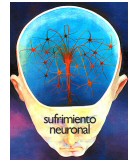
sufrimiento_neuronal_ad.jpgThere’s a wonderful collection of borderline-psychedelic drug adverts taken from the Spanish magazine Cl√≠nica Rural during the 1960s.

There’s now quite a collection of drug adverts on the net, giving an interesting historical and cultural insight into how mind altering medication has been pitched to consumers over the years.

The Japanese Gallery of Psychiatric Art is one of my favourites, which contains some equally kitsch artwork from 1956 to the present.

Alternatively, this gallery has a collection of American drug adverts including the surprising advert for the drug Thorazine captioned “Tyrant in the house? Thorazine can help control the agitated, belligerent senile”.

At the time of this advert, drugs like Thorazine (also known by its generic name chlorpromazine) were marketed as major tranquillisers.

One of its other trade-names was Largactil, intended to communicate the idea that it was ‘large acting’ and could be used to treat most forms of mental disorder.

This class of drug was then re-branded as ‘neuroleptics’, and now as ‘anti-psychotics’, showing the ongoing process of marketing and re-marketing that occurs as drug companies position themselves to best promote their wares.

Link to Spanish drug ads gallery (via BB).
Link to the Japanese Gallery of Psychiatric Art.
Link to vintage drug ads page.

Measuring depravity

bw_frustrated.jpgDepravity is a concept often used in criminal trials when making decisions on the seriousness or gravity of a particular crime. The depravity scale is a project to develop a measure of depravity, and is asking members of the public to help develop it.

It is the brainchild of forensic psychiatrist Dr Michael Welner who wants the concept of depravity to be more rigorous and psychometrically sound, so it can be measured reliably.

The depravity scale website asks members of the public to rank specific scenarios for how depraved they are, to get an estimation of how people understand and use the concept of depravity.

The scale has not been without controversy, however, with some professionals questioning whether psychiatry should become involved in making moral decisions.

Forensic psychiatry is particularly interesting in this regard, as it attempts to distinguish ‘bad’ from ‘mad’.

This project is also interesting in light of the history of psychiatry and madness. The idea that mental illness is the result of the breakdown of the mechanisms of mind and brain is a relatively new idea, and traditionally mental illness was seen as a moral failing.

Psychiatry (or mad-doctoring as it was known then) brought madness into the medical realm, where previously it was the domain of the church. Just like today, there were accusations that doctors were interfering in moral issues.

Link to The Depravity Scale website.
Link to story on the project from Psychiatric News.
Link to NY Daily News story on the scale.

Syd Barrett has left the building

syd_barrett_bw.jpgBBC News are reporting that Syd Barrett, the troubled genius and founding member of Pink Floyd, has passed away.

Barrett was rumoured to have had mental health difficulties, and his later solo albums are repleat with commentaries on the experience of mental turmoil.

He is commonly cited as one of the most influential musicians of his generation.

Shine on you crazy diamond.

after-effect illusions

There’s an illusion popular on youtube.com right now here. Have a look – it’s a motion after-effect illusion. These are discussed in the book (Hack #25). The basic story is the same for all after-effects – continuous exposure to something causes a shift in sensitivity. For continuous motion this means that the visual system shifts its baseline so that, subsequently, stillness looks like movement in the opposite direction to the adapted-to direction. The nice thing about this demo is that is shows that you can have separate motion after-effects in different parts of your visual field. My top tip is to look at your hand at the end of the video for an extra-weirdness effect.

Also today someone asked me how the moving green dot illusion works. Answer: again, i think, it is an after-effect. The purple dots create a colour after-effect, a green dot. All the separate after-effects are joined together by the phi-phenomenon (Hack #27) to give an illusion of one single, moving, green dot.

To understand why we get after-effects, check out Hack #26 (‘Get Adjusted’). Which makes this post the biggest plug for the book I’ve done in a long while!

Time magazine on prosopagnosia

time_prosopagnosia_image.jpgThe curious condition of prosopagnosia (something referred to – somewhat incorrectly – as ‘face blindness’) is featured in a short article in Time.

Prosopagnosia is a term used to refer to quite a broad range of neuropsychological difficulties that impair people from recognising others by their face, despite the fact that they may recognise them by other features (such as by voice, or even by a distinctive tatoo) and have little trouble with recognising non-face objects.

The article focuses on recent findings that prosopagnosia can result from inheriting genetic traits, rather than only from brain injury, as was previously thought.

For years, prosopagnosia was associated with damage to the fusiform gyrus and was considered quite rare owing to the fact that this brain structure is quite protected from most sorts of head injury.

The inherited version of the recognition disorder seems much more common, although, perhaps, is less severe is many cases.

The Time article reports on the experiences of some people with the disorder, and some of the recent research on the inherited condition.

We previously featured an interview with Dr Thomas Grueter, one of the researchers mentioned in the article. Interestingly, he has prosopagnosia himself.

Link to Time article ‘Do I Know You?’.

The theft of humanity

red_handprint.jpgAn article in American Scientist bemoans the division of research into schools and traditions in modern universities as counter productive, and argues that the cognitive and biological sciences are now at the forefront of combining science and art practice.

I would probably argue philosophy has always had a similarly broad outlook, but the author argues that science is where the new action is.

…but while humanistic scholars have been presuming core facts about human nature, human capacities and human being, scientists have been getting to work. One of the most striking features of contemporary intellectual life is the fact that questions formerly reserved for the humanities are today being approached by scientists in various disciplines such as cognitive science, cognitive neuroscience, robotics, artificial life, behavioral genetics and evolutionary biology.

Link to article ‘Science and the Theft of Humanity’ (via 3Quarks).

Brain-Computer Interfaces

braincomputer.JPG
Neurons in a Dish: Scientists at the Potter Lab have found that blobs of neurons cultured in a dish spontaneously generate hierarchical structures of periodic activity with population-wide spatiotemporal structure demonstrating oscillations. Certain patterns persist for hours, implying that perhaps that such in vitro neural preparations could be used to store memories.

Nerve Stump Interface: Horch and Dhillon have found that stimulation by electrodes implanted into the peripheral nerve stumps of amputees allow amputees to feel graded, discrete touch sensations in the phantom hand, and recorded motor neurons in the nerve stump can be used to set grip force and position in an artificial arm.

Re-assigning a Nerve: Kuiken has pioneered a technique in which remaining peripheral nerves that would have sent fibers to stimulate muscles in and transmit sensory information from an amputated limb, can be surgically moved within the body to an intact muscle, such as the pectoralis major. A small patch of this muscle ends up serving as a biopotential amplifier for the nerve stump, such that gross EMG signals from the newly reinnervated muscle patch can be used as myoelectric signals. Furthermore, when the skin overlying the patch is touched, the amputee experiences it as if the absent limb were being touched,

Between a thing and a thought

aldworth_function_structure.jpgArtist Susan Aldworth creates works based on neurology and brain scans, after her own experience of having an emergency angiogram after suffering a suspected stroke.

BBC News reports on her ongoing exhibition entitled ‘Matter Into Imagination‘.

The exhibition has just been moved from its previous home in the Menier Gallery, to the corridors of the Royal London Hospital, and the gallery of the Old Operating Theatre Museum near St Thomas Hospital in London Bridge.

If you’re not able to visit either of these exhibitions, Aldworth has an extensive gallery on her website that shows her brain-inspired paintings and sculptures.

Link to Susan Aldworth’s website.
Link to details of ‘Matter into Imagination’ exhibition.
Link to BBC News story ‘How brain scans inspired artist’.

Five minutes with Sherry Turkle

sherry_turkle.jpgProfessor Sherry Turkle is a psychologist best known for her pioneering research into the psychology of computers and the internet, and particularly on how we interpret concepts such as the self and identity through the veil of technology.

Her book Life on the Screen was hugely influential as one of the first books on ‘internet psychology’ in the days when the internet had barely reached the mainstream.

She remains intensely interested in how technology affects the mind, behaviour and social world, and has kindly agreed to talk to Mind Hacks.

Continue reading “Five minutes with Sherry Turkle”

Synapse vol 1 n 2

The most recent Synapse has just been published on A Blog Around the Clock with a collection of new psychology and neuroscience writing for your reading pleasure…

In addition, there’s also a neuroscience competition embedded in this edition:

This time, you have a puzzle to solve. Next to each entry, there is an image depicting the structural formula of a neurotransmitter, neurohormone or neuromodulator. Your job is to figure out what they are and leave the answers in the comments (or in your own posts that link to this edition)…

The winner – whoever is the first to correctly identify all ten compounds – will be highlighted first and with an extra post, when I host Encephalon, the other neurocarnival, later this Fall on November 6th.

There’s a few of the ‘classic nine’ in there, and the molecule accompanying the Mind Hacks post looks to be related to glycine, but I haven’t got any further than that.

Best of luck!

Link to latest Synapse neuroscience writing carnival.