Architectures of Control blog

Dan Lockton’s Architectures of Control blog is a must-read for anyone interested in the interface between design and psychology. In a recent post welcoming new readers Dan explains what the blog is about:


Most of the posts look at ‘architectures of control‘ designed into products, systems and environments, which seek to force the user to behave in a certain way. It’s something of a broad concept, embodying aspects of computer science, interaction design, architecture, psychology, politics, marketing, economics and counterculture alongside product design and engineering

Read more at: http://architectures.danlockton.co.uk/

Neurobiology of love

The Sixth International Conference on Neuroaesthetics will take place on January 20th and will focus on the neurobiology of love.

The talks include everything from “Brain Activity During Male and Female Orgasms” from Prof Gert Holstege to “The Biological Concepts of Unity-in-Love and Annihilation-in-Love” by Prof Semir Zeki.

This is a bit of a departure for the International Conference on Neuroaesthetics which has previously focused on the neuroscience of art and aesthetic appreciation.

Link to 6th International Conference on Neuroaesthetics (via BrainWaves).

Neural time travel

Science and Consciousness Review has a new feature article on how the brain allows us to revisit past times or predict the future, and how this sense can break down after brain injury.

The article is by new SCR staffer, Alice Kim, who works in the lab of pioneering memory researcher Endel Tulving.

Tulving developed the concept of autonoetic consciousness, a ‘feeling of remembering’ that allows us to distinguish when information is coming from memory compared to when it is coming from the senses.

Kim has written an article looking at how autonoetic consciousness helps memory, and how it is damaged in a patient with ‘chronesthesia’, a condition where the awareness of personal past and future is lost, despite a sense of the present being intact.

As well writing for SCR, Kim has also created a wonderful online archive of every Tulving publication, from 1959 (wow!) to the present.

As an aside, Science and Consciousness Review has now fully relaunched after a period of rebuilding since a nasty database crash last year.

Everything seems in perfect working order, so head on over if you want to keep tabs on all things consciousness related.

Link to ‘Which brain regions enable us to remember our past and anticipate our future?’.
Link to SCR front page.

Secure Beneath the Watchful Eyes

BoingBoing links to an image of a London Underground crime prevention poster with a picture of disembodied eyes and the slogan ‘Secure Beneath the Watchful Eyes’.

It could be a rather ill advised advert, unwittingly reminding London’s citizens of 1984-style totalitarian policing, or it could be a rare flash of post-9/11 irony in a public service announcement.

I suspect, however, that the poster is inspired by West Midlands Police’s Operation Momentum, which uses posters with images of eyes in an attempt to cut crime.

This was based on a study (pdf) by psychologist Dr Melissa Bateson who found that a picture of a pair of eyes near a coffee machine honesty box tripled the amount of money collected.

Bateson suggests that eyes remind us that we could be being watched, and, either consciously or unconsciously, we feel to the need to be more honest as a result.

Whether disembodied eyes with London Underground signs as pupils have the same effect remains to be seen.

jpg of ‘Secure Beneath the Watchful Eyes’ poster.
Link to Newcastle Uni press release on Operation Momentum.
pdf of paper ‘Cues of being watched enhance cooperation in a real-world setting’.

Ironically, pessimists are more likely to die early

According to a brief article in the New York Times, research has shown that pessimists are, ironically, more likely to die earlier than optimists.

The article discusses some research on dispositional optimism and pessimism and how it relates to health and risk for mortality.

The study, led by Dr. Erik J. Giltay of the Psychiatric Center GGZ Delfland and published in The Archives of General Psychiatry, followed 941 Dutch subjects, ages 65 to 85, from 1991 to 2001. Subjects were ranked in quartiles as pessimistic or optimistic on the basis of their reactions to statements like, “I still have positive expectations concerning my future” and, “I often feel that life is full of promises.”

Dr. Giltay and his colleagues found that subjects with the highest level of optimism were 45 percent less likely than those with the highest level of pessimism to die of all causes during the study. For those in the quartile with the highest optimism score, the death rate was 30.4 percent; those in the most pessimistic quartile had a death rate of 56.5 percent. There were 397 deaths in the study, and prevention of cardiovascular mortality accounted for nearly half of the protective effects of optimism.

In fact, Giltay has published a few studies which have shown similar findings.

However, one of the difficulties with these sorts of studies is determining causality.

Does being pessimistic make you more likely to have poor health, or does having poor health make you more likely to be pessimistic, or might it be a combination of both, perhaps working as a self-reinforcing cycle?

These sort of self-sustaining negative cycles are exactly the sort of things that clinical psychologists tend to target when they are treating patients, often with substantial benefits for physical and mental health.

Link to NYT article ‘Yet Another Worry for Those Who Believe the Glass Is Half-Empty’.

The manual of madness

I’ve just found a wonderful article online that appeared a couple of years ago in The New Yorker retelling the curious and surprising story of how the DSM was written.

The DSM is the Diagnostic and Statistical Manual of Mental Disorders. Published by the American Psychiatric Association it gives the criteria that define different types of mental disorder.

In Europe we tend to use an alternative, the ICD (interestingly, the two manuals don’t always agree) but the DSM is often used by researchers for consistency.

The current version of the DSM is a revised version of the 4th edition. The 5th edition, the DSM V, is due out in 2011.

Politically, the DSM is very important as it describes what mental states and behaviours are considered pathological by mainstream medicine, as well as having massive implications for medical practice and healthcare provision.

As time has gone on, the definitions are more influenced by research and less influenced by political pressures and the whims of the authors.

However, there’s one particularly surprising bit of the New Yorker article that describes how two disorders got in an earlier version:

Spitzer read the paper and asked Peele and Luisada if he could come to Washington to meet them. During a forty-minute conversation, the three decided that “hysterical psychoses” should really be divided into two disorders. Short episodes of delusion and hallucination would be labelled “brief reactive psychosis,” and the tendency to show up in an emergency room without authentic cause would be called “factitious disorder.” “Then Bob asked for a typewriter,” Peele says. To Peele‚Äôs surprise, Spitzer drafted the definitions on the spot. “He banged out criteria sets for factitious disorder and for brief reactive psychosis, and it struck me that this was a productive fellow! He comes in to talk about an issue and walks away with diagnostic criteria for two different mental disorders!” Both factitious disorder and brief reactive psychosis were included in the DSM-III with only minor adjustments.

The article is a thoroughly fascinating look into the history and politics of the ‘bible’ of psychiatry, and is a great introduction to some of the vagaries of defining mental illness.

Link to New Yorker article ‘The Dictionary of Disorder’.

The anarchy of mad words

The following quote is from p29 of Veronika Decides to Die (ISBN 0722540442) by Brazilian author Paulo Coelho.
It tells the story of a young woman who, after a failed suicide attempt, is admitted to a psychiatric hospital where she meets some curious and life-changing patients and medical staff.

Paulo Coelho was admitted to a psychiatric hospital himself when a student, and he drew on his own experiences to write the novel.

Veronika returned to her bed, and waited for the nurse to resume her reading. What did it mean to be mad? She hadn’t the slightest idea, because the word was used in a completely anarchic way: people would say, for example, that certain sportsmen were mad because they wanted to break records, or artists were mad, because they led such strange insecure lives, different from the lives of normal people. On the other hand, Veronika had seen thinly clad people walking the streets of Ljubljana in winter, pushing supermarket trolleys full of plastic bags and rags, and proclaiming the end of the world… What did it mean to be mad? Perhaps she should ask one of the mad.

Link to more info on the book.

Like Google Earth for the brain

Brain Maps is an online database of high resolution brain images that you can examine on the web or view with a point-and-zoom desktop application called StackVis.

The team behind Brain Maps has uploaded brain images from a number of species, including humans, so you can point click, zoom and scroll your way across the cortical landscape.

Link to Brain Maps.
Link to Brain Maps StackVis download.

Is that a chair in your scanner?

Simply Physics has a wonderful page of photos depicting objects which have accidentally become stuck in MRI scanners because of the pull of the powerful magnets.

These include chairs, floor cleaners, oxygen tanks and bits of medical equipment.

They even have a video of a team of people trying to extract a swivel chair from an MRI machine using straps and some large pieces of wood for leverage.

The magnets in fMRI scanners are usually at least 1.5 tesla in strength and most are now 3 tesla.

The strong magnets cause all the hydrogen atoms in the human body to align. A radio pulse is then sent which knocks the atoms out of alignment. The amount of non-alignment caused by this will differ depending on the tissue density.

As the atoms are knocked out of alignment and re-align they return a radio pulse. This can be measured, and because the returned pulse is related to tissue density, the signal can be computed into a ‘3D map’ of the tissue.

Hence the name, Magnetic Resonance Imaging – magnets align the atoms, the atoms resonate with the radio pulse and the image is computed from the pattern of pulses.

The strong magnets means bringing certain metals into the scanning room can be dangerous.

If you go for an MRI scan you’ll be asked to remove all metal from your body and you’ll be interviewed to make sure you have no metal implants in you.

If loose metal objects enter the room they can fly towards the magnet causing injury to anyone in the way.

Unfortunately, people can sometimes wander unaware into the room with unsuitable objects.

This probably accounts for why so many of the objects stuck inside the scanners on the Simply Physics page are cleaning equipment, as cleaners have wandered in not realising the risks.

Link to Simply Physics gallery of MRI mishaps.

Augmented cognition

There’s a fantastic article over at The Neurophilosopher’s Blog on augmented cognition – technology that integrates with our cognitive abilities to extend our capabilities.

We live in a time in which we are overwhelmed by information obtained from multiple sources, such as the internet, television, and radio. We are usually unable to give our undivided attention to any one source of information, but instead give ‘continuous partial attention’ to all of them by constantly flitting between them. The limitations of cognitive processes, particularly attention and working memory, place a ceiling on the capacity of the brain to process and store information. It is these processes that some researchers are aiming to enhance with augmented cognition, an emerging field which aims to use computational technology to enhance human performance in various tasks by overcoming the bottlenecks in processes such as attention and memory.

AugCog, as it is sometimes known, is now a top priority for military and aerospace companies.

They are starting to develop technology that takes account of the operator’s psychological state and adapts, so it can be used as efficiently as possible.

For example, the technology could monitor the brain so a visor would display only essential information if the person is under pressure.

In an ingenious twist on this sort of research, researchers recently developed a device which monitors other people’s faces for emotion and alerts the user to their current state.

This would be particularly useful for people who have trouble reading facial expressions, such as people with autism or people who have suffered certain forms of brain injury.

The Neurophilosopher’s article is a fantastic tour of how this technology is starting to take advantage our of psychological strengths to make up for the weaknesses, using examples from projects in development and researchers in the field.

The article also has a slick DARPA funded video (downloadable version here) that advertises the field and gives a sci-fi flavoured view of the cognitively augmented future.

Link to ‘Augmented cognition: Science fact or science fiction?’.
Link to more info from Augmented Cognition International Society.

2006-2007 in sex and sex research

Sex and relationship psychologist Petra Boyton has published her annual predictions for the year ahead in sex and sexuality and revisits last year’s predictions to see how they turned out.

Unfortunately, the majority of ‘sex research’ stories that appear in the media are usually poorly conducted PR exercises with the barely disclosed aim of promoting, well, almost anything really.

It seems 2006 was a particularly bad year for this and it seems this trend is set to continue into 2007. After all, sex sells, and bad sex, it seems, sells just as well.

Link to Petra Boyton’s 2007 predictions.
Link to 2006 review.

MEG scanning the brain

Wired has a brief guide to one of the most recently developed and exciting brain imaging technologies – magnetoencephalography or MEG.

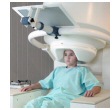
The first thing you’ll notice about MEG machines is that they live in carefully shielded sealed rooms. The second you’ll notice is that they look like giant hair dryers.

MEG works by picking up the magnetic field generated by the brain. You might remember from high school physics that every current produces a magnetic field, meaning neurons produce a magnetic field every time they are active.

However, because even groups of active neurons only have a small current, the associated magnetic field is very weak.

So weak, in fact, that a car passing in a nearby street, and even the earth itself, produces a much stronger magnetic field. This is why the shielded room is needed.

Even with the shielding, to pick up such a weak magnetic field MEG uses ultra sensitive Superconducting Quantum Interference Devices or SQUIDs.

Because they rely on superconductors, they need to be supercooled to work. To achieve this, they’re bathed in a pool of liquid helium held in a large container above the head – this is why MEG machines look like giant hairdryers.

An advantage of MEG over EEG is that unlike electrical fields, magnetic fields travel virtually unaltered across the skull, meaning it’s possible to more accurately measure where activity comes from.

An advantage over fMRI is that MEG can measure brain changes on a millisecond by millisecond basis, meaning it’s much quicker than the typical fMRI 1 second time frame.

Also, MEG is measuring brain activity directly, rather than inferring it from changes in blood flow as fMRI and PET do.

However, as MEG only measures activity on the surface of the brain and can’t distinguish activity from small areas, it doesn’t give the full depth or spatial resolution of fMRI.

As the Wired article notes, MEG is going to become an increasingly important player in our quest to understand psychology and neuroscience, so keep a lookout for an increasing number of important findings based on MEG scans.

Link to Wired article ‘MEG Scanners Are Mega Powerful’.

Temporal typo trauma

There’s a lovely typo in a 1976 paper from the Journal of Neurology, Neurosurgery, and Psychiatry that reports on a study about epilepsy after surgery. Check out the last sentence of the abstract:

Incidence of postoperative epilepsy after a transtentorial approach to acoustic nerve tumours.

J Neurol Neurosurg Psychiatry. 1976 Jul;39(7):663-5.

Cabral R, King TT, Scott DF.

Sixty-nine patients who had neurosurgical treatment for acoustic neuroma by one of two different techniques were studied with a view to determining the incidence of postoperative epilepsy. Fourty-five patients who had larger tumours underwent a combined translabyrinthine and transtentorial neurosurgical approach. For the others with smaller neuromas a translabyrinthine method was used. Only the combined approach was associated with postoperative epilepsy, and it occurred in 22% of the patients. Epilepsy was associated with temporal love trauma during surgery.

Link to entry on PubMed.

2007-01-05 Spike activity

Quick links from the past week in mind and brain news:

A boy who can walk on hot coals offers clues to genetics of pain.

A curious report of 50 Vietnamese schools girls fainting due to ‘mass hysteria‘.

Research on how you compare yourself with colleagues and happiness at work is investigated by the BPS Research Digest.

A new chemical could provide the first highly accurate living diagnosis of Alzheimer’s disease.

A few articles on exercises for cognitive enhancement:
* The New York Times reports on brain exercises.
* Time magazine discusses ‘Nintendo for Grandma’.
* The Washington Post considers keeping sharp with mental exercises.

It seems Freud had a few troubles repressing his innermost desires, as a hotel guest book suggests.

Neurofuture has some wonderful art generated by neural networks.

Anarchic art journal MungBeing has a special issue on ‘The Mind’.

The International Herald Tribune argues that neuroscience is now explaining what might cause ‘ghosts’.

A (presumably Falafel loving) Israeli scientist argues that chickpeas may have been responsible for the evolution of the human brain.

Freedom is slavery

We have the impression that our free will is supreme, but modern neuroscience is starting to challenge the idea that we are the masters of our fate and captains of our soul.

A recent article in The New York Times looked at some of the philosophical aspects of free will from the perspective of physics and neuroscience.

Newtonian physics suggests that interactions in the physical world are deterministic, that is, the outcome is predictable.

As physical objects, a crucial question is how can we have free will in a universe where every outcome is determined by what went before.

Some people have suggested that the ‘fuzzy’ nature of quantum physics might provide an answer to this, but there have been no convincing accounts of how this might work.

In neuroscience, free will is more to do with whether we have conscious control over our actions.

Two main threads of research have suggested that our experience of having complete conscious control over our actions may be an illusion.

The first is from experiments like those originally completed by Benjamin Libet. He asked people simply to move their hand whenever they felt like it and note the time when they first felt the urge to move.

While they performed this voluntary action, he recorded electrical activity from areas in the brain known to be involved in generating actions.

His experiments, and many subsequent replications, suggest that the brain’s movement areas are active about 200 milliseconds before we feel the urge to move.

In other words, we only become conscious of the intention to move after the brain has initiated the action.

The second source of doubts about our sense of free will is from patients who have suffered brain injury and discover that they have lost conscious control over their actions.

One of the most striking examples is anarchic hand syndrome, linked to frontal lobe damage, where patients find their hand has a ‘mind of its own’ and often have to prevent it from carrying out actions they don’t consciously intend.

An article in The Economist questions whether such findings are eroding the concept of legal responsibility.

This is particularly in light of court cases where evidence of neurological disturbance has been used in an attempt to persuade the jury that the person wasn’t responsible for their actions, and, therefore, not guilty of the crime in question.

Link to NYT article “Free Will: Now You Have It, Now You Don’t”.
Link to Economist article ‘Free to choose?’ (both via 3Q).