Coma alarm dreams

Intensive Care Medicine has published a wonderfully written and vivid account from a teenager who spent time brain injured and hallucinating in an intensive care unit.

The writer describes how he was admitted to intensive care at the age of 15 after suffering a head injury and had intense and bizarre hallucinations which are, as we know now, surprisingly common in critical care patients.

My experience of the time under sedation can be split into two. There was what I could perceive of the real world around me, and then there was my dream world.

In the real world, the most constant feature was sound. I could hear the nurses talking, understanding everything they said. They always spoke their names. They were always kind, conscious I think that I might hear them. They helped me to relax. I could hear the noises of the ward, tones of voices and alarms. The alarms made me tense. I can remember Mum talking to me a lot and Dad reading me ‘The Hobbit’, although I still can’t remember the names of all the dwarves. Mum and Dad’s voices always came from the left.

My other senses were not wholly switched off either. Things were put in my mouth: tubes, sucky things, wet watery pads and a toothbrush. Someone moved my hair about. I felt furry and silky toys placed under my fingers. My brother and sisters had brought a knitted tortoise and a horse for me. My feet were moved about and stretched, which felt really good. I remember that the rolled-up bed sheets were uncomfortable.

Other sensations were less good. The constant, repetitive shining of a bright light in my remaining eye really annoyed me – I am sure I can remember every single time.

Then there was my dreaming. I lived in the dream world nearly all the time and it went on and on. The dreams were vivid, terrifying and very disturbing. There were some good ones but unfortunately for me a lot of really bad ones. I can still remember most of them even now, more than a year since.

At the sound of an alarm, a giant monster appeared with a meat cleaver and pursued me around the sports hall. I had to protect a girl and prevent an army from crossing a river. The whole river and hall were aflame. I was burning from the heat.

In another I had to stop an alarm-driven colossal centipede from crossing a bridge. I could see the shadow of monsters looming towards me behind a curtain. I knew the monsters were there and about to consume me, but I lay transfixed, unable to move, and I remember feeling myself sweating with excruciating fear. I was then on the bridge of a nuclear submarine with maniacs trying to blow up the world, there was a huge explosion. Then it ended.

I was aboard a flying craft. I was there to stop green-coated aliens from creating human missiles. The aliens were forcing people into missile tubes. They were going to drop the human bombs from the aircraft.

Then there was a shape-shifter leopard beast chasing me and my friends. We were working in a fast-food place on a ship. It cornered us, and the Kentucky Fried Chicken sign burst into red lightning.

But I knew when something really nasty was going to happen. I could always hear the same alarm going off. It was a signal for the monsters to appear, for the centipede to attack, for bombs to be dropped, I would be sacrificed…I was very afraid. Tension would build to some hideous climax. Looking back, I suspect the pressure in my brain was causing both the nightmares and the alarm to go off.

I have made a great recovery from my injuries due in large part to the excellent care that was taken of my brain in intensive care. I have been into see the team a few times but I never stay too long. Those alarms still make me feel nervous!

As I noted in a recent article, these sorts of hallucinations were thought to be a distressing but ultimately irrelevant part of recovery but more recent studies suggests that have longer-term psychological impact that can be problematic in its own right.
 

Link to locked article ‘Coma alarm dreams on paediatric intensive care’
Circumstances of the life and brain

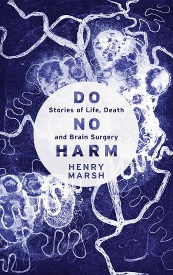
Neurosurgeon Henry Marsh has written a philosophical, incisive and exasperated book about brain surgery called Do No Harm.

It’s a hugely entertaining read as Marsh takes us through the practical and emotional process of operating, or not operating, on patients with neurological disorders.

He does a lot of moaning – about hospital management, computerisation, administration – sometimes quite enjoyably it must be said, but in some ways he does reflect the stereotype of the bellowing “I’ve got lives to save!” surgeon that stalks hospital corridors.

Most strikingly though, Marsh is clearly aware of his faults and he is a tough critic of himself and his decisions, often to the point of guilt. But it is through the many battles won and lost where you can see the wisdom shine through.

It is a brilliant insight, more than anything, into the decision-making involved in neurosurgery and the emotional impact these professional choices have on patients and professionals alike.

It’s interesting to compare in tone to Katrina Firlik’s neurosurgical biography Another Day in the Frontal Lobe which is equally candid about the fog of surgery but relentlessly optimistic in conclusion.

In contrast, Marsh is a man trying his best in difficult circumstances. Some of those circumstances just happen to be several centimetres deep in the brain.

The book is also wonderfully written by the way. One not to miss.
 

Link to details of book Do No Harm.

This is how stigma works

Sussex Police issue a statement about ‘Concern for missing Chichester man’, ITN News report it as ‘Police warn public over missing mental health patient’.

Sussex police:

Police are appealing for information about missing 43-year old Jason Merriman, who left The Oaklands Centre for Acute Care in Chichester on unescorted leave at 12.45pm on Friday 11 April. He was due back the same afternoon but has so far failed to return.
There are concerns for Jason’s welfare as he has mental health problems, and police advise that he is not approached by members of the public.

ITN News:

A mental health patient who has been missing from a care unit in Chichester for more than a day should not be approached by the public, police have warned.

Amazing really – (via @Sectioned_)

Is there creative accounting in behavioural economics?

The Financial Times has an excellent article on the future of behavioural economics.

Despite the fact that it is an incisive piece on a form of applied psychology that won Daniel Kahneman the Nobel Prize and has revolutionised political thinking, the FT has entitled the article ‘Behavioural economics and public policy’, to ensure it doesn’t arouse any passions which could bias your understanding of the text.

Ignore the title though, and it’s a fascinating and astutely critical piece on how the promises of behavioural economics haven’t always delivered and where it needs to go next.

So popular is the field that behavioural economics is now often misapplied as a catch-all term to refer to almost anything that’s cool in popular social science, from the storycraft of Malcolm Gladwell, author of The Tipping Point (2000), to the empirical investigations of Steven Levitt, co-author of Freakonomics (2005).

Yet, as with any success story, the backlash has begun. Critics argue that the field is overhyped, trivial, unreliable, a smokescreen for bad policy, an intellectual dead-end – or possibly all of the above. Is behavioural economics doomed to reflect the limitations of its intellectual parents, psychology and economics? Or can it build on their strengths and offer a powerful set of tools for policy makers and academics alike?

It’s by economist Tim Harford who also does good things on the Twitter.
 

Link to FT article ‘Behavioural economics and public policy’.
Link to alternate copy on Tim Harford’s blog.

Spike activity 28-03-2014

Quick links from the past week in mind and brain news:

Can charisma and leadership be taught? Matter looks at the history of ‘charm consultants’.

Mental health stigma: where’s my cheesecake? A piece on the Brain Flapping discusses how people react when you’re depressed.

Science News has an odd story about how 1 in 68 American 8-year-olds are diagnosed with autism and this shows how diagnosis is ‘working well’. No mention of diagnostic inflation.

The inimitable Ed Yong does a fantastic TED talk on mind-controlling parasites.

The New Yorker discusses how artificial intelligence is being applied to the board game Go.

You can’t dismiss brain imaging as just an academic gimmick. A sterling defence of fMRI in The Conversation.

The BBC has an excellent piece on the legacy of the treatment of ‘shell shock’ during the First World War on mental health.

What does it mean to say that your mind and brain are ‘at rest‘? Interesting piece in The Guardian.

Digital Trends discusses a tiny implanted brain chip for brain-computer interfaces.

Why Light Inspires Ritual. Interesting anthropological piece in Nautilus.

Bomb disposal for the brain

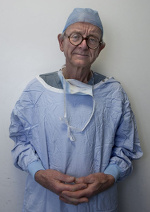
New Statesman has an excellent profile of the wise, funny and acerbic neurosurgeon Henry Marsh.

Marsh was the subject of the fantastic 2007 documentary The English Surgeon but he’s now one year away from retirement and has clearly decided that diplomatic responses are no longer a tactical necessity.

The piece also gives a vivid insight into the working life and daily challenges of a consultant neurosurgeon.

It’s also wonderfully written. This is pure joy:

When he finally went to medical school, at the Royal Free Hospital in London, he wasn’t sure about his choice. “I thought medicine was very boring,” he says bluntly. Henry is not a man to refrain from speaking his mind. “I didn’t like doctors. I didn’t like surgeons. It all seemed a bit dumb to me.” In Do No Harm he writes of his revulsion at what much surgery generally entails: “long bloody incisions and the handling of large and slippery body parts”.

But while working as a senior house officer, he observed a neurosurgeon use an operating microscope to clip off an aneurysm – a small, balloon-like blowout on the cerebral arteries that can cause catastrophic haemorrhages. It is intensely delicate work, using microscopic instruments to manipulate blood vessels just a few millimetres in diameter. It is also, as Henry says, like bomb disposal work, in that it can go very badly wrong – with the crucial difference that it is only the patient’s life at risk, not the surgeon’s. If this or any other kind of serious neurosurgery goes right, however, the doctor is a hero. “Neurosurgery,” he smiles, “appealed to my sense of glory and self-importance.”

Marsh has just written an autobiography called Do No Harm which I’ve just started reading. I’m only part way through but it’s already gripping and wonderfully indiscreet.
 

Link to New Statesman profile of Henry Marsh.

The genes are to blame game

The media love ‘your genes are to blame’ stories despite the fact that genetics is, in most cases, just one, often small, influence on a behaviour or trait.

Here’s a few lowlights:

Glass always half-empty? Your genes may be to blame
Lazy? Your Genes May Be to Blame
Have math anxiety? Your genes may be to blame
Couch potato? Your GENES could be to blame
Are You Forgetful? Your Genes Might Be To Blame
Are your genes to blame for not being rich?
Can’t do well in exams? Your genes are mostly to blame
Are Genetics to Blame for Poor Driving?
Genes to blame for boozy night

Spoiler: your genes are not to blame.

Firstly, it’s interesting that these stories are almost always framed around difficulties or negative characteristics. Rarely do you read stories along the lines of ‘Good looking? Compassionate? Healthy? Your genes may be to blame’.

In other words, they rely on people’s interest in discounting negative characteristics about themselves to attract readers / advertising targets at the expense of biasing the sorts of scientific results that get media attention.

So here would be a a more accurate if not slightly less catchy version of all these headlines: ‘Have this specific trait or behaviour? Your genes may typically contribute a small to moderate amount to the difference between people if you are similar to the population used in the study to estimate this effect – bearing in mind the caveats about the need to independently replicate the results to be confident in the reliability of the conclusions’

Yes, it doesn’t have quite the same impact as the ‘blame your genes’ headlines but you can still illustrate it with a stock photo of a blonde girl with an exaggerated expression of frustration on her face. Not all bad news, is it editors?

It’s worth saying that these sorts of stories are almost always about traits or behaviours where genetics contributes only a partial amount to the overall outcome but this is not a feature of genetics per se, it depends on what you’re looking at.

On one end of the spectrum are highly penetrant single gene disorders like Huntingdon’s disease where if you have the gene you’ll get the disorder. On the other end are much of human behaviours and traits where there are likely many genes that contribute a varying amount indirectly to the overall difference depending on the population being studied.

No-one has yet done a study on genetic contributions to differences in the likelihood of writing ‘your genes are to blame’ stories – probably due to a fear of opening a recursive media loop from which we may never emerge.

A balanced look at brain scanning

Bioethics think tank The Hastings Center have published an excellent open-access report on ‘Interpreting Neuroimages: The Technology and its Limits’ that takes a critical but balanced look at the use of brain scans for understanding the mind.

They’ve commissioned leading cognitive neuroscientists to write chapters including Geoffrey Aguirre, Martha Farah and Helen Mayberg, as well as having a chapter by some legal folks who discuss whether neuroimaging can teach us anything about moral and legal responsibility.

The chapter by the brilliant Martha Farah is particularly good and takes a level-headed look at the critiques of fMRI and is essential reading if you want to get up to speed on what brain scans are likely to tell us about the mind and brain.

The report is all in academic writing but if you’re a dedicated neuroscience fan, it probably won’t pose too much of a problem.


Link to ‘Interpreting Neuroimages: The Technology and its Limits’.

Spike activity 21-03-2014

Quick links from the past week in mind and brain news:

The thrill of cutting into a human brain says The Spectator, who have clearly never tried to operate on themselves after reading a HOWTO on the internet.

The Loom has collected some brain visualisation fly-throughs and give the low-down and what they’re about.

It turns out the Daily Mail is obsessed with brain tumours – to quite a weird extent.

Time magazine reports that after having pharmaceutical companies refuse to provide drugs for lethal injection, Texas announces it has found a new supply of execution drugs but won’t say from where.

fMRI – through the medium of song. Neurocritic finds a musical number on brain imaging.

Science News has an interesting interview on the science of unconsciousness.

Does the brain speak the truth of the self? Somatosphere with a wordy but rewarding essay.

Nature reports that the US BRAIN initiative and European Human Brain Project are to join forces. Rebel neuroscientists, striking from a hidden base…

A modern psychiatry

If you want to know how your average reasonable mainstream medical psychiatrist thinks about mental illness, Aeon magazine has a good piece that captures where many are coming from.

Now before you (yes you) Dr average reasonable mainstream medical psychiatrist, says that you don’t agree with all of it, I’m not suggesting it’s a manifesto, but it does cover a great deal of the mainstream.

We could argue a few points over some of the empirical claims, but it’s a surprisingly good snapshot in the round.

Probably the most important thing it underlines is that most psychiatrists are less obsessed with diagnosis than people who are are obsessed about the fact that psychiatrists make diagnoses.

Most psychiatrists typically don’t think that ‘every diagnosis is a disease’ and recognise the fuzziness of the boundaries – as indeed, do most medical professionals.

The article also highlights the fact that the medicalisation of emotional distress is driven as much by public demand as it is by drug company profiteering. People like pill-shaped convenience and drug companies make it their business to take advantage of this.

I would also say that the piece reflects mainstream psychiatric thinking by what it leaves out: a sufficient discussion of the psychiatric deprivation of liberty and autonomy – and its emotional impact on individuals.

Considering that this is the thing most likely to be experienced as traumatic, it is still greatly under-emphasised in internal debates and it remains conspicuous by its absence.
 

Link to ‘A Mad World’ on Aeon magazine.

Frozen nightmares

The Devil in the Room is a fantastic short film about the experience of hallucinatory sleep paralysis – a common experience that has been widely mythologised around the world.

Sleep paralysis is the experience of being unable to move during the process of waking – when you have regained consciousness but you’re brain has not re-engaged your ability to control your muscles.

The reason the experience has been widely associated with mythological creatures is because in some people it can lead to intense emotions and hallucinations.

The name ‘sleep paralysis’ is a bit confusing because this also refers to normal sleep paralysis – where your brain disengages control of your muscles during REM sleep to stop you ‘acting out’ your dreams.

The film is part of the Sleep Paralysis Project, which has much more about the experience on their website.
 

Link to ‘Devil in the Room’ on vimeo.

How to win wars by influencing people

I’ve got an article in The Observer about how behavioural science is being put at the centre of military operations and how an ‘influence-led’ view of warfare is causing a rethink in how armed conflict is managed.

Techniques such as deception and propaganda have been the mainstay of warfare for thousands of years, but there is a growing belief that the modern world has changed so fundamentally that war itself needs to be refigured. Confrontations between standing armies of large nation states are becoming rare while conflicts with guerrilla or terrorist groups, barely distinguishable from the local population, are increasingly common. In other words, overwhelming firepower no longer guarantees victory…

Mackay and Tatham argue that researching what motivates people within specific groups and deploying informed, testable interventions on the ground will be central to managing modern conflict.

It also discusses how ‘information operations’ thinking has spread into the military’s work in the civilian realm.
 

Link to ‘How to win wars by influencing people’s behaviour’.

Spike activity 14-03-2014

Quick links from the past week in mind and brain news:

The Conversation has an excellent piece on how the study of brain injury, not brain scans, have told us the most about how the brain works.

How light affects the brain. Only Human discusses a fascinating study on how a recently discovered form of human light receptor affects cognitive function.

Retraction Watch covers how the researcher behind discredited findings on the link between chronic fatigue and the XMRV virus has written a book, and has rewritten history in the process. Negative findings you say? Pifflebuymybook.

The New York Times has an excellent retrospective report about the trial that unleashed hysteria over child abuse and a thousand false memories.

Is religion good for your brain? asks Discovery News before writing an article that seems to have been thought through while huffing butane.

Science News take a critical look at studies on the link between good looks and enhanced abilities. Sadly, still no studies on the link between irresistible allure and an in-depth knowledge of early 90s PC operating systems. Cognitive scientists, you know where to find me.

Aeon magazine has an interesting piece on the relentless pre-march of humanoid robots into society.

Modern life damaging infant brains, according to some evidence-free hand-wringers contacted by BBC News. Quotes the “Institute for Neuro-Physiological Psychology”. Pro-tip for faux neurocampaigners: choose a name which doesn’t immediately announce I KNOW NOTHING ABOUT THE BRAIN.

New Scientist report on early research suggesting D-cycloserine might enhance psychotherapy for anxiety disorders.

Loving you is easy because you’re beautiful

Neuroscape Lab, we salute your next generation of brain visualisation, that looks like something out of a sci-fi film where the director is a bit obsessed with correctly representing the anatomy of the brain.

They describe the visualisation like this:

This is an anatomically-realistic 3D brain visualization depicting real-time source-localized activity (power and “effective” connectivity) from EEG (electroencephalographic) signals. Each color represents source power and connectivity in a different frequency band (theta, alpha, beta, gamma) and the golden lines are white matter anatomical fiber tracts. Estimated information transfer between brain regions is visualized as pulses of light flowing along the fiber tracts connecting the regions.

But honestly, who cares? It’s a glowing rotating brain with golden streaks of light flowing through it.

In fact, after 25 years, science has finally scanned the brain from The Orb’s ambient techno classic ‘A Huge Ever Growing Pulsating Brain That Rules from the Centre of the Ultraworld’.

It’s as if the rave generation stumbled out of life’s warehouse at 7am and ended up being neuroscientists.
 

Link to Neuroscape Lab’s awesome brain visualisation.
Link to the original Orb track (or the classic Orbital remix)

From under-hearing to ultra-hearing

The BBC World Service has a fascinating radio programme on hearing loss and how it’s spurring the move towards auditory enhancement technology for everybody.

The documentary, called Hack My Hearing, was created by science writer Frank Swain who is suffering hearing loss. He explores different forms of hearing disturbance and looks at technologies that aim to enhance hearing and how they soon might provide ‘super human’ auditory abilities.

One of the best things about the documentary is that it has been brilliantly engineered so you can experience what most of the forms of hearing loss and hearing enhancement in the documentary sound like.

It is definitely one to be listened to on headphones and it sounds wonderful.

Sadly, it’s only available as streamed audio at the moment, but you can listen to the full programme at the link below.

Update: The programme is now also available from the BBC as a podcast – downloadable directly as an mp3.


Link to Hack My Hearing streamed audio.