How to Good-Bye Depression

It’s rare than someone comes up with a truly novel treatment for mental illness, but Hiroyuki Nishigaki’s book may be a genuinely original contribution to the field.

It’s entitled How to Good-Bye Depression: If You Constrict Anus 100 Times Everyday. Malarkey? or Effective Way?

Needless to say, it’s contribution to psychiatry is only equalled by its contribution to the development of the English language.

The description of the book is a wonderful read in itself and the reviews are absolutely priceless.

I feel better already.

Link to book details on Amazon.

In search of evidence-based bullshit

Monday morning is not the best time to be told to ‘bridge the quality chasm’ and ‘identify your value stream’. I was having the misfortune of starting my week with a talk that introduced new health-service management ideas based on psychological sounding ideas such as ‘lean thinking’ and ‘connected leadership’.

Now, I’ve got no problem with things sounding like bullshit, as long as they work. After all, medicine is one of the few places where you can get away with calling the practice of squirting cold water in the ear ‘vestibular caloric stimulation’.

No-one minds that much, because it’s been very well researched and is known to have a profound, albeit temporary, effect on a number of neurological conditions.

So if I wanted to find out whether any of these new management techniques made an organisation more efficient, the first thing I’d do is find out what the research says.

In health and medicine, the ‘gold standard’ for finding our whether an intervention has an effect is the randomised controlled trial or RCT.

It’s a simple but powerful idea. You get a group of people you want to study. You measure them at the beginning. You randomly assign them to two groups. One gets the intervention, the other doesn’t. You measure them at the end. If your intervention has worked, one group should be different when compared to the others.

Of course, it gets a bit more complex in places. Making the comparison fair and deciding what should be measured can be tricky, but it’s still a useful tool.

After my traumatic Monday morning experience I went to see what randomized controlled trials had been done on management techniques.

To my surprise, I found none. Not a single RCT in any of the business psychology literature.

Now, this may be because I know little about organisational psychology, and literature searches are as much about knowing the key words as knowing what you want. So maybe RCTs are called something completely different, or I’m just looking in the wrong places.

So, if you know of any RCTs done on leadership and management techniques, please let me know, I’d be fascinated to find out.

I could completely wrong, but if I’m not, I want to know why are there no randomised-controlled trials in organisational psychology?

And as a corollary, are we spending millions on organisational interventions to supposedly help patients that have been tested no further than the pseudoscience we reject for every other area of medicine?

UPDATE: Some interesting comments from organisational psychologist Stefan Shipman:

It may be that the complexity lies in that organizational research is always secondary to doing business. I can remember in some of my early research that I attempted to implement a new human resources program in one department. The program was successful in its early stages and was (despite my suggestions) implemented company wide.

I think your post absolutely speaks to the frustration of all organizational psychologists because the zeal of organizations to find “new” ways of doing business that are hopefully more effective. This zeal often reduces the “completeness” of research. As organizational psychologists we accept the conditions under which real world research can be done. We encourage the assignment of conditions but accept that some ideas or programs might “leak” into other parts of the organization.

Lies, lesions and medical mysteries

Hysteria, or conversion disorder as it is now known, is when neurological symptoms such as blindness or paralysis are present but no neurological problems or brain abnormalities can be found.

The issue of whether such patients are ‘faking’, whether the neurological abnormality just hasn’t been found yet, or whether the problem is best understood in psychological terms, has been vexing clinicians for the best part of 200 years.

This is a fascinating quote from the introduction to Contemporary Approaches to Study of Hysteria (ISBN 019263254X) by Halligan, Bass and Marshall:

…how can we discover if someone is indeed faking it? (We use ordinary language here rather than the more obviously psychiatric terms such as factitious disorder and malingering: clarity and logic are best served by calling a spade a spade.) The simple but totally impractical solution would be 24-hour surveillance on audio- and video-tape unbeknownst to the patient. Anyone who behaved perfectly normally when alone but who invariably developed the ‘disability’ when in company might be plausibly thought to be feigning.

Short of this Big Brother solution, investigators have tried to devise catch-trials and catch-tests to detect the cheater. For example, it is sometimes assumed that a patient who ‘guesses’ a randomized stimulus sequence (touch, touch, no touch…) significantly below chance must be faking it.

But the existence of such phenomena such as blindsight, unfeeling touch, unconscious perception in visual-spatial neglect and priming in amnesia show how misleading it can be to assume that odd relationships between behaviour and verbal report necessarily constitute evidence of cheating.

We do not impinge on the honesty of patients who perform visual discriminations at above chance level while claiming to have seen nothing. Why should we perforce distrust those who score below chance? In short, the detection of lying in the neurology clinic is at least as difficult as it is in a court of law.

Link to book details.
Link to previous Mind Hacks article on hysteria.
Link to great NYT article on hysteria.

2007-11-30 Spike activity

Quick links from the past week in mind and brain news:

The Washington Post has an article on the ongoing trial using MDMA (‘Ecstasy’) assisted psychotherapy to treat post-traumatic stress disorder.

Babies learn how to make social evaluations in the first few years of life, according to a new study reported by BBC News.

The Guardian has an article on combining a high-flying career with ongoing mental illness.

For men the brain activation in the ventral striatum is dependent not only on the size of reward, but also how it compares to other people’s rewards.

Google in your brain? PageRank as a semantic memory model: Developing Intelligence examines an interesting view on memory for facts.

Is the beauty of a sculpture in the brain of the beholder? Stupid headline, interesting study.

A great post from Mixing Memory on a favourite experiment: research on schema (like mental frameworks) for memory.

Is the famous Christian poem ‘Footprints’ a case of cryptomnesia: the unconscious copying of another creative work? Rachel Aviv for the Poetry Foundation investigates.

Cognitive economics comes to the aid of football goalkeepers, via the BPS Research Digest.

The University of Virginia has a great ‘Psychedelic Sixties‘ online exhibit.

Neurophilosophy finds a wonderful image generated from a supercomputer simulation of brain microcircuitry.

The Dana Foundation has an excerpt from Sandra and Matthew Blakesee’s new book ‘The Body Has a Mind of Its Own’ available online.

Are rocks conscious? Arguing no is harder than you think, and the New York Times covers controversy.

Probably one of the most important emerging fields in biology is epigenetics. Corpus Callosum tackles a new study on the epigenetic transmission of PTSD risk markers.

Trippin’

I’m just reading a book called The Head Trip: Adventures on the Wheel of Consciousness which sounds like some stoned hippy opus, but is actually a wonderfully written travel book into the neuroscience of naturally occurring altered states of consciousness.

It was recommended to me by Tom, who got sent a copy to review, and was so enthusiastic about it, he sent it to me afterwards. And I’m very glad he did.

The author, Jeff Warren, wants to experience various altered states of consciousness that are described in the scientific literature, like the hypnagogic state – the hallucinatory period when dropping off, or lucid dreaming, when you’re aware that you’re dreaming, or hypnosis.

So he travels the world meeting researchers, taking part in experiments, trying things out on himself, and explaining the science along the way.

And this he does very well. He manages to capture some of the key debates in the literature, explain some tricky concepts, as well as introducing us to often curious and compelling characters who research these phenomena.

He skilfully compares the myths, claims and speculation with what is known from scientific studies, and what he managed to experience himself.

There’s quite a large section of the book dedicated to sleep and dreaming, and if ever you thought sleeping was the uninteresting third of your life you spend unconscious, this is the book which will make you think again.

Just great fun, and, if you’ll excuse the slightly awkward metaphor, wonderfully eye-opening as well.

In the meantime, if you want a quick fix on the science of dreaming, the Washington Post had a recent brief article that discussed the topic.

Link to book’s website.
Link to Washington Post article ‘Dream on…’

A subconsciousness raising exercise

This week’s New Scientist has a cover story on the psychology that goes on behind the scenes, in the subconscious.

Or you could call it the unconscious, or the pre-conscious. Despite the differences in terminology it’s much the same idea. Essentially, it’s the work the brain does that we’re not conscious of.

Unfortunately, the article has a bit of an excruciating tag-line:

Subconscious thought processes may play a crucial role in many of the mental facilities we prize as uniquely human, including creativity, memory, learning and language.

Next week: Sea contains water! Don’t be put off though, the article’s actually a good guide to some of the latest theories on how information crosses the consciousness divide.

What’s more, non-conscious thinking may actually work best in some cases where you might imagine rational, conscious thought is the best tool for the job. In situations where people have to make difficult choices based on large amounts of hard-to-assess information, psychologist Ap Dijksterhuis at the University of Amsterdam in the Netherlands has found that they are happier with their decision when acting on gut instinct than when forced to try to think the choice through rationally (New Scientist, 5 May 2007, p 35). Dijksterhuis is convinced that subconscious thought processes are superior in many situations – including most social interactions – because they allow us to integrate complex information in a more holistic way than can be managed by rational thought processes.

Something similar sometimes happens in problem solving, according to Jonathan Schooler from the University of British Columbia in Vancouver. By asking subjects to explain their reasoning as they go, he has found that verbalising what they are doing has no effect on people’s ability to solve analytical, mathematical or logic problems but actually hinders performance on insight problems, such as solving a riddle – those for which the solution seems to pop out of the blue in an aha! moment. Remember that subconscious thought processes differ from conscious ones in that we are unable to articulate the former. So here, it seems, is experimental evidence for something we all instinctively know: that subconscious thinking is the source of our inspiration – it is central to creativity.

Rather ironically, for an article on the unconscious, it’s been hidden behind a pay wall. So you’ll need to get a copy from your newsagent, or if you want to expand the subconscious mind, photocopy it in the library.

Link to table of contents for this week’s NewSci.

The subject of the dream

We must, in the next place, investigate the subject of the dream, and first inquire to which of the faculties of the soul it presents itself,

i.e. whether the affection is one which pertains to the faculty of intelligence or to that of sense-perception; for these are the only faculties within us by which we acquire knowledge.

The opening lines of Aristotle’s early sleep text On Dreams, written in approximately 350 BC.

Ministry of Memory Distortions

In George Orwell’s dystopian novel, 1984, Winston Smith works in the Ministry of Truth retouching photographs to remove people from the record of history. A recent psychology study suggests that these manipulations may change more than the historical record, they could affect our collective memories of what actually happened.

In the study, led by Italian psychologist Dario Sacchi, participants were shown two photographs; one from the 1989 Tiananmen Square protests and another from a 2003 protest in Rome against the Iraq war.

What they didn’t know was that some participants saw doctored versions of either one or both of the photographs. The image on the left demonstrates that a crowd was added to the Tiananmen Square image. With the Rome photo police and aggressive-looking demonstrators were added to the image of peaceful protesters.

To test whether people perceived the photos as genuine or not without giving the game away, the researchers asked participants how familiar they were with the image.

Both groups rated the Tiananmen Square photo as equally familiar, suggesting few picked up on the changes.

Interestingly, participants rated the altered Rome photo as less familiar, but when given a chance to comment, no-one suggested it was fake, with some suggesting that their memory of the protest being peaceful, rather than the photo, must be mistaken.

The participants were then asked to answer questions about the events from their memories of what happened.

Those who saw the altered Tiananmen Square image remembered more people being there, those who saw the Rome image remembered it as more violent, more negative, and recalled more property being damaged and confrontations with the police.

When the experiment was run again, participants additionally rated themselves as less likely to attend a demonstration in future.

The study has obvious implications for propaganda and the paper spends much time discussing the possible impact of doctored photos on public opinion.

Combined with some earlier studies that suggest that people often believe initial false news reports even when they’re aware of them being falsified, you can see how the media has a powerful influence over our remembered realities.

Link to study abstract.
Link to write-up from LiveScience.

Enduring error

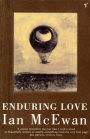
The BBC has a curious article about author Ian McEwan that makes an interesting error about his novel Enduring Love. In fact, the truth is much more subtle.

The article notes that:

McEwan made up a medical condition for the stalker and wrote a spoof article from a psychiatric journal explaining the illness and included it in the book.

His description of De Clerambault’s Syndrome fooled reviewers and psychiatrists alike.

In fact, De Clerambault’s Syndrome (where someone has the delusional belief that another person is in love with them) is well known in the medical literature and McEwan’s description is quite accurate.

Nevertheless, his book concludes with what looks like a reprint of an article from the British Review of Psychiatry that describes a case study which the book seems to be based upon.

Although also fiction (the British Review of Psychiatry doesn’t exist), its style is convincing and it’s properly referenced with studies from the real medical literature.

So convincing, in fact, that it fooled several reviewers, including those in top medical journals, into thinking the novel was based on a real case report.

A clue as to why McEwan was able to successfully imitate the medical literature is given in the acknowledgements. He thanks “Ray Dolan, friend and hiking companion, for many years of stimulating discussion”.

Dolan is a professor of neuropsychiatry at the Institute of Cognitive Neuroscience and the Functional Imaging Lab in London.

Interestingly, Dolan also played a key part in Saturday, another of McEwan’s books – which tackles a dramatic day in the life of a neurosurgeon.

As mentioned in an article in the British Medical Journal, McEwan shadowed neurosurgeon Neil Kitchen while researching the book. The article notes the pair were introduced by Dolan.

Link to Wikipedia page on De Clerambault’s Syndrome.
Link to Salon article ‘Ian McEwan fools British shrinks’.
Link to BMJ article interviewing neurosurgeon Neil Kitchen.

Mind snacks

Exploratorium has a gallery of try-it-yourself perception experiments. There’s plenty of great material here, not least because of the the slightly bizarre photos of people with distracting 80s haircuts.

There are quick projects on everything from proprioception to taste, and you can tell which are the good ones because they list ‘adult help’ as one of the materials.

Think of it as the Mind Hacks that time forgot.

Link to groovy gallery of Exploratorium perception ‘snacks’.

Morality tales

The science of morality is becoming a hot topic at the moment, and this week two articles, one in Time and one in Reason, have both tackled the issue.

The Time article is a particularly good example. It’s wonderfully written and takes a comprehensive look at the field, taking in evolution, empathy, cognitive neuroscience and culture.

If the entire human species were a single individual, that person would long ago have been declared mad. The insanity would not lie in the anger and darkness of the human mind‚Äîthough it can be a black and raging place indeed. And it certainly wouldn’t lie in the transcendent goodness of that mind‚Äîone so sublime, we fold it into a larger “soul.” The madness would lie instead in the fact that both of those qualities, the savage and the splendid, can exist in one creature, one person, often in one instant.

Link to Time article ‘What Makes Us Moral’.
Link to reason article ‘The Theory of Moral Neuroscience’.

Scans, brain waves and pulses: three way neuroscience

One of the reporters for Wired took part in an experiment that combines several key neuroscience technologies to pinpoint a brain area, switch it off, and measure the effects.

The experiment used a combination of fMRI, transcranial magnetic stimulation (TMS) and EEG.

TMS is a technique that allows parts of the brain to be safely and temporarily shut down or stimulated for a few hundred milliseconds. It’s particularly useful because it allows you to be sure that the function of a brain area is involved in causing a particular behaviour.

Brain scans only allow you to see if an area is associated with a behaviour. The brain area might be reliably active when something important is in progress, but like a car radio, it might not actually be driving the outcome.

However, if you guess that an area is part of the cause, you can use TMS to change its function while the behaviour is in progress. If the behaviour changes, you know the brain area is involved.

Often, the brain area is chosen because it is commonly associated with that behaviour. The trouble is, each person varies slightly.

Doing an fMRI brain scanning experiment first will tell you exactly where activity occurs, so later on, you can use TMS to target the spot more precisely in each individual.

While using TMS to alter the function of a brain area, researchers can also use EEG to see the physiological effect of the stimulation. As well as seeing the behavioural outcome, you can also see it’s effect on the wider brain networks.

Combining these techniques is becoming increasingly common in cognitive neuroscience.

Some recent studies have even used TMS when people are lying in fMRI scanners using magnetic coils made of non-ferrous materials so as not to be dangerous in the powerful scanner magnet.

My favourite one is a recent study where they used TMS to trigger ‘movement’ in a phantom limb by stimulating the motor cortex. They then measured the brain activity linked to movement in the non-existent hand.

Link to Wired article.
Link to abstract of article on TMS-induced phantom hand movements.

Freud widely taught, except in psychology departments

The New York Times discusses an upcoming study that has found that Freud and psychoanalysis form a key part of the teaching in the humanities, while being virtually extinct in psychology departments in the same universities.

As some of the psychologists in the article suggest, many of the problems with psychoanalysis are because those who believe in the theories have been reluctant to submit the ideas to rigorous empirical testing.

Where this has been done, the results have been fascinating. As we reported in June, empirical work has supported some of Freud’s ideas on transference (how feelings from one relationship can affect another if the two people share similarities).

Moreover, an upcoming London conference aims to get the hard nosed cognitive and neuroscientists talking to the psychoanalysts to thrash out ways of separating the wheat from the chaff and to inspire research with new ideas.

These are largely the exceptions, however, and more often than not, psychoanalysis has continued developing its ideas without much recourse to outside testing.

Psychology now runs on the mantra of ‘evidence-based practice’, which has meant the science-flimsy Freudian ideas have been largely rejected.

However, subjects like film, literature and history have no such restrictions and have found psychoanalysis a useful discussion point.

Interestingly, there are some moves to introduce cultural analysis based on cognitive science into these subjects.

Buckland’s book The Film Spectator: From Sign to Mind (ISBN 9053561315) investigates whether its possible to understand how we interpret film using cognitive linguistics and the science of perception.

Link to NYT article ‘Freud Is Widely Taught at Universities, Except in the Psychology Department’.

Free Ramachandran talk, Wednesday in London

I just found out that V.S. Ramachandran is giving a free talk, this Wednesday, at the Royal Society in London.

The talk is entitled ‘Nature and nurture in brain function: clues from synesthesia and phantom limbs’ and for those not able to make the event in person, it’s going to be webcast live.

Ramchandran is an excellent speaker, so shouldn’t be missed if you’ve not seen him talk before.

Link to details of Ramchandran talk.

Yay Serotonin! T-shirt

Left-field t-shirt company ClothMoth have a fantastic t-shirt celebrating the joys of serotonin.

The shirt will cost you $18 and will allow you to advertise your love for one of the key monoamine neurotransmitters in the brain.

Tryptophan is an essential amino acid that is synthesised into serotonin. It is found in many fruits, nuts and vegetables. Walnuts are a particularly good source.

It’s not clear how many walnuts were eaten to produce this t-shirt, but the results are fantastic anyway.

Link to ClothMoth Yay Serotonin! t-shirt (via HYA).