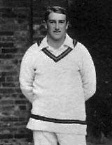
Is that you, Phineas?

The BPS Research Digest has the surprising news that a photo of Phineas Gage has been discovered. He became one of the most famous case studies in neuroscience when he had a large iron rod blown through his frontal lobes in in 1848.

He survived but his frontal lobe damage meant “Gage was no longer Gage”, at least according to his attending doctor, giving us some of the first clues that damage to specific brain areas could cause changes in personality.

The photo was apparently discovered by two photo collectors who went to great lengths to verify it was indeed Gage.

The photo may well show Gage in his later years as he toured the country with PT Barnum’s circus appeared at PT Barnum’s New York museum as one of the star attractions, always with the tamping iron on hand to amaze the crowds.

In the tradition of media circuses, the collectors have taken the long out-of-copyright photo, put a dirty great copyright sign across the front and are charging ‘usage fees’ for the undefaced version.

Phineas Gage may be dead, but the spirit of Barnum, it seems, lives on.

UPDATE: The LA Times has a short article and an undefaced version of the photo online.

Link to BPSRD on the photo.
Link to the ‘Meet Phineas Gage’ website with defaced photo.

Brain shaker

What modern home could not benefit from some brain-shaped porcelain salt and pepper shakers, I hear you ask. Apparently they even have magnets so the two hemisphere snap together into a whole brain.

Obviously, you’ll need to do an impromptu callosotomy to use them but at least you’ll have the fun of doing some split-brain experiments with your seasoning.

Not to be confused with AC/DC’s rather more saucy Brain Shake of course.

Link to brain salt and pepper shakers from Think Geek.

Street drugs and dopamine theory overdoses

Furious Seasons has alerted me to an interesting article in the Boston Globe about street dealing of the antipsychotic drug quetiapine – interesting because it reveals some of our prejudices about the neuroscience of recreational drug use.

One of the mantras of neuroscience is that drugs of abuse boost the dopamine system. This led to the somewhat bizarre headlines earlier this year that modafinil may be ‘addictive’ because it was found to increase dopamine function in the nucleus accumbens, a key part of the reward system.

The reason this was bizarre is because while there are many reports of people illicitly using the drug to avoid sleep and maintain focus, there are none about ‘modafinil addicts’. In fact, I couldn’t find a single case in the literature.

However, the ‘all drugs of abuse boost dopamine’ mantra trumped the fact that there aren’t any actual addicts to make people warn about its potential for addiction. And by people I don’t just mean the press, I mean the neuroscientists who carried out the research, including Nora Volkow, head of the US’s National Institute on Drug Abuse.

And this is why the reports of the abuse of quetiapine (trade name Seroquel), both in the popular press and in the medical literature, are so interesting, because quetiapine is a dopamine blocker.

In fact, it reduces function at the same D2 dopamine receptors in exactly the same ‘reward circuits’ that are supposedly always stimulated by drugs of abuse.

In other words, it does exactly the opposite of what the received wisdom tell us, and yet, it is being widely abused to the point where people are getting gunned down over shady quetiapine deals.

As scientists one of our greatest vices is fitting the world into our theories, rather than fitting our theories to the world. For neuroscientists, this is especially tempting because society has come to the popular but false conclusion that brain-based explanations trump behavioural or psychological observations.

There is more to drug abuse and addiction than dopamine and our clich√©s about the ‘reward system’ are hampering our efforts to make sense of it all.

Link to Boston Globe article ‘Psychiatric drug sought on streets’.
Link to Furious Seasons who have been on the case for ages.

Is brain death, death?

The New Atlantis magazine has an in-depth article discussing the difficulty in defining death and why arguments about the brain have become central to understanding the final curtain.

The article is a little bit wordy in places but does a great job of exploring the philosophy of death definitions and why these have direct practical applications in medicine.

Not least in ‘pulling the plug’ decisions and the removal of organs from people who have been declared brain dead even while their body is still functioning on life support.

Another way forward is to confess that all this time the real reason why the neurological standard seemed palatable was that the patient with total brain failure has lost consciousness and will never regain it.

All the talk about the body no longer being a whole was just a distraction. The pulsing heartbeat, the warm skin, all the integrated work of the body—these are indicators that the body is alive but not the person.

And it is the life of the person that demands protection, in this case from being made into a source for organs. This kind of dualism opens the door, of course, to the possibility that there are more “personless” bodies—that, for instance, some patients with severe dementia or PVS [persistent vegetative state] might meet the description.

Link to article ‘What and When Is Death?’

Encephalon 73 flickers into life

The 73rd edition of the Encephalon psychology and neuroscience writing carnival is here with a specially video enriched version, this time ably hosted on Channel N.

A couple of my favourites include Neurocritic tackling the myth of the depression gene and Providentia on the visionary psychosis surfer Emmanuel Swedenborg.

There’s many more excellent articles and a video to match each one so head on over and enjoy.

Link to Encephalon 73.

Unique like everyone else

Photo by Flickr user victoriapeckham. Click for sourceYou’ve probably heard of the many cognitive bias studies where the vast majority of people rate themselves as among the best. Like the fact that 88% of college students rate themselves in the top 50% of drivers, 95% of college professors think they do above average work, and so on.

In light of this, I’ve just found a wonderfully ironic study that found that the majority of people rate themselves as less susceptible to cognitive biases than the average person.

It’s work from psychologist Emily Pronin who studies insight into our own judgements and how it affects our social understanding and perception of others.

In this study, the participants (psychology students no less), were given a booklet explaining how cognitive biases work that described eight of the most common ones. They were then asked to rate how susceptible they were to each of the biases and then how susceptible the ‘average American’ was.

Each rated themselves as less affected by biases than other people, instantly causing an irony loop in the fabric of space and time.

The study also had a fantastic follow-up that demonstrated just how strongly these cognitive biases affect our thinking. Even when they’re pointed out, we can’t escape them:

Participants in one follow-up study who showed the better than-average bias insisted that their self-assessments were accurate and objective even after reading a description of how they could have been affected by the relevant bias.

Participants in a final study reported their peer’s self-serving attributions regarding test performance to be biased but their own similarly self-serving attributions to be free of bias.

Pronin calls this the ‘bias blind spot’ and you can read the full study online as a pdf file. Pronin also wrote an excellent 2008 review, also available as a pdf, on how these biases mean we see ourselves differently from how we see others, because we have direct access to our own minds but only observations of other people.

pdf of ‘bias blind spot’ study.
Link to DOI entry for same.

A reflector for violence

I don’t know what to make of this, but the discovery is quite startling. It’s data from a World Health Organisation study on lethal violence, finding that the ratio between murder and suicide differs between countries, and in some countries differs between sexes.

It suggests an interesting hypothesis, that cultural differences affect whether lethal violence is typically directed outwards (murder) or inwards (suicide). Skip to the findings if you just want the bottom line.

An Analysis of WHO Data on Lethal Violence: Relevance of the New Western Millennium.

Rezaeian M.

Asia Pac J Public Health. 2009 Jul 2. [Epub ahead of print]

INTRODUCTION: Suicide and homicide are considered to be lethal violent acts with a clear difference in their directions, that is, inwardly “killing oneself” or outwardly “killing another,” respectively. There are some studies in which these 2 violent acts are considered under the same framework mostly within Western countries. This article for the first time investigates this issue throughout the world. Material and methods. The present study uses data that have been estimated by Global Burden of Disease (GBD) project for 2000 for the 6 different regions of the world proposed by WHO. The suicide/homicide ratio has been calculated by dividing the suicide rate by the sum of the suicide and homicide rates within each age and sex groups.

FINDINGS. Three distinct groups have emerged. In the first group, that is, Southeast Asia, Europe, and Western Pacific, lethal violence in both males and females usually directs inward whereas in the second group, that is, Africa, lethal violence in both males and females directs outward. In the third group, that is, America and Eastern Mediterranean, in males lethal violence generally directs outward whereas in females it often directs inward.

CONCLUSION: Under the same framework if a factor causes external blame for the people’s failures it will increase the likelihood that the suicide/homicide ratio is expressed as homicide and vice versa. Although this might explain the observed pattern to some extent, more in-depth studies are needed to better understand the causal root of the pattern.

Link to PubMed entry for study.

The neuroscience of an unwanted limb

ABC Catalyst has a completely astounding video on someone with ‘body integrity identity disorder’ who deliberately caused a leg amputation to feel satisfied with their body. It goes on to explore the neuroscience of body image and explores some of the best known body swap experiments.

The voice over is a bit cheesy in places but otherwise it’s brilliantly explained, linking an unusual condition with the experimental lab science.

People described as having BIID feel as if a perfectly healthy limb is not really part of them. Like Robert Vickers, the man featured in the documentary, they can sometimes take extreme measures to get it amputated.

Preliminary evidence suggests that it might arise from a distortion of our neurally mapped body image and recent studies using the rubber hand illusion or the body swap illusion have been thought to tap the same sort of body image distorting effects.

One of the most compelling parts of the documentary is when the gentleman with BIID actually takes part in all the experiments.

After he takes part in the rubber hand illusion the presenter asks a really interesting question: “Is this anything like you experienced with your leg?”, “No” he answers, giving her a look like she’s a bit crazy.

This is the sort of question that is almost never asked by cognitive scientists. We create what we think is something similar in the lab, and then study it to death, but rarely do we actually get people with similar distortions to try it out and ask them what they make of it.

Vickers also recently recorded a programme for ABC Radio National’s Ockham’s Razor where he talks incredibly eloquently about the experience of his body, the turmoil of having an unwanted healthy limb and gives a remarkably good review of the scientific literature.

Both are highly recommended.

Link to amazing Catalyst programme on BIID.
Link to Robert Vickers on Ockham’s Razor.

For whom the ball tolls

I was just re-reading the excellent Prospect magazine article on psychotherapy and cricket when I was struck by a bit about the high rate of suicides in professional cricket players that I’d not noticed before.

It mentions David Frith’s book Silence of the Heart which specifically focuses on the large numbers of ex-cricket pros who have taken their own lives. This from the New Statesman review:

Is this grim roll call of any significance? In 1998, 1.07 per cent of the 264,707 male deaths in the UK were attributable to suicide; according to David Frith’s research, of the 339 England Test cricketers who had died by July 2000, 1.77 per cent were suicides. The figures are even higher for Australia (well, they have to beat us at everything, don’t they?), South Africa (an astonishing 4.12 per cent) and New Zealand. In all, Frith has unearthed more than 100 examples from all levels of the game.

I looked in the medical literature and it seems it has also been discussed there. A paper in Australasian Psychiatry examined mental illness in professional Aussie cricketers and found high rates of mood disorders, suicide, and drug and alcohol issues, along similar lines to a recent study on professional jazz musicians.

During my search I came across the astounding and tragic life of South African cricketer Aubrey Faulkner (pictured), who came from a violent background to be a cricketing legend, war hero, sports mentor and finally a suicide statistic.

It’s not clear whether cricket is particularly associated with mental illness, or whether this just reflects a trend in all elite level sportsmen, but it’s an unusual connection that I’d never come across before.

Link to New Statesman review of ‘Silence of the Heart’.
Link to PubMed entry for paper on mental illness and cricket.

neuro culture

neuro culture is a beautiful and interesting website that tracks the interaction between neuroscience and visual art as it develops across the world.

It works as a cross between an online gallery and an art studies venture, looking at how artists are making sense of the increasing awareness and interest in the brain through all levels of society.

Visual and digital technologies of the brain, the widespread dissemination of psychotropic drugs, expanding programs in consciousness studies and other neurotechnologies are having a significant impact on individuals and society.

These ongoing transformations in science and society are deeply pervading popular culture and are appearing in a profusion of media and artistic expanse- from the visual arts to film, theatre, novels and advertisements.

With this website, we explore and document past and current manifestations of this phenomenon and introduce an online platform for the analysis and exchange of cultural projects intersecting neuroscience, the arts and the humanities.

There’s some truly beautiful artwork on the site which is worth a visit purely for the rich visual spectacle.

Link to neuro culture.

2009-07-10 Spike activity

Quick links from the past week in mind and brain news:

PsyBlog covers the numerous studies that have found your name influences your performance or preferences.

Professor Baroness Susan Greenfield thinks that her increasingly bizarre warnings about the ‘neurological dangers’ of Twitter are equivalent to when people first starting saying smoking caused cancer. Except they had evidence, and understood what they were talking about.

The New York Times has an interesting piece on why some of the counter-intuitive findings of behavioural economics don’t work when people have to use their own money.

There’s an awesome post on Developing Intelligence about how the famous 40hz ‘consciousness’ oscillations in the brain may have really been eye movements affecting the signal – the debate continues.

I do is apparently a blog written by someone describing their experience of locked-in syndrome.

Emotional robots: Will we love them or hate them? asks New Scientist. Depends if they know their place, I suggest.

If you don’t read Neurophilosophy (and if you don’t, why not?) you’ve missed two excellent articles recently on the evolutionary origins of the nervous system and the neuroscience of hypnotic paralysis.

BBC Radio 4 had an excellent programme on the criminal mind that will shortly be sucked into archiveless oblivion. Enjoy it while you can license paying suckers.

A recent study on how your self-view skews your mood is discussed by Neuronarrative.

Scientific American has an excellent piece on the evolutionary origins on left and right brain hemisphere differences.

There’s an excellent post on genius and madness on Frontier Psychiatrist.

Scientists create eerie ambient music using human brains, MRI machines, reports GizModo with video. I’m waiting for musicians to create eerie brain scans using drum machines though.

The New York Times has an excellent piece on the psychology of intrusive perverse thoughts. My favourite type, as it happens.

Employees are promoted until they reach their level of maximum incompetence, according to a new study on arXiv covered by Tech Review.

Psychiatric Times has created an online forum (i.e. mud slinging arena with ring-side seats – hotdog anyone?) to cover the development of the DSM-V.

ABC Radio National’s 360 programme has an excellent piece on how the public relations industry works. Eye opening stuff.

New Scientist has an excellent piece on the origins and anthropology of war.

Acid techo. The history of how LSD inspired scientists and tech pioneers is discussed by the HuffPost. Includes a letter from Albert Hoffman to Steve Jobs.

New Scientist has an awesome article on the memristor and the future of artificial intelligence. NewSci is totally on fire this week.

Sweet and salty. Frontal Cortex discuss why they taste so good together.

The Neuroskeptic covers on a study on the effect of affirming statement on people with low self-esteem that has been widely and incorrectly reported as ‘self help harms people’.

Keep on keepin’ on

The New York Times has a fantastic profile of ultramarathon runner Diane Van Deren who became a world class endurance athlete after having brain surgery to remove a large chunk of her right temporal lobe.

The surgery was to treat otherwise untreatable epilepsy and has left her with memory and organisation difficulties, neither of which stop her from running and winning races of several hundred miles.

Van Deren, 49, had a lobectomy in 1997. She has become one of the world‚Äôs great ultra-runners, competing in races of attrition measuring 100 miles or more. She won last year‚Äôs Yukon Arctic Ultra 300, a trek against frigid cold, deep snow and loneliness, and was the first woman to complete the 430-mile version this year…

[Neuropsychologist] Gerber, who works at Craig Hospital, a rehabilitation hospital in Englewood, Colo., for people with brain or spinal-cord injuries, said that Van Deren “can go hours and hours and have no idea how long it’s been.” Her mind carries little dread for how far she is from the finish. She does not track her pace, even in training. Her gauge is the sound of her feet on the trail.

“It’s a kinesthetic melody that she hits,” Gerber said. “And when she hits it, she knows she’s running well.”

Link to NYT on Van Deren.

Brand new second hand

Photo by Flickr user _StaR_DusT_. Click for sourceNewsweek has an interesting article about the reality of unconscious plagiarism – otherwise known as ‘cryptomnesia’.

The article describes apparently genuine cases in terms of source memory – the ability to not only to remember information but also where it came from. When you remember a great idea, was it one of yours, it did you read it in a book, or hear it from a friend?

In the lab this has usually been tested by relatively simple experiments where participants are asked to read out words, imagine themselves reading out words and hear words being read out.

They’re then shown another list, and they have to say whether they’ve encountered the word before and, if so, did they hear it, read it or imagine it.

There are many variations on this simple idea, but all of which show that we routinely mistake information from other people as something we generated ourselves.

Psychologist Marcia Johnson has done a huge amount of work on how we monitor the source of our memories and how distortions affect what she calls ‘reality monitoring’.

It turns out that memories don’t have a specific source tag, like a mental label. We infer where they came from based on their content. There are many things have been found to be important, but even something as simple as the sensory vividness of the memory is known to have a big effect.

For example, people who have very vivid mental images have been found to be more likely to misattribute the source of memories for this reason.

So the idea is that sometimes we present other people’s ideas as our own, not because we’re being deliberately dishonest, but because we genuinely think we came up with it in the first place because of source memory failure.

The Newsweek article covers how this applies to writers and journalists and some of the recent research which tackles exactly these sort of memory distortions.

However, it doesn’t mention perhaps the most famous of cryptomnesia – where a judged ruled that ex-Beatle George Harrison had unconsciously plagiarised the Chiffons’ He’s so Fine in his own track My Sweet Lord.

And this is exactly where it gets a bit murky, because it’s never clear whether someone has unconsciously plagiarised, or just plagiarised, because it relies on making a judgement about someone else’s intentions.

Link to Newsweek article on cryptomnesia.

Calcium rushes in – Vesicles go BOOM

Rarely does one see a tribute to both the Wu-Tang Clan and the biochemistry of neuronal signalling in the same place, but it has been done, and the results are nothing short of a musical spectacular.

It’s a hip hop guide to neurobiology, so just sit back, relax and go with the flow (of ions as they pass through the cell membrane).

One of best bits is seeing the names of all the rappers: Sarah Tonin, Dopa-a-Mean, Gift of GABA. You get the idea.

Link to Synaptic Cleft by the Glut-tang Clan (via Greg Laden).

Pain? What pain?

Photo by Flickr user bitzcelt. Click for sourcePain research often involves investigating the link between the subjective experience of what’s hurting compared to brain activation, mental state or situation. While past research has reported gender differences in pain thresholds, a new study casts a hazy light across the field by finding that men consistently report less pain when talking to female researchers.

The experiment included men and women as participants, as well as male and female experimenters, allowing the researchers to compare each combination of the sexes during their research.

Participants had a safe but painful heat applied to their arm and they were asked to report how painful and how unpleasant it was. They also had heart rate and skin conductance monitors to check how the body reacted.

Women reported the same things to male and female experimenters but men consistently said the pain was less when talking to female staff. Importantly though, their bodily responses were no different, suggesting that the physical sensation was probably the same, they just minimised it when talking to women.

The fact that men report less pain when talking to women has been found before, but the fact the body’s reaction was no different is new and tells us that the presence of women was unlikely to have actually reduced the amount of physical suffering.

In other words, pain research that has relied just on self-report may have been affected by men trying to look macho in the lab.

Link to DOI entry and summary of study (via @researchdigest).

NeuroPod on virtual lesions, vision bias and reply

The latest edition of the Nature NeuroPod podcast is now available. It has the usual collection of cutting edge brain stories but is particularly good for an introduction to transcranial magnetic stimulation or TMS, a technique that allows researchers to temporarily ‘switch off’ bits of the human brain during experiments.

TMS is really just a large electromagnetic coil that can switched on and off very quickly, allowing a focused high intensity magnetic field to be directed into the brain from a few centimetres outside the skull.

As you may remember from high school physics, when a magnetic field passes over a conductor it causes an electrical current. In this case, the conductor is the area of your brain just at the focus of the magnetic field and the current is enough to trigger all the neurons in that small area.

Because neurons are all busy doing their thing, suddenly electrifying them all at once effectively ‘resets’ them, and so switches them off for a brief moment before they resume.

If you suspect that a particular brain area is involved in a task, you can get someone to do the task and switch the brain area off for a few hundred milliseconds with TMS. If the area is genuinely involved, the person should do it slightly worse or slightly slower, whereas, if it isn’t, there should be no difference.

TMS can also be used before someone is doing a task to make the area more or less excitable in general terms, by applying repetitive pulses to the area a few minutes before. Think of it like changing the mood of a crowd before the main event. It’ll affect how they react later on.

It’s a versatile and interesting technique for exploring brain function, but the exact detail of how it affected the electrical circuitry of the brain has been a mystery.

NeuroPod interviews neuroscientist Sven Bestmann, who recently published a paper on what we know about TMS and the brain, where he discusses the latest discoveries and explains the technique in more detail.

Link to NeuroPod webpage.
mp3 of latest podcast.