The class of 77%

A study just published in the British Journal of Psychiatry has found that only 23% of the population are without symptoms of personality disorder.

If you’re not familiar with it, personality disorder is a somewhat controversial diagnosis which essentially classifies people who we might otherwise called ‘extremely difficult’ but to the point where they cause themselves significant life problems.

This new survey used the standard diagnostic criteria, but instead of giving people a “you’ve got it or you haven’t” all-or-nothing diagnosis (given when a certain threshold of symptoms are reached) the researchers totalled up the symptoms to make a sliding scale.

The study found that even those who wouldn’t qualify for a diagnosis but still had some symptoms were more likely to have had a history of running away from home, police contacts, homelessness and sexual abuse and were less likely to be employed.

Of course, what the study could be describing is simply that people who have had a rough time come out the worst for wear.

The question is not so much whether this is a high or low figure, but at what point psychiatry and mental health services should offer assistance.

For many years psychiatry has been suffering from ‘mission creep’ where things previously thought to be unhelpful but normal (e.g. low mood after a divorce, shyness) have become classified and promoted as mental illnesses with the accompanying pharmacological treatment.

At what point we decide that something is a mental illness has become one of the central psychological and cultural questions of the 21st century.
 

Link to summary of study at the British Journal of Psychiatry.

Solitude conjures imaginary companions

I’ve just read a fantastic study on how loneliness, or even a brief reminder of it, leads us to see human-like qualities in objects around us, believe more strongly in the reality of God and supernatural beings, and even perceive pets to be more human-like.

The research, led by psychologist Nicholas Epley, is wonderfully conceived and speaks to how we seem to psychologically ‘reach out’ when we’re lonely to the point of wishful thinking.

But as well as being an interesting study, the scientific paper is wonderfully written. It’s quite poetic in places and I particularly liked the first paragraph of the ‘Discussion’ section – where scientists discuss the significance of the findings.

Needless to say, academic research papers are not usually quite so lyrical.

And God stepped out on space,
And he looked around and said:
I’m lonely—
I’ll make me a world . . . (Johnson, 1927/1990, p. 17)

Physicists have the scientific tools to suggest that Johnson may have gotten his poem profoundly wrong, but psychologists have the scientific tools to suggest that Johnson may have gotten his poem profoundly backward. In three studies, people who were chronically disconnected from others (Study 1) or momentarily led to think about disconnection (Studies 2 and 3) appeared to create humanlike agents in their environment— from gadgets to pets to supernatural agents such as God. These studies go beyond simply demonstrating that social disconnection leads people to seek companionship from nonhuman agents, showing that social disconnection can alter the way these agents are conceptualized or represented. Lonely people cannot make themselves a world, of course, but they can make themselves a mindful gadget, a thoughtful pet, or a god to populate that world.


Link to PubMed entry for study.
pdf of full text of the scientific paper.

Delusions of pregnancy, in a man

A 1999 case report describes a 29-year-old man who developed the delusional belief that he was pregnant.

Mr. R., a 29-year-old married man from a semi-urban background with 8 years’ education, was brought by his wife to the outpatient department at the National Institute of Mental Health and Neurosciences, Bangalore, India, with a 2-month history of suspicious and assaultive behaviour. He would look at the sky and say that everyone including God was trying to assault him. He also claimed that there was a baby in his abdomen.

He believed that he had Jesus in his abdomen to start with, but later reported that Jesus had flown away through his mouth, but was replaced by a human baby. He was sure that the child was 40 days old and it was the same child his wife was having. He could also feel the movements of the child and was sure that it was growing. However, he did not have any other symptoms of pregnancy. He was withdrawn and his food intake was inadequate.

Although the case reported here wasn’t the first case of male delusional pregnancy ever described (though, admittedly, they are rare) this one was of particular interest because, although the gentleman recovered, he later developed another brief psychosis where the delusion returned.

For the second time, he believed himself to be carrying a child. Curiously, both incidents occurred when his wife was genuinely pregnant.

Although there is no clear explanation for why it occurred in this particular case, there is, however, evidence that men show hormone changes when their female partners are pregnant, possibly linked to a well-known syndrome called ‘Couvade syndrome‘ where men can show sympathetic signs of pregnancy.

We’ve discussed delusions of pregnancy before although they are, unsurprisingly, much more common in women.
 

Link to PubMed entry for case report.

Infamous last words

The September issue of The Psychologist is completely open-access and has a fantastic article on the last words of executed prisoners.

The piece is by media analyst Janelle Ward who has been studying the final statements of prisoners executed by the US state of Texas, who list death row departees and their final words on a handy webpage (as I remember it used to list their last meal as well, but that information has since been removed).

Discourse analysis often focus on the ‘work’ being done by speech and statements, particularly with regards to impression management – that is, how we attempt to influence other people’s ideas about ourselves.

This is usually thought of in terms of future advantage, but in these cases, the future is only a couple of minutes at most, so this raises the question of what motivations might be behind any last words.

At the time we conducted the study we were only aware of one similar piece of work on the topic. Heflik (2005) published a content analysis of 237 last statements (between 1997 and 2005, also from the Texas death row) and found six themes: forgiveness, claims of innocence, silence, love/appreciation, activism, and afterlife belief. We expanded on Heflik’s method and examined 283 statements between 1982 and 2006 and searched for strategies of self-presentation (that is, opportunities to represent one’s identity).

We reported a textual framework that demonstrated a consistent pattern in the statements. Prisoners began by addressing relevant relationships and moved to expressing internal feelings. Next, they defined the situation (e.g. accepting or denying responsibility) and then dealt with the situation (e.g. through self-comfort, forgiveness or accusations). They ended with a short statement of closure.

We found that final statements are primarily used to construct a position self-image, stemming from an apparent desire to gain control over a powerless situation. The structure we uncovered works for both those expressing a discourse of acceptance (‘I am guilty’) or a discourse of denial (‘I am innocent’).

This issue of The Psychologist also contains article on the psychology of flavour, psychologists on Twitter, the evolution of Milgram’s infamous conformity experiment, and many more, all open and available to all.
 

Link to ‘Communication from the condemned’.
Link to table of contents for the whole issue.
 

Full disclosure: I’m an unpaid associate editor and occasional columnist for The Psychologist. My last words would probably be “I don’t think so”.

An epidemic of ghosts

Mozambique is being ravaged by an epidemic of spirit possession. These ‘outbreaks’ have traditionally been dismissed as superstition by commentators from afar, but it is becoming increasingly recognised that different cultures have different ways of expressing mental distress and social anguish – to the point where a team of medical scientists have just published the first large scale epidemiological study on spirit possession and its link to mental and physical illness in post-civil war Mozambique.

In this form of possession, the person feels as if their normal identity has been ‘pushed aside’ by a ‘spirit’, who takes control of their body and typically communicates with other people. After the possession episode, the person usually has amnesia for the episode.

In Western medicine, this is usually understood through a psychological process called dissociation – where normally integrated mental processes become disconnected. It’s like the psychological equivalent of when two teams in a company can’t communicate very well, so they start operating independently rather than as an integrated organisation.

In many societies around the world the concept of spirit possession plays an important role in understanding and explaining both the forces of nature and the psychology of individuals, to the point where it has both positive and negative effects.

Ethnographic studies have found that, during possession, ‘spirits’ may offer opinions or solutions to moral crises and may protect the individual from trauma and despair during times of violence.

However, negative possession states can causes problems or illnesses that are thought to be triggered by the harmful spirits, which can include anything from fertility problems, to family break-up, to physical aches and pains.

As times change, new spirits appear and old ones fade, each having different effects, benefits or risks. One legacy of the Mozambique war was the emergence of a new type of spirit that had a particular interest in the personal and social legacy of the conflict.

In the late twentieth century, as a result of the Mozambican protracted civil war, gamba spirits emerged. They became the principal harmful spirits and source of diagnosis. Gamba refers to the spirit of male soldiers who died in the war. Possession by gamba is a trauma of a double derivation. First, the host and patrikin [family on the father’s side] were severely exposed to warfare that led to vulnerability; and, second, to address that war-related vulnerability, the host’s patrikin were alleged to have perpetrated serious wrongdoings.

The person possessed by a gamba spirit publicly re-enacts the events of war, sometimes violently, and through the possessed person, the spirit demands public acknowledgement of the injustices they suffered. Spirits who are not appeased continue to torment the possessed person to the point of serious illness.

The study, led by medical anthropologist Victor Igreja and published in Social Science and Medicine, surveyed the extent of possession in two districts in central Mozambique and see how it was linked to trauma and physical health.

They used local criteria for the definition of spirit possession and validated interviews to assess trauma – such as the Harvard Trauma Questionnaire – developed to be used across cultures.

Households were selected at random, and out of 941 people evaluated, 175 (18.6%) reported some form of spirit possession while 5.6% had experienced multiple simultaneous spirit possession.

People who had been possessed were more likely to be women and have symptoms of physical illness but less likely to have had a baby. Those who went into trances as part of their possession were more likely to be experiencing psychological trauma, have fertility problems, have had a child die during their life and to suffer nightmares

One particularly striking finding was that the severity of psychological and physical symptoms was directly related to the number of spirits that a person had been possessed by, with more serious problems being associated with greater numbers of intruding spirits.

While the effects of spirit possession can be seen to have some relation to the Western diagnoses of post-traumatic stress disorder (PTSD), depression or anxiety, there are also many distinct features that reflect a more local concept of how a distressed person can express their mental anguish.

For people familiar with diagnoses drawn from the DSM and World Health Organisation ICD system, it is tempting to think that established descriptions are the ‘real’ disorders while cases of spirit possession are simply a local interpretation of them.

What is becoming increasingly clear, however, is that both our personal experience of psychological distress and how we express that to others, is shaped by our culture. In other words, diagnoses such as PTSD may be as much wedded to a particular culture as spirit possession.

Sadly, this new study is locked behind a pay-wall, but if you have access to the full thing I recommend giving it a read through as it is a curious combination of traditional statistical epidemiology applied to the ‘diagnosis’ of possession.

The paper demonstrates that spirit possession can be studied scientifically and makes as much sense as studying any other psychiatric problem that is defined by unusual or unhelpful behaviour, such as schizophrenia or panic disorder.
 

Link to PubMed entry for study.
Link to DOI entry for study.

When justice fails

I’ve just read a jaw-dropping Slate interview with the co-founder of the Innocence Project, an organisation that has uncovered hundreds of wrongful convictions on the basis of DNA analysis techniques which weren’t available when the case was prosecuted.

The interview is repeatedly astounding and has some terrifying insights into personal conviction, group think and the difficulty of admitting errors.

It tackles how individual motivations and perception mesh with the social structure and tools of the legal system to sometimes produce gross miscarriages of justice.

How do most wrongful convictions come about?

The primary cause is mistaken identification. Actually, I wouldn’t call it mistaken identification; I’d call it misidentification, because you often find that there was some sort of misconduct by the police. In a lot of cases, the victim initially wasn’t so sure. And then the police say, “Oh, no, you got the right guy. In fact, we think he’s done two others that we just couldn’t get him for.” Or: “Yup, that’s who we thought it was all along, great call.”

It’s disturbing that misidentifications still play such a large role in wrongful convictions, given that we’ve known about the fallibility of eyewitness testimony for over a century.

In terms of empirical studies, that’s right. And 30 or 40 years ago, the Supreme Court acknowledged that eyewitness identification is problematic and can lead to wrongful convictions. The trouble is, it instructed lower courts to determine the validity of eyewitness testimony based on a lot of factors that are irrelevant, like the certainty of the witness. But the certainty you express [in court] a year and half later has nothing to do with how certain you felt two days after the event when you picked the photograph out of the array or picked the guy out of the lineup. You become more certain over time; that’s just the way the mind works. With the passage of time, your story becomes your reality. You get wedded to your own version.

And the police participate in this. They show the victim the same picture again and again to prepare her for the trial. So at a certain point you’re no longer remembering the event; you’re just remembering this picture that you keep seeing.


Link to Slate interview with Innocence Project co-founder.

In the eye of the swarm

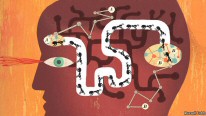
The Economist has a great article on how computer models of how bees, ants and birds operated in swarms, are being deployed as ‘artificial intelligence’ systems to solve previously unassailable problems.

To be honest, the premise of the piece is a little too grand to be plausible: the introductory paragraph announces “The search for artificial intelligence modelled on human brains has been a dismal failure. AI based on ant behaviour, though, is having some success.”

This is really not true, as artificial intelligence has actually been a great success when applied to limited and well-defined problems. The article really just explains how the study of swarm intelligence has allowed us to tackle a new set of limited and well-defined problems that were previously out of easy reach.

However, it does give some fantastic examples of how swarm behaviour, where the combination of simple individual behaviours can solve complex problems, can be applied to a range of problems:

In particular, Dr Dorigo was interested to learn that ants are good at choosing the shortest possible route between a food source and their nest. This is reminiscent of a classic computational conundrum, the travelling-salesman problem. Given a list of cities and their distances apart, the salesman must find the shortest route needed to visit each city once. As the number of cities grows, the problem gets more complicated. A computer trying to solve it will take longer and longer, and suck in more and more processing power. The reason the travelling-salesman problem is so interesting is that many other complex problems, including designing silicon chips and assembling DNA sequences, ultimately come down to a modified version of it.

Ants solve their own version using chemical signals called pheromones. When an ant finds food, she takes it back to the nest, leaving behind a pheromone trail that will attract others. The more ants that follow the trail, the stronger it becomes. The pheromones evaporate quickly, however, so once all the food has been collected, the trail soon goes cold. Moreover, this rapid evaporation means long trails are less attractive than short ones, all else being equal. Pheromones thus amplify the limited intelligence of the individual ants into something more powerful.


Link to Economist article ‘Riders on a Swarm’.
Link to Wikipedia article on swarm intelligence.

A cultured gene

Not Exactly Rocket Science covers an eye-opening study that looked at an interaction between genetics and social behaviour. So far, so normal, except that the researchers found that the gene in question, involved in sensing the hormone oxytocin, had a different effect on social behaviour in Americans and Koreans.

The study looked at how often people will ‘reach out’ to others for help and emotional support when they under stress, something that is more acceptable in the US than in Korea, and how this differs among people with different versions of the OXTR or oxytocin receptor gene.

Oxytocin has been stereotyped as a ‘hug drug’ that promotes positive social interaction but really is just a hormone involved in a range of social behaviours and has been linked to everything from bonding with babies to gloating and envy.

This new study adds to the more nuanced view of the hormone, which found a ‘reaching out’ effect only in the group of Americans, indicating that culture was affecting how the gene affected behaviour.

[Psychologist Heejung Kim] compared 134 Korean students with 140 American ones, all with comparable splits of age, gender and background. Using a questionnaire, she measured how stressed each volunteer was feeling at that point in their lives, and how they cope with stress. As with previous studies, Kim found that Koreans are less likely than Americans to turn to their social circle for support and they get less out of doing so; they are more concerned about burdening their friends and straining their relationships.

The OXTR gene exerts its influence against the background of these contrasting cultural conventions. Distressed Americans with one or more copies of the G version were more likely to seek emotional support from their friends, compared to those with two copies of the A version. But for the Koreans, the opposite was true – G carriers were less likely to look for support among their peers in times of need (although this particular trend was not statistically significant). In both cases, the G carriers were more sensitive to the social conventions of their own cultures. But the differences between these conventions led to different behaviour.

The research is a nice counter to a trend in science where studies from the American and European ‘science superpowers’ tend to overgeneralise their results (assuming that they apply universally) where research from smaller countries tends to over-localise their results.

Studies from the US and Europe tend to have titles like “An effect of gene X on ability Y”, whereas papers from smaller countries tend to say “An effect of gene X on ability Y in sample of young people from a small town in the north west of a mountainous region in continental Asia”.

Of course, each are likely to be influenced by culture and have limitations to their generalisability but this doesn’t tend to be equally recognised.
 

Link to Not Exactly Rocket Science coverage.

Falling out of love with e-dating

Marie Claire has a fascinating short interview with psychologist Mark Thompson who was apparently hired by a big name internet dating website to work on ‘scientific matchmaking’ – but recently jumped ship when he became disillusioned with the industry.

Buyer beware: the guy has just written his own book on sex and relationships, although his comments on dating sites don’t seem to directly bear on his book promotion efforts.

Regardless, it’s actually quite refreshing to hear someone give a sensible take on the limit of ‘scientific matchmaking’ as, since it has become popular, science news has regularly been bogged down by lots of poorly disguised PR fluff based on exaggerated findings or dodgy unpublished ‘statistics’.

MC: What made you leave e-dating?

MT: I hated the way we overpromised and underdelivered. Our studies showed that the odds of meeting someone online and dating him more than a month are roughly one in 10. So it’s great that all those people on the TV commercials met their spouses, but they are the exceptions, not the rule. No computer can accurately predict whom you should be with. The function of the math will make vastly more false predictions than accurate ones.

MC: But isn’t blind dating always hit or miss?

MT: Yes, but you don’t have to pay $30 a month to be set up by your friend. And you don’t go in believing that science is behind the match. There’s a different set of expectations. When diet companies show someone who lost a bunch of weight in six weeks, they have to say, “Results not typical.” I think eHarmony and other sites should do the same.

MC: Do you think online dating can be fixed?

MT: It really depends on people’s willingness to come back and tell us why each date didn’t work out so the system could get smarter. It would be like Netflix, which learns from your preferences to make better predictions for you.

Netflix for dates. Actually, it’s not such a bad idea. “If you liked this date, you might also like…” could actually come in useful you had the hots for the other person, but they weren’t so keen on you. Or just even if you’re not in it for the long-term thing perhaps.
 

Link to Marie Clarie interview with Mark Thompson (via @DrPetra).

A gut reaction to moral transgressions

The Boston Globe has an excellent article on whether ‘gut feeling’ emotions, particularly disgust, are the unrecognised basis of moral judgements and social customs.

It’s an in-depth feature article that gives a great overview of the idea that social judgements may have an emotional basis, and, more controversially, that this tendency may have developed as part of an evolved aversion to things thought likely to cause infection or disease.

Research has shown that people who are more easily disgusted by bugs are more likely to see gay marriage and abortion as wrong. Putting people in a foul-smelling room makes them stricter judges of a controversial film or of a person who doesn’t return a lost wallet. Washing their hands makes people feel less guilty about their own moral transgressions, and hypnotically priming them to feel disgust reliably induces them to see wrongdoing in utterly innocuous stories.

Today, psychologists and philosophers are piecing these findings together into a theory of disgust’s moral role and the evolutionary forces that determined it: Just as our teeth and tongue first evolved to process food, then were enlisted for complex communication, disgust first arose as an emotional response to ensure that our ancestors steered clear of rancid meat and contagion.

But over time, that response was co-opted by the social brain to help police the boundaries of acceptable behaviour. Today, some psychologists argue, we recoil at the wrong just as we do at the rancid, and when someone says that a politician’s chronic dishonesty makes her sick, she is feeling the same revulsion she might get from a brimming plate of cockroaches.

In psychology, there is lots of interest in people who have a selective problem with certain emotional reactions. ‘Psychopaths‘ are widely considered to have a selective lack of empathy, and I often wonder whether there are people who have a selective lack of disgust reactions.

There also seems to be little consideration of how disgust reactions are altered by context. For example, lots of common sexual acts seem quite unpalatable if done outside of a sexual context, despite the fact that this doesn’t change how hygienic they are.

The Boston Globe piece does a great job of covering the science in the area and it’s also worth mentioning that Edge recently posted videos and articles from a recent conference on ‘The New Science of Morality’ that has some great discussion from the leading researchers in the field.

 
Link to Boston Globe on ‘The surprising moral force of disgust’.
Link to Edge archives of the ‘The New Science of Morality’ conference.

How power corrupts

The Wall Street Journal examines how positive psychological attributes are associated with people gaining power and why these exact same attributes might be eroded once people have achieved a certain level of influence.

The piece looks at studies that show, contrary to popular belief, that sly and social devious people are less likely to be put in positions of influence by their peers but that when the psychological effect of power takes hold, these same people start to become less honest.

A few years ago, Dacher Keltner, a psychologist at the University of California, Berkeley, began interviewing freshmen at a large dorm on the Berkeley campus. He gave them free pizza and a survey, which asked them to provide their first impressions of every other student in the dorm. Mr. Keltner returned at the end of the school year with the same survey and more free pizza. According to the survey, the students at the top of the social hierarchy—they were the most “powerful” and respected—were also the most considerate and outgoing, and scored highest on measures of agreeableness and extroversion. In other words, the nice guys finished first….

Why does power lead people to flirt with interns and solicit bribes and fudge financial documents? According to psychologists, one of the main problems with authority is that it makes us less sympathetic to the concerns and emotions of others. For instance, several studies have found that people in positions of authority are more likely to rely on stereotypes and generalizations when judging other people. They also spend much less time making eye contact, at least when a person without power is talking…

[In another experiment] Participants in the high-power group considered the misreporting of travel expenses to be a significantly worse offense. However, the game of dice produced a completely contradictory result. In this instance, people in the high-power group reported, on average, a statistically improbable result, with an average dice score that was 20% above that expected by random chance. (The powerless group, in contrast, reported only slightly elevated dice results.) This strongly suggests that they were lying about their actual scores, fudging the numbers to get a few extra tickets.

It’s probably worth saying that almost all of these studies have been completed on American undergraduates and if there’s any area of human behaviour that is likely to influenced by culture, the effect of power and social influence is going to be one of the first.

For example, there are lots of well-known studies in cross-cultural differences in business ethics and sociologist Geert Hofstede’s ‘power distance’ measure (an acceptance of the inequality of power relationships that differs between countries) has been shown to alter a whole range of perceptions and behaviours.

However, I also wonder about how the ‘micro-culture’ of groups makes for a completely different environment in which power is played out.

In a recent study on treating trauma in ex-paramilitary and guerilla forces in Colombia, a group in Bogotá noted that “recruits who showed signs of weakness (a dimension of strength) or tried to evade service (loyalty) were sometimes assassinated” and that “During the instruction phase, the importance of not placing trust in others is reinforced (mistrust), as is the tenet that one must not show weakness (strength), lest they risk being killed.”

It’s not that hard to imagine how being considerate and outgoing probably doesn’t predict leadership potential in such units.

Although perhaps an extreme example, it would be interesting to see which aspects of the group (purpose? authority enforcement? motivation for membership?) would alter how power affects the individual.
 

Link to WSJ article ‘The Power Trip’ (via, and indeed, by @jonahlehrer).

I probably shouldn’t say this

I have become concerned about Miley Cyrus.

In her magnum opus, 7 Things, she discusses a recently ended relationship and highlights seven areas of dissatisfaction with her ex-partner.

From this description, I notice that her ex-beau fulfils the diagnostic criteria for ‘borderline personality disorder’ or BPD.

To quote Ms Cyrus’s concerns:

You’re vain, your games, you’re insecure
You love me, you like her
You make me laugh, you make me cry
I don’t know which side to buy
Your friends they’re jerks
And when you act like them, just know it hurts
I wanna be with the one I know
And the 7th thing I hate the most that you do
You make me love you

According to the DSM, five of nine listed features are needed for a diagnosis.

It seems this person would qualify by fulfilling the criteria for: frantic efforts to avoid real or imagined abandonment; a pattern of unstable and intense interpersonal relationships characterized by alternating between extremes of idealization and devaluation; identity disturbance: markedly and persistently unstable self-image or sense of self; impulsivity in at least two areas that are potentially self-damaging; and affective instability due to a marked reactivity of mood.

A similar diagnosis could be made using the World Health Organisation’s ICD-10 system where he or she would qualify for ’emotionally unstable personality disorder: borderline type’.

It’s probably worth noting that ‘borderline personality disorder’ is one of the more contested of the psychiatric disorders – with debates focusing on whether the diagnosis just pathologises people who are very hard to get along with.

Despite these difficulties, Ms Cyrus notes that there are seven things she likes about her ex-partner, which include “Your hair, your eyes, your old Levi’s”.

From her recent break-up I suspect these didn’t fully compensate for the pattern of relationship instability, although if she did wish to continue, both members of the couple could see a psychologist or therapist specialising in relationship difficulties.

However, research has shown that 75% of people diagnosed with BPD no longer qualify for the diagnosis after six years and so it could be worth waiting, or perhaps even thinking about dating someone slightly older to reduce the chances of repeating the same relationship pattern.

That’s very kind of you to offer Miley, but I’m waiting for Shakira.
 

Link to Miley Cyrus’s 7 Things.
Link to Wikipedia on Borderline Personality Disorder.

A neuroscientist’s psychosis

As well as publishing scientific papers about mental illness, Schizophrenia Bulletin also publishes personal accounts of psychosis and schizophrenia. I’ve just discovered this incredible 2006 article where a neuroscientist recounts her personal experience of becoming psychotic.

It’s not only vividly descriptive but wonderfully lyrical as well, written with both honesty and insight.

I was awash in a sea of irrationality. The Voices swirled around me, teaching me their Wisdom. Their Wisdom was of the Deep Meaning, and I struggled to understand. They told me their secrets and insights, piece by piece. Slowly, I was beginning to make sense of it all. It was no delusion, I knew—in contrast to what the doctors said.

“Erin, you are a scientist,” they’d begin. “You are intelligent, rational. Tell me, then, how can you believe that there are rats inside your brain? They’re just plain too big. Besides, how could they get in?”

They were right. About my being smart, I mean; I was, after all, a graduate student in the neuroscience program at the University of British Columbia. But how could they relate that rationality to the logic of the Deep Meaning? For it was due to the Deep Meaning that the rats had infiltrated my system and were inhabiting my brain. They gnawed relentlessly on my neurons, causing massive degeneration. This was particularly upsetting to me, as I depended on a sharp mind for my work in neuroscience.


Link to ‘Being Rational’ in Schizophrenia Bulletin.

Online exits

A darkly fascinating excerpt from a recent article on the cultural psychology of ‘internet suicide pacts’ in Japan, published in the academic journal Transcultural Psychiatry.

Several scholars and social commentators have drawn a connection between the rise in suicides and the negative influence of the Internet on Japanese youth. Part of the reason for a negative attitude towards Internet group suicide seems to be the fear of contagion. A historical precedent for this exists in the Edo period when a rise in shinjyū or lover’s double suicides resulted from a famous kabuki play by Chikamatsu Monzaemon. The Edo bakufu subsequently prohibited funerary services for individuals who died through shinjyū as a measure to curb the rising number of “copy-cat” suicides. In both the Edo case and the current case of Internet group suicide, there is the sense that the “form” of the suicide spreads like an infectious disease and must therefore be contained.

The expressions of the individuals who visit suicide websites and contemplate Internet group suicide suggest the possibility of alternative interpretations, however. Their comments exhibit what I consider to be a distinctive kind of loneliness and demonstrate a sense of “disconnectedness” from others and from society that signals an existential suffering that may not be reducible to a psychiatric disorder.

The article discusses the phenomenon in terms of the Japanese approach to social connectedness and how the self is seen much more in terms of relations to other people.

According to the author, anthropologist Chikako Ozawa-De Silva, the loneliness and sense of disconnectedness both prompt the suicidal act, and, likely, the seemingly counter-intuitive drive to not die alone.
 

Link to DOI entry and summary for paywalled article.

Booty calling

Someone, somewhere, can look you straight in the eye and say “I’ve got a PhD in booty call research”.

A new study just published online in the Journal of Sex Research investigates where the booty call falls on the spectrum of relationships.

Positioning the Booty-Call Relationship on the Spectrum of Relationships: Sexual but More Emotional Than One-Night Stands

Peter K. Jonason; Norman P. Li; Jessica Richardson

Journal of Sex Research

Most research on human sexuality has focused on long-term pairbonds and one-night stands. However, growing evidence suggests there are relationships that do not fit cleanly into either of those categories. One of these relationships is a “booty-call relationship.”

The purpose of this study was to describe the sexual and emotional nature of booty-call relationships by (a) examining the types of emotional and sexual acts involved in booty-call relationships and (b) comparing the frequency of those acts in booty-call relationships to one-night stands and serious long-term relationships.

In addition, the manner in which sociosexuality is associated with the commission of these acts was also examined. Demonstrative of booty-call relationships’ sexual nature was individuals’ tendency to leave after sex and infrequent handholding.

In contrast, the romantic nature of booty-call relationships was demonstrated through the frequency of acts like kissing. The results suggest the booty-call relationship is a distinct type of relationship situated between one-night stands and serious romantic relationships.

Guys, if you need a post-doc… just call.

Link to booty call study in the Journal of Sex Research (via @NoahWG).

Poker face science

The best ‘poker face’ is probably not a neutral expression, but a happy one, as it led to a greater number of opponent mistakes in a study just published in PLoS One.

The research looked at how poker playing was influenced by the emotional expression of opponents and discovered that blank and threatening expressions had little effect, but a positive expression tends to lull people into a false sense of trust and puts them off their game.

Taken from the study abstract:

This study investigates whether an opponent’s face influences players’ wagering decisions in a zero-sum game with hidden information. Participants made risky choices in a simplified poker task while being presented opponents whose faces differentially correlated with subjective impressions of trust. Surprisingly, we find that threatening face information has little influence on wagering behavior, but faces relaying positive emotional characteristics impact peoples’ decisions.

Thus, people took significantly longer and made more mistakes against emotionally positive opponents. Differences in reaction times and percent correct were greatest around the optimal decision boundary, indicating that face information is predominantly used when making decisions during medium-value gambles. Mistakes against emotionally positive opponents resulted from increased folding rates, suggesting that participants may have believed that these opponents were betting with hands of greater value than other opponents.

According to these results, the best “poker face” for bluffing may not be a neutral face, but rather a face that contains emotional correlates of trustworthiness. Moreover, it suggests that rapid impressions of an opponent play an important role in competitive games, especially when people have little or no experience with an opponent.

Link to Pubmed entry for study.
Link to full-text of study at PLoS One.