Violence and delusional pets

I’ve just read a striking article recounting cases of violence associated with delusions about household pets. Although the academic paper is locked, a copy is available online as a pdf.

The curious study was published in a 1987 edition of Behavioral Sciences and the Law and includes three extended case studies of defendants charged with aggressive crimes who had “psychotic perceptions and delusions involving their pet animals”.

Several weeks before the alleged killing, Mr. A’s cat appeared to be pregnant, so he made a nesting box for it. He said his wife disliked his cat because of its grey color. One day Mr. A dropped a jar of molasses, thereby spilling the contents. He lamented to himself that he no longer had control over picking up and holding objects. Upon seeing the cat’s strange green eyes, he concluded that voodoo was being perpetrated against him through the cat as a medium, and the cat was therefore responsible for his loss of control. It occurred to him that Cleopatra and the ancient Egyptians were surrounded by cats. He associated cats with the ancient past and evil spirits. He decided to shoot the cat in order to “break the spell” against him. However, killing his cat failed to dispel his sense of being fragmented and persecuted.

From the time he shot his cat until his wife was mortally shot several days later, Mr. A’s psychosis worsened; his thinking became more disorganized and lacking in reality adherence. Time seemed to have stopped. He perceived a striking deterioration in his wife’s appearance. “She looked so grey (her criticism of the cat), like a craven image… she looked sick.”

The author notes that the first description of this phenomenon was actually in the Edgar Allen Poe short story The Black Cat where the narrator develops delusions about his cat and eventually kills his wife.

Many thanks to Keith Laws for finding this unusual footnote in the forensic psychiatry literature.
 

pdf of article on violence and pet delusions (via @Keith_Laws)
Link to locked academic paper in journal.

Individual ecstasies: the revelatory experience conference

On March 23rd London will host a unique conference on the neuroscience, psychiatry and interpretation of revelatory visionary experiences.

It’s been put together by Quinton Deeley from our research group at the Institute of Psychiatry and brings together cognitive neuroscientists, anthropologists, religious studies scholars, psychologists and psychiatrists to discuss different ways of understanding ‘revelatory experiences’.

Mental health professionals frequently encounter people who report experiences of God or supernatural beings speaking or acting through them to reveal important truths. In some cases it is difficult to know to what extent such experiences are best explained as ‘illness’, or represent experiences which are accepted and valued within a person’s religious or cultural context. Indeed, revelatory experiences form a key part of the formation and development of major world religions through figures such as prophets, visionaries, and yogins, as well as in the religious practice of shamans and others in traditional smaller scale societies.

Why are revelatory experiences and related altered states of consciousness so common across cultures and history? What neural and other processes cause them? When should they be thought of as due to mental illness, as opposed to culturally accepted religious experience? And what value should or can be placed upon them? In this one day conference leading scholars from neuroscience, psychiatry, theology and religious studies, history and anthropology gather to present recent findings, and debate with each other and the audience about these fundamental aspects of human experience.

Rarely do we get the chance to look at visionary experiences from so many diverse angles so it should be a fascinating day.

Full details at the link below. See you there.
 

Link to details of Revelatory Experiences conference.

A culture shock for universal emotion

The Boston Globe looks at the increasing evidence against the idea that there are some universally expressed facial emotions.

The idea that some basic emotions are expressed universally and have an evolutionary basis was suggested by Darwin in his book The Expression of the Emotions in Man and Animals.

The concept was further explored by psychologist Paul Ekman who conducted cross-cultural research and reported that the expression of anger, disgust, fear, happiness, sadness and surprise were universal human characteristics.

However, these ideas have recently been challenged and a debate recently kicked off in an issue of Current Directions in Psychological Science and the Globe article does a great job of covering the fight and its fall out.

…psychologists Azim Shariff and Jessica Tracy detail accumulated evidence that they argue makes the case for an evolutionary view of emotional expressions [pdf]. Some, they say, may have evolved for a physiological purpose — widening the eyes with fright, for instance, to expand our peripheral vision. Others may have evolved as social signals. Meanwhile, in a commentary, Barrett lays out a point-by-point counterargument [pdf]. While humans evolved to express and interpret emotions, she contends, specific facial expressions are culturally learned.

Barrett believes that the universality of recognizing facial expressions is “an effect that can be easily deconstructed,” if, for instance, subjects are asked to give their own label to faces instead of choosing from a set of words. In another recent paper [pdf] in the same journal, she argues that a growing body of research shows our perception of facial expressions is highly dependent on context: People interpret facial expressions differently depending on situation, body language, familiarity with a person, and surrounding visual cues. Barrett’s own research has shown that language and vocabulary influence people’s perception of emotions. Others have found cultural differences in how people interpret the facial expressions of others — a study found that Japanese people, for instance, rely more than North Americans on the expressions of surrounding people to interpret a person’s emotional state.

A fascinating discussion that tackles a taken-for-granted psychological assumption that is now being challenged.
 

Link to Globe piece on culture and facial expression.

Group sync

The New Yorker has a fantastic article on how creativity and innovation spring from group structure and social interaction.

The piece is framed as tackling the ‘brainstorming myth’ – as the well-known idea generation method has been comprehensively but unknowingly debunked many times – but the article is really much wider and explores what sort of social interactions lead to creativity and progress.

As well as looking at lab studies it also weaves in some wonderful historical examples of how diverse environments and relationships have led to everything from Broadway success to scientific advance.

A few years ago, Isaac Kohane, a researcher at Harvard Medical School, published a study that looked at scientific research conducted by groups in an attempt to determine the effect that physical proximity had on the quality of the research. He analyzed more than thirty-five thousand peer-reviewed papers, mapping the precise location of co-authors. Then he assessed the quality of the research by counting the number of subsequent citations.

The task, Kohane says, took a “small army of undergraduates” eighteen months to complete. Once the data was amassed, the correlation became clear: when coauthors were closer together, their papers tended to be of significantly higher quality. The best research was consistently produced when scientists were working within ten metres of each other; the least cited papers tended to emerge from collaborators who were a kilometre or more apart. “If you want people to work together effectively, these findings reinforce the need to create architectures that support frequent, physical, spontaneous interactions,” Kohane says. “Even in the era of big science, when researchers spend so much time on the Internet, it’s still so important to create intimate spaces.”

A compelling, comprehensive read.
 

Link to The New Yorker piece ‘Groupthink’.

Before you hit the ground there’s a moment of bliss

I’ve just found this amazing bluesy hip hop track by George Watsky and the GetBand about having an epileptic seizure in front of a girl you’re trying to impress.

As well as being an astute observation of the experience of seizure it’s defiant, fast and funny and Watsky just rolls through the rhymes.

You don’t remember how the hell you ended up indoors
You don’t remember whether you were wetting your gym shorts
in front of Amanda, the girl you’re after
who already thought you were a fucking disaster
It’s not like a last will, it’s making me laugh
unless you get your next one while you’re taking a bath
I’m seizing the mic fast at middle school dances
I’m done being seized and I’m seizing my chances

Watsky notes on the video page that the track recounts the experience that led to him being diagnosed with juvenile epilepsy in 7th grade.

By the way, I found the video on the fantastic Art of Epilepsy blog that keeps track of epilepsy in music videos, film art and literature.
 

Link to video for Seizure Boy on YouTube.
Link to The Art of Epilepsy blog.

Online teen drama

The New Yorker nicely summarises a recent study on how teenage girls make sense of online bullying and harassment in a way that is more acceptable to their peer group.

The article is on the tragic story of a gay teen who committed suicide after being surreptitiously filmed with a lover, captured through a webcam by his room mate.

It’s well worth reading in full and during the piece it makes the point, based on a recent study by two sociologists, that many teens do not see online harassment in the same way as adults, because it doesn’t help them manage the situation within their social circle.

A recent paper by two scholars of new media—Alice Marwick, of Harvard, and Danah Boyd, of N.Y.U.—describes the tendency of teen-age girls to categorize even quite aggressive behavior as mere “drama,” in the same category as online gossip and jokes. Policy-makers and television anchors talk of “bullies” and the “bullied,” but teen-agers tend not to, in part because “teens gain little by identifying as either,” the scholars explain. “Social stigmas prevent teens from recognizing that they are weak, and few people are willing to admit that they purposefully hurt others. . . . ‘Drama’ also implies something not to be taken seriously, to be risen above, while the adult-defined ‘bullying’ connotes childishness or immaturity to teenagers.”

In the academic article the researchers note that “Understanding how “drama” operates is necessary to recognize teens’ own defenses against the realities of aggression, gossip, and bullying in networked publics. Most teens do not recognize themselves in the “bullying” rhetoric used by parents, teen advocates, and mental health professionals.”

An important point when we’re trying to communicate with teens on how to stay safe and sane online.
 

Link to New Yorker piece ‘The Story of a Suicide’.
Link to study on online teen ‘drama’.

The peak experiences of Abraham Maslow

The New Atlantis has an in-depth biographical article on psychologist Abraham Maslow – one of the founders of humanistic psychology and famous for his ‘hierarchy of needs’.

Maslow is stereotypically associated with a kind of fluffy ‘love yourself’ psychology although the man himself was quite a skeptic of the mumbo jumbo that got associated with his work.

The association is not so much because of Maslow’s focus on self-actualization, a goal where we use our psychological potential to its fullest, but because of his association with the ‘human potential movement’ and the Esalen Institute.

Esalen had some quite laudable goals but ended up being a hot tub of flaky hippy therapies. If you want an idea of what we’re talking about, you perhaps won’t be surprised to learn that nude psychotherapy movement that we covered previously on Mind Hacks originated from the same place.

Maslow quickly got pissed off with half-baked people that he attracted and but sadly the stereotype stuck.

The man himself was far more complex, however, as was his remarkably profound work, and The New Atlantis article does a great job of bringing out the depth of his life and ideas. Recommended.
 

Link to article ‘Abraham Maslow and the All-American Self’.

Gimme Shelter

The Rolling Stones launched their career in a social therapeutic club, designed to help troubled youth with communication skills. The club became legendary in rock ‘n roll history but its therapeutic roots have almost been forgotten.

Eel Pie Island is a small patch on the River Thames famous for the underground club that earned a place in 60’s history for hosting the cream of jazz bands and rock n’ roll outfits.

Less well known, is the story of how the club was created as a therapeutic environment to help troubled youth.

Its place in music history has been recounted many times over the years but its therapeutic past has almost been forgotten. At the time, it seems only to have been discussed in a 1969 article published in the International Journal of Social Psychiatry.

The club was created by junk shop owner and sociologist Arthur Chisnall. He was both a music fan and, what we would now call an outreach worker, concerned about disaffected youth.

As a music promoter, he got the cream of the American jazz and blues scene to play the club, which attracted punters like the recently formed Rolling Stones, who were just discovering the electric-tinged blues sound that they would later champion. They shortly became the house band.

But the idea was to create a club where kids could turn up and socialise, encouraged by the underground vibe, while the staff would encourage interaction and social communication skills.

The 1969 International Journal of Social Psychiatry article described the therapeutic approach:

How is therapy accomplished? Workers at the Club convey an accepting and non-judgmental attitude toward the members. A new member can come as frequently or infrequently as he wishes and thus regulate his attendance in accordance with his ability to accept the situation, so that the Club is minimally threatening to its participants. The Island’s somewhat rakish reputation surely contributes to its appeal for many youngsters…

Communication is so central to the Club’s therapeutic rationale that the only dimension on which members are classified by the staff is in terms of their being part of either a high-, medium-, or low-communication culture. Other forces making for therapy are conversations initiated by the staff, the music itself, vocational help, and identification with the Club’s founder.

In fact, Chisnall made a point of making sure people were matched with suitable friends inside the club, what we would now called ‘enhancing social support’, while putting members in contact with suitable support organisations and agencies if needed.

Musically, the club started out as a jazz club but its “somewhat rakish reputation” increasingly attracted London’s growing rock ‘n roll scene hosting The Rolling Stones, Clapton, Jeff Beck, Jimmy Page, Bowie, Rod Stewart, Pink Floyd, The Who and Pink Floyd, among a host of others.

The club, and the social therapeutic experiment, closed in ’67, apparently because Chisnall couldn’t pay repairs demanded by the police, and the building was eventually destroyed in a fire in 1971.

Nowadays, Ell Pie Island is widely recognised as the father of the 60’s rock n’ roll scene but it is hardly known that it was also the father of community intervention projects that use everything from hip hop to graffiti to get troubled kids into a positive social environment.
 

Link to locked ’69 article “A Social-Therapeutic Jazz Club in England”
Link to BBC piece on its musical legacy.
Link to book chapter on the same.

A medical study of the Haitian zombie

We hear a lot about zombies these days – in films, in music and even in philosophy – but many are unaware that in 1997 The Lancet published a medical study of three genuine Haitian zombies.

The cases studies were reported by British anthropologist Roland Littlewood and Haitian doctor Chavannes Douyon and concerned three individuals identified as zombies after they had apparently passed away.

The Haitian explanation for how zombies are created involves the distinction between different elements of the human being – including the body, the gwobon anj (the animating principle) and the ti-bon anj, which represents something akin to agency, awareness, and memory.

In line with these beliefs is the fact that awareness and agency can be split off from the human being – and can be captured and stored in a bottle by a bòkò, a type of magician and spirit worker who can be paid to send curses or help individuals achieve their aims.

This purportedly leaves a passive easily-controlled animated body – the zombie – believed to be created to provide free labour on plantations.

Anthropologist Wade Davis claimed to have identified the ingredients of the bòkò’s zombification powder which supposedly included tetrodotoxin – a naturally occurring neurotoxin found in some animals, like the pufferfish, which can cause temporary coma-like states.

I won’t say much more about the ‘neurotoxin’ theory of zombification, not least because it was brilliantly covered by science writer Mo Costandi and I couldn’t improve on his fantastic article which will tell you everything you need to know.

But on the cultural level, zombies are identified by specific characteristics – they cannot lift up their heads, have a nasal intonation, a fixed staring expression, they carry repeated purposeless actions and have limited and repetitive speech.

This means that they are easily identified by the community and Littlewood and Douyon’s study was a medical investigation into three ‘returned zombies’ – each of which was identified as a member of the family who had died and who had returned with the characteristic features.

FI was a 30-year-old woman who had died after a short illness and was buried next to the house, only for her to be recognised in a zombified state three years later by her family, wandering near to her village.

WD died at the age of 18 shortly after his “eyes turned yellow” and his body “swelled up” and was buried in a family tomb. He was identified as a zombie at a cockfight eight years after he had been buried.

MM was a young woman who also died at 18 after a short illness, but who was identified 13 years later in the town market, walking around in the characteristic detached shambling way.

While the families put their fate down to sorcery, a full medical examination was carried out by the two doctors, including the use of EEG and CT brain scans.

FI showed no neurological damage but was diagnosed with catatonic schizophrenia, a very withdrawn form of psychosis. WD was found to have brain damage, probably from lack of oxygen, and epilepsy, which could be treated with drugs. MM was found to a developmental learning disability, probably caused by her alcoholism when her mother was pregnant with her.

The fact that doctors gave medical explanations for people identified as zombies is, perhaps, no big surprise, but most interesting was that DNA and fingerprinting tests that showed that two of the zombies were cases of mistaken identity. They weren’t the dead relatives that the families thought they were.

The authors of the study noted that it is unlikely that there is a single explanation for all people identified as zombies and there was a hint that the ‘neurotoxin’ theory could explain some cases. Two types of ‘zombification’ powder from local bòkòs were tested, and, in line with Wade Davis’s ideas, tetrodotoxin was found.

But more probable is that most cases are mistaken identification of wandering mentally ill or neurologically impaired strangers by bereaved relatives.

They noted “People with a chronic schizophrenic illness, brain damage, or learning disability are not uncommonly met with wandering in Haiti, and they would be particularly likely to be identified as lacking volition and memory which are characteristics of a zombi.”

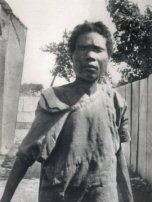
Interestingly, the first known photograph of a zombie, shown above, was taken by anthropologist Zora Neale Hurston and reproduced in her 1938 book Voodoo Gods where it notes that the subject was photographed in a psychiatric hospital, which makes more sense in light of this more recent medical examination.

It’s worth making a final point that while zombies are a particularly well-known aspect of Haitian culture, thanks to the stereotypes and Hollywood hijacking, traditional Haitian psychology and related concepts of illness are hugely fascinating topics in themselves.

If you want to lose yourself in another understanding of ourselves and the world, you could do much worse than reading the World Health Organisation’s short report ‘Culture and Mental Health in Haiti’ which is available online as a pdf. The whole report is fascinating but start at the section on ‘Religion’ from page 6 if you want to get straight to the psychology.
 

Link to locked case study in The Lancet.
Link to Mo Costandi’s “The ethnobiology of voodoo zombification”.
pdf of WHO report on ‘Culture and Mental Health in Haiti’.

A relationship through brain injury

The New York Times has an excellent article on the challenges faced by couples after one member survives brain injury.

Carers sometimes say that, after brain injury, their partner is emotionally unresponsive, emotionally unstable or that their ‘personality has changed’.

This can lead to a strain on the relationship that far outlasts the ‘obvious’ effects of the injury and, unfortunately, the problem is not widely recognised.

Mrs. Curtis, 60, was once drawn to her husband’s “sparkle,” she said. After the injury, he “flat-lined” emotionally, and he suffers from depression, anxiety and a lack of motivation.

Her husband sometimes makes erratic decisions, she added, like the time he decided to take a do-it-yourself approach to the plumbing at their home in Coralville, Iowa. “Not a good picture when I got home,” Mrs. Curtis said. “And you can yell at him like a little kid, but he didn’t know any better.”

Once a software programming analyst, Mr. Curtis, 57, has “a lot fewer interests” than he did before the injury, and he estimates he has lost 90 percent of his friends.

“It’s a new you,” he said, “and they just can’t cope with that.”

The NYT piece looks at some of these difficulties but also the work of rehabilitation psychologists Jeffrey Kreutzer and Emilie Godwin who are developing ways of helping couples in this situation.
 

Link to NYT piece on relationships after brain injury.

The importance of penis panics to cultural psychiatry

The Boston Globe has an excellent article about supposedly culture specific mental illnesses and how they are an ongoing puzzle for psychiatry’s diagnostic manual.

These conditions are called culture-bound syndromes in the DSM but they’ve always had a bit of ‘looking at the natives’ feel about them as many syndromes that are unknown in many non-Western cultures (anorexia, for example) aren’t listed as ‘culture bound’ in any way.

The Boston Globe article reminded me of a paper just published in the Journal of the History of Medicine and Allied Sciences by historian Ivan Crozier where he explores how koro – the fear that the genitals are fatally shrinking into the body – has been central to the definition of the ‘culture-bound syndrome’.

The history of how this fear, usually presenting as a penis shrinking anxiety and initially reported in South East Asia, became a prime example of a supposedly culture-specific mental illness, highlighting a bias at the centre of psychiatric definitions.

Penis shrinking fears have been reported from all over the world, but only certain cases tend to get defined as a ‘culture-specific syndrome’, because of our assumptions about what counts as the ‘real’ disorder.

Koro is a particularly good syndrome with which to play up the tension between psychiatric universalism on the one hand, and ethnic bias on the other. This disruption is clear when one surveys the varieties of koro. Some people (SE Asians) have koro because they belong to the “right” culture. Others do not, because they are suffering from another primary disorder (occidental sufferers), or because there is little in the way of psychiatric provision in their country (e.g., in Africa), and because there are other working explanations for dealing with penis panics (such as witchcraft).

Likewise, sometimes the material artifacts of masculinity are of crucial importance for explaining koro as a part of a culture (the penis clamps and piercings in Asia), but not in others (the pills western men can take when they are concerned about the penis size). These differences in treatment are not trivial. They point to an ethnocentrism in psychiatric conceptions of illness that is embodied in the DSM IV in the very place that is meant to address culture: the CBSs [culture-bound syndromes section].

Sadly, the Crozier’s academic article is locked behind a paywall (demonstrating a strange culture bound syndrome endemic in Western academia) but The Boston Globe article in free to access.
 

Link to Boston Globe article (via @DebbieNathan2)
Link to locked article on koro and culture-bound syndromes.

Advertising through avatar-manipulation

The Psychologist has an article on the surprising effect of seeing a digital avatar of yourself – as if looking at your body from the outside.

The piece covers a range of effects found in psychology studies, from increasing healthy behaviour to encouraging false memories, but the bit on deliberate avatar-manipulation for advertising caught my attention.

One such consequence is depicted in Steven Spielberg’s adaptation of the Philip K. Dick short story Minority Report. Specifically, there was a scene in which Tom Cruise’s character looked up at a billboard and encountered an advertisement using his own name. That marketing feat can certainly be recreated in virtual reality. We’ve demonstrated that if a participant sees his avatar wearing a certain brand of clothing, he is more likely to recall and prefer that brand.

In other words, if one observes his avatar as a product endorser (the ultimate form of targeted advertising), he is more likely to embrace the product. There is a fairly large literature in psychology on the ‘self-referencing’ effect, which demonstrates that messages that connect with the receiver’s identity tend to be more effective than generic messages (e.g. Rogers et al., 1977)

To explore the consequences of viewing one’s virtual doppelgänger, we ran a simple experiment using digitally manipulated photographs (Ahn & Bailenson, 2011). We used imaging software to place participants’ heads on people depicted in billboards using fictitious brands, for example holding up a soft drink with a brand label on it.

After the study, participants expressed better memory as well as a preference for the brand, even though it was obvious their faces had been placed in the advertisement. In other words, even though it was clearly a gimmick, using the digital self to promote a product is effective.

The article also notes that “Based on the findings from this study, the Silicon Valley company LinkedIn is featuring job advertisements that pull the photograph of the job applicant and place it in the job advertisement.”

Needless to say, I can’t wait for the next wave of ‘penis enlargement pill’ adverts.
 

Link to Psychologist article on doppelgänger psychology.
 

Declaration of interest: I’m an unpaid associate editor and occasional columnist for The Psychologist. My new year’s resolution is to stop buying promising-looking capsules from the internet.

The cowboy cure

The APA Monitor has an article on how ‘nervousness’ in 1800s America was treated by sending male intellectuals ‘out West’ for prolonged periods of cattle roping, hunting, roughriding and male bonding.

This, I suspect, sounded a great deal more innocent in the 1800s.

But nevertheless, this sort of intense deliberately masculine physical exercise was thought to be a genuine antidote to brain-exhausting intellectual life.

Among the men treated with the so-called “West Cure” were poet Walt Whitman, painter Thomas Eakins, novelist Owen Wister and future U.S. President Theodore Roosevelt.

Although the Rest and West cures involved wildly different therapeutic strategies, both were designed to treat the same medical condition: neurasthenia. First described by American neurologist George Beard in 1869, neurasthenia’s symptoms included depression, insomnia, anxiety and migraines, among other complaints. The malady was not just an illness, he said, but also a mark of American cultural superiority.

According to Beard, excessive nervousness was a byproduct of a highly evolved brain and nervous system. A “brain-worker” who excelled in business or the professions might experience nervous breakdowns if he overtaxed his intellect. His highly evolved wife and children could easily succumb to the same malady, particularly if they engaged in excessive study or “brain work.”

The famous neurologist Silas Weir Mitchell wrote of neuroaesthenia that, under great nervous stress, “The strong man becomes like the average woman.”

As a male psychologist who is regularly outclassed by his female colleagues I have learnt this, sadly, to be true, but not, I suspect, in the way Weir Mitchell meant.
 

Link to APA Monitor article on the cowboy cure.

Diagnostic test takedown by copyright bullies

The New England Journal of Medicine report on how the authors of key screening test, the Mini–mental state examination, have initiated a take-down of an open, validated and freely-available equivalent due to it also asking test-takers to recall three words, a string of numbers and some basic questions about the date and location.

The Mini–mental state examination, commonly known as the MMSE, is most widely used to screen for cognitive impairment and requires little specialist knowledge in neuropsychology, so it has become the evaluation of choice for most general doctors.

As most people with dementia are managed by general practitioners, the majority of people with dementia are likely to rely on the MMSE for their diagnosis.

The copyright is genuinely owned by the creators but after more than 30 years of it being freely copied without complaint the authors have initiated a copyright clampdown, now charging $1.23 per copy through a company called PAR Inc.

Disappointed by the cash-in, Harvard neurologist Tamara Fong created and validated an open-access 16-item test to do the same job which she named the Sweet 16 (word to the wise: don’t name your test something which could get you in trouble for Googling).

Among other things, the Sweet 16 contains a part where you are asked to remember three words, a part where you are asked to remember a string of numbers and a part where you are asked to say the time, date and location.

As with many cognitive tests, these short tasks are also part of the MMSE.

The Sweet 16 is now no longer available online due to a presumed copyright action by the MMSE authors and publishing company.

The New England Journal of Medicine notes:

For clinicians, the risk of infringement is real. Photocopying or downloading the MMSE probably constitutes infringement; those who publish the MMSE on a Web site or pocket card could incur more severe penalties for distribution.

Even more chilling is the “takedown” of the Sweet 16, apparently under threat of legal action from PAR (although PAR has not commented publicly). Are the creators of any new cognitive test that includes orientation questions or requires a patient to recall three items subject to action by PAR? However disputable the legal niceties, few physicians or institutions would want to have to argue their case in court.

Cashing-in on a simple and now, clinically essential, bedside test that you’ve ignored for three decades makes you seem, at best, greedy.

Taking down open-access equivalents because they also ask people the location and date and to remember a handful of words and numbers makes you a seem like a cock and a danger to clinical progress.

The NEJM again:

…there is a clear clinical benefit to using well-tested, well-validated, continually improved clinical tools in complex patient care — as demonstrated by the MMSE’s use before 2000.

In a sense, copyleft is how academic medicine has always been assumed to work. Restrictive licensing of such basic tools wastes resources, prevents standardization, and detracts from efforts to improve patient care.

This is really disgraceful behaviour and the MMSE authors and PAR Inc. should reconsider their attempts at stopping independently developed diagnostic evaluations because they include simple memory tests, but hopefully the event will lead to wider understanding for the need to have open tests for clinical assessment.
 

Link to NEJM on takedown of essential clinical tests (via @deevybee)

The mysterious nodding syndrome

New Scientist reports that Uganda has been hit by a new outbreak of the mysterious ‘nodding syndrome’ or ‘nodding disease’ that seems to be an unknown neurological condition that only affects children.

There is not much known about it but it seems to be a genuine neurological condition (and not an outbreak of ‘mass hysteria‘) that has devastated the lives of children in the region.

Affected children show a distinctive head nodding (although I would describe it more as lolling than nodding) and show delayed development neurologically and stunted growth physically. This apparently leads to malnutrition, injuries and reportedly, death.

The ‘head nodding’ is also reported to be prompted by food and eating, and by feeling cold, although these triggers are not as well verified.

If you want to see video of the symptoms the best is a seven minute piece from Global Health Frontline News although there’s also a good shorter report from Al Jazeera TV.

This brief Nature News article summarises what we know about it although from the neurological perspective there is good evidence from a preliminary studies that epilepsy and brain abnormalities are common in those with the condition.

There is some suspicion that it might be linked to infection with Onchocerca volvulus, the nematode parasite that causes river blindness, but early studies don’t show consistent results and ‘nodding syndrome’ isn’t prevalent in some other areas where the parasite is common.

One of the most mysterious aspects is why it only seems to affect children and currently there are no theories as to why.
 

Link to Nature News article on ‘nodding syndrome’.
Link to Global Health News TV report.
Link to open-access neurological study.

Ethics of the drone war

The Atlantic has a long but engrossing piece on the impact of military and intelligence robotics on the ethics of combat.

To be fair, it goes way beyond just robots and also discusses implants, digital enhancements and cybernetics. And if it sounds a bit science-fiction, it’s looking at already available or just-over-the-horizon technology and sticks with hard-nosed implications.

One more human weak-link is that robots may likely have better situational awareness, if they’re outfitted with sensors that can let them see in the dark, through walls, networked with other computers, and so on. This raises the following problem: Could a robot ever refuse a human order, if it knows better?

For instance, if a human orders a robot to shoot a target or destroy a safehouse, but it turns out that the robot identifies the target as a child or a safehouse full of noncombatants, could it refuse that order?

Does having the technical ability to collect better intelligence before we conduct a strike obligate us to do everything we can to collect that data? That is, would we be liable for not knowing things that we might have known by deploying intelligence-gathering robots?

It’s a long-read but well worth it as the piece looks at the impact of cutting-edge war technology on everything from humanitarian law to winning the hearts and minds of the local population.
 

Link to The Atlantic ‘Drone-Ethics Briefing’.