A thread of hope from a shooting

No-one knows why Steven Kazmierczak snapped. When he kicked his way into a packed lecture hall in Northern Illinois University, shooting dead five students and injuring 21 more, those who knew him expressed surprise that he was capable of such brutal violence.

He killed himself at the end of the spree, meaning his motives remain unknown, but the legacy of this tragic event may be more than just the actions of a lone unfathomable killer.

Because when Kazmierczak attacked, a team of psychologists and neuroscientists had already assessed a large group of students who had been recruited as non-affected participants for a study on the effects of victimisation, giving the researchers an unwanted opportunity to better understand how sudden trauma affects the innocent.

Since the 1980s we have recognised a trauma-specific mental disorder. Its name, ‘post-traumatic stress disorder,’ seems to suggest that trauma alone causes the condition but we have known for years that genetics play a large part in determining who does and who doesn’t develop PTSD.

Not everyone who experiences a violent attack, disaster or sexual assault will develop PTSD. In fact, the single most common outcome after tragedy is not mental illness, but recovery. That’s not to say that we wouldn’t feel shaken up or distressed after such events but most people can return to their everyday lives, perhaps changed, but unimpaired.

What we still don’t know is how people who recover are different. Why is it that some individuals develop the disorder following trauma while others appear to be relatively resilient?

We’ve known since studies on Vietnam veterans that genetics accounts for up to 30% of the difference in PTSD symptoms but researchers have been keen to find to specific genes that confer the biggest vulnerability.

Normally these types of studies look at people with and without PTSD and compare the presence of specific genes known to be linked to brain function, to see if they appear more in one group than another. Although helpful, one problem with these sorts of studies is that it is difficult to say whether the genes might directly contribute to the condition or to a general difficulty with mood or behaviour.

In scientific terms, the reason this can be a problem is because people who are already, for example, low in mood or impulsive, are on average more likely to be victimised, attacked or abused. This means it’s difficult to know exactly which genes are most important for explaining the reaction to trauma, rather than the chance of being victimised.

Psychologist Kristina Mercer was leading a study on trauma before the shooting occurred. She had been interviewing female students about their life histories and experience of trauma at Northern Illinois University, originally planning to re-interview the students over time to see which characteristics made them more likely to experience sexual assault.

Clearly motivated to make sure that something more than grief and pain would come from the event, she switched focus to better understand what made some people more likely to develop PTSD after the shooting.

The team re-interviewed the participants in the weeks following the tragedy, assessing their exposure to the violence, any PTSD symptoms present and their level of support from friends and family. A similar interview was conducted 8 to 12 months later and at the end of the study, the researchers took saliva samples to look at the DNA of each participant.

As PTSD is largely a disorder of anxiety accompanied by an intrusive reexperiencing of the event that doesn’t fade with time, the team focused on genes for the serotonin transporter system or SERT.

Serotonin is one of the brain’s neurotransmitters that provide chemical signalling between brain cells. The serotonin transporter system is responsible for removing the used serotonin from the synaptic cleft, the signalling space between the neurons, and putting it back in place, ready to be used again.

This is important because if not removed from the synaptic cleft, the serotonin will keep on signalling. In other words, the efficiency of the serotonin transport system in cleaning-up stray neurotransmitter determines the strength of the signal as much as the original message.

We know that many of the key circuits involved in anxiety are reliant on the serotonin neurotransmitter, so the research team suspected that people with genes differing in how they control transport system could be differently susceptible to anxiety and, perhaps, trauma.

In line with their thinking, the results showed a similar picture. A transport gene called rs25531 was identified as directly linked to the chance of developing PTSD after the shooting. Interestingly, a commonly mentioned serotonin gene, 5-HTTLPR, was only linked to PTSD risk when it was also present with rs25531, suggesting the importance of looking at genetic interactions and not just single genes.

Because of nature of the shootings – a lone gunman who randomly attacked anyone in range – the results are more directly tied to reaction to trauma, rather than a possible vulnerability to being victimised, meaning this is one of the few studies that gives us an unambiguous insight into the post-trauma process.

Now it’s common at this point to say that a discovery of specific genes raising the risk of mental illness should lead to a better treatment for trauma, but this is usually nothing more than a hopeful twist on the scientific details, and this case is no different.

The results suggest no direct treatment and no immediate cure because mind, brain and trauma are too complex for simple solutions.

But the study is no less important. It’s still an essential part of our understanding and provides an essential thread in a tapestry of knowledge.

And fittingly, it shows that even from the shadow of tragedy, light emerges.
 

Link to locked scientific article.
pdf of full text.

A non hysterical view of ‘cheerleader hysteria’

I’ve written an article for the Discover Magazine blog The Crux about mass hysteria and conversion disorder in light of the not-very-good-coverage given to the issue after a group of cheerleaders with unexplained neurological symptoms made the headlines.

The New York Times described the situation as a ‘nutty story’ and said hysteria is ‘not supposed to happen anymore’ which is insulting and wrong in equal measure.

Nature News described the situation as a ‘mystery US outbreak’ and managed to confusion conversion disorder with mass hysteria, generating a unfortunate mix of scaremongering and confusion.

So the article for Discover Magazine tracks the history of conversion disorder (the condition that the girls have actually been diagnosed with), what it actually means (neurological symptoms without neurological damage) and the science of how we can experience unusual effects like blindness, paralysis or, in this case, tics, without actually having a neurological disorder.

As Freud fell out of fashion, many people assumed that the concept of hysteria had gone with him, but this is not the case. Although his theory about hysteria being caused by the “unconscious repression of trauma” isn’t very popular among scientists, it’s a simple fact that patients can develop what seem like neurological disorders—such as paralysis, blindness, seizures, and tics—despite having a perfectly functioning nervous system. And despite popular claims that the condition is rare or “doesn’t happen any more,” it still commonly presents in neurological clinics. Numerous studies have found that up to one-third of patients who consult with neurologists typically have symptoms that are not fully explained by neurological damage.


Link to Discover Crux piece on ‘Cheerleader hysteria’.

Dinner table neuropsychology

Common sense or ‘folk psychology‘ is what your average person in the street uses to make sense of human behaviour. It says people have affairs because their relationship is unsatisfying, that people steal because they want money and that people give to charity because they want to help people.

Scientists tend to say ‘well, it’s a bit more complicated than that’ but talk of conditional risk factors for behaviour won’t get you very far in a dinner table discussion so ‘folk psychology’ is a culturally agreed form of psychology that is acceptable to use in everyday explanation.

I’ve just been alerted to a fascinating study in the journal Public Understanding of Science looks at how the enthusiasm for pop neuroscience has encroached on ‘folk psychology’ to create a form of ‘folk neuropsychology’ where brain-based explanations are now becoming acceptable in everyday explanation.

Talking brains: a cognitive semantic analysis of an emerging folk neuropsychology

Paul Rodriguez

Public Understanding of Science July 2006 vol. 15 no. 3 301-330

What is the influence of neuroscience on the common sense way we talk about behavior and mental experience? This article examines this influence and the diffusion of neuroscience terms as it appears in everyday language that reflects shared cultural knowledge. In an unsolicited collection of speech acts and metaphors I show that the word “brain” often substitutes for “mind” and brain states are often asserted as the cause of mental states. I also present several examples of visual depictions of the brain, including modern brain scans, which have become the basis for new cultural symbols that are identified with mental experience. Taken together, the linguistic and visual brain metaphors highlight the concrete nature of the brain in contrast to the abstract nature of the mind. This, in turn, provides a physical dimension to the way we conceptualize mental phenomena in ordinary language. Thus, a modern folk neuropsychology is emerging which provides an alternative, reductionist, and sometimes competing network of concepts for explaining the mind in comparison to conventional folk psychology.

The full study is available online as a pdf if you want the details.
 

Link to DOI entry for study (via @cfernyhough)
pdf of full text.

Filming the rabbit hole

I’ve just managed to watch a few editions of Hamilton’s Pharmacopeia, an online documentary series about mind altering drugs, and was pleasantly surprised by the quality of the programmes.

If you think hearing about other people’s drug experiences is about as interesting as watching someone staring at the wallpaper, you’ll be pleased to hear that the series also delves deeply into the cultural and scientific background of each psychoactive substance.

The presenter, Hamilton Morris, investigates a range of drug related topics – from a piece on the legendary ‘zombie powder’ of Haiti to an investigation into psychedelic truffles, to the story of an ex-Goth stripper who got involved with the biggest underground LSD laboratory ever built.

In fact, the series is so good it even attracted the attention of The New York Times who wrote an article on the offbeat investigations.

Well worth watching.
 

Link to series (autostarts video, scroll for other editions).
Link to NYT story on the series.

Moments of the self

A study just published in the Journal of Forensic Sciences gives a wonderful example of the little recognised complexity of epileptic seizures.

The article describes three cases of people who take their clothes off during seizures and discusses the potential legal consequences of engaging in such behaviour when it was caused by epilepsy.

However ‘Case 1’ has so many other aspects to it, it really highlights the diversity of epilepsy. It can cause, for example, the sensation of “needing to look for something”.

Case #1 involves a women in her mid-30s with seizures that begin with an aura of “needing to look for something” followed by prominent sensations of heat. The patient often fans herself during seizures. During a clinic visit, she was observed to have a complex partial seizure during which she reached into her blouse and pulled out her bra. In the epilepsy monitoring unit (EMU), she had two complex partial seizures, one of which involved disrobing behavior. The seizure began with her sitting in bed talking to her husband in a normal fashion. She then became unusually restless.

Ten seconds after the onset of 4-Hz right temporal activity, chewing movements began. Thirty-two seconds after the onset, she began fanning herself with her right hand. Two minutes ten seconds after the onset, the electrical activity stopped for 8 sec. It then resumed at 8 Hz in the right temporal electrodes; after another 5 sec, she unbuttoned her pajama top with both hands. Bilateral rhythm ictal electrode activity continued to gradually increase in amplitude. Fifty-five seconds after the unbuttoning, she picked up a newspaper in her right hand and fanned herself for 10 sec. The seizure then evolved into a secondary generalized tonic/clonic seizure.


Link to locked study.

Of both lovers and epilepsy

Saint Valentine is the patron saint of both lovers and epilepsy – sadly, a little known fact.

There is one wonderful example of this divine coupling, however, where the passionate saint appears alongside EEG traces on 1998 postage stamp from Italy.

This description is from a brief 2003 article from the Journal of Neurology, Neurosurgery & Psychiatry on the stamp.

EEG has been illustrated on a number of stamps. An Italian stamp of 1988 shows a pictorial representation of an EEG and St Valentine (Stanley Gibbons no. 1989, Scott no. 1743). St Valentine was the first bishop of Temi in Umbria. Some of the mythology is not entirely clear, but St Valentine was probably a physician who was martyred by the Romans on February 14, 273. He is patron saint of both lovers and epilepsy. There are also other patron saints of epilepsy.

Legend has it that St Valentine miraculously cured a young fiancee, Serapia, afflicted with a mysterious illness, thought now to be epilepsy. Sites where St Valentine was thought to have lived or visited became pilgrimage destinations for cure of the disorder. These destinations included Rome and Temi in Italy, Ruffach in France (where a hospital for epilepsy was later built), Poppel in Belgium, and Passau in Germany. Soon after Valentine’s death young lovers started making pilgrimages to Temi to be blessed by the Bishop on the 14th hour of every month for eternal love.

It’s worth noting that this recounts the traditional story of Saint Valentine although the actual history seems a little fuzzy and there were likely many historical people who have been blended into the image of the love-promoting holy man.

However, this also makes Valentine’s Day the day of both love and epilepsy, or as I like to think of it, lovers with epilepsy.
 

Link to JNNP article on epilepsy and Valentine stamp.

Individual ecstasies: the revelatory experience conference

On March 23rd London will host a unique conference on the neuroscience, psychiatry and interpretation of revelatory visionary experiences.

It’s been put together by Quinton Deeley from our research group at the Institute of Psychiatry and brings together cognitive neuroscientists, anthropologists, religious studies scholars, psychologists and psychiatrists to discuss different ways of understanding ‘revelatory experiences’.

Mental health professionals frequently encounter people who report experiences of God or supernatural beings speaking or acting through them to reveal important truths. In some cases it is difficult to know to what extent such experiences are best explained as ‘illness’, or represent experiences which are accepted and valued within a person’s religious or cultural context. Indeed, revelatory experiences form a key part of the formation and development of major world religions through figures such as prophets, visionaries, and yogins, as well as in the religious practice of shamans and others in traditional smaller scale societies.

Why are revelatory experiences and related altered states of consciousness so common across cultures and history? What neural and other processes cause them? When should they be thought of as due to mental illness, as opposed to culturally accepted religious experience? And what value should or can be placed upon them? In this one day conference leading scholars from neuroscience, psychiatry, theology and religious studies, history and anthropology gather to present recent findings, and debate with each other and the audience about these fundamental aspects of human experience.

Rarely do we get the chance to look at visionary experiences from so many diverse angles so it should be a fascinating day.

Full details at the link below. See you there.
 

Link to details of Revelatory Experiences conference.

Before you hit the ground there’s a moment of bliss

I’ve just found this amazing bluesy hip hop track by George Watsky and the GetBand about having an epileptic seizure in front of a girl you’re trying to impress.
As well as being an astute observation of the experience of seizure it’s defiant, fast and funny and Watsky just rolls through the rhymes.

You don’t remember how the hell you ended up indoors
You don’t remember whether you were wetting your gym shorts
in front of Amanda, the girl you’re after
who already thought you were a fucking disaster
It’s not like a last will, it’s making me laugh
unless you get your next one while you’re taking a bath
I’m seizing the mic fast at middle school dances
I’m done being seized and I’m seizing my chances

Watsky notes on the video page that the track recounts the experience that led to him being diagnosed with juvenile epilepsy in 7th grade.

By the way, I found the video on the fantastic Art of Epilepsy blog that keeps track of epilepsy in music videos, film art and literature.
 

Link to video for Seizure Boy on YouTube.
Link to The Art of Epilepsy blog.

A medical study of the Haitian zombie

We hear a lot about zombies these days – in films, in music and even in philosophy – but many are unaware that in 1997 The Lancet published a medical study of three genuine Haitian zombies.
The cases studies were reported by British anthropologist Roland Littlewood and Haitian doctor Chavannes Douyon and concerned three individuals identified as zombies after they had apparently passed away.

The Haitian explanation for how zombies are created involves the distinction between different elements of the human being – including the body, the gwobon anj (the animating principle) and the ti-bon anj, which represents something akin to agency, awareness, and memory.

In line with these beliefs is the fact that awareness and agency can be split off from the human being – and can be captured and stored in a bottle by a bòkò, a type of magician and spirit worker who can be paid to send curses or help individuals achieve their aims.

This purportedly leaves a passive easily-controlled animated body – the zombie – believed to be created to provide free labour on plantations.

Anthropologist Wade Davis claimed to have identified the ingredients of the bòkò’s zombification powder which supposedly included tetrodotoxin – a naturally occurring neurotoxin found in some animals, like the pufferfish, which can cause temporary coma-like states.

I won’t say much more about the ‘neurotoxin’ theory of zombification, not least because it was brilliantly covered by science writer Mo Costandi and I couldn’t improve on his fantastic article which will tell you everything you need to know.

But on the cultural level, zombies are identified by specific characteristics – they cannot lift up their heads, have a nasal intonation, a fixed staring expression, they carry repeated purposeless actions and have limited and repetitive speech.

This means that they are easily identified by the community and Littlewood and Douyon’s study was a medical investigation into three ‘returned zombies’ – each of which was identified as a member of the family who had died and who had returned with the characteristic features.

FI was a 30-year-old woman who had died after a short illness and was buried next to the house, only for her to be recognised in a zombified state three years later by her family, wandering near to her village.

WD died at the age of 18 shortly after his “eyes turned yellow” and his body “swelled up” and was buried in a family tomb. He was identified as a zombie at a cockfight eight years after he had been buried.

MM was a young woman who also died at 18 after a short illness, but who was identified 13 years later in the town market, walking around in the characteristic detached shambling way.

While the families put their fate down to sorcery, a full medical examination was carried out by the two doctors, including the use of EEG and CT brain scans.

FI showed no neurological damage but was diagnosed with catatonic schizophrenia, a very withdrawn form of psychosis. WD was found to have brain damage, probably from lack of oxygen, and epilepsy, which could be treated with drugs. MM was found to a developmental learning disability, probably caused by her alcoholism when her mother was pregnant with her.

The fact that doctors gave medical explanations for people identified as zombies is, perhaps, no big surprise, but most interesting was that DNA and fingerprinting tests that showed that two of the zombies were cases of mistaken identity. They weren’t the dead relatives that the families thought they were.

The authors of the study noted that it is unlikely that there is a single explanation for all people identified as zombies and there was a hint that the ‘neurotoxin’ theory could explain some cases. Two types of ‘zombification’ powder from local bòkòs were tested, and, in line with Wade Davis’s ideas, tetrodotoxin was found.

But more probable is that most cases are mistaken identification of wandering mentally ill or neurologically impaired strangers by bereaved relatives.

They noted “People with a chronic schizophrenic illness, brain damage, or learning disability are not uncommonly met with wandering in Haiti, and they would be particularly likely to be identified as lacking volition and memory which are characteristics of a zombi.”

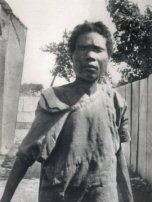
Interestingly, the first known photograph of a zombie, shown above, was taken by anthropologist Zora Neale Hurston and reproduced in her 1938 book Voodoo Gods where it notes that the subject was photographed in a psychiatric hospital, which makes more sense in light of this more recent medical examination.

It’s worth making a final point that while zombies are a particularly well-known aspect of Haitian culture, thanks to the stereotypes and Hollywood hijacking, traditional Haitian psychology and related concepts of illness are hugely fascinating topics in themselves.

If you want to lose yourself in another understanding of ourselves and the world, you could do much worse than reading the World Health Organisation’s short report ‘Culture and Mental Health in Haiti’ which is available online as a pdf. The whole report is fascinating but start at the section on ‘Religion’ from page 6 if you want to get straight to the psychology.
 

Link to locked case study in The Lancet.
Link to Mo Costandi’s “The ethnobiology of voodoo zombification”.
pdf of WHO report on ‘Culture and Mental Health in Haiti’.

A relationship through brain injury

The New York Times has an excellent article on the challenges faced by couples after one member survives brain injury.

Carers sometimes say that, after brain injury, their partner is emotionally unresponsive, emotionally unstable or that their ‘personality has changed’.

This can lead to a strain on the relationship that far outlasts the ‘obvious’ effects of the injury and, unfortunately, the problem is not widely recognised.

Mrs. Curtis, 60, was once drawn to her husband’s “sparkle,” she said. After the injury, he “flat-lined” emotionally, and he suffers from depression, anxiety and a lack of motivation.

Her husband sometimes makes erratic decisions, she added, like the time he decided to take a do-it-yourself approach to the plumbing at their home in Coralville, Iowa. “Not a good picture when I got home,” Mrs. Curtis said. “And you can yell at him like a little kid, but he didn’t know any better.”

Once a software programming analyst, Mr. Curtis, 57, has “a lot fewer interests” than he did before the injury, and he estimates he has lost 90 percent of his friends.

“It’s a new you,” he said, “and they just can’t cope with that.”

The NYT piece looks at some of these difficulties but also the work of rehabilitation psychologists Jeffrey Kreutzer and Emilie Godwin who are developing ways of helping couples in this situation.
 

Link to NYT piece on relationships after brain injury.

Christmas brain lectures available worldwide

This year’s Royal Institution Christmas Lectures were a fantastic trip through neuroscience and the brain – and you can now watch them online from anywhere in the world.
The Christmas Lectures are a traditional event where a leading scientist is chosen to present the latest developments in a fun and engaging way to a lecture theatre full of slightly posh kids.

They’re televised in the UK but they’ve now been made available online and you can watch all three streamed over the net.

And I really recommend you do as they’re fantastic.

They’re presented by psychologist Bruce Hood and they’re packed with excellent demonstrations that use everything from cutting edge neuroscience technology to stuff you could find in your house.

Enormously enjoyable whether your a fan or a profesional (or both).
 

Link to excellent online Christmas lectures.

Anesthesia as a consciousness scalpel

I’ve just written a piece for the Discover Magazine blog The Crux about a new study that used anaesthetics to “put people under” and test the limits of their conscious mind even after they’d stopped responding to the outside world.

Doing psychology experiments on people undergoing anaesthesia is not a new idea but it has always been done on people who volunteered due to undergoing genuine surgery. But this was the first study to put volunteers under anaesthesia solely as part of an experiment.

In this case, the experiment tested whether people had conscious experiences despite being unable to respond to outside stimuli – the medical definition of being unconscious.

It turns out the conscious mind keeps working way past the point where people are medically defined as unconscious.

In addition to the standard surgical way of checking unconsciousness, participants were also regularly asked to open their eyes to check when they stopped and started responding. Afterwards, each participant was questioned about their memories of the anesthesia session to see if they had conscious experiences even when seeming to be comatose. These included simple thoughts or perceptual experiences like flashes of light, to more complex experiences such as seeing or hearing the researchers, or having dream-like, out-of-body hallucinations.

It turns out that despite being rated as unresponsive and, therefore, by the current medical definition, unconscious, participants reported conscious experiences in about 60% of the sessions. This does not mean that everyone was “awake” as we normally understand it, as the extent to which the experiences reflected the reality of what was going on around the person varied, but the volunteers were clearly having conscious experiences.

Excitingly, the researchers suggest that experimental anaesthesia could be used as a ‘dimmer switch’ for the mind to find the point where no further conscious experience takes place.

Doing these studies while studying brain activity could help us understand which brain circuits are needed for the cross-over into consciousness.

More at the link below.
 

Link to ‘Anesthesia May Leave Patients Conscious—and Finally Show Consciousness in the Brain’.

Clinical test copyright bullying legally dubious

James Grimmelmann, Associate Professor at New York Law School, has written on the takedown of an open-access cognitive screening test by the copyright holders of the Mini Mental State test.

He says “any copyright claim here is legally weak and morally indefensible”.

His piece is worth reading in full not only because he sets out clearly why the legal challenge to the open-access Sweet 16 test is highly dubious but why, at least in the US jurisdiction, copyrighting any test form is simply not possible.

What about the forms? You might object that PAR isn’t trying to stop doctors from using the MMSE, only to stop others from selling the forms that go with it. Well, it turns out the Supreme Court rejected that argument, too. In Baker v. Selden, the defendant was selling a book of blank forms to be used with the plaintiff’s accounting system. The Court held that this, too, was permissible. Yes, the Court said, the plaintiff could copyright his book explaining the system of accounting, but that copyright would not extend to the forms themselves…

The same goes for blank MMSE forms. Those are “necessary incidents” to administering the MMSE, at least if you want to write down the answers in a standardized way. Indeed, to the extent that the forms are designed to total up a patient’s score, a Copyright Office regulation says flatly that they’re uncopyrightable…

In other words, not only is the copyright bullying of other tests likely to be way out of bounds, but this also extends to any copyright claim on the original test form itself.
 

Link to Grimmelmann on MMSE copyright bullying (via @deevybee)

Diagnostic test takedown by copyright bullies

The New England Journal of Medicine report on how the authors of key screening test, the Mini–mental state examination, have initiated a take-down of an open, validated and freely-available equivalent due to it also asking test-takers to recall three words, a string of numbers and some basic questions about the date and location.

The Mini–mental state examination, commonly known as the MMSE, is most widely used to screen for cognitive impairment and requires little specialist knowledge in neuropsychology, so it has become the evaluation of choice for most general doctors.

As most people with dementia are managed by general practitioners, the majority of people with dementia are likely to rely on the MMSE for their diagnosis.

The copyright is genuinely owned by the creators but after more than 30 years of it being freely copied without complaint the authors have initiated a copyright clampdown, now charging $1.23 per copy through a company called PAR Inc.

Disappointed by the cash-in, Harvard neurologist Tamara Fong created and validated an open-access 16-item test to do the same job which she named the Sweet 16 (word to the wise: don’t name your test something which could get you in trouble for Googling).

Among other things, the Sweet 16 contains a part where you are asked to remember three words, a part where you are asked to remember a string of numbers and a part where you are asked to say the time, date and location.

As with many cognitive tests, these short tasks are also part of the MMSE.

The Sweet 16 is now no longer available online due to a presumed copyright action by the MMSE authors and publishing company.

The New England Journal of Medicine notes:

For clinicians, the risk of infringement is real. Photocopying or downloading the MMSE probably constitutes infringement; those who publish the MMSE on a Web site or pocket card could incur more severe penalties for distribution.

Even more chilling is the “takedown” of the Sweet 16, apparently under threat of legal action from PAR (although PAR has not commented publicly). Are the creators of any new cognitive test that includes orientation questions or requires a patient to recall three items subject to action by PAR? However disputable the legal niceties, few physicians or institutions would want to have to argue their case in court.

Cashing-in on a simple and now, clinically essential, bedside test that you’ve ignored for three decades makes you seem, at best, greedy.

Taking down open-access equivalents because they also ask people the location and date and to remember a handful of words and numbers makes you a seem like a cock and a danger to clinical progress.

The NEJM again:

…there is a clear clinical benefit to using well-tested, well-validated, continually improved clinical tools in complex patient care — as demonstrated by the MMSE’s use before 2000.

In a sense, copyleft is how academic medicine has always been assumed to work. Restrictive licensing of such basic tools wastes resources, prevents standardization, and detracts from efforts to improve patient care.

This is really disgraceful behaviour and the MMSE authors and PAR Inc. should reconsider their attempts at stopping independently developed diagnostic evaluations because they include simple memory tests, but hopefully the event will lead to wider understanding for the need to have open tests for clinical assessment.
 

Link to NEJM on takedown of essential clinical tests (via @deevybee)