The Oscar for best neuroscience research goes to…

Both of this year’s lead Oscar winners have published scientific papers on neuroscience. We’ve covered Natalie Portman’s work on frontal lobe development in children before, but it turns out Colin Firth has also just co-authored a study on structural brain differences in people with differing political views.

An excellent post on The Neurocritic tells the intriguing story of how the study came about.

It turns out Firth was a guest editor on the daily BBC Radio 4 news programme Today and commissioned neuroscientist Geraint Rees to scan the brains of two prominent UK politicians – one staunchly liberal and the other a confirmed conservative – to look for differences.

The piece was clearly a piece of news fluff – as you can tell very little from scanning just two people – but it was motivated by a genuine interest in whether political opinions correlate with brain differences.

Rees decided to develop the idea into a more comprehensive study, using scans from 90 people, to see whether the density of the brain’s grey matter differed in line with differences in political views.

The study didn’t look at differences across the whole brain, just the anterior cingulate, a part of the frontal lobes, and the deep brain structure the amygdala.

The areas were chosen because previous studies have found that conservatives are more sensitive to fear-inducing prompts – a response linked to the amygdala, whereas liberals show more brain activity in the anterior cingulate when they have to hold back an automatic response.

It must be said that the link between these functions and brain areas is still quite preliminary, so the study is more of an exploration than a cast-iron test of a well-defined idea.

This new study, published in Current Biology and co-authored by Colin Firth, Geraint Rees along with neuroscientist Ryota Kanai and the producer of the Radio 4 programme, found distinct differences in these areas.

We found that greater liberalism was associated with increased gray matter volume in the anterior cingulate cortex, whereas greater conservatism was associated with increased volume of the right amygdala

This doesn’t tell us anything about whether conservatives or liberals are “born or made”. Despite the fact that the whole question is daft and over-simplified, a simple association between beliefs and brain areas doesn’t help us understand anything about cause and effect.

It could be that the brain areas differ because conservatives and liberals differ in how much they ‘practice’ alternative ways of thinking about the world, rather than brain structure ‘determining’ political orientation.

I really recommend the Neurocritic piece for more background, but the fact that the 2011 winners of the best actor and actress Oscar both have their name on neuroscience studies shows how fashionable the science has become.

And if, by chance, a certain Grammy award winning She Wolf would like to join the trend I would be more than willing to help out with the statistical analysis.

Yes, I realise my chat-up lines could do with a bit of work.
 

Link to The Neurocritic on Colin Firth’s neuroscience study.
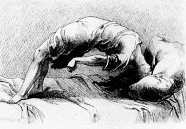
Suggesting altered states

The neuroscience of suggestion and hypnosis are helping us to understand mysterious disorders where people are blind or paralysed with no apparent medical explanation, and may be useful in investigating altered states from diverse cultures – according to an engaging discussion in the monthly JNNP podcast.

The JNNP is the slightly catchier name for The Journal of Neurology, Neurosurgery, and Psychiatry and let me ‘fess up and say the interview is with a colleague of mine, psychiatrist Quinton Deeley, who discusses our recent article on how cognitive neuroscience is providing tantalising evidence for an old theory on how hypnosis and hysteria might be linked.

Neurologist Jean-Martin Charcot believed that there may be a connection because he could simulate almost any aspect of hysteria through suggestion in susceptible individuals. Hysteria is now typically diagnosed as conversion disorder and its a condition where people appear to have neurological problems despite their nervous system seeming to be in perfect working order.

It turns out that the idea of hypnosis is a bit of a smokescreen because it depends much more on the person listening to the suggestions, than the person making the suggestions.

We now know that we all have a certain capacity to allow other people to suggest changes to our mental state. This differs between people and the ability is normally distributed, like many psychological traits, and we know its partly genetic and there’s evidence its linked to differences in brain structure.

Contrary to the popular myth, if you are experiences the effects of suggestion, your mind isn’t ‘under control’ and it’s much like watching a film. You can choose to turn away at any point but you don’t decide to be scared or amused by the movie – it just happens. Highly suggestible people can allow suggestions of paralysis, amnesia or even hallucinations.

I wrote more about the neuroscience of suggestion in an article for The Guardian but as happens with almost any piece about this area, it got given a daft headline and a ridiculous picture of someone swinging a watch. However, it remains a good place to start if you want an introduction to the science, rather than the myths.

Our recent research looked at neuroscience studies on both ‘hysteria’ and hypnosis and found there is intriguing evidence that both may involve the frontal cortex inhibiting other brain functions. For example, in cases of both ‘hysterical paralysis’ and suggested paralysis you can often see the motor areas of the brain being deactivated as the frontal cortex ramps up its activity when the person tries to move.

Quinton has a long-standing interest in anthropology and another line of this work is to look at whether this has links with ritual trance states or altered states of consciousness that happen in cultures across the world where people feel that they are making involuntary movements or feel they are not in control of their actions – even when drugs are not being used.

The discussion on the podcast touches on all these areas, and you can download the whole thing with the other half on multiple sclerosis and Vitamin D, or grab the mp3 with just the bit on suggestion, hysteria and altered states.
 

Link to March JNNP podcast page.
mp3 of just the suggestion, hysteria and altered states discussion.
Link to full scientific paper.
Link to Guardian article on the neuroscience of suggestion and hypnosis.

A symphony of synapses

Those autotune-friendly science remix chaps Symphony of Science have just released a new track called ‘Ode to the Brain!’ about our favourite piece of pinkish grey sludge.

As well as being a decent track, it is also a piece of useful recycling as it incorporates several of the dodgiest bits of popular neuroscience into a nicely mixed video.

Jill Bolte Taylor’s over-the-top spiritual brain talk for TED, Carl Sagan explaining the not very helpful idea of the reptile brain, Oliver Sack’s rare dodgy moment for TED, Bill Nye the Science Guy explaining how the brain is like a newspaper, and virtually anything said about the brain by Robert Winston.

However, it does include excerpts of a TED talk by V.S. Ramachandran, which unlike his other one about mirror neurons shaping civilization, is actually bloody brilliant.

I await the dub remix with some old skool Wilder Penfield footage to give it a retro vibe.
 

Link to Symphony of Science ‘Ode to the Brain!’

The brain behind the lion heart

I’ve just read a completely fascinating New York Times article on the neuropsychology of courage – a core human attribute that curiously seems to be largely ignored by cognitive science.

The piece looks at how we define courage, it’s relation to fear and the sometimes wonderfully innovative research that has tackled the area.

In pioneering work from 1970s and beyond, Stanley J. Rachman of the University of British Columbia and others studied the physiology and behavior of paratroopers as they prepared for their first parachute jump.

The work revealed three basic groups: the preternaturally fearless, who displayed scant signs of the racing heart, sweaty palms, spike in blood pressure and other fight-or-flight responses associated with ordinary fear, and who jumped without hesitation; the handwringers, whose powerful fear response at the critical moment kept them from jumping; and finally, the ones who reacted physiologically like the handwringers but who acted like the fearless leapers, and, down the hatch.

These last Dr. Rachman deemed courageous, defining courage as “behavioral approach in spite of the experience of fear.” By that expansive definition, courage becomes democratized and demilitarized, the property of any wallflower who manages to give the convention speech, or the math phobe who decides to take calculus.

It is also a wonderfully written article, by the way, so well worth making the leap for.
 

Link to NYT article ‘Searching for the Source of a Fountain of Courage’.

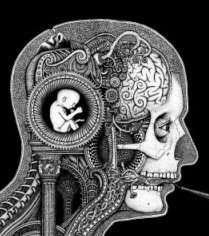
Cognitive Transtormation

The picture is detail from a stunning picture called ‘Cognitive Transformation’ by artist Ben Tolman. Click to see the full version.

I just discovered Tolman’s website earlier today where you can see his wonderfully intricate and beautifully mind-bending images.

If you want some on your wall or shelf, he also has an online store.
 

Link to Ben Tolman’s website.

Relax, it’s just a reversible drug-induced coma

The New York Times has a fantastic interview with Emery Neal Brown, a neuroscientist and doctor who is trying to understand how anaesthesia works to better understand the brain and to build better drugs.

It’s a great interview because he address several of the common beliefs and myths about anaesthesia as well as the challenge of doing neuroscience on comatose people.

Q. Is anesthesia like a coma?

A. It’s a reversible drug-induced coma, to simplify. As with a coma that’s the result of a brain injury, the patient is unconscious, insensitive to pain, cannot move or remember. However, with anesthesia, once the drugs wear off, the coma wears off.

Q. Some years ago when I had an operation, I remember the anesthesiologist trying to soothe me by saying that she was going to put me “to sleep.” Was this right?

A. No. And I wish we’d refrain from saying that to patients. It’s inaccurate. It would be better if we explained exactly what the state of general anesthesia is and why it’s needed. Patients appreciate this intellectual honesty. Moreover, anesthesiologists should never say “put you to sleep” because it is exactly the expression used when speaking about euthanizing an animal!


Link to interview in New York Times.

Capturing waves of electricity

BBC Radio 4’s Case Notes has an excellent edition on epilepsy that covers everything from the changes in consciousness during seizures to the use of brain surgery to treat the condition.
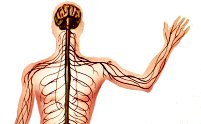
It’s a pretty straightforward discussion but you’ll likely not find a better introduction to the neurological disorder, what it does and how it’s treated. Just well explained, no nonsense and comprehensive.

Great stuff.
 

Link to epilepsy edition page with streamed audio.
mp3 of podcast.

A long view of the nervous system

BBC Radio 4’s In Our Time has a wonderful programme on the history of our knowledge about the nervous system which you can listen to streamed from the webpage or download as an mp3.
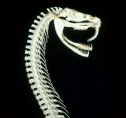
It’s a satisfyingly in-depth discussion that tracks first beliefs about the nervous system from ancient times through the renaissance into the modern age.

Scholars first described the nerves of the human body over two thousand years ago. For 1400 years it was believed that they were animated by ‘animal spirits’, mysterious powers which caused sensation and movement. In the eighteenth century scientists discovered that nerve fibres transmitted electrical impulses; it was not until the twentieth century that chemical agents – neurotransmitters – were first identified.

 
Link to episode page with streaming.
mp3 of programme.

Getting high from snakebites

The addiction journal Substance Abuse has two cases of people using snakebites to get high.
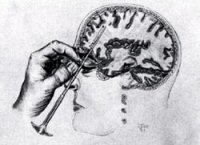
To be clear, this isn’t the mix of beer and cider, a drink also known as snakebite, but an actual venomous bite from a serpent.

Here’s the first case – and yes, alternative reality fans – he really is named ‘Mr PKD‘ in the report:

Mr. PKD, a 52-year-old married male with a history of substance use for past 34 years started taking alcohol at the age of 18 and over the years he added cannabis, benzodiazepines, and opioids over different periods of time and in varying combinations to produce the desired effects…

Two months before contacting our center, the patient learned of the intoxicating effects of snake venom through some of his friends and, as reasoned by the patient, he decided to try it in order “to experience the kick the other substances now lacked.”

With the help of the nomadic snake charmers common in India, the patient subjected himself twice to the snake bite over his left forearm over a period of 15 days. There was no local tissue injury at the site of the bite apart from the bite marks.

The patient described a feeling of dizziness and blurred vision followed by a heightened arousal and sense of well-being lasting a few hours; a more intense state of arousal than he would experience with pentazocine injections. The patient was not able to identify the snakes used but was apprehensive about the risks involved in the process.

The other case involves a man who “subjected himself to being bitten once on his left foot by a small Indian cobra (Naja naja). The patient described the experience as a blackout associated with a sense of well-being, lethargy, and sleepiness”.

Anyone even slightly tempted by this description should check out the off-putting illustrations on the Wikipedia page on snakebites. Slightly less trippy I’m sure you’ll agree.
 

Link to DOI entry for case reports.
Link to PubMed entry for case reports.

The early years of the frontal lobotomy

Neurosurgical Focus has an excellent open-access article that takes a critical look at the work of the Portuguese neurologist Egas Moniz – who controversially won the 1949 Nobel prize for inventing the frontal lobotomy.

Although the over-enthusiasm for cutting patients’ frontal lobes to try and ‘cure’ them of mental illness is now looked upon as rather an embarrassing phase in the history of medicine, the article makes clear that criticism of the technique – including Moniz’s sloppy research – has been around for as long as the operation itself.

The article is a comprehensive look at the early history of frontal lobotomy and psychosurgery in general and is a wonderful guide to the long-standing controversies surrounding the procedure.
 

Link to Neurosurgical Focus on the early history of psychosurgery.

A wave of neuroscience

The Royal Society has just released a fantastic collection of articles aimed to introduce both the cutting edge of neuroscience and the sometimes fierce debates sparked by its implications.

The collection covers everything from neural interfaces to neuroethics and the articles are written by some of the leading lights in brain research.

This publication is a collection of essays that together provide a primer of current developments in neuroscience and highlight interesting issues and questions for society and policy. The essays, authored by leading experts in neuroscience, bioethics, and science and technology policy, review the state of development of neuroscience and neurotechnology – such as neuroimaging, neuropsychopharmacology, and neural interfaces – and discuss the translation of this knowledge into useful applications. The authors discuss their own views on how developments might impact on society, examining some of the opportunities and risks, as well as the ethical questions and governance issues.

The collection has been dubbed ‘Brain Waves Module 1: Neuroscience, society and policy’ and apparently three other ‘modules’ are on their way.

You can see previews of the other modules from the links at the bottom of the collection’s web page and if they’re as good as this first one, they should make for a fantastic scientific introduction to our current understanding of the brain.
 

Link to Royal Society first Brain Waves collection.

Science and the legal high

Nature News has an article by a psychopharmacologist whose experimental drugs appeared on the street – with fatal consequences in some cases – even though he’d only mentioned them in initial scientific studies.

The scientist is David Nichols who was working on drugs chemically related to MDMA or ‘Ecstasy’. However, the compounds he created were being reported for the first time and had never been tested in humans.

A few weeks ago, a colleague sent me a link to an article in the Wall Street Journal. It described a “laboratory-adept European entrepreneur” and his chief chemist, who were mining the scientific literature to find ideas for new designer drugs — dubbed legal highs. I was particularly disturbed to see my name in the article, and that I had “been especially valuable” to their cause. I subsequently received e-mails saying I should stop my research, and that I was an embarrassment to my university.

I have never considered my research to be dangerous, and in fact hoped one day to develop medicines to help people. I have worked for nearly four decades synthesizing and studying drugs that might improve the human condition. One type is designed to alleviate the symptoms of Parkinson’s disease, and it works superbly in monkey models of the disease. That same research seeks drugs to improve memory and cognition in patients who have schizophrenia, one of the most devastating human conditions. The other substances I work on are psychedelic agents such as LSD and mescaline. It’s in that latter area of research that I have published papers about numerous molecules that probably have psychoactive properties in humans. It seems that many of these are now being manufactured and sold as ‘legal highs’.

The article that Nichols refers to is itself both worrying and fascinating as it charts how an out-of-work businessman decided to go into the legal high business and now scours the scientific literature for new compounds to try.

They end up as legal highs, presumably with the minimum of safety testing, and Nichols notes that some deaths have occurred as a result of people taking compounds he never intended to be given to humans.

I recommend both articles as they give an insight into the legal high business from two very different perspectives.
 

Link to NN ‘Legal highs: dark side of medicinal chemistry’ (via @mocost)
Link to WSJ In Quest for ‘Legal High,’ Chemists Outfox Law.

The plant of human puppets

I’ve made a radio programme with ABC Radio National’s All in the Mind about burundanga, a mysterious street drug used in South America which is widely believed to remove free will.

The name ‘burundanga’ is a popular term and doesn’t refer to a single thing, but its most commonly associated with the brugmansia plants.

They can incapacitate people in high enough doses owing to them being rich in a psychoactive chemical called scopolomine. Criminals spike unsuspecting members of the public and then rob or attack them.

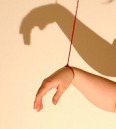
Since living in Colombia, I’ve constantly heard people tell me that the plant removes free will – the affected people just do whatever they’re told. They become, in effect, human puppets.

To me, this always sounded unlikely, and it struck me that, if this was genuinely the case, this might be a hugely important discovery in neuroscience, because free will and agency are two of the most complex and difficult to grasp areas.

But the plant also has hundreds, and probably thousands, of years of history as a psychoactive component of the religious rituals of the indigenous people of the continent, to the point where it holds a central place in some of their founding myths.

Needless to say, the chance to wander round Colombia making a documentary about a psychoactive plant at the intersection of neuroscience, myth and criminal science was too good to miss, so I hope you enjoy the journey.

It sounds wonderful, by the way, but almost entirely due to presenter and producer Natasha Mitchell’s magic at the mixing desk when making sense of my raw materal.

I’ve also written an article about the substance, including the first attempt to use it as a ‘truth drug’ after a gruesome murder, and there’s an image gallery available too.
 

Link to AITM on the plant that steals your free will with mp3 download.
Link to my article on the AITM blog.
Link to image gallery.

Ecstasy may bring the love by filtering the fear

Ecstasy users often describe the high as feeling ‘loved up’ and MDMA is frequently described as an ’empathogen’ but until now, little was known about how it genuinely affects the recognition of emotions in other people.
A new study just published in Biological Psychiatry has tested the supposed ’empathy boosting’ effects of MDMA and found that it actually makes people worse at picking up on emotions in the face – but only for threatening expressions.

The researchers, led by psychologist Gillinder Bedi, met the volunteers on three occasions, and on each one they were given either MDMA (‘ecstasy’), placebo, or methamphetamine – the latter to be able to distinguish the effect of feeling ‘wired’ from any ecstasy-specific ’empathic’ effects.

Although everyone had agreed to which drugs would be given, the study was done using ‘double-blind’ conditions, meaning neither the researchers nor the participants knew which they were getting on any particular occasion.

An hour after swallowing the pill, the volunteers were asked to rate their mood and emotional state with standardised questionnaires and to take part in experiments to assess their ability to pick up on others’ emotions.

Two tests involved picking up emotion from the face, one from just the eyes, one from whole facial expressions, and another required participants to do the same for voices.

The volunteers reported that they felt significantly more ‘loving’, ‘friendly’ and ‘playful’ on MDMA, although paradoxically on a higher dose of the drug, it also increased feelings of loneliness.

Methamphetamine also boosted some of these feelings, although to a lesser extent, suggesting that part of the ‘loved up’ feeling is probably down to similar amphetamine-like effects in both drugs (MDMA is often described as a ‘substituted amphetamine’ because of its similar molecular structure).

Strikingly, the emotion tests showed no improvement in the ability to pick up on emotion after taking MDMA, and in fact, people were worse – but only at picking up on fearful, threatening emotions in facial expressions.

This suggests that ecstasy might be causing some of the famous feeling of ‘social connectedness’ by tuning out negative signals from other people faces, rather than boosting our ability to pick up on positive emotions.

Although only a first study, it indicates that the ’empathogen’ label is probably misleading because the drug actually makes us worse at reading others’ emotions.

But because we tend to associate ’empathy’ with positive social interactions, the effects of the drug have been linked to being empathic in popular culture.
 

Link to PubMed entry for study.
Link to DOI entry for study.

Air on a G thing

Seed Magazine has an absolutely wonderful article on the neuroscience of musical improvisation that looks at how skilled musicians from the jazz greats to the classical masters take us on unplanned melodic journeys.

It’s a brilliantly written piece, a compelling fusion of music and science journalism, that skilfully captures the emerging scientific interest in musical spontaneity.

Aaron Berkowitz, a cognitive ethnomusicologist, who took on the task of demystifying improvisation as the focus of his dissertation work at Harvard, has a theory. He likens the process of learning to improvise to that of learning a second language. Initially, he says, it’s all about memorizing vocabulary words, useful phrases and verb conjugation tables. Your first day, you might learn to say: How are you? I’m fine. “These are like the baby steps beginning improvisers take. They learn the structure of the blues. They learn basic chords and get the form down,” said Berkowitz. But they’re still very limited in what they can do…

The trajectory of acquiring a language, according to Berkowitz, where you begin with learned phrases, achieve fluency, and are eventually able to create poetry mirrors perfectly the process of learning to improvise. In the same way a language student learns words, phrases and grammatical structure so that later he can recombine them to best communicate his thoughts, a musician collects and commits to memory patterns of notes, chords and progressions, which he can later draw from to express his musical ideas.

After reading the piece I wondered if the brain handles musical improvisation in a similar way to how it manages freestyle rap, as they both require unplanned spontaneity but within the restrictions of ‘what works’.

Sadly, so far, science has completely neglected the neural basis of hip-hop, but we live in hope homey.
 

UPDATE: Mind Hacks posse in full effect. In the comments NT mentioned that neuroscientist Charles Limb has got a freestyle rap study in progress and neuromusic noted that DJ and neuroscientist @djenygma tweeted earlier today he was “Sitting in on #fMRI experiment using local rappers in a freestyle-vs-memorized processing task”.


Link to excellent article on musical improvisation.

The brain isn’t going to take it lying down

The brain may manage anger differently depending on whether we’re lying down or sitting up, according to a study published in Psychological Science that may also have worrying implications for how we are trying to understand brain function.

Anger experiments that have measured electrical signals from the brain (using EEG) or that have altered neural activity with magnetic pulses (using TMS) have found that the left frontal lobe is more active than the right, but studies using fMRI functional brain scans have found no differences.

Psychologists Eddie Harmon-Jones and Carly Peterson wondered whether the brain might be working differently in EEG and TMS experiments because the participant is usually sitting upright, while in fMRI, the person is usually lying flat on their back.

If this seems like a trivial distinction as far as emotion is concerned, it actually has some sound theory behind it. A field of study called ‘embodied cognition‘ has found lots of curious interactions between how the mind and brain manage our responses depending on the possibilities for action.

For example, we perceive distances as shorter when we have a tool in our hand and intend to use it, and wearing a heavy backpack causes hills to appear steeper.

Anger is a prime example where we feel motivated to ‘do something’. In the sitting position we’re much more ready to approach whatever’s annoying us than when we’re flat on our backs, and the researchers wondered whether these body positions were interacting with our motivations to change the brain’s response.

So Harmon-Jones and Peterson asked 46 participants to write a short essay before wiring them up to an EEG that measured the electrical activity across the brain.

The participants then put on headphones and listened as someone else read their essay and rated the author on personal characteristics, such as intelligence and competence. Some participants listened while lying down, others while in the sitting position.

What they didn’t know was that the ‘raters’ were actually pre-recorded audio, and while some heard a benign commentary on their work, other participants heard the other ‘person’ slagging-off them off and harshly rating the participant and their personality.

In line with the ‘ready to respond’ theory, when the participants were angry and sitting up, the left frontal lobe was much more active than the right – but when angry and lying down, there was no difference.

First off, the findings provide evidence that body position interacts with how the brain processes emotion, perhaps depending on which actions are immediately possible.

But more importantly, the experiment might also indicate that different neuroscience techniques may be throwing up varying results because of the differing body positions needed to take the tests.

Although this is only an initial study, it could be a major spanner in the works for cognitive science which often assumes that clumping together evidence from a whole range of techniques gives a better idea of what’s going on.
 

pdf of full-text of study.
Link to PubMed entry for study.
Link to DOI entry for study.