The McDonaldization of the Mind

Last week’s ABC Radio National All in the Mind had a fantastic interview with journalist Ethan Watters whose book ‘Crazy Like Us: The Globalization of the American Psyche’ has been making waves with its criticism of the cultural dominance of American psychiatry.


I’ve promised a long overdue review of the book to The Psychologist so I won’t go into too many details here, except to say that although the book is not without its flaws, it remains an important take on how the DSM diagnostic manual is becoming a lens through which both professionals, and more importantly, regular folks, are interpreting their own distress.

This is not just a case of people using foreign terms to label mental disorder. The effect is much more profound. Our knowledge of illness, both physical and mental, affects how we experience distress.

Watters’ book investigates how ideas taken from Western society about the nature of mental illnesses are affecting other cultures, in terms of disease mongering by drug companies, inappropriate treatments being foisted on people in times of distress and local concerns being ignored because they “don’t fit the picture”.

These criticisms are not new, but Watters drags them from the depths of the anthropological research and vividly illustrates them by weaving them into personal and social stories from across the world.

The All in the Mind interview summarises and explores some of the most important and well-done pieces in the book and is definitely worth a listen.
 

Link to All in the Mind interview with Ethan Watters.

2010-09-03 Spike activity

Quick links from the past week in mind and brain news:

More on our psychedelic drugs and psychiatry series: Nature’s The Great Beyond blog has an introduction to the series and The Guardian has a great overview from our very own Mo Costandi.

Time magazine asks why do heavy drinkers outlive non-drinkers? Your mileage may vary.

How good are we at estimating other people’s drunkenness? asks The BPS Research Digest.

IEEE Spectrum magazine has a good piece on attempts by commercial companies to get still-not-very-good ‘fMRI lie detection’ accepted into court.

There’s an excellent analysis of the recent study that found only 23% of people are without ‘personality disorder symptoms’ over at Neuroskeptic.

Wired Science covers research on how behaviour change spreads more rapidly through online networks when they’re more densely connected than real-life social networks.

Fake patients and simulated symptoms are discussed in an engaging analysis of the (in)famous Rosenhan experiment at Frontier Psychiatrist.

BBC Radio 4 has a documentary on on the ‘Pont St Esprit affair’ where a French town went strange for a few days with the CIA suspected of spiking the townspeople with LSD. More commentary on the documentary maker’s blog here.

There’s an excellent essay on taking the science vs post-modernism debate beyond extremism over at Fistful of Science.

Wired Dangerroom notes that the head of the US Military in Afghanistan has been making snide comments probably referencing the Human Terrain System – the military’s crack team of ‘weaponized anthropologists’.

Zipf’s law, the long-tail and the pattern of common and lesser-spotted words in language are tackled over at Child’s Play.

The New York Times has an extensive article asking can preschoolers be depressed?

You know those visual illusions that are two pictures at once but you seem to be only able to see one at a time and ‘flip’ between them? New Scientist discusses how the brain makes the switch.

Spoonful of Medicine briefly covers a study finding that regular cannabis smokers are more sensitive to pain than non-smokers.

My brief piece on strange objects that get stuck in MRI scanners is up at Wired UK: “An MRI machine disarmed an off-duty US police officer… The gun was pulled by the magnetic force, jamming her hand between the pistol and the machine and trapping the officer.”

Frontal Cortex covers the identifiable victim bias, where we’re more likely to have sympathy with individual victims than groups, in light of the trapped miners in Chile.

People who do ‘mental work-outs’ seem to get Alzheimer’s later than other people, but they can be hit harder when it strikes, according to new research covered by Science News.

Neuroanthropology has one of its last posts on its old site on how the Sapir-Whorf hypothesis (words shape our thoughts) gets inappropriately bashed as ‘dead science’. You know the blog has moved right?

There’s a piece on Bronze Age brain surgery over at New Scientist.

Advances in the History of Psychology blog is back after its summer recess.

All hail the launch of Philosophy TV. Looks great.

The Beast File has a brilliant video giving a visual guide to the history of MDMA / Ecstasy.

Experimental philosophy is discussed by Joshua Knobe, one of the field’s founders, over at Philosophy Bites.

The Human Edge over at National Public Radio asks if believing in God is evolutionarily advantageous.

An Opthamologist on Mars

Oliver Sacks is interviewed on NeuroTribes where he talks about his forthcoming book and his own experience of spectacular hallucinations that occurred after he developed a tumour behind his retina.

NeuroTribes is a new blog by ace science writer and Wired veteran Steve Silberman. It is part of the new PLoS science blog network and in the inaugural post Silberman has scooped a fascinating interview with the great neurologist and raconteur himself.

Here he discusses how his hallucinations, caused by the brain trying to ‘fill in’ or ‘guess’ what should be in the damaged part of the retina, are affected by smoking pot.

I also had — and still have — almost continuous hallucinations of a low order: geometric things, especially broken letters, some of them like English letters, some like Hebrew letters, some like Greek, some runes, and some a bit like numbers. They tend to have straight lines rather than curves, but they rarely form actual words. This is not something I said in the book, but if I smoke a little pot, they sometimes become words. And they tend to be in black and white — but when I smoke a little pot, they’re in color.

Silberman: That’s wonderful. What do the words say?

Sacks: Short English words of no particular significance like “may,” or pseudo-words, like “ont.” Also, since my back surgery last year, I’ve been on nortriptyline, which is supposed to block the gating mechanism for pain in the spinal cord. I only take a small dose, because it gives me an intensely dry mouth. But even the small dose has a striking effect of enhancing dreams and involuntary imagery, and upgrading my hallucinations from black-and-white to color, and from geometric patterns to faces and landscapes.

The interview is both playful and profound and makes a great teaser for his forthcoming book, which apparently, is due out in October.
 

Link to Oliver Sacks interview on NeuroTribes.

The class of 77%

A study just published in the British Journal of Psychiatry has found that only 23% of the population are without symptoms of personality disorder.

If you’re not familiar with it, personality disorder is a somewhat controversial diagnosis which essentially classifies people who we might otherwise called ‘extremely difficult’ but to the point where they cause themselves significant life problems.

This new survey used the standard diagnostic criteria, but instead of giving people a “you’ve got it or you haven’t” all-or-nothing diagnosis (given when a certain threshold of symptoms are reached) the researchers totalled up the symptoms to make a sliding scale.

The study found that even those who wouldn’t qualify for a diagnosis but still had some symptoms were more likely to have had a history of running away from home, police contacts, homelessness and sexual abuse and were less likely to be employed.

Of course, what the study could be describing is simply that people who have had a rough time come out the worst for wear.

The question is not so much whether this is a high or low figure, but at what point psychiatry and mental health services should offer assistance.

For many years psychiatry has been suffering from ‘mission creep’ where things previously thought to be unhelpful but normal (e.g. low mood after a divorce, shyness) have become classified and promoted as mental illnesses with the accompanying pharmacological treatment.

At what point we decide that something is a mental illness has become one of the central psychological and cultural questions of the 21st century.
 

Link to summary of study at the British Journal of Psychiatry.

Visions of a psychedelic future

This post is part of a Nature Blog Focus on hallucinogenic drugs in medicine and mental health, inspired by a recent Nature Reviews Neuroscience paper ‘The neurobiology of psychedelic drugs: implications for the treatment of mood disorders’ by Franz Vollenweider and Michael Kometer.

This article will be available, open-access, until September 23. For more information on this Blog Focus please visit the Table of Contents.


In a hut, in a forest, in the mountains of Colombia, I am puking into a bucket. I close my eyes and every time my body convulses I see ripples in a lattice of multi-coloured hexagons that flows out to the edges of the universe.

Two hours earlier, I had swallowed a muddy brown brew known as yagé, famous for its hallucinogenic effects, its foul taste, and the accompanying waves of nausea that eventually lead to uncontrollable vomiting.

Yagé has been used for hundreds, if not thousands, of years – not as a recreational drug – but as a psychological and spiritual aid that holds a central place in indigenous religion.

Romualdo, a displaced Witoto shaman who led the ceremony, was convinced of its mental health benefits and had confidentially assured me that, after the puking, I would remain in a state of heightened conciencia where I could “ask questions, solve difficulties and communicate with spirits.” “Come with a question,” he told me, “you’ll feel better afterwards.”

The main active ingredient in yagé, known outside Colombia as ayahuasca, is dimethyltryptamine or DMT, a hallucinogenic drug from the tryptamine family that works – like LSD and psilocybin – largely through its effect on serotonin receptors.

Psychedelic drugs, mental health and brain science have traditionally made for a heated combination, but a recent scientific article, published in September’s Nature Reviews Neuroscience, has attempted to more coolly assess the growing research on the potential of hallucinogens to treat depression and anxiety.

Lab studies and medical trials form a small but robust body of knowledge that reveal reliable benefits and promising future avenues. The dissociative anaesthetic ketamine has been found to lift mood – even in cases of severe of depression – while psilocybin, present across the world in mushrooms and fungi, has been shown to have anxiety reducing properties.

But while no serious bad reactions have happened during the trials, the full range of potential risks is still not fully understood, meaning the treatments remain firmly in the lab.

The caution is warranted. Psychiatrists are more than aware of hospital admissions triggered by the same drugs taken outside of controlled conditions, and so the compounds will remain as experimental treatments until the risks are fully known.

Nevertheless, the science is now developed enough for new ideas to be generated based solely on a neurobiological understanding of the drugs.

The authors of this latest review, neuroscientists Franz Vollenweider and Michael Kometer, note that success with psychedelics that largely work on the glutamate system – such as ketamine and PCP – may be due to the fact that these circuits regulate long-term brain changes. This suggests a potential path to extending the mood lifting effects of these drugs beyond the initial ‘trip’.

One key advance would be an understanding of how the chemical structure of a particular hallucinogen relates to the experience it creates, allowing researchers a neurological toolkit that could be used to trigger the beneficial effects while toning down the extreme unreality that some people find unpleasant.

Yet, it is still not clear whether such benefits are separable from the psychedelic effects and it may be that the ‘active ingredient’ lies somewhere between an altered state of consciousness and a reflective mind, as some studies on drug-assisted psychotherapy suggest.

It is also clear that a great number of ritual hallucinogens, widely used by indigenous people for their psychological benefits, have yet to be explored.

The preliminary studies on users of yagé indicate that it has potential benefits for mental health, although it remains largely untouched by more rigorous tests.

As my own investigation ends, I leave the isolated hut feeling exhausted and disoriented as the clear morning light refracts through my thoughts and casts bright trickling colours into unfilled spaces.

As Romualdo promised, I feel better, elated even, but the questions I brought remain unanswered and have similarly refracted into a thousand intricate doubts.
 

Link to Nature Blog Focus on psychedelics Table of Contents.
Link to Nature Reviews Neuroscience article.

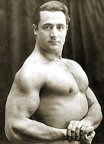
I, Jacques Derrida, Used To Be A 97lb Weakling!

Anthropologist Pascal Boyer has written a wonderfully contrarian essay for Cognition and Culture criticising the “crashingly banal assumptions” behind supposedly radical theories of human nature.

While Boyer is clearly making mischief, his main criticism of the post-modernist idea that human nature is entirely socially constructed is spot on.

While there are clear social influences in how we understand ourselves, the extreme relativism of saying everything is ‘defined by culture’ tends to evaporate when examined too closely.

But on closer inspection, it generally turns out that the initial, amazing, challenging statements in fact disguised crashingly banal assumptions. Suppose you point out to your academic ideologue that, for instance, if maleness and manhood really are completely unrelated… then it is puzzling that an extraordinarily vast number of [socially constructed] “men” happen to be [chromosomal] “males”, and that such a coincidence is spooky. You will probably be told that you did not quite understand the original statement. What it meant was that the meaning of maleness could not be derived from possession of the Y chromosome…

Or if you point out that some forms of insanity occur in many cultures at the same rates, that they trigger highly similar behaviors, are associated with the same genetic predispositions and correlate with similar neuro-functional features, you will be told that you did not understand. What was meant was that the cultural construal of madness was not derived directly from brain dysfunction…

At which point, you might be forgiven to think something like “so that was what all the fuss was about?” and you would be right of course. When push comes to shove, the flamboyant, earth-shattering, romantic, swash-and-buckle assault on our entrenched certainties seems to be, well, a bit of a damp squib.


Link to Boyer’s essay ‘There is no such thing as sexual intercourse’.

Language as a thought magnet

Today’s New York Times has a wonderful feature article on how language shapes our perception of the world.

The infamous Sapir-Whorf hypothesis claimed that our understanding was limited by language and has long been used as an example of a ‘dead theory’ but new evidence is suggesting that certain aspects of a language can indeed influence how we think

The NYT piece is a wonderfully engaging look at the studies which have shown how our perceptions are biased by language and is written by linguist Guy Deutscher.

Some 50 years ago, the renowned linguist Roman Jakobson pointed out a crucial fact about differences between languages in a pithy maxim: “Languages differ essentially in what they must convey and not in what they may convey.” This maxim offers us the key to unlocking the real force of the mother tongue: if different languages influence our minds in different ways, this is not because of what our language allows us to think but rather because of what it habitually obliges us to think about….

In recent years, various experiments have shown that grammatical genders can shape the feelings and associations of speakers toward objects around them. In the 1990s, for example, psychologists compared associations between speakers of German and Spanish. There are many inanimate nouns whose genders in the two languages are reversed. A German bridge is feminine (die Brücke), for instance, but el puente is masculine in Spanish; and the same goes for clocks, apartments, forks, newspapers, pockets, shoulders, stamps, tickets, violins, the sun, the world and love.

On the other hand, an apple is masculine for Germans but feminine in Spanish, and so are chairs, brooms, butterflies, keys, mountains, stars, tables, wars, rain and garbage. When speakers were asked to grade various objects on a range of characteristics, Spanish speakers deemed bridges, clocks and violins to have more “manly properties” like strength, but Germans tended to think of them as more slender or elegant. With objects like mountains or chairs, which are “he” in German but “she” in Spanish, the effect was reversed.


Link to ‘Does Your Language Shape How You Think?’

2010-08-27 Spike activity

Quick links from the past week in mind and brain news:

The New York Times covers the latest in the saga of whether there is a virus associated with chronic fatigue syndrome.

A lovely example of metaphorical priming over at the BPS Research Digest: feeling clean makes us harsher moral judges.

National Geographic discusses the intriguing question of why royal families have traditionally not been subject to the incest taboo.

Considering the news that the trapped Chilean miners are being sent antidepressants, Frontier Psychiatrist asks so what is the appropriate mental state for a trapped miner anyway?

Wired Science covers an important new criticism of the role of ‘kin selection’ in evolution – the idea that traits can evolve which may not promote personal survival but boost the chances of close relatives reproducing.

Body awareness illusions. Adapted for the pub. An excellent post over at Neurophilosophy. Please note: you need to be able to feel your body for them to work.

Science News reports on new research on how the 5,000 year-old body of ‘Ötzi The Iceman’ was buried and how he died in the first place.

Where does the meaning in words come from? Child’s Play discusses the relationship between words and the world and how they acquire their significance.

New Scientist discusses new research on the mechanics of hanging to try and understand what exactly kills people who are hanged – we still don’t know for sure.

Why are small towns more likely to produce sports stars than big cities? Frontal Cortex has some fascinating coverage of some counter-intuitive research.

The New York Times are in the midst of a science meltdown with their dire pick-two-studies-at-random-and-free-associate technology and the brain series. Want to join the fun? Nothing’s Shocking has a guide to writing your own.

There’s a discussion in meshing the evolutionary psychology of relationships and jealousy in homosexual couples over at Bering in Mind.

Not Exactly Rocket Science looks at when working as a team works out better than working individually. The key, it seems, is effective communication.

The mere presence of women seems to bring health benefits to men, according to research covered by The Economist. In which case, male physicists in danger, male psychologists virtually immortal.

Neuroskeptic covers an important study on the interaction of environment and genetic risk for psychosis. If it sounds technical, read carefully as it challenges many assumptions about schizophrenia ‘being genetic’.

Children seem to have a stereotyped view of robots, according to a new study of children’s drawings covered by New Scientist.

Neuroanthropology has a good response to the latest upsurge in ‘meme theory’ silliness. Ideas do not self-replicate, as any pub bore will tell you.

There’s an excellent piece on the pitfalls of labelling patients by diagnosis or by joky names over at The New York Times. If you read only one piece on clinical work this week, make it this one.

Wired Danger Room covers the news that while the US military have rejected the use of a ‘pain ray‘, it’s now been adopted by the US prison system.

A new paper in Frontiers in Computational Neuroscience covers the very early days of computational neuroscience. Wonderfully geeky with great photo.

The Wall Street Journal Blog says city traders are giving up cocaine for pot and pills. Damn that economic downturn.

As well as making you talk rubbish, amphetamine puts a strain on blood vessels in the body, according to research covered by Science News.

In the News covers a truly shocking report about the extent of sexual abuse in US prisons.

There’s a fantastic interview with Oliver Sacks on prosopagnosia (‘face blindness’) over at the New Yorker Podcast. He writes a locked article in this month’s edition.

The Wall Street Journal discusses how speaking in another language can alter our view of the world.

The recent upsurge in interest in the medical uses of psychedelic drugs is discussed over at Addiction Inbox.

Wiring the Brain has a great discussion of the synaesthesia-like ‘coloured hearing’ in William’s Syndrome. The blog is just getting better and better by the way.

Another study finds that oxytocin is not a universal ‘trust drug’ and is covered by New Scientist.

The Washington Post reports on research finding that drinking a glass of water before meals can promote weight loss. BigPharma to sue for water patent shortly.

Why are drug trials in Alzheimer’s disease failing? The Lancet has an editorial discussing the problem.

Solitude conjures imaginary companions

I’ve just read a fantastic study on how loneliness, or even a brief reminder of it, leads us to see human-like qualities in objects around us, believe more strongly in the reality of God and supernatural beings, and even perceive pets to be more human-like.

The research, led by psychologist Nicholas Epley, is wonderfully conceived and speaks to how we seem to psychologically ‘reach out’ when we’re lonely to the point of wishful thinking.

But as well as being an interesting study, the scientific paper is wonderfully written. It’s quite poetic in places and I particularly liked the first paragraph of the ‘Discussion’ section – where scientists discuss the significance of the findings.

Needless to say, academic research papers are not usually quite so lyrical.

And God stepped out on space,
And he looked around and said:
I’m lonely—
I’ll make me a world . . . (Johnson, 1927/1990, p. 17)

Physicists have the scientific tools to suggest that Johnson may have gotten his poem profoundly wrong, but psychologists have the scientific tools to suggest that Johnson may have gotten his poem profoundly backward. In three studies, people who were chronically disconnected from others (Study 1) or momentarily led to think about disconnection (Studies 2 and 3) appeared to create humanlike agents in their environment— from gadgets to pets to supernatural agents such as God. These studies go beyond simply demonstrating that social disconnection leads people to seek companionship from nonhuman agents, showing that social disconnection can alter the way these agents are conceptualized or represented. Lonely people cannot make themselves a world, of course, but they can make themselves a mindful gadget, a thoughtful pet, or a god to populate that world.


Link to PubMed entry for study.
pdf of full text of the scientific paper.

Delusions of pregnancy, in a man

A 1999 case report describes a 29-year-old man who developed the delusional belief that he was pregnant.

Mr. R., a 29-year-old married man from a semi-urban background with 8 years’ education, was brought by his wife to the outpatient department at the National Institute of Mental Health and Neurosciences, Bangalore, India, with a 2-month history of suspicious and assaultive behaviour. He would look at the sky and say that everyone including God was trying to assault him. He also claimed that there was a baby in his abdomen.

He believed that he had Jesus in his abdomen to start with, but later reported that Jesus had flown away through his mouth, but was replaced by a human baby. He was sure that the child was 40 days old and it was the same child his wife was having. He could also feel the movements of the child and was sure that it was growing. However, he did not have any other symptoms of pregnancy. He was withdrawn and his food intake was inadequate.

Although the case reported here wasn’t the first case of male delusional pregnancy ever described (though, admittedly, they are rare) this one was of particular interest because, although the gentleman recovered, he later developed another brief psychosis where the delusion returned.

For the second time, he believed himself to be carrying a child. Curiously, both incidents occurred when his wife was genuinely pregnant.

Although there is no clear explanation for why it occurred in this particular case, there is, however, evidence that men show hormone changes when their female partners are pregnant, possibly linked to a well-known syndrome called ‘Couvade syndrome‘ where men can show sympathetic signs of pregnancy.

We’ve discussed delusions of pregnancy before although they are, unsurprisingly, much more common in women.
 

Link to PubMed entry for case report.

You are in a maze of twisty little proteins, all alike

Time magazine has a brief but somewhat intricate article describing the relationship between the synapse and the APC protein.

It has a spectacularly complex and labyrinthine metaphor that doesn’t really help me understand what’s being discussed but is, nonetheless, a joy to read.

Findings by neuroscientists in various Tufts graduate programs—published in the August 18 issue of The Journal of Neuroscience—show a link between the APC protein and the development, or lack thereof, of something called a synapse.

If a synapse were a traffic intersection, the APC protein would be those annoying bridge tolls that are later used to develop roadways. Only instead of freight and passengers, the vehicles on this highway would carry information between neurons. A lack of tax collection will inhibit the development of the intersection—think potholes and faded, unreadable road signs—so that vehicles won’t be able to cross in the intended and most efficient way. In the same way, APC impairment blocks the synapse maturation that is crucial to the mental processes of learning and using memory.


Link to brief Time article (via @stevesilberman).

Infamous last words

The September issue of The Psychologist is completely open-access and has a fantastic article on the last words of executed prisoners.

The piece is by media analyst Janelle Ward who has been studying the final statements of prisoners executed by the US state of Texas, who list death row departees and their final words on a handy webpage (as I remember it used to list their last meal as well, but that information has since been removed).

Discourse analysis often focus on the ‘work’ being done by speech and statements, particularly with regards to impression management – that is, how we attempt to influence other people’s ideas about ourselves.

This is usually thought of in terms of future advantage, but in these cases, the future is only a couple of minutes at most, so this raises the question of what motivations might be behind any last words.

At the time we conducted the study we were only aware of one similar piece of work on the topic. Heflik (2005) published a content analysis of 237 last statements (between 1997 and 2005, also from the Texas death row) and found six themes: forgiveness, claims of innocence, silence, love/appreciation, activism, and afterlife belief. We expanded on Heflik’s method and examined 283 statements between 1982 and 2006 and searched for strategies of self-presentation (that is, opportunities to represent one’s identity).

We reported a textual framework that demonstrated a consistent pattern in the statements. Prisoners began by addressing relevant relationships and moved to expressing internal feelings. Next, they defined the situation (e.g. accepting or denying responsibility) and then dealt with the situation (e.g. through self-comfort, forgiveness or accusations). They ended with a short statement of closure.

We found that final statements are primarily used to construct a position self-image, stemming from an apparent desire to gain control over a powerless situation. The structure we uncovered works for both those expressing a discourse of acceptance (‘I am guilty’) or a discourse of denial (‘I am innocent’).

This issue of The Psychologist also contains article on the psychology of flavour, psychologists on Twitter, the evolution of Milgram’s infamous conformity experiment, and many more, all open and available to all.
 

Link to ‘Communication from the condemned’.
Link to table of contents for the whole issue.
 

Full disclosure: I’m an unpaid associate editor and occasional columnist for The Psychologist. My last words would probably be “I don’t think so”.

Distractingly attractive

Driver distractions are a major cause of road accidents. A new study has found that just a simple conversation with someone else in the car can be enough to increase driver errors and that the risk is greater if we fancy the passenger.

The research was conducted in a driving simulator by Cale Whitea and Jeff Caird from the Cognitive Ergonomics Research Laboratory (CERL) at the University of Calgary in Canada where they investigated something called a looked-but-failed-to-see error.

This is a form of change blindness, where we look at a scene but fail to notice something has changed. This is an important source of risk when driving, as we may be going through the motions of scanning the road but not taking in new information.

The study looked at how many of these errors would occur when drivers navigated their way through a simulated city, while also tracking their eye movements and errors with motorbikes and pedestrians on dangerous left-turns.

Crucially, the study compared how people performed when they were alone or with an opposite-sex passenger but also asked them about how attracted they were to the passenger and tested levels of extroversion and anxiety.

The results were striking:

Passenger conversations can be distracting. Higher rates of [looked-but-failed-to-see] LBFTS errors occurred when engaged in conversations with attractive passengers. In particular, those drivers who were most extroverted and attracted to the passenger also tended to be more anxious, drove slower, responded less to the pedestrian, and were involved in a greater number of emergency incidents with the motorcycle.

Considering eye gaze behavior was unaffected, the relationship between these social factors and performance variables suggest the nature of conversational distraction is cognitive. This attentional interference was sufficient in eliciting an eight-fold increase in LBFTS errors involving the motorcycle and four-times more pedestrian incidents.

In other words, conversation did not alter how people looked at the road, but it did affect how many dangerous situations people noticed – they just didn’t take them in. Fancying the passenger meant drivers missed more hazards. Their mind was clearly on other things.

Contrary to what parents might say (‘you were just showing off!’) participants actually drove more slowly when they were attracted to the passenger, but still made more errors.

It’s probably worth noting that it wasn’t the hotness of the passenger which was tested in the experiment, but the attraction of the driver, and that the distracting effect was stronger in women than men.
 

Link to PubMed entry for study.

An archive of buried brains, restored

The New York Times reports how a carefully assembled archive of human brains with tumours, collected by the pioneering neurosurgeon Harvey Cushing, was left to gather dust and decay at Yale university. Recently restored, it gives a glimpse of the early days of neurosurgery before brain scans or the consistent use of anaesthetic.

These chunks of brains floating in formaldehyde bring to life a dramatic chapter in American medical history. They exemplify the rise of neurosurgery and the evolution of 20th-century American medicine — from a slipshod trial-and-error trade to a prominent, highly organized profession.

These patients had operations during the early days of brain surgery, when doctors had no imaging tools to locate a tumor or proper lighting to illuminate the surgical field; when anesthesia was rudimentary and sometimes not used at all; when antibiotics did not exist to fend off potential infections. Some patients survived the procedure — more often if Dr. Cushing was by their side.

The collection has now been restored and organised and can be seen at the Cushing Centre at Yale.

Don’t forget to have a look at some of Cushing’s original photos of post-operation patients on the left hand side of the NYT article.
 

Link to NYT piece ‘Inside Neurosurgery’s Rise’ (via @bmossop).

The psychology of advertising in the Mad Men era

Film-maker Adam Curtis has just posted a fascinating look into how the Madison Avenue advertising agencies of the 1960s first understood and applied psychology to marketing.

As well as his account of these early forays into the consumerist mind he also posts some wonderful archive footage of the ad agencies’ training and discussions and some never before broadcast interview footage he recorded himself.

You may know Curtis from his numerous sociological documentaries, most notably The Century of the Self, which is a brilliantly made four-part series which puts forward a distinct and defendable argument about how our understanding of the mind changed through the 20th Century.

Part of this covered how advertisers began to take advantage and promote the increased focus on unconscious motivations and individuality to take advantage and promote the idea of the ‘self’ as consumer, and he expands on that in his BBC article:

The story begins at the end of the 1950s. There were two distinct camps on Madison Avenue. And they loathed each other.

One group was led by Rosser Reeves who ran the Ted Bates agency. Reeves had invented the idea of the USP – the unique selling point. You found a phrase that summed up your product and you repeated it millions and millions of times on all media so it “penetrated” the minds of the consumers.

His favourite was Lucky Strike’s “It’s Toasted”

He laid this all out, with diagrams, in his “bible” – called Reality in Advertising.

The other camp were known as “the depth boys”. They believed the opposite. That you penetrated the consumer’s mind by using all sorts of subtle psychological techniques to find out what they really wanted. These were feelings the consumer often didn’t even consciously realise themselves.

Both the video and the writing are really worth checking out for a revealing insight into how different ideas about the mind played out in the post-war consumerist dream.
 

Link to ‘Experiments in the Laboratory of Consumerism’ (via MeFi).

An epidemic of ghosts

Mozambique is being ravaged by an epidemic of spirit possession. These ‘outbreaks’ have traditionally been dismissed as superstition by commentators from afar, but it is becoming increasingly recognised that different cultures have different ways of expressing mental distress and social anguish – to the point where a team of medical scientists have just published the first large scale epidemiological study on spirit possession and its link to mental and physical illness in post-civil war Mozambique.

In this form of possession, the person feels as if their normal identity has been ‘pushed aside’ by a ‘spirit’, who takes control of their body and typically communicates with other people. After the possession episode, the person usually has amnesia for the episode.

In Western medicine, this is usually understood through a psychological process called dissociation – where normally integrated mental processes become disconnected. It’s like the psychological equivalent of when two teams in a company can’t communicate very well, so they start operating independently rather than as an integrated organisation.

In many societies around the world the concept of spirit possession plays an important role in understanding and explaining both the forces of nature and the psychology of individuals, to the point where it has both positive and negative effects.

Ethnographic studies have found that, during possession, ‘spirits’ may offer opinions or solutions to moral crises and may protect the individual from trauma and despair during times of violence.

However, negative possession states can causes problems or illnesses that are thought to be triggered by the harmful spirits, which can include anything from fertility problems, to family break-up, to physical aches and pains.

As times change, new spirits appear and old ones fade, each having different effects, benefits or risks. One legacy of the Mozambique war was the emergence of a new type of spirit that had a particular interest in the personal and social legacy of the conflict.

In the late twentieth century, as a result of the Mozambican protracted civil war, gamba spirits emerged. They became the principal harmful spirits and source of diagnosis. Gamba refers to the spirit of male soldiers who died in the war. Possession by gamba is a trauma of a double derivation. First, the host and patrikin [family on the father’s side] were severely exposed to warfare that led to vulnerability; and, second, to address that war-related vulnerability, the host’s patrikin were alleged to have perpetrated serious wrongdoings.

The person possessed by a gamba spirit publicly re-enacts the events of war, sometimes violently, and through the possessed person, the spirit demands public acknowledgement of the injustices they suffered. Spirits who are not appeased continue to torment the possessed person to the point of serious illness.

The study, led by medical anthropologist Victor Igreja and published in Social Science and Medicine, surveyed the extent of possession in two districts in central Mozambique and see how it was linked to trauma and physical health.

They used local criteria for the definition of spirit possession and validated interviews to assess trauma – such as the Harvard Trauma Questionnaire – developed to be used across cultures.

Households were selected at random, and out of 941 people evaluated, 175 (18.6%) reported some form of spirit possession while 5.6% had experienced multiple simultaneous spirit possession.

People who had been possessed were more likely to be women and have symptoms of physical illness but less likely to have had a baby. Those who went into trances as part of their possession were more likely to be experiencing psychological trauma, have fertility problems, have had a child die during their life and to suffer nightmares

One particularly striking finding was that the severity of psychological and physical symptoms was directly related to the number of spirits that a person had been possessed by, with more serious problems being associated with greater numbers of intruding spirits.

While the effects of spirit possession can be seen to have some relation to the Western diagnoses of post-traumatic stress disorder (PTSD), depression or anxiety, there are also many distinct features that reflect a more local concept of how a distressed person can express their mental anguish.

For people familiar with diagnoses drawn from the DSM and World Health Organisation ICD system, it is tempting to think that established descriptions are the ‘real’ disorders while cases of spirit possession are simply a local interpretation of them.

What is becoming increasingly clear, however, is that both our personal experience of psychological distress and how we express that to others, is shaped by our culture. In other words, diagnoses such as PTSD may be as much wedded to a particular culture as spirit possession.

Sadly, this new study is locked behind a pay-wall, but if you have access to the full thing I recommend giving it a read through as it is a curious combination of traditional statistical epidemiology applied to the ‘diagnosis’ of possession.

The paper demonstrates that spirit possession can be studied scientifically and makes as much sense as studying any other psychiatric problem that is defined by unusual or unhelpful behaviour, such as schizophrenia or panic disorder.
 

Link to PubMed entry for study.
Link to DOI entry for study.