I’m not waiting for inspiration, it’s waiting for me

Neuroscience blog Oscillatory Thoughts has a brilliant meditation on the phenomenology of “writer’s block”.

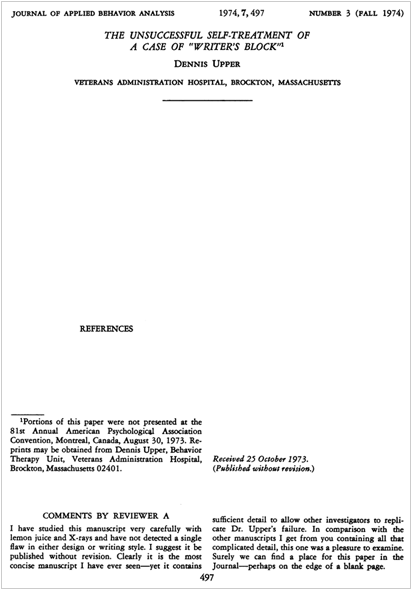
It includes what I originally thought was an hilarious but mocked-up paper from the Journal of Applied Behavior Analysis, only for me to discover that it was genuinely published.


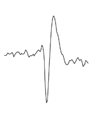
For those wanting verification of these important findings, Oscillatory Thoughts has a replication of this landmark study using more recent technology.
 

Link to Oscillatory Thoughts on “writer’s block”.
Link to the full text of the scientific paper.

Oxytocin is a complex character

Not Exactly Rocket Science elegantly covers a new study that counters the tired ‘love drug’ stereotype associated with the hormone oxytocin.

Although several studies have found that doses of the hormone, usually sprayed into the nose, increase feelings of trust, it is also becoming clear that this just one effect and it may be heavily dependent on situation or the characteristics of the person.

Contrary to the cliché, we reported on a study last year that found that the drug increased feelings of envy and gloating in a trading game.

This new research looked at how a dose of oxytocin altered men’s feeling about their social relationships – including with their mothers – and very different reactions were discovered.

[Psychologist Jennifer Bartz] found that when she averaged out the volunteers’ results, the sniffs of oxytocin hadn’t seemed to colour their memories of their mothers. But things changed when she looked at them individually. Those who felt more anxious about their relationships took a dimmer view of their mother’s parenting styles when they sniffed oxytocin, compared to the placebo. Those who were more secure in their relationships reacted in the opposite way – they remembered mum as being closer and more caring when they took the oxytocin.

These results show that oxytocin is far from being a simple “love hormone”. As Bartz says, it has a “more nuanced role… than previously thought,” and one that varies from person to person. It’s “not an all-purpose attachment panacea.”


Link to NERS on new oxytocin study.

Terminal self-diddling

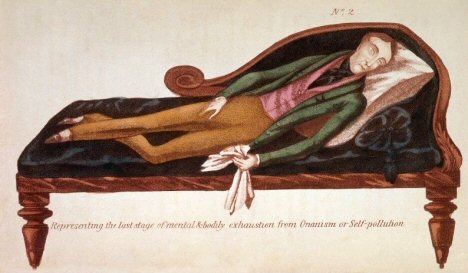
The fantastic Morbid Anatomy blog found this picture from an 1845 medical book depicting ‘the Last Stage of Mental & Bodily Exhaustion from Onanism or Self-pollution’ from the days when self-diddling was widely assumed to be a cause of madness.


Of course, you wouldn’t find anything quite so ridiculous as a mental illness described as ‘the last stage of Onanism or Self-pollution’ in the DSM-5, because stages have been rejected in favour of dimensions.
 

Link to post at Morbid Anatomy.

A new level of chutzpah in psychiatric ghostwriting

The New York Times has a revealing article about how a popular textbook for family doctors on how to treat mental illness, apparently written by two big name psychiatrists, was almost entirely written by a ghostwriting service under the direction of a large drug company.

Two prominent authors of a 1999 book teaching family doctors how to treat psychiatric disorders provided acknowledgment in the preface for an “unrestricted educational grant” from a major pharmaceutical company.

But the drug maker, then known as SmithKline Beecham, actually had much more involvement than the book described, newly disclosed documents show. The grant paid for a writing company to develop the outline and text for the two named authors, the documents show, and then the writing company said it planned to show three drafts directly to the pharmaceutical company for comments and “sign-off” and page proofs for “final approval.”

“That doesn’t sound unrestricted to me,” Dr. Bernard Lo, a medical ethicist and chairman of an Institute of Medicine group…

David A. Kessler, former commissioner of the Food and Drug Administration, is memorably quoted as saying “To ghostwrite an entire textbook is a new level of chutzpah.” “I’ve never heard of that before. It takes your breath away.”

The book is reported to be Recognition and Treatment of Psychiatric Disorders: A Psychopharmacology Handbook for Primary Care by Charles B. Nemeroff and Alan F. Schatzberg.

Nemeroff. Now where have I heard that name before?
 

Link to NYT piece on ghostwritten psychiatry textbook.

Do robots dream of electric reaping?

If, like me, you’re worried about the coming robot war, The New York Times has an article that might make you hyperventilate. It’s about how the military is increasingly arming robots and creating artificial intelligence weapons systems.

The piece explores the rapidly advancing technology of warrior robots and also covers the ethical debate over the use of mechanised killers.

It turns out that some people are so concerned they’ve created a robot arms control lobby group.

For those still a little anxious about the whole affair, several people are quoted who try and put our minds at ease.

“A lot of people fear artificial intelligence,” said John Arquilla, executive director of the Information Operations Center at the Naval Postgraduate School. “I will stand my artificial intelligence against your human any day of the week and tell you that my A.I. will pay more attention to the rules of engagement and create fewer ethical lapses than a human force.”

Dude, you’re not helping.
 

Link to NYT on ‘War Machines: Recruiting Robots for Combat’.

A history of friends in high places

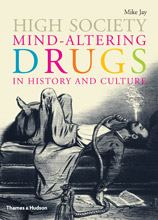
I recently indulged in the outrageous luxury of placing an international order for the book High Society: Mind-Altering Drugs in History and Culture by Mike Jay and I’m very glad I did.

If you want to get a feel for the sort of thing it tackles, the author has a fantastic video where he discusses the history of opium use and how the British in the 1800s were doing exactly the same as the modern day cocaine cartels do now.

It is an incisive and eye-opening history of society and its highs, as well as being wonderfully illustrated on almost every page.

In fact, it’s so beautiful it could almost be one of those expensive coffee table books but it also has the advantage of being shot through with a compelling narrative about how drug use developed in the world’s diverse cultures.

And it really is breathtakingly diverse in its scope – tackling everything from Native Americans and their use of the hallucinogenic cactus peyote, to the black sweet tea enjoyed in the Arabian peninsula, to loved-up urban clubbers popping ecstasy, to the enthusiasm for betel nut in the Far East, to.. well, you get the idea.

The book has been published in conjunction with an exhibition of the same name, currently showing at London’s Wellcome Collection, but it more than holds its own.

It’s a compulsive, colourful journey through one of the world’s favourite pass-times and definitely worth checking out if you’ve ever had an interest in how we tweak and have tweaked the brain’s reality settings.
 

Link to book details on publisher’s website.
Link to excellent 10 minute video on the history of opium.

Photographing the brain, 1894

Legendary Polish neurologist Edward Flatau created one of the first photographic brain atlases way back in 1894. This photo shows how he carefully took 20-minute exposure photos of freshly sliced brains.

The photo is from a recent article published in European Neurology that discusses how Flatau created the atlas and the review it got from a young Sigmund Freud, then early in his career as a neurologist.

To be fair, Freud’s review was 200 words of benign praise and hardly worthy of note, but the article is worth checking out for the discussion and images from the pioneering atlas.

Lucky for us, the article has been made open-access so enjoy it while you can.

Flatau used whole and dissected human brains, unfixed and only rinsed in water. He applied small diaphragms to effect a better depth of field, and took longexposure photographs, with exposure times of 20–30 min for uneven surfaces (ventral, dorsal, lateral and medial facies, plates I, II, V and VII), and up to 10 min for flat sections (horizontal, coronal and sagittal, plates III/ IV, VI and VIII) A schematic color chromolithograph depicted central brain pathways and connections.


Link to article directly.
Link to DOI entry for article in European Neurology.

On the touchstone of consciousness

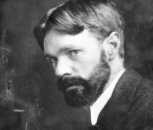
A wonderful poem simply titled ‘Thought’ by the English writer D. H. Lawrence.

Thought, I love thought.

But not the juggling and twisting of already existent ideas.

I despise that self-important game.

Thought is the welling up of unknown life into consciousness,

Thought is the testing of statements on the touchstone of consciousness,

Thought is gazing onto the face of life, and reading what can be read,

Thought is pondering over experience, and coming to conclusion.

Thought is not a trick, or an exercise, or a set of dodges,

Thought is a man in his wholeness, wholly attending.

Lawrence was hugely controversial in his day, not least due to writing Lady Chatterley’s Lover, but maintained a penetrating interest in the psychology of individuals which his stories so vividly illustrate.
 

Link to Wikipedia page on D.H. Lawrence.

2010-11-26 Spike activity

Quick links from the past week in mind and brain news:
The New York Times has an excellent piece by wide-thinking neuroscientist Robert Sapolsky: This Is Your Brain on Metaphors. Want more metaphors? This week’s ‘In Our Time’ had a history.

The web’s best optical illusion videos from io9.

The Guardian has an excellent piece covering some of the latest findings in the neuroscience of synaesthesia.

Thank you LanguageLog for the keeping it real coverage of The New York Times’ odd anecdote-led ‘Your Brain on Computers’ series.

New Scientist on a New York exhibition of Franz Messerschmidt’s sculptures – a series of “character heads” whose distorted facial features he believed had the power to ward off the demons that tormented him by pinching his thighs and abdomen.

Waiting for the sky gods of brain science. Oscillatory Thoughts takes a critical look at headline-making blue-sky-and-bluster neuroscience projects.

ScienceNews covers new research on bomb blast brain protection finding helmet visors may prevent shock waves entering through the face.

What makes a good gift? Irrationally Yours discusses how to select a present for maximum guilt-alleviating impact.

NPR has a brilliant piece on siblings, personality development, genetics, environment and why two people who grow up together can be so different.

A 15-minute writing exercise closes the gender gap in university-level physics according to research expertly covered by Not Exactly Rocket Science. Now someone hurry up and invent one for psychology so I look less of a klutz in front of my female colleagues.

The Morning News has a brilliant first-person account of someone caught up in compulsive gambling.

A diagnosis of schizophrenia exited the body of a white housewife, flew across the hospital, and landed on a young Black man from the housing projects of Detroit. Brilliant In the News piece on recent research on ‘how schizophrenia became a black disease’.

BBC Radio 3 had an surprisingly engrossing programme on when Freud met the composer Mahler. You have only two days left to listen to it and streaming only. Public funding in action.

Does having children really make us less happy, despite the contrary stereotype? Evidence Based Mummy has an excellent piece that delves into the detail.

The Wall Street Journal has a piece by VR pioneer Jaron Lanier on the psychology of being an avatar.

The ‘smell of fear’ makes us dangerous. The BPS Research Digest covers a piece on how the scent of anxious people encourages risk taking.

APA Monitor magazine for December has just arrived online. Lots of psychology goodness from the American Psychological Association.

A mirror neuron dance party for autism spectrum disorders. The Neurocritic tackles a funky if not wildly speculative treatment for ASD.

The New York Times covers the increasing use of virtual reality in psychological treatment.

The psychiatric hospital best known as the site for the filming of the 1975 movie “One Flew Over The Cuckoo’s Nest” will soon be reopened for patients. Providentia has the news.

Time magazine has a piece on how posh people are worse at reading emotion in faces. Better manners though, and that’s what counts.

Do guns make violence more likely? Barking Up the Wrong Tree tackles a relevant study.

The Guardian has an important and interesting piece on false memory, unsound convictions and a legal system that still relies on the vagaries of recall.

‘Synthetic cannabis’ has been given an immediate and temporary ban in the United States. Addiction Inbox, as always, has brilliant coverage.
An infection of mental fog

The Guardian has an excellent article on how tropical diseases are a major and largely unrecognised risk to the mental agility of young children as parasites directly or indirectly affect the brain.

Frustratingly, the diseases are widespread and, in many cases, easily treatable, if only the resources were available.

Unfortunately, the same problems that make treatment scarce also mean that the conditions are under-researched and it’s still not clear in many cases how the diseases end up causing mental deterioration.

We are still a long way from understanding the mechanisms by which a given disease may affect cognitive function. For instance, a parasitic worm infection may have its main effect on educational progress by causing diarrhoea and malaise, leading the child to miss school or to be listless and unmotivated in the classroom. But there may be more direct effects on brain development caused by malabsorption of nutrients or iron-deficiency anaemia. It has also been suggested that the toxins generated by some parasites may affect brain function.

Such effects may be temporary, the child catching up with his or her peers once the infection has been cured, or long-lasting, if brain development is disrupted during a critical phase. Research in this area is difficult, but is urgently needed if we are to develop effective preventive strategies.


Link to Guardian piece ‘Out of sight, out of mind’.

Magic at the dawn of psychology

Some of the world’s best illusionists are now collaborating with cognitive scientists to better understand the mind and brain but this turns out to be old news. A brilliant article in The Psychologist charts the remarkably long history of magicians and psychologists working together to understand the human mind.

The piece is by psychologist and historian Peter Lamont, himself a stage magician of some repute, who looks back at how illusionists knowledge of mental engineering was in demand even in the earliest days of experimental psychology.

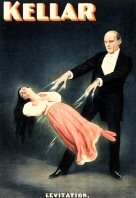
At the end of the 19th century, Hermann and Kellar were the two greatest conjurors in the world, though who was greatest depended upon whose publicity one believed. In the United States they competed over audiences and advertising space, and each considered the other his arch-rival. When Hermann died in 1896, Kellar was free to establish his reign and, aside from his notable achievements in the world of magic, he was almost certainly the inspiration for the Wizard of Oz. But before Kellar became the grand wizard, and shortly before Hermann’s death, the two great rivals agreed to compete in a quite different environment – the psychological laboratory.

In fact, December’s edition of The Psychologist is a special issue on the history of psychology with all the major articles open and available to all.
 

Link to article on magic and psychology.
Link to table of contents for December’s The Psychologist.
 

Full disclosure: I’m an unpaid associate editor and occasional columnist for The Psychologist. Sadly, I lost the magic years ago.

The boundaries of mental illness

Seed Magazine has an excellent piece on ‘redefining mental illness’ that discusses the limits of labelling mental disorders and whether we can understand disability purely in terms of the mind.

The piece captures the highlights from a recent online blog discussion on the topic and is inspired in part by the ongoing update to the American Psychiatric Association’s diagnostic manual, the DSM-5, due to be released in May 2013.

One of the big changes to the manual is likely to be the introduction of dimensions, so instead of just having to decide whether “you have it or you don’t” psychiatrists will be able to rate symptoms on a sliding scale.

This has been inspired evidence that hallucination-like experiences or unlikely magical beliefs are not restricted to people with schizophrenia or other psychotic disorders, but are also present, albeit to varying degrees, in everyone.

This has led some to argue that we should abandon diagnoses for mental disorders as they’re just arbitrary cut-off points that have no scientific basis.

But if everyone has their own ‘unique dose’ of unusual experiences, like everyone has their ‘unique dose’ of typical daily anxiety, we should see a nice smooth curve when we measure it in the population. Some people have a little, some people have lots, and we should find everyone else in between.

It turns out, that this is not the case with hallucinations, delusions, reality distortions and unusual magical beliefs.

A recent over-arching meta-analysis of all the data from past research suggests that some people show a qualitative difference in the type of psychosis-like experiences they have – in other words, there is a natural break – but this doesn’t match up with who is likely to be diagnosed with schizophrenia.

Here are the authors in their own words:

The weight of evidence suggests there is a nonarbitrary boundary between those with and without schizophrenia. Certainly, the prevalence estimates of the psychometric risk categories indicate that this nonarbitrary boundary is well below the threshold for schizophrenia, capturing approximately 11% of the population.

In other words, there is not a smooth continuum between normality and schizophrenia. In fact, there seems to be clear difference in 11% of the population, but this happens in most cases in people who never become mentally ill.

Less than 1% of the population will qualify for a diagnosis of schizophrenia and only 3% for any type of psychotic disorder involving hallucinations and delusions.

That leaves 8% who have, perhaps what we could call ‘schizophrenia-like’ unusual experiences (as opposed to ‘regular’ unusual experiences), but who don’t ever seem to become disabled.

What this may mean is that defining mental disorders like schizophrenia largely on the basis of certain experiences may be missing the point, because they don’t in themselves cause a problem for most people.

But what this also means, is that the diagnostic manuals will remain very rough guesses until the publishers decided to draw their diagnoses from science, rather than doing science to try and justify their diagnoses.
 

Link to Seed on ‘Redefining Mental Illness’.
Link to ‘What is Mental Illness’ blog carnival.
Link to PubMed entry for meta-analysis of psychosis-like experiences.

A misperceptive critic

It’s not often that hallucinations indulge in media criticism, but this case of Charles Bonnet syndrome recently published in the journal Optometry is a delightful exception.

Everyone, it seems, is a critic, including perceptual distortions generated by, in this case, macular degeneration.

A 79-year-old man presented to the clinic with intermittent hallucinations of 6 months’ duration before this visit. He reported it occurred mostly in the evening, when he saw visions of road maps, Christmas wreaths, and faces that blocked his television screen. The faces were not of people known to him and often had elaborate hats or headdresses. When he rode in a car, he often saw houses that he knew were not truly present, and when he watched his favorite celebrity television dancing show, he saw multiple dancers rather than the 2 actually dancing. He was not disturbed or frightened by these hallucinations; he knew that they were not real. On the contrary, he felt they were amusing and reported they were often more entertaining than what was actually on television.


Link to PubMed entry for case report.
Link to DOI entry for same.

Mental air

A poem by the great Irish writer William Butler Yeats on the difficulties of getting the balloon of the mind into its narrow shed.

No, I’m not really sure what it’s about either, but I wonder if that’s the point.

The Balloon Of The Mind
by William Butler Yeats

Hands, do what you’re bid:
Bring the balloon of the mind
That bellies and drags in the wind
Into its narrow shed.

The cutting edge of a splitting headache

ABC Radio National’s Life Matters has a programme that’s full of fascinating snippets about the cutting edge of headache science.

It’s hardly the sort of material you’ll be charming your next date with, but there are so many ‘I never knew that’ moments that it’s definitely worth catching if you have an interest in the research or treatment of a pounding head.

For example, the programme reviews how Botox is being used to treat migraine, the introduction of a completely new class of headache drugs – the CGRP receptor antagonists, and how drug companies are marketing special body part specific medications for increased profit – despite the fact they all contain identical active ingredients.

It also covers how the added codeine in standard headache pills probably does nothing and why psychological treatment can be an effective way of treating even long-term persistent headache when drugs can seem to do no further good.

Lots more eye-opening facts and a plenty of discussion tightly packed into a 20 minute show.
 

Link to Life Matters on ‘Headaches: what’s new?’

Walk this sway

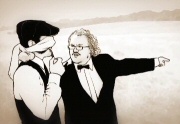
NPR has a fascinating segment about how humans can’t walk in a straight line unless we have an external guide. We just end up walking in circles.

It turns out, no one is really sure why this happens but experiments on walkers, drivers and swimmers have all found the tendency to circle back on ourselves despite us thinking that we’re maintaining a steady course ahead.

The NPR piece is both a short radio discussion and an animation so make you catch both as it’s a minor but utterly fascinating mystery.

So why, when blindfolded, can’t we walk straight? There is still no good answer. Jan Souman, a research scientist in Germany, co-wrote a paper last year about this human tendency to walk in circles…

In our radio broadcast, Jan and I explore possible explanations for this tendency to slip into turns. Maybe, I suggest, this is a form of left or right handedness where one side dominates the other? Or maybe this is a reflection of our left and right brains spitting out different levels of dopamine? Or maybe it’s stupidly simple: Most of us have slightly different sized legs or slightly stronger appendages on one side and this little difference, over enough steps, mounts up?

Wrong, wrong and wrong, Jan says. He’s tested all three propositions (the radio story describes the details) and didn’t get the predicted results.


Link to NPR on ‘Why Can’t We Walk Straight?’ (via @JadAbumrad).