Cross Road Blues

The July issue of the British Journal of Psychiatry has another edition of its ‘psychiatry in 100 words’ series – this time on melancholia and the blues legend Robert Johnson.

‘I got stones in my pathway/And my road seems dark at night/I have pains in my heart/They have taken my appetite’. Robert Johnson, known as the King of the Delta blues singers, distilled into these lines the essence of severe depressive illness – somatic ills, fear and suspicion, emotional and physical pain, nocturnal troubles and struggle against obstacles. The words are one with the powerful, haunting music. ICD-10 and DSM-IV have their place, but poets have often been there before us, and done a better job. We can all learn from Robert Johnson, born just 100 years ago.


Link to BJP ‘Melancholia in 100 words’.

Naomi Wolf, porn and the misuse of dopamine

‘Is pornography driving men crazy?’ asks campaigner Naomi Wolf in a CNN article that contains a spectacular misunderstanding of neuroscience applied to a shaky moral conclusion.

Wolf asks suggests that the widespread availability and consumption of pornography is “rewiring the male brain” and “causing them to have more difficulty controlling their impulses”.

According to her article, pornography causes “rapid densensitization” to sexual stimulation which is “desensitizing healthy young men to the erotic appeal of their own partners” and means “ordinary sexual images eventually lose their power, leading consumers to need images that break other taboos in other kinds of ways, in order to feel as good.”

Moreover, she says “some men (and women) have a “dopamine hole” – their brains’ reward systems are less efficient – making them more likely to become addicted to more extreme porn more easily.”

Wolf cites the function of dopamine to back up her argument and says this provides “an increasing body of scientific evidence” to support her ideas.

It does not, and unfortunately, Wolf clearly does not understand either the function or the relevance of the dopamine system to this process, but we’ll get onto that in the moment.

Purely on the premise of the article, I was troubled by the fact that “breaking taboos” is considered to be a form of pathology and it lumps any sort of progression in sexual interest as a move toward the “extreme”.

‘Taboo’ and ‘extreme’ are really not the issue here as both are a matter of perception and taste. What is important is ‘consensual’ and ‘non-consensual’ and when the evidence is examined as a whole there is no conclusive evidence that pornography increases sexual violence or the approval of it (cross-sectional studies tend to find a link, experimental and crime data studies do not).

To the contrary, wanting new and different sexual experiences is for the majority a healthy form of sexual exploration, whether that be through porn or other forms of sexual behaviour.

One part of the motivation for this is probably that people do indeed become densensitised to specific sexual images or activities, so seeing the same thing or doing the same thing over and over is likely to lead to boredom – as any women’s magazine will make abundantly clear on their advice pages.

But this is no different to densensitisation to any form of emotional experience. I contacted Jim Pfaus, the researcher mentioned in the article, who has conducted several unpublished studies showing that physiological arousal reduces on repeat viewing of sexual images, but he agrees that this is in line with standard habituation of arousal to most type of emotional images, not just sexual, that happens equally with men and with women.

It’s important to point out that this densensitisation research is almost always on the repetition of exactly the same images. We would clearly be in trouble if any sexual experience caused us to densensitise to sex as we’d likely lose all interest by our early twenties.

However, it is Wolf’s description of the dopamine system where things get really weird:

Since then, a great deal of data on the brain’s reward system has accumulated to explain this rewiring more concretely. We now know that porn delivers rewards to the male brain in the form of a short-term dopamine boost, which, for an hour or two afterwards, lifts men’s mood and makes them feel good in general. The neural circuitry is identical to that for other addictive triggers, such as gambling or cocaine.

The addictive potential is also identical: just as gamblers and cocaine users can become compulsive, needing to gamble or snort more and more to get the same dopamine boost, so can men consuming pornography become hooked. As with these other reward triggers, after the dopamine burst wears off, the consumer feels a letdown – irritable, anxious, and longing for the next fix.

Wolf is accidentally right when she says that porn ‘rewires the brain’ but as everything rewires the brain, this tells us nothing.

With regard to dopamine, it is indeed involved in sexual response, but this is not identical to the systems involved with gambling or cocaine as different rewards rely on different circuits in the brain – although doesn’t it sound great to lump those vices together?

Porn is portrayed as a dangerous addictive drug that hooks naive users and leads them into sexual depravity and dysfunction. The trouble is, if this is true (which by the way, it isn’t, research suggests both males and females find porn generally enhances their sex lives, it does not effect emotional closeness and it is not linked to risky sexual behaviours) it would also be true for sex itself which relies on, unsurprisingly, a remarkably similar dopamine reward system.

Furthermore, Wolf relies on a cartoon character version of the reward system where dopamine squirts are represented as the brain’s pleasurable pats on the back.

But the reward is not the dopamine. Dopamine is a neurochemical used for various types of signalling, none of which match the over-simplified version described in the article, that allow us to predict and detect rewards better in the future.

One of its most important functions is reward prediction where midbrain dopamine neurons fire when a big reward is expected even when it doesn’t occur – such as in a near-miss money-loss when gambling – a very unpleasant experience.

But what counts as a reward in Wolf’s dopamine system stereotype? Whatever makes the dopamine system fire. This is a hugely circular explanation and it doesn’t account for the huge variation in what we find rewarding and what turns us on.

This is especially important in sex because people are turned on by different things. Blondes, brunettes, men, women, transsexuals, feet, being spanked by women dressed as nuns (that list is just off the top of my head you understand).

Not all sex is rewarding to all people and people have their likes, dislikes and limits.

In other words, there is more to reward than the dopamine system and in many ways it is a slave to the rest of the brain which interprets and seeks out the things we most like. It is impossible to explain sexual motivation or sexual pathology purely or, indeed, mainly as a ‘dopamine problem’.

Wolf finishes by saying that “understanding how pornography affects the brain and wreaks havoc on male virility permits people to make better-informed choices” despite clearly not understanding how pornography could affect the brain and providing nothing but anecdotes about the effect on male sexual function.

This does not mean all porn is helpful or healthy, either to individuals or society, but we should be criticising it on established effects, not on misunderstood and poorly applied neuroscience deployed in the service of bolstering shaky conclusions about its personal impact.
 

Link to Naomi Wolf’s “Is pornography driving men crazy?”

The neurology of the undead

Wired has an excellent neurological guide to surviving the zombie holocaust that will keep you one shamble ahead when the undead attack.


The article and the wonderful accompanying infographics were inspired by the work of neuroscientist Bradley Voyek who, when he is not poking around in the decaying brains of zombies, looks at communication networks in the human brain.
 

Link to Wired piece on the neuroscience of the zombie apocalypse.

Internet dating and the science of fire starting

The New Yorker has a fantastic article about the psychology of online dating.

The piece explores how the big names of internet matchmaking attempt to strike up sparks between you and millions of other people and how they play off what attracts people in face-to-face encounters.

Psychology, maths and the economics of truth are used to bring people together, with each dating site having a different theory about how attraction works

It is tempting to think of online dating as a sophisticated way to address the ancient and fundamental problem of sorting humans into pairs, except that the problem isn’t very old. Civilization, in its various guises, had it pretty much worked out. Society—family, tribe, caste, church, village, probate court—established and enforced its connubial protocols for the presumed good of everyone, except maybe for the couples themselves. The criteria for compatibility had little to do with mutual affection or a shared enthusiasm for spicy food and Fleetwood Mac. Happiness, self-fulfillment, “me time,” a woman’s needs: these didn’t rate. As for romantic love, it was an almost mutually exclusive category of human experience. As much as it may have evolved, in the human animal, as a motivation system for mate-finding, it was rarely given great consideration in the final reckoning of conjugal choice.

The twentieth century reduced it all to smithereens. The Pill, women in the workforce, widespread deferment of marriage, rising divorce rates, gay rights—these set off a prolonged but erratic improvisation on a replacement. In a fractured and bewildered landscape of fern bars, ladies’ nights, Plato’s Retreat, “The Bachelor,” sexting, and the concept of the “cougar,” the Internet promised reconnection, profusion, and processing power.

Unsurprisingly, many dating sites now employ psychologists to optimise their hook up algorithms and the article explores the thinking and the practice behind the process.

A great read.
 

Link to excellent New Yorker article on internet dating.

The Ginger Jake poisonings

A mysterious epidemic of paralysis was sweeping through 1920s America that had the medical community baffled. The cause was first identified not by physicians, but by blues singers.

During the prohibition, alcohol was banned but people got buzzed the best way they could. One way was through a highly alcoholic liquid called Jamaica Ginger or ‘Jake’ that got round the ban by being sold as a medicine.

Eventually the feds caught on and even such poorly disguised medicines were blacklisted but Jamaica Ginger stayed popular, and alcoholic, due to the producers including an organophosphate additive called tricresyl phosphate that helped fool the government’s tests.

What they didn’t know was that tricresyl phosphate is a slow-acting neurotoxin that affected the neurons that control movement.

The toxin starts by causing lower leg muscular pain and tingling, followed by muscle weakness in the arms and legs. The effect on the legs caused a distinctive form of muscle paralysis that required affected people to lift the leg high during walking to allow the foot to clear the ground.

This epidemic of paralysis first made the pages of the New England Journal of Medicine in June 1930, but the cause remained a mystery.

What the puzzled doctors didn’t know was that the cause had been identified by two blues musicians earlier that year, in songs released on 78rpm records.

Ishman Bracey’s song Jake Liquor Blues and Tommy Johnson’s track Alcohol and Jake Blues had hit on the key epidemiological factor, the consumption of Jamaica Ginger, likely due to their being part of the poor southern communities where jake was most commonly drunk.

Slowly, the medical community caught on, noting that the additive damaged the spinal cord and peripheral nerves, and the adulterated jake was slowly tracked down and outlawed.

The story, however, has an interesting neurological twist. In 1978, two neurologists decided to track down some of the survivors of jake poisoning 47 years after the booze fuelled epidemic hit.

They found that the original neurological explanation for the ‘jake walk’ effect was wrong. The paralysis was actually due to damage to the movement control neurons in the brain (upper motor neurons) and not the peripheral nervous system.

Jake was much more dangerous than thought and the false lead was probably due to inadequate assessments when the epidemic hit, possibly because the stigma associated with the condition prevented a thorough investigation.

The study has a poignant description of the social effect of the condition:

The shame experienced by those with jake leg possibly led some with a minimal functional disorder to deny that they ever had the disease, and patient 4 stated that he knew some such people. We heard of other men with obvious impairment who claimed to have had a stroke.

If you want to read more on this curious piece of neurological there’s a great article on Providentia you can check out for free and a renowned 2003 article from The New Yorker which is locked behind a paywall due to digital prohibition.
 

Link to Providentia post on Ginger Jake.

Epilepsy, inside and out

The New York Times has an inspiring piece about neurologist and epilepsy specialist Brien Smith who has just become chairman of the Epilepsy Foundation. Unusually, his interest is more than just professional as he has epilepsy himself.

I was really struck by this part, as it shows how even trained medical professionals can unnecessarily freak out when they see someone having a seizure:

One day during medical school, my classmates and I learned that one of the most well-liked doctors-in-training in the hospital had had a seizure while leading morning work rounds.

The sight of him writhing had caused the other doctors and nurses on the ward to panic. Some stood mute, frozen with fear. An intern, believing that the seizure arose from low blood sugar levels, took his half-eaten jelly doughnut and held it against the mouth of his seizing colleague. Others yelled to the ward secretary to “call a code,” and continued to do so even after another dozen doctors and nurses had already arrived on the floor.

The young doctor eventually recovered. But for many of the medical students and doctors who heard about the episode or were on the wards that day, the dread of that morning would linger long beyond our years of training. Epilepsy was, and remains, a frightening and mysterious malady.

Time and again, I have seen this happen. People call ambulances unnecessarily. People risk the life of the person having a seizure by trying to put something in their mouth (to stop them ‘biting their tongue’). People risk injury to the person by trying to hold them down.

If you want to be one of the few people who don’t freak out when someone has a seizure and if you want to be genuinely helpful, read this brief page on first aid for epilepsy.

And if you have a couple more minutes, check out The New York Times piece on neurologist Brien Smith and his unique insight into the condition. Highly recommended.
 

Link to NYT piece on Brien Smith (via @mocost).

The malware of medical science

Just when you thought the pharmaceutical industry had used up every dirty trick in the book, it has been revealed that a ‘study’ of the epilepsy drug gabapentin (aka Neurontin) was never really intended to investigate the medication, but was primarily intended to get doctors to prescribe it more often.

A report published in the Archives of Internal Medicine examined documents uncovered in legal cases that show that a drug trial called ‘Study of Neurontin: Titrate to Effect, Profile of Safety’ (STEPS) was largely designed to involve doctors in a marketing programme that would appear like a scientific trial.

Actually, it was a scientific trial of a sort, but rather than studying the effect of the drug on patients, they were studying the effect of marketing on the doctors.

Parke-Davis sales representatives collected and recorded individual subject data. In a clear example of data tampering, they not only attended epilepsy patients’ office visits (under the guise of “shadowing” the clinician), but also actively promoted the use of Neurontin and blocked the use of competing medications, particularly lamotrigine (Lamictal), at those visits. They also rewarded participating investigators with free lunches and dinners.

Without informing either patients or physicians, the drug company’s marketing department monitored each investigator’s prescribing practices. It documented a 38% increase in prescriptions of Neurontin after investigators attended an introductory briefing, as well as a 10% increase in the average prescribed dose. It also compared prescribing patterns between study investigators and a control group of nonparticipating neurologists, and documented increased prescribing of Neurontin only among the study participants.

Big Pharma: the malware of medical science.
 

Link to good write-up in Internal Medicine News.
Link to locked study in the Archives of Internal Medicine.
Link to locked related editorial in the Archives of Internal Medicine.

From character analysis to orgasm batteries

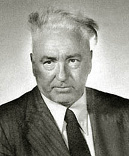
Slate has a brilliant article on one of the most troubled and yet fascinating people in the history of psychology – William Reich – inventor of the orgasmotron.

Reich was one of Freud’s inner circle but decided to propose his own ideas rather than follow the Freudian orthodoxy, something which got him promptly kicked out of the chosen few.

The point of contention was that Reich favoured analysing the personality as a whole, rather than individual symptoms, using a system he developed call ‘character analysis’.

His system had a massive impact on psychoanalysis but as time went on he became more and more radical to the point of seeming to have lost his marbles.

Merging abandoned versions of Freudianism and Marxism, Reich saw repression and neurosis as causes and results of bourgeois property ownership and patriarchy. He established free sex clinics and roved the city in a van from which he proselytized for Communism and orgasm. The open expression of libido, beginning with free love between adolescents, would raise the proletarian political consciousness. Soon, Reich was drummed out of the analytic movement and the Communist Party.

This, you may be surprised to hear, was not Reich at his most left-field.

He also began to believe that the power of orgasm, called orgone, could be stored in batteries and could be absorbed from the sky by the use of a special machine called a cloudbuster.

If the name of the machine seems familiar, it’s probably because it ‘Cloudbusting’ was the title of a song and video by Kate Bush which told the story of Reich’s machine and his downfall.

He eventually died in prison after being arrested by the FBI for illegally distributing his ‘orgone energy accumulator’ leaving a chaotic legacy that stretches from the profound to the ridiculous.
 

Link to Slate article on Willhelm Reich.

A 30 second piece of our minds

A new book has been published called 30 Second Psychology. It’s been written by some familiar folks and aims to capture fifty of the most important theories of psychology in one punchy package.

It’s been edited by Christian Jarret of the BPS Research Digest and includes contributions from me, Mo Costandi, Dave Munger and Tom Stafford.

The book covers everything from psychotherapy to cognitive neuroscience and, as normal, the others have done a much better job than me. Thankfully, though, I have been edited into sense.

Here’s part of my entry on Abraham Maslow’s humanistic psychology and how it inspired client-centred counselling, nude psychotherapy and love-ins.

Abraham Maslow trained as a hard-nosed experimental psychologist who became disillusioned with defining human nature through lab experiments and was dissatisfied with the Freudian alternative. Instead of seeing humans as the passive recipients of experience or slaves to unconscious drives, Maslow saw us as motivated by an ultimate need to become fulfilled and ‘self-actualized’ where we are at peace with ourselves and others and have the psychological freedom “to become everything that one is capable of becoming.” Humanistic psychology grew from this inspiration and placed subjective lived experience, rather than the unconscious mind, at the centre of human nature.

These ideas were taken up by psychotherapists, most notably by Carl Rogers, who based ‘client-centred therapy’ on the principles of genuineness and acceptance of a person’s basic worth. Although Maslow was sometimes uncomfortable with how his approach was adopted by the 1960s counter-culture, leading to everything from love-ins to nude psychotherapy, his central themes of respect for individual autonomy and the encouragement of personal development are now at the core of all most modern psychological treatments and his ‘hierarchy of needs’ is still considered a important theory of human motivation.


Link to more details from the publishers.
Link to book on Amazon.

An unusual form of the Babinski reflex

A curious anecdote about legendary neurologist Joseph Babinski accidentally hitting on the butler of famous physician Henry Head:
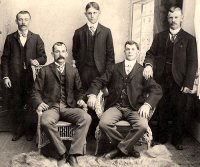
Babinski [1857–1932] stayed with Henry Head in London. He spoke no English but on retiring wanted to use a bidet and summoned the butler who spoke no French; he therefore used sign language to indicate what he wanted and the butler construed the gestures as Babinski propositioning him and resigned from the household.

I’m sure we’ve all made that mistake at some point.

As re-told in an article in this month’s neuroscience journal Brain on the late William McDonald.

A dose of female intelligence

Harvard Business Review interviews a research team who have found that increasing the number of women in a team raises group intelligence.

Of course, the findings could also be as accurately described as showing that men make groups more stupid, although the researchers are far too tactful to mention this particular interpretation.

Woolley: We’ve replicated the findings twice now. Many of the factors you might think would be predictive of group performance were not. Things like group satisfaction, group cohesion, group motivation—none were correlated with collective intelligence. And, of course, individual intelligence wasn’t highly correlated, either.

Malone: Before we did the research, we were afraid that collective intelligence would be just the average of all the individual IQs in a group. So we were surprised but intrigued to find that group intelligence had relatively little to do with individual intelligence.

HBR: But gender does play a role?

Malone: It’s a preliminary finding—and not a conventional one. The standard argument is that diversity is good and you should have both men and women in a group. But so far, the data show, the more women, the better.

As a male clinical psychologist, I am now completely accustomed to being intellectually out-gunned by my female colleagues, but it’s important to realise that there’s more to group work than intelligence.

Do we really want a world of better decisions but with fewer dick jokes? Just the thought of it keeps me up at night.

(See?)
 

Link to article in Harvard Business Review (and don’t miss the podcast).

In search of invisible violence

NPR Radio covers an amazing inattentional blindness experiment that investigated how easy it is to miss a vicious beating in the street – after a policemen was convicted of ignoring an attack during a pursuit.

Inattentional blindness is the phenomenon where we don’t notice something seemingly obvious because we are paying attention to some other details.

It was most famously demonstrated by the ‘gorillas in our midst’ experiment where observers asked to count the number of passes between basketball players fail to notice a man in a monkey suit walking though the action.

Following a policeman’s conviction for supposedly ‘keeping quiet’ about a beating that he ran past while in pursuit of someone else, the same researchers wanted to know whether people asked to follow a jogger and monitor their behaviour would miss a simulated attack in the street.

Then about a minute in the run, slightly off to the side, [researchers] Chabris and Simons had three students stage a fight.

“We had two students beating up a third, punching him and kicking him and throwing him to the ground,” Chabris says.

The question was whether the students would see the fight, and under the conditions — nighttime — that most closely resembled [policemen] Conley’s experience. The numbers were shockingly low.

“Only about a third of the subjects reported seeing the fight that we had staged,” says Chabris.

It’s a brilliant piece of applied research, a great report with an amazing backstory, and the full text of the study is available online if you want more details.
 

Link to NPR report.
Link to full text of study.

The trouble with psychiatry

If you want an incisive critique of modern psychiatry, look no further than an excellent article in The New York Review of Books.

It brilliantly captures the fights over diagnosis and the DSM, the problem of drug companies buying influence by paying physicians, and why the promises of drug treatments are often propped up with marketing hype.

The article is well-informed, doesn’t mince words, and the author is no anti-psychiatry flak. She’s Marcia Angell, ex-editor of the New England Journal of Medicine, one of the world’s leading medical journals.

One of the leaders of modern psychiatry, Leon Eisenberg, a professor at Johns Hopkins and then Harvard Medical School, who was among the first to study the effects of stimulants on attention deficit disorder in children, wrote that American psychiatry in the late twentieth century moved from a state of “brainlessness” to one of “mindlessness.” By that he meant that before psychoactive drugs (drugs that affect the mental state) were introduced, the profession had little interest in neurotransmitters or any other aspect of the physical brain. Instead, it subscribed to the Freudian view that mental illness had its roots in unconscious conflicts, usually originating in childhood, that affected the mind as though it were separate from the brain.

But with the introduction of psychoactive drugs in the 1950s, and sharply accelerating in the 1980s, the focus shifted to the brain. Psychiatrists began to refer to themselves as psychopharmacologists, and they had less and less interest in exploring the life stories of their patients. Their main concern was to eliminate or reduce symptoms by treating sufferers with drugs that would alter brain function. An early advocate of this biological model of mental illness, Eisenberg in his later years became an outspoken critic of what he saw as the indiscriminate use of psychoactive drugs, driven largely by the machinations of the pharmaceutical industry.

If you want a great insight into the difficulties of psychiatry and how they’ve emerged, this article is one of the best introductions you could hope for.
 

Link to article in the NYRB (via 3QD).

A curious hysterical blindness

The New York Times has an extended book review that explores female hysteria in 19th Century Paris while demonstrating a curious hysterical blindness of its own.

The piece reviews a new and supposedly excellent book by Asti Hustvedt called ‘Medical Muses: Hysteria in Nineteenth-Century Paris’.

Hysteria is the presentation of seemingly neurological symptoms without any damage to the nervous system that could explain it. Although we can’t explain why many neurological disorders appear, neurological symptoms – almost by definition – are linked to clear and detectable damage.

Those that appear without the presence of such damage were traditionally labelled ‘hysteria’ although are now subsumed under various diagnoses such as conversion disorder or somatoform disorder.

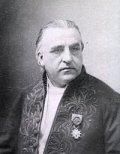
Charcot was a highly influential 19th Century neurologist who essentially defined the shape of modern neurology and he was fascinated by hysteria. This is the subject of Asti Hustvedt’s new book.

I’ve not read the book but the review, and many pieces like it, focus on neurologist Jean-Martin Charcot’s interest in female hysteria as a demonstration of how the female body and sexuality were uniquely pathologised in 19th century medicine.

This would be interesting were it not for the fact that solely focusing on ‘female hysteria’ misrepresents what happened.

Not least because after more than two thousand years of hysteria being portrayed as being a uniquely feminine disorder, Charcot identified and campaigned for the existence of male hysteria.

This is from medical historian Mark Micale:

During the 1880s, Charcot published the case histories of more than 60 male “hysterics” and treated countless others in his daily hospital practice. Between a third and a quarter of the overall number of hysterical patients he presented in his printed works were men or children. In these writings, Charcot formulated an elaborate set of medical ideas about the disease in males, including a theory of aetiology, a model of symptomatology, and a programme of therapeutics.

Throughout this period, Charcot campaigned energetically for his theory of masculine hysteria, and by the time of his death, in 1893, the idea was widely accepted within mainstream European medical communities. Many of Charcot’s medical contemporaries judged his work on the topic to be among the most scientifically significant parts of his oeuvre, and the School of the Salpetriere, as it was called, was associated internationally with the theme of male hysteria.

It’s true to say that the female ‘hysterical patients’ gained much more attention (due to a combination of public fascination, Charcot’s love of showmanship and the recent invention of photography) but it’s interesting to note that this pattern has continued into the modern day.

This is despite the fact that’s the famous neurologist’s own interests were far more balanced. A curious historical parallel.
 

Link to review in the NYT.
Link details of ‘Medical Muses: Hysteria in Nineteenth-Century Paris’.

The psychology of expert predictions

This week’s edition of BBC Radio 4 All in the Mind has a fantastic section on the psychology of knowledgeable predictions that bursts lots of bubbles about the power of experts but also discusses how to make more accurate predictions.

You can listen to the whole programme online but it seems the crucial section has accidentally found it’s way onto YouTube which you can catch here.

The discussion is with author Dan Gardner and by psychologist Dylan Evans who tackle the links between risk, prediction and knowledge.

It has lots of fascinating insights, including the fact that the fame of experts is inversely related to their accuracy, that US weather forecasters are better than UK forecasters (and not because UK weather is more difficult), and that more confident predictions are more likely to be wrong.

If you want to catch the whole of All in the Mind the section of grief myths is also wonderful.
 

Link to All in the Mind.
Link to section on expert predictions.