Is mental health a smoke screen for society’s ills?

Somatosphere has a fantastic account of the debates rocking the world of global mental health – the still nascent field that aims to make mental health a world priority.

The idea itself is sound in the general sense, but there is still a lot of argument about what it means to promote mental health and much discussion about whether ‘global mental health’ is just a means of exporting Western ideas and diagnoses in a sort of 21st century globalisation of the mind.

I am always a little struck by the fact that the ‘global mental health’ movement seems mainly to focus on Asia and Africa.

For example, the lack of participation of Latin American mental health professionals and advocates is striking in both the headline-making publications and the key conferences.

This is a pity as Latin America has developed a unique perspective on mental health that, by reading the debates covered by Somatosphere, would be very relevant.

If you want to get your head into the space of this particular Latin American approach, have a think about this analogy.

How would you react if instead of supporting the American civil rights movement in the 1960s, you were told the major problem was that people were being affected by a mental illness called ‘post-discrimination stress disorder’?

I’m sure it would be possible to come up with a valid and reliable ‘PDSD’ diagnosis that could be agreed upon and would genuinely predict behavioural and psychological distress and impairment – the experience of racism is known to predict mental health problems and the discrimination of the civil rights era was extreme.

Arguing for more resources to be put into treating ‘post-discrimination stress disorder’ when the civil rights movement was almost at breaking point in the 1940s and 50 would lay you open to accusations of ‘putting up a smoke screen’ and ‘making a distraction’ when what was needed was social change, not an attempt to pathologise black people.

The question that you may be asking, and many Latin American psychologists have asked, is whether we should be instead focussing on inequality and violence to improve mental health.

The Western focus on disorders, they argue, can distract and blind us to societal problems. Instead of preventing oppression, we pathologise its victims.

This approach was born out of a field called liberation psychology that made exactly this point.

One of the founders was a remarkable chap called Ignacio Martín-Baró who was a Spanish priest who trained as a psychologist and worked in El Salvador during the Salvadoran civil war.

He was eventually murdered by a government death squad because of his theories, which at least shows their power if not their popularity.

Unfortunately, liberation psychology has become heavily politicised and you often hear variations of “Martín-Baró’s work means you must support my left-wing views” from proponents.

This is a shame because Martín-Baró’s work was often making a more profound and over-arching point – that there is no such thing as an apolitical act in mental health, and, indeed, in health care in general.

For example, the West’s understanding of the victims of war, torture and displacement in terms of PTSD and other diagnostic labels is largely due to the experience of treating refugees who have fled these horrible situations.

In this context, PTSD makes sense in the West because it has the implicit assumption that the person is now safe (after all, it’s post-traumatic stress disorder) and that the experiences and reactions described in the diagnosis are, therefore, inappropriate.

However, if you live in a war zone, intrusive thoughts, feeling on edge and avoiding reminders of danger could be considered quite a reasonable reaction to the constant experience of death and violence.

When you meet people who do live in war zones, who would clearly meet the criteria for PTSD, they rarely complain about their mental state. They’re usually more concerned about the actual dangers.

They’re concerned about torture, not intrusive thoughts about being tortured – the threat of rape, not rape-related anxiety.

So, the hard question becomes: are we really helping by sending professionals and training locals to recognise and treat people with, for example, PTSD?

And this is where Martín-Baró drew his inspiration from. The way we understand and treat mental health problems, he argued, is always political. There is no absolute neutrality in how we understand distress and those that think so are usually just blind to their own biases.

And this is what the global mental health movement is wrestling with. And needless to say, there are plenty of biases to overcome.

Big Pharma pushes theories as adverts for its medication. Western mental health professionals can see themselves as healers of people who don’t necessarily need healing.

Researchers see an untapped gold mine of data and local scientists see a way out of what seems like a limiting and unglamorous academic life distant from the shining lights of Northern Hemisphere High Science.

So when we talk about ‘mental health literacy’ are we talking education or propaganda? It’s not an easy question to answer or, for many, to even think about.

The Somatosphere piece is one of the best guides to this debate I’ve yet read. Essential reading.
 

Link to Somatosphere on ‘Global Mental Health and its Discontents’

The rebirth of hypnosis

I’ve got an article in today’s Observer about the re-emergence of hypnosis into the scientific mainstream despite the fact that the technique is still associated with stereotypes.

The piece has been oddly titled ‘hypnosis is no laughing matter’, which kind of misses the point, because no-one laughs at it, but many scientists do find it uncomfortable because of its long-running associations with stage shows, high-street hypnotists and the like.

The sub-heading also suggests that the article is about the revival of hypnosis as a ‘clinical tool’ when the article only discusses the use of hypnosis in the lab.

However, get past the headings and the piece discusses the genuinely interesting cognitive science of hypnosis and suggestibility.

The recent research is interesting not so much because we are learning about hypnosis itself, but because it is helping us understand some quite striking things about the fundamentals of the mind.

Amir Raz and colleagues at McGill University in Montreal reported that it was possible to “switch off” automatic word reading and abolish the Stroop effect – a psychological phenomenon that demonstrates a conflict between meanings, such as where we are much slower to identify the ink colour of a word when the word itself describes a different hue. Furthermore, when this experiment was run in a brain scanner, participants showed much lower activation in both the anterior cingulate cortex, an area known to be particularly involved in resolving conflict between competing demands, and the visual cortex, which is crucial for recognising words. Although this may seem like a technicality, to the scientific world it was a strikingly persuasive demonstration that hypnosis could apparently disassemble an automatic and well-established psychological effect in a manner consistent with the brain processes that support it.

One of the other exciting areas is the use of hypnosis to temporarily induce altered states of consciousness that can then be studied in the lab. More of that in the article.
 

Link to Observer article.

No, the web is not driving us mad

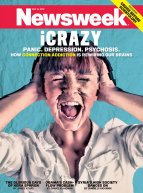
Oh Newsweek, what have you done. The cover story in the latest edition is an embarrasing look at non-research that certainly doesn’t suggest that the internet is causing “extreme forms of mental illness”.

The article is a litany of scientific stereotypes and exaggeration:

The current incarnation of the Internet—portable, social, accelerated, and all-pervasive—may be making us not just dumber or lonelier but more depressed and anxious, prone to obsessive-compulsive and attention-deficit disorders, even outright psychotic.

This is an amazing list of mental illnesses supposedly caused by the internet but really Newsweek? Psychosis? A condition ranked by the World Health Organisation as the third most disabling health condition there is and one that is only beaten in its ability to disable by total limb paralysis and dementia and that comes ahead of leg paralysis and blindness.

We’re talking schizophrenia and severe bipolar disorder here. The mention of psychosis even makes the front page, of one of the most respected news magazines in the world, so this must be pretty striking evidence.

So striking, in fact, that it would probably turn psychiatric research on its head. We have studied the environmental risk factors for psychosis for decades and nothing has suggested that the internet or anything like it would raise the risk of psychosis. This must be amazing new scientific evidence.

So what is the evidence to back up Newsweek’s front page splash: a blog post, a quote and a single case study.

The rest of the article is full of similar howlers.

But the research is now making it clear that the Internet is not “just” another delivery system. It is creating a whole new mental environment, a digital state of nature where the human mind becomes a spinning instrument panel, and few people will survive unscathed.

“This is an issue as important and unprecedented as climate change,” says Susan Greenfield, a pharmacology professor at Oxford Univer…

Oh Christ.

A 1998 Carnegie Mellon study found that Web use over a two-year period was linked to blue moods, loneliness, and the loss of real-world friends. But the subjects all lived in Pittsburgh, critics sneered.

They didn’t sneer. They looked at the follow-up study, done on the same people, by the same research team, that found that “A 3-year follow-up of 208 of these respondents found that negative effects dissipated”.

As I’ve mentioned before, it is only possible to report on the first of these findings without the second if you’ve not read the research or are aiming for a particular angle. Why? Because if you type ‘internet paradox’, the name of the original study, into Google, the name of the follow-up study – The Internet Paradox Revisited – comes up as the second link.

If you’d read any of the actual literature on the topic, you’d know about the follow-up study because they are two of the most important and some of the few longitudinal studies in the field.

The article also manages the usual neuroscience misunderstandings. The internet ‘rewires the brain’ – which I should hope it does, as every experience ‘rewires the brain’ and if your brain ever stops re-wiring you’ll be dead. Dopamine is described as a reward, which is like mistaking your bank statement for the money.

There are some scattered studies mentioned here and there but without any sort of critical appraisal. Methodological problems with internet addiction studies? No mention. The fact that the whole concept of internet addiction is a category error? Not a whisper. The fact that prevalence has been estimated to vary between 1% and 66% of internet users. Nada

Sadly, these sorts of distorted media portrayals have a genuine impact on the public’s attitudes and beliefs about mental illness.

But perhaps the biggest problem with the article is that it doesn’t include any critical voices. It’s mainly people who have a book to sell or an axe to grind.

The internet will apparently make you psychotic if you only listen to the three people who think so. Or Newsweek, that is.
 

Link to ‘Is the Web Driving Us Mad?’

Projecting Nabokov

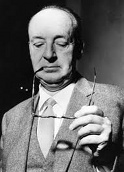
American Scholar has an excellent article on the use of psychology in the novels of Vladimir Nabokov – most famous as the author of Lolita.

As is now standard for literary criticism the article includes lots of florid prose and a spurious reference to ‘mirror neurons‘, but get past the flouncing and it’s a brilliant look at perhaps the most psychologically engaged author of the 20th century.

It’s not just that Nabokov’s novels are beautifully observed, insightful and run through with references to psychological theory, but also that he was a fierce combatant in the ‘Freud wars’:

Famously, Nabokov could not resist deriding Freud. And for good reason: Freud’s ideas were enormously influential, especially in Nabokov’s American years, but his claims were hollow. Nobel laureate Peter Medawar, perhaps the greatest of science essayists, declared in his book Pluto’s Republic, in terms akin to Nabokov’s, that Freudianism was “the most stupendous intellectual confidence trick of the twentieth century.” Nabokov saw the intellectual vacuity of Freudian theory and its pervasiveness in the popular and the professional imagination. He thought it corrupted intellectual standards, infringed on personal freedom, undermined the ethics of personal responsibility, destroyed literary sensitivity, and distorted the real nature of childhood attachment to parents–the last of which has been amply confirmed by modern developmental psychology.

Cynics, and especially cynics of a Freudian persuasion, might suggest that if you’ve written a novel about paedophilia, the last thing you’d want is people probing your unconscious motivations and so Nabokov’s objections could be understood as a form of projection.

Others might suggest, and especially those of a non-Freudian persuasion, that orthodox psychoanalysis needs to inspire no other motivation in its critics as it is so patently ridiculous that it doesn’t even make good farce.

Actually, Freud wrote so widely, revised his ideas, contradicted himself, hit on genuine insights, and shamelessly embarrassed himself, all in equal measure, that to say you are ‘for’ or ‘against’ Freud is like saying you are ‘for’ or ‘against’ the Greek classics.
 

Link to article on Nabokov as psychologist (via @ferrisjabr)

Made for PR Neuroscience

Times Higher Education has a short but revealing article about a ‘neuromarketing’ company called MindLab that keeps getting ‘accidentally’ associated with the University of Sussex.

The ‘accidental’ association is not what makes the piece interesting, however, as it also gives an insight into a type of marketing that relies on the hype of neuroscience to make the news.

Mindlab International measures psychological reactions to brands or products using a “scientific approach” that “offers PRs an extra way to add a newsworthy element to PR campaigns”, founder David Lewis-Hodgson told PR Week in 2006…

Previous research by Mindlab has found that reading is more relaxing than listening to music or going for a walk, in a study commissioned by the maker of Galaxy chocolate as part of a campaign to give away 1 million books.

It has also been reported that a Mindlab survey, commissioned by the maker of Rocky, a chocolate bar, found that an estimated 25 million adults in the UK have been injured during a tea or coffee break.

In April this year a “neurological study by Dulux [the paint company] and the Mindlab International Laboratory at Sussex University” that measured the “physiological arousal” prompted by the imagining of various activities found that “women find a redecorated room just as pleasurable as sex”, the Huffington Post reported.

Yes, you read that correctly, and if I ever become old, bitter, and want to sabotage someone’s illustrious career in neuroscience I’m just going to write a piece of software that adds ‘the Huffington Post reported’ to the end of all their scientific papers (however, I digress).

What’s interesting is that simply making something appear like a neuroscience study is enough to get it and the associated product in the news – to the point where companies can now base their business model on the practice.

Neuromarketing is the study of the neuroscience of marketing – a genuinely interesting field that, contrary to what neuromarketing companies will have you believe, has absolutely no practical benefit at the moment because no-one has yet demonstrated that a neural response is a better predictor of the key outcomes than a behavioural response.

This, however, is more like neuro-spin-marketing, as it relies on people believing the hype of neuromarketing to get branded pseudo-studies into the media.

Buyer beware.
 

Link to THE piece on MindLab (via @sarcastic_f)

Feed your head

LiveScience has a spectacularly bad article that covers the toxicology results of Rudy Eugene, the ‘Miami cannibal’ who was immediately labelled as being high on ‘bath salts‘ and was predictably, not high on bath salts.

But don’t let the Parp! Parp! Clown Taxi notion of drugs causing cannibalism put you off from suggesting that drugs cause cannibalism because the article makes a point of carefully considering which substances were responsible for the face eating.

Eugene tested positive for marijuana. Could that have been the cause? Definitely not says the article.

“Some people have said, ‘Well, it must have been the marijuana that triggered Eugene’s behavior.’ That, in my opinion, is outrageous, and out of the question. Marijuana will not cause this type of behavior,” said Dr. Bruce Goldberger, professor and director of toxicology at the University of Florida.

Goldberger said that although a significant amount of research has found a link between marijuana use and the onset of schizophrenia or psychosis in at-risk individuals, this isn’t what happened to Eugene. “This behavior exhibited by Eugene is well beyond the scope of someone suffering from acute psychosis,” he told Life’s Little Mysteries. [Could Cannibalism Solve a Future Food Shortage?]

The ‘Could Cannibalism Solve a Future Food Shortage?’ link is genuinely in the original article by the way, presumably inserted by an automatic algorithm with an unintentional genius for badly timed inappropriate humour.

But one of the major points of the article is to report the toxicology results which found no evidence for ‘bath salts’ drugs in Eugene’s body.

Conclusion: the cannibalism was caused by bath salts. Secret bath salts. That no-one can detect yet.

There’s probably a cognitive bias that leads people to believe in impossible causal mechanisms in the face of evidence that all but rules out the presence of the supposed trigger – but I’m damned if I can find it.

Hang on. I think it’s called the Living Elvis Makes Me Girlfriends Out of Gatorade bias.
 

Link to article (via @stevesilberman)

Ghost image in my mind

Offbeat indie singer Charlotte Gainsbourg released a 2009 song about being fMRI brain scanned that even incoporated sounds from an actual scanner.

The track is called IRM, presumably because Gainsbourg is a French speaker and ‘magnetic resonance imaging’ in French is imagerie par résonance magnétique – which, by the way, is also the sound of a mysterious Parisian stranger whispering sweet nothings in your ear.

If you’re not familiar with what an MRI machine sounds like, listen out for the ‘buzz plus alien tractor beam’ sound in the song.

There is also what looks like an interesting error in the song. At one point she sings “Analyse EKG, Can you see a memory?”

As EKG usually refers to an electrocardigram – a measure of heart function – it’s unlikely she’ll see many memories there.

An EEG, on the other hand, measures electrical activity from the brain, and was probably what was intended.

Here’s the wonderfully poetic neuroscience lyrics in full:

Take a picture what’s inside
Ghost watching my mind
Neural pattern like a spider
Capillary to the centre

Hold still and press a button
Looking through a glass onion
Following the X-Ray eye
From the cortex to medulla

Analyse E K G
Can you see a memory
Register all my fears
On a flowchart disappear

Leave my head demagnetised
Tell me where the trauma lies
In the scan of pathogen
Or the shadow of my sin

The track is great by the way. MRI never sounded so hip.
 

Link to Charlotte Gainsbourg track IRM.

An animated neuroscience of headache pills

TED have a fantastic animation that explains how pain works and how it is relieved by two common analgesics – aspirin and ibuprofen.

Of course, pain relievers work in many different ways – the opioids, for example, are vastly different – but the four-minute video is a wonderful guide to the neuroscience of two common household pills.

Excellent stuff.
 

Link to ‘How Do Pain Relievers Work?’ (via @brainpicker)

One hundred years of gratitude

Tomorrow is the 100th birthday of Alan Turing – brilliant mathematician, philosopher, proto-cognitive scientist, secret war hero and unjustly persecuted gay man.

If you want some excellent coverage of his life, work and influence, Wired UK has a new collection of articles stemming from their Turing Week project.

Highly recommended.
 

Link to Turing Week on Wired UK.

A procession of dementia

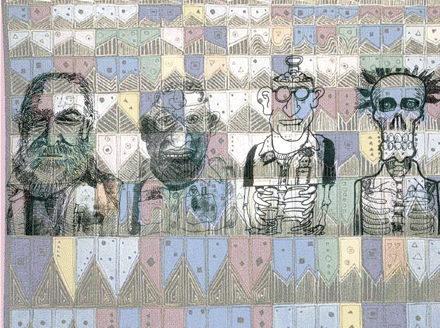
The June issue of the neuroscience journal Brain has an amazing cover showing “increasingly bizarre and menacing caricatures by an artist with frontotemporal lobar degeneration during the course of his illness”.

The caption reads:

From left, the first picture drawn many years before his illness; the middle pair in the first 2 years of dementia; and that on the right at least 3 years into the illness. Background: Gouache entitled ‘Unravelling Boléro’, showing de novo transmodal creativity comprising auditory to visual transformation, by a patient with primary progressive aphasia…


Link to Brain cover (via @tiempoasm)

The making of ‘War Neuroses’

The history of one of the most important and disturbing films in the history of psychiatry is covered by an excellent article in the latest edition of the Journal of the History of Medicine.

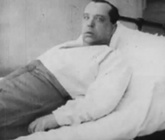
The piece concerns the 1917 film of soldiers affected by ‘shell shock’ during World War One. It was called ‘War Neuroses’ and was filmed at Netley and Seale Hayne hospitals. You can now watch the entire footage online

The full text of the article is locked behind a paywall but the pdf has found its way online.

The history of the film turns out to be very interesting. Although it has become iconic for images of ‘shell shocked’ soldiers it was also made with the promotion of producer and medic Arthur Hurst’s career in mind.

Hurst turns out to be a curious figure and not necessarily a good representative of what was happening with regard to the home treatment of traumatised soldiers – as he isolated himself physically and professionally from the wider community of professionals working on treatments.

Despite working at Netley, Hurst made no attempt to integrate himself within the wider community of shell shock doctors. By the end of 1916, Maghull and the Maudsley had become the main centers for experiment into treatment, run respectively by R. G. Rows and Frederick Mott, but Hurst worked independently of them and their staff. In part, this was because he saw himself as a general physician, rather than a medically qualified psychologist, bringing a knowledge derived from neurology and infectious disease to the question of neurasthenia, hysteria, and shell shock.

As a charismatic leader, Hurst was more comfortable running his own hospital than becoming part of a network of shell shock doctors—many of whom explored hypotheses borrowed from psychoanalysis, anthropology, and psychology. Significantly, no motion pictures were shot at either Maghull or the Maudsley, though both were recorded in still photographs.

Another curious detail is that Hurst made the film to demonstrate the effectiveness of his treatment, showing before and after treatment footage of the soldiers.

However, some of the ‘before treatment’ footage has clearly been re-enacted as the surroundings and personnel don’t change position. This was apparently common in documentaries of the time and was probably justified by Hurst as being an accurate depiction.

Nevertheless, apparently this was not only an attempt to make his treatments look more effective but the footage itself was also used to demonstrate to patients the extent of the change they’d experienced.

Anyway, the whole article is full of fascinating background, so well-worth checking out.

Also, if you’re interested in reading more about ‘shell shock’ and its effect on mental health treatment the June edition of APA Monitor has an article by the same historian, Edgar Jones, on how it was first taken seriously.
 

Link to article in journal site.
pdf of the same.
Link to film on YouTube.
Link to APA Monitor article on ‘shell shock’.

A Bigger Apple

The Open University’s blog has a fascinating piece on why New York City has seen an astonishing drop in crime, against the predictions of most social theories.

Twenty years ago most criminologists and sociologists would have doubted that a metropolis could reduce this kind of crime by so much. Although the scale of New York Citys success is now well known and documented, most people may not realize that the city’s experience showed many of modern America’s dominant assumptions concerning crime to be flat wrong, including that lowering crime requires first tackling poverty, unemployment and drug use and that it requires throwing many people in jail or moving minorities out of city centers.

Instead New York made giant strides toward solving its crime problem without major changes in its racial and ethnic profile; it did so without lowering poverty and unemployment more than other cities; and it did so without either winning its war on drugs or participating in the mass incarceration that has taken place throughout the rest of the nation.


Link to ‘How New York Beat Crime’ (via @mrianleslie)

Dramatically titled neuroscience story

Question about your life. Introduction to a thematically related tragedy. Promise of hope.

Over-simplified premise. Mention of a brain part and an inadequately explained technology in the same sentence.

Dramatic claim of a breakthrough.

Researcher and affiliation. Description of motivation related to a minor personal detail.

Overly-technical account of experiment.

Contrived analogy.

Rhetorical question?

Allusion to a controversy.

Quote from the researcher. Quote from another researcher.

Caution about over-interpretation. Over-interpretation. Mention of future work.

Genuinely insightful point.

Unintentional irony.

Earnest but misleading conclusion. Optimistic ending.


With apologies to an old kuro5hin post.

A geography of stigma

The picture below is of the main building to Princess Park Manor, a luxury housing development in North London, that used to be Colney Hatch Lunatic Asylum.

A recent newspaper article about the apartments notes how they have become an attraction for pop singers and reality TV stars.

The Princess Park Manor website lauds the historic buildings but has a history section that completely avoids the fact that the building was an asylum – Europe’s biggest no less.

But this attempt to distance the local area from associations with mental illness is not a new phenomenon. In fact, this area of London has been uniquely affected by trying to dissociate itself from the hospital.

The asylum was so named because it was located in a historic area called Colney Hatch.

As the hospital became infamous in London (it housed almost 3,500 patients at one stage so became well-known), the Colney Hatch name became irreversibly associated with madness. Being called a ‘Colney Hatch case’ was a standard insult.

As a result, simply being associated with the area was stigmatising and house prices began to be affected.

The solution was to rename the whole area to New Southgate. The train station was similarly renamed – originally called ‘Colney Hatch and Southgate’ and then ‘Southgate and Colney Hatch’ but finally the mention of the feared name was omitted entirely, settling with just ‘New Southgate’.

Eventually, the hospital itself was renamed to ‘Friern Hospital’

In fact, the only reference to Colney Hatch that remains in the area is the road Colney Hatch Lane which can also be called the B550 if you prefer.

Curiously though, the hospital had its own cemetery on site although I could find no trace of it on my explorations. Presumably it has been built over as the rest of the estate was sold off.
 

Link to piece on the history of the area.

Gene environment interaction of your neighbourhood

The amount genes and the environment contribute to our behaviour varies across the country and a new study has mapped exactly where the differences lie.

As well as an interesting finding in itself, the study also highlights an important but often misunderstood point about heritability.

The map on the right is from the study, and generated by the freely available software the research team have created. It shows the results of a large twin study that has been carried out with the help of families across the country.

Twin studies allow us to work out the amount of influence the environment and genetics has on particular trait by comparing the outcomes in identical twins, who are as close as you’ll get to being genetically identical, and non-identical twins, who share only 50% of their genes.

The map shows how much genetic contribution there is to the difference in ADHD symptoms across the UK. You’ll note that genetics makes much more of a contribution to the difference in ADHD symptoms in London than in other parts of the country.

In other words, it’s daft to give a definitive answer about ‘how genetic’ ADHD is, because the expression of genetic tendencies depends on the environment.

That’s not to say that ADHD or any other mental disorder are completely flexible with regard to their environmental and genetics bases, as there are limits and these are likely to be specific to the problem.

But it is also the case that with complex outcomes like mental illness it’s impossible to say that a particular one is solely a ‘genetic disorder’.

There’s a good write-up of the study on the King’s College London website and both the scientific paper and the software are freely available.

The software lets you map the genetic and environmental contributions to a wide number of outcomes that were measured by the study – everything from height to school performance to ADHD.
 

Link to write-up of study.

Behavioural profiling in casinos

Online culture magazine limn has an amazing article on the use of high-tech behavioural profiling in casinos that lets the house target its gaming to where it cashes in most.

Due to the fact that most games are now networked and most punters have been persuaded to play by a swipe card that can be tied to their personal details every last action can be recorded and analysed.

There is now dedicated behavioural analysis software that allows casinos owners to see how they can best target specific demographics.

The casino’s data cloud, when animated and queried, had rendered visible the fleeting, real-time contours of a behavioral group whose constituents, seated at individual play terminals and immersed in the solitary activity of play, were likely unaware of their kinship. Casino managers attempted to profit from the proclivities of this touch-point collective by carving out a physical space for its members and formally inviting them to gather there—not to socialize, but to continue to interact with their own game screens. Although the players were affiliated by age, gender, game preference, and ultimately a common gathering site, the collective they formed was “virtual” in the sense that it took shape and subsequently became meaningful through casino data analysis and visualization software rather than through self-selection, voluntary participation, or shared experience.

The article is a little jargon heavy but it gives an candid insight into how you appear to the data-hungry casino.

By the way, the whole issue of limn is on ‘Crowds and Clouds’ so there’s plenty of other great stuff for people interested in social psychology.
 

Link to article on ‘Crowd Contouring’ (via @somatosphere)
Link to latest issue of limn on ‘Crowds and Clouds’