A guided tour of bad neuroscience

Oxford neuropsychologist Dorothy Bishop has given a fantastic video lecture about how neuroscience can be misinterpreted and how it can be misleading.

If you check out nothing else, do read the summary on the Neurobonkers blog, which highlights Bishop’s four main criticisms of how neuroscience is misused.

But if you have the time, sit back and see the lecture in full.

The key is that these are not slip-ups only restricted to the popular press and self-help books – they are exactly the sort of poor reasoning about neuroscience that affects many scientists as well.

Essentially, if you get the Bishop’s four main points of how ‘neurosciency stuff leads to a loss of critical faculties’, you’re on fine form to separate the wheat from the chaff in the world of cognitive neuroscience.

Excellent stuff.
 

Link to coverage on the Neurobonkers blog.
Link to streamed video of the lecture.

Consciousness after decapitation

How long is a severed head conscious for? The question has troubled students of the human body for centuries and generated countless, possibly mythical stories. History of medicine blog The Chirurgeon’s Apprentice has finally looked through the records to find out which of the accounts are based in blood-curdling fact.

A common tale involves someone trying to test the idea during the French revolution by taking a severed head directly after it has fallen from the guillotine and asking questions, with the unfortunate victim communicating via blinks until it loses consciousness.

We’ve covered exactly such a story previously on Mind Hacks, but historian of medicine Lindsey Fitzharris thought it sounded a bit too much like a tall tale and decided to find out if anything like this had ever actually happened.

She ended up on a wonderfully macabre journey through the science of consciousness after decapitation, involving everything from electrocuting severed heads to grimacing dead people:

The first to reportedly do so was a Dr Séguret, who subjected a number of guillotined heads to a series of experiments during the French Revolution. In several instances, he exposed their eyes to the sun and observed that they ‘promptly closed, of their own accord, and with an aliveness that was both abrupt and startling’. He also pricked one of the severed head’s tongue with a lancet, noting that the tongue immediately retracted and ‘the facial features grimaced as if in pain’. Was this my urban legend?

Right century, wrong story.

Fitzharris eventually finds the source of the story, but I wouldn’t want to spoil the, er, fun for you.
 

Link to ‘Losing One’s Head’ (via @TheNeuroTimes)

Animals conscious say leading neuroscientists

A group of leading neuroscientists has used a conference at Cambridge University to make an official declaration recognising consciousness in animals.

The declaration was made at the Francis Crick Memorial Conference and signed by some of the leading lights in consciousness research, including Christof Koch and David Edelman.

You can read the full text as a pdf file, however, the main part of the declaration reads:

We declare the following: “The absence of a neocortex does not appear to preclude an organism from experiencing affective states. Convergent evidence indicates that non-human animals have the neuroanatomical, neurochemical, and neurophysiological substrates of conscious states along with the capacity to exhibit intentional behaviors. Consequently, the weight of evidence indicates that humans are not unique in possessing the neurological substrates that generate consciousness. Non- human animals, including all mammals and birds, and many other creatures, including octopuses, also possess these neurological substrates.”

You can also see all of the talks on the conference’s webpage. Curiously, physicist Stephen Hawking was there and the declaration was signed in his presence.
 

Link to conference website.
pdf of full declaration.
Link to coverage from Janet Kwasniak.

Hacking the brain for fun and profit

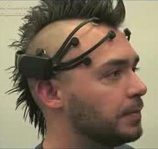
A study presented at the recent Usenix conference demonstrated how it is possible to get private information from the brains of people who use commercial brain-computer interfaces – like NeuroSky and Emotiv.

These headsets are designed for gamers and are cheaper, less accurate versions of EEG devices – used by scientists to read the electrical activity of the brain by attaching electrodes to the surface of the scalp.

The new study, titled ‘On the Feasibility of Side-Channel Attacks with Brain-Computer Interfaces’ (available online as a pdf), took advantage of a reliable brain signal called the P300.

The P300 reflects the brain’s categorisation of something as relevant, important or meaningful. If you’re shown a series of photo portraits, for example, the P300 will kick in when you see photos of people you recognise but not to strangers.

One form of the not-very-reliable EEG ‘lie detector’ is based on this principle. Called the Guilty Knowledge Test, the idea is that the police would show you photos of the crime scene, and if you had actually been there, your P300 would kick in.

This new study was based on a similar principle. The researchers ran various experiments based on the same idea: they’d ask a question to make sure the key information was at the forefront of the study participant’s mind, and then they’d fire a bunch of information at the volunteer to pick out which was most associated with the P300.

For example, in one experiment participants were told they would have to type in the first digit of their newly acquired PIN number into the computer, but before this happened, the volunteers were shown a series of single digits, while the software recorded which numerals were most associated with the P300.

In another, the P300 was recorded while participants were shown pictures of branded credit cards and bank machines. Another experiment asked participants to think of their month of birth before showing them all the options, while another flashed up maps of the local area to determine their approximate home address.

You can see how the researchers were angling to get the equivalent of essential account details out of the volunteers.

Although the set-up was a little artificial, the researchers note that this sort of unconscious personal detail dredging could be incorporated into a game-like activity, so people would be unaware of what was really happening.

The test was a success scientifically, in that the key information was identified more often than chance, but fraudsters are unlikely to be eschewing email hacking for NeuroSky pwning anytime soon. The hit rate was about 10-20%.

Nevertheless, as a demonstration of a ‘hacking brain wave data from a commercial gaming equipment to get personal information’ you have to take your hat off to the research team.

Even more interestingly, perhaps, is the increasing trend for security technology to move towards the interface between mind and machine.

Another study presented at the same conference showed how people could input ‘passwords’ into a system without any conscious knowledge of knowing a password.

The idea relies on implicit learning – which is where you learn connections between things without having any conscious knowledge of doing so.

For example, when playing a computer game like Guitar Hero or Dance Dance Revolution, the same short sequence of moves might come up several times but you might not be aware of it, because they would be embedded within a larger sequence.

However, simply by having encountered the sequence before you will do better the second time – because you have practised the response – even if you have no conscious memory of it.

For each user, this new study embedded a newly generated ‘password of moves’ several times into a longer sequence and made sure they were well practised. Later, the software could identify each user by spitting out those moves again and checking the performance to see if they’d been encountered before. The participants were unaware of anything except that they were playing a game.

Looking at the bigger picture, the fact that computer security could rely on the fine detail of how the brain works could open up a whole new arena of security vulnerabilities.

Perhaps you could be covertly trained to enter someone else’s security details, or perhaps that last game you played actually trained you to leak your login details in another activity – all of which may be completely unnoticeable to your conscious mind.

Black hat neuroscientists may suddenly become very concerned with how these automatic effects could be influenced in very specific, and of course, very lucrative, ways.
 

Link to study on brain-based personal details hacking (via BoingBoing)
Link to unconscious password study.

A country on the couch

The New York Times discusses Argentina’s love affair with psychoanalysis. A country that has more psychologists – the majority Freudian – than any other nation on Earth.

Argentina is genuinely unique with regard to psychology. Even in Latin America, where Freudian ideas remain relatively strong, Argentina remains a stronghold of the undiluted classic schools of psychoanalysis.

It is also unique in terms of the access people have to the practice. In the majority of the world, psychoanalysis is the reserve of the upper middle classes and aristocracy – both in terms of the analysts and the patients.

While the watered-down (some would say made sensible) psychodynamic psychotherapy is more widely available, psychoanalytic training and therapy is extremely expensive. You could easily spend a couple of thousand US dollars a month on therapy alone.

As trainees have to be taught, supervised and be in constant treatment themselves (although the latter usually at a discounted rate) it remains a practice by and for a very narrow group from society. If you want to see this for yourself, training institutes often have open evenings, which I highly recommend as an interesting anthropological field trip.

This elitism is much less the case in Argentina, however, meaning that people from all walks of life see psychoanalysts and Freudian-inspired commentary is an integral part of popular culture.

The NYT article is a little puzzled as to why psychoanalysis has gained such a foothold in the country. Of course, it received a great many psychoanalyst émigrés in the years surrounding the Second World War, as many were Jewish, but in covering similar ground myself, I wondered whether there are good psychological reasons for its continued popularity.
 

Link to NYT piece on psychoanalysis in Argentina.
Link to earlier piece by me on the same.

Communicating at the speed of thought

Your humble hosts, Tom and Vaughan, have written an article for Trends in Cognitive Sciences about how social media is changing mind and brain research.

The piece is both a brief introduction to blogs and Twitter, as well as an overview of how scientific debate happens online and how it is affecting the traditional approach to cognitive science.

Although we focus on cognitive science, it actually applies to science and science communication in general:

Fundamentally, there are important similarities between principles of traditional scientific culture and on-line culture: both prioritise access to information, citation (whether to journals or via links to other online sources), and kudos for whoever does good work. Academia aspires to openness, engagement, and respect for the principles of rational discussion. Social media facilitate these. The online community is free-flowing, somewhat chaotic, and information-rich – much the same as science has ever been.

In the same spirit, Trends in Cognitive Sciences have made the article freely available online, so you can read it at the link below.
 

Link to ‘Brain network: social media and the cognitive scientist’.

A very modern trauma

Posttraumatic stress disorder is one of the defining disorders of modern psychiatry. Although first officially accepted as a diagnosis in the early 1980s, many believe that it has always been with us, but two new studies suggest that this unlikely to be the case – it may be a genuinely modern reaction to trauma.

The diagnosis of PTSD involves having a traumatic experience and then being affected by a month of symptoms of three main groups: intrusive memories, hyper-arousal, and avoidance of reminders or emotional numbing.

It was originally called ‘post-Vietnam syndrome’ and was promoted by anti-war psychiatrists who felt that the Vietnam war was having a unique effect on the mental health of American soldiers, but the concept was demilitarised and turned into a civilian diagnosis concerning the chronic effects of trauma.

Since then there has been a popular belief that PTSD has been experienced throughout history but simply wasn’t properly recognised. Previous labels, it is claimed, like ‘shell shock’ or ‘combat fatigue’, were just early descriptions of the same universal reaction.

But until now, few studies have systematically looked for PTSD or post-trauma reactions in the older historical record. Two recent studies have done exactly this, however, and found no evidence for a historical syndrome equivalent to PTSD.

A study just published in the Journal of Anxiety Disorders looked at the extensive medical records for soldiers in the American Civil War, whose mortality rate was about 50-80 greater than modern soldiers fighting in Iraq and Afghanistan.

In other words, there would have been many more having terrifying experiences but despite the higher rates of trauma and mentions of other mental problems, there is virtually no mention of anything like the intrusive thoughts or flashbacks of PTSD.

In a commentary, psychologist Richard McNally makes the point that often these symptoms have to be asked about specifically to be detected, but even so, he too admits that the fact that PTSD-like symptoms virtually make no appearance in hundreds of thousands of medical records suggests that PTSD is unlikely to be a ‘universal timeless disorder’.

Taking an even longer view, a study published in Stress and Health looked at historical accounts of traumatic experiences from antiquity to the 16th century.

The researchers found that although psychological trauma has been recognised throughout history, with difficult events potentially leading to mental disorder in some, there were no consistent effects that resembled the classic PTSD syndrome.

Various symptoms would be mentioned at various times, some now associated with the modern diagnosis, some not, but it was simply not possible to find ‘historical accounts of PTSD’.

The concept of PTSD is clearly grounded in a particular time and culture, but even from a modern diagnostic perspective it is important to recognise that we tend to over-focus on PTSD as the outcome of horrendous events.

Perhaps the best scientific paper yet published on the diversity of trauma was an article authored by George Bonanno and colleagues in 2011. You can read the full-text online as a pdf.

It notes that the single most common outcome after a traumatic event is recovery without intervention, and for those who do remain affected, depression and substance abuse problems are equally, if not more likely, than a diagnosis of posttraumatic stress disorder.
 

Link to locked study on trauma in Civil War soldiers.
Link to locked study on trauma through history.

The science and politics of mind-altering drugs

The Guardian Science Podcast has an interview with neuroscientist David Nutt on the science and politics of mind-altering substances and it’s possibly one of the most sensible discussions of drugs and drug harms you are likely to hear in a long time.

Prof Nutt is quite well known in the UK – largely due to be fired by the Government from their drugs advisory panel for pointing out in a scientific paper that the health risks of taking ecstasy are about equivalent to going horse riding.

Rather than doing the usual dishonest apology required of government advisors where they ask forgiveness for ‘unintentionally misleading the public’ away from a convenient collective illusion, he decided to take the government to task about their disingenuous drug policy.

He is now a straight-talking, evidence-based, pain-in-the-arse to the government who doggedly stick to the ‘war on drugs’ rhetoric that not even they believe any more.

In the interview the discussion ranges from how psychedelic affect the brain to the scientific basis (or lack thereof) of drug policy. Essential listening.

 
Link to Science Podcast interview with David Nutt.

Sexism affects robots

The Journal of Applied Social Psychology has just pubished a study that is both bizarre and profound. It reports on two experiments that show gender stereotyping extends to robots.

(S)he’s Got the Look: Gender Stereotyping of Robots

F. Eyssel and F. Hegel

Journal of Applied Social Psychology

Previous research on gender effects in robots has largely ignored the role of facial cues. We fill this gap in the literature by experimentally investigating the effects of facial gender cues on stereotypical trait and application ascriptions to robots. As predicted, the short-haired male robot was perceived as more agentic than was the long-haired female robot, whereas the female robot was perceived as more communal than was the male counterpart. Analogously, stereotypically male tasks were perceived more suitable for the male robot, relative to the female robot, and vice versa. Taken together, our findings demonstrate that gender stereotypes, which typically bias social perceptions of humans, are even applied to robots. Implications for design-related decisions are discussed.

Sadly, the study is locked behind a paywall, which is a pity because the discussion about “implications for design-related decisions” is a sort of parallel-world look into android gender politics.

The authors discuss whether it is better to create gender free robots to fight social stereotypes or whether we should create robots that comply with society’s prejudices to make them more acceptable.

Personally, I’m all for genderqueer robots. That would really throw a spanner in the works. Or a works in the spanner.
 

Link to locked study (via @hysell)

Psychosis and the fog of reality

Last May The New Yorker had a beautiful but paywalled article on on psychosis and insight. Thankfully the full text has found its way online as a pdf.

Psychosis is the psychiatric term for delusions and hallucinations, with insight being the ability to recognise that what you believe or experience is not a fair representation of reality.

The concept of insight is more easily applied to hallucinations than delusions, after all you can hallucinate patterns on the walls but realise that the patterns are not really there, but you can’t really have a belief and not believe it.

With regard to delusions, it is tested by seeing how readily people can accept that there is a chance they might be wrong. In other words, it’s an estimate of certainty with absolute certainty in a false belief being considered abnormal.

In practice, and due to the difficulties on agreeing on or verifying reality, it often comes down to whether you agree with your psychiatrist (indeed, one definition of insight, includes accepting treating as a sign of good insight), sometimes leading to situations where people with genuine psychosis completely reject any form of treatment even where it would be of clear benefit.

Rachel Aviv’s article for The New Yorker is a brilliant exploration not only of the experience of slipping into psychosis but also the politics and practicalities of insight.

By the way, Aviv has written a series of excellent articles about mental health including one called ‘Which Way Madness Lies: Can psychosis be prevented?’ for Harper’s Magazine which is also online as a pdf.
 

pdf of article on insight in psychosis.
pdf of article on preventing psychosis.

A stream of unconsciousness

I have just discovered that if you search Pinterest with the keyword psychology you get a wonderfully eclectic stream of psychological images that range from the frosting of pop culture to the depths of profound theory.

In fact, it’s a bit like swimming around in the mind of a psychologist as they slowly drift off to sleep – a kind of whimsical, looping stream of half-verified memories and insights.
 

Link to ‘psychology’ on Pinterest.

Neurowords and the burden of responsibility

The New York Times has an excellent article about the fallacy of assuming that a brain-based explanation of behaviour automatically implies that the person is less responsible for their actions.

The piece is by two psychologists, John Monterosso and Barry Schwartz, who discuss their research on how attributions of blame can be altered simply by giving psychological or neurological explanations for the same behaviour.

The fallacy comes in, of course, because psychology and neuroscience are just different tools we use to describe, in this case, the same behaviour.

A brain characteristic that was even weakly associated with violence led people to exonerate the protagonist more than a psychological factor that was strongly associated with violent acts….

We labeled this pattern of responses “naïve dualism.” This is the belief that acts are brought about either by intentions or by the physical laws that govern our brains and that those two types of causes — psychological and biological — are categorically distinct. People are responsible for actions resulting from one but not the other. (In citing neuroscience, the Supreme Court may have been guilty of naïve dualism: did it really need brain evidence to conclude that adolescents are immature?)

Naïve dualism is misguided. “Was the cause psychological or biological?” is the wrong question when assigning responsibility for an action. All psychological states are also biological ones.

A better question is “how strong was the relation between the cause (whatever it happened to be) and the effect?”

In light of the Aurora shootings and the prematurely and already misfiring debate about the shooter’s ‘brain state’, this is well worth checking out.
 

Link to NYT piece ‘Did Your Brain Make You Do It?’ (via @TheNeuroTimes)

Hallucinating body flowers

A curious and kaleidoscopic case of hallucinations reported in the latest journal Arquivos de Neuro-Psiquiatria:

A 95-year-old woman, with four years of schooling, had a seven-year history of DI [delusional infestation]. In the beginning, there were itching and prickling sensations on arms and head. Subsequently, she felt small worms, with different shapes and colors, crawling through her skin or swirling around her body.

After two years, she began to see small pumpkins and flowers coming out of her body and lettuce crawling on the table. She complained of water trickling out of walls and forming puddles on the ground. Occasionally, she saw small children walking on the walls and also worms on the floor and walls.

Sometimes, the parasites set fire to small objects. She became upset with her family and physicians who did not believe her.

The belief that you are infested with hallucinatory parasites is more typically called delusional parasitosis but it is usually not linked to the florid circus of hallucinations reported here, which are more typical of Charles Bonnet syndrome.
 

Link to case report in Arquivos de Neuro-Psiquiatria.

All time high

The latest issue of The Psychologist has a fascinating article on why time can seem distorted after taking drugs.

The piece is by psychologists Ruth Ogden and Cathy Montgomery who both research the effects of drugs, legal and illegal, on the mind and brain.

The consumption of drugs and alcohol has long been known to warp time experiences. In his much-quoted book Confessions of an English Opium Eater, Thomas De Quincey (1821/1971) noted that opium intoxication resulted in distortions to the passage of time to the extent that he ‘Sometimes seemed to have lived for 70 or 100 years in one night; nay, sometimes had feelings representative of a millennium passed in that time’.

Similar experiences were also reported by Aldous Huxley (1954) in Doors of Perception after consuming mescaline and LSD. Drug-induced distortions to time are not only experienced by renowned literary figures: a quick search of an internet drug forum will reveal that many drug users report similar experiences to De Quincey and Huxley following marijuana, cocaine and alcohol use.

The article notes that both the social context in which drugs are taken (e.g. drinking on a night out) and the pharmacological effects of the substances can each add their own ingredients to the time stretching or shrinking effects.
 

Link to article ‘High Time’ in The Psychologist.

How the FBI sees the psychopath

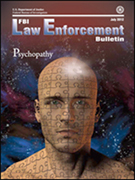
The latest FBI Law Enforcement Bulletin is a special issue on the criminal psychopath.

Apart from the use of eye-scorching clip-art, it’s notable more what it tells us about how the FBI approaches the concept of psychopathy than necessarily being a great introduction to the topic.

Some of the most revealing articles are written by agents and give advice on how to interrogate the ‘psychopath’ as if it was a single type of person and not a relatively consistent pattern of characteristics found within unique individuals.

“…small talk, fidgeting with cell phones or notepads, or showing uncertainty regarding seating arrangements can communicate to psychopaths that interrogators are nervous or unsure of themselves,” says one article, “psychopathic individuals view this as a weakness”.

Well, that’s that then.

Despite some overconfident conclusions, several of the articles do give some good accounts of actual cases and the issue remains an interesting peek into how the FBI sees the psychopath.
 

Link to latest FBI Law Enforcement Bulletin (via @crimepsychblog)