Work for free!

South West London and St George’s Mental Health NHS Trust are taking the piss. They’re advertising for a full-time, one year assistant psychologist post that is completely unpaid.

These jobs usually pay about £20,000-24,000 in London but despite this offer being completely exploitative they could easily fill the post for free.

The reason is because assistant psychologist jobs are one of the key steps to get on to training as a clinical psychologist which is a massively popular career in the UK.

This is partly because psychology itself became a hot topic and universities realised about 15 years ago that the subject was a money spinner, meaning many undergraduate courses regularly have about 200 students a year on them.

This put additional pressure on clinical psychology training places, which for the last decade have had about 20 applications for each place on the course.

As the competition is intense, assistant psychologist jobs are like gold dust. The NHS Trust I work in regularly takes down adverts for these jobs after about 24 hours, at which point they may have received up to 500 applications.

So finding someone to do a £20,000 assistant psychology job for free should be fairly trivial.

You can also see an additional trend at work: while you need an approved doctorate to now qualify for the profession, many hope an MSc in the same subject area – which doesn’t actually do anything except extend your academic knowledge – will help their chances.

Universities are capitalising on this demand and lots of MSc courses have started popping up all over the country, all with ‘not quite clinical psychology’ names like “foundations of clinical psychology” and “clinical applications of psychology”.

I don’t doubt they’re excellent, but that’ll be another maybe 10 grand on top of your student debt.

The effect of all this is that the not-so-well-off are inadvertently filtered out of the profession and we increasingly lack diversity in an already overly-homogeneous profession.

Don’t get me wrong. I’m sure this unpaid assistant psychologist job is valuable work. But not exploiting young people should also be a priority.
 

Link to piss-taking job post (via @bengoldacre)

Technophobia: a talk at the Royal Institution

I’m going to be talking about technophobia, media panics and how technology really affects the mind and brain, next Tuesday at the Royal Institution in London.

The talk will be a trip through the history of technology scares – from Ancient Greece to Facebook, a look at how the modern media deals with concerns about new communications tools, and a round-up of what we actually know about the impact of technology on ourselves.

The evening will be MC’ed by Dallas Campbell and I am told there will be musical accompaniment.

Relax, I won’t be singing. No technology on earth can withstand my terrible voice.
 

Link to more information and tickets.

Brain’s nothingness centre found

Collectively Unconscious has a satirical post entitled “Brain region found that does absolutely nothing”.

Neuroscientists at the University of Ingberg have found a brain region that does absolutely nothing. Their research, presented at the annual Society for Neuroscience meeting, showed that a small region of the cortex located near the posterior section of the cingulate gyrus responded to ‘not one of our 46 experimental manipulations’…

“Over the months that followed we tried everything we knew, with over 20 different participants. IQ tests, memory tasks, flashing lights, talking, listening, imagining juggling, but there was no response. Nothing. We got more desperate, so we tried pictures of faces, TMS, pictures of cats, pictures of sex, pictures of violence and even sexy violence, but nothing happened! Not even a decrease. No connectivity to anywhere else, not even a voodoo correlation. 46 voxels of wasted space. I know dead salmons that are more responsive.”

Clearly the problem here is a lack of imagination.

A recent (genuine) study simply ran the same experimental data from an fMRI scanning session through 6,912 different possible ways of conducting the analysis.

Suddenly, activity popped up all over the brain.

As Einstein said “Imagination is more important than knowledge, because even though science strives to be an objective body of knowledge driven by a systematised method for accurately discovering causal relationships, in reality, it’s a bun fight”.

Pretty sure that was Einstein. Hang on, I’ll just check my stats. Yep, yes it was.
 

Link to satirical post on Collectively Unconscious.

A cultural understanding of autism

Nature has a fascinating article on the diagnosis of autism and how it clashes with cultures that have different forms of everyday social interaction and different standards for how children should behave.

In rural South Africa, young children may look at adults’ faces while having a conversation, but they don’t usually make direct eye contact because it is considered disrespectful. Yet a lack of eye contact is a hallmark of social deficits in people with autism, and as such it is something Western clinicians look for when diagnosing the disorder.

There are other examples of children’s behaviour – such as finger pointing to draw attention to something, or conversing with adults as if they are peers – that are commonplace in the West and included in tests of autism.

The ‘gold standard’ for diagnosing autism is a combination of the ADOS, a set of structured tasks to observe interaction with the person concerned, and the ADI, an interview with the caregiver to see how any difficulties have emerged over time.

As both were developed in London, they are based on Western / European model of social interaction. The risk is that other forms of cultural interaction can be wrongly interpreted as signs of impairment.

It’s worth saying that many cases of autism are unmistakeable as difficulties in social interaction can be quite marked.

However, as the concept of the autism spectrum has become more common, what can be variously and unsatisfactorily described as ‘high functioning’, ‘atypical’ or ‘mild’ autism, usually where difficulties are not immediately obvious, is where there is more room for cultural confusion.

The Nature article describes how various cultural tendencies eddy and flow around the concept of autism and how clinicians are now attempting to navigate the choppy waters of diagnosis.
 

Link to excellent Nature article on culture and autism.

A brief reheating of the refrigerator mother

The Telegraph has a well-intentioned but confused article about how child neglect affects the brain and what can be done about it.

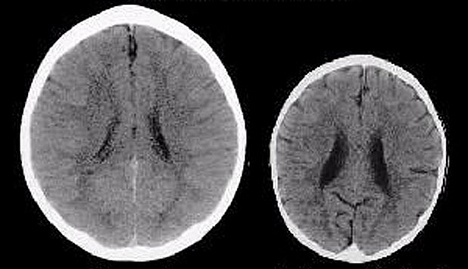
What’s the difference between these two brains? asks The Telegraph. “The primary cause of the extraordinary difference between the brains of these two three-year-old children,” says the journalist, “is the way they were treated by their mothers.”

According to the paper “The child with the much more fully developed brain was cherished by its mother, who was constantly and fully responsive to her baby. The child with the shrivelled brain was neglected and abused.”

Firstly, it’s worth saying that reduced brain size is clearly related to neglect and abuse but the images are not a typical representation of this.

These scans were originally published in an article on child abuse by neuroscientist Bruce Perry who drew them from an unpublished abstract [pdf] of a study on neglect in children, which didn’t control for malnutrition or drug exposure during pregnancy.

They’re described as showing CT scans of three-year-olds, one normal and the other neglected who has a head size smaller 97% of children his or her age. This would make him or her almost diagnosable with microcephaly, a neurological disorder of small head size usually caused by a genetic defect.

This difference in brain size has actually been found in those without the genetic defect. In fact, this difference was found in a study of severely neglected Romanian orphans but severe malnutrition was also a significant factor.

In other words, unless you include ‘starvation’ under the concept or ‘poor interaction with the mother’ the scans really don’t represent what typically happens to children who are emotionally neglected.

Oddly, the Telegraph article spins brain development as specifically depending on the mother, giving an undercurrent of traditional mother-blaming.

Neurologists are beginning to understand exactly how a baby’s interaction with their mother determines how, and indeed whether, the brain grows in the way that it should.

The ghost of the refrigerator mother rises again.

The piece is full of other neurological howlers: “Eighty per cent of brain cells that a person will ever have are manufactured during the first two years after birth” is just baffling, considering we are born with almost all the neurons we will ever have.

The number of synapses – connections between brain cells – does increase after birth but at most by about two thirds. The number peaks between about one and four years, depending on the brain area, and then it rapidly decreases as the brain removes unused connections in a process called synaptic pruning.

The words of neuroscientist Allan Schore seem to have be carefully selected to bolster this scientific misunderstanding, despite the fact his actual quotes do not suggest that he thinks brain cells ‘grow’ after birth.

Furthermore, the idea that “if a baby is not treated properly in the first two years of life, the genes for various aspects of brain function, including intelligence, cannot operate” is seemingly a fuzzily remembered misunderstanding of the role of stress on the epigenetics of neural development.

In fact, it looks like the piece has been written to support a government commissioned report by MP Graham Allen developed from an earlier report by think tank The Centre for Social Justice.

Both present the brain scans, somewhat misleadingly, as a reasonable illustration of emotional neglect, and the first report, scientifically, is a bit ropey. The second though, is surprisingly good.

It actually talks little about the brain, doesn’t feel the need to get into mother-blaming, argues that more support is needed for young children below the age of three from early intervention programmes.

This is a valuable approach and a valid point of view, which The Telegraph article is right behind, but neither brain-shrivelling mothers nor scare tactics are needed.
 

Link to somewhat confused Telegraph article.
Link to scientific review on brain effects of child abuse.

British Psy Ops in Afghanistan

BBC News has an extremely rare article on the UK military’s psychological operations group and their work in Afghanistan.

The piece reports how the 15 (UK) Psychological Operations Group have been given the Firmin Sword of Peace – an accolade recognising the building of community relations awarded by, well, the UK military.

Get your plaudits where you can, that’s what I say.

Psy Ops is a combination of marketing and public relations with more targeted psychology, sociology and anthropology to measure fast moving social changes and perceptions – largely used to inform strategy and military intelligence at the local level.

The 15 (UK) Psy Ops Group rarely ever features in the media and there’s not a great deal of information about them, although most of it has been collected on this PowerBase page.

In fact, the last time 15 (UK) Psy Ops hit the headlines was when one of their unit was killed in 2008, who was most notable in the media for being the first British female solider to die in Afghanistan.

Except for that, one of the last mentions was in 2003. And now they’re press-releasing an award given to them by their own organisation and talking to reporters.

So why the PR drive? Recruitment, it seems. Commander Steve Tatham notes that “at a time most of the Armed Forces are being cut back, his unit is being expanded”.

Despite the spin, it’s not a bad article actually. Although the Group do give the ‘we’re just telling the truth’ line it does discuss the sort of approaches they take and the problems they face.
 

Link to BBC News article on UK Psy Ops in Afghanistan.
Link to Ministry of Defence press release.

Hark! What light through yonder neuron breaks

An unintentionally funny first line from a new study on the neuroscience of love.

The lifetime prevalence of romantic love is extremely high, as romantic love strikes nearly 100% of the people at one or more times during their life. As a comparison, the lifetime prevalence of experiencing any mental disorder is “only” 46.4% (National Institute of Mental Health, US).

The paper also has the oddly Shakespearean sounding line

By virtue of using a cognitive task with a full factorial design, we show that the dorsal striatum is not activated by beloved-related information per se, but only by beloved-related information that is attended

In fact, when Shakespeare wrote “Love looks not with the eyes, but with the mind” he was probably thinking of the role of attentional modulation in the neural response to images of your lover based on the finding that activity in the dorsal striatum is only increased when the participants have to notice rather than ignore pictures of their beloved in an fMRI-based oddball task.

Angels! I think I hear the sound of angels!
 

Link to locked study.

The neuroscience of sexual attractions

A recent edition of radio programme KERA Think has a fantastic discussion on development and the neuroscience of sexual attraction in its many forms.

The programme is a discussion with Simon LeVay, a neuroscientist who raised a lot of eyebrows by finding differences in the brain structure of gay and straight men in a 1991 study.

The science has massively advanced since then and LeVay gives a fascinating and lucid account of what know about the biology of the rainbow of sexual attraction – and where the mysteries still lie.
 

Link to programme page with streamed audio.
mp3 of podcast.

Deeper into forensic bias

For the recent Observer article on forensic science and the psychological biases that affect it, I spoke to cognitive scientist Itiel Dror about his work.

I could only include some brief quotes from a more in-depth exchange, so for those wanting more on the psychology of forensic examining, here’s Dror on how evidence can be skewed and why these effects have been ignored for so long.

What do you think has been the turning point for the forensic science community in terms of beginning to accept the role of cognitive bias in interpretation of evidence?

I think the clear cut scientific research with actual forensic examiners which was a within-subject experimental design, showing that the *same* expert, examining the *same* evidence, can reach different conclusions when they are affected by bias. The problem was also demonstrated in fingerprinting and DNA, very robust forensic domains.

I think you are very right to say that they have ‘began’. There has been a change, for example, the UK Forensic Regulator is now onboard. But there is still a way to go.

Which area of forensic science do you think is currently most susceptible to cognitive bias?

It will be the forensic science areas in which, as I like to say, the human examiner is the main instrument of analysis. These are most of the forensic domains: fingerprinting, DNA, CCTV images, firearms, shoe and tire marks, document examination, and so on. When there is no instrument that says ‘match’ or ‘no-match’ and it is in the ‘eye of the beholder’ to make the judgement, then subjectivity comes in, and is open to cognitive bias.

Essentially, forensic areas in which there are no objective criteria: where it is the forensic expert who compares visual patterns and determines if they are ‘sufficiently similar’ or ‘sufficiently consistent’. For example, whether two fingerprints were made by the same finger, whether two bullets were fired from the same gun, whether two signatures were made by the same person. Such determinations are governed by a variety of cognitive processes.

The cognitive nature of subjectivity is that it can be influenced and biased by extraneous contextual information. Forensic scientists work within a variety of such influences: from knowing the nature and details of the crime, to being indirectly pressurized by detectives, from seeing the ‘target’, to working within and as part of the police, from computer generated meta-data, to appearing in courts within an adversarial criminal justice system, and so on. The contextual influences are many and they come in many forms, some of which are subtle. So, many, most of the forensic areas are vulnerable.

It seems there is a reluctance to change procedures to minimise cognitive bias. Where does the resistance come from?

There are still forensic examiners who think that are immune to context and do not understand, let alone accept, the existence and danger of cognitive bias. They often confuse ‘bias’ (as in being racist, anti-Semitic etc) with cognitive bias; and this makes some of them think that it is an ethical issue. Forensic examiners rarely, if at all, receive training in this area and in the rare occasions that they do, they get bad training from people who do not specialise in providing training about cognitive bias in forensics.

The forensic community, as the military, police, and so on, are all very hard to change; there is a strong culture within those organisations. It is especially hard to promote change when errors are not as apparent as in other domains. If the police shoot an innocent person, then they very quickly know that they made a mistake, if a surgeon amputates the wrong leg, then they know very quickly that they made a mistake. In contrast, in the forensic domain, in real criminal cases, we do not know the ground truth, and do not really know if a mistake has happened or not. Only in very rare and special circumstances do errors surface (as in the Mayfield and McKie cases).

The courts have basically for the most part blindly accepted most of the forensic evidence. So, the examiners see no reason to change, if the courts accepts their evidence, then that is that. This may be changing. The hope is that judges will be more aware of the danger of cognitive bias and not accept forensic conclusions that are tainted with bias.
 

Link to further reading from Itiel Dror.

Interviews with interrogators

Author Dominic Streatfeild interviewed many trained military, intelligence and police interrogators for his book Brainwash and I’ve just realised he’s put the full text of the interviews online.

They’re in equal measures fascinating, disturbing and sometimes worryingly relevant, as the ‘war on terror’ still relies on many of the same physical coercion techniques used in conflicts past.

The interviewees discuss their experiences of being interrogated to being interrogators and range from being captured in the Korean War, to counter-insurgency in Yemen, to The Troubles in Northern Ireland, to the ‘war on terror’ in Afghanistan.

[Interrogation subjects in the world of intelligence tend to construct series of cover stories, like the skins of an onion. Interrogators have to] go through these stories, peeling the onion, trying to get to the core. And eventually, people run out of stories.

The interviews are:

Interview with British Interrogator #1
Interview with British Interrogator #2
Interview with British Interrogator #3
Interview with SAS NCO Trained Interrogator
Interview with Senior Royal Ulster Constabulary (RUC) officer
Interview with US Army Interrogator #1

Let slip the coins of war

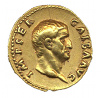
A fascinating short excerpt from a new study that estimates war and population change in Ancient Rome from finds of stashed coins.
It turns out that the coin hoards are a surprisingly good guide to human behaviour:

The reasons for this correlation are not hard to fathom. People tend to hide their valuables in times of violence and danger. Emergency hoards would later be recovered by the owners unless they had been killed or driven away. As a result, the greater the intensity of warfare, the more hoards are left in the ground to be discovered by archaeologists. For this reason, the time-specific deposition rate of hoards serves as an index of internal instability caused by violent conflict and dislocation.

Coins are useful because, of course, they’re dated. So in other words, finding lots of unrecovered coin stashes from a particular time period suggests there was a lot of war.

The researchers used this measure of war intensity in Ancient Rome to estimate population changes. Neat.
 

Link to full text of study.

A history of ideas about the brain

Being Human has an excellent article on how ideas about the function of the brain have evolved over the centuries.

The piece is by respected science writer Carl Zimmer who wrote a fantastic book on the dawn of modern neuroscience called Soul Made Flesh.

This new article is a whistle stop tour of how our ideas about the brain have changed over the last three millennia:

For all the cognitive power that the human brain contains, it’s also exquisitely delicate. It has the consistency of custard. When an ancient anatomist decided to investigate the organs of a cadaver, he would have had no trouble pulling out the heart and manipulating its rugged chambers and valves. But after death, the brain’s enzymes make quick work of it. By the time the anatomist had sawed open the skull, he might well be looking at nothing but blush-colored goo. Who could ever think that in that goo could be found anything having to do with our very selves?

The site it’s written for, Being Human, seems to be a think tank funded social network and blogging platform for human nature geeks.

I’m not sure we need another topic specific social networking platform, most of which suffer from the fact people can’t be bothered to reconstruct the cliques they have from existing general purpose platforms (i.e. life), but it does seem to be filling up with interesting content (i.e. ideas).
 

Link to ‘From Cooling System to Thinking Machine’.

Hallucinations on the radio

BBC Radio 4 has just broadcast a documentary entitled ‘Hallucination – Through the Doors of Perception’ that charts the various ways in which we can experience freewheeling and autonomous perceptions.

You can hear it streamed online here or you can download it as a podcast but only for 7 more days, as like French cheese, mp3s can make you ill if they’re left out for too long.

Despite the fascinating topic, it’s actually a bit dry. It sounds like the Hitchhiker’s Guide to the Gallery without the witty commentary.

Definitely worth listening to, but probably improved by a stiff drink, or perhaps something a little hallucinatory.
 

Link to streamed version of hallucinations radio documentary.
Link to shortly to expire podcast page.