Autism across cultures

NPR has recently broadcast a short interview with anthropologist Roy Richard Grinker who discusses how autism is understood in different cultures and across the world.

Grinker has written a book called Unstrange Minds (ISBN 0465027636) which was inspired both by his daughter, who has been diagnosed with autism, and his travels across the world to discover how people with autism exist within different cultures.

The book’s website is well worth visiting as it has a number of excerpts as well as some additional material and photos.

Link to NPR page with Grinker interview audio.
Link to website of Unstrange Minds.

Diagnosing and treating childhood

Psychiatrist Edward Hume has created uploaded a spoof paper on the the ‘etiology and treatment of childhood’, satirising the growing enthusiasm for diagnosing children with psychiatric disorders.

The paper was written by Jordan Smoller and published in the humorous book called Oral sadism and the vegetarian personality (ISBN 0345347005).

Childhood is a syndrome which has only recently begun to receive serious attention from clinicians. The syndrome itself, however, is not at all recent. As early as the 8th century, the Persian historian Kidnom made references to “short, noisy creatures,” who may well have been what we now call “children.” The treatment of children, however, was unknown until this century, when so-called “child psychologists” and “child psychiatrists” became common. Despite this history of clinical neglect, it has been estimated that well over half of all Americans alive today have experienced childhood directly (Suess, 1983). In fact, the actual numbers are probably much higher, since these data are based on self-reports which may be subject to social desirability biases and retrospective distortion.

Link to spoof paper (thanks for the correction Blar!).

UK’s Ministry of Defence researching parapsychology

According to BBC News news story, a Ministry of Defence report shows that the UK government agency carried out tests to see if participants could demonstrate the psychic ability of ‘remote viewing‘ in 2002.

The document was obtained under the Freedom of Information Act and reportedly outlines experiments to test whether participants could ‘see’ information hidden in envelopes.

During the study, commercial researchers were contracted at a cost of £18,000 to test them to see if psychic ability existed and could be used for defence purposes.

Some 28% of those tested managed a close guess at the contents of the envelopes, which included pictures of a knife, Mother Teresa and an “Asian individual”.

The MOD joins a long list of government agencies from around the world who have reportedly investigated psychic abilities.

The most famous supposedly being the CIA’s remote viewing experiments from the 1970s.

Link to BBC News story ‘MoD defends psychic powers study’.
Link to more from The Scotsman.

The cutting edge of Parkinson’s Disease

BBC Radio 4’s medical programme Case Notes recently had a special on Parkinson’s Disease which explored the condition and the work on the latest treatments – including brain surgery and cell transplants.

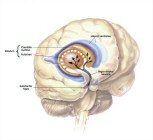
Parkinson’s Disease is heavily linked to the loss of dopamine neurons in the nigrostriatal pathway in the brain (there’s a good diagram here).

This causes movements difficulties (including slowness of movement, stiffness and tremor) as well as cognitive difficulties which can impair reasoning, concentration and memory.

Because the disorder is linked to the loss of cells in quite a focused area of the brain, it is been the subject of much interest by medical researchers wanting to ‘replace’ these cells by implanting stem cells into affected brain area with the hope that they’ll turn into new dopamine neurons.

So far, the trials have shown mixed results, although the research is still in the early stages.

Because of the use of stem cells, Parkinson’s Disease has become a political battleground, especially in the USA, where stem cell research is considered much more controversial than in other parts of the world.

Link to Case Notes on Parkinson’s Disease (with audio).
Link to NIH information on Parkinson’s Disease.

2007-02-23 Spike activity

Quick links from the past week in mind and brain news:

Schizophrenia could be ‘evolution of the intellect’ according to genetic study looking at how traits linked to the disorder may be beneficial in some instances.

“Why do men ignore nagging wives? It’s all science”. The sexism is optional it seems.

Cognitive Daily looks at research suggesting that video gamers make better surgeons.

In light of the case of a 4-year-old American girl who died from prescribed psychiatric medication, the Boston Globe questions the trend for diagnosing infants with bipolar disorder.

There’s been some fantastic neuropsychology videos on Channel N recently.

BBC News reports on a recent discovery of new brain cell growth in adult human brains.

The 2007 USA Memory Championships kick off in a couple of weeks.

SciAm reports that the ‘largest ever’ autism study identifies two promising genetic factors in the condition.

Developing Intelligence looks at how children develop prospective memory – the memory for remembering to do things in the future.

The neurochemistry of orgasm

Below is an excerpt from a review, published in this week’s Nature, of the book The Science of Orgasm (ISBN 9780801884900).

The review is by Prof Tim Spector whose work we’ve featured previously on Mind Hacks.

Spector published the results of a study in 2005 on the genetics of female orgasm which generated a range of critical commentaries.

His review tackles a new book which aims to cover the latest research on orgasm from a number of perspectives, but also gives a glimpse into the neuroscience of orgasm itself.

In my view, the best part of the book is the neurochemistry of the orgasm. Studies of paraplegic women clearly show the importance in female orgasm of multiple complex neural pathways such as the vagus nerve.

Functional brain imaging is an exciting area for study and (despite poor-quality pictures) the authors present the latest findings of multiple areas of brain activity during orgasm — which make any simplistic dopamine (stimulatory) – serotonin (inhibitory) mode of action unlikely.

They postulate a central role for areas such as the cingulate cortex, which is also where pain is perceived — linking pain and orgasm as related sensory processes. Orgasms apparently alter pain perception and increase pain thresholds, and this link may explain bizarre reports of women having orgasms during childbirth.

However, just when I was ready for the truth — a clear definition of orgasm and where it arises in the brain — I was told it was not a reflex, only a perception of neural activity and, even worse, probably a form of diffuse consciousness in an as yet undiscovered fifth dimension.

After such a careful, slow build-up of teasing and tantalizing data, I was definitely left frustrated — and wanting more.

Link to Spectors’ review (not freely available unfortunately).
Link to info on the book from the publishers.

A fruit that affects dopamine neurons

The fruit pictured on the right is called a soursop – a reportedly delicious fruit from the French West Indies that contains very small amounts of a substance that kills dopamine neurons.

Two research studies have looked at the substance – annonacin – and found it to kill off dopamine neurons in test tube trials.

Annonacin is only present in small quantities so occasionally eating soursop should be safe.

However, it is thought that the high rates of treatment resistant Parkinson’s disease in the French West Indies may be linked to high levels of soursop consumption.

Parkinson’s disease is caused by the death of dopamine neurons in the nigrostriatal pathway of the brain.

Link to neurotoxicity study on soursop.
Link to study on link with Parkinson’s disease.

Love unlimited

New Scientist has a fascinating news report on the psychology of polyamory – the practice of having multiple partners with the full consent of everyone involved.

Most Western societies have a focus on exclusively committed couples as the main family unit.

In contrast, people who are polyamorous feel themselves capable of more than one loving relationship and are often a part of a network of intimate lovers.

Crucially, lovers may not simply be sexual partners, and someone may be involved in several long-term committed relationships.

The dynamics of these relationships are bound to be different from traditional couples-based relationships, and psychologists are now starting to research how this affects the individuals and the social group.

Opinion is still divided on how successful these relationships might be in different spheres of life, although the field is really lacking in any systematic long-term studies.

So is poly more sustainable than monogamy? “Infidelity in monogamous relationships is estimated at 60 to 70 per cent, so it seems that attraction to more than one person is normal. The question is how we deal with that,” says Meg Barker, a professor of psychology at London South Bank University who presented her research into poly at the 2005 meeting of The British Psychological Society. “The evidence is overwhelming that monogamy isn’t natural,” says evolutionary biologist David Barash of the University of Washington, Seattle. “Lots of people believe that once they find ‘the one’, they’ll never want anyone else. Then they’re blindsided by their own inclinations to desire other attractive individuals. So it’s useful to know that this behaviour is natural.”

But as a mating strategy, poly may not be any better than monogamy; a person’s reproductive success may diminish if there is less pressure to be exclusive. “Jealousy is probably fitness enhancing,” Barash says. A more jealous male is likely to stick closer to his mate and prevent her from getting impregnated by other males. “A good look at human biology does not support polyamory any more than it supports monogamy,” he says. Biologist Joan Roughgarden, at Stanford University in Palo Alto, California, goes further. “Polyamory won’t last. The likelihood of being able to successfully raise children in that context is very limited. My guess is that it’s not an evolutionary advance, but a liability.”

Link to NewSci article ‘Love Unlimited: The polyamorists’.

The iris is the window to the soul

A fascinating paper just released online suggests that patterns in the iris of the eye can give an indication of personality.

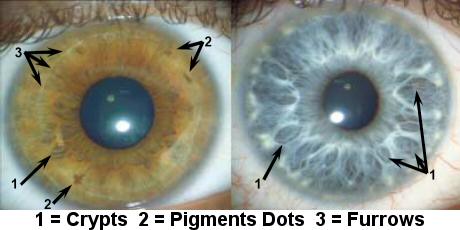
The research has been led by psychologist Mats Larsson and looks at relationship between measures of personality and the ‘crypts, pigment dots, and contraction furrows’ of the iris.

BBC News covers the research, as does a post on the Living the Scientific Life blog. There’s also some excellent background material to the research on a page from Larsson himself.

The paper itself is only available to subscribers to Biological Psychology. It seems the free summary isn’t available online yet, but this is an interesting excerpt from the introduction of the paper on previous studies:

The idea that personality differences are related to iris characteristics is not new. In 1965, Cattell observed differences in cognitive styles between blue and brown eyed subjects (Cattell, 1965) and since then eye color has been found to be related to a great variety of physiological and behavioral characteristics. Dark eyed people have on average higher scores on extraversion, neuroticism (Gentry et al., 1985), ease of emotional arousal (Markle, 1976) and sociability (Gary and Glover, 1976). However, there are a number of studies that fail to replicate the personality findings, typically because the effect tends to fade after early childhood. For instance, Rubin and Both (1989) found that blue-eyed children in kindergarten and Grade 2 were overrepresented in groups of extremely withdrawn youngsters, whereas no association could be found in Grade 4 or between eye color and extreme sociability in any grade.

According to Larsson’s more recent research, a gene called Pax6 is involved in both the development of the eye, and the development of an area of the frontal lobe called the anterior cingulate cortex or ACC.

The ACC is known to be involved in attention and inhibiting automatic responses, and there’s plenty of evidence to link it to personality-relevant traits like empathy and self-control.

Larsson found that ‘crypts’ were significantly associated with five personality characteristics (Feelings, Tendermindedness, Warmth, Trust and Positive Emotions) whereas ‘contraction furrows’ were associated with Impulsiveness.

I can’t say I’m entirely clear what ‘crypts’ and ‘contraction furrows’ look like, but there’s a description on Wikipedia and you can click here to see the diagram from Larsson’s paper in a popup window.

If it comes as a surprise that the same gene could influence both the eye and brain development, it’s actually not that strange an idea based on what we already know.

The retina, like the brain, is part of the central nervous system, so genes that code for the eye could also be associated with brain development.

Furthermore, the face develops from some of the same cells as the brain during the early stages of embryo growth.

This is why disorders that cause learning disabilities are sometimes associated with distinctive facial features (e.g. Down syndrome, Williams syndrome).

One other recent development worthy of note is that governments and businesses are now set on storing iris information to use as ID.

For example, the UK government wants to encode iris information on passports and keep copies on database to use in iris recognition systems in a system that is being trialled at the moment.

This might mean that personality profiles could be generated from biometric data.

How accurate they might be remains another question, but as with any centralised population sample, the concern is that those with unusual results may be scrutinised more closely using other methods, or deemed to be ‘risky’.

Link to BBC News story “How irises ‘reveal personalities'”.
Link to Living the Scientific Life post.
Link to Larsson’s page on his research.

Virtual reality to treat combat trauma

BBC News is reporting on a AAAS presentation on how virtual reality is being used to treat soldiers who have suffered post-traumatic stress disorder (PTSD) after combat.

Symptoms of PTSD include intrusive memories, pathological avoidance of things related or loosely-related to the trauma, and persistent arousal.

Cognitive behaviour therapy or CBT is one of the most effective treatments for PTSD.

Among its key methods is to slowly reintroduce the person to things associated with the trauma, while dealing with the negative thoughts that are triggered by the situation.

This is relatively straightforward if the person was traumatised by a car crash, as cars, roads and traffic are readily available.

If the person was traumatised by war, however, it is not always feasible to expose the person to ‘low level’ combat conditions as it may be too dangerous, or the person may have been taken out of the combat zone already.

Virtual reality is a possible way of doing this without putting the soldier at risk, while being realistic enough to treat the condition.

This research is part of a project led by Dr Albert Rizzo, which was the subject of a 2005 NPR radio programme which explored the treatment and its benefits.

While the project has been running for a while, the AAAS presentation contained the latest results, which reportedly suggest a promising outcome for soldiers treated with this method.

Link to BBC News story ‘Virtual treatment for US troops’.
Link to NPR programme ‘Virtual Reality Therapy for Combat Stress’ (with audio and video).

Greetings cards for mental illness

Greetings card manufacturer Hallmark have released a new line of cards especially for the person in your life experiencing mental illness, such as depression or an eating disorder, or other traumatic and difficult times.

ABC News has a report on the cards which are designed with colours to reflect the mood of the situation and pithy messages to match:

For eating disorders: “All I want is for you to be healthy and happy with yourself. Please take it one day at a time until you are.”

For depression: “When the world gets heavy, remember, I’m here to help carry it with you.”

There’s no word on cards for psychosis or paranoia (maybe “Like you, I never trusted those neighbours and their infernal thought stealing machines”) or people detained under the mental health act (“Kafkaesque doesn’t begin to describe the situation. Have a successful tribunal”).

Perhaps I’ve found a gap in the market?

Link to Journeys cards on Hallmark website.
Link to ABC News story (via Trouble with Spikol).

Top ten psychology studies

Jeremy Dean of PsyBlog is currently doing a run down of his top ten psychology studies and will conclude the series by asking for a vote for the reader’s favourite.

He’s writing up each one as a separate article, so you get a flavour of what the study involved and how it changed our knowledge of psychology.

So far, five out of the ten have been covered and include influential studies such as the one that laid the foundations for cognitive behavioural therapy and another where euphoria was induced by experimental trickery.

The full list will be released and written-up over the coming weeks, and a vote will decide the winner!

Link to PsyBlog’s “Top Ten Psychology Studies”.

SciAm Mind Matters

Scientific American have launched a new weekly blog seminar on the mind and brain where they target a particular study and get leading psychologists and neuroscientists give their take on it.

The editors give a quick run down of the study itself, while the invited commentators pull out the crucial issues or points of controversy.

So far they’ve looked at PTSD, navigation, environmental enrichment and the science of decision making, and there’s a new focus every week.

Link to SciAm Mind Matters.

Five minutes with Howard Dully

howard_dully.jpgDave Isay, Piya Kochhar and Howard Dully produced one of the most powerful radio documentaries of 2005 where Howard told the story of his own lobotomy and the quest to make sense of the experience.
A lobotomy is a type of brain surgery to disconnect parts of the frontal lobes from the rest of the brain.

It was originally devised by Egas Moniz as a treatment for psychiatric illness because it seemed to have a ‘calming’ effect.

Howard was given the operation when only 12 years old by Walter Freeman – the world’s most enthusiastic evangelist for this procedure.

The procedure is now almost entirely disused, owing to the poor outcomes and dangers of the procedure, but it has left a legacy of people with permanently altered lives.

Howard wanted to understand how this dangerous procedure came to be so widely used and how it came to be performed on him as a child. He has also been kind enough to talk to Mind Hacks about his experiences.

Continue reading “Five minutes with Howard Dully”

The human is the only animal that…

Psychologist Daniel Gilbert on the unwritten vow taken by psychologists. From p3 of Stumbling on Happiness (ISBN 9780007183135).

Few people realise that psychologists also take a vow, promising that at some point in their professional lives they will publish a book, a chapter or at least an article that contains the sentence: ‘The human being is the only animal that…’ We are allowed to finish the sentence any way we like, but it has to start with those eight words.

Most of us wait to relatively late in our careers to fulfil this solemn obligation because we know that successive generations of psychologists will ignore all the other words that we managed to pack into a lifetime of well-intentioned scholarship and remember us mainly for how we finished The Sentence.

We also know that the worse we do, the better we will be remembered. For instance, those psychologists who finished The Sentence with ‘can use language’ were particularly well remembered when chimpanzees were taught to communicate with hand signs.

And when researchers discovered that chimps in the wild used sticks to extract tasty termites from their mounds (and to bash each other over the head now and again), the world suddenly remembered the full name and mailing address of every psychologist who ever finished The Sentence with the words ‘uses tools’.

So it is with good reason that most psychologists put off completing The Sentence for as long as they can, hoping that if they wait long enough, they might just die in time to avoid being publicly humiliated by a monkey.

Why psychologists study twins

The BPS Research Digest has a concise article on a key way of determining how much genetics influences the expression of a psychological trait – the twin study.

The article is part of a new series where professional researchers are asked to write short articles on key topics.

This one is by Dr Angelica Ronald from London’s Institute of Psychiatry who researches the autism spectrum.

Twin designs address the nature-nurture question. Behaviour geneticists compare how alike one twin is with the other twin on whatever variable they are interested in; in my case this is autistic behaviours. If genes influence variation in autistic behaviours, identical twin pairs who share all their genes will be highly similar in their degree of autistic behaviours whereas fraternal twins will be much less similar. This is what we have found.

Twin studies have been essential in understanding the effects of genetics but are controversial with some researchers as there are various ways of determining the outcome which may not always be in agreement.

Link to BPSRD article ‘Why psychologists study twins’.