Is banking on neuroscience a false economy?

The Economist has a great article taking a wide-angle view of neuroeconomics, asking whether it actually contributes anything useful to our understanding of economic systems or whether its just a personal psychology of gains and losses that won’t actually scale.

The fiercest attack on neuroeconomics, and indeed behavioural economics, has come from two economists at Princeton University, Faruk Gul and Wolfgang Pesendorfer. In an article in 2005, “The Case for Mindless Economics” [pdf], they argued that neuroscience could not transform economics because what goes on inside the brain is irrelevant to the discipline. What matters are the decisions people take—in the jargon, their “revealed preferences”—not the process by which they reach them. For the purposes of understanding how society copes with the consequences of those decisions, the assumption of rational utility-maximisation works just fine.

But today’s neuroeconomists are not the first dismal scientists to dream of peering inside the human brain. In 1881, a few years after William Jevons argued that the functioning of the brain’s black box would not be known, Francis Edgeworth proposed the creation of a “hedonimeter”, which would measure the utility that each individual gained from his decisions. “From moment to moment the hedonimeter varies; the delicate index now flickering with the flutter of the passions, now steadied by intellectual activity, low sunk whole hours in the neighbourhood of zero, or momentarily springing up towards infinity,” he wrote, poetically for an economist.

Part of the scepticism seems to originate from more general reservations about the results of brain scanning studies being over-interpreted, echoing wider concerns in cognitive neuroscience.

What’s interesting though is that the article mentions that neuroeconomics researchers are turning to transcranial magnetic stimulation (TMS) – a technique that alters brain function for a few hundred milliseconds while people are actively completing tasks.

Because TMS alters brain function, it’s not just showing you a correlation like brain scans do. If task performance changes when you’ve altered that brain area you can infer that the particularly part of the cortex you’ve targeted is causally involved in the psychology of the task.

Along these lines, one recent high-profile study [pdf] managed to alter participants’ fairness behaviour in the Ultimatum Game (a common experimental task) when the function of the upper outside surface of the right frontal lobe was disrupted.

Link to The Economist article ‘Do economists need brains?’.
pdf of ‘The Case for Mindless Economics’.
pdf of TMS study on fairness in the Ultimatum Game.

2008-07-25 Spike activity

Quick links from the past week in mind and brain news:

Neurophilosophy has a beautiful quote from the great Spanish neuroscientist Santiago Ramon y Cajal.

The miseries of losing one’s sense of smell are covered by an interesting Slate article on this neglected sense.

Cognitive Daily looks at a study which attempts to answer the question ‘Why do more Asians have perfect pitch?‘.

Two novels on identity theft are touched on by My Mind on Books.

The New York Times has an excellent multimedia feature on ‘The Voices of Bipolar Disorder’ where people affected by the condition discuss their experiences.

Delusions reflect Hollywood movie ‘The Truman Show‘.

Nature reviews the latest Disney animated feature about an artificially intelligent robot Wall-E.

The Female Brain or one female’s perspective? Neuroanthropology reports from a recent ‘critical neuroscience’ conference and a discussion about popular books on sex difference.

Scientific American on why anecdotal evidence can undermine scientific findings for most people.

SciAm’s Mind Matters blog on the neural energy drain of decision-making.

The BPS Research Digest looks at a study that reports novelty seekers have a right-sided spatial bias.

The neuroscience of insight is discussed in a tantalising excerpt from a New Yorker by The Frontal Cortex.

Psych Central has an interview with the insightful psychiatrist Daniel Carlat.

BooYaa! Straight-talking judge has some hard words for Eli Lilly in the ongoing court case over antipsychotic olanzapine (Zyprexa).

Misdirected magic

Just one more on the magic. I just got this email from Mind Hacks readers Stefano suggesting that stage magicians that use psychological language actually pollute the public’s understanding of science. He also gives a much better, and, I’m guessing, more accurate explanation of the hand-raising trick in Keith Barry’s TED performance.
As a psychologist, I have to say I dislike the new sort of mentalism that we’re seeing nowadays. Derren Brown (an incredibly talented performer, as you said) tries to portray his show as something more than old-fashioned magic by introducing psychological terms and studies, somewhat erratically. I understand that his use of scientific terminology might be part of the misdirection, but it really makes me cringe to see he perform ridiculous feats and justify it by citing things like the Milgram study, concentration abilities or persuasion techniques. Almost every time he mentions a psychological concept, he either misrepresents it or uses it to explain absurd stuff that he did with stooges or simply old magic tricks.

I didn’t know Keith Barry, but I have to say his TED lecture made me put him on the same category as Derren Brown: old mentalist tricks disguised as “persuasion and psychological techniques”. He even managed to fool you, it seems: the trick that you attributed to hypnosis has nothing to do with it, being achieved simply by the performer applying pressure on the feet of the subject instead of his hand. Notice how he never says where the pressure will be, and his left leg is covered by the table. His other live tricks are equally simple, and have nothing do with psychology, except for the fact that everything you do to an audience – even cheating/fooling them – is part of it.

Stefano makes an interesting point that these acts rely, in part, on misinforming people about psychology. Derren Brown is a classic example where he often gives explanations after the trick so the viewer feels they are being let in on the secret, but which are obviously misleading and so are part of the more general misdirection that the feats are achieved through the ‘power of the mind’.

In terms of the hand raising trick that Stefano mentions, looking back at the video, this seems a much more likely explanation. In which case, this is a ‘theory of mind‘ illusion, where we are fooled into attributing a different mental state to the person picked from the audience than they actually have.

I hope you don’t mind me publishing part of your email Stefano, I did try and email and ask but unfortunately the address wasn’t valid. Do get in touch if you have a website or blog and I’ll happily link to it and many thanks for your interesting commentary.

Dennett on magic and misdirection

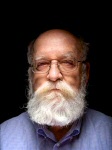
While musing over yesterday’s post on the use of psychological language as a form of a magician’s misdirection, I remembered Dennett’s 2003 article [pdf] on consciousness where he uses exactly this as a metaphor for why consciousness doesn’t exist as some scientists think it does.

Dennett argues that the ‘hard problem‘ is a red herring – the whole question of how conscious first person experience arises from the biological function of the brain assumes that consciousness is a single thing that needs explaining.

He suggests that there isn’t a single thing that is consciousness, just a collection of mental components, but the fact we’ve named it as a single thing fools us.

In his article Explaining the “Magic” of Consciousness, he gives a great analogy of how the use of the word ‘the’ was used in a card trick to make it seem completely mysterious even to fellow professional magicians.

The tempting idea that there is a Hard Problem is simply a mistake. I cannot prove this. Or, better, even if I can prove this, my proof will surely fall on deaf ears, since CHALMERS, for instance, has already acknowledged that arguments against his convictions on this score are powerless to dislodge his intuition, which is beyond rational support. So I will not make the tactical error of trying to dislodge with rational argument a conviction that is beyond reason. That would be wasting everybody’s time, apparently. Instead, I will offer up what I hope is a disturbing parallel from the world of card magic: The Tuned Deck.

For many years, Mr. Ralph Hull, the famous card wizard from Crooksville, Ohio, has completely bewildered not only the general public, but also amateur conjurors, card connoisseurs and professional magicians with the series of card tricks which he is pleased to call “The Tuned Deck”…

Ralph Hull’s trick looks and sounds roughly like this:

Boys, I have a new trick to show you. It’s called ‘The Tuned Deck’. This deck of cards is magically tuned [Hull holds the deck to his ear and riffles the cards, listening carefully to the buzz of the cards]. By their finely tuned vibrations, I can hear and feel the location of any card. Pick a card, any card… [The deck is then fanned or otherwise offered for the audience, and a card is taken by a spectator, noted, and returned to the deck by one route or another.] Now I listen to the Tuned Deck, and what does it tell me? I hear the telltale vibrations, … [buzz, buzz, the cards are riffled by Hull’s ear and various manipulations and rituals are enacted, after which, with a flourish, the spectator’s card is presented].

Hull would perform the trick over and over for the benefit of his select audience of fellow magicians, challenging them to figure it out. Nobody ever did. Magicians offered to buy the trick from him but he would not sell it. Late in his life he gave his account to his friend, HILLIARD, who published the account in his privately printed book. Here is what Hull had to say about his trick:

For years I have performed this effect and have shown it to magicians and amateurs by the hundred and, to the very best of my knowledge, not one of them ever figured out the secret. …the boys have all looked for something too hard [my italics, DCD].

Like much great magic, the trick is over before you even realize the trick has begun. The trick, in its entirety, is in the name of the trick, “The Tuned Deck”, and more specifically, in one word “The”! As soon as Hull had announced his new trick and given its name to his eager audience, the trick was over. Having set up his audience in this simple way, and having passed the time with some obviously phony and misdirecting chatter about vibrations and buzz-buzz-buzz, Hull would do a relatively simple and familiar card presentation trick of type A (at this point I will draw the traditional curtain of secrecy; the further mechanical details of legerdemain, as you will see, do not matter).

His audience, savvy magicians, would see that he might possibly be performing a type A trick, a hypothesis they could test by being stubborn and uncooperative spectators in a way that would thwart any attempt at a type A trick. When they then adopted the appropriate recalcitrance to test the hypothesis, Hull would ‘repeat’ the trick, this time executing a type B card presentation trick. The spectators would then huddle and compare notes: might he be doing a type B trick? They test that hypothesis by adopting the recalcitrance appropriate to preventing a type B trick and still he does “the” trick – using method C, of course. When they test the hypothesis that he’s pulling a type C trick on them, he switches to method D – or perhaps he goes back to method A or B, since his audience has ‘refuted’ the hypothesis that he’s using method A or B.

And so it would go, for dozens of repetitions, with Hull staying one step ahead of his hypothesis-testers, exploiting his realization that he could always do some trick or other from the pool of tricks they all knew, and concealing the fact that he was doing a grab bag of different tricks by the simple expedient of the definite article: The Tuned Deck.

pdf of article Explaining the “Magic” of Consciousness.

Sleight of mind

I’ve just watched a video of an immensley entertaining TED presentation by ‘brain magician’ Keith Barry who does an act with various ‘mind control’ or ‘mind reading tricks’.

It reminded me of an early book by Derren Brown, an English magician who has a similar pitch. Brown is better known for his more recent TV shows and books, but some of his early publications are fascinating because they not only discuss his approach, but also shed light on our increasingly psychology-focused culture.

Keith Barry’s TED presentation contains part suggestion that would be well-known to hypnotists (in fact, the arm raising and lowering is used in standard hypnotisability measures) and part stage magic, all wrapped up in the language of psychology.

He starts the presentation by noting that the redirection of attention is an important part of magic and gives an example of our tendency to follow the magician’s gaze.

In fact, this is preceded by a clasping trick which surely demonstrates this, where the audience’s attention, and rather unfairly for the internet viewer – the camera, are diverted away from him reclasping his hands in a different manner.

I’m not going to pretend that all of the tricks in Barry or Brown’s shows are obvious, as some leave me completely baffled and in awe. I suspect only poor magicians will allow their tricks to be apparent even to the most curious of psychologists.

However, in Brown’s now sadly out-of-print book Pure Effect he makes the fascinating point that the narrative itself is part of the redirection, and describes how framing magic tricks in psychological language leads to certain expectations which, of course, make certain redirections more easily achievable.

This classic presentational ploy that Banachek calls ‘psychological direction’ allows for the illusion of enormous skill, as long as you let the participants figure out for themselves that you are employing such methods. I believe I earn their respect by denouncing psychic ‘psychic power’ as woolly guff and I challenge those lobotomised flower fairies who believe in such nonsense, appealing to their intelligence and belief in themselves as sceptical creatures. The other advantage of this angle is that is allows the effect to sit comfortably with a magic routine that suggests that similar ploys are at work.

The two sets become connected by a seductive undercurrent of apparently deft manipulation of the participant’s minds. At first, these techniques are being employed to produce wonderful, artistic and mystical effects. Then the tone darkens, and the performer, almost with an air of reluctance, sensing the correct rapport in the group, casts aside his props and amusements and begins to rely entirely on his knowledge of human nature to delve into the thought processes of the group. The spectators sense this intensifying of the situation, and adjust their interpretation of the event accordingly. What we are seeing is no longer trickery.

Such an approach uses our cultural familiarity and belief in psychological explanations to redirect our thinking to one place, while the magician is working the ‘magic’ below our level of awareness. In other words, most of the magic is done before the trick even starts.

This is what most impresses me about professional magicians. The slight of hand and the perceptual tricks are cool, but its the cognitive magic, the shaping of expectancies through narrative, that makes them seem so wondrous.

UPDATE: I just noticed this rather well-timed article on Wired Science entitled ‘Magic Tricks Reveal Inner Workings of the Brain’ that expands on the topic. Enjoy!

Link to Keith Barry TED ‘brain magic’ presentation.

Head in a vice

Scientific American has an article on migraines that takes a comprehensive look at the science of this painful and hallucinatory disorder.

The piece updates the science on migraines from the traditional but oversimplified ‘constricted blood vessels’ explanation to explore the interplay between nerves, neurotransmitters and lifestyle.

A crucial process seems to be cortical spreading depression that may be responsible, at least in part, for both the intense pain and the aura:

Aura appears to stem from cortical spreading depression—a kind of “brainstorm” anticipated as the cause of migraine in the writings of 19th-century physician Edward Lieving. Although biologist Aristides Leão first reported the phenomenon in animals in 1944, it was experimentally linked to migraine only recently. In more technical terms, cortical spreading depression is a wave of intense nerve cell activity that spreads through an unusually large swath of the cortex (the furrowed, outer layer of the brain), especially the areas that control vision. This hyperexcitable phase is followed by a wave of widespread, and relatively prolonged, neuronal inhibition. During this inhibitory phase, the neurons are in a state of “suspended animation,” during which they cannot be excited.

Neuronal activity is controlled by a carefully synchronized flow of sodium, potassium and calcium ions across the nerve cell membrane through channels and pumps. The pumps keep resting cells high in potassium and low in sodium and calcium. A neuron “fires,” releasing neurotransmitters, when the inward flow of sodium and calcium through opened channels depolarizes the membrane—that is, when the inside of the cell becomes positively charged relative to the outside. Normally, cells then briefly hyperpolarize: they become strongly negative on the inside relative to the outside by allowing potassium ions to rush out. Hyperpolarization closes the sodium and calcium channels and returns the neurons to their resting state soon after firing. But neurons can remain excessively hyperpolarized, or inhibited, for a long time following intense stimulations.

The article is remarkably comprehensive, probably as it’s written by neurologists David Dodick and John Gargus.

Link to SciAm article ‘Why Migraines Strike’ (via 3Q).

Through the looking glass

The New York Times has a great article on the psychology of mirrors that shows that they’re both cognitively challenging and have the power to change our social behaviour.

As a kid I spent hours puzzling over the fact that mirrors seemed to swap left and right but not up and down and it seems that there’s much about mirrors that we just don’t get very easily – such as judging how big our reflection will be. As it turns out, it’s always half our size.

Another curious aspect is that simply the presence of a mirror in a room changes our social behaviour because it seems to make us more self-aware.

Other researchers have determined that mirrors can subtly affect human behavior, often in surprisingly positive ways. Subjects tested in a room with a mirror have been found to work harder, to be more helpful and to be less inclined to cheat, compared with control groups performing the same exercises in nonmirrored settings. Reporting in the Journal of Personality and Social Psychology, C. Neil Macrae, Galen V. Bodenhausen and Alan B. Milne found that people in a room with a mirror were comparatively less likely to judge others based on social stereotypes about, for example, sex, race or religion.

“When people are made to be self-aware, they are likelier to stop and think about what they are doing,” Dr. Bodenhausen said. “A byproduct of that awareness may be a shift away from acting on autopilot toward more desirable ways of behaving.” Physical self-reflection, in other words, encourages philosophical self-reflection, a crash course in the Socratic notion that you cannot know or appreciate others until you know yourself.

Unfortunately, the article misses out one of the most fascinating scientific findings – the fact that our understanding of mirrors can be selectively impaired after brain injury.

It’s called mirror agnosia and is a condition where people lose their sense of reflection.

In these cases, the patient still has intact knowledge about mirrors, they can describe what they do and how they work, but they can’t seem to put it into practice.

For example, the patient stands in front of a mirror and the researcher holds a pen over the patient’s shoulder and asks him to reach for it. Most people would reach backwards, people with mirror agnosia reach forwards and bang their hand into the glass.

In this study, the researchers noted that “all four patients kept complaining that the object was ‘in the mirror’, ‘outside my reach’ or ‘behind the mirror’. Thus, even the patients’ ability to make simple logical inferences about mirrors has been selectively warped to accommodate the strange new sensory world that they now inhabit”.

Even more curious are cases of mirrored-self misidentification, a delusional variant where patients look into the mirror, see themselves, and believe it is another person.

Here’s a case description from a 2001 study of a patient with the condition:

TH described his reflection as a person who was a ‘dead ringer’ for himself. TH frequently attempted to talk to the person, and said that as the person never replied he could only assume he had something wrong with his voice or tongue. When asked what he thought the person’s personality was like, TH replied that the person had not given him any reason to be suspicious. Asked where the person lived, TH said he lived in an apartment adjoining TH’s own apartment (although there was no other apartment on that block of land).

Link to NYT article ‘Mirrors Don‚Äôt Lie. Mislead? Oh, Yes’

Five minutes with psychedelics researcher Bill Richards

Psychologist Bill Richards studies the medical potential of the hallucinogenic drug psilocybin, the active ingredient in ‘magic mushrooms’.

He’s part of the research team at the respected Johns Hopkins Medical School who are studying whether psilocybin-assisted psychotherapy can help people with cancer cope with the psychological impact of their condition.

The project is a hot topic at the moment, partly because the research team are looking for volunteers with a diagnosis of cancer to take part in the pioneering study, and also because several of their recent findings have made headlines.

These have included the widely-reported results from their recent studies where participants reported that some of the psilocybin experiences remained deeply and personally meaningful, even after a year.

Bill has been a clinical psychedelics researcher since the 1960s and so has a wealth of experience with these curious compounds, and he’s also kindly agreed to talk to Mind Hacks about the current pioneering research project.
 

Continue reading “Five minutes with psychedelics researcher Bill Richards”

Oliver Sacks’ Rage for Order

Oliver Sacks’ fantastic 1996 autism documentary Rage for Order is now available on Google Video, where he meets some completely remarkable people and explains some of the more curious features of the syndrome.

The programme explores the sort of interests, behaviours and talents that are associated with autism through Sacks’ irresistible interest in the human condition.

It includes the artist Jessica Park, who creates the most stunningly colourful paintings of buildings with perfectly accurate star constellations in the background (that’s one of her pictures on the left).

It’s a really wonderful piece of television and was part of a six-part series that Sacks’ made called Mind Traveller.

Sadly, the other parts of the series seem to be lost to the internet, but do get in touch if you have a copy as I would to see them.

Link to ‘Rage for Order’ on Google Video.

Encephalon turns gold at 50

The 50th edition of the Encephalon psychology and neuroscience writing carnival has arrived, with the best of the last fortnight’s mind and brain writing ably hosted by the excellent Sharp Brains.

Alvaro stars with a tongue-in-cheek request to remind people of the benefits of participating and hosting Encephalon at your blog.

If there’s a particular post your proud of and want to spread the word, or you’re interesting in getting exposure for your blog by hosting the high traffic festivities, just drop an email to encephalon dot host at gmail dot com.

A couple of my favourites from this edition include a completely fascinating post on the compulsive collecting of televisions reported in the medical literature, and another on the function of fearful faces.

The next edition will be hosted on the primed and ready Mouse Trap.

Link to Encephalon 50.

Values, taste perception and psychological blind spots

An ingenious study just published in the Journal of Consumer Research has provided a striking demonstration that taste perceptions and product preferences are strongly influenced by our personal values – to the point where people who believe in the importance of social authority perceived a sausage roll labelled as vegetarian as far inferior to a ‘meat’ version, even though they ate the same sausage roll on both occasions.

The same result appeared whether the participants actually ate meat or vegetarian sausage rolls, and the participants couldn’t reliably distinguish the two in any condition.

The study, led by psychologist Michael Allen, is a neat demonstration of how our product preferences are influenced by an interaction of our personal values, the cultural meaning of the product and its physical properties, along the lines of an earlier study that found that wine described as more expensive tastes better, even when it was no different from the same wine described as being cheaper.

Of relevance to this study is that fact that red meat has been consistently associated with social power while grains, fruits and vegetables with social equality. What this new study suggests is that these social meanings interact with our own values to affect our perception.

If you think this effect might be specific to sausages, the study conducted a similar experiment with brands of cola, finding that people who endorsed the values linked to Pepsi (excitement, enjoyment, social power and recognition) perceived a cola labelled as Pepsi as tasting better, regardless of whether it actually was the genuine article, or whether it was a budget supermarket brand.

As we’ve discussed previously, perhaps what’s most interesting is that most consumers tend to think that they select products primarily on the basis of physical properties, despite plenty of evidence to the contrary.

This is the ‘psychological blind spot’ which most marketing is targeted at. Indeed, I’ve always suspected that it’s the people who say “advertising doesn’t affect me” who are the marketers’ dream consumer, largely because they lack insight into the inescapable effects of marketing.

The study is well worth reading in full, or failing that, just the first few pages, as the introduction is a fascinating review of the psychology of product symbolism and how it affects decisions and preferences.

This research suggests that products have important social meanings that much product preference is driven by a need to manage our social appearance and identity.

It’s not that people who strongly identify with the importance of social power and eat red meat, or people who identify with excitement and drink Pepsi, just say they taste better.

The taste is genuinely different for them, but only when they think they are consuming these products. Assuming the products are similar to a certain degree, a significant slice of our perception is actually driven by what we want to be the case because of the values we already hold.

Link to write-up from Medical News Today.
Link to full text of study.

Psychopharmaparenting

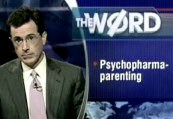
Neuroanthropology has found a highly amusing video clip from the satirical US comedy show The Colbert Report on the increasing use of psychiatric drugs in children, something he dubs ‘psychopharmaparenting’.

Colbert riffs on 2006 article from The New York Times that reported a five-fold increase in children being prescribed antipsychotics.

These drugs are typically not prescribed because a child is experiencing psychosis (for reasons that no-one is entirely sure of, children only rarely become psychotic) but because of behavioural problems.

One antipsychotic drug (risperidone) has been approved in some countries for children with autism who are aggressive, self-injure or have severe tantrums, but the concern is that these sorts of drugs are being used more widely to simply pacify difficult to manage children.

Methylphenidate (Ritalin) is another drug which has caused similar concerns as parents and teachers pressure doctors to prescribe the drug even for what used to be considered relatively mild problems of inattention and hyperactivity.

The official line is that these drugs are the last resort, because behavioural interventions – specific programmes that teach parents to manage children’s behaviour in a more effective way – are remarkably effective with a large evidence base to back them up.

Unfortunately, despite not meddling with the brain’s dopamine system to who-knows what long-term effect, they’re not as well-known, not always available and require effort and learning.

Any decision to give medication involves weighing up and advantages and disadvantages, but there is always an interplay between the influence of the scientific evidence, and what has become socially acceptable.

The fact Colbert is able joke about psychopharmaparenting is a sign of how widespread the practice has become.

Link to psychopharmaparenting clip.

Cogito ergo t-shirt

Indie t-shirt designers 410BC are channelling Descartes in their spring collection, with a brain emblazoned t-shirt that declares ‘I think therefore I am’.

Not a bad shirt for $15 dollars I think you’ll agree, especially if you’re hip to 17th century French philosophers.

The phrase “I think therefore I am” originated because Descartes wanted to know about what sort of things existed in the world, but realised he couldn’t trust his senses because they could be fooled.

He imagined the most extreme example he could think of, where an evil demon was keeping him in a Matrix-style universe in which everything he perceived was an illusion. He asked the question, if he couldn’t trust his senses, what could he truly know.

Descartes came to the conclusion that he could doubt everything except the fact he was doubting and therefore concluded that his ability to doubt, and consequently his thought, was proof of his existence – summed up in has famous phrase “I think therefore I am”.

In part, this also led him to believe that thought was not part of the physical universe, and that thought and matter were separate entities. In fact, he believed thoughts were part of the soul but interacted with the body through the pineal gland – a small structure which occupies a central position in the brain.

Descartes’ proposal that thought and matter (or mind and brain) are separate entities is known as as Cartesian dualism and is now much derided.

One difficulty is that while few people deny that both mind and brain exist in the physical world, it’s difficult, and some would say impossible, to talk about them in the same way.

For example, it’s easy to answer the question ‘what colour are your neurons?’ but impossible to answer the question ‘what colour are your thoughts?’

This causes all sorts of merry hell for cognitive scientists and leads to the rather bizarre tendency for people to think that every explanation that includes the mind needs to be reduced to brain function for it to be valid.

Philosophers, who tend to be much more able to think about these things without panicking, tend to favour what’s called property dualism, which says that while we accept everything happens in the physical world, we can’t always match every aspect of one level of description to another, even if both are both completely coherent on their own level.

I’m hoping that the 410BC autumn collection will have a similar t-shirt that says “I think, but that doesn’t mean I believe that properties that I ascribe to my thoughts on level of mental description will necessarily be reducible to the theories of neurobiology, although I agree that the scientific endeavour to discover which properties have reliable neural correlates will be an important part of any complete theory of the human mind, bearing in mind that reduction is not an answer in itself and will have to be complemented by theories that span all levels of explanation”.

However, I also think they might need a few more attractive blonde models to boost sales on that one.

Link to 410BC ‘Cogito ergo sum’ t-shirt (via Hide Your Arms).

On the brink of a social psychology revolution

The Times has a brief article noting the growing influence of social psychology in government thinking and economic policy, mirroring the popular interest in a slew of new books on behavioural economics.

It’s interesting that the article lists various ways in those close to the British political establishment are increasingly bringing ideas drawn from empirical social sciences in their thinking, mirroring the murmurings about the Obama team’s interest in behavioural economics.

And, as we’ve noted here, there’s now an increasing interest, causing an ongoing controversy, about the use of social scientists in the occupying military forces in Iraq and Afghanistan.

We hear a great deal about interest and initiatives in these areas, but very little about outcome studies (although its possible that the military keep theirs secret) so I wonder whether the success of these approaches will depend on the maturity of the science in terms of how well it actually predicts changes in the real world.

Link to Times article on the ‘social psychology revolution’.

2008-07-18 Spike activity

Quick links from the past week in mind and brain news:

One I missed before – The New York Review of Books has an extended and thoughtful review of a stack of cognitive science books and Neurophilosophy has a great commentary.

The New York Times reports on the challenges of $600-a-session patients. Interesting to note it’s all described in terms of psychoanalysis – a therapy strangely ghettoed among the well-to-do.

TV producer creates a video documentary about his brain surgery for Parkinson’s disease.

Neuroanthropology discusses the best way of going about studying neuroanthropology and the problems you might face from other researchers worried about this crazy new mix of neuroscience and culture.

The history of the Wisconsin Card Sorting Test is covered by Advances in the History of Psychology.

Wired notes that victims of ‘mind control‘ are to gather in Connecticut for a annual conference.

Fluoxetine for Fido. The New York Times examines the growing trend for using psychiatric drugs on pets.

To the bunkers! Channel N has a video on neurorobotics.

The BPS Research Digest finds a video discussion between psychologist Jonathan Haidt and political scientist Will Wilkinson on the psychology of morality.

Research finding <a href="http://scienceblogs.com/notrocketscience/2008/07/infants_remember_more_by_chunking_groups.php
“>memory ‘chunking’ in infants is covered by the excellent Not Quite Rocket Science.

SharpBrains has one of its bi-weekly round-ups of its interviews and all that’s new in the world of cognitive enhancement.

More from The New York Times, this time on the commercial release of the Emotiv Systems ‘brain reading’ gamer’s headset.

Cognitive Daily report on how playing video games can improve visual acuity.

Wall-E and and the evolution of emotion expression is discussed by Frontal Cortex.

One step beyond

Neurophilosophy has found a fascinating black and white TV documentary on Mexican hallucinogenic mushrooms from 1961, where the presenter samples some of the psilocybin-containing fungus and reports the effects during the trip.

In the January 4th, 1961 episode of One Step Beyond, director and presenter John Newland ingests psilocybin under laboratory conditions, to investigate whether or not the hallucinogenic mushroom can enhance his abilities of extra-sensory perception.

The programme was apparently inspired by a 1959 book called The Sacred Mushroom, by parapsychologist Andrija Puharich, who is known for taking the spoon-bending fraudster Uri Geller to the United States for investigation.

As Neurophilosophy notes, this was before the dawn of the psychedelic age, and so it was unlikely that this would have been connected to drug culture as we might do today, but was likely to be viewed as a documentary on the strange ways of ‘them overseas’.

It has some interesting parallels to a 1955 BBC documentary on mescaline, where the Labour MP Christopher Mayhew took a fairly stiff dose and narrated the effects (“Tubby is disappearing in time…”).

The magic mushroom documentary also has some wonderfully stilted dialogue in places, and mentions that they could be used to treat mental disorder – an area which is being researched once more.

We’ll have some more on this research shortly, so look out for a forthcoming interview.

Link to Neurophilosopy with documentary video.