I know where you are secretly attending!

A remarkable study has just been published in the cognitive science journal Vision Research which may be the first genuine demonstration of brain scan ‘mind reading’.

The study focuses on visual attention and particularly what is called ‘covert visual attention’ – the ability to mentally focus on something without moving your eyes.

For example, take the phrase ‘cat x dog’. I want you to fix your eyes on the ‘x’ and keep them there, but then alter your concentration so you mentally focus on ‘cat’ and then ‘dog’ and back again.

Your eyes aren’t moving but you can concentrate on different things in the scene you’re looking at just by shifting your attention. This is called ‘covert’ visual attention because there is no obvious (‘overt’) bodily movement associated with it, it’s a hidden (‘covert’) mental process.

Since the time of William James, attention has been thought of like a spotlight in that you just ‘shine’ it on an area to make it mentally clearer.

The authors of this new study wondered whether attention was really this selective and decided to use a nifty brain imaging method to test this out.

They relied on the fact that every point in your retina is literally mapped in the brain. Each point in the visual scene has a corresponding area of the visual cortex which is laid out in the same way – in something called a retinotopic map

We know that visual attention selectively boosts activity in the visual cortex, so when you switch between ‘cat’ and ‘dog’ in our example above, the brain increases activity in the visual areas that corresponds to each word.

In other words, it’s possible to measure the effect of visual attention by looking at where changes in visual cortex activity occur.

After doing some tests to make sure they’d verified the exact layout of each of the participant’s retinotopic map, the researchers asked participants in the scanner to systematically focus on specific parts of a circular area cut into segments, with inner, middle and outer rings – all while keeping their eyes fixed in the centre.

They then mapped activity from the visual cortex back into the visual scene to create a ‘heat map’ of where attention was spread.

You can see an example in the image on the right. The ‘x’ never appeared in the actual experiment, I just added those to make the diagram clearer, but they illustrate where the participants were instructed to concentrate.

Overall, the results showed that attention was not tightly focussed like a spotlight. In fact, when we direct our concentration to the outer ring of vision, large areas of the visual scene are flooded with activity.

This happened to a lesser extent with the very inner ring of vision, with visual scene enhancement typically extending outwards as well.

But with the middle ring of vision, the enhancement was pretty tight, being restricted to just that area.

This is an amazing finding in itself, but the ‘mind reading’ part is quite a finale.

The researchers also had a section of their study where they asked the participants to randomly focus on parts of the circle. Remember, they weren’t moving their eyes (and this was checked with a monitor), just changing their internal focus of concentration.

By solely looking at the patterns of brain activation, the researchers worked out where the participants were concentrating with 87% accuracy.

In many previous ‘mind reading’ experiments, researchers have shown people different sorts of pictures and then worked out which ones they were looking at by analysing brain activity.

It’s a largely passive process and relies on distinguishing different physiological reactions. If you measured blood flow to the penis you could probably distinguish whether men were looking at pictures of furniture or people having sex – but you probably wouldn’t call this ‘mind reading’. These previous studies just measured the brain to do something similar.

While such studies are often over-hyped, this new experiment does take the process a step further.

It’s still a very limited task but the participants are voluntarily engaging in a purely internal mental process and the brain scans tell us where their focus of concentration is.

The researchers had no knowledge of where this was beforehand and the same thing couldn’t have been worked out through watching participants’ behaviour.

Link to study.
Link to PubMed entry for same.

2009-06-26 Spike activity

Quick links from the past week in mind and brain news:

The Wall Street Journal vaguely thinks about the benefits of daydreaming and a wandering mind for creativity.

There’s more video of Philip Zimbardo discussing the psychology of time over at Fora.tv

The Independent reveals that some people use drugs to enhance the mind because they’ve never been used in this way, ever, in history and we are being challenged with a dilemma so new it can barely be conceived by the human mind.

Is it acceptable for people to take methylphenidate to enhance performance? asks the British Medical Journal. A two part debate.

The Boston Globe has an interesting piece on how American college students choice of major is influenced by what their friends have chosen.

Sleeping on a complex decision may be a bad choice, reports New Scientist covering new research aiming to rehabilitate conscious decision-making.

Cognitive Daily covers a rare instance where single language speakers perform better than bilinguals – in spatial negative priming experiments. A chat-up line for a million Italian exchange students is born.

Metafilter collects a bunch of evidence on domestic violence by women suggesting that it happens at an equal rate to domestic violence by men,

Unconscious science stereotype associations predict size of science gender gap across 34 countries, according to a study covered by Not Exactly Rocket Science.

The Atlantic has an article on technology and the brain which doesn’t suck. It’s not great – it just assumes that we suffer from information overload without any evidence and doesn’t mention a single study in the area – but it doesn’t pretend to be anything different.

People are more likely to comply with requests into the right ear, suggests a study in a night club covered by Wired Science. Sadly, the researchers were just asking for cigarettes.

New Scientist reports on a study of business communication that found email exchange patterns can predict impending doom.

Who do senior psychiatrists go to for psychological help? asks The New York Times. To Boston, it seems, where apparently they’re all still psychoanalysts.

Is it me, or did this study find that breast implants cure depression? Should make for an interesting randomized controlled trial. I’m trying to imagine the placebo condition.

Somatosphere has a thought-provoking post about why psychiatry researchers are reluctant to reveal their own use of medication.

Language may be key to developing the ability to understand other people’s minds, says research on deaf signers covered by New Scientist. There’s actually much previous research on this. A great 1999 study on this is available as a pdf.

Bad Astronomy has a fully <a href="Optical illusion
http://blogs.discovermagazine.com/badastronomy/2009/06/24/the-blue-and-the-green/”>awesome visual illusion!

ABC Radio National’s Late Night Live has a <a href="http://www.abc.net.au/rn/latenightlive/stories/2009/2596450.htm
“>discussion on mind enhancing drugs in universities. Has a funny informal style and a question that starts “If you were trying to become a big swinging dick at Harvard…”

New Scientist discusses a study on how celebrities stay famous regardless of talent. Illustrated with a picture of Paris Hilton, which is more ironic than they realise.

Innovative social psychologist John Bargh is interviewed over at Edge.

Talking of which, Bargh fires the first salvo in a Psychology Today debate on free will. Uber social psychologist Roy Baumesiter takes up the challenge.

Rock Stars of Science PR stunt pairs up biomedical scientists with rock legends for awkward photo shoots. Get me Porn Stars of Science and I might raise an eyebrow.

To the bunkers! Domestic robots built to have a taste for flesh according to New Scientist.

The Smithsonian Magazine discusses whether the cross-species von Economo neurons are specially tuned for social interaction.

US seniors are ‘smarter’ than their UK counterparts, finds new study reported by New Scientist. Ours make better tea though, and I know what I prefer.

Scientific American has an article on the science of economic bubbles and busts.

Mind Hacks’ Tom has a excellent looking article in this month’s Prospect Magazine on the links between improvisation and post-brain injury confabulation that been jailed behind a pay wall. Anyone seen a copy in the wild?

Ex psychiatric bible chief slams new secret committee

Photo by Flickr user mrtwism. Click for sourceThe forthcoming revision of the psychiatrists’ diagnostic manual, the DSM-V, is controversially being written behind closed doors and has already sparked criticisms for its lack of openness to outside scrutiny. So far, critics have managed to raise little more than smoke signals but the tinderbox may well have just been ignited by an article of scorching criticism penned by the head of the last DSM committee.

The article, by psychiatrist Allen Frances, is apparently due to be published in Psychiatric Times but a pre-publication version seems to have found its way online as a pdf and is already being widely circulated.

Frances slams the new chairman, the process, and the ethos of secrecy behind the new manual saying that “The work on DSM-5 has, so far, displayed an unhappy combination of soaring ambition and remarkably weak methodology.”

He also cites the openness of previous revisions as key to their acceptance and validity, and criticises the supposedly impending diagnostic creep that would make mild disturbances diagnosable mental illnesses.

Such heavyweight criticism in one of American psychiatry’s main news publications signals that the shit has really hit the fan for what was already a controversial project.

The article was posted online by psychiatrist Doug Brenner who also described being kicked off the authors list for an academic paper and denounced to members of a DSM sub-committee for criticising conflicts of interest in the committee in an earlier blog post.

This spurred well-known psychiatrist and blogger Daniel Carlat to recount his own experience of being denounced to the DSM committee for nothing more than a critical comment on his site, left by a reader.

If these reports are to be believed, it seems the committee members are already becoming hot under the collar and the apparently forthcoming Psychiatric Times piece can only turn up the heat.

pdf of Allen Frances article for Psychiatric Times.

neuro images

neuro images is a regularly updated website of beautiful neuroscience images run by Neurophilosophy blogger Mo Costandi.

It’s a Tumblr blog, so is a pretty no frills affair, but it’s the perfect platform just to let the pictures shine.

There are already some stunning images on there, from ancient illustrations to cutting edge scans, so keep an eye on it for more neural eye candy.

Link to neuro images.
Link to Neurophilosophy.

Race bias and the menstrual cycle

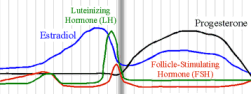
I’ve just found this surprising study in Psychological Science that found a link between the point in the menstrual cycle of 77 white women and various measures of race bias.

Race Bias Tracks Conception Risk Across the Menstrual Cycle.

Psychol Sci. 2009 May 4. [Epub ahead of print]

Navarrete CD, Fessler DM, Fleischman DS, Geyer J.

Although a considerable body of research explores alterations in women’s mating-relevant preferences across the menstrual cycle, investigators have yet to examine the potential for the menstrual cycle to influence intergroup attitudes. We examined the effects of changes in conception risk across the menstrual cycle on intergroup bias and found that increased conception risk was positively associated with several measures of race bias. This association was particularly strong when perceived vulnerability to sexual coercion was high. Our findings highlight the potential for hypotheses informed by an evolutionary perspective to generate new knowledge about current social problems-an avenue that may lead to new predictions in the study of intergroup relations.

The research paper is online as a pdf if you want the full details.

The authors explain the findings as suggesting that women show a preference to their ‘in group’, those who more closely match their own background and lifestyle, when most fertile.

Menstrual cycle has been found to influence numerous preferences in women in earlier studies, including dressing attractively, preference for the type of fanciable person, including a preference for more ‘masculine’ features.

Indeed, cycles in oestrogen are known to alter dopamine function in the striatum, a deep brain structure.

pdf of menstrual cycle and race bias study.
Link to PubMed entry for same.

Pressed for time perception

Photo by Flickr user ToniVC. Click for sourceEdge has an interesting article by neuroscientist David Eagleman on the perception of time that describes how we can experience temporal illusions just like we experience visual illusions.

I have to say, the piece is a little wordy, so it needs a bit of concentration, but it is well worth the effort.

This section has an interesting way of fooling ourselves into perceiving an event before you seem to have triggered it:

It has been shown that the brain constantly recalibrates its expectations about arrival times. And it does so by starting with a single, simple assumption: if it sends out a motor act (such as a clap of the hands), all the feedback should be assumed to be simultaneous and any delays should be adjusted until simultaneity is perceived.

In other words, the best way to predict the expected relative timing of incoming signals is to interact with the world: each time you kick or touch or knock on something, your brain makes the assumption that the sound, sight, and touch are simultaneous.

While this is a normally adaptive mechanism, we have discovered a strange consequence of it: Imagine that every time you press a key, you cause a brief flash of light. Now imagine we sneakily inject a tiny delay (say, two hundred milliseconds) between your key-press and the subsequent flash. You may not even be aware of the small, extra delay.

However, if we suddenly remove the delay, you will now believe that the flash occurred before your key-press, an illusory reversal of action and sensation. Your brain tells you this, of course, because it has adjusted to the timing of the delay.

If you’re wanting more on time perception, TED have just released an interesting lecture by Philip Zimbardo on how we reason about time.

And rather coincidentally, Eagleman is interviewed on ABC Radio National’s All in the Mind this week, about his synaesthesia research and fiction writing.

Link to Edge article on time perception.
Link to TED on reasoning about time (thanks Patricio!).
Link to AITM interview with David Eagleman.

A Troublemaker’s fringe

Photo by Flickr user e-magic. Click for sourceNext week the World Conference of Science Journalists will be coming to London. A few of us felt they might not adequately address some of the key problems in their profession, which has deteriorated to the point where they present a serious danger to public health, fail to keep geeks well nourished, and actively undermine the publics’ understanding of what it means for there to be evidence for a claim.

More importantly we fancied some troublemaking and a night in the pub.

As a result, you have the opportunity to come and see three angry nerds explain how and why mainstream media’s science coverage is broken, misleading, dangerous, lazy, venal, and silly. Join our angry rabble, and tell the world of science journalists exactly what you think about their work. All are welcome, admission is free. They may not come.

After the presentations (with powerpoint and everything, in a pub) we will attempt to collaboratively and drunkenly derive some best practise guidelines for health and science journalists, with your kind assistance.

Ben Goldacre has written the Guardian’s Bad Science column for 6 years, where he exposes misleading science journalism, health scare hoaxes, pill-pushing quacks and the crimes of the evil multinational pharmaceutical industry. He will talk about how the media promote the publics’ misunderstanding of evidence, focusing on health scares, journalists’ hoaxes, and their consequences, as well as cases where scientists have had their work misrepresented and failed to get satisfaction from newspapers.

Vaughan Bell is a neuropsychology researcher and clinician in the NHS, where he deals with disorders of the mind and brain, and is a writer for MindHacks.com, where he deals with disorders of the media. His talk will be called “Don’t touch that dial! Technology scares and the media” and will discuss how the media loves to tell us that new technology will give us brain damage and mental illness but is strangely adverse to discussing the research even when the science says there’s not a lot to be worried about.

Petra Boynton is a Social Psychologist and Lecturer in International Health Services Research. She specialises in researching sex and relationships health. For the past 7 years Petra has worked as as an Agony Aunt in print, online and broadcast media. She actively campaigns for free and accurate sexual health advice within the media both in the UK and Internationally. Petra will talk about the consequences of PR companies misusing surveys and formulas as a form of cheap advertising, the problem of unethical or untrained people posing as ‘media experts’, and what happens when journalists fail to fact check science and health stories.

www.badscience.net
www.mindhacks.com
www.drpetra.co.uk

Of note, attending the WCSJ will cost you £200 a day. You are welcome to come to our event entirely for free, beer/shrapnel in a bucket gratefully received. Journalists, corporate event organisers: welcome to the shits and giggles economy. Special thanks to Sid the Skeptic from Viz for booking the room at short notice.

What:

World Conference of Science Journalists 2009 – Troublemakers Fringe

Where:

Penderel’s Oak Pub, 286-288 High Holborn, London WC1V 7HJ, Holborn Tube.

Google Maps here

When:

1st July 7pm for 8pm – Midnight

Advance of the seven veils

Photo by Flickr user ff137. Click for sourceI’ve discovered there is a small scientific literature on the cognitive science of belly dancing. Yes, I know I should be doing something else with my time, but it’s too late now and it’s too good not to share.

A group of movement researchers studied which fundamental action abilities were the best predictors of belly dancing skills in 1st-4th grade students and, in another study, in 5th and 6th grade students. Rhythmic coordination seems to be a key skill across most age groups.

Belly dancer’s myclonus is a condition where damage to the parts of the nervous system that control muscle coordination cause an involuntary stomach rippling effect that belly dancers strive to achieve. It is thought to be a problem with neural systems called ‘central pattern generators’ (CPGs) that create rhythmic pulses.

Jimmy Or is a robotics researcher who used what we know about the neuroscience of central pattern generators to create a belly dancing humanoid robot with a flexible spine. You can see it in action on his website.

Mass hysteria and dancing manias

The July edition of the The Psychologist has an absolutely fantastic article on the ‘dancing manias’ that swept through Europe in the middle ages and triggered an exhausting compulsion to dance.

The piece looks at the history of these manias and discusses them in terms of dissociation, the ‘unconscious compartmentalisation of normally integrated mental functions’, which is something we discussed the other day with respect to modern day possession and trance rituals.

Dissociation is usually discussed as something individual, whether the person induces it deliberately through ritual, lets themselves be affected through hypnosis, or is affected involuntarily, as in the case of ‘conversion disorder‘.

However, there are hundreds if not thousands of cases of ‘mass hysteria’ or ‘mass psychogenic illness’ that have been documented and are that are thought to involve a similar mental process.

Unfortunately, these ‘mass hysterias’ tend to be widespread but fleeting affairs, meaning they’re hard for researchers to study.

One of the commonest findings, however, is that they often occur where people find themselves in an intolerable situation that they’re not able to influence or otherwise complain about.

If you’re interested in learning more, I really recommend a 2002 article from the British Journal of Psychiatry by sociologist Robert Batholomew and psychiatrist Simon Wessely as an excellent introduction to the field.

Otherwise, Batholomew’s books are excellent. My favourite is his 2001 book Little Green Men, Meowing Nuns and Head-Hunting Panics: A Study of Mass Psychogenic Illnesses and Social Delusion (ISBN 0786409975).

Anyway, The Psychologist article is a great place to start and one of the most enjoyable articles I’ve read on the topic for a while.

Link to The Psychologist on ‘Dancing plagues and mass hysteria’.
Link to article from the British Journal of Psychiatry.

Full disclosure: I’m an occasional columnist and unpaid associate editor of The Psychologist. I also love dancing manias.

Like tears in the rain

Forbes magazine has an excellent special issue that is rammed full of diverse and interesting articles on artificial intelligence.
It’s a large collection of short articles that covers everything from the mathematics of free will to the likelihood of there being a robot war in the future (see, it’s not just me).

There are a fair few speculative pieces, so those who like their transhumanists with a pinch of salt may have to be ready with the seasoning, but wide variety of articles means there should be something for everyone.

Each intends to introduce an idea rather than explore it in detail. I liked the pieces on whether AI can help fight terrorism and another on how the use of AI to explore theories of the mind has declined, and I’m still reading through the rest.

The only slight annoyance is that the series starts with the clich√© question “Can machines think?”

Perhaps the single most sensible response I ever read to this was a quote from a speech but the much missed Dutch computer scientist Edsger Dijkstra:

“The question of whether machines can think… is about as relevant as the question of whether submarines can swim.”

Link to Forbes ‘AI Report’.

Stalkers and assassins of the US President

I’ve just found this fascinating 2006 article by a consultant psychiatrist to the US Secret Service that classifies the types of stalkers and assassins that have troubled the President of the United States.

The piece, by psychiatry professor Robert Phillips, reviews past classifications of presidential harassers and cases from the literature to produce a list of main types.

In my work as consultant to the U.S. Secret Service on protective intelligence cases, it is my clinical assessment that aids in their ultimate determination of who poses a potential risk to a protectee.

In performing evaluations of persons who have either threatened or attacked presidents, pursued them without nefarious intent, or appeared at the White House without invitation, I have searched for a framework that would allow me to integrate my diagnostic opinion of an individual subject with a conceptualization of what is known about others who have acted similarly.

Phillips’ classification includes:

* The Resentful Presidential Stalker or Assassin
* The Pathologically Obsessed Presidential Stalker or Assassin
* The Presidential Infamy Seeker
* The Presidential Nuisance or Presidential Attention Seeker

But perhaps most interesting is the part where he illustrates each type with examples from past cases.

These include famous cases, such as John Hinckley – the man who shot President Reagan but was apparently also a stalker of Carter, to less well known cases such as one woman referred to only as ‘Ms Doe’ who “possessed a delusional love interest” in Clinton.

It’s interesting to compare this classification with the independently created typology of stalkers of the British royal family drawn from the Metropolitan Police’s Royalty Protection Unit files.

Link to full text of article.
Link to PubMed entry for same.

Tooling up the body

Photo by Flickr user Darren Hester. Click for sourceNot Exactly Rocket Science covers an intriguing study that provides further evidence for the theory that the brain treats tools as temporary body parts.

Using tools has lots of interesting effects on our perception. In one of my favourite studies, psychologist Dennis Proffitt found that we perceive distances as shorter when we have a tool in our hand, but only when we intend to use it.

This latest study found that using a tool for only a few minutes modified the body’s action settings. In the experiment, participants were asked to repeatedly pick up a block that had been placed in the middle of the table.

Then, they had to repeat the same actions with a grabber – a long, mechanical lever tipped with a two-fingered “hand” – and then a third time, with their own hand again.

Small LEDs on the volunteers’ hands allowed Cardinali to track their movements and calculate the speed and acceleration of their arms. She found that they reached for the block differently after they had been accustomed to the grabber, taking longer to accelerate their hands more slowly and to seize the block (although once they actually touched the blocks, they grasped them in just the same way as before). The delays even affected the speed at which they pointed at the block, a behaviour that wasn’t “trained” by the grabber.

To Cardinali, these results suggested that after using the grabber, the volunteers’ had included it into their mental representation of their own arms. Because of that, they felt that their arms were longer than they actually were and reached for the block more slowly.

Link to Not Exactly Rocket Science on tools as body extensions.

Into the ancient mind

Newsweek has an interesting critique of evolutionary psychology that tackles some of the main areas of contention.

The article claims to question the whole field of evolutionary psychology but really only deals with specific studies, largely because has quite a limited view of the approach and is strangely wed to biological determinism.

From the biological determinism angle, contrary to what the article implies, even if specific antisocial traits have evolved this doesn’t excuse the behaviour or suggest that it is inevitable, as the history of violence tells us.

The article is clearly influenced by the work of philosopher David Buller, who has been a long-time critic of the field.

But what the article also doesn’t mention is that it is largely addressing a certain form of thinking on evolutionary psychology – namely an approach chiefly promoted by Buss, Tooby and Cosmides, sometimes called the ‘Santa Barbara’ approach.

This view is characterised by the idea that we have evolved specific mental modules (like individual ‘units’ of behaviour or thought) that have been shaped by selection pressures to address problems most important for survival over the time span of human existence – typically characterised as the ‘stone age’.

This is only one form of thinking however. In its weaker form, evolutionary psychology is much less controversial in that we know that genetics, and even single genes, can influence cognition and behaviour, and that selection pressures are equally likely to have been exerted on these genes.

The difficulty is deciding in what cases selection pressure is working through mind and behaviour and at what psychological level the selection pressure manifests itself.

For example, is it best to think of selection pressure as operating on low level cognitive mechanisms such as speed of processing, visual perception and working memory, or on more complex processes such as perception of beauty, relationship style or emotional range.

The critics of evolutionary psychology usually focus on the latter. David Buller clearly specifies this in a recent and recommended article that he wrote for Scientific American but this is not clear in the Newsweek piece.

Buller himself has his critics and there is an excellent page with rebuttals of his claims from the Center for Evolutionary Psychology, many of which focus on his use of evidence to support his arguments.

Recently, a new twist in the tale has come from a study just published in Science that used computational modelling to suggest that major changes in human behaviour during the stone age could be entirely accounted for by cultural changes and there is no need to suggest a fundamental change in the structure of our minds.

The Newsweek article is definitely worth reading, but it’s not the whole story and is best supplemented with responses from some of Buller’s critics.

Link to Newsweek article ‘Don’t blame the caveman’.
Link to Buller’s article for SciAm.
Link to Buller rebuttals.
Link to Science paper on culture and cognitive changes.
Link to PubMed entry for same.

March of the robot t-shirts

Dapper British t-shirt blog Hide Your Arms have collected 101 of the best robot t-shirts available anywhere on the net.

It has every type of robot reference you can possibly think of and there are some genuinely beautiful garments hidden amid the torrent of mechanised irony.

Enjoy them while you can because when the robot war comes we’ll all be naked except for a bar code tattoo.

It’ll be worse than it sounds. I promise.

Link to Hide Your Arms 101 robot t-shirts.

Hushed thunder

ABC Radio National has a fantastic programme on El, a 27 year old woman with selective mutism – essentially a speaking phobia that enforces an anxiety-driven silence with everyone except her family.

The documentary is deeply poignant but has several moments of sublime irony that really stopped me in my tracks.

El stopped speaking to anyone except her family as a young child and has spent the large part of her life not being able to utter a word to anyone else.

The programme details the painful impact this has had on her life, how she was verbally attacked by pupils and staff in school, and how she has found it difficult to get a job, or hasn’t been respected in the work she’s done.

In one aside, she mentions she has a degree in communication.

In my mind, a thousand stories were unfurled by the breeze of this simple fact.

El, by the way, is an incredibly articulate communicator. The photo to the right is one of her own artworks and her words, spoken by an actress, are clear and evocative.

The ending to the programme is like hushed thunder.

The documentary is part of an innovative ABC Radio National series entitled Stories of Silence that explores the many meanings of quiet.

Link to El’s story (via AITM Blog).

Out of control decision-making

I’ve just noticed that TED has recently put another talk online by the entertaining and thought-provoking behavioural economist Dan Ariely where he discusses why our feeling of being in total control of our decision-making may be false.

We mentioned an earlier and similarly interesting TED talk on the psychology of cheating previously, but this one is more concerned with what we might call decision-making inertia, where the ‘default’ options or red herrings have a huge sway over our reasoning

This is despite the fact that most people are completely unaware of how irrelevant information has such a profound impact on our choices.

Link to Dan Ariely TED talk on whether we’re in control of our choices.