Dangerous minds

Malcolm Gladwell has written an excellent article for The New Yorker on the problems with the FBI’s methods of profiling serial killers and other serious offenders.

The Behavioral Analysis Unit (formerly the Behavioural Science Unit) is the FBI’s psychology unit that aims to research and develop methods of understanding criminal behaviour, police tactics, negotiation, and crime scene analysis.

It is a huge enterprise that exports its expertise around the world. Foreign police forces can often call on their expertise, for free, to help solve domestic cases.

However, in many ways the BAU is a world onto itself. It develops its own techniques that can often be quite distinct from those of non-FBI forensic psychologists. For example, many of its criminal and crime science analysis methods rely heavily on Freudian-style symbolic interpretations.

For example, the FBI classifies serial killers into ‘organized’ and ‘disorganized’ types.

Organized serial killers supposedly use logic and planning to commit crimes that fulfil their fantasies. The victim carefully selected, efforts are made to maintain control throughout the crime and the scene is cleaned up afterwards.

In contrast, disorganized serial killers supposedly choose their victims almost randomly and attack in a haphazard way, taking opportunity as it occurs. The crime scene is apparently chaotic and because the ‘disorganized killer’ has no interest in the person themselves, they may, as Gladwell recounts, “takes steps to obliterate their personalities by quickly knocking them unconscious or covering their faces or otherwise disfiguring them.”

Perhaps the thing that raises the most eyebrows is that it publishes and reviews many of its theories in its own in-house journals, meaning they get little outside academic scrutiny.

Gladwell takes a look at some of these ideas in more detail and notes that they haven’t faired well to some of the independent academic assessments they’ve been tested with:

Not long ago, a group of psychologists at the University of Liverpool decided to test the F.B.I.’s assumptions [pdf]. First, they made a list of crime-scene characteristics generally considered to show organization: perhaps the victim was alive during the sex acts, or the body was posed in a certain way, or the murder weapon was missing, or the body was concealed, or torture and restraints were involved. Then they made a list of characteristics showing disorganization: perhaps the victim was beaten, the body was left in an isolated spot, the victim’s belongings were scattered, or the murder weapon was improvised.

If the F.B.I. was right, they reasoned, the crime-scene details on each of those two lists should “co-occur” ‚Äî that is, if you see one or more organized traits in a crime, there should be a reasonably high probability of seeing other organized traits. When they looked at a sample of a hundred serial crimes, however, they couldn‚Äôt find any support for the F.B.I.’s distinction. Crimes don’t fall into one camp or the other. It turns out that they’re almost always a mixture of a few key organized traits and a random array of disorganized traits. Laurence Alison, one of the leaders of the Liverpool group and the author of “The Forensic Psychologist‚Äôs Casebook,” told me, “The whole business is a lot more complicated than the F.B.I. imagines.”

The whole article is a fascinating insight into the world of FBI profiling and notes that the methods may rely as much on cognitive distortions for their impact, as on hard evidence.

UPDATE: The forensic psychologists over at the excellent CrimePsychBlog have some commentary on the Gladwell piece, noting, among other things that Gladwell bases his criticisms on methods of profiling pioneers whose time has long since passed. A scientific approach is apparently now the mainstay of profiling practice and (they hope) that also includes the FBI.

Link to New Yorker article ‘Dangerous Minds’ (via 3Q).

2007-11-09 Spike activity

Quick links from the past week in mind and brain news:

The Neurocritic covers a fascinating study that modelled group interest for new web information. Full text: pdf.

Call for a ban on controversial ‘Dolphin Assisted Therapy’. Controversial or just completely bizarre?

Brain Waves covers the top 10 neuroscience trends of 2007.

Activity is reduced in visual areas to direct activation toward hearing areas when we’re trying to listen to complex sounds, according to a new study covered by BBC News.

The New Republic has an in-depth review of a new book on the biology of altruism.

A study in this month’s British Journal of Psychiatry found that people with schizophrenia can be more logical than people without a psychiatric diagnosis.

The Scientific American Mind Matters blog covers some of the highlights of the Society for Neuroscience annual conference.

The BPS Research Digest looks at a study on psychiatrists who treat themselves for mental illness.

The LA Times has an in-depth and important article entitled ‘Are we too quick to medicate children?’

Van Gogh and the history of manic depression is discussed by The Neurophilosopher.

BBC News reports on an intriguing new genetic study of epilepsy: two genes are known individually to increase the chance of having a seizure, but carrying both makes epilepsy less likely.

A study finds further evidence that genetics has a role in determining sexual orientation in men.

PsyBlog discusses the false consensus bias and why we all stink as intuitive psychologists.

The Guardian reports on a study that suggest love at first sight is just sex and ego. Presumably, only if you do it right though.

Amygdala abnormalities linked to violent aggression in a study covered by Treatment Online.

Developing Intelligence reports that an artificial intelligence model of speech recognition develops what seem to be the equivalent of mirror neurons.

How we understand what doctors say can be quite different, even when they use the same words, depending on how serious we think the illness is. Cognitive Daily covers a fantastic applied psychology study.

Alcohol abuse in the New Testament

I just found this abstract of a 1987 article from the journal Alcohol and Alcoholism that reviewed attitudes to alcohol in the Bible, and found that boozing was looked on considerably more favourably in the Old Testament than the New.

Alcohol abuse in the New Testament.

Seller SC.

Alcohol and Alcoholism. 1987;22(1):83-90.

The New Testament is similar to the Old Testament in terms of some fundamental attitudes towards alcohol. St Paul, for example, in the spirit of the Old Testament, unequivocally condemns drunkenness but recommends the consumption of wine in moderate amounts. Nevertheless, there are significant differences in emphasis between the two documents. Wine is referred to as God’s gift in six of the books from the Old Testament, and no such description is offered in the New Testament. Total abstention seems acceptable only under exceptional circumstances in the Old Testament, while it is implicitly extolled through the exemplary role of John the Baptist in the New Testament. Finally, penalties for drunkards, including loss of salvation, are proportionally more frequent and comprehensive in the New Testament.

Link to PubMed entry for article.

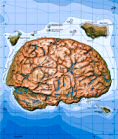
Brain map, created by a cartographer

The October 25th edition of Neuron has a fantastic ‘brain map’ cover designed by Sam Brown, a cartographer based in Wellington, New Zealand.

You really need to see the cover in the flesh to see all the wonderful detail, as unfortunately, there’s no high resolution versions of the cover online.

There’s a better image currently on the Unit Seven website, which is still quite impressive though.

All walk and no trouser

A study shortly to be published in the Archives of Sexual Behaviour reports that the menstrual cycle has an effect on women’s walking style and its attractiveness to men, but has also provoked speculation that highlights the worst in evolutionary psychology story-telling.

The study found that women’s walking style differed during the menstrual cycle, but that men rated it as most attractive when they were least fertile.

This contrasts with several previous studies have found that women dress, act and are perceived as most attractive during their most fertile time of the month.

Some researchers suggest that we’ve evolved so women subtly advertise their fertility to potential mates, perhaps, quite reasonably, as this happens in far more obvious ways almost uniformly throughout the animal kingdom.

So you might think that something to consider is that this finding is evidence against this idea, or that maybe the link with walking style is just a ‘side-effect’.

For example, estrogen affects dopamine function in the striatum, part of key action pathways in the brain, and the menstrual cycle is linked to changes in neuromuscular coordination. It could be that evolution has selected for the behaviour via these mechanisms, but it could also be that they have no evolutionary significance.

However, the alternative is barely considered in the paper or in the press reports. This from New Scientist:

However, Provost and her colleagues say there is in fact no contradiction between this research and other studies, as they are investigating two different kinds of signal. The previous research investigating men’s response to fertile women focused on signals such as smells and facial expressions, which can only be detected at close range. That makes evolutionary sense, as it would benefit a woman to advertise her fertility to a man that she has decided is worth having children with and has therefore allowed to get close to her.

In contrast, men can pick up on the attractiveness of a woman’s walk from long distance, and it can therefore act as an unwitting signal to less appealing males who she might not want to choose. So the advantage of having a less sexy walk around the time of ovulation becomes clear: it allows a woman to hide her fertile period from undesirable men who might take advantage of her at that time.

As an explanation, I actually quite like it, but there’s little consideration of the ‘side-effect’ idea, or even the contradictory evidence. For example, it goes against research which suggests that women dress more attractively during their most fertile time.

Evolutionary psychology is sometimes criticised for creating ‘just so stories‘ – unverifiable explanations that weave a story about how the data suggests that evolution has selected for a particular cognitive or behavioural difference.

It’s true to say that this accusation is levelled at evolutionary psychology more than is warranted. It does make testable predictions and all science involves some story telling to some degree.

Nevertheless, evolutionary psychology researchers would do well to show that they are considering the alternative explanation – that some behaviours might be associated with sex or fertility while having no influence on survival, the chance of mating, or passing on certain genes.

At this point I normally castigate the media for picking up on the sexy speculations and not the debate, but unfortunately, in this case, the scientific paper seems to make the same mistake.

Link to abstract of study.
Link to media reporting.

Sonata in epilepsy

The August edition of medical journal Epilepsy and Behaviour has an interesting case study of a patient who found that listening to Mozart could reduce his epileptic seizures.

The patient had what are known as ‘gelastic seizures’, meaning they trigger laughter when they occur.

Anticonvulsive drugs didn’t seem to help, and surgery to try and remove the focus of his seizures (often a successful treatment) had little significant effect.

We admitted for assessment a 56-year-old gentleman who had experienced gelastic seizures (laughing fits) since shortly after birth. He developed complex partial seizures during his teenage years and secondarily generalized tonic‚Äìclonic seizures in his midthirties…

It was agreed that he should be admitted for reassessment of his condition and to determine whether further surgical intervention could be of benefit.

A few months prior to his admission, he learned that Mozart’s music had been used, with some success, to enhance spatiotemporal reasoning. He therefore began to listen to Mozart for an average of 45 min a day. He did not listen to one particular piece of music.

Before he began listening to Mozart, he was having gelastic seizures with intense laughter, in association with altered perception and experiential phenomena, at a frequency of five or six per day, as well as secondarily generalized tonic–clonic seizures at an average frequency of seven per month. Electroencephalography revealed some evidence of right hemisphere involvement during the seizures that lasted 15–30 s. Seizures also were associated with a brief rise in heart rate.

Within days of starting to listen to Mozart regularly, he noticed a difference in the pattern of his seizures. In the 3 months during which he had listened to Mozart, he did not have any secondarily generalized tonic–clonic seizures. He continued to have five gelastic seizures a day, but these manifested as simply a brief smile (5–9 s), which he could disguise in the presence of others; in addition, the altered perception and experiential phenomena ceased.

Repeat MRI at this time revealed no change in the hypothalamic hamartoma and no definite or consistent EEG or ECG changes with any of the brief events.

No significant change has been observed during neuropsychometric testing since 2000.

The authors of the study mention in passing the so-called ‘Mozart effect‘ – where the music supposedly helps the brain operate more effectively owing to its typical rhythm which affects brain function.

It’s largely thought to be rubbish by most serious neuroscientists, although that hasn’t stopped a whole industry of ‘brain enhancing’ Mozart products being pushed onto unsuspecting punters.

For some people, epileptics seizures can be triggered by very idiosyncratic things.

As we discussed previously on Mind Hacks, ‘musicogenic epilepsy’ can be triggered by types of music, specific tones, or even specific songs (there’s a good discussion of this in Oliver Sacks’ new book).

It is likely, therefore, that from some people, specific music or types of music will also reduced their chances of having a seizure.

Link to PubMed entry for case study in Epilepsy and Behaviour.

Neuropod on blow, brainbows and optimism

The November edition of the newly minted Nature Neuroscience podcast Neuropod has just been released with features on the ‘brainbow‘ multi-colour neuron staining, the neurobiology and regulation of cannabis, the cognitive neuroscience of optimism, and the sleep cycle.

The interview on cannabis is with neuroscientist Paul Morrison and psychiatrist Robin Murray – two leading cannabis researchers.

Despite him leading recent research which has shown a modest but likely causal link between cannabis use and psychosis, Murray has always maintained a level-headed approach to the problem and is well-worth listening to (fast forward to 10 minutes in, if you’re in a hurry).

He’s on fine form and has this take on the effect of the drug on the political classes:

Essentially, cannabis is very bad for the brains of politicians, they do not know what to do. Firstly, they’re asked ‘have you ever smoked cannabis?’ and they don’t know whether to say yes or no, and then they have this belief that tinkering with the classification will actually do something.

Link to Neuropod webpage with audio.

Blue jean brain

Artist Lee Pirozzi creates wonderful three-dimensional fabric brains and neuroanatomical structures.

The piece on the left is called ‘Blue Jean Brain II’.

Pirozzi’s portfolio also describes a few of the pieces like so:

…in “In Search of the Perfect Blue Jeans,” denim, sequins, and satin form the textured and nuanced surfaces of the human brain, while in “Amygdala of Terror,” a snakelike coil appears affixed to the brain itself.

The pieces make a lovely complement to The Museum of Scientifically Accurate Fabric Brain Art which displays the work of neuroscientists who carefully depict their favourite subject through needlecraft.

Link to Lee Pirozzi’s fabric brain sculptures (thanks mirbrewer!).
Link to The Museum of Scientifically Accurate Fabric Brain Art.

No holds barred neuroscience interviews

The scientific journal Molecular Interventions has a whole load of open-access articles that contain interviews with leading molecular biologists, including several with notable neuroscientists.

As you might expect from a scientific journal (which rarely include interviews) the exchanges are in-depth and gloriously geeky in places.

I haven’t found a search term to cleanly pull out all the interviews, but so far I’ve found discussions with:

Kay Redfield Jamison: ‘The Personal and Professional: Of One Mind’.
David Colquhoun: ‘An Uncommon Scientist with a Lot of Common Sense’.
Geoffrey Burnstock: ‘Most highly cited scientist’.
Floyd Bloom: ‘Neuroscience was not even a word’.
Candace Pert: ‘Paradigms from Neuroscience: When Shift Happens’.
Nora Volkow: ‘Motivated Neuroscientist’.
Sol Snyder: ‘Research as an Art Form’.
Eric Kandel: ‘The future of memory’.

I’ve not read them all, but there’s some real gems in there from some neuroscience heroes, so well-worth a read through.

The birth of Alzheimer’s disease

Neurophilosophy has just published another wonderfully illustrated article on a key moment in neuroscience: this one focuses on Alois Alzheimer, one of the first to discover the major brain changes in Alzheimer’s disease, and Auguste Deter, the middle aged woman in whom he first detected the pathology now inextricably linked to the disorder.

When in his care, Alzheimer carefully recorded Deter’s clinical symptoms of memory loss, impaired language and confusion, and later, when she died, he looked carefully at her brain during post-mortem.

Using a recently developed staining technique he found abnormal clumps of protein, peppered throughout the brain – which are now known to be amyloid plaques – one of the most recognisable features of the disease.

The article makes the interesting point that Alzheimer did not in fact discover this, but that the name has stuck because the head of the research group, Emil Kraepelin, highlighted the findings under the name ‘Alzheimer’s disease’ to promote the institution.

Although well known in his own right, it is true that Kraepelin gained much reflected glory from promoting the work of Alzheimer.

Unfortunately, Kraeplin’s reputation was to be tarnished by his other all-together less distinguished prot√©g√©, Ernst R√ºdin.

Rüdin was hired by Kraepelin to study the genetics of mental illness and found evidence of how mental instability could be inherited.

Later, Rüdin became a key player in drafting the Nazi Law to Prevent Hereditarily Sick Offspring which resulted in the forcible sterilisation of thousands of people with physical disabilities, drug addiction, and mental and neurological disorders.

This was the beginning of what was later to become Action T4 in which thousands upon thousands of people with supposed ‘hereditary defects’ were systematically killed by the Nazis.

Alzheimer’s contribution to neuroscience is thankfully notable for the right reasons, and the Neurophilosophy article is a great tour through his work, notes and original drawings.

Link to Neurophilosophy on ‘Alois Alzheimer’s first case’.

LSD psychotherapy artwork

Someone’s posted examples of artwork created by patients that were undergoing LSD psychotherapy when it was originally trialled by Stanislav Grof, before research in this area was suspended by panicked world governments when the drug became widely used.

The images are from Grof’s book LSD Psychotherapy, and range from the whimsical, to the abstract, to the terrifying.

The early explorations of using psychedelic drugs in psychotherapy seemed promising but were over far too soon to give a definite answer of whether they helped overcome any mental health or behavioural problems.

It’s only very recently that scientific research into this area has re-started, largely due to the careful work of MAPS – the Multidisciplinary Association for Psychedelic Studies.

Link to artwork of patients undergoing LSD psychotherapy.

Is the developing world better for schizophrenia?

One of the most commonly repeated facts about schizophrenia is that people diagnosed with the condition tend to do better in developing countries, rather than in rich Western countries. A new study has reviewed outcome studies from low and middle-income countries across the world and found the picture just isn’t that clear.

The original finding that people with the diagnosis do better in developing countries was from three World Health Organisation studies.

The recent review has criticised the previous studies for not adequately dealing with some important factors – like mortality.

It’s important to account for deaths in outcome studies, because they could skew the results, if not counted properly, to make outcome look better.

For example, three people with schizophrenia are assessed at the beginning of the study, a year later they are re-assessed, but sadly, one has died. Of the other two, one has improved and one got worse.

Death is, perhaps, the worst possible outcome, and since schizophrenia involves a high risk of suicide and is associated with a lower life expectancy, it is more likely in those affected.

If this isn’t noted, however, the follow-up results might suggest that out of the two remaining, half improved, and half got worse.

In fact, the outcome was worse in two thirds, as one got worse and one died, and only one third improved.

So not being able to account for deaths may make the picture look rosier than it is.

The study looked at these these factors, as well as other more socially relevant effects, such as on marriage, social relationships and employment – rather than purely examining clinical symptoms. It also investigated whether outcomes were different for males and females.

The conclusions of the study suggest that the picture is complex and dependent on many different influences, as it varies greatly between countries:

First, there appears to be great variation in clinical outcomes and patterns of course. Whereas, some studies in India strongly support the “better prognosis” hypothesis outcomes do not appear to be nearly as positive in Brazil and China. Additionally, limited evidence suggests that gender effects vary cross-nationally.

Second, similar patterns are found in the domains of disability and social functioning: good in most studies in India and Indonesia, but poorer in Nigeria, and much poorer in a cohort of untreated persons in Chennai, India. Social functioning by gender also varied: in the MLS [Madras Longitudinal Study], women had high levels, while in Nigeria women fared poorly. Outcomes in occupational and marital status also varied. A more important point, however, is that status in these 2 domains must be interpreted in the context of sociocultural norms and assessed, at least to some degree, qualitatively. Viewed from this perspective, the data in table 7 suggest that rates of marriage for people with schizophrenia are relatively low and rates of divorce/separation are high.

The study was conducted by a team of four researchers, from America, the UK, India and Nigeria and is published in November’s Schizophrenia Bulletin as an open-access paper, so the full text is freely available online.

Link to full text of study.

Help with research on the neuropsychology of hypnosis

I’m currently involved with a research group investigating the neural basis of hypnosis and dissociative disorders and, if you live in London, we’d like to invite you to take part in our research.

Dissociative disorders are where people lose abilities that they normally have, such as limb movement, in the absence of underlying neurological illness.

However, for this stage of the research we’re inviting healthy participants to complete some short questionnaires and take a short test that measures how hypnotisable you are.

This will take place with group of other people and everyone gets an £8 volunteer fee for their time.

We’re running sessions at the Institute of Psychiatry in Camberwell, on the following dates:

2pm, Saturday 10th November
2pm, Saturday 17th November
2pm, Saturday 24th November

After taking part we may invite you to participate in further parts of the study at another time (such as a brain scan or some measures of memory or attention) but you are under no obligation to do so.

Each part is separate, and, if you are invited, volunteering for one part doesn’t mean you have to take part in any others.

Like all good scientific research, the study has been fully reviewed and approved by the local research ethics committee.

If you’re interested in finding out more, there’s further information on our study webpage where you can also contact me, ask questions, get sent the full information sheet, or volunteer for one of the sessions.

Link to study info and contact details.
Link to webpage to email me.

Charley says…

Filmmaker Jo McGinley has created a brief and adorable film about her cat, Charley, who has cerebellar hypoplasia – a disorder in the development of the cerebellum that causes marked movement and coordination problems.

Cerebellar hypoplasia also occurs in humans and can lead to similar movement difficulties.

The complete function of the cerebellum is poorly understood, but it is well known that it is a key part of the brain’s movement system.

Damage to the cerebellum can affect coordination and timing, and the effect of alcohol on movement may, at least in part, be explained by its effect on the cerebellum.

‘Hypolasia’ means ‘incomplete growth’ and so the ‘cerebellar hypoplasia’ refers to the physical growth problem with this part of the brain.

The movement problem associated with this, as can be seen in Charley, is known as ‘cerebellar ataxia’.

‘Ataxia’ literally means ‘without order’ and refers to the coordination of muscles. So, ‘cerebellar ataxia’ refers to a disordered movement of muscles caused by problems with the cerebellum.

The film of Charley is wonderfully endearing, and it makes the point that kittens are often destroyed if they have this problem, despite the fact that they are in no pain, need no special care, and have a normal life span.

Link to film ‘This is Charley’

A handbag (shaped like a brain) is a girl’s best friend

Designer Jun Takashi has created a high fashion handbag, shaped like a brain. Why? You ask. Why not? I answer.

At this point I would like to make it clear that the idea that we only use 10% of our handbag is a myth.

Scientific studies have found that all of the handbag is in constant use, although some parts may be more active than others.

Link to Jun Takashi’s designer brain handbag (via BB).

Black humour perks up the inevitable

Time magazine has a short article on an interesting finding: after thinking about their own death, participants in a psychology study were more likely to respond unconsciously in ways that suggested a boost in mood.

The study was led by psychologist Nathan DeWall and asked one group of students to think about a painful dental procedure, and another about their own death.

The participants were then asked to complete questionnaires that rated their mood. In terms of their conscious reporting, there was no difference between the groups.

However, when asked to do some simple tasks that are known to be affected by unconscious emotional biases, the group who had thought about death showed a consistently positive effect:

Students in the death-and-dying group, it turns out, had all gone to their happy place ‚Äî at least in their unconscious. There was no difference in scores between the groups on the explicit tests of emotion and affect. But in the implicit tests of nonconscious emotion ‚Äî the wordplay ‚Äî researchers found that the students who were preoccupied with death tended to generate significantly more positive-emotion words and word matches than the dental-pain group. DeWall thinks this mental coping response kicks in immediately when confronted with a serious psychological threat. In subsequent research, he has analyzed the content of the volunteers’ death essays and found that they’re sprinkled with positive words. “When you ask people, ‘Describe the emotions that the thought of your own death arouses in you,'” says DeWall, “people will report fear and contempt, but also happiness that ‘I’m going to see my grandmother’ and joy that ‘I’m going to be with God.'”

I would like to think that this will come as welcome news to the people who protested against a funeral parlour being built near their homes because of concerns about a ‘negative psychological impact’, although, I suspect it will be of little comfort.

Experimental evidence is remarkably unconvincing to some.

It reminds me of when Tom Gilovich did an analysis of the ‘hot hand’ in professional basketball (where players who have scored several points are supposedly ‘on a run’). His study [pdf], published in the journal Cognitive Psychology, found that the effect was just the misperception of random variation.

When asked about the research, Red Auerbach, coach of the Boston Celtics, reportedly responded “Who is this guy? So he makes a study. I couldn’t care less”.

Another example of the fly of empirical evidence being crushed against the windscreen of self-confidence. Well, at least Stephen Colbert would be proud.

Link to Time article ‘Are We Happier Facing Death?’.