Why don’t ethics professors behave better?

If you spent your whole life trying to work out how to be ethical, you would think you’d be more moral in everyday life. Philosopher Eric Schwitzgebel has found that this isn’t the case, and asks the question “Why don’t ethics professors behave better than they do?”.

Initially, this was based on a hunch, but Schwitzgebel, with colleague Joshua Rust, has begun to do research into the question. They’ve found some surprising results.

At a recent philosophy conference, he offered chocolate to anyone who filled in a questionnaire asking whether ethicists behaved better than other philosophers.

It wasn’t long before an ethics professor stole a chocolate without filling in a questionnaire. (This reminds me of a famous psychology study that found that trainee priests on their way to give a talk on ‘The Good Samaritan’ mostly ignored someone in need if they were in a hurry!).

When the results came in, ethicists rated other ethicists as behaving better, but other philosophers rated them as no more moral than everyone else.

In another study, Schwitzgebel investigated whether people interested in moral issues are more likely to steal books. By looking at library records, he’s found that books on ethics are more likely to be stolen than other philosophy books.

So why aren’t ethics professors more ethical than the rest of us? Schwitzgebel wonders whether it is because there is a difference between emotional engagement with moral issues and a more detached reasoning style that is necessary for careful analysis, but which may not make someone feel compelled to act more ethically.

Ominously, he notes that “More and more, I’m finding myself inclined to think that philosophical reflection about ethical issues is, on average, morally useless”.

It is interesting that there are similar problems in other professions. For example, doctors don’t follow health advice adequately and are much more likely to suffer from mental illness.

As an aside, Schwitzgebel has made all his papers and publications available online and has a fantastic blog that is well worth keeping tabs on.

Link to Schwitzgebel’s articles on ‘The problem with ethics professors’.
Link to Schwitzgebel’s homepage with publications and blog links.

Law, ethics, brain scans and mind reading

ABC Radio National’s All in the Mind has just broadcast the first of a two-part series on using neuroscience to read the mind.

The first programme investigates whether neuroscience can tell us anything about criminality and violence, and what role brain-based evidence will play in the court room.

The programme talks to many of the delegates from last April’s The Law and Ethics of Brain Scanning conference which was one of the first to consider the legal issues of brain scans in detail.

All of the conference talks have been put online as mp3 files so you can listen to the talks yourself if you want to hear more.

In the mean time, this edition of All in the Mind covers the key issues and next week’s will investigate some more (as yet undisclosed) aspects of so-called ‘mind-reading’ technology.

Link to AITM on ‘Mind Reading’.
Link to The Law and Ethics of Brain Scanning conference audio.

Encoding memory: from a free issue of SciAm

To celebrate the launch of a redesign, Scientific American have made the July edition freely available online as a pdf file. The cover story examines the search for how the brain encodes memories.

The issue is only available online until the end of June (one more week!) so you’ll need to be quick, but it’s a copy of the entire issue.

On a related note, the June 25th podcast is on the neurology of boxing-related brain damage.

pdf of July 2007 Scientific American (via Neurophilosopher).
Link to July edition table of contents.

Oldest children have highest IQ: a family effect?

Science has just published a study of almost a quarter-of-million people providing strong evidence that oldest children have slightly higher IQs, and, most interestingly, the evidence suggests that this isn’t a biological effect – it’s likely to do with family environment and upbringing.

In fact, first-born children are known to have a number of psychological differences. For example, they are less likely to be gay, show differences in autistic-like traits, and are typically less severely affected by schizophrenia if it occurs.

These differences have often been explained by a theory that argues that the mother adapts her immune system during the first pregnancy and it might not be fully attuned to later children and this might affect the brain development of subsequent children.

In order to test this idea the Science study looked at the records of almost 250,000 Norwegian army recruits, all of which have routine IQ tests and full medical and family histories.

It turned out, as has been found many times before, that first-born children had higher IQs by about 3 points on average.

Crucially, it also turned out that some second-born children who had an older sibling who had died young also had higher IQs.

In other words, although they were second-born biologically, they were brought up as the oldest child after their sibling passed away.

Being brought up as the oldest child seems to be the crucial factor: family-rank, not birth order affects IQ. This suggests that the immune system theory is unlikely to explain this effect.

This has generated a great deal of discussion and many parents are interested in whether they can provide the ‘first child advantage’ to their younger children as well.

The New York Times featured the study and just published a follow-up article discussing the role of family-dynamics in the development of intelligence after all the interest it generated.

Some psychologists are suggesting that the effect might be because older children get the chance to coach the junior family members which may help them consolidate knowledge and provide practice in manipulating information.

It’s also interesting that a recent study on birth-order in Thai medical students found exactly the reverse pattern. Younger siblings were found to be more intelligent and have more positive personality factors.

All of these studies suggest that culture and environment are crucial factors during childhood, both for mental and emotional development.

Link to abstract of Science study (thanks Laurie!).
Link to NYT write-up.
Link to NYT on intelligence and family dynamics.

Mind the gap: science and the insanity defence

Reason Magazine has an excellent article on why our knowledge about the psychology and neuroscience of mental illness doesn’t really help when trying argue for or against the insanity defence in court.

The insanity defence concerns whether a person accused of a crime should be considered legally responsible.

Some of the first legal criteria for judging someone ‘not guilt by reason of insanity’ are the M’Naghten Rules created after Daniel M’Naghten tried to assassinate the British Prime Minister Robert Peel in 1843.

He ended up killing Peel’s secretary, but when caught was found to be suffering from paranoid delusions and it was judged that his crime was motivated by his unsound mind and he didn’t understand the ‘nature and quality’ of what he did.

Most Commonwealth law in this area is still based on these criteria, and most US law was too, until shortly after John Hinckley shot US President Ronald Reagan and was found not guilt by reason of insanity.

This caused a backlash against the insanity defence and many US states have variously abolished it or made it much more difficult to prove (near impossible in some cases).

The Reason Magazine article examines why, when it does arise, the evidence is largely based on descriptions of the person’s mental state and why recent advances in understanding mental illness don’t really help very much.

One of the main reasons is that studies that find differences between people with mental illness and those without, do so on the group level. The same differences might not be present when comparing any two individuals.

In other words, on average, there are mind and brain differences between people affected by mental disorders and unaffected people, but the individual variation is so great that you couldn’t reliably say it would be present in one particular person.

As these criminal trials are focused on the actions of one individual much of the objective science goes out the window because it can’t reliably indicate an diagnosis, state of mind or reasoning abilities on the individual level.

This means that the most relevant evidence is usually the testimony of a psychiatrist or psychologist who is giving his or her clinical, descriptive judgement of the person’s state of mind.

The Reason Magazine article examines what sort of dilemmas this causes, and considers how developments in psychology and neuroscience are likely to impact on the legal judgement of insanity.

It’s an excellent guide to some of the key issues and the difficulties of making legal judgements on subjective states of mind.

Link to article ‘You Can’t See Why on an fMRI’.

Personalised drugs

The New York Times has an interesting opinion piece on using genetic tests to determine which psychiatric drugs will be most effective and least problematic.

It is starting to become known that people with certain genes or sets of genes react to drugs differently.

These could be genes related to aspects of brain function, or, just as importantly, liver function, because many psychiatric drugs are broken down by enzymes in the liver.

For example, enzyme CYP2D6 metabolises a whole range of psychiatric drugs including antidepressants and antipsychotics.

Some people have certain versions of the CYP2D6 gene which means they have much less of the enzyme and so break these drugs down at a much slower rate.

This means the same dose of the drug in these people will have a much stronger effect, which can lead to increased side-effects.

There are many more examples of how genes influence the effects of drugs, and doctors would ideally like to be able to test people beforehand to see which drugs might be better.

Like most mass-market industries, the drug industry prefers a ‘one size fits all’ approach, advertising their pill as suitable for anyone with a particular condition.

The idea of genetically testing people for drug suitability is causing them a bit of a headache at the moment, as they’re desperately trying to think of ways to make money out of it.

The New York Times article is quite positive about the effect this will have on the relationship between medicine and industry:

Aside from the potential to transform clinical psychiatric practice, these new developments will surely change the relationship between doctors and the drug industry and between the industry and the public. Direct-to-consumer advertising will become nearly irrelevant because the drugs will no longer be interchangeable, but will be prescribed based on an individual’s biological profile. Likewise, doctors will have little reason to meet with drug company representatives because they won’t be able to give doctors the single most important piece of information: which drug for which patient. For that doctors will need a genetic test, not a salesman.

Of course, it could just lead to people with common genes being prescribed cheap, widely available treatments, while those with rarer genetic profiles having to pay more for expensive, niche medicines.

Almost certainly, it will lead to the drug industry getting into the genetic testing market, probably with equally as many advantages and drawbacks as exist with their current marketing strategies.

Link to NYT on ‘On the Horizon, Personalized Depression Drugs’.

Are we computers, or are computers us?

Philosopher Dr Pete Mandik has published an interesting thought on his blog that questions whether the common ‘computer metaphor’ used to describe the human mind is really a metaphor at all.

Cognitive psychology typically creates models of the mind based on information processing theories.

In other words, the mind and brain are considered to do their work by manipulating and transforming information, either from the senses, or from other parts in the system.

It is therefore common for scientists to talk about the mind and brain in computer metaphors, as if they are information processing machines.

Mandik questions whether this is really a metaphor at all:

There is a sense of the verb “compute” whereby many, if not all, people compute insofar as they calculate or figure stuff out. Insofar as they literally compute, they literally are computers. Further, the use of “compute”, “computing”, and “computer” as applied to non-human machines is derivative of the use as applied to humans.

It strikes me as a bit odd, then, to say that calling people or their minds “computational” is something metaphorical.

Indeed, the term ‘computer’ was originally a name for a person who did mathematical calculations for a company.

Calculating machines were then given the supposedly metaphorical name ‘computers’ as they did equivalent work to the human employees.

Mandik questions whether we should think of any of these examples as genuine metaphors, since they’re describing the same operations.

However, a key issue for cognitive science is whether there are reasonable limits in describing mind, brain and behaviour in mathematical terms.

The fact that we can adequately describe some things mathematically doesn’t solve this problem, because there may be things that are impossible to describe in this way which we simply don’t know about.

Often though, we just assume that we haven’t found the right maths yet, when the reality may be far more complex.

Link to Pete Mandik post with great discussion.

2007-06-22 Spike activity

Quick links from the past week in mind and brain news:

Science reports that forced donations activate brain areas associated with altruism.

The New York Times reports that half of all continuing medical education courses in the United States are now paid for by drug companies and are often little more than marketing exercises.

The Neurophilosopher finds some beautiful antique brain anatomy drawings.

Men react more positively to children with facial appearance resembling themselves, suggesting genetic relatedness, while women’s reactions are more influenced by healthy looks.

Pure Pedantry has some fascinating analysis of some 80,000 year-old ornaments.

More coverage on the long-term neurological effects of concussion in NFL players from The New York Times.

Did Hitler have syphilis? Wild speculation abounds in a recent psychiatry conference presentation.

Research has consistently found that materialism makes you unhappy, but The New York Times reports that it may not make you better off either.

What makes a movement seem artificial? Cognitive Daily looks at how we perceive movements in computer animations.

Self-effacing people are secretly confident, suggest new study on the differences between declared and inner self-esteem.

Backlash over child bipolar disorder: Scathing articles published in the SF Chronicle and Boston Globe.

Mixing Memory published an gripping article on the psychology of metaphors that generated two great follow-ups.

Discover Magazine looks at the new generation of aptitude measurements in psychology that hope to go <a href="http://discovermagazine.com/2007/may/blinded-by-science
“>beyond IQ.

Next step brains: Evolution or optimisation?

This week’s edition of ABC Radio National’s opinion programme Ockham’s Razor has Dr Peter Lavelle speculating about a future when computers will match or outstrip the human brain.

Taking a “if you can’t beat ’em, join ’em” approach, Lavelle looks to a time when we’ll extend our capabilities with electronics and cybernetic expansions.

But he doesn’t stop there. He continues way past where most futurists stop and thinks about the possible end points for the human race if our trend for technological integration continues.

A fun and wildly speculative way to spend 15 minutes if you like your neuroscience with a touch of wide-eyed wonder.

Link to programme details and audio.

The attractions of complex plastic bags

Another snippet from the Journal of Forensic Sciences, this time from a post-mortem case report from the July edition:
“We here report the case of a 34-year-old man who died due to asphyxia, secondary to body wrapping in the largest and most complex plastic bag ever involved in a published case of autoerotic death.”

People are sources of such surprising sexual diversity and you can just feel the curiousity radiating from the case report.

Despite the seemingly unusual nature of the death, over 400 autoerotic fatalities have been reported in the medical literature, suggesting that similar practices are probably conducted safely on a much wider basis.

For people who deal with tragic circumstances on a day-to-day basis, the intellectual fascination helps cope with the emotions these sorts of cases stir up.

I remember sitting in a cafe with a forensic psychologist happily chatting away, when the people next to us stood up and moved to another table as they seemed to be increasingly put off their food.

Being able to eat lunch while discussing gruesome case reports is one of the benefits of this form of coping strategy.

Link to abstract of ‘Complex autoerotic death with full body wrapping in a plastic body bag’.

Labelling emotions reduces their impact

A brain scanning study has found that naming emotions reduces the intensity of emotion processing in the brain, possibly outlining a brain network responsible for the old saying ‘a problem shared is a problem halved’.

A team led by psychologist Dr Matthew Lieberman brain-scanned participants while they looked at pictures of faces that had different emotional expressions.

Earlier studies have found that naming an emotion seems to reduce its impact but this study went to particular lengths to make sure it was actually naming the emotion that helped, rather than just naming something, or identifying the emotion in other ways.

Participants were also scanned while having to name a face with a proper name, like Jane or Peter, or while matching the face to one with a similar emotional expression. This last task involved identifying the emotion but not naming it.

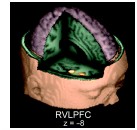
It turned out that when naming an emotion, and not for the other tasks, activity in a frontal lobe area called the the right ventrolateral prefrontal cortex (right VLPFC) significantly increased while activity in the amygdala decreased.

The amygdala is known to be heavily involved in processing emotions and seems to be regulated, at least in part, by the VLPFC.

These findings are consistent with this idea. The VLPFC increases its activity to dampen down the emotions triggered by the amygdala.

However, it’s not clear whether this happens equally for both positive and negative emotions, as 80% of the faces in the study had expressions of anger or fear, while only 20% displayed happiness or surprise, so this data only really tells us about unpleasant feelings.

We know that observing emotion in others makes us more likely to feel the same thing ourselves, but it’s not the same as experiencing an emotion ‘first-hand’, so we need to be a bit careful in assuming that this study fully represents the more everyday experience of talking about our emotions.

This experiment gives us a good understanding of the brain circuit involved reducing emotional impact via naming, but it doesn’t tell us much about why this occurs.

This is one of the major drawbacks of neuroimaging studies. They often just redescribe an effect in terms of brain activity.

Of course, this is essential knowledge, but we need to do more than just have several types of description and it is why the results from brain scanning studies need to be integrated with behavioural, experimental, clinical and subjective reports to be fully informative.

Link to write-up from APA Monitor.
Link to write-up from Scientific American.
Link to abstract of scientific study.

Profiling serial killers and other violent criminals

I just noticed that the January edition of the Journal of Forensic Sciences is freely available online, which contains psychological case reports on two serial killers and a football hooligan.

The journal is always a fascinating read, as it combines academic papers on everything from molecular analysis to psychological profiling.

The psychology case reports are often more influenced by a Freudian, interpretive style of explanation than in many other areas of psychology.

This is perhaps because the reports are largely from the USA which was historically most influenced by Freudian ideas and still retains a stronger influence in clinical and forensic psychology.

It is possibly also because it’s quite hard to do controlled studies on violent criminals, and so single case studies are more likely to draw on interpretive ideas that were specifically developed to delve into the mind of individuals.

For example, the FBI’s Behavioural Science Unit will partly analyse a crime scene using interpretive methods to link the symbolism of certain actions (e.g. covering a victims face after the murder) with the emotional state of the killer (e.g. shame).

The APA Monitor has an intriguing article on FBI profiling if you want to know more, and if you want some examples of the sorts of thinking that goes into criminal profiling, the case reports in the January edition are a good place to start.

Link to ‘Paths to Destruction: The Lives and Crimes of Two Serial Killers’.
Link to ‘The Hooligan’s Mind’.
Link to ‘Criminal profiling: the reality behind the myth’.

Pugilistic Discussion Syndrome

The Wired Alt-Text blog has an amusing list of made-up diagnoses for internet users, covering all the major pathologies of online interaction.

This is my favourite:

Pugilistic Discussion Syndrome

In this curious form of aphasia, the subject is unable to distinguish between a discussion and a contest. The subject approaches any online forum as a sort of playing field, and attempts to “win” the discussion by any means necessary. The rules of the imaginary contest are apparently clear to the individual as he or she will often point out when others break them, but when asked to outline these rules the individual is reluctant, perhaps not wishing to confer an “advantage” on any “opponents.” The conditions for winning are similarly difficult to pin down, although in some cases the individual will declare himself the winner of a discussion that, to all others, appears to be ongoing.

Of course, the next step is for an ambitious young researcher and a support group of affected families to champion the cause. Shortly after, a precise list of symptoms for each diagnosis will be created.

Some initial research will demonstrate that the behaviour in a particular category can be reduced by a particular psychiatric drug, at which point a drug company will fund a ‘public education campaign’ about the disorder.

Now flush with cash, the researchers and support groups will lobby for mainstream acceptance (inclusion in the DSM being the crowning glory), and as soon as that happens, the drug company will push for a licence for their treatment to be approved for the condition.

Voila. Another dreadful disease has been recognised, de-stigmatised and treated. The march of progress moves ever forward.

On a more serious note, what I’ve just described is a typical process by which new psychiatric conditions become mainstream.

Some people, and their families, may genuinely suffer from the effects jokingly described under ‘Pugilistic Discussion Syndrome’.

It is always worth helping people to suffer less, but the question you should ask yourself when you hear about a new mental illness is not whether people are suffering (which they almost certainly are), but whether the best way to alleviate that suffering is by deciding it should be diagnosed and treated by the medical profession.

Medicine uses science, but the decision over what is worth researching and treating is based on a mixture of political, personal, scientific and economic concerns.

Nowhere is this more apparent than in psychiatry. An essential question for critical thinking in this field is ‘who benefits from this approach?’.

The answer should always be the patients, but it isn’t always clear that this is the case. We need to keep asking ourselves this same question over-and-over to make sure psychiatry is serving those most in need.

So, if you want to get involved with medical progress, consider some of the conditions on Wired’s satirical list.

Link to ‘Narcissistic Blog Disorder and Other Conditions of Online Kookery’.

What aliens taught us about self-justification

Newsweek has a brief but interesting article on the new generation of research focused on cognitive dissonance – our desire to reconcile ill-fitting beliefs and actions which can lead us to self-justify in the most curious ways.

The theory is one of the most important in psychology but has a rather unusual origin.

It originated with psychologist Leon Festinger who came up with the idea after studying a UFO cult.

The cult believed in a prophecy that aliens would land at a certain date and destroy the earth. The date came and went and no aliens appeared, but a curious thing happened.

While some believers became disillusioned and left, others strengthened their beliefs. Festinger asked ‘why would your belief strengthen if there’s evidence against it?’.

He thought that it might result from a process of trying to make sense of two conflicting things – in this case, acting as a cult member, but having your belief in a prophecy disproved.

Perhaps to reconcile these positions and make yourself feel more at ease, you could either change your actions (leave the cult), or, change your other beliefs to fit (maybe the prophecy was a test of faith?).

Festinger set decided to test this idea in the lab with a now classic experiment.

He asked groups of students to volunteer for an experiment. In the study the students were asked to complete a dull and repetitive task.

Afterwards they were asked to persuade another student to volunteer. For this, half the students were paid one dollar, half twenty dollars.

The students were put in the position that their actions (persuasion) conflicted with their belief that the task was boring.

The students who were paid only one dollar rated the task as more enjoyable than the twenty dollar students.

While the paid students could justify their persuasion by telling themselves they were doing it for the money, the unpaid students justified it to themselves by changing their opinion of the task – “Actually, it wasn’t that boring after all”.

Many more studies have born out the theory, suggesting that we are motivated to reduce conflicts in our actions and beliefs, partly because we feel discomfort when they do not adequately match.

The Newsweek article looks at some of the more recent research in this area, and touches on some of the neuroscience studies which are trying to work out how the brain is involved in this process.

Incidentally, the author of the piece, Wray Herbert, also has a blog that is full of other great articles.

Link to Newsweek article ‘Toothless is Beautiful’.

The pathologies of social rejection

Today’s Washington Post has an article on the psychology of rejection in children’s social circles and its possible long-term effects on behaviour and mental health.

It comes in the wake of the Virginia Tech massacre and it aims to make sense of bullying and rejection by looking at scientific studies in the area.

These have uncovered which things make a child more likely to be rejected, and what is likely to occur when it happens.

One key finding is that early rejection means that children are less likely to develop social skills, meaning continued rejection is more likely.

This has led to a focus on ‘early intervention’ for troubled children to try and prevent them from getting caught up in the vicious circle of social exclusion.

This is a valuable project because rejection is known to be associated with depression, behaviour problems and chance of becoming involved in criminal activities.

The article looks at some of the recent studies that have focused on this area, and talks to some of the professionals involved in trying to make a difference with vulnerable young people.

Link to article ‘A Better Response to Rejection’.