What is it like being nerve gassed?

I’ve just found an interesting article in the Journal of Pharmacy Practice that discusses the medical management of chemical weapons injuries.

It has a particularly attention-grabbing section that describes the effects of being nerve gassed. I’ve pasted it below, but as it was dense with medical jargon, I’ve added explanations in square brackets.

The nerve agents prevent the breakdown of [neurotransmitter] acetylcholine resulting in a cholinergic crisis. Muscarinic effects from nerve agents include miosis [constriction of the pupils of the eyes], bradycardia [slowed heartbeat], diarrhea, nausea and vomiting, diaphoresis [excessive sweating], bronchial secretions [fluid in the lungs], and bronchial constriction [lung tightening]. A dimming of vision occurs with the miosis.

Nicotinic effects include tachycardia [fast heartbeat] and muscle twitching which progresses to muscle paralysis. The toxidrome [poisoning syndrome] depends of the route of absorption. When dermally absorbed [through the skin] muscle twitching occurs first. With inhalation exposure, breathing difficulties are seen first.

The onset of symptoms with inhalation exposure is within 5 minutes. With dermal exposure, it can last up to several hours. The seizures due to nerve agents may be from blocking [neurotransmitter] γ-aminobutyric acid (GABA).

The article also discusses other types of chemical weapons: blister agents, choking agents, incapacitating agents, riot control agents, blood agents, and toxic industrial chemicals. All of which sound very unpleasant.

However, ‘incapacitating agents’ can also mean substances that have psychotropic effects. These can be anything which drug the person to a state where they are less able to resist.

In theory, these could be anything, but the article particularly notes opioid-based gasses (think vaporised synthetic heroin – like the fentanyl derivative used in the 2002 Moscow theatre siege by Russian special forces) or the hallucinogenic drug BZ which has featured in many favourite conspiracy theories.
 

Link to locked article on chemical weapons medicine.

A taxonomy of ayahuasca hallucinations

A wonderful list categorising hallucinations experienced by the Cashinahua people of Peru after drinking the hallucinogenic brew ayahuasca.

1. Brightly colored, large snakes
2. Jaguars and ocelots
3. Spirits, both of ayahuasca and others
4. Large trees, often falling trees
5. Lakes, frequently filled with anacondas and alligators
6. Cashinahua villages and those of other Indians
7. Traders and their goods
8. Gardens

It was reported by the anthropologist Ken Kensinger in a chapter in the book Hallucinogens and Shamanism.

It reminded me of writer Jorge Luis Borges’ whimsical classification system for animals.

Is social psychology really in crisis?

My latest ‘behind the headlines’ column for The Conversation. Probably all old news for you wised-up mindhacks.com readers, but here you go:

The headlines

Disputed results a fresh blow for social psychology

Replication studies: Bad copy

The story

Controversy is simmering in the world of psychology research over claims that many famous effects reported in the literature aren’t reliable, or may even not exist at all.

The latest headlines follow the publication of experiments which failed to replicate a landmark study by Dutch psychologist Ap Dijksterhuis. These experiments are examples of what psychologists call “social priming”, which is a phenomenon where people who are exposed to ideas unconsciously incorporate them into their behaviour. So people who are reminded of old age are reported to walk slower, and people asked to think about university professors do better on a trivial pursuit knowledge test.

What they actually did

The first of Dijksterhuis’ original experiments asked people to think about the typical university professor and list on paper their appearance, lifestyle and behaviours. After this they answered 42 questions taken from Trivial Pursuit.

The experiment found that people who had thought about professors scored 10% higher than people who hadn’t been primed in this way. In this latest report, David Shanks, Head of the Division of Psychology and Language Sciences at University College London and colleagues tried to replicate this effect in nine separate experiments. They didn’t find the effect in any of their experiments, which they suggest calls into question the validity of the original research.

How plausible is it

It’s extremely plausible that people are influenced by recent activities and thoughts – the concept of priming is beyond question, having been supported by decades of research.

What’s less established is whether these effects are really “unconscious” (whatever that means) and whether sophisticated concepts like intelligence can really worm their way into our behaviour in such a profound way.

Tom’s take

The headline reporting of this spat is misleading – there’s nothing worrying about disputed results for social psychology. The process of affirming, disputing and denying results is part of the normal part of science. What is worrying is that this failed replication comes on top of other failed replications of famous social priming results and after the discovery of some high profile frauds in psychology, such as Diederik Stapel.

This has led some to talk of a crisis in experimental social psychology, centring on whether standards of research in the area have slipped enough to allow false results to become easily accepted.

The whole situation is a wonderful opportunity to see “under the hood” of science and see how it really works (rather than how we’re taught it should work). Everything is in the mix: fundamental conceptual disagreements (about the nature of unconscious processing), disciplinary tribalism (between cognitive psychologists and social psychologists), big dog personalities and emotions running high, academic fashion creating a scientific “bubble” (this is that bubble bursting) and soul-searching questions about whether our methods as researchers are fit for purpose.

My guess is that, when the dust settles, we’ll find out that priming effects can work – but they aren’t as strong or common as reported. I have faith that most effects reported in the literature will turn out to true in some form – the vast majority of psychologists are honest and methodical – but we also know for sure than some effects will turn out to have been chimeras, we just can’t say for sure in advance which.

The really interesting aspects to the debate, from my point of view, is going to be clarifying exactly how unconscious these effects are. My prejudice is that social psychologists have been overly casual about using that word, using it in circumstances which would contradict the way most people use it, whether they’re psychologists or not.

Read more

Shanks, D. R., Newell, B. R., Lee, E. H., Balakrishnan, D., Ekelund, L., Cenac, Z., Fragkiski, K. & Moore, C. (2013). Priming Intelligent Behavior: An Elusive Phenomenon, PloS one, 8(4), e56515.

Ed Yong on Bargh’s response to another failure to replicate

Rolf Zwaan on the theory of social priming

Rolf Zwaan on replication done right

Tom Stafford does not work for, consult to, own shares in or receive funding from any company or organisation that would benefit from this article, and has no relevant affiliations.

The Conversation

This article was originally published at The Conversation.
Read the original article.

An unrecognised revolution in street drug design

I’ve got an article in The Observer about the ongoing but little recognised revolution in street drug design being pushed forward by the ‘legal high’ market.

Since 2008 we’ve seen the first genuine wave of ‘designer drugs’ that are being produced by science-savvy professional labs that are deliberately producing substances to avoid drug laws.

New substances are appearing at a rate of more than one-a-week and some are completely new to science.

The article looks at how the clandestine labs are creating these new highs and what this almost impossible to regulate situation means for the ‘war on drugs’ approach to recreational drug use.
 

Link to article in The Observer.

A radio guide to global mental health

The BBC World Service is in the midst of an excellent series on global mental health – called The Truth About Mental Health.

It is currently half-way through and is remarkably well done, looking at everything from the war in Syria, to the effects of solitary confinement, to treatment in developing countries.

The programme also takes a considered look at the important question of whether mental illness is universal or whether it is tightly bound to the culture in which we live.

You can get the episode guide and streaming audio from this page but because the BBC is a bit rubbish at the internet, the podcasts are on an entirely different page, not linked from the episode guide, under the heading of a different programme and mixed in with another series.

Oh, and they’re only available for a few weeks. It’s fine, those interactive Pods will never catch on.

Don’t let this put you off though, whether you manage to catch the podcasts or can stream the programmes online, they’re an excellent guide to the increasingly important field of global mental health.
 

Link to guide and streamed audio of The Truth About Mental Health
Link to podcasts.

Protect your head – the world is complex

The British Medical Journal has a fascinating editorial on the behavioural complexities behind the question of whether cycling helmets prevent head injuries.

You would think that testing whether helmets prevent bikers from head injury would be a fairly straightforward affair. Maybe putting a bike helmet on a crash test dummy and throwing rocks at its head. Or counting how many cyclists with head injuries were wearing head protection – but it turns out to be far more complicated.

The piece by epidemiologist Ben Goldacre and risk scientist David Spiegelhalter examines why the social and behavioural effects of wearing a helmet, or being required to wear one by law, can often outweigh the protective effects of having padding around your head.

People who are forced by legislation to wear a bicycle helmet, meanwhile, may be different again. Firstly, they may not wear the helmet correctly, seeking only to comply with the law and avoid a fine. Secondly, their behaviour may change as a consequence of wearing a helmet through “risk compensation,” a phenomenon that has been documented in many fields. One study — albeit with a single author and subject—suggests that drivers give larger clearance to cyclists without a helmet.

Risk compensation is an interesting effect where increasing safety measures will lead people to engage in more risky behaviours.

For example, sailors wearing life jackets may try more risky maneuvers as they feel ‘safer’ if they get into trouble. If they weren’t wearing life jackets, they might not even try. So despite the ‘safety measures’ the overall level of risk remains the same due to behavioural change.

This happens in other areas of life. Known as self-licensing it is where people will allow themselves to indulge in more harmful behaviour after doing something ‘good’.

For example, people who take health supplements are more likely to engage in unhealthy behaviours as a result.

The moral of the story, of course, is to stay in the bunker.
 

Link to BMJ editorial ‘Bicycle helmets and the law’.

When giving reasons leads to worse decisions

We’re taught from childhood how important it is to explain how we feel and to always justify our actions. But does giving reasons always make things clearer, or could it sometimes distract us from our true feelings?

One answer came from a study led by psychology professor Timothy Wilson at the University of Virginia, which asked university students to report their feelings, either with or without being asked to provide reasons. What they found revealed just how difficult it can be to reliably discern our feelings when justifying our decisions.

Participants were asked to evaluate five posters of the kind that students might put up in their bedrooms. Two of the posters were of art – one was Monet’s water lilies, the other Van Gogh’s irises. The other three posters were a cartoon of animals in a balloon and two posters of photographs of cats with funny captions.

All the students had to evaluate the posters, but half the participants were asked to provide reasons for liking or disliking them. (The other half were asked why they chose their degree subject as a control condition.) After they had provided their evaluations the participants were allowed to choose a poster to take home.

So what happened? The control group rated the art posters positively (an average score of around 7 out of 9) and they felt pretty neutral about the humorous posters (an average score of around 4 out of 9). When given a choice of one poster to take home, 95% of them chose one of the art posters. No surprises there, the experimenters had already established that in general most students preferred the art posters.

But the group of students who had to give reasons for their feelings acted differently. This “reasons” group liked the art posters less (averaging about 6 out of 9) and the humorous posters more (about 5 to 6 out of 9). Most of them still chose an art poster to take home, but it was a far lower proportion – 64% – than the control group. That means people in this group were about seven times more likely to take a humorous poster home compared with the control group.

Here’s the twist. Some time after the tests, at the end of the semester, the researchers rang each of the participants and asked them questions about the poster they’d chosen: Had they put it up in their room? Did they still have it? How did they feel about it? How much would they be willing to sell it for? The “reasons” group were less likely to have put their poster up, less likely to have kept it up, less satisfied with it on average and were willing to part with it for a smaller average amount than the control group. Over time their reasons and feelings had shifted back in line with those of the control group – they didn’t like the humorous posters they had taken home, and so were less happy about their choice.

Trivial pursuit

The source of this effect, according to the researchers, is that when prompted to give reasons the participants focused on things that were easy to verbalise; they focused on the bright colours, or funny content of the humorous posters. It’s less easy to say exactly what’s pleasing about the more complex art classics. This was out of step with their feelings, so in the heat of the moment participants adjusted their feelings (a process I’ve written about before, called cognitive dissonance). After having the posters on their wall, the participants realised that they really did prefer the art posters all along.

The moral of the story isn’t that intuition is better than reason. We all know that in some situations our feelings are misleading and it is better to think about what we’re doing. But this study shows the reverse – in some situations introspection can interfere with using our feelings as a reliable guide to what we should do.

And this has consequences in adulthood, where the notion of expertise can mean struggling to discern when introspection is the best strategy. The researchers who carried out this study suggest that the distorting effect of reason-giving is most likely to occur in situations where people aren’t experts – most of the students who took part in the study didn’t have a lot of experience of thinking or talking about art. When experts are asked to give reasons for their feelings, research has found that their feelings aren’t distorted in the same way – their intuitions and explicit reasoning are in sync.

You might also see the consequences of this regularly in your line of work. Everybody knows that the average business meeting will spend the most time discussing trivial things, an effect driven by the ease with which each member of the meeting can chip in about something as inconsequential as what colour to paint the bike sheds, or when to plan a meeting to discuss the conclusions of that meeting. When we’re discussing complex issues, it isn’t so easy to make a contribution. The danger, of course, is that in a world which relies on justification and measurement of everything, those things that are most easily justified and measured will get priority over those things which are, in fact, most justified and important.

This is my BBC Future column from last week. The original is here. For what it is worth, I think the headings it received there are very distracting from the real implications of this work. If you’ve got this far, you can work out why for yourself!

Drugs where the sun don’t shine: a cultural history

Through the history of humanity, every culture has made use of psychoactive substances. While smoking, eating and injecting have generated most interest, taking drugs through the nether regions has a remarkably long history.

Firstly, let’s get your burning question out of the way. The reason someone might want to administer drugs through the vagina or anus is because these areas have two properties that make them excellent drug delivery systems: they are moist and they have an excellent blood supply.

This means drugs will be absorbed into the bloodstream and reach the brain very quickly – often more quickly than if you drank the substance.

We know why this works due to medical research, but as we wander through the history of downstairs doping, you may wish to take a moment to reflect on how this remarkable fact was first discovered.

The earliest accounts of rectal administration of psychoactive drugs come from the Ancient Mayan civilization where ritual enemas were commonly used to induce states of trance and were widely depicted on carvings and pottery.

The image above is a Mayan carving depicting a priest giving reclining man a large ritual enema to the point where he sees winged reptile Gods flying overhead. Sorry hipsters, your parties suck.

It wasn’t just the Mayans, though. The historical use of psychoactive enemas was known throughout the Americas and is still used by traditional societies today.

Unfortunately, we know little about the history of similar practices in Africa but they are certainly present in traditional societies today – and largely known to mainstream science through documented medical emergencies.

In contrast, while it seems that enemas and douching were often used in Ancient Europe (for example, Aristides writes in his Sacred Tales that the goddess Athena appeared to him in a dream and recommended a honey enema – thanks your holiness), they do not seem to have been used for bottom-up drug taking.

However, there is some evidence that in medieval Europe, hallucinogenic ointments were applied to the vagina with some speculation that the ‘witch on a flying broomstick’ cliché arose due to the use of a broomstick-like applicator for strongly psychoactive drugs.

As the first synthesised psychoactive drugs became available in the 19th and early 20th Centuries, specialised delivery devices were quickly developed.

Cocaine was especially likely to be applied down-below because, although it makes you high, it is also an excellent local anaesthetic useful for discomfort and minor surgery. The development of cocaine tampons was considered a medical innovation that was “regarded as an especially effective treatment for gynecological diseases”.

The application of psychoactive drugs into the anus is a small but essential part of modern medicine. Status epilepticus is a medical emergency where someone has an epileptic seizure that doesn’t end by itself. It is potentially fatal.

The single best way of ending the seizure is through the use of drugs like lorazepam or diazepam (better known as Vallium). But if someone is unconscious and possibly shaking, trying to get them to swallow a pill could be very dangerous. Hence, the drug is often put straight into the back passage. This has saved countless lives and may, one day, save yours.

Recreationally, both vaginal and anal cocaine use have been reported in the medical literature and popular culture. Unfortunately though, most cases of cavity cocaine highs are not from recreational users but smugglers who have hidden drugs in their body and had the packets burst – sending them to hospital with drug toxicity.

For those wondering whether the modern world has truly mastered the art of the half-height high, you need look no further than ‘butt chugging’ – the frat boy practice of absorbing alcohol through the anus either via a tube or via a booze-soaked tampon.

Police reports suggested that the University of Tennessee chapter of the Pi Kappa Alpha fraternity decided to have a butt chugging party which promptly sent fraternity member Alexander Brougthon to the emergency room with alcohol poisoning.

This led to quite possibly one of the oddest incidents in the history of derrière drug taking: a live press conference where the entire fraternity and their lawyer addressed the media to deny the incident ever happened.

After the lawyer gives a strongly worded denial, Brougthon reads his statement. “The scandalous accusations surrounding that event never happened and I completely deny them,” he says. “At this point,” he continues, “my intent is to clear my name”.

One of the press pack asks a question. “Alexander, can you clarify what did happen that day?”

He looks distraught. “It’s a long story” he says.

Crystal history

Spiegel Online has an excellent article that traces the history of methamphetamine from its early days as synthetic soldier fuel in Nazi Germany to its recent history as street crank.

There is one curious bit though:

Pervitin remained easy to obtain even after the war, on the black market or as a prescription drug from pharmacies. Doctors didn’t hesitate to prescribe it to patients as an appetite suppressant or to improve the mood of those struggling with depression. Students, especially medical students, turned to the stimulant to help them cram through the night and finish their studies faster.

Numerous athletes found Pervitin decreased their sensitivity to pain, while simultaneously increasing performance and endurance. In 1968, boxer Joseph “Jupp” Elze, 28, failed to wake again after a knockout in the ring following some 150 blows to the head. Without methamphetamine, he would have collapsed much sooner and might not have died. Elze became Germany’s first known victim of doping. Yet the drug remained on the market.

This was probably not mainly due to increased pain tolerance. In fact, studies on the pain-killing effects of amphetamine show quite modest effects on reducing discomfort.

Being knocked out is basically where the brain has sustained so much damage that it cannot maintain sufficient arousal to support consciousness.

Amphetamine artificially increases arousal, so you’re likely able to sustain much more brain damage before passing out.

Or to put it another way, after dropping speed, the point at which you sustain enough brain damage to pass out becomes much closer to the point at which you’re likely to die.

There is also a chronic effect of amphetamine raising blood pressure, which increases the chance of stroke, so getting repeatedly punched in the head while on speed is probably not a good idea. I suspect this was the more likely route to the death of boxer Joseph “Jupp” Elze.

If you want a background on the science and history of stimulants, I never miss the opportunity to recommend the brilliant book Speed, Ecstasy, Ritalin: The Science of Amphetamines.

However, if you want a quick primer (no, not that sort) the Spiegel article is a great place to start.
 

Link to Spiegel article ‘The German Granddaddy of Crystal Meth’.

2013-05-31 Spike activity

Quick links from the past week in mind and brain news:

A video of a brain surgery patient playing guitar during the procedure. Theatre nurse on drums.

The Guardian has an excellent piece on ‘appreciating the politics of psychiatry’. Hints of Viennese wood and iodine with a curiously bitter aftertaste.

“Yesterday, I read a paper that, to my mind, embodies what’s wrong with cognitive neuroscience” says Neuroskeptic. Personally, I just look at the pictures.

People into bondage are better psychologically adjusted according to a new study covered by Pacific Standard. Double-blind intervention already planned.

Time magazine warns not to read too much into brain scans. Although you can see castles if you stare long enough.

Neuroscience: Method man. Nature not fooling anyone by trying to pass off Karl Deisseroth as one of the Wu-Tang Clan.

Smoking weed doesn’t reduce loneliness says The Neurocritic, somewhat wistfully.

Does brain stimulation make you better at maths?

brainstimulation

The Headlines

Brain stimulation promises “long-lasting” maths boost

Mild electric shocks to brain may help students solve maths problems

Electrical brain boost can make you better at maths

What they actually did

Researchers led by Roi Cohen Kadosh at the University of Oxford trained people on two kinds of maths skills, rote learning simple arithmetic problems and practicing more varied calculations.

During this learning process they applied small and continually varying electrical currents to the scalp, above the temples. A control group wore the electrodes but didn’t receive any current. Compared to the controls, the people who practiced with the current turned on performed faster on the maths problems.

Even more amazing, when a subset of the participants were brought back six months later, those who had received the electrical treatment were still significantly faster, albeit only for the harder, more varied, calculations.

How plausible is it?

The particular technique these researchers used, called Transcranial Random Noise Stimulation (TRNS) is a recent invention, but the use of electrical stimulation to affect brain activity has a long history.

The brain is an electrochemical machine, so there’s every reason to think that electrical stimulation should affect its function. The part of the brain the researchers stimulated – the dorsolateral prefrontal cortex – is known to be involved in complex tasks like learning, decision making and calculation.

What’s amazing is that such a gross intervention as applying a current via electrodes, to such a large part of the brain, could have a specific (and beneficial) effect on mathematical ability.

Tom’s take

This is technically impressive work, done by highly capable researchers at well respected institutions and published in a prestigious journal. Still, there are a few warning signs that make me nervous about how reliable the result is.

  1. The key result showing the long-lasting nature of the effect is based on just six people who received the treatment (out of the 12 originally treated and the 12 controls). Even worse, the statistical test they rely on would have come up as “no effect” if they had done it the conventional way. While the result is based on such small numbers it has to remain as “promising” at best, rather than confirmed.

  2. The researchers recorded percentage correctly on the maths problems, as well as speed of responding, but they only discuss the speed of responding. The graphs of errors make it look like the people who got faster also make more mistakes, which doesn’t count as an improvement in my book. Why no combined analysis of speed and accuracy?

  3. We don’t know which part of the brain this effect is due to. Although they did record brain activity and show that it changes in the area they were interested in, the basic comparison is still “doing something to the brain” vs “doing nothing to the brain” (thanks to Vince Walsh for pointing this out). It is hard to make any solid conclusions on how this technique might be having an effect.

  4. There was no systematic check that participants were truly ignorant of which group they were in, although the researchers believe this to be the case. If participants knew when their brain was being stimulated then the change in performance could have been due to motivation or a desire to please rather than any specific manipulation of brain function.

Putting these worries aside, we’re not going to see this technique used in the classroom any time soon, even if it holds up. Suppose this technique is reliable, and we really can improve people’s basic maths skills with a bit of electrical stimulation we’d still hesitate to deploy it. Does it affect any other skills, perhaps taking resources away from them?

Competition is a basic principle of brain development, it isn’t implausible that there would be a cost to overclocking the brain like this. There might be all sort of minor side effects such as increased fatigue or poorer attention, which would mean that stimulation wasn’t just pure benefit. Or – also plausible – perhaps the more rapid learning of the basics would mean that skills which build on those basics would be harder to learn (sort of like screenburn for memories).

I’m not worried for the participants in this research, but I’d still want a lot more questions answered before I started setting electrical stimulation along with homework.

Read more

The original paper: Snowball, A., Tachtsidis, I., Popescu, T., Thompson, J., Delazer, M., Zamarian, L., Zhu, T., Cohen Kadosh, R. (2013). Long-Term Enhancement of Brain Function and Cognition Using Cognitive Training and Brain Stimulation. Current Biology. doi:10.1016/j.cub.2013.04.045Ed

Ed Yong on the dangers of neuroscience with small data sets.

Dorothy Bishop has collected some reactions to misleading headlines about ‘shocks’).

Tom Stafford does not work for, consult to, own shares in or receive funding from any company or organisation that would benefit from this article, and has no relevant affiliations.

The Conversation

This article was originally published at The Conversation.
Read the original article.

Photographing hallucinations

BMJ Case Reports has a paper that describes two patients with Parkinson’s disease who experienced hallucinations that transferred onto photos they took to try and prove they were real.

This is ‘Patient 1’ from the case report:

Patient 1 was first evaluated at age 66, having been diagnosed with PD [Parkinson’s Disease] at age 58… She complained of daytime and night-time visual hallucinations for the past one year. Most of the time she did not have insight about them. She described seeing three children playing in her neighbour’s yard and a brunette woman sleeping under the covers in one of the beds in her house. She also saw images of different people sitting quietly in her living room. Most of her visual hallucinations subsided in open and brightly lit spaces but were, nevertheless, troublesome. In one instance, she saw a man covered in blood, holding a child and called 911.

Her husband, in an attempt to prove to her that these were hallucinations, took pictures of the neighbour’s yard and the bed in their house. Surprisingly, when shown these photos, the patient continued to identify the same children playing in the yard and the same brunette woman sleeping under the covers. This perception was present every time the patient looked at these photos. Within 6 months of stopping ropinirole and titrating quetiapine to 75 mg every night at bedtime the hallucinations were less severe and shorter in duration, but the patient continued to see them in the photos.


Link to locked article in BMJ Case Reports.

Why you might prefer more pain

When is the best treatment for pain more pain? When you’re taking part in an experiment published by a Nobel prize winner and one of the leading lights in behavioural psychology, that is.

The psychologist in question is Daniel Kahneman; the experiment described by the self-explanatory title of: When More Pain Is Preferred to Less: Adding a Better End. In the study, Kahneman and colleagues looked at the pain participants felt by asking them to put their hands in ice-cold water twice (one trial for each hand). In one trial, the water was at 14C (59F) for 60 seconds. In the other trial the water was 14C for 60 seconds, but then rose slightly and gradually to about 15C by the end of an additional 30-second period.

Both trials were equally painful for the first sixty seconds, as indicated by a dial participants had to adjust to show how they were feeling. On average, participants’ discomfort started out at the low end of the pain scale and steadily increased. When people experienced an additional thirty seconds of slightly less cold water, discomfort ratings tended to level off or drop.

Next, the experimenters asked participants which kind of trial they would choose to repeat if they had to. You’ve guessed the answer: nearly 70% of participants chose to repeat the 90-second trial, even though it involved 30 extra seconds of pain. Participants also said that the longer trial was less painful overall, less cold, and easier to cope with. Some even reported that it took less time.

In case you think this is a freakish outcome of some artificial lab scenario, Kahneman saw a similar result when he interviewed patients who had undergone a colonoscopy examination – a procedure universally described as being decidedly unpleasant. Patients in Kahneman’s study group had colonoscopies that lasted from four to 69 minutes, but the duration of the procedure did not predict how they felt about it afterwards. Instead, it was the strength of their discomfort at its most intense, and the level of discomfort they felt towards the end of the procedure.

These studies support what Kahneman called the Peak-End rule – that our perceptions about an experience are determined by how it feels at its most intense, and how it feels at the end. The actual duration is irrelevant. It appears we don’t rationally calculate each moment of pleasure or pain using some kind of mental ledger. Instead, our memories filter how we feel about the things we’ve done and experienced, and our memories are defined more by the moments that seem most characteristic – the peaks and the finish – than by how we actually felt most of the time during the experience.

Kahneman wondered whether this finding meant that surgeons should extend painful operations needlessly to leave patients with happier memories, even though it would mean inflicting more pain overall. Others have asked whether this means that the most important thing about a holiday is that it includes some great times, rather than the length of time you are away for. (It certainly makes you think it would be worth doing if you could avoid the typical end to a holiday – queues, lumping heavy luggage around and jetlag.)

But I think the most important lesson of the Peak-End experiments is something else. Rather than saying that the duration isn’t important, the rule tells me that it is just as important to control how we mentally package our time. What defines an “experience” is somewhat arbitrary. If a weekend break where you forget everything can be as refreshing as a two-week holiday then maybe a secret to a happy life is to organise your time so it is broken up into as many distinct (and enjoyable) experiences as possible, rather than being just an unbroken succession of events which bleed into one another in memory.

All I need to do now is find the time to take a holiday and test my theory.

This is my BBC Future column, originally published last week. The original is here.

Science behind the billion dollar brain hype

Image by Flickr user Ars Electronica. Click for source.If you want to hear me talk about what the US and Europe’s billion dollar brain projects are trying to achieve, I’m on the latest BBC All in the Mind discussing the science behind the quite considerable hype.

I discuss these latest brain initiatives alongside presenter Claudia Hammond and distinguished neuroscientist Donald Stein – who appeared despite my suggestion of inviting distinguished neuroscientist Shakira.

Either way, a good discussion on an important topic.
 

Link to programme information and streamed audio.
mp3 of podcast.

Did the eyes really stare down bicycle crime in Newcastle?

This is the first fortnightly column I’ll be writing for The Conversation, a creative commons news and opinion website that launched today. The site has been set up by a number of UK universities and bodies such as the Wellcome Trust, Nuffield Foundation and HEFCE, following the successful model of the Australian version of the site. Their plan is to unlock the massive amount of expertise held by UK academics and inject it into the public discourse. My plan is to give some critical commentary on headlines from the week's news which focus on neuroscience and psychology. If you've any headlines like you'd critiquing, let me know!


eyes

The headlines

Staring eyes ‘deter’ Newcastle University bike thieves

The poster that’s deterring bike thieves

The sign that cuts bike theft by 60%

The story

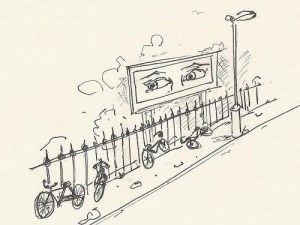
A picture of a large pair of eyes triggers feelings of surveillance in potential thieves, making them less likely to break the rules.

What they actually did

Researchers put signs with a large pair of eyes and the message “Cycle thieves: we are watching you” by the bike racks at Newcastle University.

They then monitored bike thefts for two years and found a 62% drop in thefts at locations with the signs. There was a 65% rise in the thefts from locations on campus without signs.

How plausible is it?

A bunch of studies have previously shown that subtle clues which suggest surveillance can alter moral behaviour. The classic example is the amount church-goers might contribute to the collection dish.

This research fits within the broad category of findings which show our decisions can be influenced by aspects of our environment, even those which shouldn’t logically affect them.

The signs are being trialled by Transport for London, and are a good example of the behavioural “nudges” promoted by the Cabinet Office’s (newly privatised) Behavioural Insight Unit. Policy makers love these kind of interventions because they are cheap. They aren’t necessarily the most effective way to change behaviour, but they have a neatness and “light touch” which means we’re going to keep hearing about this kind of policy.

Tom’s take

The problem with this study is that the control condition was not having any sign above bike racks – so we don’t know what it was about the anti-theft sign that had an effect. It could have been the eyes, or it could be message “we are watching you”. Previous research, cited in the study, suggests both elements have an effect.

The effect is obviously very strong for location, but it isn’t very strong in time. Thieves moved their thefts to nearby locations without signs – suggesting that any feelings of being watched didn’t linger. We should be careful about assuming that anything was working via the unconscious or irrational part of the mind.

If I were a bike thief and someone was kind enough to warn me that some bikes were being watched, and (by implication) others weren’t, I would rationally choose to do my thieving from an unwatched location.

Another plausible interpretation is that bike owners who were more conscious about security left their bikes at the signed locations. Such owners might have better locks and other security measures. Careless bike owners would ignore the signs, and so be more likely to park at unsigned locations and subsequently have their bikes nicked.

Read more

Nettle, D., Nott, K., & Bateson, M. (2012) “Cycle Thieves, We Are Watching You”: Impact of a Simple Signage Intervention against Bicycle Theft. PloS one, 7(12), e51738.

Tom Stafford does not work for, consult to, own shares in or receive funding from any company or organisation that would benefit from this article, and has no relevant affiliations.

The Conversation

This article was originally published at The Conversation.
Read the original article.

A world of swearing

The Boston Globe has a short but fascinating interview on the history of swearing where author Melissa Mohr describes how the meaning of the act of swearing has changed over time.

IDEAS: Are there other old curses that 21st-century people would be surprised to hear about?

MOHR: Because [bad words] were mostly religious in the Middle Ages, any part of God’s body you could curse with. God’s bones, nails, wounds, precious heart, passion, God’s death—that was supposedly one of Queen Elizabeth I’s favorite oaths.

IDEAS: Have religious curses like that lost their power as the culture becomes increasingly secular?

MOHR: We still use them a lot, but we just don’t think of them as bad words. They’re very mild. If you look at lists of the top 25 swear words, I think “Jesus Christ” often makes it in at number 23 or something….The top bad words slots are all occupied by the racial slurs or obscene—sexually or excrementally—words…

IDEAS: Are blasphemy, sexuality, and excrement the main themes all over the world?

MOHR: As far as I know, they’re mostly the same with a little bit of regional variation. In Arab and Spanish-speaking Catholic countries, there’s a lot of stuff about mothers and sisters. But it’s pretty much the same.

Interesting, there is good evidence that swear words are handled differently by the brain than non-swear words.

In global aphasia, a form of almost total language impairment normally caused by brain damage to the left hemisphere, affected people can still usually swear despite being unable to say any other words.

Author Melissa Mohr has just written a book called Holy Sh*t: A Brief History of Swearing which presumably has plenty more for swearing fans.
 

Link to Boston Globe interview (via @leraboroditsky)
Link to details of Holy Sh*t: A Brief History of Swearing.