Zimbardo on heroism

Edge has a video of Philip Zimbardo talking about what his investigations into the psychology of conformity and abuse have told him about the psychology of non-conformity in the face of evil.

He starts his talk with the following:

One of the questions I’ve been asking myself is, is there a counter point to Hannah Arendt’s classical analysis of evil in terms of her phrase ‘the banality of evil’.

Zimbardo largely describes how his previous work pointed him towards studying heroism and non-conformity, but also gives a nice outline of some of the historical and political background to his work.

Link to page with embedded Quicktime video.

2007-04-13 Spike activity

Quick links from the past week in mind and brain news:

More from Cardiff’s Violence and Society Research Group: Wins, not defeats make fans more aggressive.

The New York Magazine has an in-depth article on research that has looked at the psychology of the boss in the workplace.

Retrospectacle examines new evidence that lactate may be a key in understanding how the brain responds to traumatic injury.

American Scientist reviews a series of books on morality, moral evolution and decision making.

A new blog called ‘On the Brain‘ launches, written by a professor of neuroscience.

The genetic contribution to sexual orientation and sexuality is considered by an article in The New York Times.

The Neurophilosopher investigates recent research into alien abduction, reincarnation and memory errors.

Salon has an interview with Cathryn Jakobson Ramin, author of a new book on midlife memory loss.

Gun ownership linked to suicide

A study just published in the Journal of Trauma found that across 50 US States, home gun ownership was linked to an increase in the risk of gun-related suicide.

The man-in-the-street wisdom on suicide goes something like this: ‘If someone wants to kill themselves, they’ll always find a way to do it’.

In actual fact, we now know that availability of an easy method of suicide makes it more likely.

Many drugs are no longer provided in pill bottles, but instead, in blister packs and this is linked to a reduced severity of overdose.

You would think that if someone wanted to die by overdose, pushing pills out a blister pack would be no less of an obstacle than emptying them out of a bottle, but simple measures such as this can be an effective form of self-harm prevention.

Why is this? Well, it’s not really clear, but possibly because every action someone takes on the path to suicide has to be contemplated and thought about.

Perhaps each contemplation makes people reflect and less likely to act impulsively. Certainly, in some people (but not all it seems) impulsivity is linked to a history of suicide attempts.

Pushing 100 pills out of a blister pack is 99 more actions than emptying a bottle of pills, so maybe this gives more time for people to halt any impulsive actions.

Guns are an instant way of killing yourself and this is one explanation of why they might be linked to a higher rate of suicide.

One objection to the gun-suicide association might be that this is just a correlation and suicidal people might be more likely to have guns in their house because they have acquired a method to kill themselves, or otherwise lead lifestyles that would make both owning a gun and killing themselves more likely.

The finding in the Journal of Trauma study is indeed a correlation, but an experimental approach that would find a true causal link – e.g. putting guns in randomly selected households and seeing if more people kill themselves in these homes – would be highly unethical.

However, the study controlled for a number of factors that are typically given as reasons other than just gun ownership for the link, such as poverty, urbanisation, unemployment, mental illness, and drug and alcohol dependence and abuse.

Still the link remained, and remained only for death by firearm, not suicide by any other method.

Link to summary of study (via Furious Seasons).
Link to abstract of scientific study.

Kurt Vonnegut has left the building

This is a novel somewhat in the telegraphic schizophrenic manner of tales of the planet Tralfamadore, where the flying saucers come from. Peace.

A quote from Slaughterhouse-Five, a novel by American writer Kurt Vonnegut, who died yesterday.

Slaughterhouse-Five is a novel about World War II, the bombing of Dresden, alien abduction, youthful foolishness, time travel, brain injury and forgiveness.

It is a truly remarkable book that gives a profound and sensitive portrait of a person with brain injury, and the chaotic, hallucinatory, terrifying and sometimes wonderful experiences that can come with it.

The unique construction of the blind brain

ABC Radio National’s All in the Mind recently had a two programme special (part 1, part 2) on the neuroscience of blindness, focusing on how blindness affects the development of the brain and how electronic neural implants and being developed to restore lost vision.

One of the most remarkable parts is the interview with psychologist Zoltan Torey, who became blind as a student in an industrial accident.

He has written The Crucible of Consciousness (ISBN 0195508726), a remarkable and highly regarded book on the conscious mind.

In the 1st part of the series, he describes how he constructs a a ‘visual’ representation of the world and how his blindness has informed his study of consciousness:

But what is new of course is just the way in which I am able to combine things in my brain without the interference of vision. Normally when people want to think they close their eyes because the flood of visual impressions that comes at you is a distraction. I have the privilege of not having to cope with that, of thinking without…I’m a sort of ‘thinkaholic’, if I might use this expression. This is the way I did my research work about psychology and the consciousness. Not being troubled with vision itself, it was possible for me to imagine complex internal systems, and so I have this marvellous opportunity to run an internal show like a movie director.

Researchers studying neuroplasticity (how the brain changes its structure and function) are now focusing on the brains of blind people, as it has become clear that, for example, the area of the brain normally functioning as the visual cortex in sighted people seems to be active during touch-based reading, which is something that doesn’t occur in sighted people.

The second programme looks at the latest research on ‘bionic’ retina implants, that aim to process light and, through implanted electrodes, stimulate the optic nerve to act as an artificial retina replacement.

Link to The Blind Brain: Part 1 of 2.
Link to The Blind Brain: Part 2 of 2 – The bionic eye.

Sex, love and SSRIs

Psychology Today has an interesting article on anthropologist Helen Fisher’s theory that SSRI drugs (commonly used as antidepressants) interfere with love and attraction.

SSRI stands for ‘Selective Serotonin Reuptake Inhibitor’ and the group includes drugs such as Prozac (fluoxetine), Seroxat (paroxetine) and Zoloft (sertraline) which all increase the availability of the neurotransmitter serotonin in the synapse – the chemical junction between neurons.

Despite the (somewhat misleading) use of the word ‘selective’ in the title, these drugs also affect many other types of neurotransmitters to varying degrees – of which dopamine is one.

Fisher maintains that as attraction, desire and sexual pleasure are known to involve dopamine circuits in the brain, these drugs interfere with relationship formation.

This dopamine deficit affects people in a variety of ways, according to Fisher and her research partner, Virginia-based psychiatrist J. Andrew Thomson, Jr. Singles using antidepressants may have a harder time meeting people, because their natural sexual response is dampened. Some researchers believe desire was designed to help people select mates who are genetically suited to them. The spark that ignites on meeting someone new is telling you something: This might be your match. When you miss those signals, your odds of finding an appropriate mate decrease.

Fisher outlines her theory in a paper published with psychiatrist J. Anderson Thomson in the recent book Evolutionary Cognitive Neuroscience.

Luckily, the paper is also available online as a pdf file if you want to see their argument in full.

As an aside, the Psychology Today article is by science writer Orli Van Mourik, who you may know from Neurontic blog.

Link to Psychology Today article ‘Sex, love and SSRIs’.
pdf of scientific paper (warning: big download!).

The dramatic history of anaesthetics

BBC Radio 4’s In Our Time had a recent programme on the history of anaesthetics, covering their discovery and their application from the first pain killers to their use in modern day surgery.

It starts with Humphrey Davy testing a wide selection of seemingly randomly chosen gases on himself and discovering ‘laughing gas’ or nitrous oxide.

The programme continues to cover the development of other important Victorian anaesthetics such as ether, chloroform and cocaine, including dramatic demonstrations, usually involving public operations or tests on unwary research assistants.

Link to In Our Time on anaesthetics (with audio).

Power naps for better memory

Neurophilosopher has a great review of a recent study on how short naps help improve memory, and how this is supported by the brain.

Participants were asked to learn an action task and were split into two groups. One group was allowed to have an afternoon nap, while the others remained awake.

Afterwards, those who had slept during the afternoon could perform the task better than those who hadn’t.

EEG recordings of the brain suggested how the learning boost occurred:

This study confirms that the consolidation of motor memories is associated with a particluar stage of sleep (NREM), and that this in turn is correlated with electrical activity in an anatomically discrete region of the brain (the motor cortex).

One interpretation of the findings is that power naps trigger accelerated memory consolidation. An alternative hypothesis is that a good night’s sleep consists of multiple stages which are devoted to the consolidation of memories encoded during waking hours; thus, a full night’s sleep may not be necessary for this consolidation to take place; as long as a sleep episode – be it a a short night’s sleep or an afternoon power nap – includes the corresponding stages (NREM), newly-encoded memories will be consolidated.

For more details and link to the full paper, check out the article over at the Neurophilosophy Blog.

Link to Neurophilosophy article ‘Power naps enhance memory consolidation’.

The dynamics of crowd disasters

Science News has an intriguing article on how physicists have applied models of fluid dynamics to successfully understand dangerous crowd stampedes.

The joint German-Saudi team were prompted to conduct the research by the tragic events of 2006 where hundreds were killed during a mass stampede during the Hajj, the annual pilgrimage to Mecca.

Various physical models have been applied quite successfully in understanding crowd behaviour. We reported on one using a model of magnetism back in 2005.

These models work because, perhaps surprisingly, many different types of complex system seem to share higher-level or emergent properties: from atoms to neurons to people to telephone networks, and so on.

When trying to understand potentially life-threatening situations like crowd panic or stampede, it would be unethical to do large scale experiments, but these sort of models could be used to understand how they occur.

The researchers simulated crowd behaviour using models from fluid dynamics and compared their predictions with video of the stampede during the 2006 pilgrimage and found that it could accurately model crowd panic.

In normal conditions, pedestrians tend to spontaneously fall into ordered patterns, such as lanes going in opposite directions, previous research had shown. As crowds get denser, stop-and-go patterns begin to propagate in waves, as is typical for cars on heavily trafficked highways. But in critical situations—as when cars get into gridlock—people can break out in panics that result in random patterns of motion, similar to the turbulence of water in the wake of a boat. Crowd members can get squeezed and asphyxiated or fall and be trampled.

These sorts of models can be life-saving as they enable crowd control measures to be tested in the most dangerous conditions without putting anyone at risk.

The full paper is available online as a pdf file.

Link to Science News article ‘Formula for Panic’.
pdf of paper ‘The Dynamics of Crowd Disasters: An Empirical Study’.

Mood slime

RAY: Peter, this is an incredible breakthrough. I mean, what a discovery! A psychoreactive substance! Whatever this stuff is, it responds to human emotional states.

PETER: Mood slime. Oh, baby…

WINSTON: You mean this stuff actually feeds on bad vibes.

RAY: Like a cop in a donut factory.

Dialogue from one of the only comedy films to star parapsychologists: Ghostbusters II.

A Shock Wave of Brain Injuries

The Washington Post has just published an article on the worrying amount of brain damage suffered by US troops in Iraq because of shockwave injuries from roadside bombs known as improvised explosive devices or IEDs.
These sorts of injuries tend not to damage the skull, but can cause significant injury as the brain rapidly accelerates and decelerates inside the skull, and impacts on the inside of the bone casing.

These types of injury are known as ‘closed head injuries‘ as nothing penetrates the skull.

It’s a common misconception that a skull fracture always leads to a worse brain injury.

In fact, in some cases, if the skull breaks, it can allow some of the force of the impact to be dispersed (this is why bicycle and motorcycle helmets are designed to break).

If the skull doesn’t break, sometimes this can lead to the energy of the impact being more fully absorbed by the brain, often leading to shearing and tearing of the white matter pathways as the brain ‘bounces around’ inside.

The Washington Post article outlines why IEDs are likely to have this effect:

Here’s why IEDS carry such hidden danger. The detonation of any powerful explosive generates a blast wave of high pressure that spreads out at 1,600 feet per second from the point of explosion and travels hundreds of yards. The lethal blast wave is a two-part assault that rattles the brain against the skull. The initial shock wave of very high pressure is followed closely by the “secondary wind”: a huge volume of displaced air flooding back into the area, again under high pressure. No helmet or armor can defend against such a massive wave front.

It is these sudden and extreme differences in pressures — routinely 1,000 times greater than atmospheric pressure — that lead to significant neurological injury. Blast waves cause severe concussions, resulting in loss of consciousness and obvious neurological deficits such as blindness, deafness and mental retardation. Blast waves causing TBIs can leave a 19-year-old private who could easily run a six-minute mile unable to stand or even to think.

The article notes that the military have not had to deal with these sorts of injuries in such large numbers before, as IEDs have rarely been used on this scale.

Apparently, the military are currently poorly equipped to deal with these injuries, which is causing problems both for treatment in the field and for longer-term rehabilitation programmes.

The article also contains an interesting factual error: “Iraq has brought back one of the worst afflictions of World War I trench warfare: shell shock. The brain of a soldier exposed to a roadside bomb is shocked, truly.”

Shell shock‘ was given this name during World War I because it was originally thought to be due to the blasts of shells affecting the brain.

It was later discovered that the cause of the condition was combat trauma (i.e. emotional stress) rather than brain injury, so it doesn’t actually describe any type of closed head injury.

Link to Washington Post article ‘A Shock Wave of Brain Injuries’.

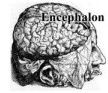
Encephalon 20 hits the net

The 20th edition of Encephalon has just been published containing the best in the last fortnight’s mind and brain writing.

This edition is hosted by science writer Orli Van Mourik’s blog Neurontic and has everything from a neurologist answering questions on computers and consciousness, to studies suggesting that the brain (particularly in mothers) may be specially attuned to the sound of baby cries.

There’s plenty more similarly interesting science stories at the link below.

Link to Encephalon 20.

Violence linked to price of beer

A research report published in Applied Economics has found that the number of patients with violence-related injuries treated in hospital emergency rooms is related to the price of beer.

The paper is available online as a pdf and is from Cardiff University’s Violence and Society Research Group.

The researchers examined admissions to 58 hospital accident and emergency departments over a five year period and found that as the price of beer increased, violence-related injuries decreased.

In general, studies have found that alcohol consumption increases both the risk of being a victim of violence and the perpetrator of it.

There are three main theories on why alcohol and violence are linked: i) due to the drug effects on the brain; ii) because people use alcohol as an excuse for violent behaviour; iii) because people who use alcohol might be more likely to be violent, perhaps due to personality factors like sensation-seeking, impulsivity or risk-taking.

Of course, these theories are not in competition and all the factors are likely to have some influence, but researchers are keen to find out how they interact to better understand the problem.

Interestingly, the Applied Economics study also looked at a number of other factors linked to violence and found that increases in poverty, unemployment, diversity of ethnic population, the summer months and major sporting events also independently predicted an increase in violence.

This combination of an economic and psychological approach to understand violence is particularly important for designing and implementing government or health service policies.

Cardiff University’s Violence and Society Research Group has an interesting history.

It was started by dentist and surgeon Prof Jonathan Shepherd who noticed the amount of facial glass injuries turning up in hospital.

Many turned out to be due to alcohol-fuelled violence and the Group’s research has shown that everything from glass type to availability of recycling facilities can reduce the number of injuries.

The research extended to include violence in general and now takes a comprehensive look at how both social and individual factors influence violent behaviour.

pdf of paper on price of beer and violence.
Link to Violence and Society Research Group page (with full-text papers).

Yes or No would be very misleading

“We are accustomed to think of any particular response as either learned or innate, which is apt to be a source of confusion in thinking about things… Is the response inherited or acquired? The answer is, Neither: either Yes or No would be very misleading.”

Pioneering neuropsychologist Donald Hebb highlights that fact that all human responses are a result of both inherited attributes and learnt experience.

Hebb is best known for his theory of how learning can be supported by networks of single neurons.

The theory, now called Hebbian learning, is a key aspect of artificial intelligence and neuroscience.

I got this quote from Oliver Sacks’ book Migraine but the source isn’t listed. If anyone knows exactly which of Hebb’s writings this comes from, do let me know.

UPDATE: Grabbed from the comments: It is from “The Organization of Behavior: A Neuropsychological Theory” – it’s on Google Books. Thanks John!

This Week in the History of Psychology

Christopher Green, a professor of psychology at York University in Toronto produces a weekly podcast that examines crucial events in the history of psychology.

Each episode of This Week in the History of Psychology looks at a significant development that happened in the same week during the past.

Prof Green also runs the fantastic Classics in the History of Psychology website that has an archive of some of the most important documents in the field.

Link to This Week in the History of Psychology podcast (via BPSRD).
Link to Classics in the History of Psychology website.

Top 10 influential psychotherapists

Psychotherapy Networker magazine is celebrating its 25th anniversary and has conducted a survey to find out the 10 most influential psychotherapists.

Over two and a half thousand (presumably) American psychotherapists responded to the question “Over the last 25 years, which figures have most influenced your practice?” from which the top ten were compiled.

This list is as follows:

1. Carl Rogers
2. Aaron Beck
3. Salvador Minuchin
4. Irvin Yalom
5. Virginia Satir
6. Albert Ellis
7. Murray Bowen
8. Carl Jung
9. Milton Erickson
10. John Gottman

The article discusses each of these key figures and their contribution to psychotherapy, as well as placing them in the wider context of psychological treatments for mental distress.

As well as outlining the most influential psychotherapists, another article looks at the 10 most influential research findings from the last 25 years that have influenced the development of modern psychotherapy.

Finally, an article on ‘Defining Psychotherapy’ cuts to the core of the debate over what psychotherapy is and what is should be in terms of both theory and everyday practice.

The articles are a fantastic introduction to both the theory behind psychological therapies and to what you might expect if you were to undertake therapy yourself, either as a client or a therapist.

Link to ‘The Top 10 Most Influential Therapists…’
Link to ‘Top 10 Research Findings…’
Link to article ‘Defining Psychotherapy’.