Wake up and smell the caffeine

New York Magazine has a wonderful article on the culture, controversies and pharmacology of caffeine – the world’s most popular psychoactive drug.

Ranging from the recent upturn in coffee’s popularity and its inevitable effect on our caffeine consumption to the science of its neurological effects, the article manages to capture some of the key debates about the tremor inducing buzz substance.

One particularly interesting part touches on research that suggests that, like the effect of nicotine, the lift for regular users may be nothing more than withdrawal symptoms being soothed to bring us back to baseline.

That all said, what if the uptick in energy, alertness, and smarts we feel after drinking a cup of coffee isn‚Äôt a real uptick at all? What if it‚Äôs an illusion? A group of cutting-edge caffeine researchers believes that might be the case…

When Griffiths and Juliano teamed up to review 170 years of caffeine research, much of which confirmed the drug’s reputation as a brain booster, they noticed a pattern: Most studies had been done on caffeine users who, in the interest of scientific rigor, were deprived of the stimulant overnight. Because caffeine withdrawal can commence in just twelve hours, by the time each study’s jonesing test subjects were given either caffeine or a placebo, they had begun to suffer headaches and fatigue.

For the half that received the stimulant—poof!—their withdrawal symptoms vanished. The other half remained uncaffeinated, crabby, and logy, and guess which group scored higher on cognitive tests time after time? The boost the test subjects who got the caffeine felt may have simply been a function of having been deprived of the drug.

Link to ‘The Coffee Junkie‚Äôs Guide to Caffeine Addiction’.

Multiple sarcasm

If you’re going to be sarcastic, make sure you do it with the full force of knowledge behind you, because there’s nothing that’ll make you look more ridiculous than being sarcastic and wrong.

Unfortunately, an otherwise interesting article from The New York Times manages to tick both boxes. The fact that the article is on the neuroscience of sarcasm makes it all the more ironic, but we all know that irony is an entirely different ball game.

Despite what the opening paragraph of the article tells you, neuropsychologist Katherine Rankin’s study did not find that sarcasm “resides” in the right parahippocampal gyrus – a part of the temporal lobe that lies just below the hippocampus.

Her study, which was presented to a recent neurology conference, tested a series of 78 patients with various forms of dementia and 13 healthy older adults, with the TASIT – a test that measures the ability to discriminate between sarcastic and sincere statements.

The research team then used MRI scans to take structural images of each of the participants’ brains and looked to see whether atrophy (brain area shrinkage caused by cell death) was linked to poorer sarcasm detection.

As they mention in their presentation abstract: “Poorer sarcasm recognition correlated with right temporal lobe atrophy (anterior fusiform and parahippocampal gyrii, superior temporal sulcus), and atrophy to the right superior frontal gyrus and striatal structures (right caudate and left globus pallidus)”.

For those not familiar with the geography of the brain, this is a fairly distributed area, affecting the frontal lobe, temporal lobe and basal ganglia, largely on the right side.

Contrary to what the article tells you, it’s very unlikely that Dr Rankin was surprised by the fact that the brain areas linked to sarcasm were on the right, rather than the left dominant hemisphere for language.

In fact, not only has right hemisphere damage been known to impair the recognition of emotion in speech for almost 30 years, but in her own abstract Rankin mentions that the finding is consistent with existing research on voice prosody, facial emotion recognition and perspective taking.

Finally, to say that sarcasm “resides” in one particular place in the brain from a study like this is just daft. It’s like concluding fun “resides” in a particular area of the city because you’ve noticed that the population enjoyed themselves less after the cinema burnt down.

Dr Rankin’s study has not yet been published, so the full details aren’t available. However, from the abstract it looks like an excellent study on the cognitive neuroscience of sarcasm which will make a great contribution to the growing literature (including another study presented at the same conference).

I just wouldn’t go by the NYT piece to pick up on the details, although it does have a good demonstration clip from the TASIT.

Link to NYT on sarcasm.
Link to abstract of scientific study.

Back to the future, but this time with data

IEEE Spectrum Online magazine has a special and rather splendid feature on the ‘singularity‘ – the supposed point when technology will outpace the human brain and we’ll be catapulted into a time of intelligent machines, neurologically enhanced humans and never ending life.

If you think this sounds like science fiction, then you’re probably right. Loathe as they are to admit it, transhumanists are essentially pining for the future as depicted in late 20th / early 21st century speculative fiction.

This is not necessarily such a bad thing. Like science fiction itself, some of it obviously stretches credibility to the point of self-parody, while some tackles the limits of technology and human experience in a profound and sophisticated way.

One notable difference is that some of the biggest names in science are involved in the transhumanist movement, and so despite their somewhat, let’s say, ‘ambitious’ aims, the discussions tend to start from what is already possible.

IEEE Spectrum calls the singularity the technological rapture and it’s hard to escape the quasi-mystical aspect of some transhumanism, although perhaps more akin to 21st century alchemy than any explicit belief in the tenants of mainstream religion.

Nevertheless, this new feature sticks largely to the science and contains a wealth of articles, interactive features and video interviews that focus mainly on neuroscience and artificial intelligence. Consequently, there are many highlights to absorb and enjoy.

There’s even a wall chart which tells you “who’s who” in the movement, which is handily illustrated by the disembodied (presumably cryogenically frozen) heads of some of the key thinkers in the field.

UPDATE: It wouldn’t be transhumanism without a mention of Ray Kurzweil! Never fear, for today’s New York Times fills the gap with a piece noting that, like Christmas, the singularity will be here sooner than you think.

Link to ‘The Singularity: A Special Report’.

What the tip of the tongue tells us about the brain

The tip-of-the-tongue state is a common experience where you know you know something but can’t quite bring it to mind. This everyday experience has told us a great deal about how the mind and brain work, as explored in an article for the Boston Globe.

It’s a paradoxical experience if you think about it. You know something, but you can’t remember it.

Just this tells us that the storage of information and the ability to access it are distinct in the brain.

It also tells us that the brain must have ways of monitoring itself and communicating how successfully it carries out its operations to the conscious and unconscious mind.

This is known as ‘metacognition‘ and is one of the most important concepts in modern psychology.

The Boston Globe article (by Jonah Lehrer of the Frontal Cortex blog) is a remarkably lucid exploration of exactly this topic, looking at how it has been studied in everything from lab studies to people with brain injury who suffer near permanent tip-of-the-tongue states.

Link to Boston Globe article ‘What’s that name?’.

Battering Bobo

Albert Bandura’s 1961 ‘Bobo doll experiment‘ examined whether watching aggressive behaviour could trigger violence in children and is one of the most famous studies in in psychology. The video from the experiment is now available online so you can hear Bandura narrating the study as various children knock ten bells out of a plastic doll.

The study has been widely cited in debates about whether TV violence makes children more aggressive, but Bandura never referred to television at all in the article that described the study.

Undoubtedly, the study came at a time of peak concern about the effect of TV on children and so was highly topical, but it also caught the changing mood in psychology as a science.

In 1961 psychology was moving away from behaviourism toward a cognitive approach. Behaviourism suggested that all thought and behaviour arose from stimulus-response or paired-stimulus learning.

In contrast, cognitive psychology argues that the mind is more like a computer, and so processes information and builds internal models of the world.

The Bobo doll experiment was designed as a study of social learning theory, an approach Bandura innovated which attempts to explain how we can learn from others simply by observing them.

While individuals might get rewarded for successfully learning by observation, there are many other instances when this doesn’t happen even though learning still successfully occurs.

Therefore, social learning theory implies that we have internal models, internal motivations and non-conditioned learning – all of which are incompatible with a purely behaviourist approach.

The study could be applied to social concerns about TV and caught the spirit of the new psychology, making it popular with the public and psychologists alike.

Link to video of Bandura’s ‘Bobo doll experiment’ (via MeFi).
Link to full text of the original paper.

To the Madhouse

This month’s British Journal of Psychiatry reprints a poignant poem from the late English physician and poet Edward Lowbury:

To the Madhouse

What she has told us all a hundred times –
That old, unwanted women can again
Be hunted down, accused of pointless crimes
And burned in the public square; that it is vain
To plead ‚Äì or prove ‚Äì one’s innocence; that men
With solemn looks will come into the house,
And say, fearing a scene, `You’ll feel no pain;’
`It’s for your good;’ `We’re not ungenerous;’
What she foretold, when we dismissed her fear
Saying `You dreamed such things’ ‚Äì it now comes true:
The door is open, and the men are here.
Calmly they question her, and with a new
Smiling indifference drag her from the room
And through the streets to the expected doom.

The poem is apparently from one of his collections, entitled New Poems 1935–1989.

The image of the ‘mad woman’ is a recurrent theme in poetry and literature, particularly of times past, and was famously discussed in the 1979 book The Madwoman in the Attic.

One of the Wordworth’s most famous poems, The Mad Mother, is, perhaps, the best known example and recounts the words of a young lady who is experiencing what we would now call postpartum psychosis.

On the surface, it has a more cheerful outlook than Lowbury’s poem, although the content of the mother’s words belie the situation of the subject, rending the piece considerably more disturbing in many ways.

The picture on the right is by the 18th century French painter Th√©odore G√©ricault and is entitled Portrait of a Woman Suffering from Obsessive Envy and is from his series of ten ‘portraits of the insane’.

At the time it was believed that madness could be seen in the face, and G√©ricault wanted to capture how different forms of insanity expressed themselves – a project that preceded later attempts to do the same with photography.

Sadly, only five of the portraits survive, but they remain some of the most important works in the history of portraiture.

Link to short BJP article on the poem.
Link to Wordworth’s poem The Mad Mother.
Link to piece on G√©ricault’s ‘portraits of the insane’.

Shadows of R.D. Laing

The Observer discusses the recent and somewhat lonely death of Adam Laing, the son of revolutionary psychiatrist R.D. Laing, in an article tinged with both sadness and irony.

Adam Laing was apparently found alone in a remotely pitched tent on the Spanish island of Formentera, surrounded by mostly emptied bottles of alcohol, having had a heart attack during a drinking binge.

R.D. Laing was famously troubled himself, suffering from both alcoholism and depression, and for a psychiatrist that specialised in the influence of the family on mental health, he was a notoriously absent father.

He is often, rather clumsily, associated with ‘anti-psychiatry’. Although he rejected the label himself and was certainly not against psychiatric treatment, he did propose some radical ideas that chimed with the counter-culture of the 1960s.

One of this most important contributions was suggesting that family dynamics had an influence on the development and expression of psychosis.

In many ways his ideas were the forerunner of subsequent work on psychosis and ‘expressed emotion’ – another clumsy term that is used to described the extent to which family members talk about another family member in a critical or hostile manner or in a way that indicates marked emotional over-involvement.

In a now widely replicated finding, the number of critical and undermining comments made in a family to a person with psychosis is known to predict the chance of relapse. This has led to the development of family therapy for psychosis which has been shown to reduce relapse rates.

Laing was more concerned with the development of psychosis and argued that the content of hallucinations and delusional beliefs often reflected thoughts that would otherwise be inexpressible in the fraught emotion of a dysfunctional family.

Perhaps Laing’s most naive, and ironically, most popular essays, The Politics of Experience and The Bird of Paradise suggested that madness was a quasi-mystical state in which the psychotic person had been thrown into a process of ‘ego transcendence’.

Psychosis was, therefore, a process of catharsis and the person should be guided on their journey, rather than treated to moderate their chaotic mental state.

For some people, this is almost certainly true, but these people are sadly in the minority. Most find psychosis a disturbing experience and we there is now accumulating evidence that outcome is far worse for people who have longer periods of untreated psychosis.

Laing was important in pointing out that the mental health system can often add to the disturbing experiences rather than temper them, but he often wandered off into vaguely focused anti-authoritarian diatribes in both his writing and talks which made him a darling of the underground but which obscured his more valuable insights.

The Observer article discusses the contrast between Laing’s work and his difficult personality and family life.

Like this one, it’s an article on the death of a man that largely talks about his long departed father.

It’s difficult to read without being struck by the irony that even in death, R.D. Laing’s work and personality have overshadowed his family life.

Link to Observer article on Laing (thanks Tom and Karel!).

Do Bayesian statistics rule the brain?

This week’s New Scientist has a fascinating article on a possible ‘grand theory’ of the brain that suggests that virtually all brain functions can be modelled with Bayesian statistics – an approach discovered by an 18th century vicar.

Bayesian statistics allow the belief in the hypothesis to shift as new evidence is collected. This means the same evidence can have a different influence on certainty, depending on how much other evidence there is.

In other words, it asks the question ‘what is the probability of the belief being true, given the data so far?’.

The NewSci article looks at the work neuroscientist Karl Friston, who increasingly believes that from the level of neurons to the level of circuits, the brain operates as if it uses Bayesian statistics.

The essential idea is that the brain makes models upon which it bases predictions, and these models and predictions are updated in a Bayesian like-way as new information becomes available

Over the past decade, neuroscientists have found that real brains seem to work in this way. In perception and learning experiments, for example, people tend to make estimates – of the location or speed of a moving object, say – in a way that fits with Bayesian probability theory. There’s also evidence that the brain makes internal predictions and updates them in a Bayesian manner. When you listen to someone talking, for example, your brain isn’t simply receiving information, it also predicts what it expects to hear and constantly revises its predictions based on what information comes next. These predictions strongly influence what you actually hear, allowing you, for instance, to make sense of distorted or partially obscured speech.

In fact, making predictions and re-evaluating them seems to be a universal feature of the brain. At all times your brain is weighing its inputs and comparing them with internal predictions in order to make sense of the world. “It’s a general computational principle that can explain how the brain handles problems ranging from low-level perception to high-level cognition,” says Alex Pouget, a computational neuroscientist at the University of Rochester in New York.

Friston is renowned for having a solid grasp of both high-level neuroscience and statistics. In fact, he’s was the original creator of SPM, probably the most popular tool for statistically analysing brain scan data.

Needless to say, his ideas have been quite influential and ‘Bayesian fever’ has swept the research centre where he works.

I was interested to see that his colleague, neuroscientist Chris Frith, has applied the idea to psychopathology and will be arguing that delusions and hallucinations can be both understood as the breakdown of Bayesian inference in an upcoming lecture in London.

This edition of NewSci also has a great article on how cosmic rays affect the brains of astronauts, so it’s well worth a look.

Link to NewSci article ‘Is this a unified theory of the brain?’.
Link to article ‘Space particles play with the mind’.

In the midst of the video game fury

The BPS Research Digest has just alerted me to an excellent cover article from Prospect magazine on the effects of computer games on young minds and why the scaremongering is largely hot air.

One of the biggest mongers of scare is the otherwise excellent Susan Greenfield, who seems to be convinced, mostly on the basis of speculations from some rather obliquely-related neuroscience studies, that video games and electronic culture and doing dreadful things to young minds (although not to elderly minds, who should apparently buy the ‘brain training’ software she’s endorsed).

There is indeed evidence of an association between violent video games and aggression aggression in some young people, but there’s also plenty of evidence of the benefits of children playing games.

Psychologist Tanya Byron wrote a remarkably well-researched report on the topic for the UK government, which is rightly highlighted by the Prospect article as one of the high-points of the debate.

The Prospect piece is a great overview of some of the things less often touched on by the academic literature, such as the real-life management skills needed to succeed in some of the massively multiplayer online role-playing game’s like World of Warcraft or Second Life.

Link to Prospect article ‘Rage Against the Machines’.

Fantastic introduction to MRI brain scanning physics

Magnetic resonance imaging is the most popular method for scanning the brain both for research and for clinical investigations. I’ve just found a wonderfully written article that gives a great introduction to the physics of how MRI scanners work.

It is both clearly written for the non-specialist and fantastically complete. This is a rare and valuable combination.

There are some other guides to MRI physics which are also wonderfully written but most lack the sufficient detail that would bring you up to ‘entry level’ in the field.

For example, How Stuff Work’s guide to MRI is a great place to start, but it won’t tell you about why and how T1 and T2 imaging are different, or any of the other things you need to know to understand the fundamentals of MRI technology.

You don’t need to know maths to understand the article (the downfall of most ‘introductory’ guides to MRI) and the author uses wonderfully clear analogies throughout.

The article is written by radiologist Robert Pooley, who should give himself a pat on the back for such a great job. It was published as an open-access paper in the journal RadioGraphics. Perfection!

Link to article ‘Fundamental Physics of MR Imaging’.

2008-05-30 Spike activity

ABC Radio National’s The Philosopher’s Zone broadcasts part two of its series on the philosophy of suicide.

PsyBlog has been rocking the cognitive biases recently. This is a fascinating article on ‘Four Belief Biases That Can Reduce Pleasure‘.

Columbia University has an archive of video lectures by some of the ‘big names’ in psychology and neuroscience.

The BPS Research Digest covers a new study that finds that harsh discipline actually makes aggressive children worse.

Calm Zone. A fantastic UK initiative to encourage young inner city males to get help for mental health difficulties.

“Why we posted epilepsy film to YouTube”. The Guardian continues the debate over whether video of people having seizures is education or exploitation.

Time magazine wonder about the possibilities of prescribing our own antidepressants.

Pete Doherty says ‘a mind is a terrible thing to waste’. No it’s not the Pete Doherty you’re thinking of.

The All in the Mind blog finds some interesting commentary on movement, the mind, cognition and the car.

Psychologist David Rabiner asks does mindfulness meditation help adults and teens with ADHD? in an article for Sharp Brains.

The Situationist discusses whether we’re living in an age of increasing child anxiety?

Gratingly banal headline obscures an interesting article from The New York Times on the neurobiology of cigarette addiction.

Not Quite Rocket Science covers recent research on how perceived social hierarchy affects cognitive abilities. The Economist on the same.

A fantastic 2002 article from Wired on the curious and death of psychiatrist Elisabeth Targ, who completed the (in)famous prayer healing (not quite so) randomised controlled trials.

Brain Windows is a fantastic looking neuroscience blog that seems to have been dormant for a couple of months. Plenty of good articles there though.

Forgetting Is the New Normal according to an excellent brief article on memory and ageing from Time magazine.

Furious Seasons looks at some new broadsides in the debate over the effectiveness of antidepressants.

Can you teach happiness? ABC Radio National’s education programme EdPod examines whether it’s possible to teach positive psychology to school children.

Inspirational Kid’s Company founder and child therapist Camila Batmanghelidjh is interviewed in The Independent.

Time magazine looks at the psychology of Second Life.

The ‘seven challenges of psychotherapy‘ are discussed by PsychCentral.

Miracle fruit trips out flavours

The New York Times have an article on the truly miraculous miracle fruit, a plant that contains a unique protein that transforms even the most intensely acidic flavours into sweet taste sensations.

“You pop it in your mouth and scrape the pulp off the seed, swirl it around and hold it in your mouth for about a minute,” he said. “Then you’re ready to go.” He ushered his guests to a table piled with citrus wedges, cheeses, Brussels sprouts, mustard, vinegars, pickles, dark beers, strawberries and cheap tequila, which Mr. Aliquo promised would now taste like top-shelf Patrón.

The miracle fruit, Synsepalum dulcificum, is native to West Africa and has been known to Westerners since the 18th century. The cause of the reaction is a protein called miraculin, which binds with the taste buds and acts as a sweetness inducer when it comes in contact with acids, according to a scientist who has studied the fruit, Linda Bartoshuk at the University of Florida’s Center for Smell and Taste.

Apparently, some pioneering barmen have been experimenting with miracle fruit cocktails and the article has video of a ‘flavour tripping party’ where people get together to try the small red berry before sampling a while range of foods which take on a strange news flavour.

Link to NYT article ‘A Tiny Fruit That Tricks the Tongue’.

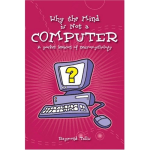
Review: “Why the mind is not a computer”

tallis.png
“Why the mind is not a computer: A pocket lexicon of neuromythology”
Raymond Tallis (2004, originally published 1994).

Neuromythology is the shibboleth of cognitive science that the mind is a machine, and that somehow our theories of information, complexity, patterns or representations are sufficient to explain consciousness. Tallis accuses cognitive scientists, and philosophers of cognitive science such as Chalmers, Churchland and Dennett, of the careless use of words which can apply both to thinking and to non-thinking systems (‘computing’, ‘goals’, ‘memory’, for example). This obfuscation “provides a framework within which the real problems can be by-passed and the illusion of progress maintained”. At his best Tallis is a useful reminder that many of the features of the brain which are evoked to ‘explain’ consciousness really only serve as expressions of faith, rather than true explanations. Does the mind arise from the brain because of the complexity of all those intertwined neurons? The processes inside a cell are equally complex, why aren’t cells conscious? Similarly for patterns, which depend on the subjective perspective (yes, the consciousness) of the observer rather than having an objective existence which is sufficient to generate consciousness; and for levels of description, which, with careless thinking are sometimes reified so that the mind can ‘act’ on the brain, when in fact, if you are physicalist, the mind and brain don’t have separate existences. Moments of the argument can appear willfully obstructive. Tallis maintains that there is no meaningful sense in which information can exist without someone being informed, any more, he says, than a watch can tell the time without someone looking at it. He’s right that we should be careful the word information, which has a very precise technical meaning and also colloquial meanings, but if you suppose that subjective consciousness is required to make information exist (and rule-following, representation and computation to pick a few other concepts about which he makes similar arguments) then you effectively disallow any attempts to use these concepts as part of your theory of consciousness. The disagreement between Tallis and many philosophers of cognitive science seems to me to be somewhat axiomatic — either you believe that our current models of reality can explain how matter can produce mind, or you don’t — but Tallis is right to remind us that the things we feel might eventually provide an answer don’t in themselves constitute an answer.

In essence what this book amounts to is a vigorous restatement of the ‘hard problem’ of consciousness — the stubborn inadequacy of our physical theories when faced with explaining how phenomenal experience might arise out of ordinary matter, or even with beginning to comprehend what form such an explanation might take.

Disclaimer: I bought this book with my own money, because I needed something to read at the Hay Festival after finishing Ahdaf Soueif’s wonderful ‘Map of Love’ (200) and because Raymond Tallis’s essay here was so good. I was not paid or otherwise encouraged to review it.

History of american psychiatry, in two obituaries

The last few months have seen the passing of Frank Ayd and Charles Brenner, two huge figures in American psychiatry. Their obituaries in The New York Times reflect the ideological divide between psychoanalysis and pharmacotherapy that defined stateside psychiatry during the 20th century.

Ayd, pictured top, was one of the pioneers of antipsychotic drug therapy in the states. Although it was already popular among European psychiatrists, Ayd was one of the first to try chlorpromazine (more commonly known as Thorazine) with some of his outpatients.

As well as noticing the huge potential for the drug, virtually the first ever effective treatment for severe psychosis, he was also persistent in publicising the disabling side-effects when many others were dismissing them as part of the illness or ‘hysterical’ in nature.

In contrast, Brenner was a mainstay of mainstream Freudian psychiatry for most of his life.

Interestingly, both Brenner and Ayd came from similar backgrounds. In their early years, both published on drug treatments and lobotomy (then at the height of its popularity), although Brenner later trained as a psychoanalyst and began to focus almost entirely on a Freudian approach.

Brenner is perhaps best known for his ‘conflict theory’, first presented in an influential paper entitled The Mind as Conflict and Compromise Formation.

This overturned the distinction between the Id, Ego and Superego and the Freud’s idea of the unconscious as being nothing more than metaphors, and proposed a model of the mind which we would now recognise as a constraint satisfaction approach – where the mind attempts the best compromise between the satisfaction of drives while accounting for emotions and defences.

While Anglo-European psychiatry tended to lean toward the biological approach, in the mid-20th century American psychiatry was largely Freudian. This is partly to do with the differing practice traditions, European psychiatry was largely hospital based and focused on psychosis while American psychiatry was largely concerned with office practice and neurosis.

The shift to a more scientific approach to psychiatry in the 1970s was led by several US psychiatry departments who were more Anglo-European influenced (Washington University, Johns Hopkins, Iowa Psychiatric Hospital, New York Psychiatric Institute).

This hit psychoanalytic psychiatry hard. One of the major blows was the 1980 publication of the DSM-III diagnostic manual that threw out almost all Freudian-influenced diagnoses after studies found them unreliable.

Link to NYT obituary of Frank Ayd.
Link to NYT obituary of Charles Brenner.

Encephalon 46 arrives

The latest edition of the Encephalon psychology and neuroscience writing carnival has just appeared online, ably hosted by The Neurocritic.

A couple of my favourites include an article on the psychology of superstition from PodBlack and one hot from the Association for Psychological Science convention, where Cognitive Daily report on cognitive influences on calculation.

It’s a bumper edition and it even has some video of an intriguing experiment on ‘distributive justice’. You’ll have to read more to find out.

Link to Encephalon 46.

Hash high in cannabidiol but varies widely

In light of research showing that an ingredient in cannabis, cannabidiol, seems to actually reduce the risk of psychosis, I speculated previously on Mind Hacks whether smokers might be attracted to high-cannabidiol dope.

A study of UK street cannabis published in the Journal of Forensic Sciences suggests that cannabis resin (hashish) has the average highest rates of cannabidiol, while ‘skunk’ and imported herbal cannabis (weed) have the lowest.

For people who take cannabis, it’s not the cannabidiol that makes you ‘high’, it’s mainly a substance called tetrahydrocannabinol or THC.

There’s accumulating evidence that THC increases the risk of psychosis, while cannabidiol reduces it – so the ratio of the two substances in the street drug might give a ‘risk profile’ in terms of mental health.

‘Might’ is the operative word here, as the research is still preliminary and the studies are still largely correlational with regard to cannabidiol-to-THC ratio and psychosis-like symptoms.

However, if this does turn out to be case, the new survey of UK street cannabis suggests that, on average, cannabis resin has higher levels of cannabidiol, with the implication that this might be less risky in terms of developing schizophrenia or other psychotic disorders.

This finding is an average over all the samples, however, and the study also found that resin had quite a bit of variability with regards to cannabidiol-to-THC ratio.

However, imported herbal cannabis and skunk was generally very low in cannabidiol. Additionally, skunk also had about 6 times the THC content of normal weed, making it especially potent.

The study concludes:

This study suggests that cannabis in England in 2005 remains a very variable drug with unpredictable pharmacological and psychological activity. The potency (THC content) of the cannabis varies widely, as does the content of other cannabinoids, especially in herbal cannabis and cannabis resin. The average potency within the country appears to be increasing, but large variations remain within and between different areas of the country.

CBD affects the pharmacological qualities of THC and reduces it psychoactive potential. The relative proportions of THC and CBD in resin are wide ranging, supporting the view that the potential effects of resin cannot be judged by measuring the THC content alone. The resin samples were all similar in appearance and gave the user no indication of their cannabinoid content.

Of the three principle forms of cannabis, sinsemilla [skunk] commonly had the highest THC content and almost totally lacked CBD. Had CBD been present it would have reduced the psychoactive potential of this material. In addition to having increased in potency, sinsemilla also appears to have become the most widely used form of cannabis. The current trends in cannabis use suggest that those susceptible to the harmful psychological effects associated with THC are at ever greater risk. This is due to the combined rise in potency and popularity of sinsemilla and the absence of CBD in this product.

The lead scientist in the study is called Professor Potter. Do with that fact as you will.

Link to abstract of Journal of Forensic Sciences study.