 This week’s Time magazine has a cover article on ‘America’s Medicated Army’, discussing the widespread use of antidepressant and anxiety-reducing drugs in US Army troops in Iraq and Afghanistan.
The saying goes that ‘military psychiatry is to psychiatry what military music is to music’, and, certainly, military mental health clinicians have quite different objectives to their civilian counterparts.
Treating someone who has been traumatised by a war zone with the priority of returning them to combat is an unusual way of working from a civilian perspective.
While military psychiatry has traditionally relied on rest from combat operations using the ‘PIE‘ principle of minimal withdrawal from the theatre of war, for the first time, the American military are now allowing deployed troops to be prescribed psychiatric medication, principally to treat depression and anxiety.
The article is an interesting angle on the sorts of intense stresses that soliders endure, but it’s probably worth remembering that having soldiers medicated against the traumas of war is not particularly new.
Traditionally, however, soldiers have medicated themselves with whatever substances were to hand.
Drug use by US troops in the the Vietnam War has been widely portrayed in Hollywood films but it is based on hard medical evidence. Contemporary medical studies reported that approximately 1 in 5 soldiers was addicted to heroin, with marijuana and alcohol use even more widespread.
I looked and couldn’t find any data on illicit drug use in troops in Iraq, but a recent report notes that 11% of US soldiers in Iraq who sought mental health care had ‘severe misuse of alcohol’, rising to 18% if ‘moderate’ cases are included.
These figures are hard to compare directly, but that’s 18% of soldiers referred to military psychiatrists, not 18% of the total troop population, which makes me think there’s probably less self-medication occurring during this war than the Vietnam war at least, and possibly others.
Even if this rather rough estimate turns out to be true, it’s impossible to say whether the availability of prescribed medication is reducing drug and alcohol misuse, or whether it is being used to shore up the troops in an geographical area where recreational substances are just harder to come by.
The history of military psychiatry has told us that the single best way of preventing mental illness (and death, injury and civilian causalities) is to not deploy troops into combat.
Unfortunately, history has also told us that the blindingly obvious has never been particularly popular with political leaders, and until that time, the military may simply be trying to avoid widespread illicit self-drugging by making army approved medication available to its depressed and anxious soldiers.
Link to Time article ‘America’s Medicated Army’.
 High-end talking shop, TED, has a couple of video lectures on ‘
 The placebo effect is usually thought to involve the patient’s belief in a treatment, but as Tom pointed out in an
  The Bonkers Institute for Nearly Genuine Research has added a
  Newsweek has a fascinating
  BBC Radio 4’s seasonal mind and brain programme All in the Mind has just
 During the 1960s, a sudden upsurge in anti-consumerist rebellion threatened the profits of the world’s big corporations. The solution to the problem turned out to be packaging the counter-culture and selling the concept of rebellion back to a receptive youth audience.
 The University of Utah have created a
  I’ve just noticed that the month slipped past without me realising that the May edition of Nature’s
 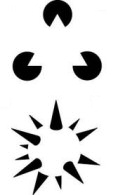 Cognitive Daily have just concluded a series on three classic studies in early psychology: one on Ebbinghaus who experimented on his own memory, one on Millicent Washburn Shinn who experimented on her own
  New York Magazine has a wonderful
  If you’re going to be sarcastic, make sure you do it with the full force of knowledge behind you, because there’s nothing that’ll make you look more ridiculous than being sarcastic and wrong.
 IEEE Spectrum Online magazine has a special and rather splendid
  The tip-of-the-tongue state is a common experience where you know you know something but can’t quite bring it to mind. This everyday experience has told us a great deal about how the mind and brain work, as explored in an
  Mind Hacks