
Reflected glory

PsyBlog covers a study that explored the phenomenon of ‘reflected glory’ where sports fans will psychologically associate themselves with their team more closely if they are successful, but will distance themselves if the team loses.

The post discusses a classic 1976 study that looked at the ‘basking in reflected glory’ effect:

In the first of three experiments they compared what people wore when their college football team won with when they lost. On each occasion they went out and counted the number of students that wore shirts with their University’s name on it. Sure enough students were more likely to wear apparel emblazoned with their university’s name if their team had recently won a game.

In the second and third experiments the researchers found that people were much more likely to associate themselves with their team by using the pronoun ‘we’ if their team had won rather than lost. This effect was especially pronounced when people’s public image was threatened. In other words: if people currently feel they look bad to others, perhaps due to some failure, they are even more likely to try and reach for some success from elsewhere and hope that it rubs off on them.

Since then, there has been quite a sizeable literature on the effects on the psychological effects of being a sports fan – something known in the literature as ‘sport teams identification’.

One study found a clear link between team success and mood and a review even found a small effect on suicide attempts when you look at whole populations.

I don’t know a great deal about sports psychology, but there’s a small number of wonderful studies on how fans use pessimism to manage the psychology effects of wins and losses.

For example, one study found that dedicated fans of a team who’d just lost have an altered perception of how pessimistic they were before the game, perceiving their pre-match expectations to be much lower than they actually were.

Link to PsyBlog on the ‘reflected glory’ effect.

The art of CT

New Scientist has a gallery of wonderful images from radiologist Kai-hung Fung who makes awesomely beautiful pictures from CT scans.

The brain image (pictured) is particularly beautiful, it is labelled:

This image looks directly down through the top of the patient’s head.

The complex network of arteries and veins in the brain can be seen in shades of dark blue and the skull base is shown in green in the background.

Link to gallery of beautiful Kai-hung Fung images.

Encephalon 78 saunters in

The 78th edition of the Encephalon psychology and neuroscience writing carnival has recently appeared on the Providentia blog with the latest in mind and brain writing from the blogosphere.

A couple of my favourites include a piece on The Mousetrap about the self in the eyes of the founding father of cognitive psychology – Ulrich Neisser, and a post that review robots controlled by brain simulations on Brain Stimulant.

There’s much more in the latest edition so do have a look.

Link to Encephalon 78.

2009-11-27 Spike activity

Quick links from the past week in mind and brain news:

<img align="left" src="http://mindhacks-legacy.s3.amazonaws.com/2005/01/spike.jpg&quot; width="102" height="120"

There’s an excellent analysis of the Blue Brain / IBM rumpus about ‘cat brain’ simulations and PR hype over at IEEE Spectrums.

Wired covers doubts about the ‘awake during 23 years in diagnosed coma’ case. NewSci has an subsequent interview with treating neurologist Steven Laureys, who adds little, but to be fair, he’s in a difficult position as he is bound by patient confidentiality.

There’s an obituary of influential anthropologist and linguist Dell Hymes in the Washington Post “who helped pioneer the study of how people use language in their everyday lives”.

Not Exactly Rocket Science covers an surprising study that finds that liberal American students tend to think that lighter photos of Barack Obama are more typical of him, while conservatives think he’s best represented by darker photos. Lighter skin judgements predicts voting in everyone.

NPR has an interesting piece on studies showing that the idea of ‘multi-tasking‘ is likely a myth – in fact, we’re probably just fast switching between tasks.

Mugged by a one eyed-man? BPS Research Digest covers research on how to make police line-ups fairer for suspects who have an unusual distinguishing feature.

All in the Mind has an interesting piece on piece on the psychology of engaging people with climate change.

Science writer David Dobbs discusses his recent piece on recasting risk genes as sensitivity genes on the Brain Lehrer Radio Show. You can hear the piece on Neuron Culture.

BBC News reports on a new study that has found a crucial gene involved in one of the deadliest forms of brain tumour.

There’s an excellent piece on ‘the mighty power of the nocebo effect‘ on Bad Science following recent goverment discussion on the evidence for homeopathy in the UK

Time magazine slightly misses the point by asking ‘Female Sexual Dysfunction: Myth or Malady?’. The key issue is not whether it’s a difficulty, but whether it’s a medical condition. The latter is being hyped now there’s a not very effective medication in the pipeline ready to be marketed.

On a similar note, there’s a good analysis of the new ‘female sex drive pill’ trial data that’s been released in summary form over at Neuroskeptic.

The Toronto Globe and Mail has an excellent piece about the growing evidence for bloodflow difficulties being involved in multiple sclerosis.

Neuronarrative collects a series of video lectures on the neuroscience of emotion.

Genetic differences in responsiveness to oxytocin are linked face reading ability and success in inferring emotions, according to research covered by The New York Times.

How our skin helps us to perceive speech. No really. Another good write-up from Not Exactly Rocket Science.

Science covers how fMRI evidence has recently been used in sentencing in a US murder case.

Science writer Jonah Lehrer reviews Stanislas Dehaene’s book on the neuroscience of reading over at Barnes and Nobel Review.

The Guardian covers a recent study that involving brain scanning actress Fiona Shaw to help understand how actors take on other characters.

A rather poorly controlled new study on brain structure differences related to ‘internet addiction’ is expertly covered by The Neurocritic.

Addiction Inbox cover the inconvenient truth from the latest survey that the Dutch smoke less cannabis than the majority of other European countries.

Can you be blamed for sleepwalking crimes? asks New Scientist.

Somatosphere has a motherlode of podcasts from a recent neuroethics conference.

The consequences of faking it

I’ve just caught a short video by the brilliant behavioural economist Dan Ariely who explains the surprising effect of wearing fake goods on the likelihood of us cheating and for on much we suspect that others are being dishonest.

Ariely is riffing on one of his recent studies that was led by psychologist Francesca Gino. It’ll shortly appear in Psychological Science but can read the full text online as a pdf.

The study involved asking people to wear real or fake designer sunglasses, when in reality they were all the genuine article. Interestingly, those wearing the supposedly fake shades behaved less honestly in subsequent tests and were more likely to suspect others of behaving unethically.

Ariely gives a brilliant account of the study but there’s an interesting aspect in the full paper which he doesn’t touch on so much. In the final experiment of the study, the researchers found that it was a change in attitude that seemed to drive the change in honesty.

Wearing the ‘fake’ sunglasses seemed to increase personal feelings of being inauthentic and these feeling of the ‘counterfeit self’ were most associated with changes in behaviour.

Participants who believed they were wearing imitation goods were more likely to agree with the sentiments “Right now, I don’t know how I really feel inside” and “Right now, I feel alienated from myself” and were more like to say that they felt “out of touch with the ‚Äòreal me‚Äô” and felt as if “I don‚Äôt know myself very well”.

The study suggests that fake goods change how we perceive ourselves and this relaxes our boundaries of acceptable behaviour.

The video is short and brilliantly explained and the study is fascinating.

Link to Dan Ariely video on the effect of faking it.
pdf of full text of scientific paper.

Project HM

Patient HM became famous for having a dense surgically-induced amnesia and taking part in numerous neuropsychology studies that told us a great deal about the structure of memory. He died last year but left his brain to science and Project HM has been set up to co-ordinate the scientific analysis of his brain.

According to a post on the Project blog, the process of dissecting and digitally recording the structure of HM’s brain will begin on Wednesday 2nd December and apparently you’ll be able to watch it live via video streamed from the site.

The best write up of the Project is over at Nature News who have unfortunately jailed their article behind a pay wall. However, here’s the punch line:

On 2 December, exactly one year after Molaison’s death, [Neuroanatomist Jacopo] Annese, of the University of California, San Diego, will begin dividing the brain into roughly 2,400 slices, each thinner than a human hair, and digitizing them. Annese hopes that Molaison’s brain will become the first of many in a digital human-brain library at the university.

Annese is one of the few people with the sophisticated equipment needed to slice whole human brains, which is how he came by Molaison’s brain. Most labs cut human brains into blocks before slicing them ‚Äî the fate that befell Albert Einstein’s brain.

Annese will mount and stain about every 30th slice for cell nuclei and projections, which will allow him to map the cellular architecture in three dimensions. The remaining slices will be available to the neuroscience community, with researchers able to view the particular slice they want to study before requesting it.

Link to Project HM website.

Quack Psychologists, 1927

I’ve just found this interesting 1927 news item from Science magazine lambasting the rise of ‘quack psychologists’ that were apparently troubling the American public at the time. It’s interesting because it has a dig a two very specific groups of unorthodox psychological groups:

PSEUDO-PSYCHOLOGISTS, who promise, like fairy godmothers, to turn every-day human beings into fascinating personalities or into great financial successes, are creating large groups of discontented individuals, according to Dr. E. A. Shaw and George E. Gardner, of the Harvard University Psycho-Educational Clinic.

These two clinical psychologists state in a report to the National Committee for Mental Hygiene that “character analysts” and “practical psychologists” are responsible for many of the dissatisfied, badly adjusted cases that come to the Harvard Clinic. Gilt edge promises made to all, irrespective of ability and training, lead individuals to false hopes and discontent with kinds of work for which they are suited. And repeated failures to attain the heights so glowingly described as well within reach can lead an individual to serious mental upsets.

The psychological quack, half informed concerning scientific psychological principles, undertakes in a conference or by lectures, and for no small fee, to advise men and women about their mental and vocational ills. The two Harvard psychologists explain that “these men, we maintain – and their numbers are growing day by day – are a detriment to the mental health of the community. In their doctrines and platitudes there is just enough of truth and of falsity to make them dangerous.”

One serious result of the situation pointed out is that the work of the “analysts” becomes confused in the eyes of the public with the work of well-trained vocational advisers and directors of personality clinics who conscientiously and carefully study the individual who comes to them for help and who advise him according to his real possibilities.

The reference to “character analysts” and “practical psychologists” is not just a general dismissal of the poorly trained practitioner, it refers to two specific movements that departed from the established mainstream.

“Character analysts” undoubtedly refers to followers of analyst Willhelm Reich who was originally a follower of Freud before foolishly engaging in some free-thinking which got him kicked out of the inner circle.

His book Character Analysis departed from the traditional Freudian focus on individual symptoms to consider the interplay of the whole personality. It has become a classic in psychoanalysis but as he wandered from the Freudian path, he and his followers were ostracised.

Reich took a distinctly odd turn in later years, believing the power of orgasm, called orgone, could be stored in batteries and could be absorbed from the sky by the use of a special machine called a cloudbuster. Incidentally, this story inspired the Kate Bush song Cloubusting, which describes Reich’s obsession with the machine and his eventual downfall.

“Practical psychologists” refers to a movement of amateur psychologists that created their own popular clubs to discuss and ‘translate’ lab findings to the populace.

They saw themselves as liberating psychology from the ivory towers of the university but they were despised by academic psychologists for their uncritical thinking and, probably worse in their eyes, popularism.

The Psychologist had a great article on the growth of this movement in the UK, if you want more on what pop psychology looked like in the early 20th century.

Some years before the publication of this news piece, Freud had written his famous paper on ‘Wild Psycho-Analysis’ which clearly stated that true analysts had to toe the line and had to be taught by one of the initiated – everyone else was to be considered a dangerous amateur.

I have no idea who Dr E.A. Shaw was, but George E. Gardner was a orthodox Freudian psychoanalysis based at the prestigious McLean Hospital in Massachusetts, so you can see how they were using the talk reported in the Science piece to bolster the established Freudian approach to the mind.

Link to PubMed entry for news report.

NeuroPod covers the best of SfN

Don’t miss a special edition of the Nature NeuroPod podcast which is dedicated to highlights from the recent Society for Neuroscience annual gathering of the tribes which took place in Chicago in October.
The discussion looks at the big themes in this year’s conference, including optogenetics – the use of light stimulation to alter gene expression neuron activity with millisecond precision, society and neuroethics, and the use of techniques from stage magic to explore attention and consciousness.

A fascinating summary that clearly only scratches the surface of the biggest brain meeting on the planet but it still has plenty of shiny new gems.

Link to NeurPod homepage.
mp3 of NeuroPod Extra podcast of SfN highlights.

Think hard

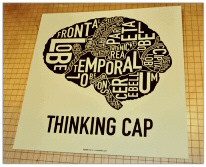
Online poster shop Ork Posters! have this fantastic brain poster which is not only brilliantly designed but anatomically correct as well.

They do a Tan and Black version, which is pictured here and an identical one in Burgundy, which turns out to be a little more expensive.

So if you want some retro-typeface neuroscience fusion design on your wall, you know where to go.

Link to Ork Posters! ‘Think Hard’ print (via @mocost)

Going underground

Photo by Flickr user Annie Mole. Click for sourceSlate has a great article discussing how psychologists have used the subway as a natural laboratory to study the social psychology of humans forced to interact in strange and unusual ways during their travels across the city.

I never knew before, but it turns out there’s been quite a bit of research on the subways, metros and undergrounds of the world.

Spend enough time riding the New York City subway‚Äîor any big-city metro‚Äîand you’ll find yourself on the tenure-track to an honorary degree in transit psychology. The subway‚Äîwhich keeps random people together in a contained, observable setting‚Äîis a perfect rolling laboratory for the study of human behavior. As the sociologists M.L. Fried and V.J. De Fazio once noted, “The subway is one of the few places in a large urban center where all races and religions and most social classes are confronted with one another and the same situation.”

Or situations. The subway presents any number of discrete, and repeatable, moments of interaction, opportunities to test how “situational factors” affect outcomes. A pregnant woman appears: Who will give up his seat first? A blind man slips and falls. Who helps? Someone appears out of the blue and asks you to mail a letter. Will you? In all these scenarios much depends on the parties involved, their location on the train and the location of the train itself, and the number of other people present, among other variables. And rush-hour changes everything.

Link to Slate piece on ‘Underground Psychology’.

Harlow’s Pit of Despair

ABC Radio National’s Artworks programme interviews two creators of a new play about the mind and motivations of psychologist and serial monkey abuser Harry Harlow.

Harlow was a fascinating and troubled fellow who completed some of the most notorious studies in psychology where he raised monkeys apart from their mothers, most famously with ‘wire cage’ substitutes of various kinds.

He found that infant monkeys preferred to hang on to a wire cage ‘mother’ surrounded by cloth regardless of whether it provided food or not, suggesting to Harlow that comfort was of prime importance.

Over time his studies evolved and became increasingly cruel, until even those closest to his work felt he had gone too far.

The maternal deprivation studies are widely cited but they really told us little except the obvious fact that early relationships are important. This was widely promoted by the Neo-Freudians who felt Freud’s focus on infant sexuality was clearly missing the mark and had already been confirmed by extensive studies in children from deprived families conducted by London’s Tavistock Clinic years before.

More interesting, however, is Harlow himself – a man who was frequently depressed and estranged from his own mother, and the play deals with the psychology of this complex character.

The play is on in Melbourne, Australia but the discussion is also fascinating as the creators have clearly thought a great deal about the ethics of the research and Harlow’s own motivations.

Link to discussion on Artworks.
Link to more information about the play.

Autism, desperation and untested treatments

The Chicago Tribune has just published two important articles on how untested and potentially dangerous medical treatments are being used on autistic children by US parents desperate for a cure.

Many of these treatments are based on flimsy or non-existent evidence and they are being promoted by a subculture of parents of autistic children, who seem to overlap significantly with the anti-vaccination movement.

Dr. Carlos Pardo was trying to head off trouble.

The Johns Hopkins neurologist and his colleagues had autopsied the brains of people with autism who died in accidents and found evidence of neuroinflammation. This rare look inside the autistic brain had the potential to increase understanding of the mysterious disorder.

It also, he knew, could inspire doctors aiming to help children recover from autism to develop new experimental treatments — even though the research was so preliminary the scientists did not know whether the inflammation was good or bad, or even how it might relate to autism.

So when Pardo and his colleagues published their paper in the Annals of Neurology in 2005, they added an online primer that clearly explained their findings in layman’s terms and sternly warned doctors not to use them to develop treatments…

Citing Pardo’s research, doctors have treated children with a blood product typically reserved for people with severe immune system disorders like the one known as “bubble boy” disease. They have used it to justify sealing children with autism in pressurized bags and submarine-like metal chambers. Other children have been given a drug used to treat extremely rare genetic disorders.

The articles have several more examples of how scientific findings have been distorted or misinterpreted to justify dubious treatments (like chelation therapy, hormone suppressors and hyperbaric chambers) without any clear evidence for their benefit.

They’re both in-depth articles but are well worth your time as, along with Wired’s recent article on autism and antivaxxers, they are some of the best mainstream articles to track the growing trend for pseudo-medical autism treatments in recent times.

Link to ‘Risky alternative therapies have little basis in science’.
Link to ‘Science hijacked to support alternative therapies’ (both via MeFi)

British ‘brain washing’ during WWII interrogations

BBC Radio 4 has an excellent documentary on how ‘brain washing’ techniques and psychological coercion were used by the British military for interrogations during the Second World War.

Newly uncovered documents implicate psychiatrist Alexander Kennedy in the use of sensory deprivation, disorientation and mind-altering drugs on prisoners during secret service interrogations on foreign soil.

The piece has uncanny echoes of the recent debate about Guantanamo Bay and ‘war on terror’ interrogations with the extensive use of contractors and the leader of the government, Harold Wilson Macmillan, falsely denying that anything abusive took place.

The techniques are surprisingly similar to those later researched by the CIA MKULTRA programme and many of the sensory deprivation and disorientation techniques clearly survived until the ‘war on terror’.

It’s an interesting complement to the recent BBC documentary (‘Revealing the Mind Bender General’) we discussed previously about the role of British psychiatrist William Sargant in what seems like a continuation of this research in post-war London.

BBC News has a brief summary of the programme if you don’t catch it in the next few weeks as it is likely to disappear from the now crippled BBC archive in the near future.

Link to BBC Radio 4 edition of Document on WWII ‘brain washing’.
Link to BBC News piece ‘Britain’s WWII brainwashing’.

Media cat and mouse game with brain simulations

Henry Markram, leader of the Blue Brain neural tissue simulation project, has sent an angry email to IBM following their widely-reported but misleading announcement that they’d created a simulation as complex as a cat brain.

This has come some months after similar headlines declared that an equivalent of a ‘mouse brain’ had been simulated by the IBM-affiliated Blue Brain project.

The initial claims were clearly false, as the project only aims to simulate cortical columns, a type of highly organised brain tissue that is common in the cortex, and the most recent simulation to make the headlines is even more simple.

Even the Blue Brain project, which is attempting realistic biological simulations, is not aiming to simulate the complexity or the function of a whole brain, in the same way that a simulation of muscle tissue, no matter how accurate, is clearly not going to produce an artificial human.

In an email which was copied to several leading science publications, project leader Henry Markram takes IBM’s PR department and one of their cognitive computing researchers to task for ‘stupid statements’ and ‘mass deception of the public’ – and those statements are some of the tamer ones. Here are points 1-3:

1. These are point neurons (missing 99.999% of the brain; no branches; no detailed ion channels; the simplest possible equation you can imagine to simulate a neuron, totally trivial synapses; and using the STDP learning rule I discovered in this way is also is a joke).

2. All these kinds of simulations are trivial and have been around for decades – simply called artificial neural network (ANN) simulations. We even stooped to doing these kinds of simulations as bench mark tests 4 years ago with 10’s of millions of such points before we bought the Blue Gene/L. If we (or anyone else) wanted to we could easily do this for a billion “points”, but we would certainly not call it a cat-scale simulation. It is really no big deal to simulate a billion points interacting if you have a big enough computer. The only step here is that they have at their disposal a big computer. For a grown up “researcher” to get excited because one can simulate billions of points interacting is ludicrous.

3. It is not even an innovation in simulation technology. You don’t need any special “C2 simulator”, this is just a hoax and a PR stunt. Most neural network simulators for parallel machines can can do this today. Nest, pNeuron, SPIKE, CSIM, etc, etc. all of them can do this! We could do the same simulation immediately, this very second by just loading up some network of points on such a machine, but it would just be a complete waste of time – and again, I would consider it shameful and unethical to call it a cat simulation.

It’s a stinging response from someone clearly annoyed at the misrepresentation of this sort of biological simulation work.

If you want to get a good handle on the aims of the Blue Brain project at least, Jonah Lehrer’s piece for Seed is the best you’re likely to read for a while.

Link to Markram’s email in IEEE Spectrum (via @Neurotechnology)

Spinning yarns

Originally published earlier this year in Prospect magazine, Tom has put a copy of his fantastic article online where he discusses our capacity for improvisation and how it links with a post-brain damage condition call confabulation where patients seem unable to stop themselves inventing unlikely stories.

Confabulation occurs most typically after frontal lobe damage and causes patients to give clearly false information either spontaneously or when they’re asked a question without any obvious intention to deceive the questioner.

It’s generally thought to be a problem with retrieving memories. The idea is that, initially, remembering activates a whole load of loosely associated information and then a filtering processes narrows it down to only the most relevant and likely memories.

Confabulation is thought to occur when brain damage impairs this filtering process so patients will recount incoherent information because they can’t easily distinguish between likely memories and other the contents of their mind.

Tom discusses how, in healthy people, the strength of this filtering process could be ‘turned down’ to allow theatrical improvisation and instant creativity.

In those patients with frontal damage who do confabulate, however, the brain injury makes them rely on their internal memories—their thoughts and wishes—rather than true memories. This is of course dysfunctional, but it is also creative in some of the ways that make improvisation so funny: producing an odd mix of the mundane and impossible. When a patient who claims to be 20 years old is asked why she looks about 50, she replies that she was pushed into a ditch by her brothers and landed on her face. Asked about his good mood, another patient called Harry explains that the president visited him at his office yesterday. The president wanted to talk politics, but Harry preferred to talk golf. They had a good chat.

Improvisers tap into these same creative powers, but in a controlled way. They learn to cultivate a “dual mind,” part of which doesn’t plan or discriminate and thus unleashes its inventive powers, while the other part maintains a higher level monitoring of the situation, looking out for opportunities to develop the narrative.

In fact, this is in line with work on Jazz musicians that we discussed last year.

This particular study found that activity in the dorsolateral prefrontal cortex (DLPFC) – a large chunk of the frontal lobes – reduces during Jazz improvisation, suggesting that the mental controls are eased up allowing a more free flowing mental style.

Link to Tom’s Prospect article ‘Tall Stories’.

Cold asylum

New Scientist has a gallery of striking photos taken from Christopher Payne’s book that details his photographic tour of abandoned asylums in the US.

In both the UK and the US, and, I suspect, in many other countries, there are numerous unused decaying mental asylums that have become obsolete as ‘care in the community’ has become the flag under which mental health services have been reformed or ignored.

The NewSci gallery captures the faded grandeur of some of these impressive buildings and has photographs of the devices and technology from a psychiatry of a bygone era.

As we discussed previously, many of the buildings are being converted into hotels, flats and the like with their past history hushed up, but what this photo set shows is that many more beautiful and architecturally unique buildings are simply being left to rot before they’re demolished.

By the way, the website of the book also has a fantastic slideshow with many more stunning photos – only hampered by the crippled flash interface. Look for the ‘Play Slideshow’ link at the bottom to kick it off.

Link to NewSci gallery of old asylum photos.
Link to website of Chris Payne’s ‘Asylum Book’.