The grief problem

Photo by Flickr user Derek Bridges. Click for source.I’ve got an article in The Observer about the sad history of how psychologists have misunderstood grief and why it turns out to be much more individual than traditional theories have suggested.

As well as the individual variations, it also riffs on the massive diversity of cultural grief and mourning practices.

At the beginning of Nicole Kidman’s 2008 film Australia, the audience is shown a warning. “Exercise caution when watching this film,” it says, “as it may contain images or voices of deceased persons.” The notice, perplexing for most viewers, was for the benefit of Aboriginal Australians, who may have a taboo against naming or encountering representations of the dead.

The taboo has spiritual roots relating to not disturbing spirits of the departed but anthropologist Katie Glaskin describes how the naming taboo “serves to make people ‘acutely aware’ of the person whose name is being avoided”. As a form of remembering through non-remembrance, it is a psychological mirror image of more familiar traditions where creating and cherishing a representation of the deceased is considered necessary for healthy mourning. This underlines the fact that mourning can take place in a radically different way, based on a thoroughly different understanding of death, highlighting how any claims to a universal “psychology of grief” pale in the face of human diversity.

The article has many more examples and we’re now at a stage where the idea that we go through specific ‘stages’ of grief is untenable scientifically – but lives on due to its powerful grip on society.

This is most worrying because it has been used to pathologise people who don’t seem to be grieving ‘appropriately’, branding them as ‘in denial’ when really they’re just dealing with things in their own way.
 

Link to article in The Observer.

The relative consuming disease

The Global Mail has an amazing story about how the last treks to find cases of kuru – a cannabalism-related brain disease – have been completed.

Kuru was passed on by eating the brains of dead relatives – a long finished tradition of the Fore people in Papua New Guinea – and it infected new people through contact with prions.

Prions are misfolded proteins that cause other proteins to take on the infectious misfolding. In the case of kuru it lead to shaking, paralysis, outbursts of laughing and a host of other neurological symptoms as the brain slowly degenerated.

No-one knew prions existed or could exist before kuru. But as the article makes clear, this ‘obscure disease’ of a remote tribe revolutionised our understanding of proteins and how infections could take place.

But the story is how it was discovered is more than just lab tests and the article is a brilliant retelling of the research.

Michael Alpers has been working on the research project since the 60s and recalls some of the episodes:

After each death, he says, “I would go and talk to the family again, and say, ‘Okay?’. They had participated in cutting up bodies in the past — so that was not an unusual activity for them. We had to clear a few people — particularly the women who were wailing. But some of the women stayed. The ones involved put on masks to protect the tissue and I had gloves.

“The father, or a close relative, would hold the head, and I would take the top of the skull off with a bone handsaw. It would take maybe 20 minutes… like cutting an avocado. I would go to particular parts of the brain… take out small cubes. My assistant would hold out the bottle that was relevant, take the lid off, and I’d pop it in.

“Then I’d take the whole brain out and put it in a bucket full of formalin and cotton wool so it wouldn’t be deformed, and put the lid on. All our samples would go into an insulated box. Then I put the skull cap back on, and sewed up. Then we said goodbye… gave everyone a hug, and took off. I did this five times. It was enough.”

It’s a wonderfully written, informative piece. A long and compelling read.
 

Link to article ‘The Last Laughing Death’ (via @mslopatto)

Sex taboos: a brief and incomplete tour

Cultures around the world have restrictions or prohibitions on when sex is allowed which turn out to be quite amazing in their diversity.

This is a fascinating section on the wide world of sex taboos from the Encyclopedia of Sex and Gender:

In some societies, sexual activity is prohibited during certain times of day. The Cuna of Panama approve of sexual relations only at night in accordance with the laws of God. The Semang of Malaysia believe that sex during the day will cause thunderstorms and deadly lightening, leading to drowning of not only the offending couple but also of other innocent people. And the West African Bambara believe that a couple who engage in sex during the day will have an albino child.

Sometimes, sex is prohibited in certain places. The Mende of West Africa forbid sexual intercourse in the bush, while the Semang condemn sex with camp boundaries for fear that the supernatural will become angry. Among the Bambara, engaging in sexual relations out of doors will lead to the failure of crops.

Sex taboos can also apply to certain activities. Often, sex prohibitions are associated with war or economic pursuit. The Ganda of Uganda forbid sexual intercourse the night before battle if the fighting is likely to be protracted. The Lepcha prohibit sex for three months after a bear trap has been set. If the taboo is broken, no animals will be caught. The Cuna of Panama outlaw sexual intercourse during a turtle hunt, the Yapese of Oceania prohibit sex during a fishing excursion, and among the Ganda of Uganda sex is forbidden while the wood for making canoes is being processed.

Ganda women may not engage in sexual intercourse while they are mourning the dead and Kwoma men are prohibited from engaging in sexual activity after a cult ceremony has been held. The Jivaro of Ecuador refrain from engaging in sex after someone has died, after planting narcotics, when preparing a feast or after an enemy has been killed.

Of course, while these may seem exotic, our own social practices regarding sex probably seem equally as unusual to outsiders.

Imagine Jivaro anthropologists, watching Nicki Minaj videos, slapping themselves, shouting “you won’t believe what the people of North America have to do to have sex!”


Link to section from the Encyclopedia of Sex and Gender.

A cultural understanding of autism

Nature has a fascinating article on the diagnosis of autism and how it clashes with cultures that have different forms of everyday social interaction and different standards for how children should behave.

In rural South Africa, young children may look at adults’ faces while having a conversation, but they don’t usually make direct eye contact because it is considered disrespectful. Yet a lack of eye contact is a hallmark of social deficits in people with autism, and as such it is something Western clinicians look for when diagnosing the disorder.

There are other examples of children’s behaviour – such as finger pointing to draw attention to something, or conversing with adults as if they are peers – that are commonplace in the West and included in tests of autism.

The ‘gold standard’ for diagnosing autism is a combination of the ADOS, a set of structured tasks to observe interaction with the person concerned, and the ADI, an interview with the caregiver to see how any difficulties have emerged over time.

As both were developed in London, they are based on Western / European model of social interaction. The risk is that other forms of cultural interaction can be wrongly interpreted as signs of impairment.

It’s worth saying that many cases of autism are unmistakeable as difficulties in social interaction can be quite marked.

However, as the concept of the autism spectrum has become more common, what can be variously and unsatisfactorily described as ‘high functioning’, ‘atypical’ or ‘mild’ autism, usually where difficulties are not immediately obvious, is where there is more room for cultural confusion.

The Nature article describes how various cultural tendencies eddy and flow around the concept of autism and how clinicians are now attempting to navigate the choppy waters of diagnosis.
 

Link to excellent Nature article on culture and autism.

A brief reheating of the refrigerator mother

The Telegraph has a well-intentioned but confused article about how child neglect affects the brain and what can be done about it.
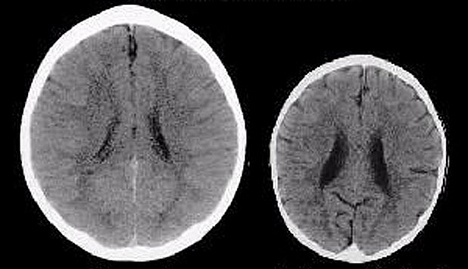
What’s the difference between these two brains? asks The Telegraph. “The primary cause of the extraordinary difference between the brains of these two three-year-old children,” says the journalist, “is the way they were treated by their mothers.”

According to the paper “The child with the much more fully developed brain was cherished by its mother, who was constantly and fully responsive to her baby. The child with the shrivelled brain was neglected and abused.”

Firstly, it’s worth saying that reduced brain size is clearly related to neglect and abuse but the images are not a typical representation of this.

These scans were originally published in an article on child abuse by neuroscientist Bruce Perry who drew them from an unpublished abstract [pdf] of a study on neglect in children, which didn’t control for malnutrition or drug exposure during pregnancy.

They’re described as showing CT scans of three-year-olds, one normal and the other neglected who has a head size smaller 97% of children his or her age. This would make him or her almost diagnosable with microcephaly, a neurological disorder of small head size usually caused by a genetic defect.

This difference in brain size has actually been found in those without the genetic defect. In fact, this difference was found in a study of severely neglected Romanian orphans but severe malnutrition was also a significant factor.

In other words, unless you include ‘starvation’ under the concept or ‘poor interaction with the mother’ the scans really don’t represent what typically happens to children who are emotionally neglected.

Oddly, the Telegraph article spins brain development as specifically depending on the mother, giving an undercurrent of traditional mother-blaming.

Neurologists are beginning to understand exactly how a baby’s interaction with their mother determines how, and indeed whether, the brain grows in the way that it should.

The ghost of the refrigerator mother rises again.

The piece is full of other neurological howlers: “Eighty per cent of brain cells that a person will ever have are manufactured during the first two years after birth” is just baffling, considering we are born with almost all the neurons we will ever have.

The number of synapses – connections between brain cells – does increase after birth but at most by about two thirds. The number peaks between about one and four years, depending on the brain area, and then it rapidly decreases as the brain removes unused connections in a process called synaptic pruning.

The words of neuroscientist Allan Schore seem to have be carefully selected to bolster this scientific misunderstanding, despite the fact his actual quotes do not suggest that he thinks brain cells ‘grow’ after birth.

Furthermore, the idea that “if a baby is not treated properly in the first two years of life, the genes for various aspects of brain function, including intelligence, cannot operate” is seemingly a fuzzily remembered misunderstanding of the role of stress on the epigenetics of neural development.

In fact, it looks like the piece has been written to support a government commissioned report by MP Graham Allen developed from an earlier report by think tank The Centre for Social Justice.

Both present the brain scans, somewhat misleadingly, as a reasonable illustration of emotional neglect, and the first report, scientifically, is a bit ropey. The second though, is surprisingly good.

It actually talks little about the brain, doesn’t feel the need to get into mother-blaming, argues that more support is needed for young children below the age of three from early intervention programmes.

This is a valuable approach and a valid point of view, which The Telegraph article is right behind, but neither brain-shrivelling mothers nor scare tactics are needed.
 

Link to somewhat confused Telegraph article.
Link to scientific review on brain effects of child abuse.

Hark! What light through yonder neuron breaks

An unintentionally funny first line from a new study on the neuroscience of love.

The lifetime prevalence of romantic love is extremely high, as romantic love strikes nearly 100% of the people at one or more times during their life. As a comparison, the lifetime prevalence of experiencing any mental disorder is “only” 46.4% (National Institute of Mental Health, US).

The paper also has the oddly Shakespearean sounding line

By virtue of using a cognitive task with a full factorial design, we show that the dorsal striatum is not activated by beloved-related information per se, but only by beloved-related information that is attended

In fact, when Shakespeare wrote “Love looks not with the eyes, but with the mind” he was probably thinking of the role of attentional modulation in the neural response to images of your lover based on the finding that activity in the dorsal striatum is only increased when the participants have to notice rather than ignore pictures of their beloved in an fMRI-based oddball task.

Angels! I think I hear the sound of angels!
 

Link to locked study.

The neuroscience of sexual attractions

A recent edition of radio programme KERA Think has a fantastic discussion on development and the neuroscience of sexual attraction in its many forms.

The programme is a discussion with Simon LeVay, a neuroscientist who raised a lot of eyebrows by finding differences in the brain structure of gay and straight men in a 1991 study.

The science has massively advanced since then and LeVay gives a fascinating and lucid account of what know about the biology of the rainbow of sexual attraction – and where the mysteries still lie.
 

Link to programme page with streamed audio.
mp3 of podcast.

Come hell or high water

The New York Times has an article on New York’s suicide cops who are tasked with talking down potential ‘jumpers’.

If you want to read something that’ll restore your hope in humanity, give this article ten minutes of your time.

In Midtown Manhattan or the financial district, for instance, pedestrians are more likely to yell, “Jump!”; in residential areas, like Harlem or Brooklyn, where the would-be jumper might be a familiar face, residents will provide officers with information about the person. They will cheer and applaud officers who make a successful grab…

“Traffic was horrible,” Detective Keszthelyi recalled. “Everybody was yelling at me. New York is ‘Hurry up and move or get out of my way.’ ”

The 40-year-old detective tuned out the angry din and zeroed in on the man before him. “I’m not here to hurt you in any way,” he offered gently.

The detective asked the man’s story, what brought him out here, and a dialogue began. The man, in his early 20s, explained that he had no job and no place to live, Detective Keszthelyi said.

“You might seem like you are alone, but you are not really alone,” he told him.

You sir, are a star.
 

Link to NYT article ‘The Jumper Squad’ (via @rvitelli)

I’m just here for the research

My latest Beyond Boundaries column for The Psychologist asks why psychologists don’t immerse themselves in the lives of people they study and whether sociologists think we’re wimps. Plus a bonus question about why strip clubs are so frequently researched.

Sociologists must think we’re wusses. While we’re handing out questionnaires, scanning people in labs or measuring behavioural responses, our society-focused friends wade into the thick of it. One particular technique, called participant observation, involves taking part in the activities of those you want to study or accompanying them in their daily lives. For reasons never quite clear to me, this has never been a popular approach in psychology, although from reading a few of the studies, perhaps you can begin to see why.

Simon Winlow was finding it difficult to study violence in the night-time economy and so decided to get himself a job as a bouncer. His work provides an exceptional insight into how doormen use and understand professional violence in clubs and pubs. This was not least because, at the risk of losing his job, Winlow was expected to muscle in when patrons became aggressive. In other words, beat people up. It’s not often that you read about a researcher beating up their research subjects but how could you do such a study without it? ‘The rights and wrongs of these issues’, his research team noted, ‘were never fully resolved’. Run-ins with the authorities are not unknown. Sociologist Mick Bloor, who himself ended up in a bar fight while studying male prostitution in Glasgow, wrote a pertinent article on research dangers. He recounts how one PhD student had been imprisoned without trial in Africa during fieldwork.

Several other researchers immersed themselves in the world of provos and paramilitaries during the height of The Troubles in Northern Ireland. Lorraine Dowler recounted how she was forced to flee when her interviewee became the target of a street-level assassination attempt, while social scientist Frank Burton woke one morning to find a submachine gun pointed in has face and the owner insinuating he was a military informer. Sadly, not all have come away from their experiences unscathed. The body of Ken Pryce was found washed up on a Caribbean beach after investigating criminality in Jamaica.

There are some isolated examples in psychology, most notably David Rosenhan’s study ‘On being sane in insane places’, where he asked researchers to fake symptoms of mental illness to be admitted to psychiatric hospital, but we are surprisingly reticent to take an immersive approach to the people we study. Maybe we are specialists in looking in from the outside?

Not mentioned in the column, to avoid offending the gentle readers of The Psychologist, is the fact that one of the most popular subjects for ‘participant observer’ studies has been strip clubs.

Just think about that for a minute.

Whatever strip club related thoughts are now gyrating through your mind, be assured that someone has done a study on it, by, er… participating and observing.

Visiting strip clubs, visiting strip clubs for women, visiting gay strip clubs, working as a stripper, and probably the finest example of its genre – a study on going to strip clubs while on holiday.

Drs, I would take my hat off to you, but it’s covering my data.
 

Thanks to Jon Sutton, editor of The Psychologist who has kindly agreed for me to publish my column on Mind Hacks as long as I include the following text:

The Psychologist is sent free to all members of the British Psychological Society (you can join here), or you can subscribe as a non-member by going here.
 

Link to column from The Psychologist (bottom of page).

Does social psychology have a prejudice problem?

The Weekly Standard has a scorching article that takes ‘liberal psychopundits’ to task for suggesting that science supports their view that conservatives are ‘heartless and stupid’.

It comes on the heels of a new study that found that social psychology professors were more likely to be liberal (no surprise there) but rather more shockingly were prepared to openly discriminate against conservative colleagues.

The ‘science blind Republicans’ idea has become particularly popular in some corners of the blogosphere, but as psychologists will tell you, people in White Houses shouldn’t throw stones.

If you want an excellent discussion of why everyone, regardless of their political stripe, is susceptible to the denial of science, a recent edition of BBC Radio 4’s Analysis on the psychology of political prejudice is one of the best cognitive science documentaries I’ve heard in ages.

Right wingers prefer to deny the science of evolution and global warming, while left-wingers prefer to ignore the evidence on the genetic influence on behaviour and IQ.

Reality, of course, is bipartisan and will smack you in the nose regardless of how you vote.
 

Link to edition of BBC Radio 4 Analysis on political prejudice.
Link to podcast download page for same.

Artist treats psychiatric hospital stay as art residency

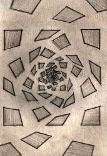
Claude Heiland-Allen is an artist who specialises in mathematical, algorithmic and science-based art. When he was recently admitted to a psychiatric hospital he decided to treat his stay “as an artist-in-residence opportunity” – producing fractal images by freehand drawings.

You can see some of the amazing work on his website.

He explains the background to his unusual residency:

…Claude eventually found himself in a psychiatric hospital, treating his in-patient as an artist-in-residence opportunity, using more old-school media such as pens, pencils and paper to carry on making art despite adversity. It’s hard to draw a perfect circle when sharp drawing compasses are disallowed, but with plenty of time to practice, and inspiration from memories of Euclid, Escher, Coxeter, and many others whose names he should recall, many more images of various designs should be finding their way on to this website sooner or later, along with a few texts inspired by events along the ride.

Some amazing art and his website says more work from his stay is due to appear.
 

Link to Claude Heiland-Allen’s website (via @yaxu)

The Lancet, [temporarily] seized by irony

The Lancet has just a launched a special collection on how epilepsy is a global health problem particularly in lower-income countries.

According to several of the articles, one of the key problems that drives the medical neglect of people with epilepsy is a lack of accurate information about the condition for health professionals and the public.

How ironic then that The Lancet have put the five key scientific review articles from the series behind a paywall – costing $31.50 each. That’s 157.50 dollars for all five.

According to the figures cited in special collection, in a low income country $157.50 dollars would pay for a year’s epilepsy treatment for up to 31 people (using the cheapest anti-epileptic drug phenobarbital).

In some countries in sub-Saharan Africa, $157.50 would pay the monthly salary of a dedicated epilepsy nurse.

Or you can pay for five Lancet review articles that provide not only accurate, evidence-based treatment recommendations for epilepsy but also lament the lack of freely available, accurate, evidence-based treatment recommendations for epilepsy.

UPDATE: The Lancet has announced that all articles are now freely available to anyone who completes the free registration on their site. Credit where credit’s due – an excellent move. Many thanks to them.


Link to Lancet special collection on epilepsy.

Growing up in Broadmoor

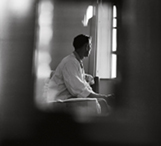
Novelist Patrick McGrath talks about his childhood as the son of a psychiatrist growing up in the grounds of Broadmoor – one of Britain’s highest security psychiatric hospitals – in an article for Intelligent Life.

Broadmoor Hospital has a special and undeserved place in the British psyche – stereotyped as ‘the real-life equivalent of Arkham Asylum’.

The reality is vastly different. While dangerous people do genuinely go there, it is primarily a hospital and a particularly state-of-the-art one at that, although it is a very secure place.

With this is mind, McGrath’s article is all the more amazing, as it describes a forensic hospital of generations past where children could live on the grounds and play amid the hospital buildings.

…the family had settled happily into Broadmoor life. The superintendent’s kids—there were four of us eventually—were well pleased with their lot. Kentigern had sculleries, pantries, a meat safe, servants’ quarters, and various sheds and outhouses, including a conservatory where the patients grew tomatoes. The garden was a sprawling expanse of trees and lawns, a goldfish pond with a fountain, a vegetable garden and, best of all, areas of dense rhododendron bushes where you could hide out from the authorities and build a campfire. It was a good place to grow up.

I occasionally work in medium secure psychiatric wards, a ‘step below’ Broadmoor on the risk ladder, and it usually takes me at least 15 minutes to get in through the searches, doors and endless locks. The days when families lived on site are long gone.

McGrath also talks about (in)famous patients and cases that made the media and how they affected their family life.

Interestingly, McGrath has gone on to write several novels that feature psychiatry or madness as central to the plot.

A curious and unique perspective.
 

Link to ‘A Boy’s Own Broadmoor’ (via MeFi)

The inner object

The Lancet has a wonderful article on how medicine has understood how strange objects have ended up in the body and how this has influenced our understanding of the body and behaviour.

The piece notes that cases where people have swallowed or inserted foreign bodies into themselves have been important for surgery and even anatomy – hair swallowers apparently provided useful “hair casts of the stomach”.

However, it is no surprise that interest turned to understanding why some people put objects into themselves.

Thus, in surgical writings, the foreign body became something from which psychological meaning could be drawn. In 1913, William Clayton-Green puzzled: “Did hair-swallowers desire to do something which others abhorred? Or did they wish to excite wonder and interest and to puzzle their doctors? Or was hair-swallowing a form of psychical tic, occurring in mentally abnormal subjects?” He and his contemporaries struggled to answer such questions. This new interest in a psychological model of the foreign body is also apparent in the case of a young woman, Beatrice A, admitted repeatedly to the Royal London Hospital between 1898 and 1909 for the removal of hairpins inserted into her bladder. On her first admission, the young milliner was described as “[m]ad as a hatter”.

Yet, by 1909, this conclusion did not seem so obvious. Beatrice’s actions were now referred to as a “habit”, and it was noted that no other symptoms of insanity had been observed. Beatrice herself informed the surgeon “that she formerly suffered from an impulse to throw herself out [of] windows [and] once did it. Many years ago however she gave this up for the now harmless amusement of putting hairpins into her bladder.” This unusual explanation appears to have perturbed Beatrice’s surgeons, located as it was somewhere between the rational and the irrational: inserting hairpins did indeed seem less dangerous than falling from a height, but why might she need to do either? Thus articles in the next few decades debated the psychological meaning of foreign bodies, with a wide array of possible explanations suggested from hysteria to malingering, sexual perversion, and “professional swallowing”.

The image is of objects found in the stomach of a “26-year-old woman who was admitted to hospital in 1915, having accidentally swallowed a metal hook 2 weeks previously, since when there had been pain and the vomiting of black material”.
 

Link to Lancet article ‘Curious appetites’.

Schizophrenia beyond the brain

The Wilson Quarterly has an excellent article about the rebirth of interest in how social experiences affect the development of schizophrenia.

It’s written by the brilliant anthropologist Tanya Marie Luhrmann, who tracks how the enthusiasm for a completely neurobiological explanation for the disorder has now begun to wane.

It’s worth saying that this extreme neurobiological focus has really been an American phenomenon.

While it’s true to say that psychiatry has taken a distinct neurobiological turn across the world, the mantra that ‘schizophrenia is a brain disease’ and only needs to be understood in terms of brain function has been most strongly championed in the United States.

For somewhat mysterious reasons, and not without a touch of irony, American psychiatry has been subject to quite striking mood swings over the past century.

The ‘Freudian takeover’ only really occurred in the US, and was overturned by the diagnostic manual championing ‘mid-Atlantics’ who created the DSM-III.

Subsequently, a dominant current of thought emerged that mental illnesses could be understood as ‘brain disorders’ – a concept massively promoted and funded by drug companies. Searches for the ‘gene for schizophrenia’ and the ‘brain circuit for depression’ were all the rage, even if they seem a little naive in hindsight.

In Europe, however, social psychiatry – where mental disorders are seen within a social context – remained widely taught. In the UK, it had more an an epidemiological flavour, where on the continent it was more focussed on analysing the cultural meaning of mental illness.

Nevertheless, Luhrmann’s article is an excellent overview of how psychiatry has started to look ‘beyond the brain’, although we’d hope it doesn’t lose sight of it while gazing at the horizon

My only significant problem was that the article repeats the ‘people with schizophrenia do better in the developing world’ claim, which is so over-general as to be useless.

Other than that though, an excellent incisive article and one of the best pieces you’re likely to read in a while.
 

Link to ‘Beyond the Brain’ in The Wilson Quarterly (thanks Peter!)

Avoiding the shadows

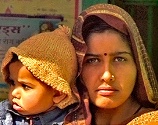
The Lancet has a powerful essay on children born from rape and the social and psychological consequences for mother, child and community.

I’ll let the article speak for itself as it carefully articulates how the relationship between mother and child can be affected by these tragic events.

There is one point worth highlighting, however. The piece notes that when affected women do have contact with healthcare professionals, clinicians often avoid tackling problems with childcare because they are denied or ignored by the mothers who, understandably, find it difficult to address problems linked to such a violent and painful event.

The article notes that the wellbeing of the child is often not well addressed as “Many practitioners who care for women who have been raped maintain this silence because either their focus is on the well-being of the mother or they genuinely believe that the interests of the mother and child are not served by articulating relational difficulties”.

Mental health professionals rightly identify avoidance as one of the key factors that maintain problematic behaviours. It’s a strategy that places short-term comfort above longer-term well-being and we all use it, but when we rely it to manage serious emotional or behavioural difficulties it can mean we never recover.

But what is less admitted is that healthcare professionals also suffer from avoidance. We don’t like making people distressed, even when it is necessary to overcome serious difficulties. Consequently, we also avoid addressing painful issues, which is something that can also help maintain the problem in the person we are working with.

Ironically, it is very difficult to get healthcare professionals to recognise that they themselves are affected by this. We are much more comfortable when the problems are safely situated in the patient.
 

Link to Lancet article ‘Child in the shadowlands’ (via @EvaAlisic)