18 minutes of trauma

I’ve just found one of the best discussions on the importance and limits of the concept of post-traumatic stress disorder on a programme from the Why Factor on BBC World Service.

It’s a brief programme, only 18 minutes long, but packs in a remarkably incisive look at PTSD that tackles its causes, its cultural limits and its increasing use as an all-purpose folk description for painful reactions to difficult events.

Both compassionate and critical, it’s one of the best discussions of post-trauma and its diagnosis I have heard for a while.

As is typical for the internet-impaired BBC radio pages, the podcast is on an entirely different page, so you might want to download the mp3 directly.
 

Link to programme page and streamed audio.
mp3 of programme audio.

A war of biases

Here’s an interesting take on terrorism as a fundamentally audience-focused activity that relies on causing fear to achieve political ends and whether citizen-led community monitoring schemes actually serve to amplify the effects rather than make us feel safer.

It’s from an article just published in Journal of Police and Criminal Psychology by political scientist Alex Braithwaite:

A long-held premise in the literature on terrorism is that the provocation of a sense of fear within a mass population is the mechanism linking motivations for the use of violence with the anticipated outcome of policy change. This assumption is the pivot point upon and around which most theories of terrorism rest and revolve. Martha Crenshaw, for instance, claims, the ‘political effectiveness of terrorism is importantly determined by the psychological effects of violence on audiences’…

Terrorists prioritize communication of an exaggerated sense of their ability to do harm. They do this by attempting to convince the population that their government is unable to protect them. It follows, then, that any attempt at improving security policy ought to center upon gaining a better understanding of the factors that affect public perceptions of security.

States with at least minimal historical experience of terrorism typically implore their citizens to participate actively in the task of monitoring streets, buildings, transportation, and task them with reporting suspicious activities and behaviors… I argue that if there is evidence to suggest that such approaches meaningfully improve state security this evidence is not widely available and that, moreover, such approaches are likely to exacerbate rather than alleviate public fear.

In the article, Braithwaite presents evidence that terrorist attacks genuinely do exaggerate our fear of danger by examining opinion polls close to terrorist attacks.

For example, after 9/11 a Gallup poll found that 66% of Americans reported believing that “further acts of terrorism are somewhat or very likely in the coming weeks” while 56% “worried that they or a member of their family will become victim of a terrorist attack”.

With regard to community monitoring and reporting schemes (‘Call us if you see anything suspicious in your neighbourhood’) Braithwaite notes that there is no solid evidence that they make us physically safer. But unfortunately, there isn’t any hard evidence to suggest that they make us more fearful either.

In fact, you could just as easily argue that even if they are useless, they might build confidence due to the illusion of control where we feel like we are having an effect on external events simply because we are participating.

It may be, of course, that authorities don’t publish the effectiveness figures for community monitoring schemes because even if they do genuinely make a difference, terrorists might have the same difficulty as the public and over-estimate their effectiveness.

Perhaps the war on terror is being fought with cognitive biases.
 

Link to locked academic article on fear and terrorism.

A technoculture of psychosis

Aeon Magazine has an amazing article on the history of technology in paranoid delusions and how cultural developments are starting to mirror the accidental inventions of psychosis.

It’s by the fantastic Mike Jay, who wrote The Air Loom Gang, an essential book that looks at one of the most famous cases of ‘influencing machine’ psychosis.

In his article, Jay applies the same keen eye for history and culture and explores how the delusions of psychosis are carefully intertwined with culture.

Persecutory delusions, for example, can be found throughout history and across cultures; but within this category a desert nomad is more likely to believe that he is being buried alive in sand by a djinn, and an urban American that he has been implanted with a microchip and is being monitored by the CIA. ‘For an illness that is often characterised as a break with reality,’ they observe, ‘psychosis keeps remarkably up to date.’ Rather than being estranged from the culture around them, psychotic subjects can be seen as consumed by it: unable to establish the boundaries of the self, they are at the mercy of their often heightened sensitivity to social threats.

The article covers everything from Victorian delusions of electrical control, to the breakdown of novelist Evelyn Waugh, to the fiction of Philip K Dick.

It’s an excellent piece, and even those who have a special interest in the history of psychosis will find it full of fascinating gems.

By the way, it looks like Jay’s book The Air Loom Gang is about to be re-released in a newly updated version, under a new title The Influencing Machine.
 

Link to ‘The Reality Show’ in Aeon Magazine.

Car crash attraction

A curious case report from a 1960 edition of American Journal of Psychiatry describing a man who gets turned on by being injured by ‘an automobile operated by a woman’.

The patient, a man in his late twenties, reported a periodic desire to be injured by a woman operating an automobile. This wish, present since adolescence, he had by dint of great ingenuity and effort, gratified hundreds and times without serious injury or detection. Satisfaction could be obtained by inhaling exhaust fumes, having a limb run over on a yielding surface to avoid appreciable damage or by being pressed against a wall by the vehicle. Gratification was enhanced if the woman were attractive by conventional standards. Injuries afflicted by men operating autombiles or other types of injury inflicted by woman had no meaning. He experienced pleasure from the experience, thus establishing the symptom as a perversion rather than a compulsion.

The patient’s sexual, social, and occupational adjustment was good and his intelligence superior. He intellectualized to a considerable extent but could experience and manage strong positive and negative feelings. He was ashamed of his symptom but somewhat proud of its unusual nature. A Minnesota Multiphasic Personality Index did not demonstrate significant psychopathology and did not indicate the probable presence of perversion or impulse neurosis.

The case could be classified as a type of symphorophilia – sexual arousal associated with disasters or accidents.
 

Link to locked AJP case study.

#DearMentalHealthProfessionals

Photo by Flickr user William Arthur Fine Stationery's. Click for source.Just a quick post to say that the #DearMentalHealthProfessionals hashtag on Twitter is one of the most interesting and helpful things I’ve read online in a long time.

It contains heartfelt feedback, gratitude, anger, and useful insights and makes for essential reading.

If you don’t use Twitter you can read it live here and some of the responses have been archived here.

A notorious song

A song banned was banned by the BBC until 2002 because worries that it may cause a suicide epidemic. The piece is titled Gloomy Sunday and was written by the Hungarian composer Rezső Seress.

The following abstract tip-toes around the point that there is no evidence it ever caused suicides but the history and hand-wringing about the song are interesting in themselves.

Gloomy Sunday: did the “Hungarian suicide song” really create a suicide epidemic?

Omega (Westport). 2007-2008;56(4):349-58.

Stack S, Krysinska K, Lester D.

The effect of art on suicide risk has been a neglected topic in suicidology. The present article focuses on what is probably the best known song concerning suicide, Gloomy Sunday, the “Hungarian suicide song.” An analysis of historical sources suggests that the song was believed to trigger suicides. It was, for example, banned by the BBC in England until 2002. The alleged increase in suicides in the 1930s associated with the playing of the song may be attributed to audience mood, especially the presence of a large number of depressed persons as a result of the Great Depression.

The influence of music on suicide may be contingent on societal, social, and individual conditions, such as economic recessions, membership in musical subcultures, and psychiatric disturbance. Further research is needed on art forms, such as feature films, paintings, novels, and music that portray suicides in order to identify the conditions under which the triggering of suicides occurs.

There are lots of versions of the song, including the original, available on YouTube. As you might expect, the best is a version by Billie Holliday.

It is indeed kinda gloomy, but it’s hardly like to spark a wave of suicidal thinking.

There is, however, a minor history concerning how works of art affect real-world suicide practices.

Most famously, the Aokigahara forest in Japan at the base of Mount Fuji has become a common suicide destination after the characters in Seichō Matsumoto’s 1961 novel Kuroi Jukai end their lives there.
 

Link to abstract of article about ‘Gloomy Sunday’ on PubMed.

Love is a cognitive enhancer

Aeon magazine has an excellent article about how a study on the adoption of Romanian orphans has helped us understand the importance of early-life affection for brain development.

It tracks the story of the Bucharest Early Intervention Project (BEIP), a US-based study that was inspired by seeing the appalling living conditions of orphans from the Ceausescu regime era.

Many were left with virtually no human interaction, were often poorly fed, in poor health and sometimes seemed to be cognitively impaired.

The Bucharest Early Intervention Project completed a randomised controlled trial to show that adoption not only improved physical health but also improved brain function – demonstrating the importance of human contact for healthy brain development.

It’s a moving article that really gets into the importance of early development but it gives an curious impression of what inspired the studies.

It suggests that in 1999, when the study was first launched, previous studies on the negative neurodevelopmental effects of depriving young animals of maternal affection provided the basis for thinking that this is what might be happening in the Romanian orphans.

This is certainly one line of thinking. The experiments of serial monkey abuser Harry Harlow often pop up in these discussions, despite the fact that the effect of early care and affection on healthy emotional development has been known since antiquity and was demonstrated by John Bowlby’s studies on World War II evacuee children years before.

But in the case of Romanian orphans, one of the most important sources of information was not animal studies, but studies already done on the effects of adoption on brain development in Romanian Orphans – of which the first study was published a year earlier, in 1998.

These studies were led by child psychiatrist Michael Rutter who had revisited Bowlby’s ideas and thought that while broadly accurate they were probably too strong in their predictions and that development could be improved for many.

When the Ceausescu regime fell and the plight of the orphanages became clear, many families from across Europe adopted orphans. Rutter compared children who had been taken up by UK families and compared them on what age they were adopted.

The studies found that the length of emotional deprivation was associated with smaller head size (reflecting brain development), lowered IQ, and increased mental heath problems, even when the effects of poor nutrition were controlled for.

One of the difficulties is that the results may not have been comparable to the effects of adoption by Romanian families – which, for example, remains a country with a more limited healthcare system.

The Bucharest Early Intervention Project were the first to run a randomised controlled trial of adoption – literally, an experiment to compare adopting children versus institutional care – to conclusively demonstrate the benefits.

Needless to say, it was an ethically charged project, and the Aeon article discusses the challenges that it raised.
 

Link to Aeon article ‘Detachment’.

A proto-anthropology of the rock n’ roll groupie scene

The Groupies is a remarkable record. The 1969 LP features nothing but interviews with ‘super groupies’ who discuss the culture of sleeping around the 60’s rock n’ roll scene.

It was made by, and featured, an 18 year-old version of the future Dr Cleo Odzer who shows her early interest in both sex and culture – both of which she’d study in her career as an anthropologist.

The girls talk about taking drugs, hanging out with bands, getting the clap and ‘making piggies’ – which is quite possibly both the cutest and oddest euphemism I’ve ever heard for having sex.

By the time she made The Groupies she had already been featured in Time magazine and broken off an engagement to Keith Emerson – of Emerson, Lake & Palmer fame. That’s them together on the left, by the way.

Odzer went on to become a journalist, then a drug runner, then an addict, then an ex-addict, and then, an anthropologist – eventually completing her PhD in the subject at the New School for Social Research in New York by studying prostitution in Thailand.

This was the first of Odzer’s areas of interest as an anthropologist. The second was the hippy scene in Goa, India, and the third was on sexual activity on the internet – then rather boldly called ‘cybersex’.

It’s worth saying that Odzer was never the most objective of investigators, tending to get overly involved in most things she researched. Or at least, that’s how it seemed. It’s just as possible she decided to research the things that she was already overly-involved with.

You can see this in her work. While her academic work included a more cutting analysis, her published books tended to be as much about her as the culture.

Her 1997 ‘cybersex’ book Virtual Spaces: Sex and the Cyber Citizen was largely thought a curiosity but, looking back, it was quite revolutionary.

While the academic world had just discovered this weird new phenomenon, and mostly viewed it with eyes-over-spectacles disproving glances, Odzer wrote what amounted to a cross between a Lonely Planet travel guide and the Joy of Sex – but for the newly connected internet user.

Odzer died at the age of 50, in Goa, after returning there from New York. Accounts vary. Possibly she died peacefully in her adopted home, possibly she finally succumbed to a lonely death with AIDS.

But when you listen to The Groupies LP, and the full audio is online, you can see the beginnings of a common thread that ran through her work.

It touches on a genuinely interesting social area which most people would have dismissed as seedy but which has a clear culture emerging from it. The analysis is slightly chaotic but genuinely insightful in places. It captures the excitement but in retrospect, it took something from her.
 

Link to page with audio of The Groupies.
Link to Wikipedia page on Cleo Odzer.

Taking emotions at face value

Boston Magazine has a fascinating article on the work of psychologist Lisa Feldman Barrett who has been leading the charge against the idea that we recognise the same facial expression of emotion across the world.

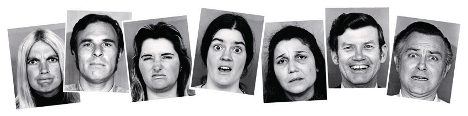
This was first suggested by Paul Ekman whose work suggested that humans can universally recognise six emotions: anger, disgust, fear, happiness, sadness, and surprise.

His research involved showing people from different cultures pictures of faces and asking them to label each expression from a choice of emotional words.

But Barrett has found a simple flaw in the procedure:

She returned to those famous cross-cultural studies that had launched Ekman’s career—and found that they were less than watertight. The problem was the options that Ekman had given his subjects when asking them to identify the emotions shown on the faces they were presented with. Those options, Barrett discovered, had limited the ways in which people allowed themselves to think.

Barrett explained the problem to me this way: “I can break that experiment really easily, just by removing the words. I can just show you a face and ask how this person feels. Or I can show you two faces, two scowling faces, and I can say, ‘Do these people feel the same thing?’ And agreement drops into the toilet.”

The article is on much more than this controversy in cognitive science and also tracks how research on emotion and facial expression is playing an increasing role in law enforcement – with not all of it well supported by evidence.

And if you want links to some of the scientific papers, the always interesting Neuroanthropology blog has more at the bottom of this post.
 

Link to Boston Magazine article ‘About Face’.

A radio guide to global mental health

The BBC World Service is in the midst of an excellent series on global mental health – called The Truth About Mental Health.

It is currently half-way through and is remarkably well done, looking at everything from the war in Syria, to the effects of solitary confinement, to treatment in developing countries.

The programme also takes a considered look at the important question of whether mental illness is universal or whether it is tightly bound to the culture in which we live.

You can get the episode guide and streaming audio from this page but because the BBC is a bit rubbish at the internet, the podcasts are on an entirely different page, not linked from the episode guide, under the heading of a different programme and mixed in with another series.

Oh, and they’re only available for a few weeks. It’s fine, those interactive Pods will never catch on.

Don’t let this put you off though, whether you manage to catch the podcasts or can stream the programmes online, they’re an excellent guide to the increasingly important field of global mental health.
 

Link to guide and streamed audio of The Truth About Mental Health
Link to podcasts.

Protect your head – the world is complex

The British Medical Journal has a fascinating editorial on the behavioural complexities behind the question of whether cycling helmets prevent head injuries.

You would think that testing whether helmets prevent bikers from head injury would be a fairly straightforward affair. Maybe putting a bike helmet on a crash test dummy and throwing rocks at its head. Or counting how many cyclists with head injuries were wearing head protection – but it turns out to be far more complicated.

The piece by epidemiologist Ben Goldacre and risk scientist David Spiegelhalter examines why the social and behavioural effects of wearing a helmet, or being required to wear one by law, can often outweigh the protective effects of having padding around your head.

People who are forced by legislation to wear a bicycle helmet, meanwhile, may be different again. Firstly, they may not wear the helmet correctly, seeking only to comply with the law and avoid a fine. Secondly, their behaviour may change as a consequence of wearing a helmet through “risk compensation,” a phenomenon that has been documented in many fields. One study — albeit with a single author and subject—suggests that drivers give larger clearance to cyclists without a helmet.

Risk compensation is an interesting effect where increasing safety measures will lead people to engage in more risky behaviours.

For example, sailors wearing life jackets may try more risky maneuvers as they feel ‘safer’ if they get into trouble. If they weren’t wearing life jackets, they might not even try. So despite the ‘safety measures’ the overall level of risk remains the same due to behavioural change.

This happens in other areas of life. Known as self-licensing it is where people will allow themselves to indulge in more harmful behaviour after doing something ‘good’.

For example, people who take health supplements are more likely to engage in unhealthy behaviours as a result.

The moral of the story, of course, is to stay in the bunker.
 

Link to BMJ editorial ‘Bicycle helmets and the law’.

Drugs where the sun don’t shine: a cultural history

Through the history of humanity, every culture has made use of psychoactive substances. While smoking, eating and injecting have generated most interest, taking drugs through the nether regions has a remarkably long history.

Firstly, let’s get your burning question out of the way. The reason someone might want to administer drugs through the vagina or anus is because these areas have two properties that make them excellent drug delivery systems: they are moist and they have an excellent blood supply.

This means drugs will be absorbed into the bloodstream and reach the brain very quickly – often more quickly than if you drank the substance.

We know why this works due to medical research, but as we wander through the history of downstairs doping, you may wish to take a moment to reflect on how this remarkable fact was first discovered.

The earliest accounts of rectal administration of psychoactive drugs come from the Ancient Mayan civilization where ritual enemas were commonly used to induce states of trance and were widely depicted on carvings and pottery.

The image above is a Mayan carving depicting a priest giving reclining man a large ritual enema to the point where he sees winged reptile Gods flying overhead. Sorry hipsters, your parties suck.

It wasn’t just the Mayans, though. The historical use of psychoactive enemas was known throughout the Americas and is still used by traditional societies today.

Unfortunately, we know little about the history of similar practices in Africa but they are certainly present in traditional societies today – and largely known to mainstream science through documented medical emergencies.

In contrast, while it seems that enemas and douching were often used in Ancient Europe (for example, Aristides writes in his Sacred Tales that the goddess Athena appeared to him in a dream and recommended a honey enema – thanks your holiness), they do not seem to have been used for bottom-up drug taking.

However, there is some evidence that in medieval Europe, hallucinogenic ointments were applied to the vagina with some speculation that the ‘witch on a flying broomstick’ cliché arose due to the use of a broomstick-like applicator for strongly psychoactive drugs.

As the first synthesised psychoactive drugs became available in the 19th and early 20th Centuries, specialised delivery devices were quickly developed.

Cocaine was especially likely to be applied down-below because, although it makes you high, it is also an excellent local anaesthetic useful for discomfort and minor surgery. The development of cocaine tampons was considered a medical innovation that was “regarded as an especially effective treatment for gynecological diseases”.

The application of psychoactive drugs into the anus is a small but essential part of modern medicine. Status epilepticus is a medical emergency where someone has an epileptic seizure that doesn’t end by itself. It is potentially fatal.

The single best way of ending the seizure is through the use of drugs like lorazepam or diazepam (better known as Vallium). But if someone is unconscious and possibly shaking, trying to get them to swallow a pill could be very dangerous. Hence, the drug is often put straight into the back passage. This has saved countless lives and may, one day, save yours.

Recreationally, both vaginal and anal cocaine use have been reported in the medical literature and popular culture. Unfortunately though, most cases of cavity cocaine highs are not from recreational users but smugglers who have hidden drugs in their body and had the packets burst – sending them to hospital with drug toxicity.

For those wondering whether the modern world has truly mastered the art of the half-height high, you need look no further than ‘butt chugging’ – the frat boy practice of absorbing alcohol through the anus either via a tube or via a booze-soaked tampon.

Police reports suggested that the University of Tennessee chapter of the Pi Kappa Alpha fraternity decided to have a butt chugging party which promptly sent fraternity member Alexander Brougthon to the emergency room with alcohol poisoning.

This led to quite possibly one of the oddest incidents in the history of derrière drug taking: a live press conference where the entire fraternity and their lawyer addressed the media to deny the incident ever happened.

After the lawyer gives a strongly worded denial, Brougthon reads his statement. “The scandalous accusations surrounding that event never happened and I completely deny them,” he says. “At this point,” he continues, “my intent is to clear my name”.

One of the press pack asks a question. “Alexander, can you clarify what did happen that day?”

He looks distraught. “It’s a long story” he says.

Photographing hallucinations

BMJ Case Reports has a paper that describes two patients with Parkinson’s disease who experienced hallucinations that transferred onto photos they took to try and prove they were real.

This is ‘Patient 1’ from the case report:

Patient 1 was first evaluated at age 66, having been diagnosed with PD [Parkinson’s Disease] at age 58… She complained of daytime and night-time visual hallucinations for the past one year. Most of the time she did not have insight about them. She described seeing three children playing in her neighbour’s yard and a brunette woman sleeping under the covers in one of the beds in her house. She also saw images of different people sitting quietly in her living room. Most of her visual hallucinations subsided in open and brightly lit spaces but were, nevertheless, troublesome. In one instance, she saw a man covered in blood, holding a child and called 911.

Her husband, in an attempt to prove to her that these were hallucinations, took pictures of the neighbour’s yard and the bed in their house. Surprisingly, when shown these photos, the patient continued to identify the same children playing in the yard and the same brunette woman sleeping under the covers. This perception was present every time the patient looked at these photos. Within 6 months of stopping ropinirole and titrating quetiapine to 75 mg every night at bedtime the hallucinations were less severe and shorter in duration, but the patient continued to see them in the photos.


Link to locked article in BMJ Case Reports.

Disaster response psychology needs to change

Photo by Flickr user flyingjournals. Click for source.I’ve got an article in today’s Observer about how disaster response mental health services are often based on the erroneous assumption that everyone needs ‘treatment’ and often rely on single-session counselling sessions which may do more harm than good.

Unfortunately, the article has been given a rather misleading headline (‘Minds traumatised by disaster heal themselves without therapy’) which suggests that mental health services are not needed. This is not the case and this is not what the article says.

What it does say is that the common idea of disaster response is that everyone affected by the tragedy will need help from mental health professionals when only a minority will.

It also says that aid agencies often use single-session counselling sessions which have been found to raise the risk of long-term mental health problems. This stems from a understandable desire to ‘do something’ but this motivation is not enough to actually help.

Disaster, war, violence and conflict, raise the number of mental health problems in the affected population. The appropriate response is to build or enhance high-quality, long-term, culturally relevant mental health services – not parachuting in counsellors to do single counselling sessions.
 

Link to article on disaster response psychology in The Observer.

Deeper into genetic challenges to psychiatric diagnosis

For my recent Observer article I discussed how genetic findings are providing some of the best evidence that psychiatric diagnoses do not represent discrete disorders.

As part of that I spoke to Michael Owen, a psychiatrist and researcher based at Cardiff University, who has been leading lots of the rethink on the nature of psychiatric disorders.

As a young PhD student I sat in on lots of Prof Owen’s hospital ward rounds and learnt a great deal about how science bumps up against the real world of individuals’ lives.

One of the things that most interested me about Owen’s work is that, back in the day, he was working towards finding ‘the genetics of’ schizophrenia, bipolar and so on.

But since then he and his colleagues have gathered a great deal of evidence that certain genetic differences raise the chances of developing a whole range of difficulties – from epilepsy to schizophrenia to ADHD – rather these differences being associated with any one disorder.

As many of these genetic changes can affect brain development in subtle ways, it is looking increasingly likely that genetics determines how sensitive we are to life events as the brain grows and develops – suggesting a neurodevelopmental theory of these disorders that considers both neurobiology and life experience as equally important.

I asked Owen several questions for the Observer article but I couldn’t reply the answers in full, so I’ve reproduced them below as they’re a fascinating insight into how genetics is challenging psychiatry.

I remember you looking for the ‘genes for schizophrenia’ – what changed your mind?

For most of our genetic studies we used conventional diagnostic criteria such as schizophrenia, bipolar disorder and ADHD. However, what we then did was look for overlap between the genetic signals across diagnostic categories and found that these were striking. This occurred not just for schizophrenia and bipolar disorder, which to me as an adult psychiatrist who treats these conditions was not surprising, but also between adult disorders like schizophrenia and childhood disorders like autism and ADHD.

What do the current categories of psychiatric diagnosis represent?

The current categories were based on the categories in general use by psychiatrists. They were formalized to make them more reliable and have been developed over the years to take into account developments in thinking and practice. They are broad groupings of patients based upon the clinical presentation especially the most prominent symptoms and other factors such as age at onset, and course of illness. In other words they describe syndromes (clinically recognizable features that tend to occur together) rather than distinct diseases. They are clinically useful in so far as they group patients in regard to potential treatments and likely outcome. The problem is that many doctors and scientists have come to assume that they do in fact represent distinct diseases with separate causes and distinct mechanisms. In fact the evidence, not just from molecular genetics, suggests that there is no clear demarcation between diagnostic categories in symptoms or causes (genetic or environmental).

There is an emerging belief which has been stimulated by recent genetic findings that it is perhaps best to view psychiatric disorders more in terms of constellations of symptoms and syndromes, which cross current diagnostic categories and view these in dimensional terms. This is reflected by the inclusion of dimensional measures in DSM5, which, it is hoped, will allow these new views to stimulate research and to be developed based on evidence.

In the meantime the current categories, slightly modified, remain the focus of DSM-5. But I think that there is a much greater awareness now that these are provisional and will replaced when the weight of scientific evidence is sufficiently strong.

The implications of recent findings are probably more pressing for research where there is a need to be less constrained by current diagnostic categories and to refocus onto the mechanisms underlying symptom domains rather than diagnostic categories. This in turn might lead to new diagnostic systems and markers. The discovery of specific risk genes that cut across diagnostic groupings offers one approach to investigating this that we will take forward in Cardiff.

There is a lot of talk of endophenotypes and intermediate phenotypes that attempt to break down symptoms into simpler form of difference and dysfunction in the mind and brain. How will we know when we have found a valid one?

Research into potential endophenotypes has clear intuitive appeal but I think interpretation of the findings is hampered by a couple of important conceptual issues. First, as you would expect from what I have already said, I don’t think we can expect to find endophenotypes for a diagnostic group as such. Rather we might expect them to relate to specific subcomponents of the syndrome (symptoms, groups of symptoms etc).

Second, the assumption that a putative endophenotype lies on the disease pathway (ie is intermediate between say gene and clinical phenotype) has to be proved and cannot just be assumed. For example there has been a lot of work on cognitive dysfunction and brain imaging in psychiatry and widespread abnormalities have been reported. But it cannot be assumed that an individual cognitive or imaging phenotype lies on the pathway to a particular clinical disorder of component of the disorder. This has to be proven either through an intervention study in humans or model systems (both currently challenging), or statistically which requires much larger studies than are usually undertaken. I think that many of the findings from imaging and cognition studies will turn out to be part of the broad phenotype resulting from whatever brain dysfunction is present and not on the causal pathway to psychiatric disorder.

Using the tools of biological psychiatry you have come to a conclusion often associated with psychiatry’s critics (that the diagnostic categories do not represent specific disorders). What reactions have you encountered from mainstream psychiatry?

I have found that most psychiatrists working at the front line are sympathetic. In fact psychiatrists already treat symptoms rather than diagnoses. For example they will consider prescribing an antipsychotic if someone is psychotic regardless of whether the diagnosis is schizophrenia or bipolar disorder. They also recognize that many patients don’t fall neatly into current categories. For example many patients have symptoms of both schizophrenia and bipolar disorder sometimes at the same time and sometimes at different time points. Also patients who fulfill diagnostic criteria for schizophrenia in adulthood often have histories of childhood diagnoses such as ADHD or autistic spectrum.

The inertia comes in part from the way in which services are structured. In particular the distinction between child and adult services has many justifications but it leads to patents with long term problems being transferred to a new team at a vulnerable age, receiving different care and sometimes a change in diagnosis. Many of us now feel that we should develop services that span late childhood and early adulthood to ensure continuity over this important period. There are also international differences. So in the US mood disorders (including bipolar) are often treated by different doctors in different clinics to schizophrenia.

There is also a justifiable unwillingness to discard the current system until there is strong evidence for a better approach. The inclusion of dimensional measures in DSM5 reflects the acceptance of the psychiatric establishment that change is needed and acknowledges the likely direction of travel. I think that psychiatry’s acknowledgment of its diagnostic shortcomings is a sign of its maturity. Psychiatric disorders are the most complex in medicine and some of the most disabling. We have treatments that help some of the people some of the time and we need to target these to the right people at the right time. By acknowledging the shortcomings of our current diagnostic categories we are recognizing the need to treat patients as individuals and the fact that the outcome of psychiatric disorders is highly variable.

Like a part of me is missing

Matter magazine has an amazing article about the world of underground surgery for healthy people who feel that their limb is not part of their body and needs to be removed.

The condition is diagnosed as body integrity identity disorder or BIID but it has a whole range of interests and behaviours associated with it and people with the desire often do not feel it is a disorder in itself.

Needless to say, surgeons have not been lining up to amputate completely healthy limbs but there are clinics around the world that do the operations illegally.

The Matter article follows someone as they obtain one of these procedures and discusses the science of why someone might feel so uncomfortable about having a working limb they were born with.

But there is a particularly eye-opening bit where it mentions something fascinating about the first scientific article that discussed the condition, published in 1977.

One of the co-authors of the 1977 paper was Gregg Furth, who eventually became a practising psychologist in New York. Furth himself suffered from the condition and, over time, became a major figure in the BIID underground. He wanted to help people deal with their problem, but medical treatment was always controversial — often for good reason. In 1998, Furth introduced a friend to an unlicensed surgeon who agreed to amputate the friend’s leg in a Tijuana clinic. The patient died of gangrene and the surgeon was sent to prison. A Scottish surgeon named Robert Smith, who practised at the Falkirk and District Royal Infirmary, briefly held out legal hope for BIID sufferers by openly performing voluntary amputations, but a media frenzy in 2000 led British authorities to forbid such procedures. The Smith affair fuelled a series of articles about the condition — some suggesting that merely identifying and defining such a condition could cause it to spread, like a virus.

Undeterred, Furth found a surgeon in Asia who was willing to perform amputations for about $6,000. But instead of getting the surgery himself, he began acting as a go-between, putting sufferers in touch with the surgeon.


Link to Matter article on the desire to be an amputee.