The princess who swallowed a glass piano

The Glass Piano is a wonderful BBC Radio 3 programme about Princess Alexandra of Bavaria who thought she had swallowed a glass piano.

The programme was created by writer and poet Deborah Levy who “considers the true story of Princess Alexandra Amelie of Bavaria, 1826-1875 who at the age of 23 was observed awkwardly walking sideways down the corridors of her family palace. When questioned by her worried royal parents, she announced that she had swallowed a grand glass piano.”

As we’ve discussed previously, glass delusions were quite regularly reported by physicians in the 19th century but are now seemingly extinct in a curious cultural shift in madness.

People who experienced the delusion believed that their body was entirely, or in part, made of glass

The Glass Piano is a curious blend between a drama and documentary that recounts the case of Princess Alexandra and explores the history of this curious conviction.

It has some fantastic insights from historian of psychiatry Erin Sullivan, a trauma specialist, and rather more unpredictably from psychoanalyst Susie Orbach who makes some genuinely insightful comments while at other times sounding like she’s been smoking a glass pipe:

“Certainly she would not have walked like a princess because in order to bear a piano inside of her she would have had to had her legs quite far apart. We want to think Freud because its that moment in history where Freud discovers that we’re all sexual beings. So you could say that her legs are far apart for that reason.”

You could indeed.

I have to say, however, that these somewhat whimsical comments are actually in the spirit of the piece, which mixes conjecture with solid historical research, original musical and drama.

Unfortunately, the audio for the piece was only available for a week but an mp3 of the programme has mysteriously found its way online which you can get here.
 

Link to programme information on BBC site.
Link to download / streaming of mp3.

Subtle word change affects election participation

A subtle word change to refer to the self on a pre-election survey seems to significantly boost the number of voters in national elections.

A new study led by psychologist Christopher Bryan and published in the Proceedings of the National Academy of Sciences investigated how the sense of self motivates the public act of voting.

The authors point out that in terms of individual self-interest, voting is irrational. Just the probability of being killed in a car accident on the way to the polls far outweighs the likelihood that the average American’s vote will influence the outcome of most elections.

But from a public point of view, voting is essential for a functioning democracy, so the study tested the hypothesis that doing something positive for the community might motivate people by giving a potential boost to our self-image.

To do this, the researchers ran three experiments where they asked potential voters to complete an internet survey asking about the upcoming elections.

Importantly, half the people got a survey that referred to the act of voting while the other half got an identical survey but where the questions were worded to refer to them as a voter, directly implicating their self-identity.

For example, one version of a question would use a verb to refer to voting as an act (“How important is it to you to vote in the upcoming election?”) while another would use a noun to directly implicate the respondent (“How important is it to you to be a voter in the upcoming election?”)

Directly after the survey, respondents in the self-implicating condition said they were much interested in voting in the upcoming election than those who completed the ‘voting as act’ survey, suggesting that the self-focused wording boosted enthusiasm.

Crucially, the effect also transferred into actions as another study looked at public voting records and found that those who had completed the self-focused survey were actually more likely to vote than those who had completed the action-focused survey.

Finally, the researchers ran the same study using a survey company to randomly select a nationally representative sample of people. These respondents were also more likely to vote if they completed the self-focused ‘election survey’.

Studies that attempt to influence behaviour often find effects that are ‘small but reliable’.

In contrast, the authors note that the effects of the simple word change “are among the largest experimental effects ever observed on objectively measured voter turnout” – increasing actual turnout by more than 10%.

The researchers suggest that the effect is not solely about make the questions more self-relevant, but more strongly linking the self to a concept generally regarded as positive – voting.

This means the perception of the concept itself is also key and the effect might be reversed if the wording change referred to something generally regarded as negative – for example, a criminal act.
 

Link to open-access study in PNAS.

The buried story of Los 33

The Guardian has an insightful and moving article on how the thirty three Chilean miners and their families have coped with their post-disaster world, many under the beguiling spotlight of the global media.

The article looks at the largely unknown story of the how the men’s families dealt with the days leading up to their rescue, who were not even known to be alive until their famous note appeared attached to the drillhead after 17 days underground.

It also examines the difficult process of adjustment that both the men and the families have faced since the rescue.

Back home, the men have received weekly therapy as part of a government insurance scheme that covers their incomes until they are able to go back to work. But their global travels have meant patchy attendance – and pretty quickly, the authorities were threatening to withdraw the therapy if they continued to go abroad and miss sessions. Meeting the miners, you sense that there has been no coherent strategy to help them find their way back to any sort of normality, no serious attempt to help them through their extraordinary experience.

Ariel says he does not need any therapy; others complain that the meetings are pointless and lead nowhere. You sense they have not been told in any coherent way the long-term nature of the trauma they may have suffered and the type of treatment that may require. They were, after all, trapped underground for longer than any other recorded group of men. Certainly in many cases the therapy has combined with much shorter-term solutions: astonishing levels of medication – pills to let them sleep, pills to keep them calm when awake.

Some of the men find solace with one another. The bonds of friendship and solidarity they forged down the mine are now stronger than those with their own families. Others refuse to see one another at all – jealousy over who is appearing where, appearance money and fame have driven them apart. That is the men.

Their wives and partners have to live with them, desperately trying to work out how to cope with quiet lives blown apart. For them, of course, there has been no help on offer.

Apparently the author of the piece has made a documentary about the men and their families on exactly this topic called ’17 Days Buried Alive’ which is due to be broadcast on UK TV on the 12th of August.
 

Link to article on ‘Los 33’ (via @JadAbumrad)

Antipsychotics and the profit panacea

Aljazeera has an interesting if not worrying article about the fact that antipsychotic drugs have become “the single top-selling therapeutic class of prescription drugs in the United States, surpassing drugs used to treat high cholesterol and acid reflux.”

The huge rise in prescriptions has been sparked by the availability of a relatively new class of drugs called ‘atypical antipsychotics’.

All antipsychotics block the D2 type of dopamine receptor and their effect on the mesolimbic dopamine pathway is what largely causes the reduction in psychotic symptoms.

The older drugs block D2 receptors fairly indiscriminately in the brain, including in the nigrostriatal pathway.

This pathway is involved in movement regulation and blocking dopamine here leads to similar problems to Parkinson’s disease (tremors, rigid and uncontrollable movements) – a type of dementia where this brain area starts to break down due to disease.

The newer ‘atypical antipsychotics’ usually also block serotonin 2A (5HT-2A) receptors in the key movement pathway.

Serotonin normally reduces dopamine release but because serotonin is being blocked, more dopamine is released in the movement pathway with the newer atypical antipsychotic drugs than with the older typical antipsychotic medications.

This means less Parkinson’s-like movement side-effects with the atypicals – a genuine advance – but unfortunately, the serotonin effect causes additional problems with weight gain and often obesity, diabetes and heart problems.

However, these problems are perhaps easier to control and more ‘socially acceptable’ (compare with someone who make strange contorted movements during conversation).

On the commercial side, many newer atypicals are still under patent, meaning one company has sole control over their manufacture and sale, while other companies are not able to make cheaper copies.

Over time, these newer drugs have been promoted, legally and illegally, by drug companies for a wider and wider range of problems – everything from depression to dementia.

Despite limited evidence for their effectiveness in these areas, the sales campaign has been a huge success and the drugs are now being widely prescribed.

Once upon a time, antipsychotics were reserved for a relatively small number of patients with hard-core psychiatric diagnoses – primarily schizophrenia and bipolar disorder – to treat such symptoms as delusions, hallucinations, or formal thought disorder. Today, it seems, everyone is taking antipsychotics. Parents are told that their unruly kids are in fact bipolar, and in need of anti-psychotics, while old people with dementia are dosed, in large numbers, with drugs once reserved largely for schizophrenics. Americans with symptoms ranging from chronic depression to anxiety to insomnia are now being prescribed anti-psychotics at rates that seem to indicate a national mass psychosis…

What’s especially troubling about the over-prescription of the new antipsychotics is its prevalence among the very young and the very old – vulnerable groups who often do not make their own choices when it comes to what medications they take. Investigations into antipsychotic use suggests that their purpose, in these cases, may be to subdue and tranquilize rather than to treat any genuine psychosis.

Antipsychotic drugs have been one of the great advances of 20th century medicine. For the first time we have an effective treatment for psychosis, one of the most disabling of any of the disorders, that works for at least a fair proportion of patients.

The side-effects of both the older and newer drugs, however, are among the worst of any medication and they should genuinely be used with caution.

Unfortunately, the well-being of patients has become secondary to the profit margins of large pharmaceutical companies who continue to promote these drugs to as many patients as possible, regardless of their benefits or adverse effects.

The Aljazeera article tracks this campaign to the point where they have become top selling medications.
 

Link to ‘How Big Pharma got Americans hooked on anti-psychotic drugs.’

Book review: Crazy Like Us

‘Cultures become particularly vulnerable to new beliefs about the mind and madness particularly during times of social anxiety or discord’, notes Ethan Watters in this compelling book. Watters sees social discord as making cultures ‘vulnerable’ to new beliefs, rather than simply ‘receptive’, and this sentence captures both the depth of insight in Crazy Like Us and its main theme – that sees the spread of Western ideas about mental illness as a form of psychological imperialism.

‘Imperialism’ is perhaps too strong a word, as Watters is neither overtly political nor tiresomely polemic in his analysis, which results in one of the most engaging, accessible and well-researched non-academic books about culture and mental illness available. But in summing up he does tend towards suggesting that Western ideas about the disordered mind are imposed on other cultures, when occasionally there are more subtle stories in the details.

Not unlike the adoption of Western music and fashions by young people in traditional cultures, the shift toward new ideas is as often driven by local enthusiasm for concepts of wealth and sophistication as by deliberate outside forces. The book gives several examples of how changes occur by a combination of the two, as, for example, aggressive drug company campaigns to market the Western concept of depression to the public in Japan relied on the fact that these ideas had been already adopted by Japanese psychiatrists, many of whom trained in Europe and America.

Watters discusses culture as a powerful determinant of how we express psychological distress and mental illness. This influence is not always positive, and the book notes how Western models of mental illness may be detrimental over traditional ideas of coping, for example by silence or even spirit possession. The clearest example is how disasters and emergencies often draw in well-meaning ‘experts’ who clumsily apply Western concepts of psychological trauma and pathologise local reactions that may be psychological helpful but don’t fit the model.

I was left with a few minor quibbles, including the reliance on World Health Organisation data on how schizophrenia outcomes in developing countries are better than in developed countries, when more recent work has shown that there is so much variation between countries that this generalisation really means very little. These, however, remain minor concerns in the overall scheme of things. The book is not an academic tome and the approach is narrative, but Watters has clearly mastered the scientific research where it counts. As an introduction to (and perhaps even a revelation of) how culture and mental illness are intertwined, you are unlikely to find a more engaging and thought-provoking book.
 

This review was originally published in The Psychologist and you can read it online here.

It’s worth noting the book is available in both a US edition and a UK edition which seem to differ only in the subtitle.
 

Link to Crazy Like Us companion site.

Two weeks of hell, forty years ago

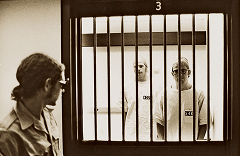
It’s been forty years since the Stanford prison experiment and the university’s alumni magazine has asked the participants and researchers for their reflections on their role in the notorious events of 1971.

It makes for a fascinating read as it not only gets Zimbardo to comment on the eventually out-of-control study but also talks to one of the abusive ‘guards’ (now a mortgage salesman) one of the ‘prisoners’ (now a teacher) and the whistleblower who eventually called for the study to end.

This is from Craig Haney, one of the researchers from the study:

I also realized how quickly we get used to things that are shocking one day and a week later become matter-of-fact. During the study, when we decided to move prisoners to different parts of the prison, we realized that they were going to see where they were and be reminded they’re not in a prison—they’re just in the psych building at Stanford. We didn’t want that to happen.

So we put paper bags over their heads. The first time I saw that, it was shocking. By the next day we’re putting bags on their heads and not thinking about it. That happens all the time in real correctional facilities. You get used to it. I do a lot of work in solitary-confinement units, on the psychological effects of supermax prisons. In places like that, when prisoners undergo the so-called therapy counseling, they are kept in actual cages. I constantly remind myself never to get used to seeing the cages.

The article sheds light both on the study and the lives of the the key players, now and then.
 

Link to article on Stanford Alumni Magazine (via @crimepsychblog)

Doubts about social contagion

Slate has an important article about how the studies behind last year’s headlines saying that things like divorce, obesity and loneliness spread through social networks like a ‘contagion’ may not be as sound as the stories suggested.

The headline grabbing study on ‘divorce contagion’ has still yet to be published as it hasn’t made it through the scientific peer-review process. The authors are criticised for talking to the media about the conclusions before the results have been confirmed.

Other studies were published in leading journals but the same publications have been much less keen to air criticisms of the work despite the fact that many leading names in the network analysis community have highlighted problems in the methods used in the research.

This is perhaps the real story here, as many conclusions turn out to be wrong in science, but the big name journals work much more like the popular media than they like to admit – heralding flashy new findings but being unwilling to take on the responsibility of continuing the debate after the glitz has faded.

It’s worth noting that the debate about the ‘social contagion’ studies is ongoing but the Slate article has some good coverage of where the growing doubts lie.
 

Link to Slate article ‘Disconnected?’

Cross Road Blues

The July issue of the British Journal of Psychiatry has another edition of its ‘psychiatry in 100 words’ series – this time on melancholia and the blues legend Robert Johnson.

‘I got stones in my pathway/And my road seems dark at night/I have pains in my heart/They have taken my appetite’. Robert Johnson, known as the King of the Delta blues singers, distilled into these lines the essence of severe depressive illness – somatic ills, fear and suspicion, emotional and physical pain, nocturnal troubles and struggle against obstacles. The words are one with the powerful, haunting music. ICD-10 and DSM-IV have their place, but poets have often been there before us, and done a better job. We can all learn from Robert Johnson, born just 100 years ago.


Link to BJP ‘Melancholia in 100 words’.

Naomi Wolf, porn and the misuse of dopamine

‘Is pornography driving men crazy?’ asks campaigner Naomi Wolf in a CNN article that contains a spectacular misunderstanding of neuroscience applied to a shaky moral conclusion.

Wolf asks suggests that the widespread availability and consumption of pornography is “rewiring the male brain” and “causing them to have more difficulty controlling their impulses”.

According to her article, pornography causes “rapid densensitization” to sexual stimulation which is “desensitizing healthy young men to the erotic appeal of their own partners” and means “ordinary sexual images eventually lose their power, leading consumers to need images that break other taboos in other kinds of ways, in order to feel as good.”

Moreover, she says “some men (and women) have a “dopamine hole” – their brains’ reward systems are less efficient – making them more likely to become addicted to more extreme porn more easily.”

Wolf cites the function of dopamine to back up her argument and says this provides “an increasing body of scientific evidence” to support her ideas.

It does not, and unfortunately, Wolf clearly does not understand either the function or the relevance of the dopamine system to this process, but we’ll get onto that in the moment.

Purely on the premise of the article, I was troubled by the fact that “breaking taboos” is considered to be a form of pathology and it lumps any sort of progression in sexual interest as a move toward the “extreme”.

‘Taboo’ and ‘extreme’ are really not the issue here as both are a matter of perception and taste. What is important is ‘consensual’ and ‘non-consensual’ and when the evidence is examined as a whole there is no conclusive evidence that pornography increases sexual violence or the approval of it (cross-sectional studies tend to find a link, experimental and crime data studies do not).

To the contrary, wanting new and different sexual experiences is for the majority a healthy form of sexual exploration, whether that be through porn or other forms of sexual behaviour.

One part of the motivation for this is probably that people do indeed become densensitised to specific sexual images or activities, so seeing the same thing or doing the same thing over and over is likely to lead to boredom – as any women’s magazine will make abundantly clear on their advice pages.

But this is no different to densensitisation to any form of emotional experience. I contacted Jim Pfaus, the researcher mentioned in the article, who has conducted several unpublished studies showing that physiological arousal reduces on repeat viewing of sexual images, but he agrees that this is in line with standard habituation of arousal to most type of emotional images, not just sexual, that happens equally with men and with women.

It’s important to point out that this densensitisation research is almost always on the repetition of exactly the same images. We would clearly be in trouble if any sexual experience caused us to densensitise to sex as we’d likely lose all interest by our early twenties.

However, it is Wolf’s description of the dopamine system where things get really weird:

Since then, a great deal of data on the brain’s reward system has accumulated to explain this rewiring more concretely. We now know that porn delivers rewards to the male brain in the form of a short-term dopamine boost, which, for an hour or two afterwards, lifts men’s mood and makes them feel good in general. The neural circuitry is identical to that for other addictive triggers, such as gambling or cocaine.

The addictive potential is also identical: just as gamblers and cocaine users can become compulsive, needing to gamble or snort more and more to get the same dopamine boost, so can men consuming pornography become hooked. As with these other reward triggers, after the dopamine burst wears off, the consumer feels a letdown – irritable, anxious, and longing for the next fix.

Wolf is accidentally right when she says that porn ‘rewires the brain’ but as everything rewires the brain, this tells us nothing.

With regard to dopamine, it is indeed involved in sexual response, but this is not identical to the systems involved with gambling or cocaine as different rewards rely on different circuits in the brain – although doesn’t it sound great to lump those vices together?

Porn is portrayed as a dangerous addictive drug that hooks naive users and leads them into sexual depravity and dysfunction. The trouble is, if this is true (which by the way, it isn’t, research suggests both males and females find porn generally enhances their sex lives, it does not effect emotional closeness and it is not linked to risky sexual behaviours) it would also be true for sex itself which relies on, unsurprisingly, a remarkably similar dopamine reward system.

Furthermore, Wolf relies on a cartoon character version of the reward system where dopamine squirts are represented as the brain’s pleasurable pats on the back.

But the reward is not the dopamine. Dopamine is a neurochemical used for various types of signalling, none of which match the over-simplified version described in the article, that allow us to predict and detect rewards better in the future.

One of its most important functions is reward prediction where midbrain dopamine neurons fire when a big reward is expected even when it doesn’t occur – such as in a near-miss money-loss when gambling – a very unpleasant experience.

But what counts as a reward in Wolf’s dopamine system stereotype? Whatever makes the dopamine system fire. This is a hugely circular explanation and it doesn’t account for the huge variation in what we find rewarding and what turns us on.

This is especially important in sex because people are turned on by different things. Blondes, brunettes, men, women, transsexuals, feet, being spanked by women dressed as nuns (that list is just off the top of my head you understand).

Not all sex is rewarding to all people and people have their likes, dislikes and limits.

In other words, there is more to reward than the dopamine system and in many ways it is a slave to the rest of the brain which interprets and seeks out the things we most like. It is impossible to explain sexual motivation or sexual pathology purely or, indeed, mainly as a ‘dopamine problem’.

Wolf finishes by saying that “understanding how pornography affects the brain and wreaks havoc on male virility permits people to make better-informed choices” despite clearly not understanding how pornography could affect the brain and providing nothing but anecdotes about the effect on male sexual function.

This does not mean all porn is helpful or healthy, either to individuals or society, but we should be criticising it on established effects, not on misunderstood and poorly applied neuroscience deployed in the service of bolstering shaky conclusions about its personal impact.
 

Link to Naomi Wolf’s “Is pornography driving men crazy?”

Internet dating and the science of fire starting

The New Yorker has a fantastic article about the psychology of online dating.

The piece explores how the big names of internet matchmaking attempt to strike up sparks between you and millions of other people and how they play off what attracts people in face-to-face encounters.

Psychology, maths and the economics of truth are used to bring people together, with each dating site having a different theory about how attraction works

It is tempting to think of online dating as a sophisticated way to address the ancient and fundamental problem of sorting humans into pairs, except that the problem isn’t very old. Civilization, in its various guises, had it pretty much worked out. Society—family, tribe, caste, church, village, probate court—established and enforced its connubial protocols for the presumed good of everyone, except maybe for the couples themselves. The criteria for compatibility had little to do with mutual affection or a shared enthusiasm for spicy food and Fleetwood Mac. Happiness, self-fulfillment, “me time,” a woman’s needs: these didn’t rate. As for romantic love, it was an almost mutually exclusive category of human experience. As much as it may have evolved, in the human animal, as a motivation system for mate-finding, it was rarely given great consideration in the final reckoning of conjugal choice.

The twentieth century reduced it all to smithereens. The Pill, women in the workforce, widespread deferment of marriage, rising divorce rates, gay rights—these set off a prolonged but erratic improvisation on a replacement. In a fractured and bewildered landscape of fern bars, ladies’ nights, Plato’s Retreat, “The Bachelor,” sexting, and the concept of the “cougar,” the Internet promised reconnection, profusion, and processing power.

Unsurprisingly, many dating sites now employ psychologists to optimise their hook up algorithms and the article explores the thinking and the practice behind the process.

A great read.
 

Link to excellent New Yorker article on internet dating.

Epilepsy, inside and out

The New York Times has an inspiring piece about neurologist and epilepsy specialist Brien Smith who has just become chairman of the Epilepsy Foundation. Unusually, his interest is more than just professional as he has epilepsy himself.

I was really struck by this part, as it shows how even trained medical professionals can unnecessarily freak out when they see someone having a seizure:

One day during medical school, my classmates and I learned that one of the most well-liked doctors-in-training in the hospital had had a seizure while leading morning work rounds.

The sight of him writhing had caused the other doctors and nurses on the ward to panic. Some stood mute, frozen with fear. An intern, believing that the seizure arose from low blood sugar levels, took his half-eaten jelly doughnut and held it against the mouth of his seizing colleague. Others yelled to the ward secretary to “call a code,” and continued to do so even after another dozen doctors and nurses had already arrived on the floor.

The young doctor eventually recovered. But for many of the medical students and doctors who heard about the episode or were on the wards that day, the dread of that morning would linger long beyond our years of training. Epilepsy was, and remains, a frightening and mysterious malady.

Time and again, I have seen this happen. People call ambulances unnecessarily. People risk the life of the person having a seizure by trying to put something in their mouth (to stop them ‘biting their tongue’). People risk injury to the person by trying to hold them down.

If you want to be one of the few people who don’t freak out when someone has a seizure and if you want to be genuinely helpful, read this brief page on first aid for epilepsy.

And if you have a couple more minutes, check out The New York Times piece on neurologist Brien Smith and his unique insight into the condition. Highly recommended.
 

Link to NYT piece on Brien Smith (via @mocost).

From character analysis to orgasm batteries

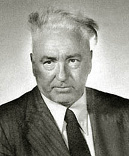
Slate has a brilliant article on one of the most troubled and yet fascinating people in the history of psychology – William Reich – inventor of the orgasmotron.

Reich was one of Freud’s inner circle but decided to propose his own ideas rather than follow the Freudian orthodoxy, something which got him promptly kicked out of the chosen few.

The point of contention was that Reich favoured analysing the personality as a whole, rather than individual symptoms, using a system he developed call ‘character analysis’.

His system had a massive impact on psychoanalysis but as time went on he became more and more radical to the point of seeming to have lost his marbles.

Merging abandoned versions of Freudianism and Marxism, Reich saw repression and neurosis as causes and results of bourgeois property ownership and patriarchy. He established free sex clinics and roved the city in a van from which he proselytized for Communism and orgasm. The open expression of libido, beginning with free love between adolescents, would raise the proletarian political consciousness. Soon, Reich was drummed out of the analytic movement and the Communist Party.

This, you may be surprised to hear, was not Reich at his most left-field.

He also began to believe that the power of orgasm, called orgone, could be stored in batteries and could be absorbed from the sky by the use of a special machine called a cloudbuster.

If the name of the machine seems familiar, it’s probably because it ‘Cloudbusting’ was the title of a song and video by Kate Bush which told the story of Reich’s machine and his downfall.

He eventually died in prison after being arrested by the FBI for illegally distributing his ‘orgone energy accumulator’ leaving a chaotic legacy that stretches from the profound to the ridiculous.
 

Link to Slate article on Willhelm Reich.

A dose of female intelligence

Harvard Business Review interviews a research team who have found that increasing the number of women in a team raises group intelligence.

Of course, the findings could also be as accurately described as showing that men make groups more stupid, although the researchers are far too tactful to mention this particular interpretation.

Woolley: We’ve replicated the findings twice now. Many of the factors you might think would be predictive of group performance were not. Things like group satisfaction, group cohesion, group motivation—none were correlated with collective intelligence. And, of course, individual intelligence wasn’t highly correlated, either.

Malone: Before we did the research, we were afraid that collective intelligence would be just the average of all the individual IQs in a group. So we were surprised but intrigued to find that group intelligence had relatively little to do with individual intelligence.

HBR: But gender does play a role?

Malone: It’s a preliminary finding—and not a conventional one. The standard argument is that diversity is good and you should have both men and women in a group. But so far, the data show, the more women, the better.

As a male clinical psychologist, I am now completely accustomed to being intellectually out-gunned by my female colleagues, but it’s important to realise that there’s more to group work than intelligence.

Do we really want a world of better decisions but with fewer dick jokes? Just the thought of it keeps me up at night.

(See?)
 

Link to article in Harvard Business Review (and don’t miss the podcast).

Is medical school an empathotoxin?

Medical school seems to have a profound negative effect on empathy according to a research review just published in Academic Medicine.

The review of 18 studies found that self-reported emotional understanding declines markedly during medical training. Counter-intuitively, the crucial downturn happens when medical students start seeing patients.

Although the studies are almost completely based on self-report, at the very least they show a decline in being interested in others’ emotional states, even if we can’t be sure that emotional competency is being affected.

Apart from the start of clinical practice phase of training the other major influence in empathy decline was personal distress, which concurs with studies that suggest that people in general report less empathy as they feel worse.

Of course, there may be a number of other factors at work, including the stress of training, an attempt to cope with suffering patients and what the article describes as ‘poor role models’.

What this refers to is the traditional ‘learning through humiliation’ style of medical teaching that seems to be oddly prized by the medical establishment as a form of clinical hazing.

The occasional reply to concerns about physician empathy is usually something along the lines of “what would you prefer, someone who is a good clinician or someone who is a nice person?”.

Despite the false dichotomy, the study make it abundantly clear why empathy is important in medicine, as it is associated with:

• patients’ reporting more about their symptoms and concerns
• physicians’ increased diagnostic accuracy
• patients’ receiving more illness-specific information
• patients’ increased participation and education
• patients’ increased compliance and satisfaction
• patients’ greater enablement
• patients’ reduced emotional distress and increased quality of life
 

Link to PubMed entry for study.
Link to DOI entry for study.

For Whom the Bell Tolls: A psychological autopsy

The Independent has an excellent article on the life and death of writer Ernest Hemingway based on an academic article that attempted a ‘psychological autopsy’ to understand the reasons for his suicide.

Hemingway’s suicide has remained a sticking point for many of his biographers as it seemed incongruous with his adventurous, hard drinking and robustly out-going character.

In 2006, psychiatrist Christopher Martin published an examination of Hemingway’s death in the form of a ‘psychological autopsy‘ to better understand his final decision.

The method aims to get a picture of the dead person’s mental state, health, personality, and social situation to understand what motivated them to take their own life.

The Independent is a careful examination, based on Martin’s academic analysis, that looks at Hemingway’s personality and how the myth of the man had overshadowed many of his personal difficulties for many years.

It’s an in-depth and compelling read that gives a stark look at the darker side of the great writer’s mental life.
 

Link to Independent article on Hemingway (via @brainpicker)
Link to DOI entry and locked academic article.

But what does it teach you?

The New Yorker has a fantastic article on theories of education and how the reasons for why people go to college have changed over the years. The description sounds a bit dull but the article is really very good.

It tracks how the perception of what a college education should do, at least in the States, has changed and evolved over the years.

For example, selection by academic ability is a relatively new concept. Ivy League universities were largely considered as finishing schools for young men, and presumably, the occasional daring young woman who had the support of their family and felt there was more to life than getting up the duff (Americans: blessed with child).

In the mid 20th Century, the concept changed so college was considered a place to identify and shape the brightest members of society, while more recently it has become seen as a place to deliver needs-specific training.

The articles weaves in this story with modern ideas and preoccupations about whether students actually learn anything useful and whether education is being dumbed down, prettied up or sold out.
 

Link to New Yorker article.